





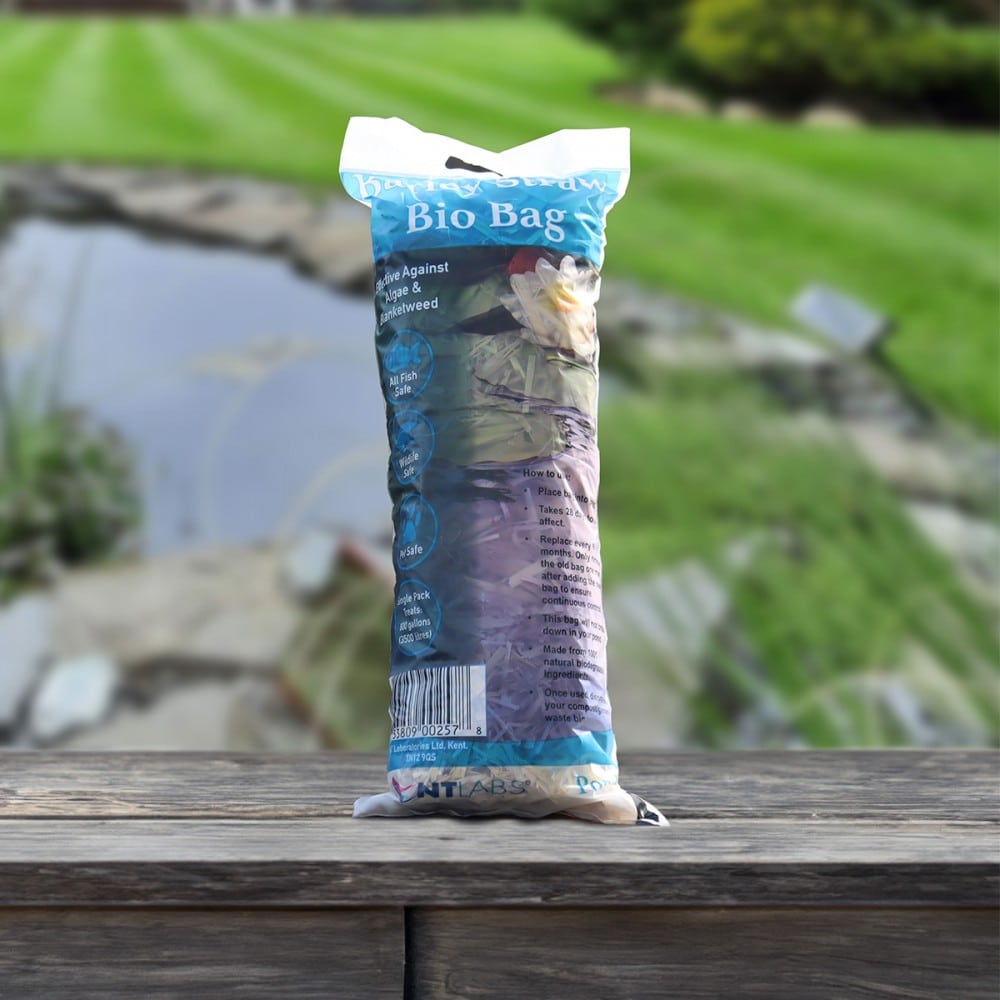
NT Labs Barley Straw Bio Bags
| Brand | NT Labs |
|---|
NT Labs Barley Straw Bio Bags help control green water algae and blanketweed. Choose a single pouch or twin pack. Allow approximately 28 days to take effect and follow the six-month replacement routine on the pack.
Price range: £4.99 through £8.99 (inc VAT)
NT Labs Barley Straw Bio Bags
Single and twin pouches for a planned pond algae-control routine
NT Labs Barley Straw Bio Bags provide a pouch-based option for helping control green water algae and blanketweed in garden ponds. Choose a single pouch or a twin pack. The current single-pack label states a treatment capacity of 3,500 litres; use the directions on the pack supplied when deciding how many bags your pond needs.
This is the solid barley-straw pouch product in the NT Labs Pond range. It is different from bottled Liquid Barley Straw and does not use a measured liquid dose. If you have previously bought Barleyclear, check which format you want before ordering: a bottle and a pouch have different application and replacement instructions.
Choose the pack for your pond
The single option contains one pouch, while the twin option contains two. A twin pack can therefore provide two pouches for an appropriate larger system or keep a second pouch available for a later replacement, depending on the instructions and the actual pond volume. Do not assume that two bags are necessary simply because they arrive in the same pack.
Calculate the water held in your pond before choosing the quantity. Use its internal water dimensions and allow for shelves and substantial features that occupy space. If the pond has an irregular outline, dividing it into smaller measurable sections is more useful than treating the widest and deepest measurements as a complete rectangular volume. Keep your volume estimate with your pond-maintenance notes for future use.
Allow time for the treatment to work
NT Labs specifies an approximately 28-day period before the bags take effect. They are therefore suited to a planned maintenance approach rather than a promise of clear water immediately after placement. Record the date you introduce the pouch so you can assess progress over the intended period.
Green water and blanketweed look different. Green water affects the appearance of the water itself, whereas blanketweed forms visible strands or mats that may catch around plants and equipment. Identifying what you are seeing helps you choose a useful response and judge whether it is improving. Photographing the same area of pond in similar light can make gradual changes easier to compare.
Placing and replacing the pouch
The manufacturer’s instructions are to place the bag in the pond, replace it every six months and leave the previous bag in place for one month after introducing its replacement. That overlap maintains the replacement routine while the new pouch starts working. Make both the replacement date and the later removal date part of your maintenance calendar.
Choose an accessible position that lets you check and retrieve the pouch without disturbing the whole pond. Keep pump intakes and other water passages clear. When you inspect equipment, check that the bag has not moved into an awkward position or become caught where it could obstruct circulation. Follow any additional placement details printed on the packaging.
Ingredients and disposal
NT Labs describes the ingredients as natural and biodegradable, while explaining that the bag will not break down in the pond. It should still be retrieved when its service period is finished. The manufacturer directs used material to compost or garden waste.
Keep the packaging until you have noted the application details and replacement interval. With more than one pond, label your maintenance record clearly so the start date and number of bags relate to the correct system. This is particularly useful if another person will be looking after the pond while you are away.
Maintain circulation alongside algae control
A barley-straw pouch does not remove the need to maintain the pond’s pump and filter. Check equipment regularly and keep accessible strainers clear of accumulated debris. If blanketweed is collecting around an intake, deal with that obstruction according to the equipment instructions rather than waiting for an algae-control product to restore the flow.
Remove loose leaves and excess debris as part of normal pond care. For settled organic waste, compare NT Labs Sludge Remover and follow its separate treatment directions. Review feeding if uneaten food is being left behind, and observe whether runoff or decaying plant material is entering the water. These checks address practical contributors to poor pond conditions while the chosen treatment has time to work.
Compare other algae-control options
For a different treatment format, see NT Labs Blanketweed & Algae Control. Compare the intended use and directions rather than transferring the instructions from one product to another. Different products can have different application intervals, preparation requirements and treatment capacities.
If the fish show unusual behaviour, investigate water quality and equipment operation promptly. Clearer-looking water alone does not confirm suitable ammonia, nitrite or oxygen conditions. Keep observations and water-test results alongside your treatment record, and seek advice if the cause of a problem is unclear. Choosing an algae-control product should fit into the wider care of the pond and its inhabitants.



Reviews
There are no reviews yet.