






Marine Salinity & Temperature
Marine Salinity & Temperature
Measure seawater concentration and temperature with a defined scale
Marine salinity can be measured through conductivity or refractive index and may be displayed as practical salinity, parts per thousand or specific gravity. These scales describe related properties but should not be compared casually without the instrument definition and temperature basis.
Choose an instrument designed for natural or artificial seawater, with the required range, resolution and temperature compensation. Calibrate using the standard specified for the method and allow the sample and sensor to stabilise.
Compare measurement principle, scale and calibration standard
- Choose conductivity or refractometer technology.
- Check PSU, ppt or specific-gravity display.
- Use a seawater-appropriate calibration standard.
- Allow temperature compensation and stabilisation.
- Rinse away salt deposits after use.
Our practical view: Salinity and temperature must be read together, and calibration standards must suit the instrument. We check whether the system reports ppt, PSU, specific gravity or conductivity before comparing numbers.
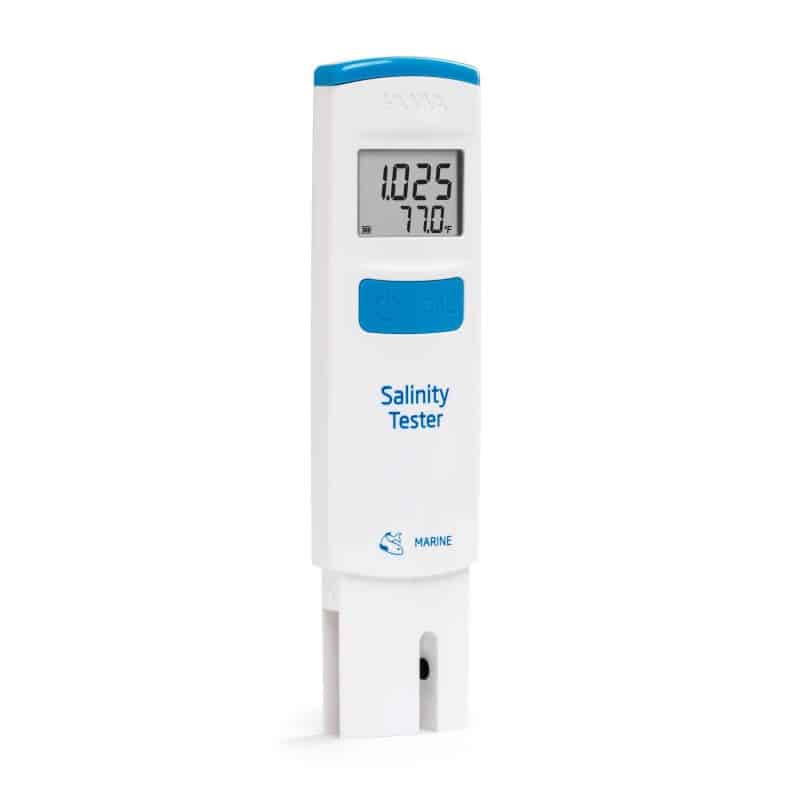
Choosing Marine Salinity & Temperature from a measured water result
Marine salinity and temperature products include monitors, standards, reagents and reef-testing kits. Salinity measurement may be derived from conductivity and temperature compensation, so use the correct standard and allow samples and probes to stabilise. Marine pH reagents and multiparameter monitors are water-matrix specific.
What to check before ordering
- Confirm the instrument’s salinity scale and intended range.
- Calibrate with the stated standard at a stable temperature.
- Keep probes free from salt deposits and bubbles.
Products you can compare in this section
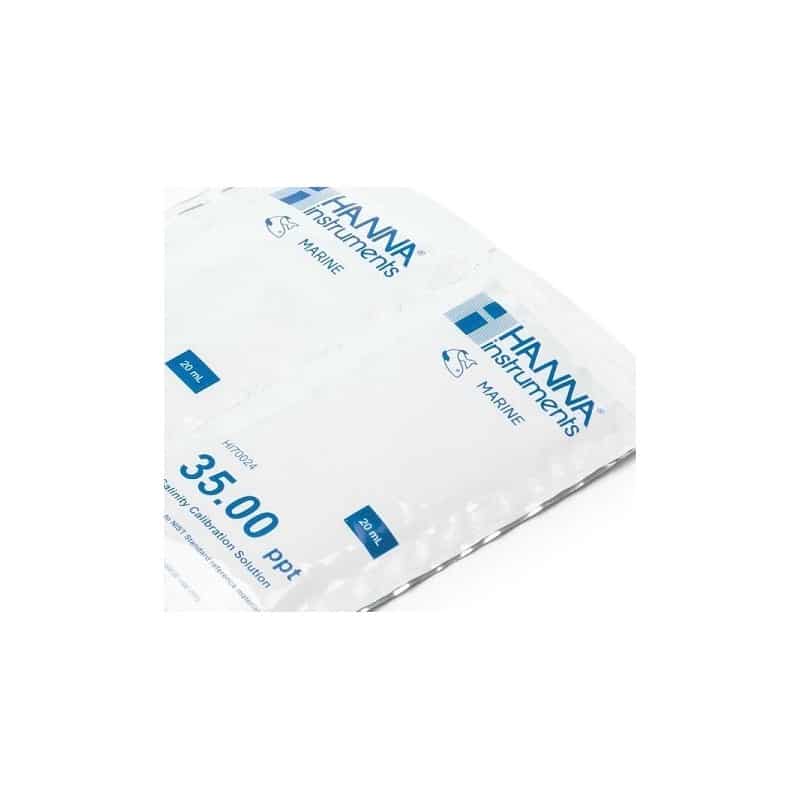
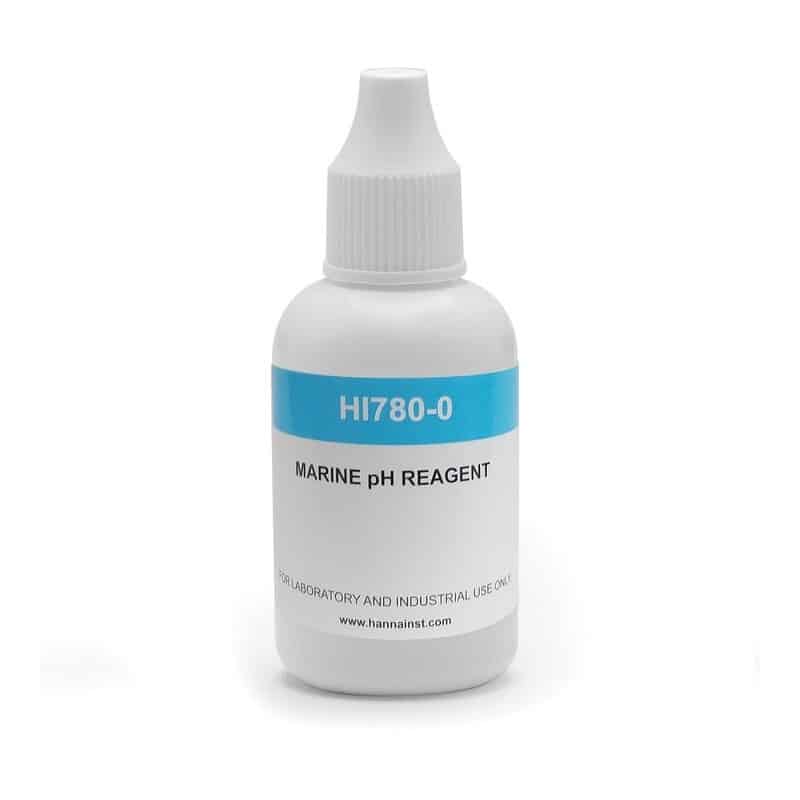
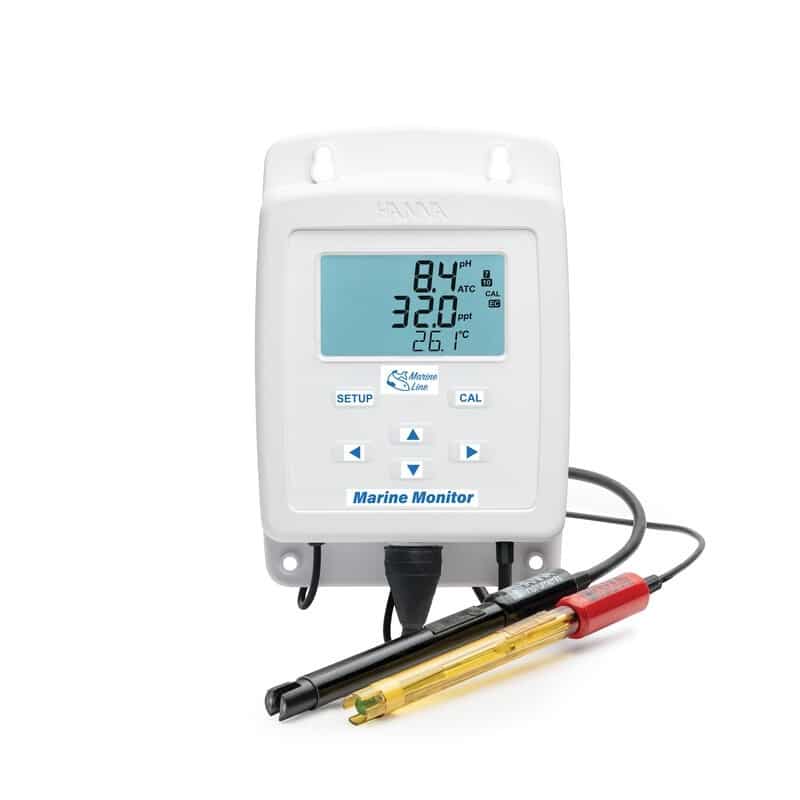
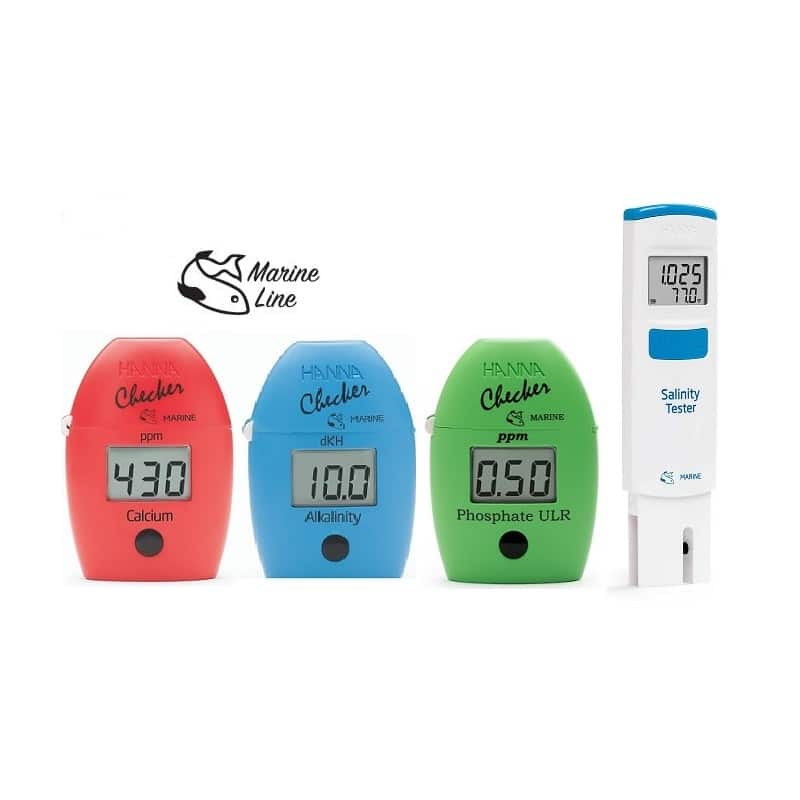
Current examples include Hanna Salinity Calibration Standard 35.00 ppt Sachets – HI-70024P, Hanna Marine pH Reagents (100 Tests) for HI780 Checker – HI780-25, Hanna Marine Monitor for pH, EC, Salinity & Temperature – HI981520, Hanna Marine Reef Testing Kit – HI-REEFKIT and Hanna Marine Waterproof Salinity Tester – HI98319.
Top-off water changes salinity differently from a saltwater water change. Record both temperature and salinity trends so evaporation is not mistaken for a dosing problem.
Need to compare the wider range? Return to Hanna Instruments for the surrounding product family.
Marine Salinity & Temperature Testing Guide
Conductivity and refractive index infer salinity differently
Each method uses its own conversion model, so calibration and sample type must match the instrument.
Temperature affects both measurement and interpretation
Use the instruments compensation procedure and compare results on the same defined basis.
Salt residue causes drift and carry-over
Rinse sensors or sample wells as directed and avoid diluting the next sample with retained rinse water.
Related water-care categories for Marine Salinity & Temperature: Water testing & purifiers · Hanna Instruments · Seneye · Water purifiers · Dechlorinator units · Pond treatments
Marine Salinity & Temperature Frequently Asked Questions
These Marine Salinity & Temperature answers cover the recurring buying and testing questions we encounter. The exact instrument, reagent and application instructions still take priority.
What is the difference between salinity, specific gravity and PSU?
They are related but distinct scales or representations. Use the instrument definition and temperature basis before converting or comparing.
Should a marine salinity tester be calibrated with pure water?
Follow the exact instrument manual; some refractometers use deionised water while other instruments require a defined salinity standard.
Does automatic temperature compensation remove every temperature effect?
No. It applies the instruments defined correction, but the sample and sensor still need suitable equilibration and the display basis must be understood.
Can a pond conductivity meter measure marine salinity?
Only if its range, sensor, compensation and conversion are specified for the intended saltwater application.
How do I choose the right Marine Salinity & Temperature product?
For Marine Salinity & Temperature, define the sample type, expected concentration, reporting unit and confidence required before comparing compatible instruments, reagents and standards.
Why does the measurement range matter?
When testing Marine Salinity & Temperature, a result outside the method range may be invalid, while an unnecessarily broad range can hide useful detail at low concentrations.
Why must I record the unit with a water-test result?
A Marine Salinity & Temperature value is meaningful only with its unit, reporting form and method; similar-looking numbers can otherwise describe different results.
How can I improve repeatability when using Marine Salinity & Temperature?
For repeatable Marine Salinity & Temperature results, use a representative sample, clean equipment, accurate volume and consistent timing, and keep optical cells free from fingerprints and bubbles.
What should I do if a water-test result looks wrong?
If a Marine Salinity & Temperature result looks wrong, repeat a fresh sample, confirm the method and range, inspect the reagents and validate with a suitable standard or independent method where needed.
How should water-test reagents and standards be stored?
Store Marine Salinity & Temperature reagents and standards sealed, labelled and within the stated temperature and expiry limits, and protect them from contamination.
Can Marine Salinity & Temperature prove water is safe to drink?
No. A Marine Salinity & Temperature field test covers defined parameters only and cannot establish overall drinking-water or microbiological safety.
What details should I record with a test result?
With a Marine Salinity & Temperature result, record the date, time, sampling point, temperature where relevant, instrument, method, chemical form, unit and recent treatment or maintenance.
