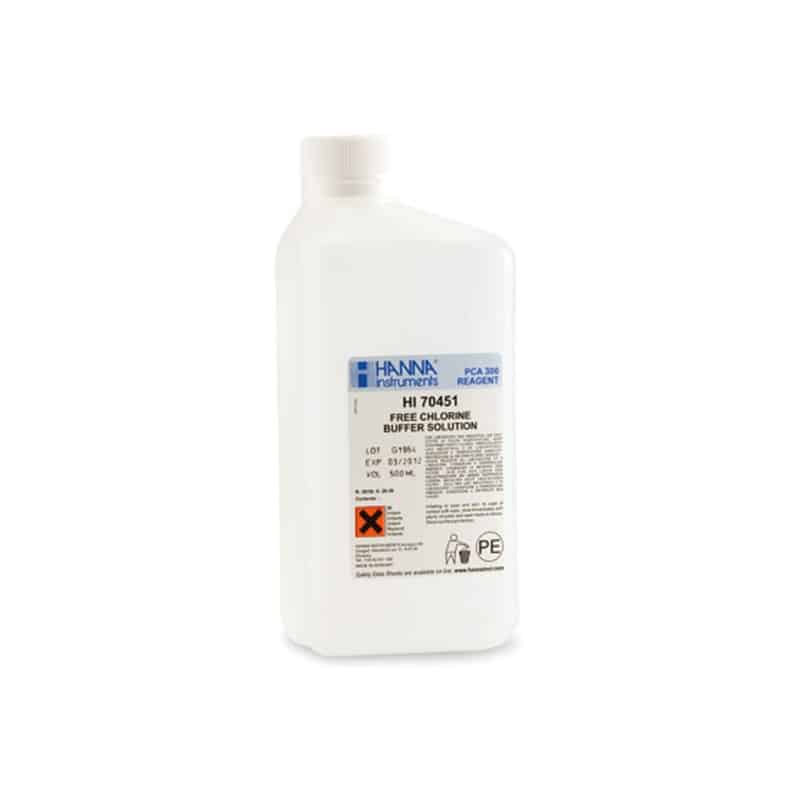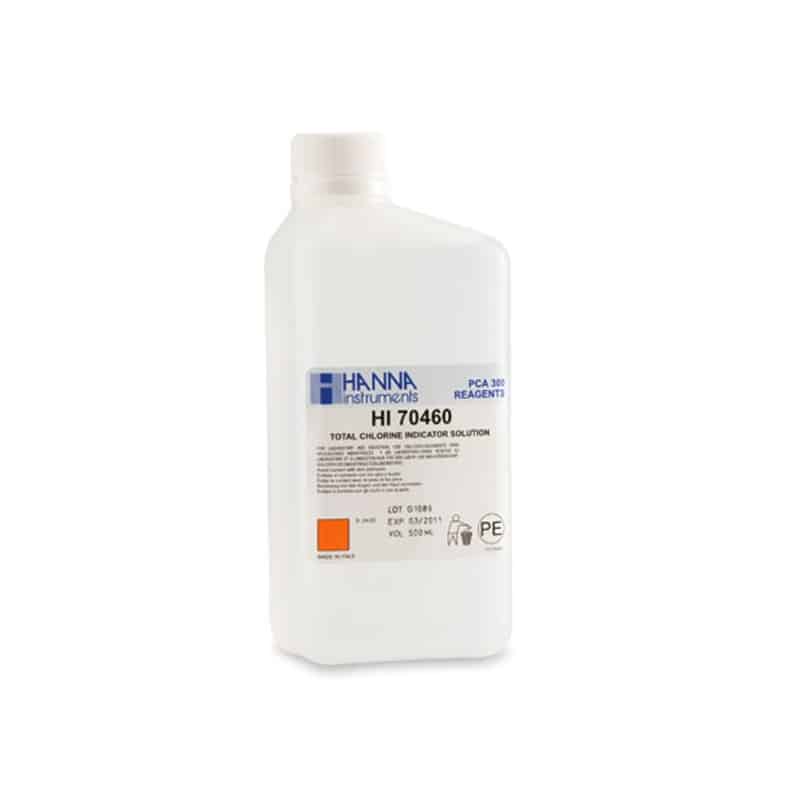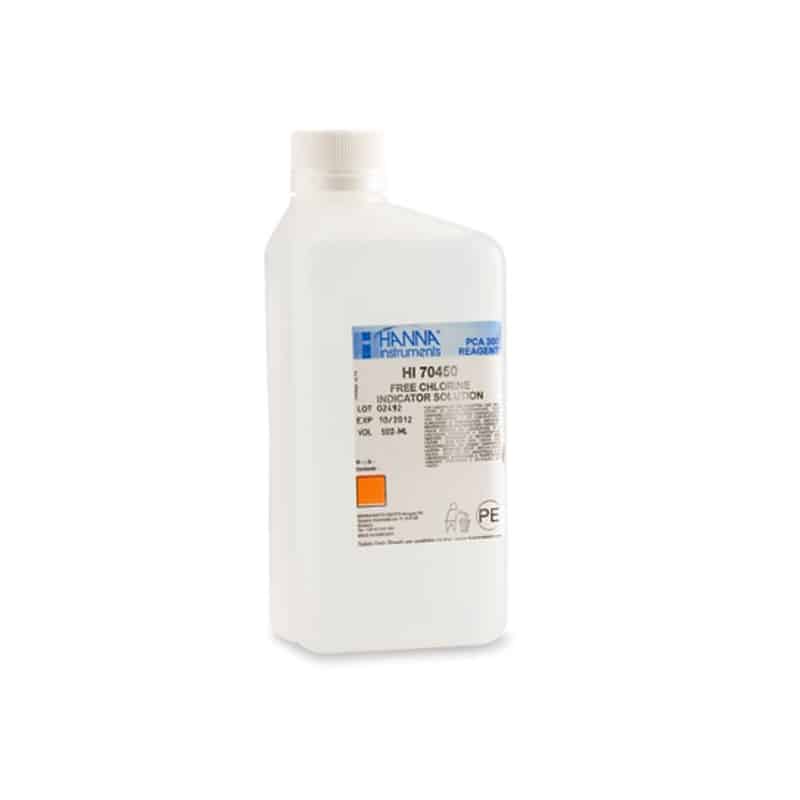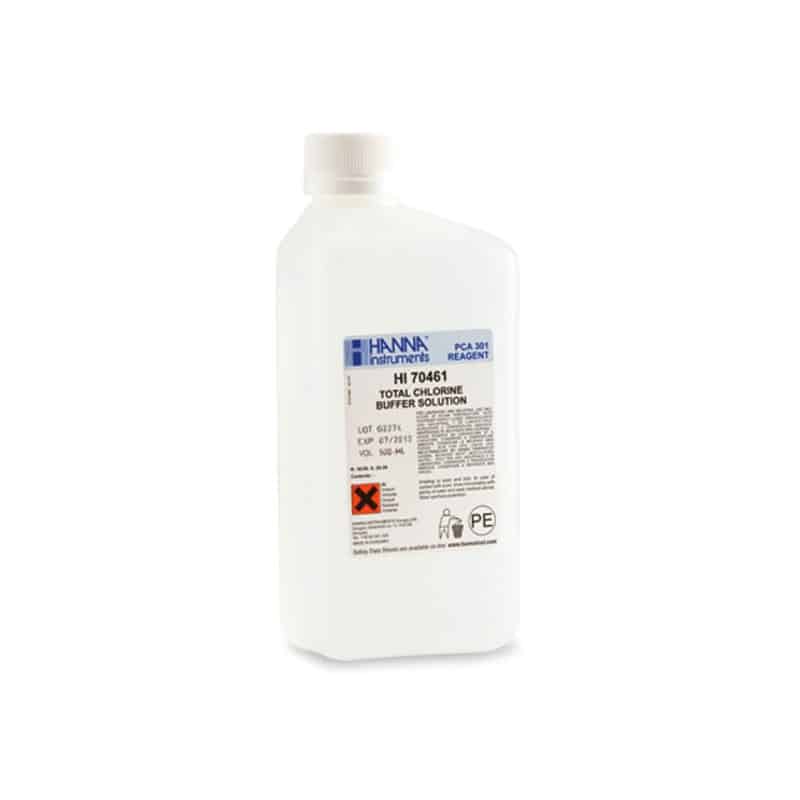
Free & Total Chlorine
Distinguish free chlorine, total chlorine and combined chlorine correctly
Free chlorine describes a defined available disinfectant fraction, while total chlorine includes free chlorine plus combined forms. Combined chlorine is commonly derived from the difference between total and free results when the same compatible method and units are used.
Choose the correct DPD or alternative method for the expected concentration, sample type and required resolution. Very high oxidant levels, sample colour, turbidity and timing can interfere with some tests.
Select the chlorine fraction and range required by the application
- Distinguish free, total and combined chlorine.
- Match range to low-level or treated-water testing.
- Use the exact DPD reagent sequence.
- Check oxidant and sample-colour interferences.
- Follow applicable pool or process-water standards.
Our practical view: Free chlorine, total chlorine and combined chlorine answer different questions. We match the instrument, range and reagent code to the pool, tap-water or process-water decision you need to make.
Choosing Free & Total Chlorine from a measured water result
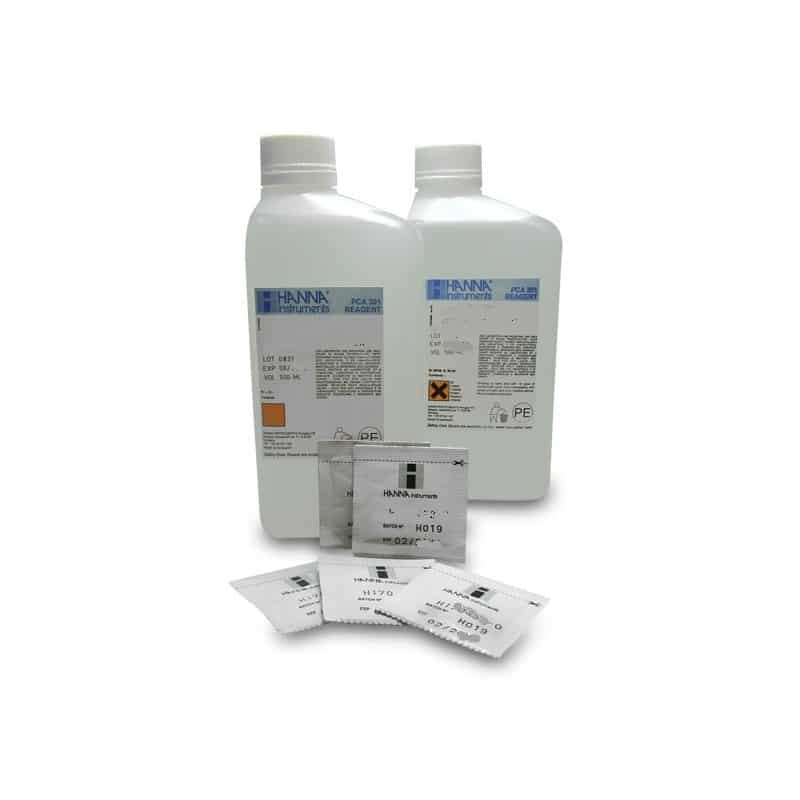
This category includes chlorine test kits, Checkers, photometers, online-analyser reagents and calibration standards. Free chlorine measures readily available disinfectant; total chlorine includes combined forms. Subtracting free from total can indicate combined chlorine when both are measured correctly. High concentrations may need a dedicated range or dilution procedure specified by the manufacturer.
What to check before ordering
- Decide whether free, total or both chlorine values are required.
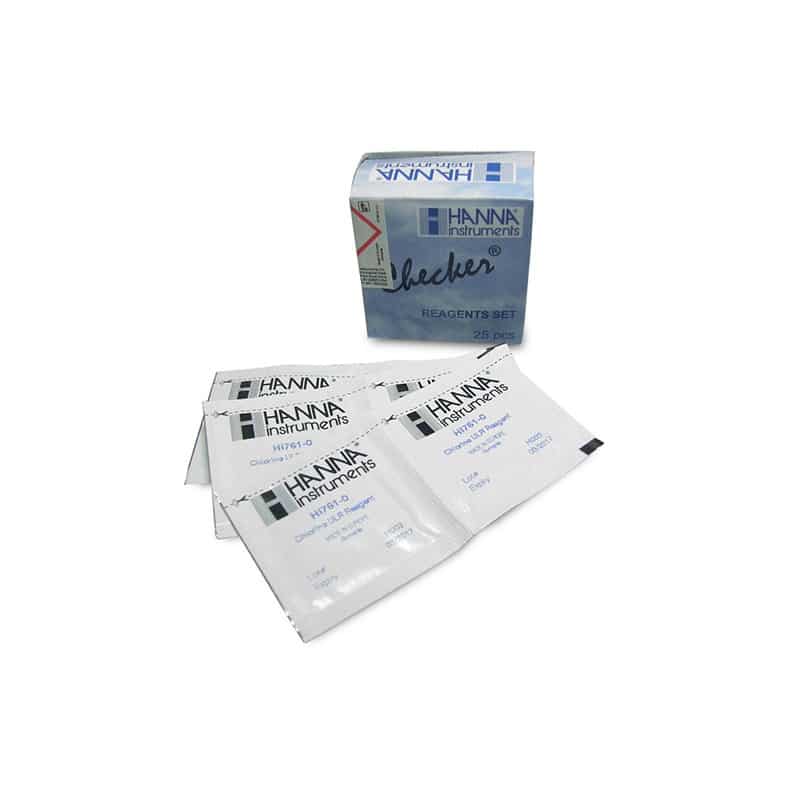
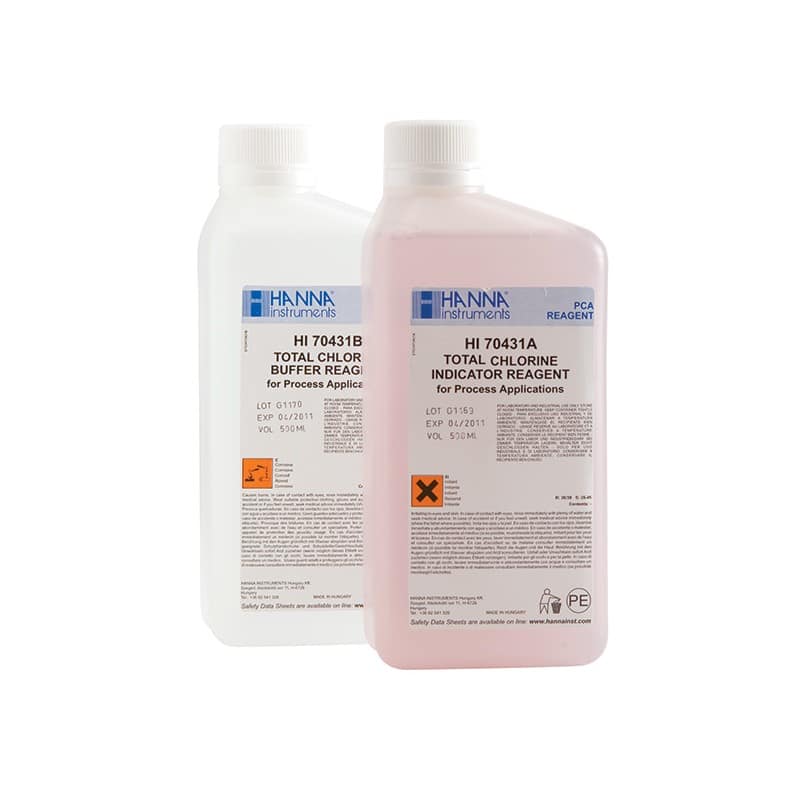
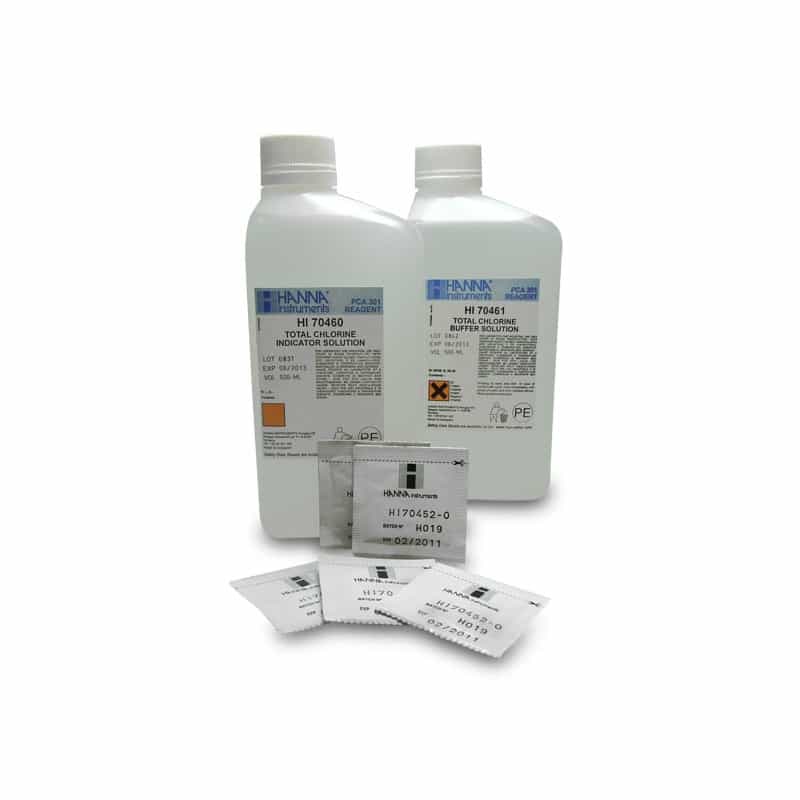
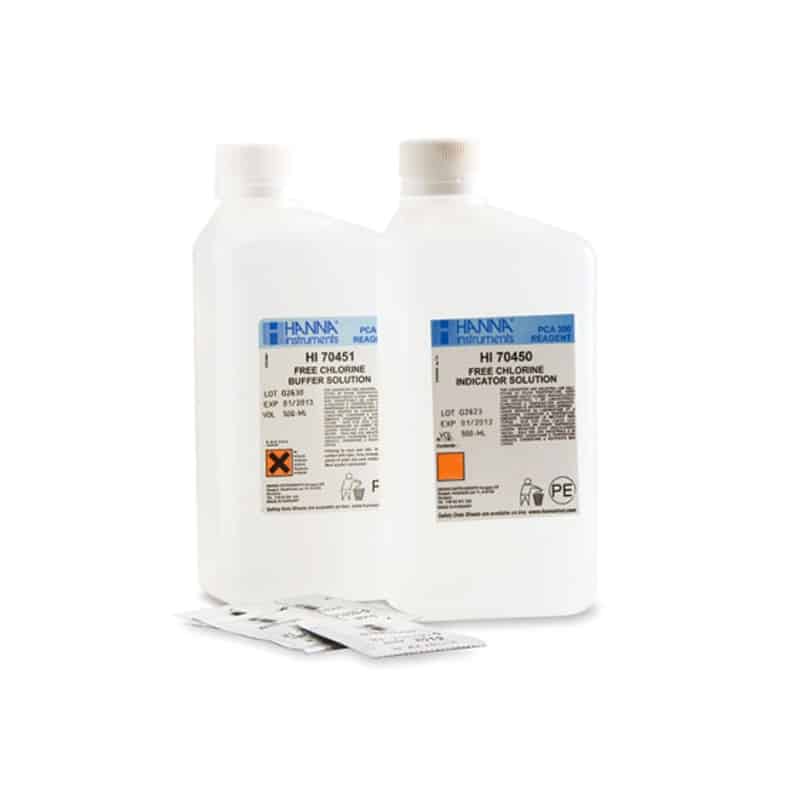
- Match reagent sachets or liquid sets to the exact instrument code.
- Test fresh samples promptly and protect them from strong light.
Products you can compare in this section
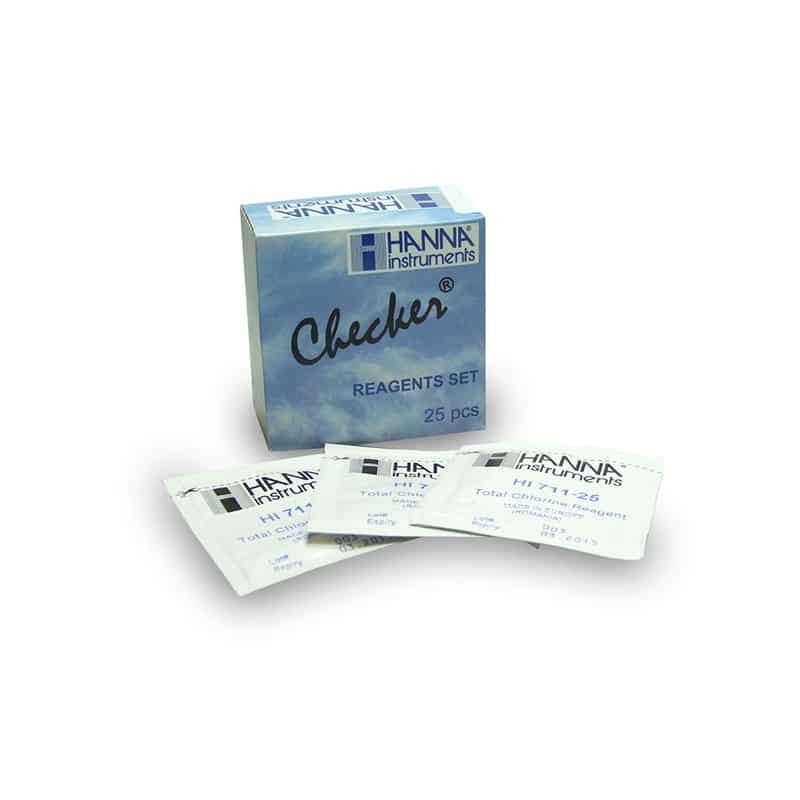
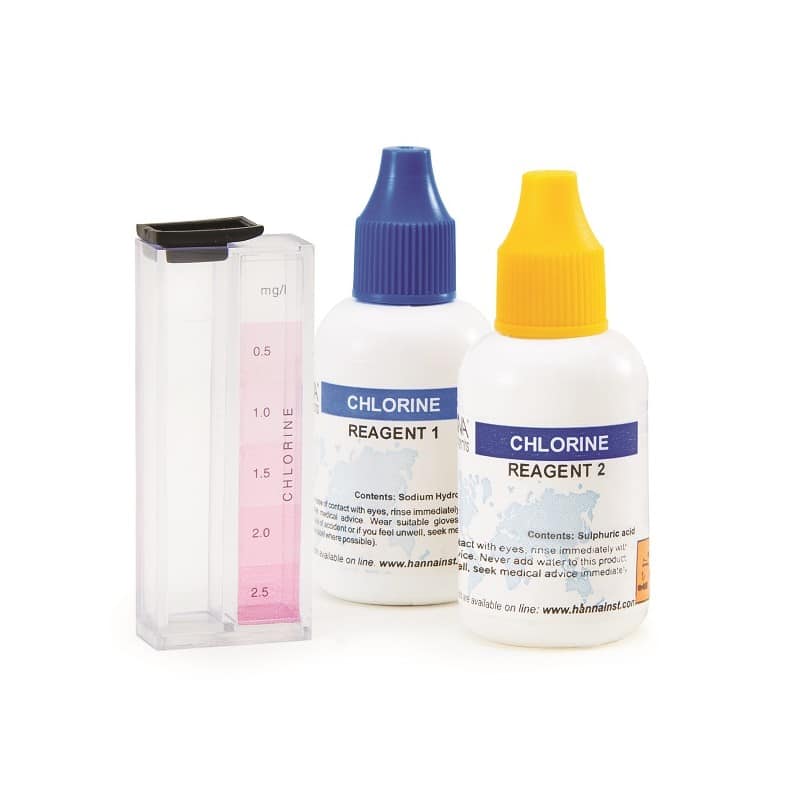
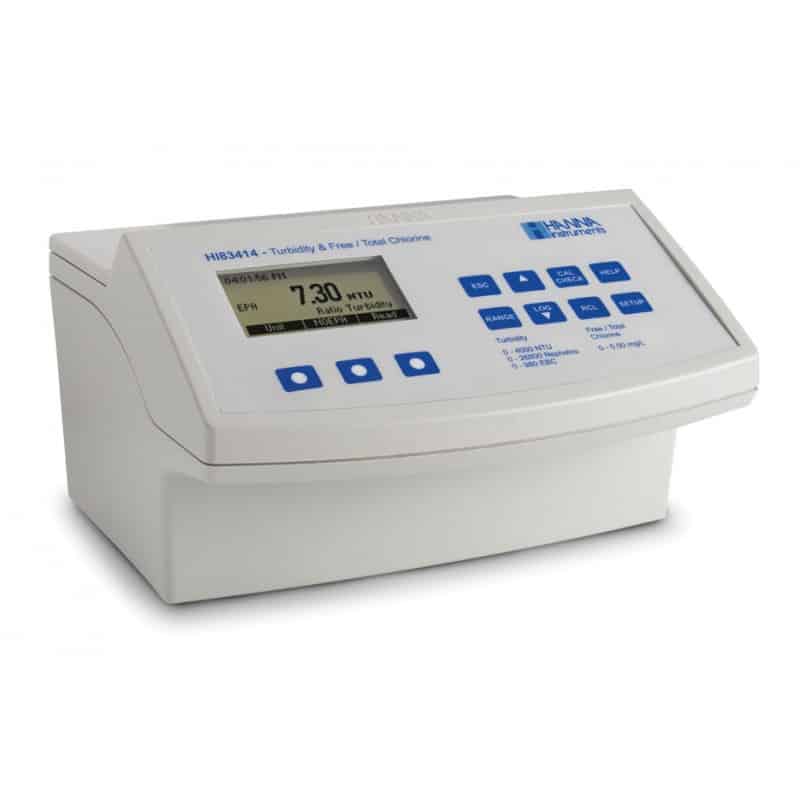
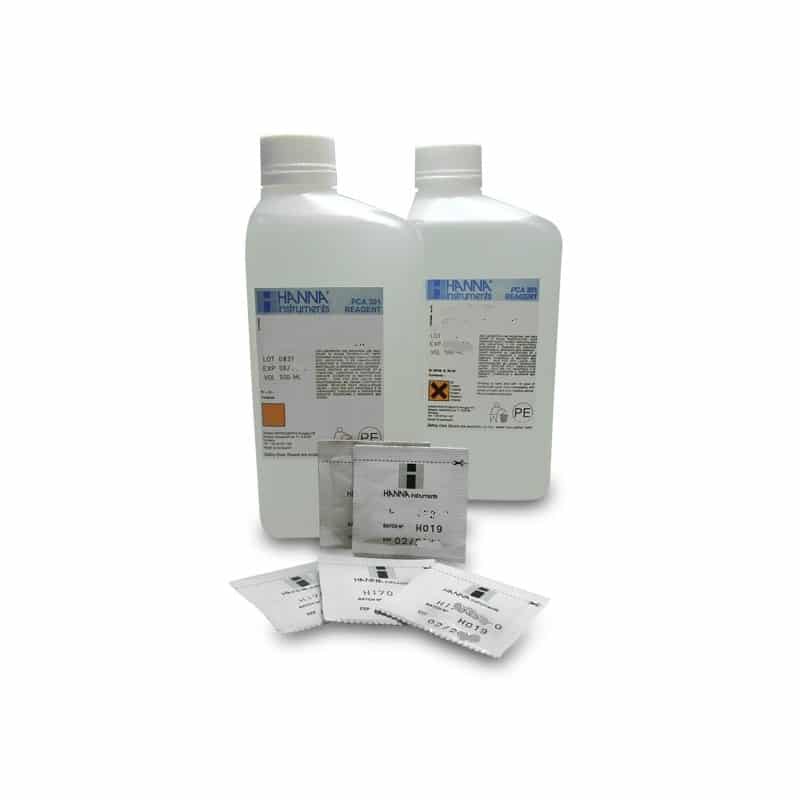
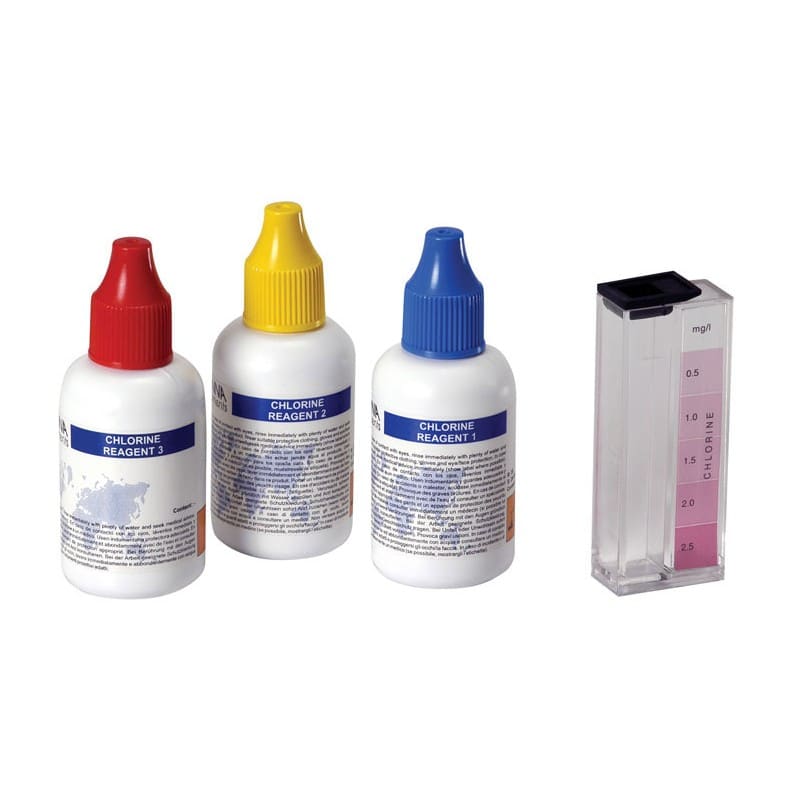
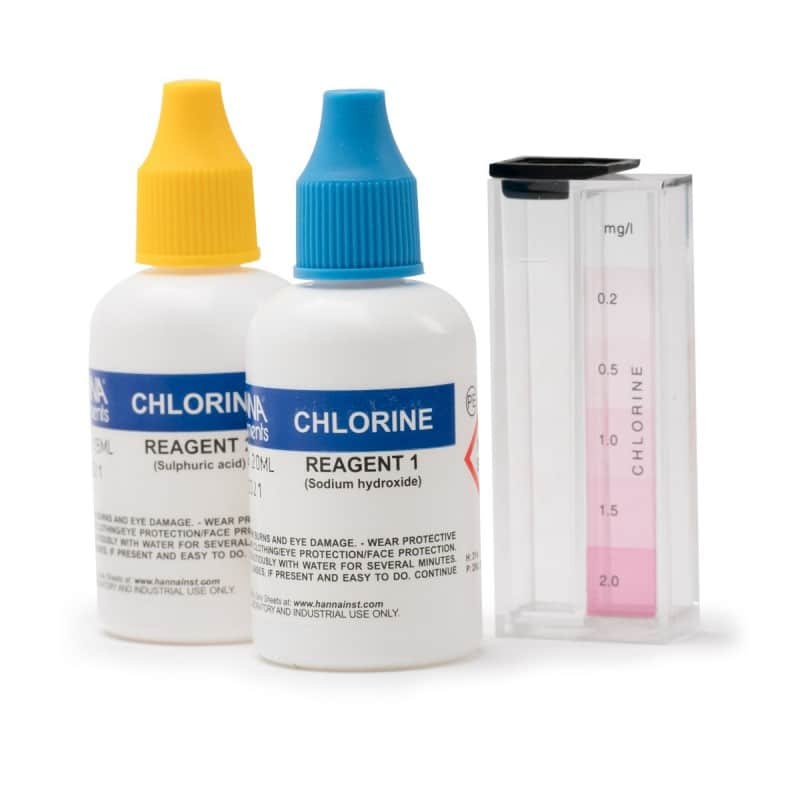
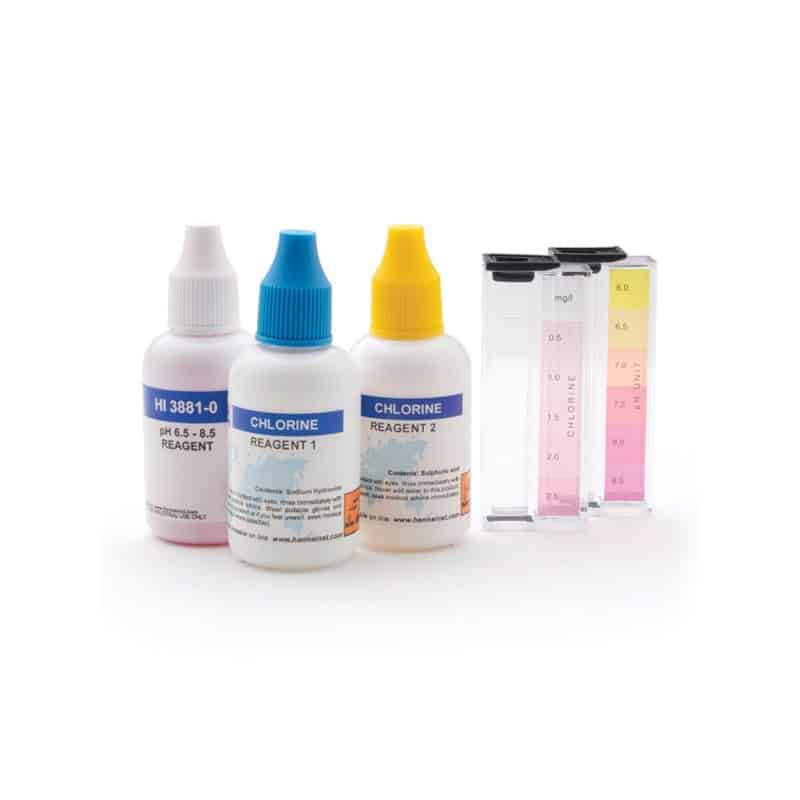
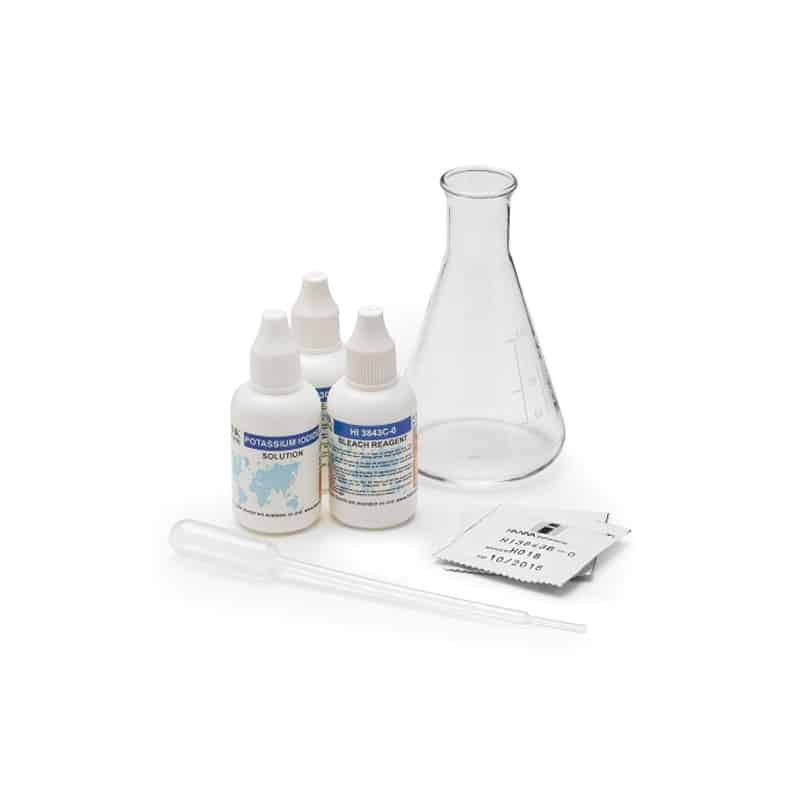
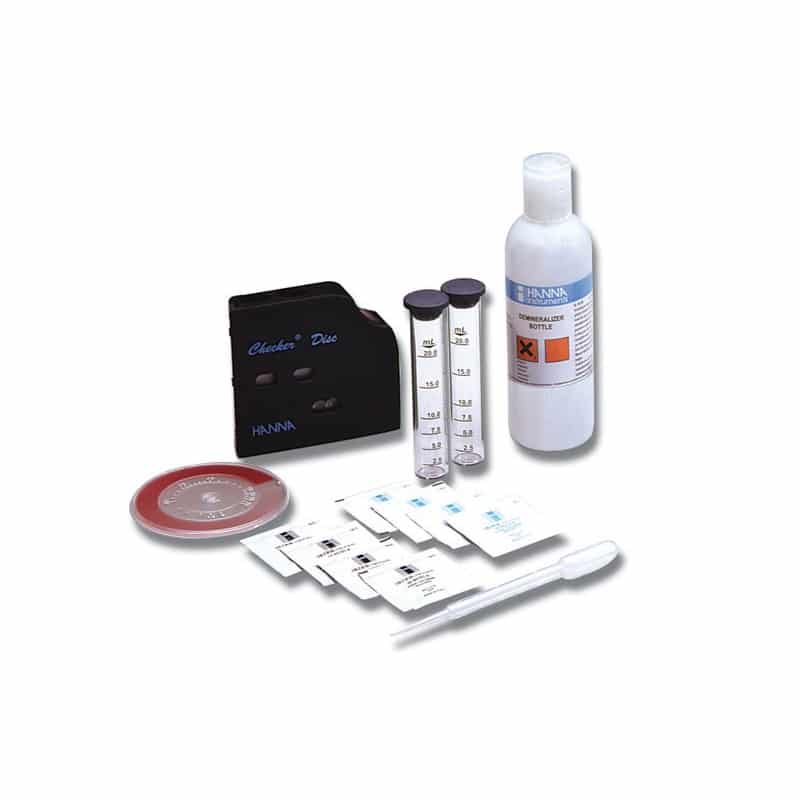
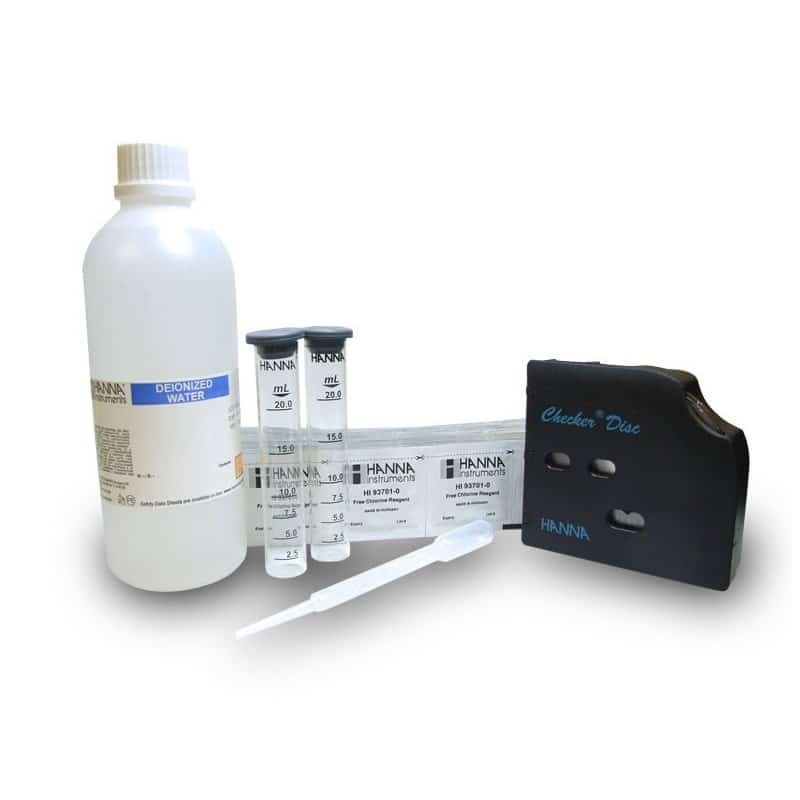
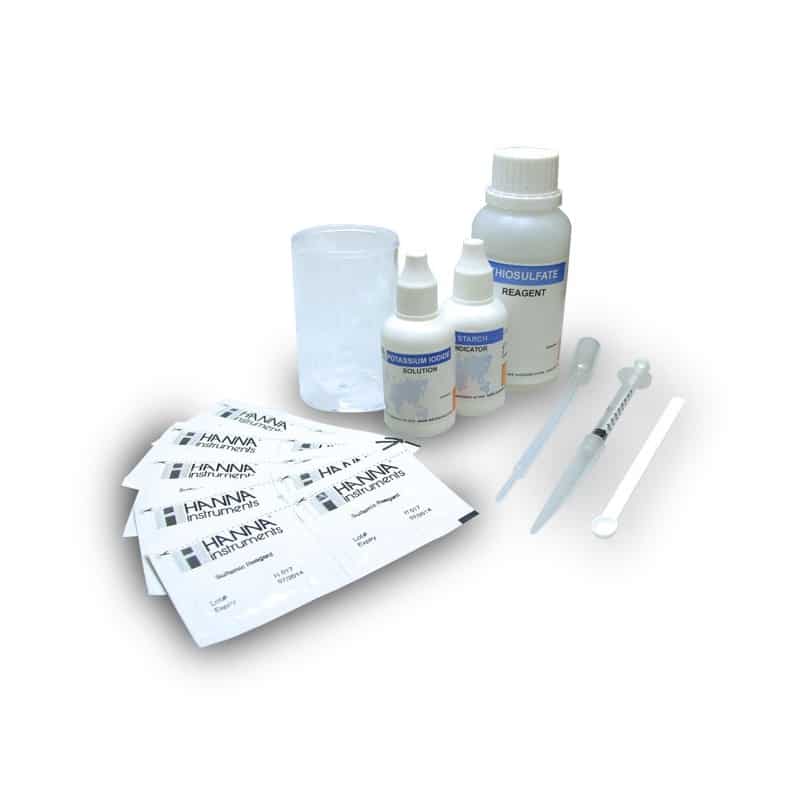
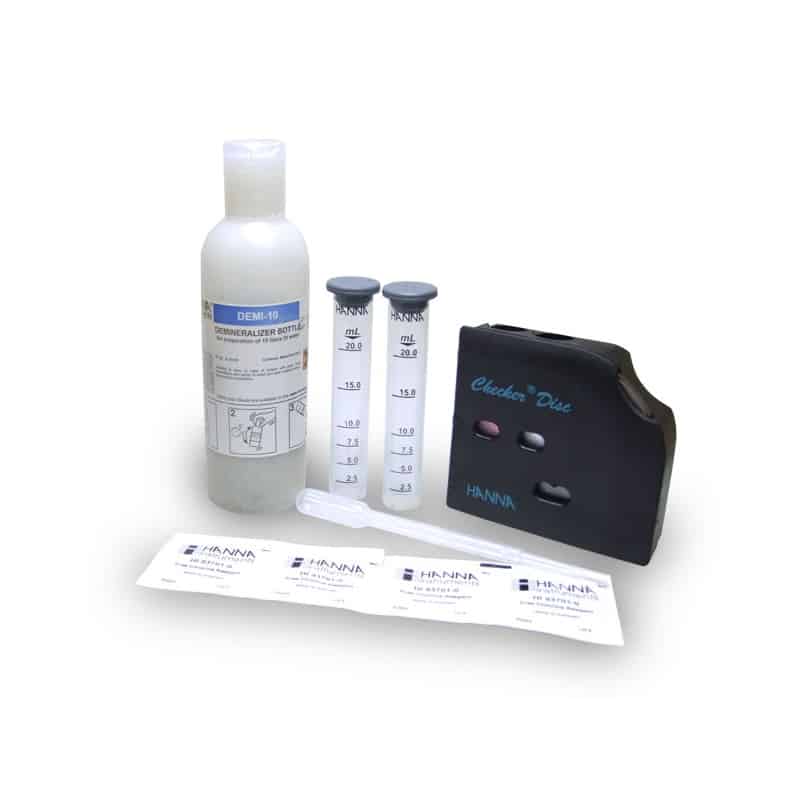
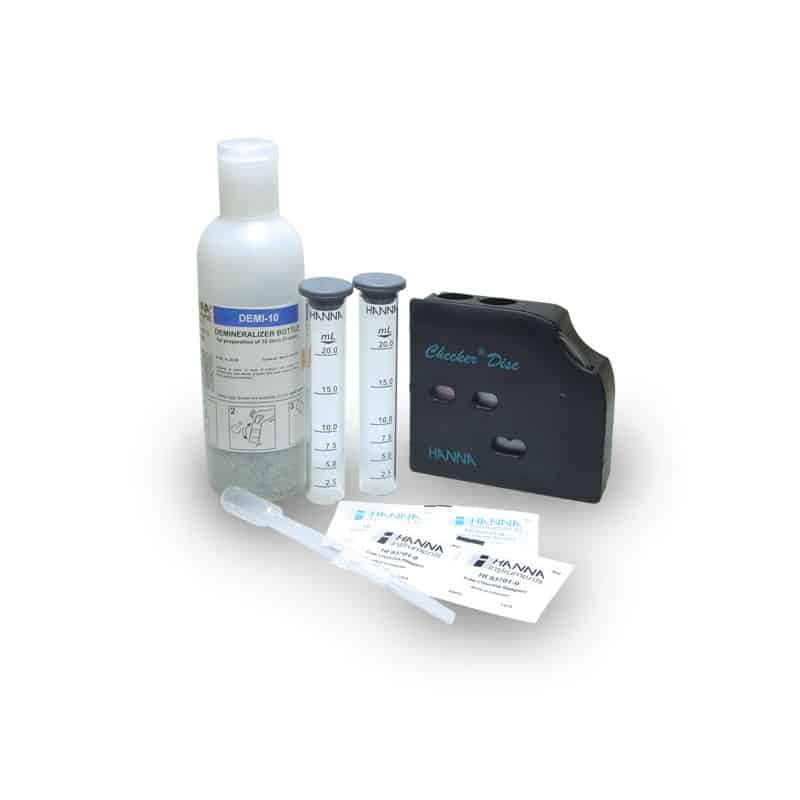
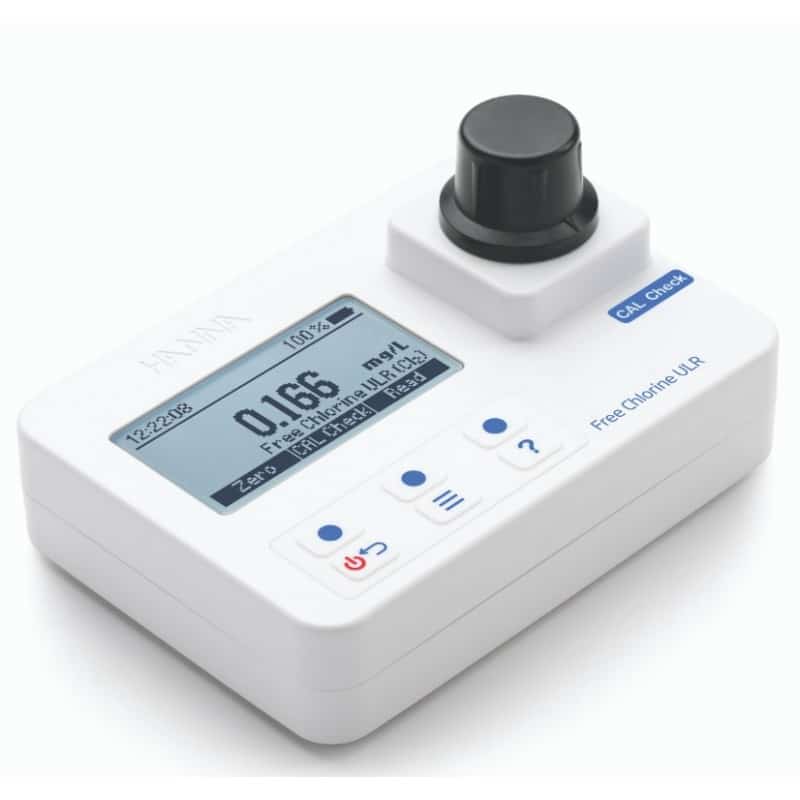
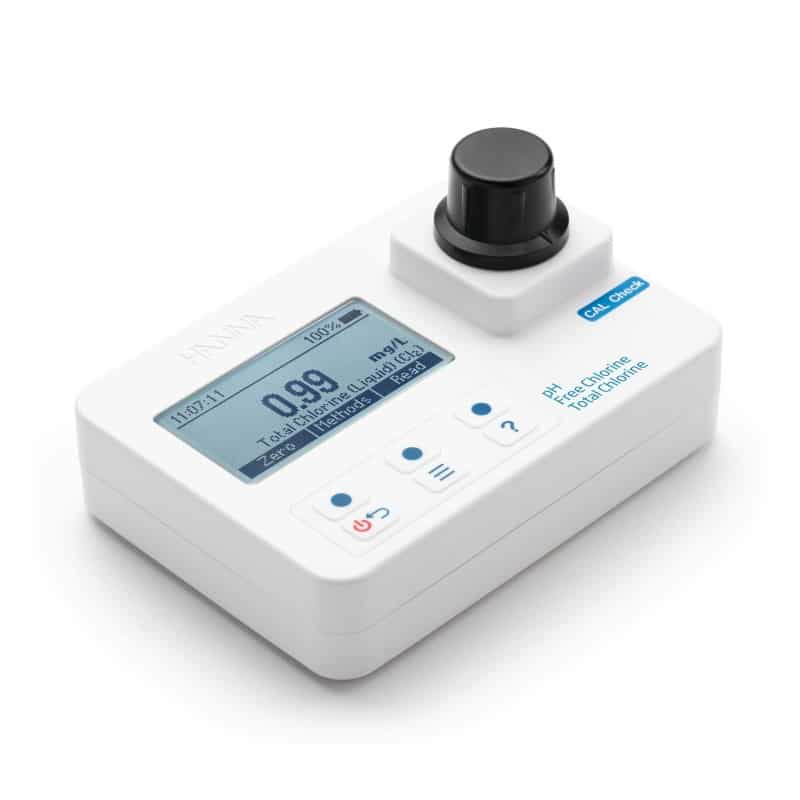
Current examples include Hanna Free Chlorine Test Kit – HI-3831F, Hanna Free Chlorine Test Kit with Colour Cube – HI-3829F, Hanna Free & Total Chlorine UHR Portable Photometer – HI-97771, Hanna Total Chlorine Ultra High Range Checker HC – HI-771 and Hanna Free Chlorine Checker HC – HI701.
For pond dechlorination, test both the incoming supply and purifier outlet. A zero reading is useful only when the method can detect at the level that matters.
Need to compare the wider range? Return to Hanna Instruments for the surrounding product family.
Free & Total Chlorine Testing Guide
Free and total are separate method steps
Do not label one result as the other, and calculate a difference only from compatible readings.
Colour development is time-sensitive
Read the sample at the instructed time and avoid contamination from residual reagent or chlorine demand in sampling equipment.
Application rules determine the target
Pool, process, source and aquatic systems have different requirements; use the applicable operational guidance rather than a universal target.
Related water-care categories for Free & Total Chlorine: Water testing & purifiers · Hanna Instruments · Seneye · Water purifiers · Dechlorinator units · Pond treatments
Free & Total Chlorine Frequently Asked Questions
These Free & Total Chlorine answers cover the recurring buying and testing questions we encounter. The exact instrument, reagent and application instructions still take priority.
What is the difference between free and total chlorine?
Free chlorine measures a defined available fraction; total chlorine includes free and combined forms under the stated method.
How is combined chlorine calculated?
It is commonly calculated as total chlorine minus free chlorine when both readings use compatible methods and units.
What is a DPD chlorine test?
DPD is a colorimetric reagent method in which chlorine produces colour measured visually or by a photometer according to a defined procedure.
Can very high chlorine cause an unexpectedly low result?
Some methods can bleach or move outside their range at high oxidant concentrations. Check the method warnings and verify safely with an appropriate range.
How do I choose the right Free & Total Chlorine product?
For Free & Total Chlorine, define the sample type, expected concentration, reporting unit and confidence required before comparing compatible instruments, reagents and standards.
Why does the measurement range matter?
When testing Free & Total Chlorine, a result outside the method range may be invalid, while an unnecessarily broad range can hide useful detail at low concentrations.
Why must I record the unit with a water-test result?
A Free & Total Chlorine value is meaningful only with its unit, reporting form and method; similar-looking numbers can otherwise describe different results.
How can I improve repeatability when using Free & Total Chlorine?
For repeatable Free & Total Chlorine results, use a representative sample, clean equipment, accurate volume and consistent timing, and keep optical cells free from fingerprints and bubbles.
What should I do if a water-test result looks wrong?
If a Free & Total Chlorine result looks wrong, repeat a fresh sample, confirm the method and range, inspect the reagents and validate with a suitable standard or independent method where needed.
How should water-test reagents and standards be stored?
Store Free & Total Chlorine reagents and standards sealed, labelled and within the stated temperature and expiry limits, and protect them from contamination.
Can Free & Total Chlorine prove water is safe to drink?
No. A Free & Total Chlorine field test covers defined parameters only and cannot establish overall drinking-water or microbiological safety.
What details should I record with a test result?
With a Free & Total Chlorine result, record the date, time, sampling point, temperature where relevant, instrument, method, chemical form, unit and recent treatment or maintenance.