





Ammonia
Detect ammonia with the correct chemical form, range and sample method
Ammonia can accumulate where animal waste and organic matter exceed biological processing. The un-ionised NH3 fraction is generally more toxic to aquatic life and its proportion rises as pH and temperature increase.
Before comparing products or results, check whether the method reports total ammonia, total ammonia nitrogen, ammonium or un-ionised ammonia. Freshwater and seawater methods may use different chemistry and interference control.
Match ammonia reporting form to the decision you need to make
- Identify TAN, NH3, NH4 or the stated reporting form.
- Choose a range suited to expected concentrations.
- Confirm freshwater or marine compatibility.
- Measure pH and temperature when assessing NH3 risk.
- Repeat unexpected readings before major corrective action.
Our practical view: Ammonia testing must use the right range and water matrix. We distinguish total-ammonia methods from free-ammonia monitoring and account for pH, temperature and salinity when interpreting risk.
Choosing Ammonia from a measured water result
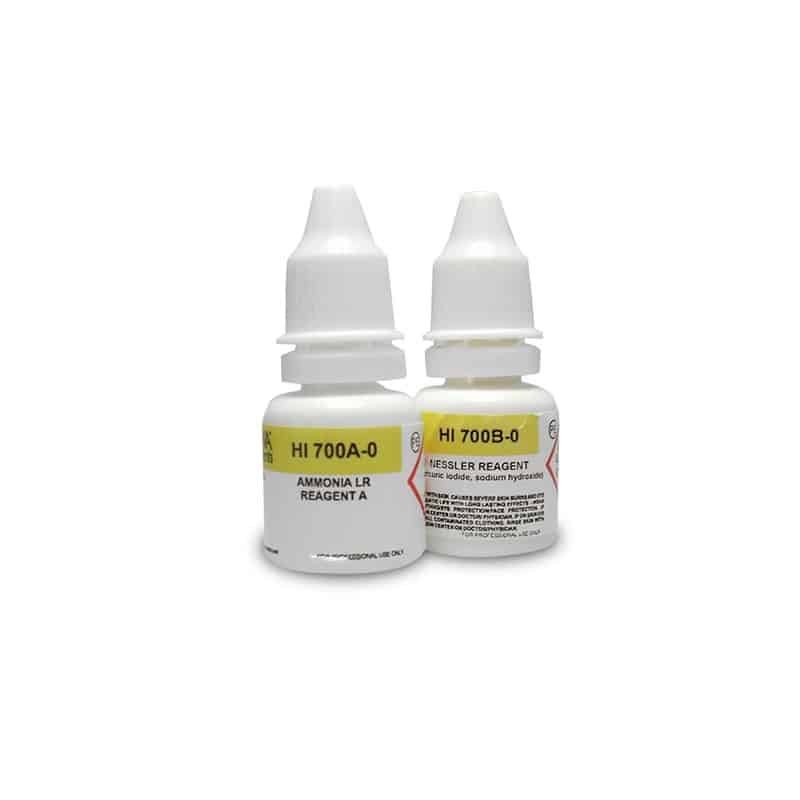
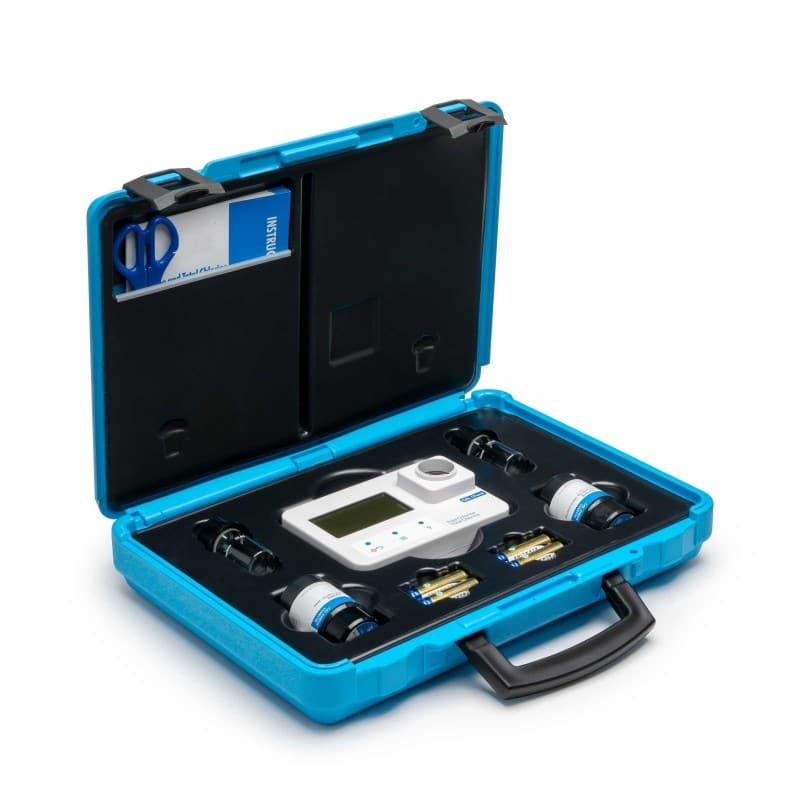
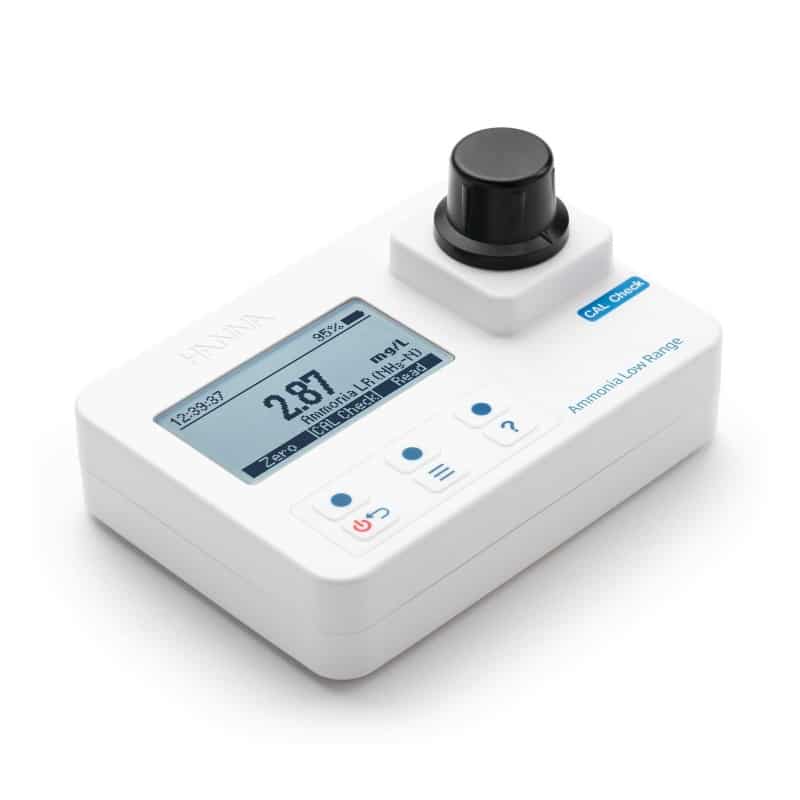
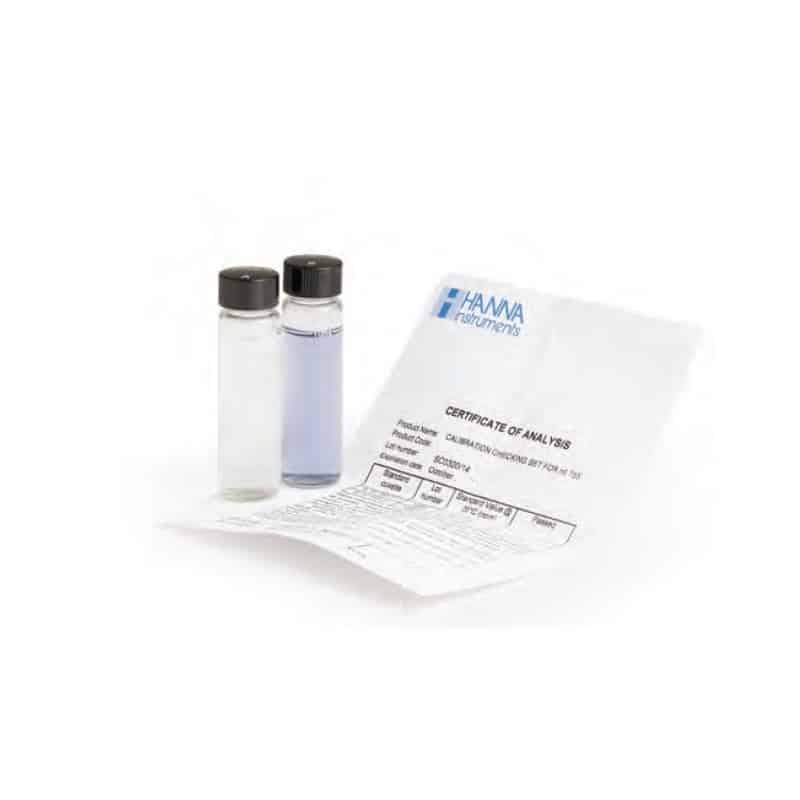
Ammonia products include portable photometers, Checkers, reagents and calibration standards for different ranges and water types. Low-range freshwater, medium-range and marine methods are not interchangeable. Confirm whether results are reported as ammonia, ammonia-nitrogen or another unit. Toxic un-ionised ammonia rises as pH and temperature increase.
What to check before ordering
- Choose the meter range for the concentrations you need to detect.
- Match reagents and standards to the exact HI instrument.
- Record pH and temperature alongside the ammonia result.
Products you can compare in this section
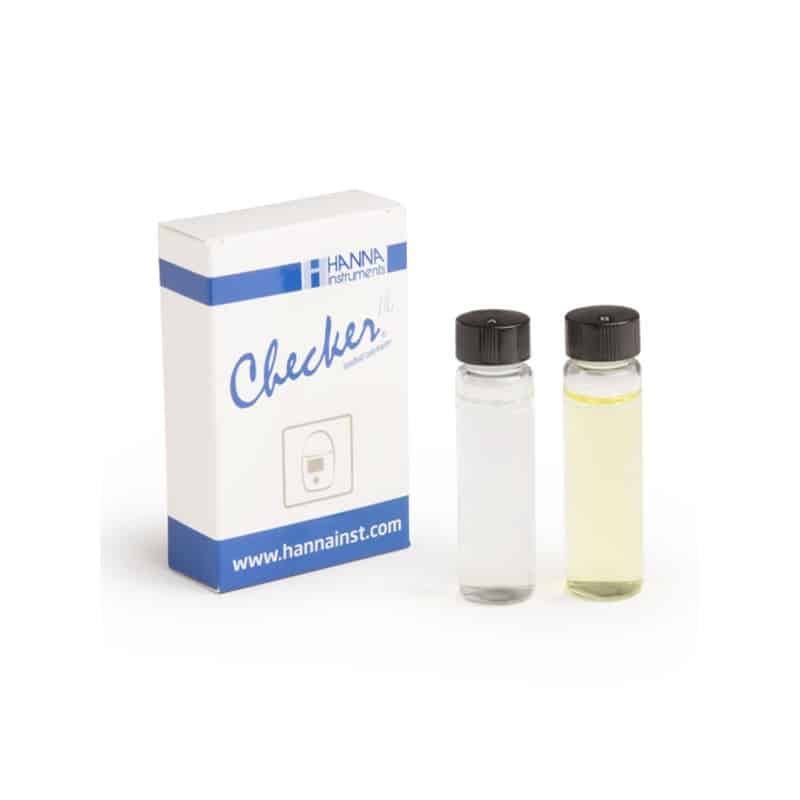
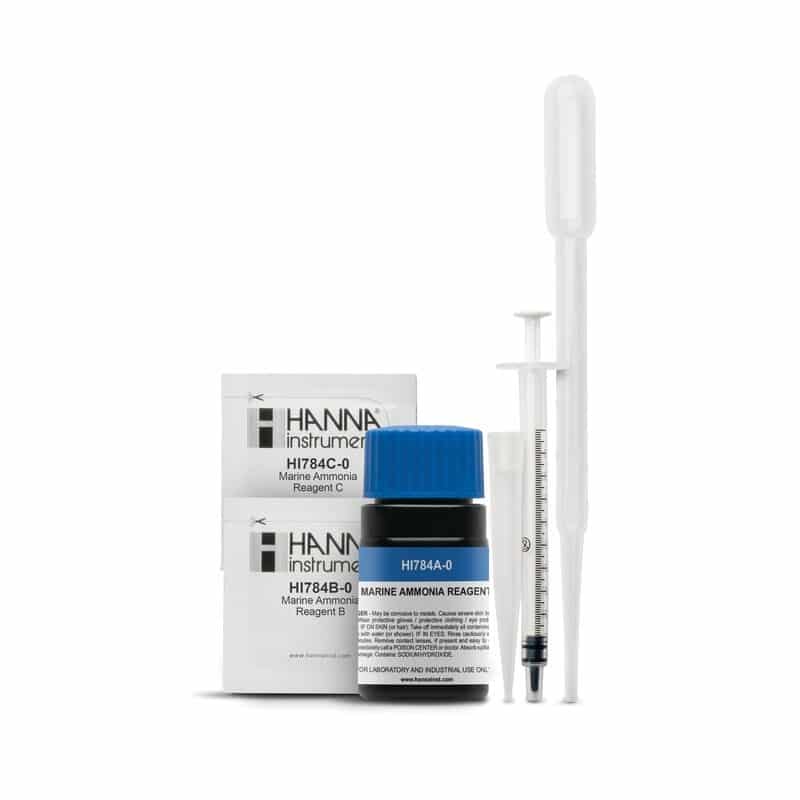
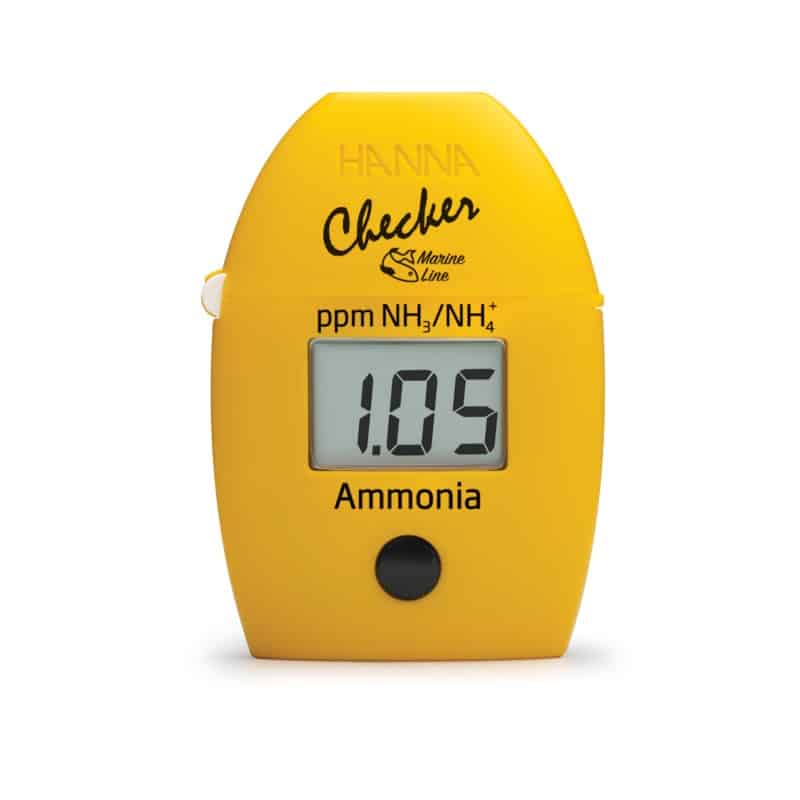
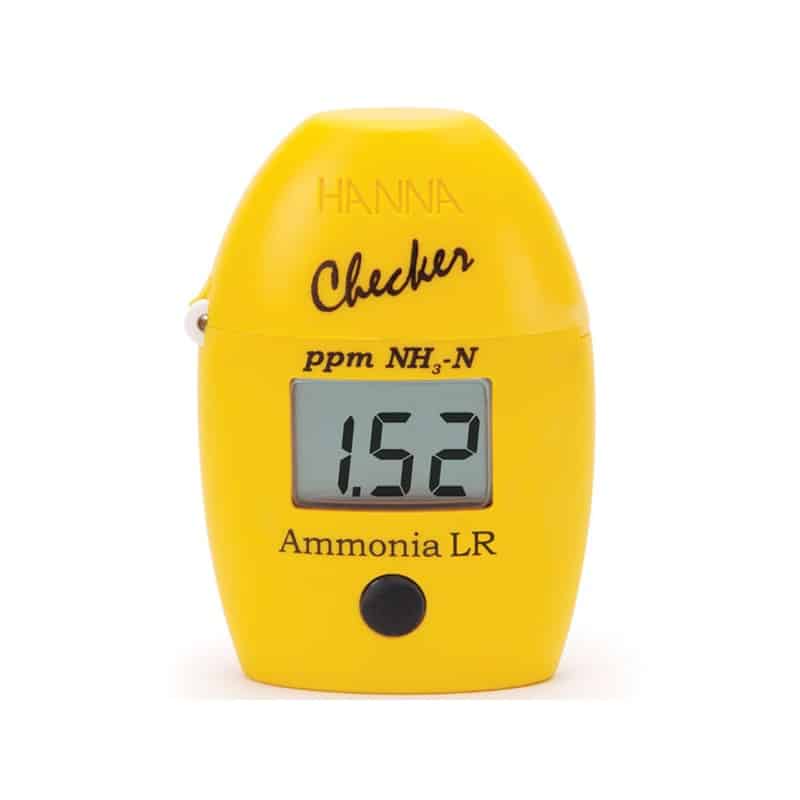
Current examples include Hanna Ammonia Medium Range Portable Photometer Kit – HI-97715C, Hanna Ammonia Low Range Photometer (0–3.00 mg/L) – HI-97700, Hanna Ammonia Checker Calibration Check Set (0.00 & 1.00 ppm) for HI700 – HI-700-11, Hanna Ammonia Reagents (25 Tests) for HI700 Checker – HI700-25 and Hanna HI-700 Ammonia Low Range Checker.
Any unexpected ammonia in a stocked pond or aquarium deserves immediate confirmation, strong aeration and a check of filtration and recent feeding. Do not wait for fish symptoms.
Need to compare the wider range? Return to Hanna Instruments for the surrounding product family.
Ammonia Testing Guide
The word ammonia can describe different reported values
Two results with the same number may not be equivalent if one is expressed as nitrogen and another as the complete ion or combined ammonia species.
pH and temperature change toxicity context
A total-ammonia result should be interpreted with current pH, temperature, species sensitivity and the method documentation.
A rising trend needs system investigation
Check feeding, stocking, dead organic material, biological filtration, water flow and recent treatments rather than relying on a single isolated test.
Related water-care categories for Ammonia: Water testing & purifiers · Hanna Instruments · Seneye · Water purifiers · Dechlorinator units · Pond treatments
Ammonia Frequently Asked Questions
These Ammonia answers cover the recurring buying and testing questions we encounter. The exact instrument, reagent and application instructions still take priority.
What is total ammonia nitrogen?
TAN is a reporting convention for the combined ammonia species expressed as nitrogen. Confirm the exact method before comparing it with NH3, NH4 or total-ammonia results.
Why do pH and temperature matter when testing ammonia?
They affect the proportion present as un-ionised NH3, so the same total result can represent a different biological risk under different conditions.
Can a marine ammonia reagent be used for pond water?
Only if the instrument and method documentation explicitly covers that sample type.
What should I check after an unexpected ammonia reading?
Repeat with a fresh sample, verify reagent and method, then assess filtration, feeding, stocking, flow and any recent system changes.
How do I choose the right Ammonia product?
For Ammonia, define the sample type, expected concentration, reporting unit and confidence required before comparing compatible instruments, reagents and standards.
Why does the measurement range matter?
When testing Ammonia, a result outside the method range may be invalid, while an unnecessarily broad range can hide useful detail at low concentrations.
Why must I record the unit with a water-test result?
A Ammonia value is meaningful only with its unit, reporting form and method; similar-looking numbers can otherwise describe different results.
How can I improve repeatability when using Ammonia?
For repeatable Ammonia results, use a representative sample, clean equipment, accurate volume and consistent timing, and keep optical cells free from fingerprints and bubbles.
What should I do if a water-test result looks wrong?
If a Ammonia result looks wrong, repeat a fresh sample, confirm the method and range, inspect the reagents and validate with a suitable standard or independent method where needed.
How should water-test reagents and standards be stored?
Store Ammonia reagents and standards sealed, labelled and within the stated temperature and expiry limits, and protect them from contamination.
Can Ammonia prove water is safe to drink?
No. A Ammonia field test covers defined parameters only and cannot establish overall drinking-water or microbiological safety.
What details should I record with a test result?
With a Ammonia result, record the date, time, sampling point, temperature where relevant, instrument, method, chemical form, unit and recent treatment or maintenance.
