Filter by Brand

Koi Pond Monitors & pH Controllers

Continuous pond monitoring supported by maintained probes and sensible safeguards

A pond monitor can reveal trends and rapid changes that occasional manual tests may miss. A controller may also switch compatible dosing or treatment equipment, but its decisions are only as reliable as the probe, calibration and installation.

Compare measured parameters, resolution, probe type, temperature compensation, calibration points, alarm handling, logging and output ratings. Any automatic dosing arrangement needs suitable limits, isolation and independent checks.

Choose monitoring by parameter, probe care and control risk

  • Define which parameters require continuous monitoring.
  • Check probe calibration, storage and replacement needs.
  • Use alarms as early warnings, not proof of cause.
  • Confirm controller output and equipment compatibility.
  • Provide safe dosing limits and manual verification.

Our practical view: Continuous monitors and pH controllers become part of the life-support system. We plan probe position, calibration, dosing safety and alarms before treating installation as complete.

Choosing Koi Pond Monitors & pH Controllers from a measured water result

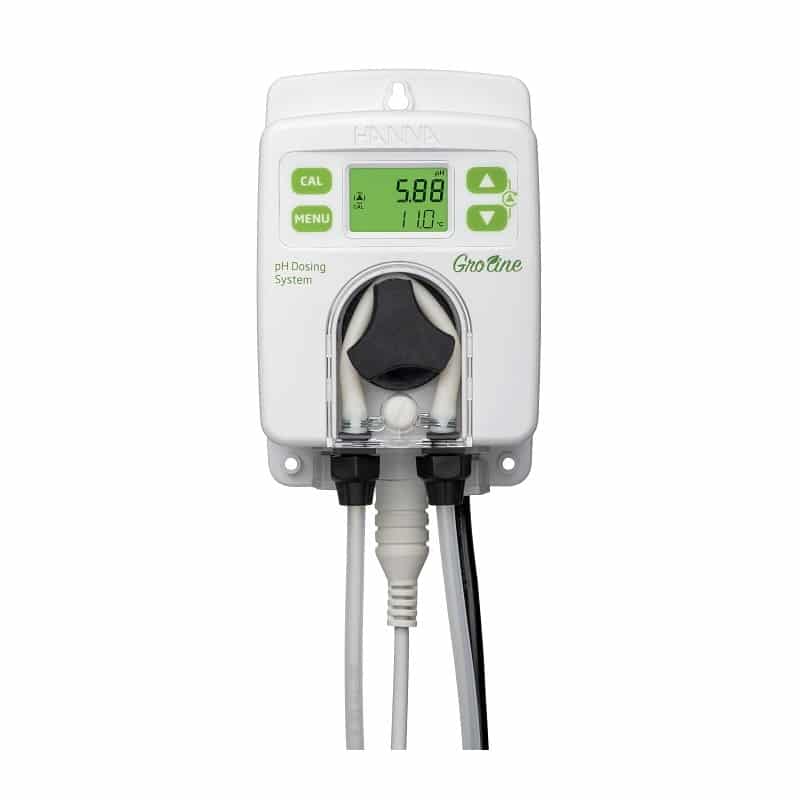
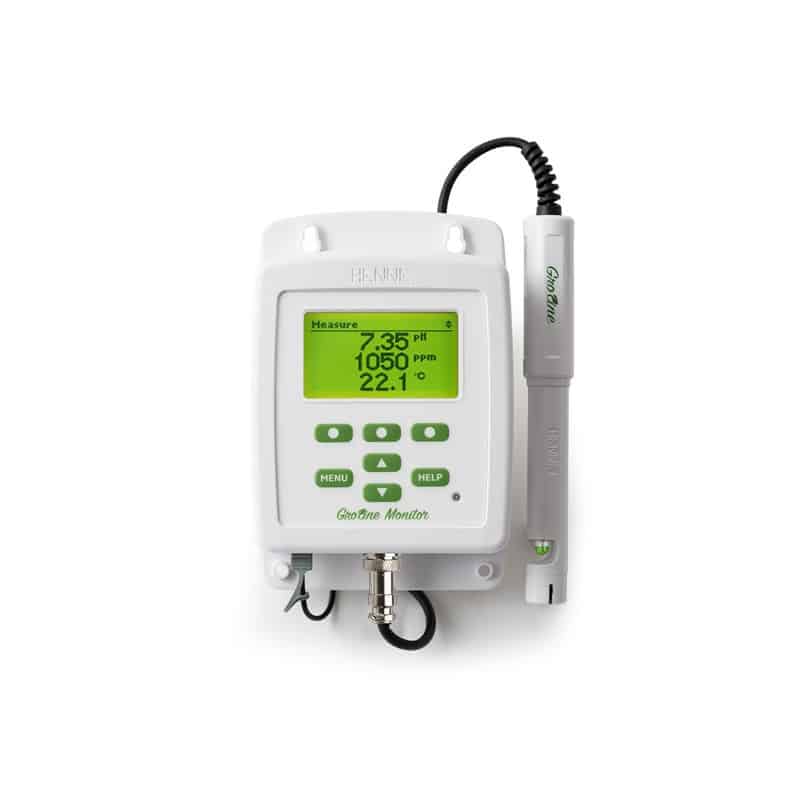
Koi-pond monitors and pH controllers include Hanna systems for continuous pH, conductivity/TDS and temperature measurement, with selected dosing control. A controller does not remove the need for independent checks. Probes drift, foul and eventually wear. Dosing outputs need maximum limits, secure chemical storage and enough water movement to prevent a concentrated slug reaching fish.

What to check before ordering

  • Choose parameters and probe ranges appropriate to freshwater ponds.
  • Install probes where representative water is always flowing.
  • Set calibration, cleaning and independent-verification schedules.

Products you can compare in this section

Current examples include Hanna GroLine pH Dosing System with pH/Temperature Probe – HI981412-00, Hanna GroLine Monitor for pH and EC/TDS & Temperature – HI981420.

Start with monitoring and logging before enabling automatic dosing. That lets you understand normal daily movement and prove the sensor is trustworthy.

Need to compare the wider range? Return to Hanna Instruments for the surrounding product family.

Koi Pond Monitors & pH Controllers Testing Guide

A stable display can still be wrong

Probe drift, fouling, drying, electrical interference and exhausted standards can create plausible but inaccurate readings.

Trend data is often more useful than one number

Review daily patterns alongside feeding, weather, aeration and maintenance to understand change.

Automation needs fail-safe design

Limit dosing capacity, use alarms and independently verify readings before allowing a controller to make large corrections.

Related water-care categories for Koi Pond Monitors & pH Controllers: Water testing & purifiers · Hanna Instruments · Seneye · Water purifiers · Dechlorinator units · Pond treatments

Koi Pond Monitors & pH Controllers Frequently Asked Questions

These Koi Pond Monitors & pH Controllers answers cover the recurring buying and testing questions we encounter. The exact instrument, reagent and application instructions still take priority.

What can a koi pond monitor measure?

Depending on the model it may measure pH, temperature, conductivity, dissolved oxygen or other defined parameters. Check the exact sensor set.

Does a pH controller adjust pond pH automatically?

Some controllers can switch compatible dosing equipment, but safe operation requires correct calibration, output matching, dosing limits and independent checks.

How do I know if a pond probe has drifted?

Compare it with fresh standards or an independent trusted method and inspect calibration slope, response time and condition where available.

Can a monitor replace manual water testing?

No. Independent manual checks help validate probes and cover parameters the monitor does not measure.

How do I choose the right Koi Pond Monitors & pH Controllers product?

For Koi Pond Monitors & pH Controllers, define the sample type, expected concentration, reporting unit and confidence required before comparing compatible instruments, reagents and standards.

Why does the measurement range matter?

When testing Koi Pond Monitors & pH Controllers, a result outside the method range may be invalid, while an unnecessarily broad range can hide useful detail at low concentrations.

Why must I record the unit with a water-test result?

A Koi Pond Monitors & pH Controllers value is meaningful only with its unit, reporting form and method; similar-looking numbers can otherwise describe different results.

How can I improve repeatability when using Koi Pond Monitors & pH Controllers?

For repeatable Koi Pond Monitors & pH Controllers results, use a representative sample, clean equipment, accurate volume and consistent timing, and keep optical cells free from fingerprints and bubbles.

What should I do if a water-test result looks wrong?

If a Koi Pond Monitors & pH Controllers result looks wrong, repeat a fresh sample, confirm the method and range, inspect the reagents and validate with a suitable standard or independent method where needed.

How should water-test reagents and standards be stored?

Store Koi Pond Monitors & pH Controllers reagents and standards sealed, labelled and within the stated temperature and expiry limits, and protect them from contamination.

Can Koi Pond Monitors & pH Controllers prove water is safe to drink?

No. A Koi Pond Monitors & pH Controllers field test covers defined parameters only and cannot establish overall drinking-water or microbiological safety.

What details should I record with a test result?

With a Koi Pond Monitors & pH Controllers result, record the date, time, sampling point, temperature where relevant, instrument, method, chemical form, unit and recent treatment or maintenance.