






Pond Cleaning in Sussex
Professional Pond Cleaning Services Across East and West Sussex
Looking for pond cleaning in Sussex? We assess selected projects across East and West Sussex, checking the pond, access and travel before confirming a visit. Send us photographs and your postcode so we can discuss whether the proposed work is a good fit.
Our work covers garden, koi and wildlife ponds, from removing settled waste to caring for plants and filtration. We can also discuss ongoing maintenance and wider pond services, with the work agreed around what your pond actually needs.
Give your pond the right kind of attention
A change in water colour does not tell the whole story. We consider waste, fish, planting and equipment together, so a pond clean addresses the relevant problems and leaves you with a practical plan for its care.
Deal with waste at its source
Leaves, dead plants and food can collect where circulation is weak. Removing excessive deposits reduces the material breaking down in the water.
Look beyond cloudy water
Sediment, algae and equipment limitations can have different remedies. Photographs and a history of the problem help us distinguish them.
Consider the whole pond system
Fish handling, aeration and a filter restart affect each other. We plan them together and retain useful biological media where its condition allows.
Make future care manageable
An awkward filter or inaccessible planting can make routine work difficult. We discuss these details, including whether a large pond or lake maintenance assessment is more appropriate.
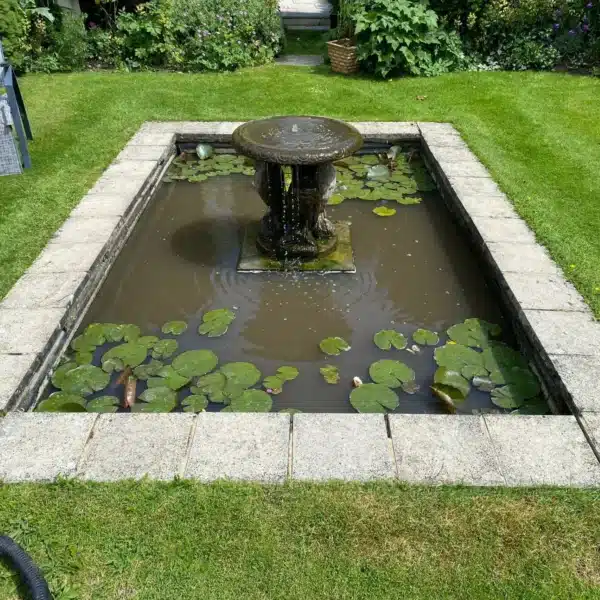
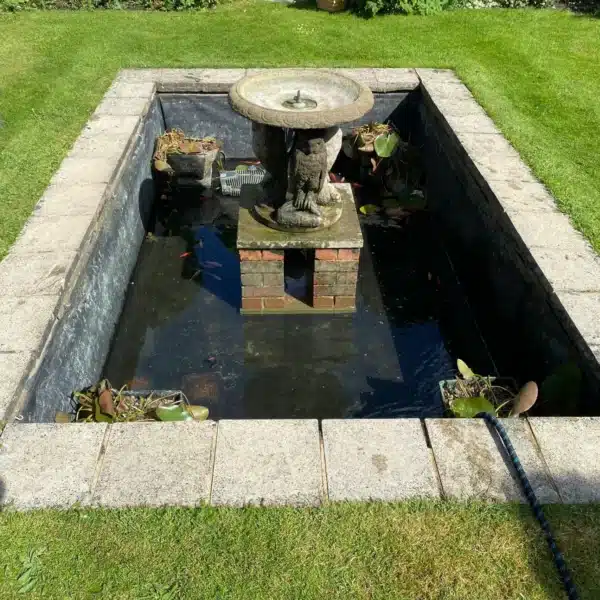
What is included in our pond cleaning service
After assessing the pond, we agree which tasks are required and how they will be carried out. Depending on the job, this can include:
Preparing for fish care
We check the fish requirements and any concerns you report. If the work needs them moved, aerated temporary holding and suitable working space are planned first.
Removing water and deposits
The extent of draining depends on the waste and access required. Surface cleaning is matched to the liner or fibreglass, avoiding unsuitable pressure or unnecessary disturbance.
Servicing the filtration
We clean and check accessible pumps, filter components and pipework as agreed. If the system needs more than servicing, we explain possible pump and filtration improvements.
Managing aquatic plants
Useful planting is considered alongside growth that needs thinning, trimming or repositioning. This helps reduce future decaying material without treating all vegetation as waste.
Refilling the pond
We plan water supply and conditioning, including dechlorination where required. Any biological support depends on the filtration and the work undertaken.
Completing the visit
We check equipment operation and suitable water conditions before returning held fish. Aftercare advice explains what to watch and how to manage the pond after the work.
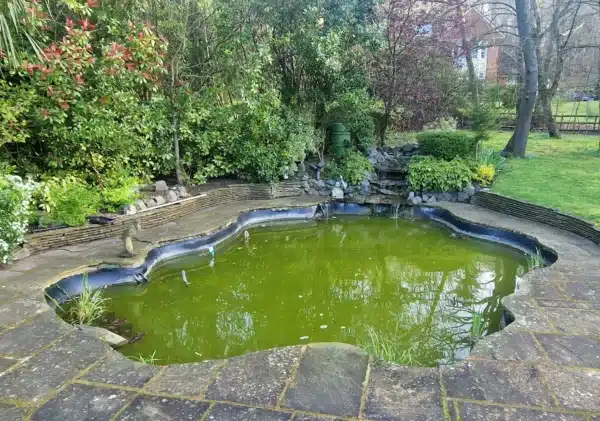
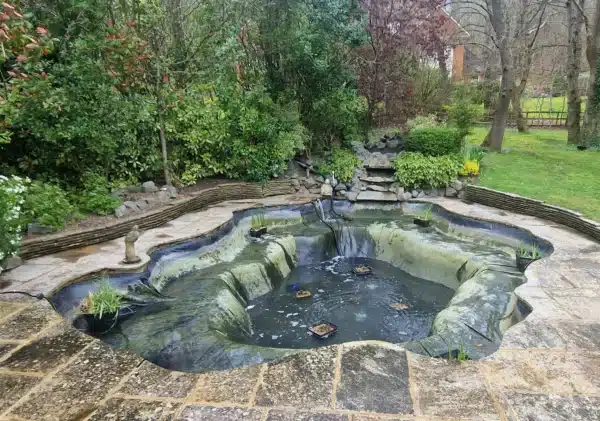
Other pond work we can help with
If another problem is contributing to the pond’s condition, we can discuss it alongside the cleaning enquiry:
- Water loss, liner assessment and fibreglass installation where appropriate
- Pump upgrades and suitable pond filters
- Managing algae and blanketweed
- Cleaning appropriate pond edges and surrounding surfaces
Why ask That Pond Guy about your Sussex pond?
We start by understanding the job before arranging the journey. Clear information helps us plan the right work, equipment and fish care, and explain when a different service or a more local visit may offer better value.
- An individual assessment before booking
- A scope that distinguishes cleaning from repairs
- Practical plans for holding, refill and access
- Advice on care between visits
We also design and build koi ponds, so we consider structure and filtration as well as cleaning. Read customer reviews and browse our recent work on Instagram.
Pond cleaning starts from £250 + VAT. Sussex projects are quoted individually, with the work, pond size, condition, fish, access and travel included in the assessment.
Pond cleaning across Sussex
We welcome enquiries from Brighton, Hove, Worthing, Lewes, Eastbourne, Haywards Heath, Crawley, Horsham, Bognor Regis, Chichester, Littlehampton and surrounding towns and villages. Coverage is confirmed for the particular project; a postcode alone is not a booking confirmation.
Our other county pages cover Kent, London, Surrey and Essex. For a Sussex project, send photographs and the location so we can advise on suitability and arrangements.
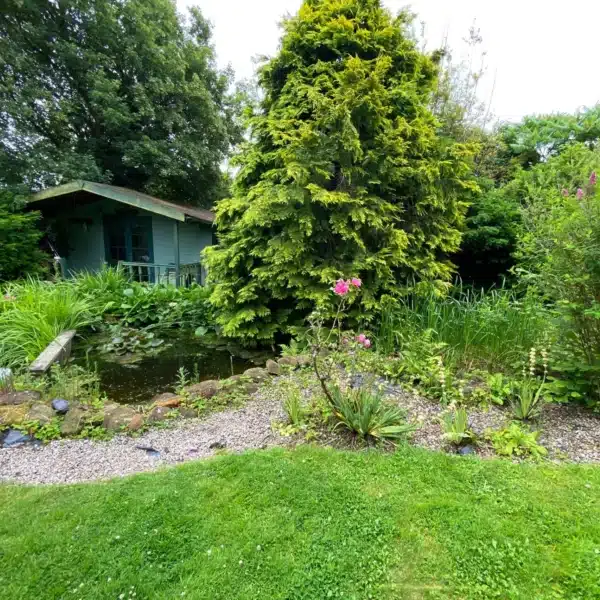
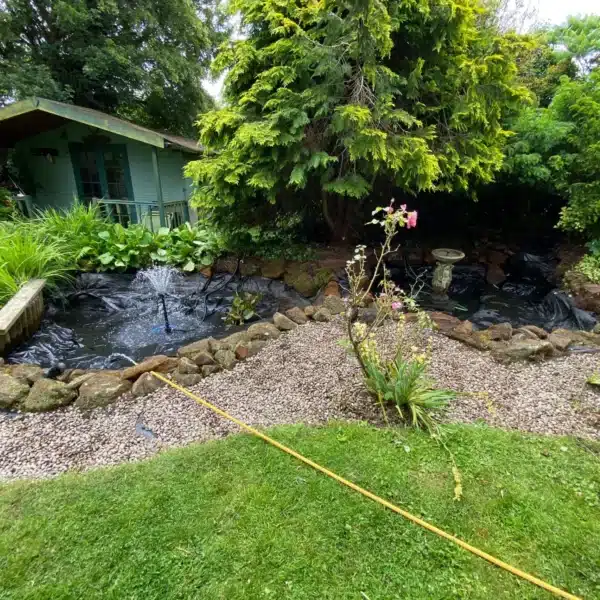
Pond cleaning projects in Sussex and nearby
See our pond cleans in East Dean, East Sussex, and Billingshurst, West Sussex, with photographs and feedback from the customers. We have also included our cleaning and winter maintenance work in Horley, Surrey, and a pond clean in Sevenoaks Weald, Kent, as examples from neighbouring counties.
Is cleaning the right next step?
Describe what you see now and how it has changed. A neglected pond, a plant management problem and a failing filter need different plans, even when all three affect the appearance of the water.
- A substantial cleanDeep settled waste may need a larger intervention, with access, temporary holding and refill considered in advance.
- Regular careDebris removal, plant control and routine servicing can help a pond that is otherwise stable.
- Koi or wildlife careThe inhabitants and features to retain affect both the method and the timing.
- Equipment attentionPoor flow or recurring green water can require pump, UV or filter investigation alongside cleaning.
Help us plan the visit before we travel
A short video from the parking position to the pond is useful. Show gates, slopes, steps, soft ground and narrow passages, along with water supply and space for temporary fish holding. Mention access restrictions and disposal arrangements so these can be considered when assessing the visit.
Send pond dimensions and depth where known, a full pond view, close photographs of the water and base, fish details and equipment labels. Explain previous attempts to resolve the problem and whether you want a single clean or ongoing support. You can compare the full pond cleaning service before enquiring.
Pond cleaning in Sussex: your questions
How frequently does a pond need professional cleaning?
The amount of waste and the way the pond is managed matter more than a fixed calendar interval. Fish, feeding, planting and equipment all influence the work. We can discuss routine attention and when a larger clean is justified.
How can I recognise a problem that needs attention?
Look for increasing deposits, frequent blockages, unusual smells or persistent changes in water colour. Fish spending prolonged periods at the surface can signal an urgent oxygen or water quality problem; explain that promptly when asking for help.
Why does accumulated sludge matter?
As organic material decomposes it can add nutrients and consume oxygen. Excessive deposits can therefore affect more than appearance. Cleaning should be considered together with circulation, filtration and the pond’s stocking.
When should I enquire about a Sussex pond clean?
Enquire with current photographs when you notice a problem or want to plan seasonal work. Spring and autumn are common choices, but we consider conditions and the required tasks before recommending a date.
Do local conditions change the cleaning approach?
They can, but we need details of the actual pond. Tell us about windblown debris, runoff, surrounding trees or exposed access where relevant. A coastal address or rural postcode does not establish what cleaning is needed.
Can you clean a pond that has fish?
Yes. We assess the fish and the planned disturbance before deciding on the method. Where temporary holding is needed, aeration and suitable water are part of the arrangements, with fish returned when pond conditions allow.
Will every clean involve removing the fish?
Not necessarily. Light maintenance may be possible with fish remaining in the pond. Substantial draining or work that disturbs large deposits may require holding. Include fish numbers and approximate sizes with the enquiry.
What helps reduce stress for the fish?
Careful planning of handling, holding, aeration and water conditions is important. Tell us about any existing fish concerns so the visit can be assessed accordingly, rather than treating it as a routine clean.
Does cleaning affect useful bacteria?
It can. Biological media and pond surfaces support useful bacteria, so unnecessary sterilisation is avoided. The aim is to remove excessive waste while retaining useful biology where possible and planning the restart appropriately.
Will you clean the filter as well?
Filter servicing can form part of the agreed work. Mechanical blockages and biological media need different treatment, so we consider the installed system rather than simply washing every component in the same way.
What if green water returns after cleaning?
The UV, filter, circulation, light and nutrient conditions may need assessment. Explain when the green water returned and send equipment details. Repeating a full clean may not address the underlying reason.
Is a summer clean possible?
Sometimes. Warm water has less capacity to hold oxygen, which affects how fish and disturbance are managed. A limited or staged approach may be preferable; extreme heat can make substantial work unsuitable.
Can work be carried out in winter?
We consider water temperature, ice risk, fish and the problem that needs attention. Some limited tasks may be possible, while a major clean may be better postponed until conditions are more suitable.
Which season is safest for the pond?
There is no single answer for all ponds. Avoiding extremes of heat and cold helps, but wildlife activity, fish and the extent of the proposed work are also important. Timing is discussed with those factors in mind.
Do you take on wildlife pond cleaning?
We assess suitable wildlife pond projects. Work is selective, retaining valuable planting and margins and considering seasonal activity. Tell us what wildlife and habitat are present before the method is agreed.
What can cause an unpleasant smell?
Decaying deposits and areas with limited oxygen or circulation can be involved. Describe when the smell appears and whether equipment has stopped working, as the cause may need attention alongside waste removal.
Can a pond be cleaned if its equipment is faulty?
It may be possible, with repair or replacement considered as part of the plan. Send pump and filter photographs before booking so we can assess whether the system can be restarted properly after cleaning.
Can I enquire about a koi pond in Sussex?
Yes. Show the pond, drains, pipework and filter area, and include fish and feeding details. The system and the work required help determine whether the project and travel are suitable.
How long should I allow for the work?
A small straightforward clean may take a few hours; larger or heavily neglected ponds can need most of a day or a more extensive plan. Access, holding and refill time all affect the estimate we discuss.
How is removed waste dealt with?
We agree the waste arrangements before the visit. Let us know about disposal access and whether suitable plant material can remain for composting, so the quotation reflects the actual handling required.
How disruptive is a pond clean?
Handling water, sludge and equipment can be messy. We discuss working space and vulnerable areas beforehand and plan how to limit disruption, while being clear about the practical demands of the job.
What if access is long, steep or across soft ground?
Show the whole route and any restrictions in photographs or a video. Equipment choice, time and feasibility depend on those details, so access is checked before confirming a travelling visit.
What will pond cleaning in Sussex cost?
Cleaning starts from £250 + VAT, with an individual quotation for the proposed job. Travel, size, deposits, fish, filtration and access affect the price. Sending useful information first helps us assess whether the visit offers good value.
Can you provide recurring maintenance?
We can discuss selected ongoing arrangements based on location and scope. Explain the tasks you need help with and their frequency so we can assess whether regular visits are practical.
How do I request an assessment?
Send the postcode, clear pond and equipment photographs, approximate dimensions, fish information and the access route. Tell us what has changed and the result you are looking for; we can then discuss the next step.
Contact Us
Please get in touch to discuss your pond needs and we will get back to you as soon as possible.
matt@thatpondguy.co.uk
07368 372129
