







Pond Drum Filters – Frequently Asked Questions
Below is a comprehensive guide to drum filters for koi ponds. It explains how drum filters work, how to size them correctly, installation options, maintenance requirements and common mistakes to avoid.
Whether you are upgrading an existing filtration system or planning a new koi pond build, these questions cover the most important things pond owners need to know about drum filtration.
What is a drum filter for a koi pond?
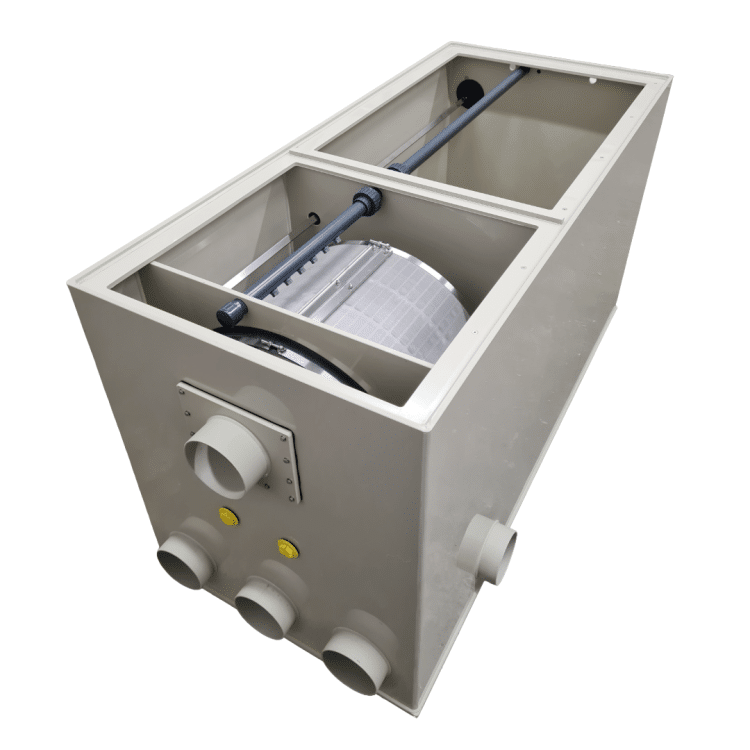
A drum filter is an automatic mechanical filtration system that removes solid waste from pond water before it can break down.
Water passes through a fine stainless steel mesh screen inside a rotating drum. When debris restricts flow, a float switch activates an automatic cleaning cycle and high pressure spray nozzles flush waste to drain.
Because the process is automated, the filter maintains consistent mechanical performance with minimal manual intervention.
How does a drum filter improve water quality?
Drum filters remove fish waste, uneaten food and organic debris immediately. This prevents solid waste from decomposing inside the filtration system.
As a result:
Ammonia spikes are reduced
Organic load decreases
Water clarity improves
Biological filters remain cleaner
Koi health improves
Mechanical waste removal is the first and most important stage in high performance koi pond filtration.
Do drum filters remove ammonia and nitrite?
No. Drum filters provide mechanical filtration only. They remove solid waste but do not process dissolved toxins.
Ammonia and nitrite are processed by biological filtration, typically using moving bed filters, shower filters or biological chambers.
What micron size drum screen is best for koi ponds?
Most drum filters use screens between 30 and 120 microns.
30 micron screens provide extremely fine filtration but clean more frequently.
60 to 70 microns are considered ideal for heavily stocked koi ponds.
100 to 120 microns provide strong waste separation with fewer cleaning cycles.
The correct choice depends on fish stocking levels and desired water clarity.
What is the difference between gravity fed and pump fed drum filters?
Gravity fed drum filters sit at pond water level. Water flows directly from bottom drains into the drum filter, and the pump sits after the filter.
Pump fed drum filters sit above pond water level. A pond pump pushes water into the drum filter and clean water flows onward to biological filtration or back to the pond.
Both systems perform well when correctly designed. The choice depends on pond layout and pipework configuration.
What size drum filter do I need?
Drum filter sizing depends on several factors, not just pond volume.
Important considerations include:
Actual flow rate through the filter
Fish stocking density
Feeding intensity
Pipe diameter and plumbing design
Future expansion plans
For example, a heavily stocked 40,000 litre koi pond may require a larger drum filter than a lightly stocked 60,000 litre ornamental pond.
Can a drum filter be too big?
Slight oversizing is usually beneficial. A larger drum filter cleans less frequently and operates under lower mechanical stress.
However, the unit must still match the pump flow rate and pipework layout correctly.
Are drum filters worth the money?
For serious koi keepers, drum filters are often one of the most valuable filtration upgrades available.
Although they cost more than traditional filtration systems, drum filters:
Reduce maintenance time
Improve water stability
Protect biological filtration
Allow higher stocking levels
Maintain excellent water clarity
Over time they often prevent expensive water quality problems.
How often does a drum filter clean itself?
Cleaning frequency depends on the amount of waste entering the system.
Lightly stocked ponds may trigger only a few cleaning cycles per hour.
Heavily stocked koi ponds may trigger cleaning every few minutes during heavy feeding.
Cleaning is activated by water level restriction, not by a timer.
Do drum filters waste a lot of water?
No. Each cleaning cycle uses a short burst of water to flush debris from the screen.
Total water loss is relatively small compared with manual filter cleaning or large water changes.
Are drum filters noisy?
Modern drum filters operate quietly during normal filtration.
During a cleaning cycle you will hear a short spray sound while the screen is washed. This typically lasts only a few seconds.
How long do drum filters last?
High quality stainless steel drum filters can last well over 10 years.
Wear components such as seals, mesh panels and spray nozzles may eventually require replacement, but the main structure and drive system are designed for long term operation.
Can drum filters handle heavily stocked koi ponds?
Yes. Drum filters are specifically designed for high waste environments.
However, correct sizing is essential to ensure the system can handle the amount of waste produced by the fish.
Can I retrofit a drum filter to an existing pond?
Yes. Many pond owners upgrade existing filtration systems by installing a drum filter.
Pump fed drum filters are often the easiest option for retrofits, although gravity fed installations can also be adapted depending on pipework.
Do drum filters eliminate blanket weed?
Drum filters remove solid debris but do not directly kill blanket weed.
Blanket weed growth is typically caused by nutrients and sunlight. UV clarification and nutrient management are usually required to control algae.
Do I still need a UV clarifier with a drum filter?
In most cases, yes.
A drum filter removes solids from the water, while a UV clarifier destroys free floating algae and certain pathogens.
Many drum filter systems incorporate UV units or are designed to work with external UV clarifiers.
Do drum filters reduce nitrate levels?
No. Nitrate removal requires biological processes, water changes or specialised filtration systems.
Drum filters focus purely on mechanical waste removal.
Can drum filters be used in winter?
Yes. Drum filters operate all year round.
During colder months fish produce less waste and feeding decreases, so cleaning cycles usually occur less frequently.
What happens during a power cut?
During a power cut, the automatic cleaning system stops operating.
In gravity fed systems, water can usually continue flowing through the filter. Once power is restored the drum filter resumes normal operation automatically.
Is a drum filter better than a bead filter?
Drum filters and bead filters perform different roles.
Drum filters provide continuous automatic mechanical filtration.
Bead filters require regular backwashing to remove trapped waste.
For heavily stocked koi ponds, drum filters generally offer superior mechanical waste removal and significantly lower maintenance.
What are the most common mistakes when buying a drum filter?
Common mistakes include:
Choosing a filter based only on pond volume
Ignoring actual system flow rate
Undersizing for stocking density
Failing to plan biological filtration
Choosing the cheapest unit without considering build quality
Correct system design is far more important than brand alone.
How much does a drum filter cost?
Pricing varies depending on brand and size.
Smaller standalone drum filters typically start in the mid four figure range, while large systems designed for estate ponds or commercial installations can reach five figures.
Total system cost should also include biological filtration and installation.
How much electricity does a drum filter use?
Drum filters are relatively energy efficient.
The drive motor only runs during cleaning cycles and the wash pump operates briefly. Overall electricity consumption is low compared with circulation pumps and air pumps.
Can drum filters improve koi growth and colour?
Indirectly, yes.
Stable water conditions support better digestion, growth and colour development in koi. By removing organic waste quickly, drum filters help maintain the consistent water quality required for healthy fish.
What maintenance does a drum filter require?
Although largely automatic, regular inspection is recommended.
Typical checks include:
Inspecting spray bars
Checking float switches
Monitoring seals and bearings
Keeping waste outlets clear
Maintaining biological filtration
Routine inspection helps ensure reliable long term performance.
How do drum filters protect biological filters?
Drum filters remove solid waste before it reaches biological media.
This prevents bio media from clogging, maintains higher oxygen levels and keeps beneficial bacteria more active. As a result, the entire filtration system operates more efficiently.
Are drum filters suitable for swimming ponds?
Yes. Large drum filters are often used in natural swimming ponds where fine mechanical separation is essential for maintaining water clarity.
Can I install a drum filter myself?
Experienced pond builders and advanced hobbyists may install drum filters themselves.
However, professional installation ensures correct pipe sizing, electrical safety and proper integration with biological filtration systems.
Still Need Advice?
Choosing the correct drum filter involves more than simply matching pond litres.
If you are unsure which drum filter is best for your pond, contact us with your pond size, pipework layout and stocking level. We can recommend a filtration system designed for long term reliability and stable water quality.
What is the best drum filter for a koi pond?
The best drum filter for a koi pond depends on several factors including pond size, fish stocking density, pipework layout and the type of biological filtration being used.
For smaller ponds, compact drum filters or combi drum filters may be sufficient. For larger or heavily stocked ponds, higher capacity drum filters with greater flow rates are typically required.
Choosing a filter that can comfortably handle the pond’s waste load is far more important than choosing a specific brand.
Why are drum filters considered the best mechanical filtration?
Drum filters are considered the most effective mechanical filtration because they remove solid waste automatically and continuously.
Unlike traditional filter systems that trap waste inside media, drum filters separate solids immediately and flush them out of the system. This prevents decomposition inside the filter and keeps the biological stage much cleaner.
How much flow can a drum filter handle?
Flow capacity depends on the model and design of the drum filter.
Smaller units may handle around 20,000 to 30,000 litres per hour, while large professional drum filters can process well over 100,000 litres per hour.
It is important that the drum filter matches the pump’s flow rate to maintain efficient filtration.
How many bottom drains can connect to a drum filter?
Many drum filters support multiple bottom drains depending on their inlet configuration.
Larger systems may support two or more bottom drains, allowing waste to be collected efficiently from across the pond floor.
Correct pipe sizing and layout are essential for optimal performance.
Can drum filters remove fine particles?
Yes. Drum filters are designed specifically to remove very fine suspended particles.
Depending on the screen size used, drum filters can remove particles as small as 30 microns. This greatly improves water clarity and prevents debris from reaching biological filters.
Do drum filters remove fish food waste?
Yes. Uneaten food is one of the main types of waste removed by drum filters.
Because the filtration system removes food particles quickly, it prevents them from decomposing and affecting water quality.
Can drum filters reduce algae problems?
Drum filters help reduce nutrients in the water by removing organic waste before it breaks down.
While they do not directly kill algae, reducing the organic load in the pond can help limit conditions that promote algae growth.
How quickly does a drum filter clean itself?
Cleaning cycles are very short and typically last between 5 and 20 seconds.
During this time the drum rotates and spray jets wash debris off the screen.
How often does the drum rotate?
The drum rotates only during cleaning cycles.
The rotation allows the spray system to clean the entire screen surface before the system returns to normal filtration.
What happens to the waste removed by a drum filter?
Waste removed during cleaning cycles is flushed out through a discharge outlet.
This waste water is usually directed to a drain, soakaway or waste pipe.
Can drum filters be used on large koi ponds?
Yes. Large drum filters are commonly used on ponds exceeding 100,000 litres.
High flow models are capable of processing large volumes of water while maintaining excellent mechanical separation.
Are drum filters suitable for commercial koi facilities?
Yes. Many commercial koi farms and specialist koi dealers use drum filtration systems.
Their ability to remove waste automatically makes them ideal for high stocking densities and intensive feeding regimes.
Can drum filters handle heavy feeding schedules?
Yes. Drum filters are particularly effective in ponds where fish are fed frequently.
Because they remove waste continuously, they help prevent excessive organic build up during heavy feeding periods.
What materials are drum filters made from?
Most high quality drum filters are constructed using stainless steel drums combined with durable plastic or composite housings.
Stainless steel screens provide excellent durability and corrosion resistance.
Do drum filters rust?
The drum screens are typically made from stainless steel which is highly resistant to corrosion.
With normal maintenance, rust is rarely an issue.
Can leaves clog a drum filter?
Large debris such as leaves may occasionally collect on the screen but the automatic cleaning cycle will normally remove them.
Pond skimmers can help prevent large debris from entering the filtration system.
Can drum filters work with skimmers?
Yes. Many filtration systems combine bottom drains and skimmers feeding into the same drum filter.
This allows both floating debris and sinking waste to be removed efficiently.
Can drum filters be installed underground?
Yes. Gravity fed drum filters are often installed in filter bays at pond water level, which may be below ground.
This allows water to flow naturally from bottom drains into the filter.
Can drum filters be installed in sheds or filter houses?
Yes. Many pond owners install filtration systems inside dedicated filter houses to protect equipment from weather and improve accessibility.
Do drum filters reduce pond cleaning?
Yes. One of the biggest advantages of drum filtration is reduced maintenance.
Because the system removes waste automatically, manual filter cleaning is greatly reduced.
Can drum filters improve pond clarity quickly?
Yes. Once installed and running properly, drum filters often improve water clarity very quickly because they remove suspended solids immediately.
Can drum filters be used with moving bed filters?
Yes. Moving bed filters are one of the most common biological stages paired with drum filtration.
The drum removes solids while the moving bed processes ammonia and nitrite.
Can drum filters be used with shower filters?
Yes. Shower filters are often paired with drum filters in high performance koi filtration systems.
This combination provides excellent mechanical separation and strong biological processing.
Can drum filters support high fish stocking levels?
Yes. When properly sized, drum filters can support heavily stocked koi ponds.
However, biological filtration must also be sufficient to process the ammonia produced by the fish.
Do drum filters require regular servicing?
Drum filters require occasional inspection but far less maintenance than traditional filtration systems.
Routine checks help ensure reliable operation.
How do drum filters protect pond pumps?
By removing solid debris before water reaches the pump, drum filters prevent particles from damaging pump impellers.
This helps extend the lifespan of pond pumps.
Can drum filters increase oxygen levels?
Indirectly, yes.
Because drum filters keep biological media cleaner, oxygen levels within biological filtration systems remain higher.
Do drum filters work with air pumps and aeration systems?
Yes. Drum filters are often used alongside aeration systems which support biological filtration and improve oxygen levels in the pond.
Are drum filters suitable for wildlife ponds?
Drum filters are generally designed for koi ponds or heavily stocked fish ponds.
Wildlife ponds usually have much lower waste loads and typically do not require drum filtration.
Can drum filters help stabilise water parameters?
Yes. By removing organic waste quickly, drum filters help maintain stable water chemistry and reduce fluctuations in ammonia levels.
Do drum filters help reduce organic sludge?
Yes. Because solid waste is removed immediately, much less sludge accumulates in the filtration system or pond.
Can drum filters be upgraded later?
Yes. Many filtration systems allow drum filters to be added as an upgrade to improve mechanical filtration.
Can drum filters be used with heated ponds?
Yes. Heated koi ponds often produce more waste due to increased feeding, making drum filtration particularly beneficial.
Do drum filters increase pond turnover rate?
Drum filters themselves do not increase flow, but they allow higher flow filtration systems to operate efficiently by preventing clogging.
Why are drum filters popular with serious koi keepers?
Drum filters have become popular because they offer:
automatic waste removal
excellent mechanical filtration
reduced maintenance
improved water clarity
better biological filter performance
These advantages make them ideal for high quality koi ponds.
Are drum filters the future of pond filtration?
Many pond professionals consider drum filtration to be the modern standard for mechanical filtration in koi ponds.
Their ability to remove solids automatically while maintaining stable water quality has made them increasingly popular among pond builders and koi hobbyists.
What is the best drum filter for a koi pond in the UK?
The best drum filter depends on pond size, fish stocking levels and the overall filtration system design.
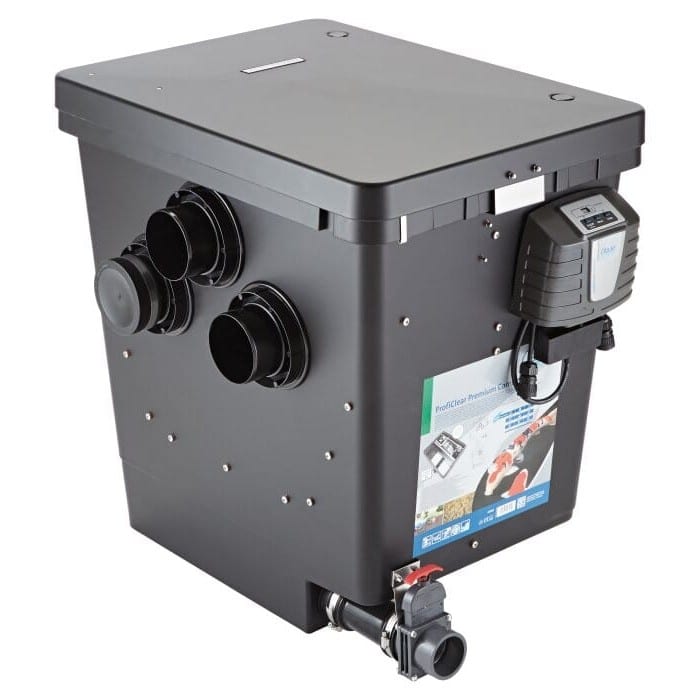
For many koi ponds in the UK, high quality drum filters from manufacturers such as Burtons Aquatics, Oase and Filtreau are commonly used. These brands offer reliable mechanical filtration and models suitable for ponds ranging from small private gardens to large estate ponds.
The most important factor is selecting a drum filter with sufficient flow capacity and waste handling capability for the pond.
What is the difference between a drum filter and a bead filter?
Drum filters and bead filters serve different roles in pond filtration.
A drum filter removes solid waste automatically using a rotating screen and cleaning cycle. A bead filter traps waste inside plastic beads and must be backwashed regularly to remove it.
For heavily stocked koi ponds, drum filters usually provide more efficient mechanical waste removal and require less manual maintenance.
What is the difference between a drum filter and a multi bay filter?
Multi bay filters rely on brushes and filter media to trap debris.
Over time this waste accumulates inside the media and requires frequent cleaning.
Drum filters remove solid waste immediately and flush it out of the system automatically. This keeps the filtration system cleaner and significantly reduces maintenance.
Do drum filters replace traditional pond filters?
In many modern koi pond systems, drum filters replace the mechanical stage of traditional filtration systems.
However, biological filtration is still required to process ammonia and nitrite. Drum filters are usually paired with moving bed filters, shower filters or biological chambers.
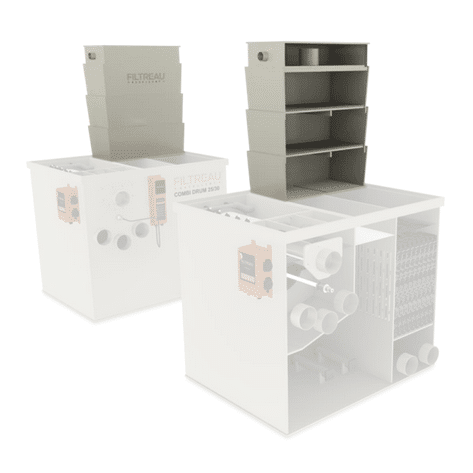
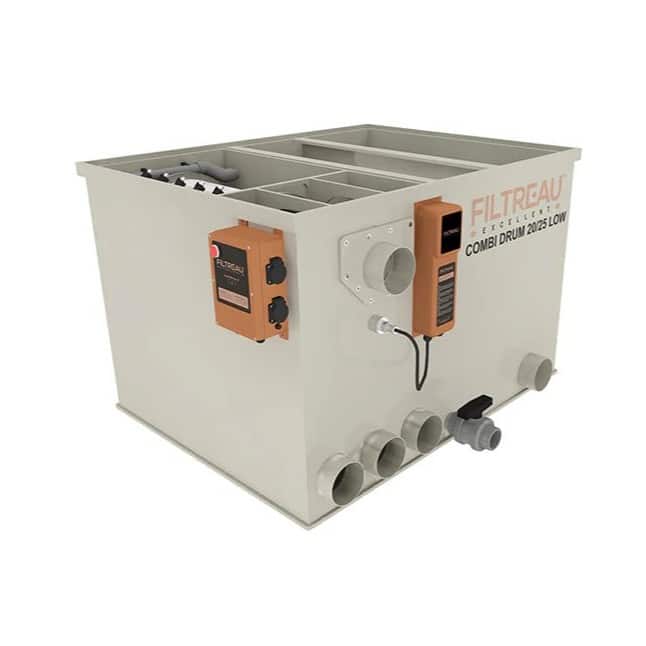
What is a combi drum filter?
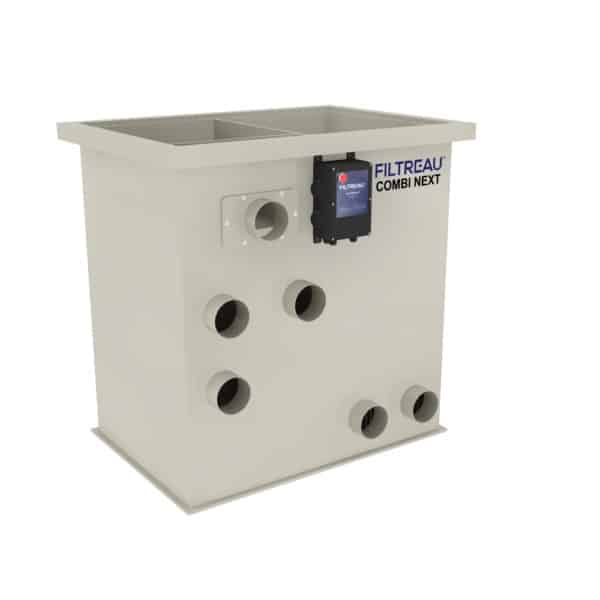
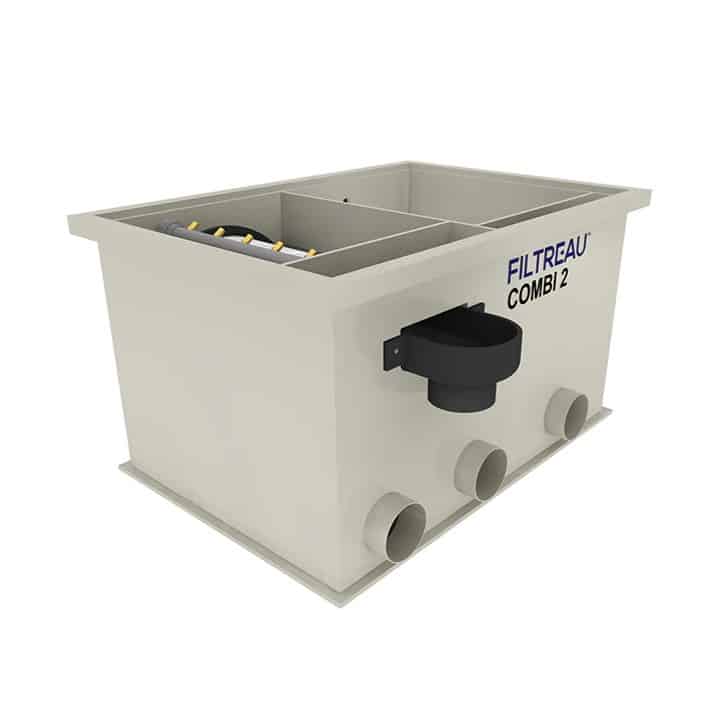
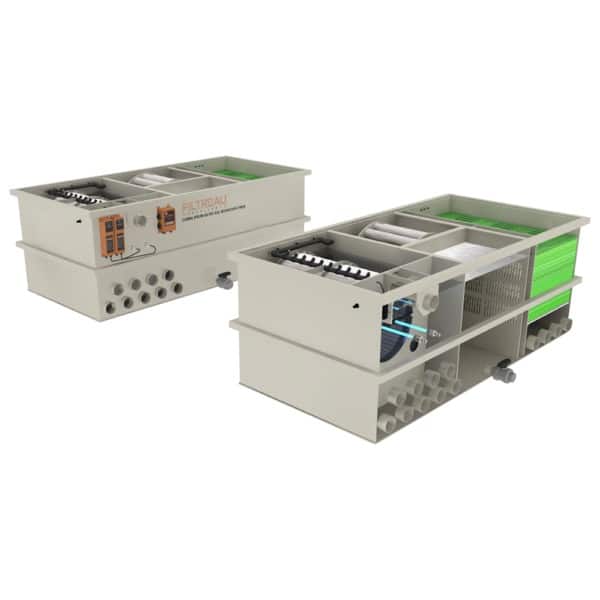
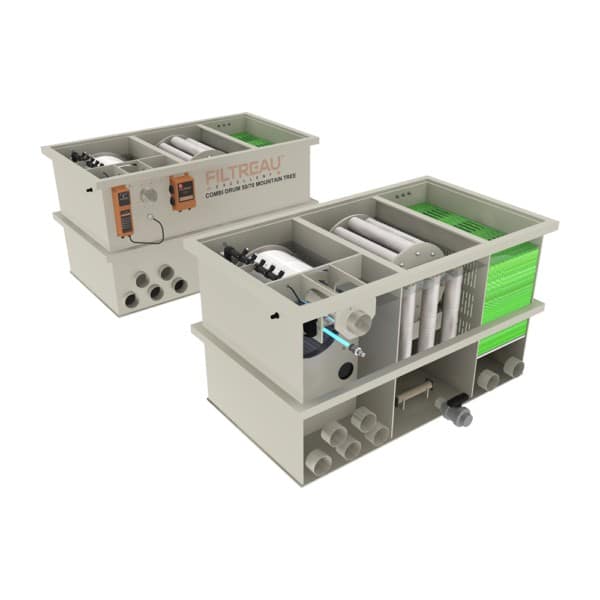
A combi drum filter combines mechanical drum filtration and biological filtration in a single unit.
Water first passes through the drum screen where solids are removed. The clean water then flows into a biological chamber containing filter media where beneficial bacteria process ammonia and nitrite.
Combi drum filters are ideal where space is limited or where a simpler filtration system is preferred.
What is a standalone drum filter?
A standalone drum filter performs mechanical filtration only.
After solids are removed, water flows to a separate biological filter. This allows greater flexibility in system design and makes it easier to increase biological capacity later.
How do I install a drum filter on a koi pond?
Installing a drum filter usually involves connecting bottom drains and skimmers to the filter inlet.
Water flows into the drum where mechanical filtration occurs before moving on to biological filtration and then returning to the pond.
Installation must consider pipe diameter, flow rate, waste discharge and electrical connections.
Do drum filters need a waste outlet?
Yes. Drum filters require a waste outlet so debris removed during cleaning cycles can be flushed away.
This outlet is usually connected to a drain or soakaway system.
Do drum filters need mains water?
Most drum filters require a pressurised water supply to power the spray bar used during cleaning cycles.
This water source is usually connected to the household mains.
Can drum filters run without mains water?
Some systems can operate using a pump fed wash system, but most drum filters rely on a mains water connection for reliable cleaning.
Without adequate water pressure, the spray system may not clean the drum screen properly.
How important is flow rate when choosing a drum filter?
Flow rate is one of the most important factors when selecting a drum filter.
The filter must be capable of handling the total water flow produced by the circulation pumps. If the filter is undersized, water levels may fluctuate and cleaning cycles may become excessive.
What pond turnover rate should a drum filter support?
Most koi ponds aim to circulate the entire pond volume every one to two hours.
The drum filter should therefore support at least the same flow rate as the pumps moving water through the filtration system.
Can drum filters be used with multiple pumps?
Yes. Larger drum filters can support multiple pumps drawing water after the mechanical filtration stage.
This is common in large koi ponds with multiple returns or water features.
Do drum filters remove fine sediment?
Yes. Drum filters are extremely effective at removing fine sediment and suspended solids.
The stainless steel screen traps particles before they can settle in the pond or clog biological filtration.
Why do drum filters keep ponds clearer?
Because waste is removed immediately, fewer particles remain suspended in the water.
This dramatically improves water clarity compared with traditional filter systems where waste remains trapped in media.
Do drum filters prevent sludge build up?
Drum filters significantly reduce sludge accumulation because solid waste is removed before it settles in the pond.
However, some sludge may still accumulate in areas with poor circulation.
Can drum filters support high flow waterfalls?
Yes. Drum filters can support waterfalls and other water features as long as the filter capacity matches the total system flow rate.
Can drum filters support multiple return lines?
Yes. Many pond systems use several return lines including waterfalls, underwater returns and circulation jets.
Drum filters can support these systems when correctly sized.
What happens if the drum screen becomes damaged?
If the screen becomes damaged it can usually be replaced.
Most manufacturers offer replacement mesh panels which can be fitted without replacing the entire drum.
How often should drum screens be inspected?
Periodic inspection is recommended to ensure the screen remains clean and undamaged.
Routine checks help prevent unexpected filtration issues.
Can drum filters handle large koi ponds?
Yes. Many drum filters are designed specifically for large koi ponds.
High capacity models can process extremely high water flow rates while maintaining effective mechanical filtration.
Are drum filters used in commercial koi facilities?
Yes. Many koi dealers and professional breeders use drum filters to maintain excellent water quality across large systems.
Do drum filters help reduce bacterial problems?
By removing organic waste quickly, drum filters reduce the conditions that allow harmful bacteria to multiply.
Cleaner filtration systems generally support healthier fish.
Do drum filters improve oxygen levels in filtration systems?
Indirectly, yes.
By keeping biological media cleaner, drum filters help maintain better oxygen circulation within biological filtration chambers.
Can drum filters improve fish growth?
Stable water quality supports healthier koi which can grow more consistently.
Drum filtration contributes to stable water conditions by removing waste quickly.
Are drum filters suitable for heated koi ponds?
Yes. Heated ponds often require more filtration because fish are fed throughout winter.
Drum filters help manage the increased waste produced in heated systems.
Can drum filters be used with automatic feeders?
Yes. Many koi ponds use automatic feeders, which increase feeding frequency.
Drum filters help manage the additional waste produced.
Do drum filters require electrical power?
Yes. Drum filters require electricity to power the control system, drive motor and cleaning cycle.
However, electricity consumption is generally low.
What safety features do drum filters include?
Most drum filters include water level sensors, safety shutoffs and control systems that monitor operation.
These systems help prevent damage or malfunction.
Are drum filters suitable for indoor ponds?
Yes. Drum filters are often used in indoor koi ponds and commercial aquatic facilities.
Indoor installations can make maintenance easier and protect equipment from weather.
Why do pond builders recommend drum filters?
Many pond builders recommend drum filters because they offer reliable mechanical filtration and greatly reduce maintenance compared with traditional filtration systems.
Their automatic cleaning process keeps filtration systems operating efficiently for long periods.
Are drum filters becoming more popular?
Yes. Drum filtration has become increasingly popular over the past decade.
Many modern koi pond builds now include drum filters as standard mechanical filtration.
Are drum filters suitable for new pond builds?
Yes. Drum filters are commonly installed during new pond construction.
Designing the pond around drum filtration often results in the most efficient filtration system.
Should I oversize my drum filter?
Slight oversizing is often beneficial because it reduces cleaning frequency and improves system longevity.
However, the filter must still match the system’s flow rate.
How do I know if my drum filter is working correctly?
A properly functioning drum filter will maintain stable water levels, trigger cleaning cycles when needed and keep the pond water clear.
Regular inspection ensures the system continues to operate correctly.
