Burtons Drum Filters – Frequently Asked Questions
If you are considering upgrading to a Burtons Drum Filter, these are the most common questions pond owners ask when choosing the right model for their koi pond.
What is a drum filter for a pond?
A drum filter is an automatic mechanical filtration system designed to remove solid waste from pond water before it breaks down and pollutes the pond.
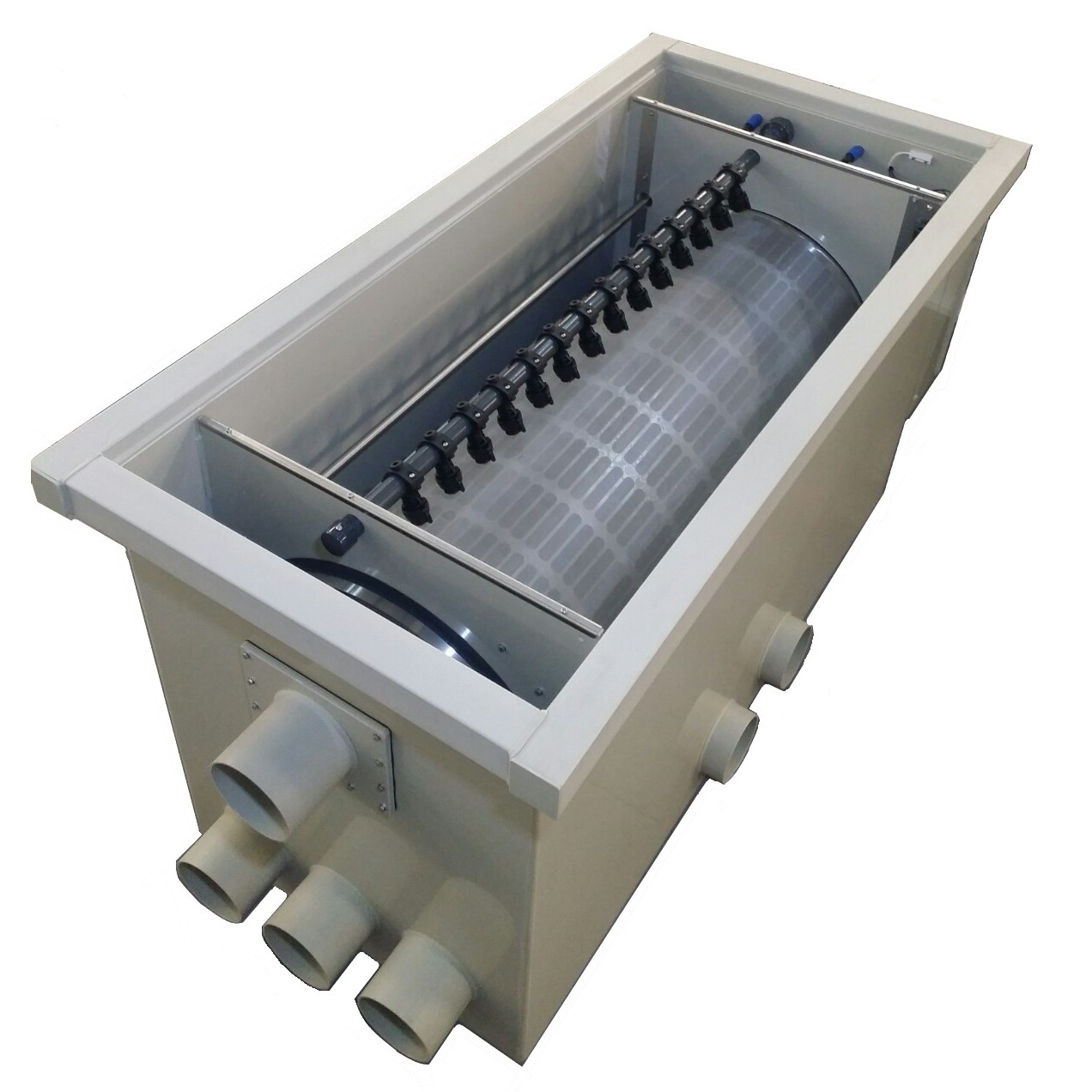
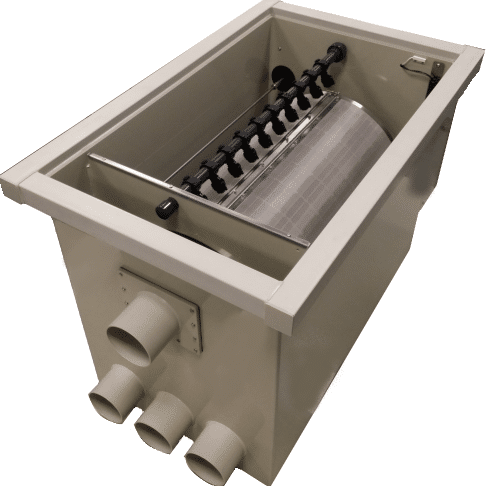
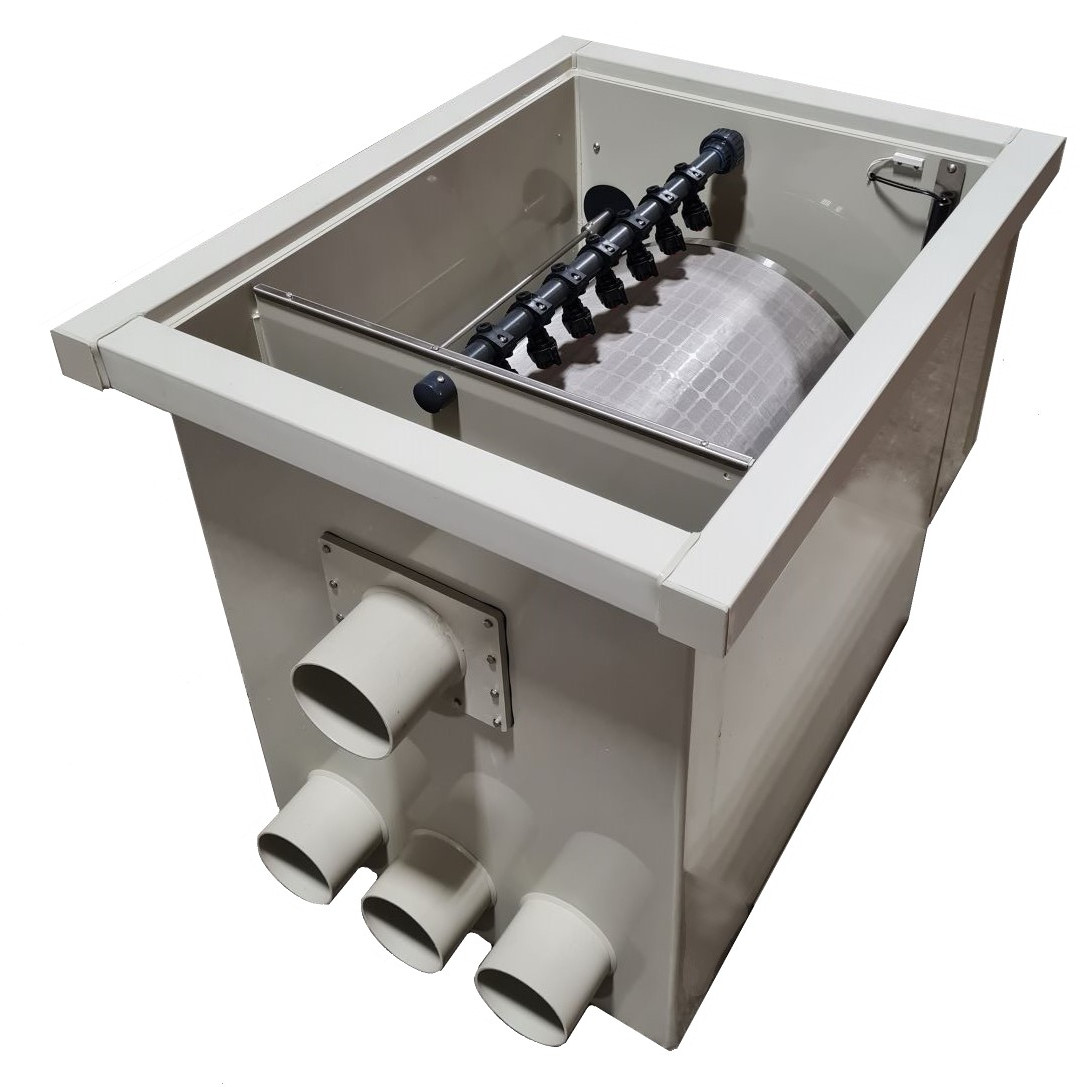
Water passes through a rotating stainless steel screen that traps debris such as fish waste, uneaten food and organic particles. When the screen becomes dirty, the filter automatically activates a cleaning cycle which flushes the debris to waste.
Drum filters are widely considered one of the most effective mechanical filtration systems available for koi ponds.
How does a Burtons drum filter work?
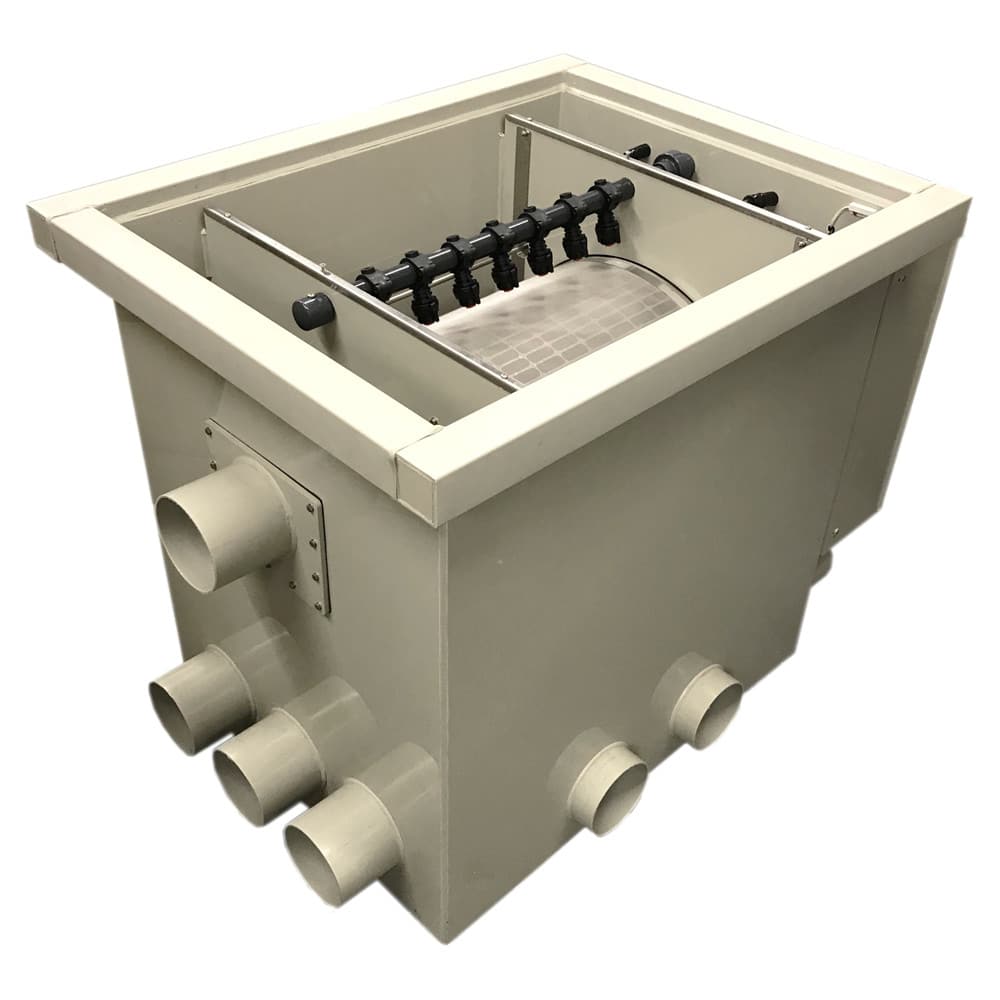
A Burtons drum filter works by passing pond water through a rotating stainless steel drum screen.
As debris builds up on the screen, the water level inside the drum chamber rises slightly. A sensor detects this change and automatically activates the cleaning cycle.
During the cleaning cycle the drum rotates while high pressure spray jets wash the screen clean and flush the debris to waste. This keeps the screen clear and allows the filter to continue operating efficiently.
What does a drum filter remove from pond water?
Drum filters remove solid waste and suspended debris from pond water.
This includes fish waste, uneaten food, blanketweed fragments, leaves and organic particles that would otherwise break down and affect water quality.
By removing waste early in the filtration process, drum filters help keep the biological filter cleaner and maintain clearer pond water.
What micron screen do Burtons drum filters use?
Most Burtons drum filters use a 60 micron stainless steel screen.
This mesh size captures very fine debris while still allowing good water flow through the filter. It is widely considered the ideal balance for koi ponds and heavily stocked fish ponds.
Are Burtons drum filters suitable for koi ponds?
Yes. Burtons drum filters are specifically well suited to koi ponds and heavily stocked ornamental ponds.
Koi produce large amounts of waste, so efficient mechanical filtration is essential. Drum filters remove this waste automatically and help maintain stable water quality.
What is the difference between a drum filter and a combi drum filter?
A standard drum filter provides mechanical filtration only. It removes solid waste from the water but requires a separate biological filter to process ammonia and nitrite.
A Burtons combi drum filter like the BD150 Combi or the BD300 Combi includes both the drum filter and an integrated biological chamber in the same unit, creating a complete filtration system.
What is the difference between a standard drum filter and a through flow drum filter?
Standard drum filters are designed with a typical inlet and outlet layout suitable for many koi pond filtration systems.
Through flow drum filters have additional inlets and outlets, allowing much higher water flow rates. These are commonly used on larger ponds or systems with multiple bottom drains.
What is the difference between the Burtons BD range and TF range?
The BD range consists of standard drum filters designed for medium to large koi ponds.
The TF range, which stands for Through Flow, is designed for higher flow installations and larger filtration systems. These models feature more inlets and outlets to accommodate higher water circulation.
What is a cube drum filter?
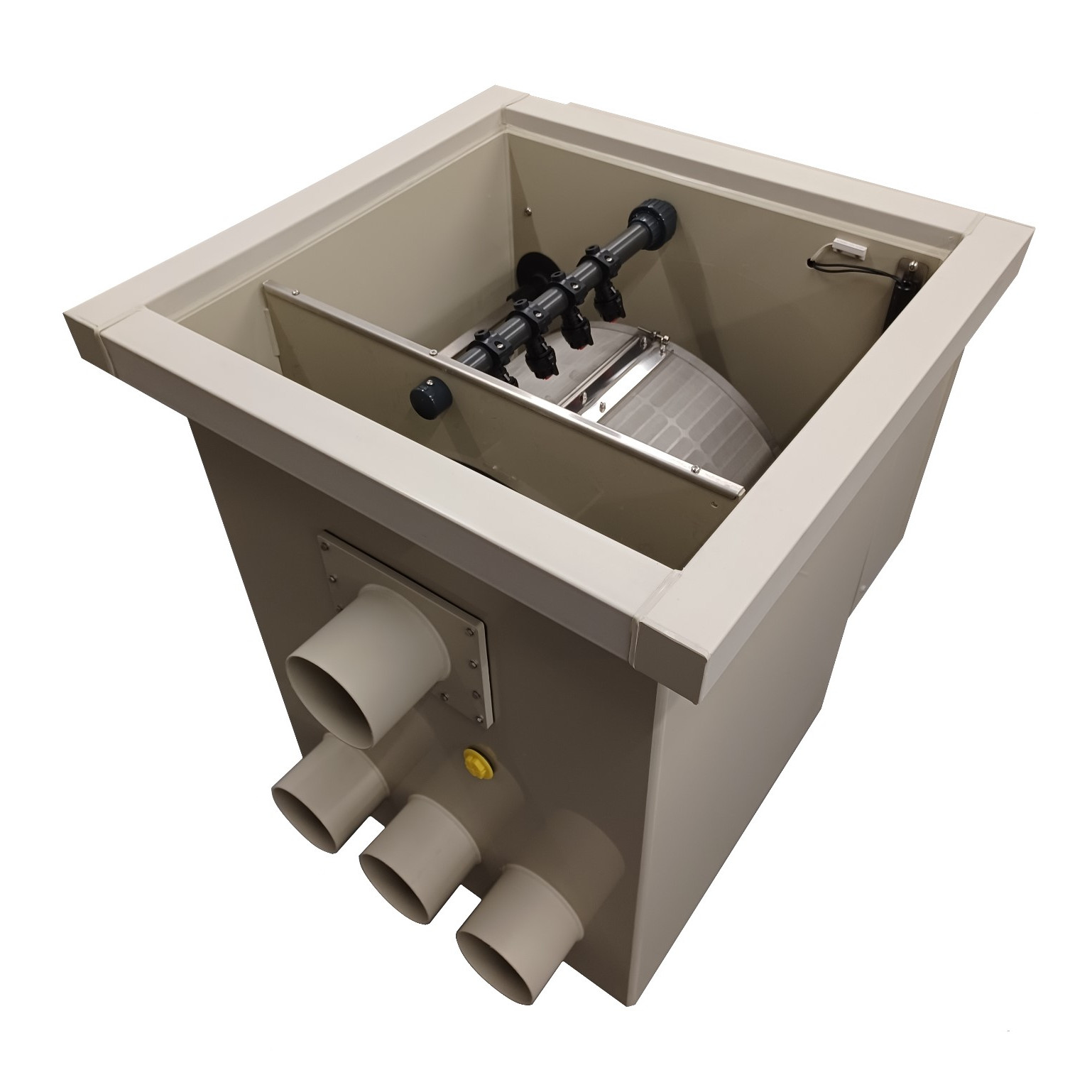
A cube drum filter is a compact drum filtration unit designed for smaller ponds or filter bays where space is limited.
It uses the same drum filtration principle as larger drum filters but in a more compact design.
Are drum filters better than traditional pond filters?
For many koi ponds, drum filters provide significant advantages over traditional filtration systems.
They remove solid waste automatically before it breaks down, improve water clarity and greatly reduce manual maintenance compared with multi bay filters or pressure filters.
Do drum filters improve water clarity?
Yes. Drum filters greatly improve water clarity by removing very fine suspended solids from the water.
Because waste is removed before it breaks down, there are fewer dissolved organic compounds in the water, resulting in clearer pond water.
Do drum filters reduce pond maintenance?
Yes. One of the biggest advantages of drum filtration is the reduction in manual cleaning.
Traditional filtration systems often require regular flushing and cleaning. Drum filters remove waste automatically, reducing the amount of maintenance required.
Do drum filters help reduce ammonia?
Drum filters remove solid waste before it has time to break down and release ammonia.
However, ammonia removal is primarily handled by biological filtration where beneficial bacteria convert ammonia into nitrite and nitrate.
Do drum filters require biological filtration as well?
Yes. Drum filters provide mechanical filtration only.
Biological filtration is still required to convert ammonia and nitrite into less harmful compounds. This can be provided by a separate biological filter or by using a combi drum filter with an integrated bio chamber.
How often does a drum filter clean itself?
The cleaning cycle is triggered automatically whenever the drum screen becomes dirty.
In heavily stocked koi ponds the filter may clean several times per hour. In lightly stocked ponds it may clean much less frequently.
Each cleaning cycle typically lasts only a few seconds.
Are drum filters noisy?
Drum filters are generally quiet during normal operation.
The cleaning cycle produces a short spraying sound while the spray bar washes the drum screen, but this usually lasts only a few seconds.
Do drum filters clog?
Drum filters are designed specifically to prevent clogging.
When the screen becomes dirty the automatic cleaning cycle activates and washes the debris away, allowing the filter to continue operating normally.
Can drum filters be installed on existing ponds?
Yes. Many pond owners upgrade their filtration systems by installing drum filters on existing ponds.
The installation usually involves connecting the drum filter to bottom drains, skimmers and return pumps within the pond filtration system.
Can drum filters be used with bottom drains?
Yes. Drum filters are commonly installed in gravity fed systems connected to bottom drains.
Bottom drains carry waste directly from the pond floor into the drum filter where it can be removed automatically.
Can drum filters be used with pond skimmers?
Yes. Pond skimmers are often connected to drum filters alongside bottom drains.
The skimmer removes floating debris from the pond surface and sends it to the drum filter for removal.
Are drum filters worth the investment?
For many koi pond owners, drum filters are one of the most effective filtration upgrades available.
They provide automatic waste removal, improved water clarity and significantly reduced maintenance compared with traditional filtration systems.
Why are Burtons drum filters popular with pond builders?
Burtons drum filters are widely used by pond builders and filtration specialists because they are robust, reliable and available in several different configurations.
Their automatic cleaning system and efficient mechanical filtration make them a practical choice for many koi pond installations.
What is the best drum filter for a koi pond?
The best drum filter depends on the size of the pond, the number of fish and the overall filtration design.
For smaller koi ponds, compact drum filters or combi drum filters may be suitable. For larger ponds or heavily stocked systems, larger drum filters with higher flow capacity are usually recommended.
Choosing a drum filter that can comfortably handle the pond’s waste load and water flow rate is essential for maintaining stable water quality.
What size drum filter do I need for my pond?
The correct drum filter size depends on several factors including pond volume, fish stocking levels, feeding rates and the overall filtration layout.
A good rule of thumb is that the filtration system should be capable of turning over the entire pond volume at least once every one to two hours.
Heavily stocked koi ponds often require larger filters than lightly stocked ornamental ponds of the same size.
How long do drum filters last?
A high quality drum filter can last many years when installed correctly and maintained properly.
Most drum filters use stainless steel drum components, durable motors and electronic control systems designed for continuous operation.
Routine inspection of spray bars, seals and moving parts helps ensure reliable long term performance.
Do drum filters work on heavily stocked koi ponds?
Yes. Drum filters are particularly effective on heavily stocked koi ponds because they remove solid waste automatically before it breaks down.
This reduces the amount of organic waste entering the biological filtration system and helps maintain stable water conditions even when feeding levels are high.
What is the difference between gravity fed and pump fed drum filters?
In a gravity fed system, water flows naturally from the pond through bottom drains and skimmers into the drum filter before reaching the pump.
In a pump fed system, a pump pushes water from the pond into the drum filter.
Gravity fed systems are very common in koi ponds because they allow waste to travel directly from the pond floor into the filtration system.
Can drum filters be used on large koi ponds?
Yes. Larger drum filters are designed specifically for high flow filtration systems and large ponds.
Models with multiple inlets and outlets can handle very high water circulation rates and are commonly used on large koi ponds and estate lakes.
Do drum filters remove fish waste?
Yes. Drum filters are designed specifically to remove solid fish waste from pond water.
The stainless steel drum screen traps solid debris before it can break down in the pond or biological filter.
Removing this waste early helps maintain clearer water and reduces pollution within the filtration system.
Do drum filters remove blanketweed?
Drum filters remove blanketweed fragments and organic debris from the water, but they do not eliminate the cause of blanketweed growth.
Blanketweed is usually caused by excess nutrients and sunlight. While drum filters improve water quality, additional pond management may be required to control blanketweed.
How often should a drum filter be serviced?
Drum filters require relatively little maintenance compared with traditional pond filters.
Most maintenance involves occasionally checking the spray bar, ensuring the waste outlet is clear and inspecting the drum screen and sensors.
Regular inspection helps keep the system running efficiently.
Do drum filters use a lot of electricity?
Drum filters are generally energy efficient.
During normal operation they use very little electricity. Most power consumption occurs during the short cleaning cycle when the drum rotates and the wash pump operates.
These cycles typically last only a few seconds.
Can drum filters be installed indoors?
Yes. Many drum filters are installed inside filter bays, pump houses or dedicated filtration rooms.
Indoor installations can help protect equipment from the weather and make maintenance easier.
Do drum filters replace biological filtration?
No. Drum filters provide mechanical filtration only.
They remove solid waste from the water but do not process ammonia or nitrite. This is why biological filtration is still required within the pond filtration system.
Some combi drum filters include an integrated biological chamber to provide both stages of filtration in one unit.
Are drum filters suitable for new pond builds?
Yes. Drum filters are commonly installed during the construction of new koi ponds.
Installing drum filtration from the start allows the filtration system to be designed around efficient mechanical waste removal.
Can drum filters be added to existing pond systems?
Yes. Many pond owners upgrade their filtration by installing a drum filter on an existing pond.
This usually involves modifying pipework so the drum filter can be integrated into the current filtration layout.
Do drum filters help improve koi health?
Yes. Drum filters help improve water quality by removing solid waste quickly.
Stable water conditions are essential for healthy koi, and efficient mechanical filtration helps prevent waste from breaking down and affecting water parameters.
Why do many pond builders recommend drum filters?
Drum filters have become very popular with pond builders because they provide reliable automatic filtration and significantly reduce maintenance.
By removing waste automatically, they help keep filtration systems cleaner and improve long term pond water quality.
Are drum filters the future of koi pond filtration?
Many pond professionals consider drum filtration to be one of the most effective mechanical filtration technologies available for koi ponds.
The ability to remove solid waste automatically while maintaining stable water quality has made drum filters increasingly popular among koi hobbyists and pond builders.