






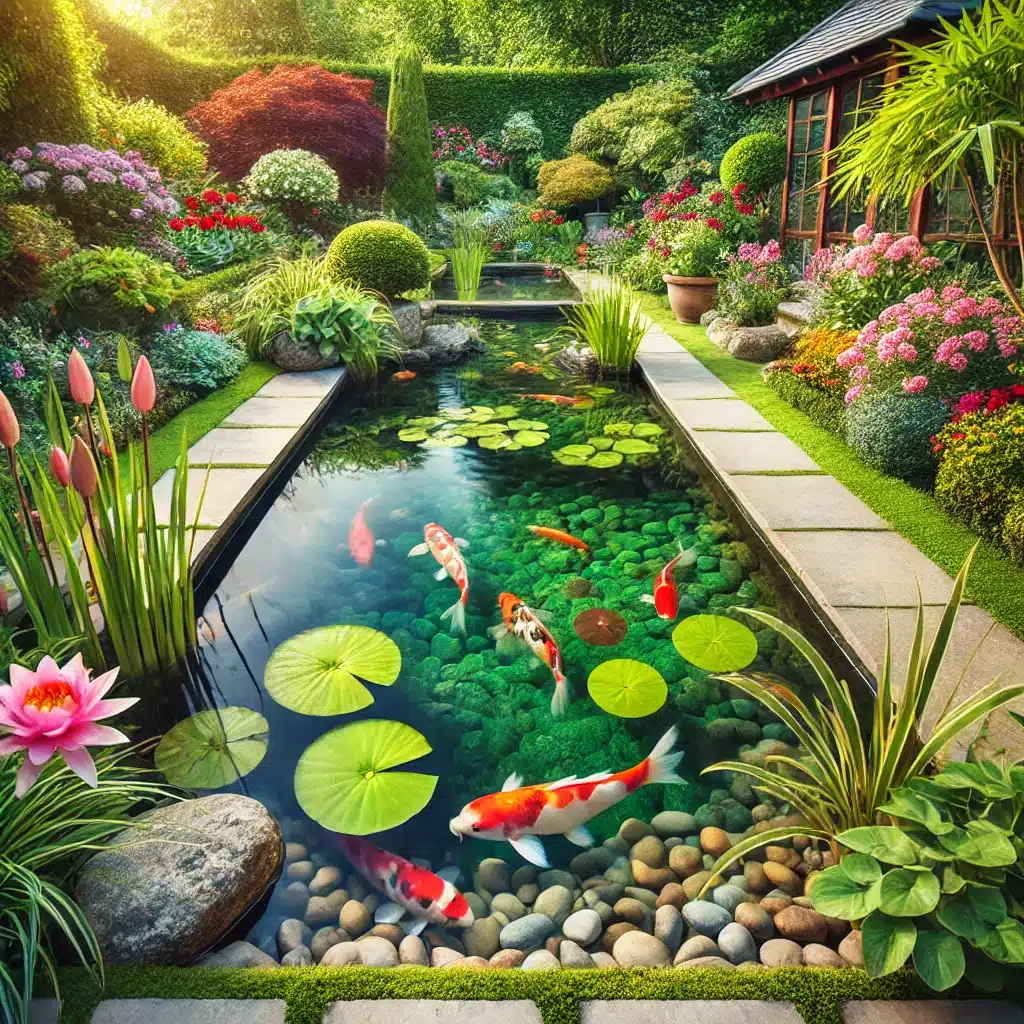
Caring for an Inherited Koi Pond
Caring for an Inherited Koi Pond can be both exciting and daunting. A well-maintained pond is a beautiful addition to any property, but it also comes with significant responsibilities. Koi ponds require specific care to ensure the health of the fish and the longevity of the pond itself. If you’ve recently inherited a koi pond, this comprehensive guide will walk you through the essential steps to evaluate, clean, and maintain your new aquatic haven.
Step 1: Assess the Current State of the Pond
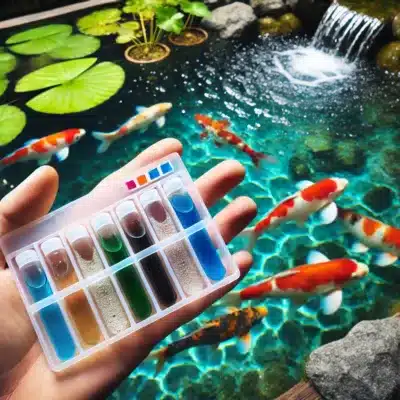
Testing Water Quality in a Koi Pond for Optimal Health
Before diving into maintenance or upgrades, take time to thoroughly assess the current condition of the koi pond. This initial evaluation will help you identify immediate concerns and plan for long-term care when caring for an Inherited Koi Pond.
-
Inspect the Water Quality:
- Use a reliable pond water test kit to measure critical parameters such as pH levels, ammonia, nitrites, nitrates, and water hardness. Healthy ponds typically have a pH between 7.0 and 8.5, low ammonia and nitrite levels, and balanced hardness to support koi health.
- Look for signs of poor water quality, such as murkiness, foul odors, or excessive algae growth, which may indicate underlying issues that need immediate attention.
- For a deeper understanding of maintaining water balance, explore our guide on Water Hardness and pH Stability.
-
Check the Fish:
- Observe the koi closely for any signs of stress or illness, such as lethargy, erratic swimming, loss of appetite, or visible parasites like white spots or ulcers.
- Healthy koi should be active, respond eagerly to feeding, and display vibrant, even coloration without any abnormalities.
- If you suspect disease, consult a fish health expert and consider isolating affected koi to prevent the spread of infections.
-
Evaluate Filtration and Equipment:
- Inspect the pond’s filtration system, pumps, and additional equipment like UV clarifiers or heaters. Look for signs of wear, malfunction, or inefficiency.
- Ensure filters are free of debris and that water is circulating effectively. Advanced systems, such as drum filters, require operational checks to confirm their automated cleaning cycles are functioning as intended.
- For more information on high-performance filtration systems, refer to our Drum Filters Guide.
-
Examine the Pond Structure:
- Conduct a thorough visual inspection of the pond’s structure, including its liner, fibreglass shell, or concrete walls. Look for cracks, tears, or leaks that could lead to water loss.
- Check the edges of the pond for signs of erosion or displaced rocks that might compromise its integrity.
- If the pond requires significant repairs, consider professional solutions like fibreglassing. For guidance, visit our Pond Fibreglassing Guide.
-
Assess Plant Growth and Surroundings:
- Evaluate aquatic and surrounding plants. Overgrown vegetation or invasive species like blanketweed can impact water quality and clog filtration systems.
- Remove decaying plant matter and prune back overgrowth to maintain a balanced ecosystem.
By taking the time to conduct a detailed assessment, you’ll gain a clear understanding of your pond’s current condition and the steps needed to create a thriving environment for your koi. This foundational knowledge is critical for planning future maintenance and upgrades effectively.
Step 2: Plan a Thorough Cleaning When Caring for an Inherited Koi Pond
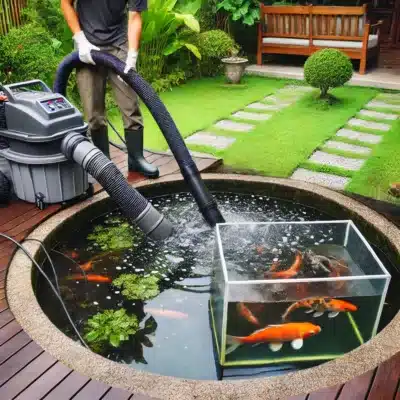
Professional Pond Cleaning Process for a Healthy Koi Pond
Once you’ve assessed the pond, the next step is to perform a deep cleaning when caring for an Inherited Koi Pond. This process will reset the pond’s environment, removing accumulated waste and restoring water quality. If you feel overwhelmed or lack the necessary equipment, our Pond Cleaning Services are here to help. Here’s what we can do for you:
- Complete pond draining and debris removal.
- Professional cleaning of filtration systems, pumps, and skimmers.
- Safe relocation and care for koi during the cleaning process.
- Water testing and treatment to restore optimal conditions.
- Expert advice on ongoing maintenance and upgrades.
If you’d like to manage the cleaning yourself, follow these detailed steps:
-
Relocate the Koi Temporarily:
- Use a large, aerated holding tank to house the koi during the cleaning process. This ensures their safety while the pond is being cleaned.
- Monitor the tank’s water temperature and oxygen levels to reduce stress on the fish. For tips on maintaining oxygen levels, read our article on Oxygenation and Aeration.
-
Drain the Pond:
- Carefully remove the water, directing it to a suitable drainage area. Avoid draining water into storm drains, as it may contain contaminants that can harm local ecosystems.
-
Remove Debris:
- Scoop out leaves, algae, and sludge from the bottom of the pond. Using a Pond Vacuum can make this task easier and more efficient.
- Pay attention to hard-to-reach areas like corners and beneath rocks, where waste can accumulate over time.
-
Clean the Filtration System:
- Disassemble and thoroughly clean all filters, pumps, and skimmers. Replace any worn-out components and flush out pipes to remove blockages.
- Ensure any advanced filtration systems, such as drum filters, are functioning correctly and perform necessary maintenance tasks, like inspecting spray bars and sensors.
-
Refill and Condition the Water:
- Refill the pond with fresh, clean water. Treat the water with a dechlorinator to neutralize harmful chlorine and chloramines that can harm your koi.
- Test the water for pH, ammonia, nitrites, and other critical parameters, adjusting them as needed to ensure a safe environment for the fish.
If you’re unsure about any aspect of pond cleaning or want professional assistance, don’t hesitate to Contact Us. A professionally cleaned pond not only enhances its beauty but also ensures the health and safety of your koi.
Step 3: Upgrade and Enhance the Pond
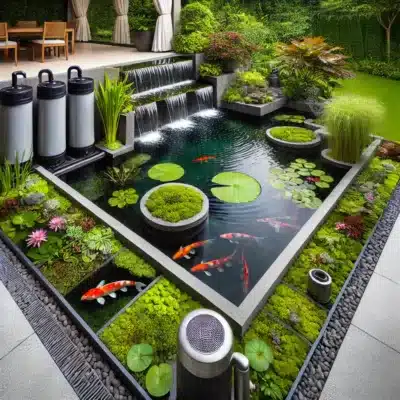
Upgrading a Koi Pond with Modern Features and Landscaping
Caring for an Inherited Koi Pond is an excellent opportunity to make upgrades that will enhance its functionality, efficiency, and aesthetic appeal. Thoughtful enhancements can significantly improve the pond’s environment for both the koi and the pond owner. Here are some key upgrades to consider:
-
Upgrade Filtration Systems:
- Modernize the pond’s filtration system by replacing outdated or inefficient units with advanced solutions like drum filters, pressurized filters, or combination systems that include mechanical and biological filtration. These upgrades ensure superior water clarity, enhanced waste removal, and reduced maintenance requirements. Learn more about efficient filtration options in our Pond Filters Guide.
- For ponds with heavy fish loads or large volumes, consider high-capacity drum filters that can handle increased flow rates and debris load efficiently.
-
Add Aeration:
- Increase oxygen levels in the pond with air pumps, fountains, or waterfalls. Aeration not only supports koi health but also aids in breaking down organic waste and maintaining balanced water parameters.
- Installing features like fountains or cascading waterfalls can also add visual appeal while contributing to water movement and oxygenation. Discover more about aeration techniques in our Oxygenation and Aeration Guide.
-
Improve Landscaping:
- Enhance the pond’s surroundings with carefully chosen plants and decorative elements. Marginal plants, such as cattails and irises, can improve water quality by absorbing excess nutrients. Floating plants like water lilies not only provide shade and reduce algae growth but also add an elegant touch to the pond’s aesthetics.
- Consider using native or non-invasive plant species to maintain ecological balance. For detailed plant recommendations, refer to our guide on Best Plants for Koi Ponds.
-
Install a Pond Heater:
- To protect koi during colder months and maintain a stable water temperature, invest in a reliable pond heater. This is especially important for regions with harsh winters, as koi are sensitive to rapid temperature fluctuations.
- Heaters can extend the koi’s active season and allow year-round enjoyment of the pond. For more insights, visit our Pond Heating Guide.
-
Upgrade Lighting:
- Install underwater or perimeter lighting to highlight the pond’s features during the evening. LED lights are energy-efficient and come in various colors to enhance the visual appeal of the pond.
- Lighting also improves safety around the pond and allows you to enjoy the beauty of your koi after sunset.
-
Add Decorative Features:
- Incorporate features like bridges, stepping stones, or sculptures to create a focal point around the pond. These elements can transform the pond into a centerpiece of your garden.
- Consider installing a viewing window for a unique perspective on your koi’s activities.
Upgrading and enhancing your koi pond not only improves its functionality but also adds significant value to your property. For professional advice on pond improvements, explore our Pond Maintenance Services or Contact Us for tailored recommendations.
Step 4: Establish a Maintenance Routine When Caring for an Inherited Koi Pond
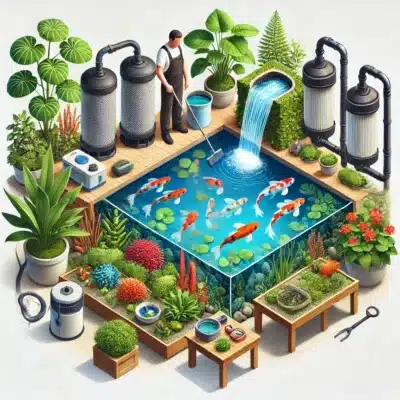
Maintaining a Koi Pond for Long-Term Health and Beauty
A consistent maintenance routine is essential to ensure the long-term health and caring for an Inherited Koi Pond. By dividing tasks into daily, weekly, monthly, and seasonal categories, you can keep your pond thriving with minimal effort.
Daily Tasks:
- Feed the koi with a high-quality diet suitable for their size, age, and the current season. Observe their feeding behavior to ensure all fish are eating and no food is left uneaten, which can pollute the water.
- Perform a quick visual check of the pond. Look for any changes in the water’s clarity, signs of algae growth, or debris on the surface.
- Confirm that equipment like pumps, filters, and aerators are functioning properly. Listen for unusual noises and check for visible signs of wear or malfunction.
Weekly Tasks:
- Test the water quality using a pond testing kit. Measure key parameters such as pH, ammonia, nitrites, nitrates, and water hardness. Adjust these parameters as needed to maintain a balanced ecosystem.
- Skim off floating debris like leaves or plant matter using a net. This helps prevent waste buildup that could clog filtration systems or decompose and harm water quality.
- Inspect the pond’s perimeter for signs of erosion or plant overgrowth that may encroach on the pond or block sunlight.
Monthly Tasks:
- Clean the filtration system to ensure it operates efficiently. Rinse mechanical filter media to remove trapped debris, but avoid over-cleaning biological media to preserve beneficial bacteria.
- Inspect all equipment, including UV clarifiers and heaters, for signs of wear or damage. Replace parts as necessary to prevent unexpected failures.
- Check the structural integrity of the pond liner, shell, or edges. Address small tears or cracks before they escalate into major issues.
- Prune aquatic plants to prevent them from overgrowing and taking over the pond. Remove dead or decaying vegetation to keep nutrient levels balanced.
Seasonal Tassks:
- Spring: Perform a thorough clean to prepare for the active koi season. Restart pond equipment that may have been turned off during winter and adjust feeding schedules as the water temperature rises.
- Summer: Monitor water levels closely due to evaporation and top up as needed. Ensure aeration is sufficient to counteract reduced oxygen levels in warmer water.
- Autumn: Remove fallen leaves promptly to prevent excessive debris buildup. Consider adding a net over the pond to catch falling leaves before they enter the water.
- Winter: Reduce feeding as koi become less active in colder temperatures. Use a pond heater or floating de-icer to maintain an open section of water for gas exchange. Protect pumps and equipment from freezing temperatures by insulating or storing them indoors if necessary.
By following this maintenance schedule, you’ll create a stable and healthy environment for your koi, ensuring they thrive year-round. For additional tips or to arrange professional pond maintenance, visit our Pond Maintenance Services.
Establish a Maintenance Routine with Annual Professional Cleaning
While maintaining a regular routine is key to keeping your pond in optimal condition, scheduling an annual professional pond clean can make a world of difference. Our expert services go beyond routine care, ensuring your koi pond remains a healthy, stunning focal point of your property.
Why Choose an Annual Professional Clean?
- Comprehensive Deep Cleaning:
Over time, debris, sludge, and organic waste accumulate in even the best-maintained ponds. A professional clean eliminates this buildup, improving water clarity and quality. - Thorough Equipment Inspection:
We inspect all components of your pond system, including pumps, filters, and UV clarifiers. Identifying and addressing issues early can prevent costly repairs down the line. - Health Check for Your Koi:
Our team observes the condition of your fish, looking for signs of stress, illness, or parasites. This ensures your koi remain vibrant and healthy year-round. - Expert Water Quality Management:
We test and balance your pond’s water chemistry, adjusting pH levels, ammonia, and nitrites to create the perfect environment for your koi. - Save Time and Effort:
A full pond clean can be a labor-intensive process. Let our team handle the heavy lifting so you can focus on enjoying your pond. - Enhance Aesthetic Appeal:
Regular professional cleaning maintains the pristine beauty of your pond, ensuring it remains a serene and inviting feature in your outdoor space.
Contact Us for Your Annual Pond Clean
Our professional pond cleaning service includes:
- Draining and debris removal.
- Safe relocation and care for your koi during the process.
- Full cleaning of filtration systems and other equipment.
- Water testing and rebalancing.
- Expert guidance on long-term maintenance and upgrades.
For a stress-free way to keep your pond in top condition, contact us today to schedule your annual clean. With our expertise, you can enjoy the beauty and tranquility of a thriving koi pond all year long.
Step 5: Prioritize Koi Health when Caring for an Inherited Koi Pond
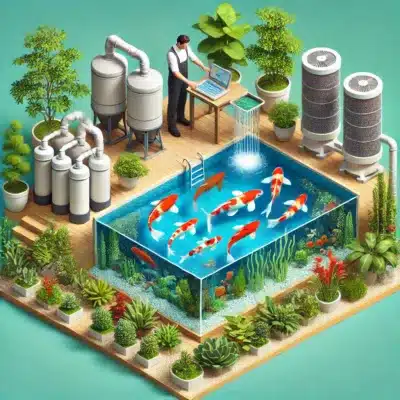
Caring for Koi in a Well-Maintained Pond
Koi are the heart of any pond, and ensuring their health is paramount to maintaining a thriving aquatic environment. Follow these best practices to keep your koi healthy, vibrant, and stress-free when caring for an Inherited Koi Pond:
1. Provide a Balanced Diet
- Feed your koi high-quality food tailored to their size, season, and activity level. During warmer months, opt for protein-rich diets that support growth and energy. In colder months, switch to low-protein, wheat germ-based foods that are easier to digest.
- Avoid overfeeding, as uneaten food can deteriorate water quality and promote algae growth. Feed small portions and observe the koi’s behavior to ensure they eat everything within a few minutes.
- Learn more about seasonal feeding in our guide on What to Feed Koi in Winter.
2. Monitor Behavior
- Observe your koi regularly for signs of stress or illness. Healthy koi are active, exhibit vibrant colors, and respond eagerly during feeding.
- Look for symptoms such as clamped fins, erratic swimming, surface gasping, or visible parasites. Behavioral changes may indicate water quality issues, injury, or disease.
- Address concerns promptly by testing the water parameters and consulting a fish health expert if necessary.
3. Quarantine New Additions
- When introducing new koi to the pond, quarantine them in a separate, aerated tank for at least two weeks. This prevents the spread of diseases or parasites to the existing population.
- During the quarantine period, observe the new fish for any signs of illness or stress and treat them if required. Ensure the quarantine tank has similar water conditions to the main pond to minimize acclimation stress.
4. Maintain Optimal Water Quality
- Regularly test the pond’s water parameters, including pH, ammonia, nitrites, nitrates, and dissolved oxygen. Poor water quality is one of the most common causes of koi health issues.
- Ensure the filtration system is functioning efficiently and conduct regular maintenance to keep water conditions stable.
- Address spikes in ammonia or nitrites immediately. Our guide on Ammonia and Nitrite Management provides detailed steps for managing these harmful compounds.
5. Protect Against Predators and Harsh Conditions
- Install protective measures like netting or motion-activated deterrents to prevent predators such as herons from harming your koi.
- During extreme weather, use a pond heater or floating de-icer to maintain a safe temperature and ensure proper gas exchange.
- Provide shaded areas or floating plants to protect koi from prolonged sun exposure in summer.
6. Perform Regular Health Checks
- Periodically catch and examine a few koi for physical health assessments. Check for ulcers, sores, or other abnormalities that may require treatment.
- Maintain a basic koi first-aid kit with items such as antiseptics, wound dressings, and medications to address common issues quickly.
7. Foster a Stress-Free Environment
- Avoid overcrowding the pond, as this increases competition for resources and elevates stress levels. Ensure the pond’s stocking density aligns with its size and filtration capacity.
- Minimize sudden changes in water conditions, temperature, or lighting, as these can shock the fish and compromise their immune systems.
By following these practices, you’ll create a stable and nurturing environment that allows your koi to thrive. For expert assistance in maintaining koi health or addressing concerns, explore our Pond Maintenance Services or Contact Us for tailored advice.
Conclusion
Inheriting a koi pond is a rewarding experience that can transform your outdoor space into a serene retreat. By following these steps, you’ll ensure the pond remains a healthy and beautiful habitat for your koi. From thorough cleaning to upgrading systems and establishing a maintenance routine, each action contributes to a thriving ecosystem. For expert advice and support, explore our Pond Maintenance Services.
