Frequently Asked Questions About Pressure Filters for Ponds
Choosing the right pond filtration system can sometimes feel confusing, especially with so many different pressure filters, bead filters, UV clarifiers and advanced koi pond systems now available. Below we’ve answered some of the most common questions we get asked about pressurised pond filters, including installation, maintenance, water clarity, koi ponds, waterfalls, algae control and choosing the correct system for your pond.
What is a pressurised pond filter?
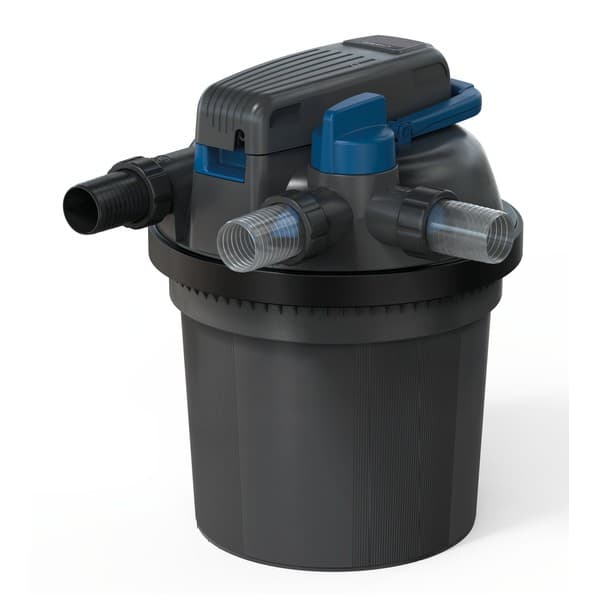
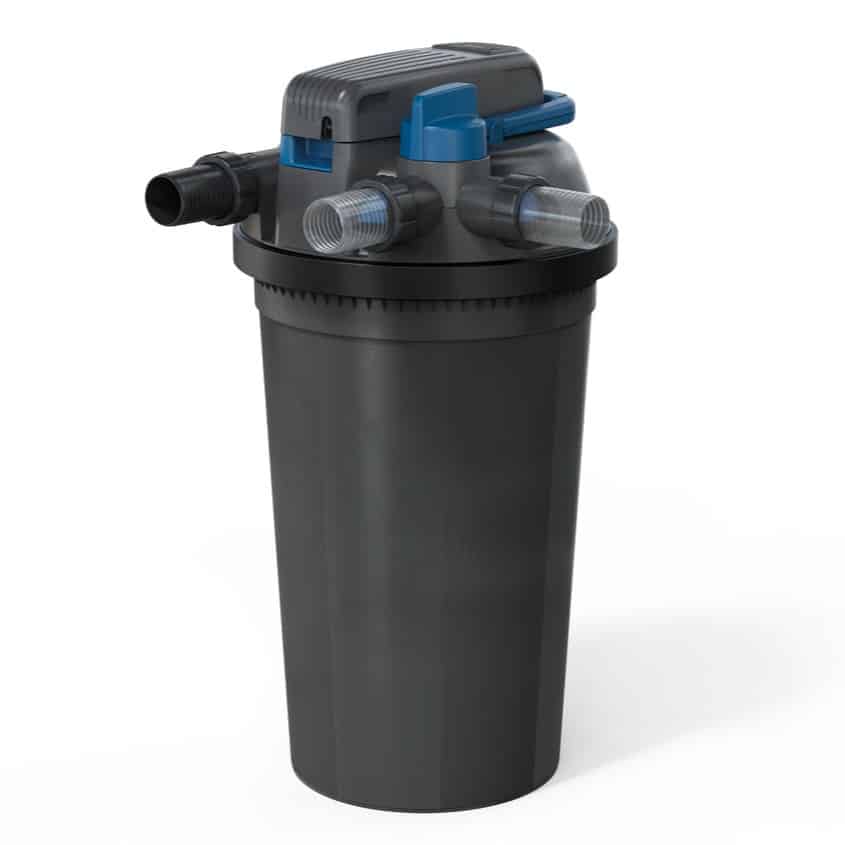
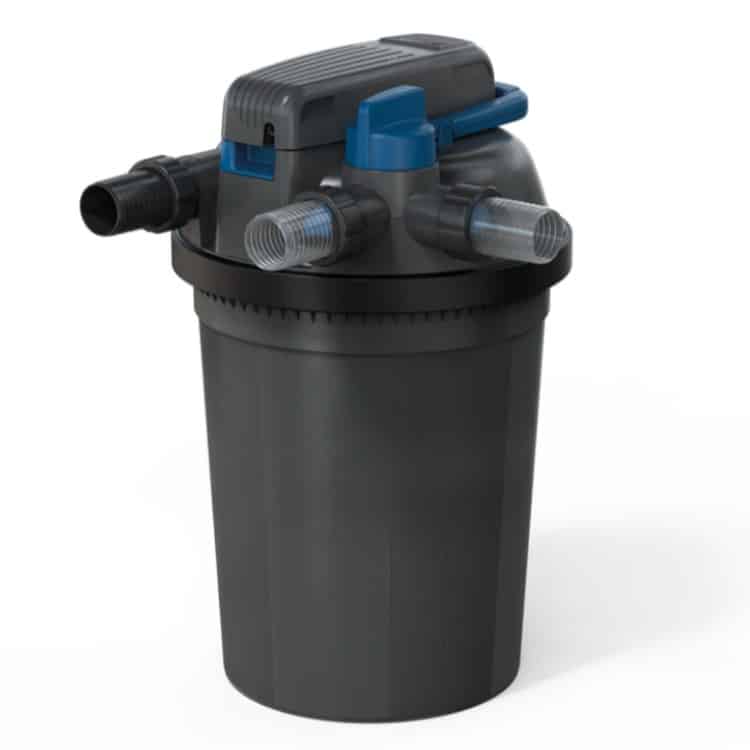
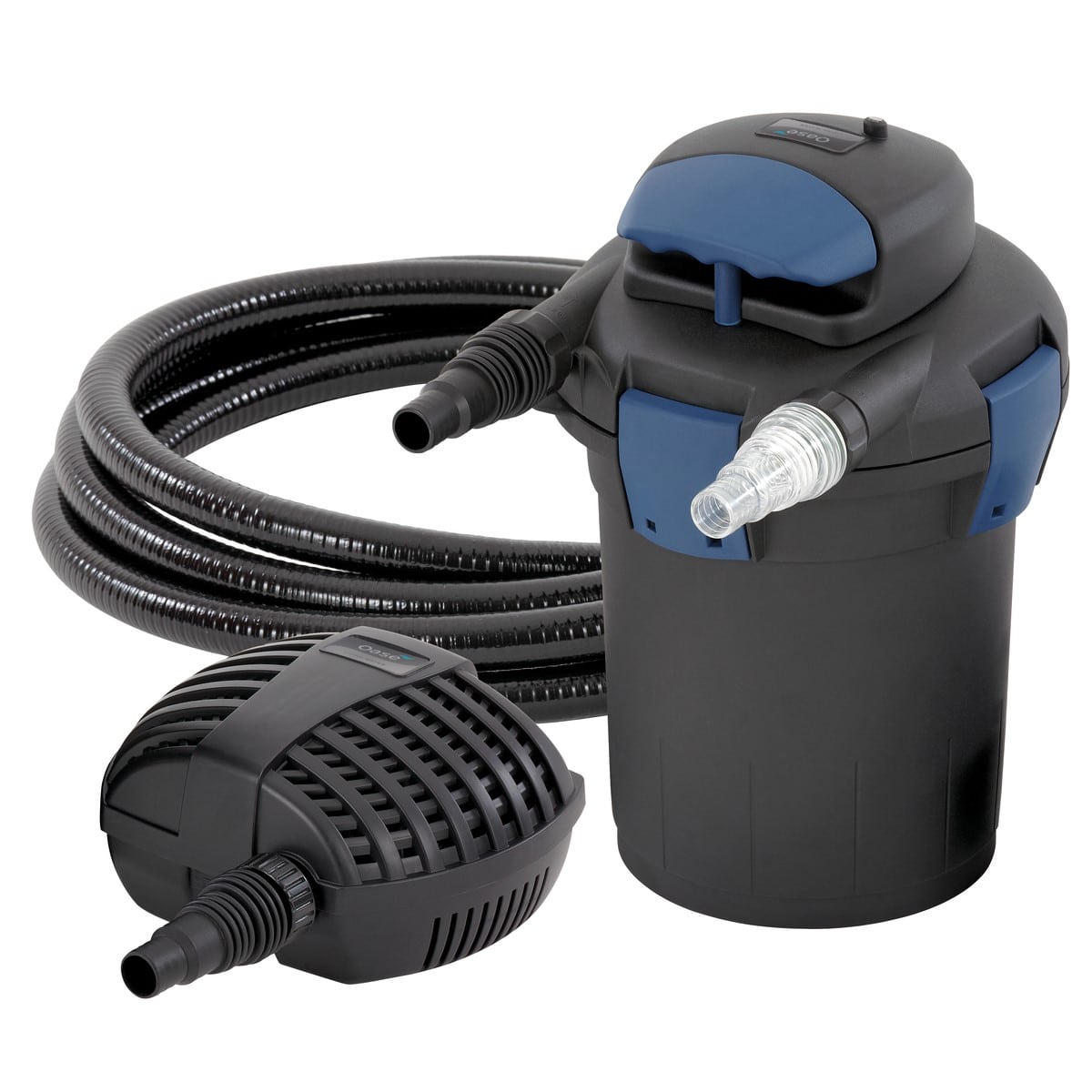
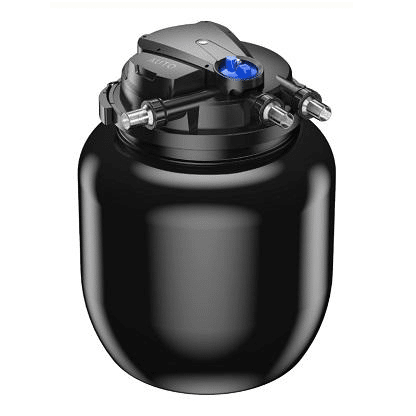
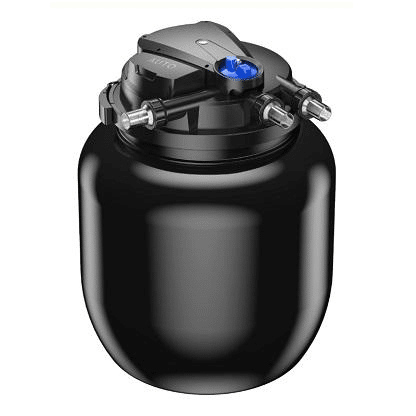
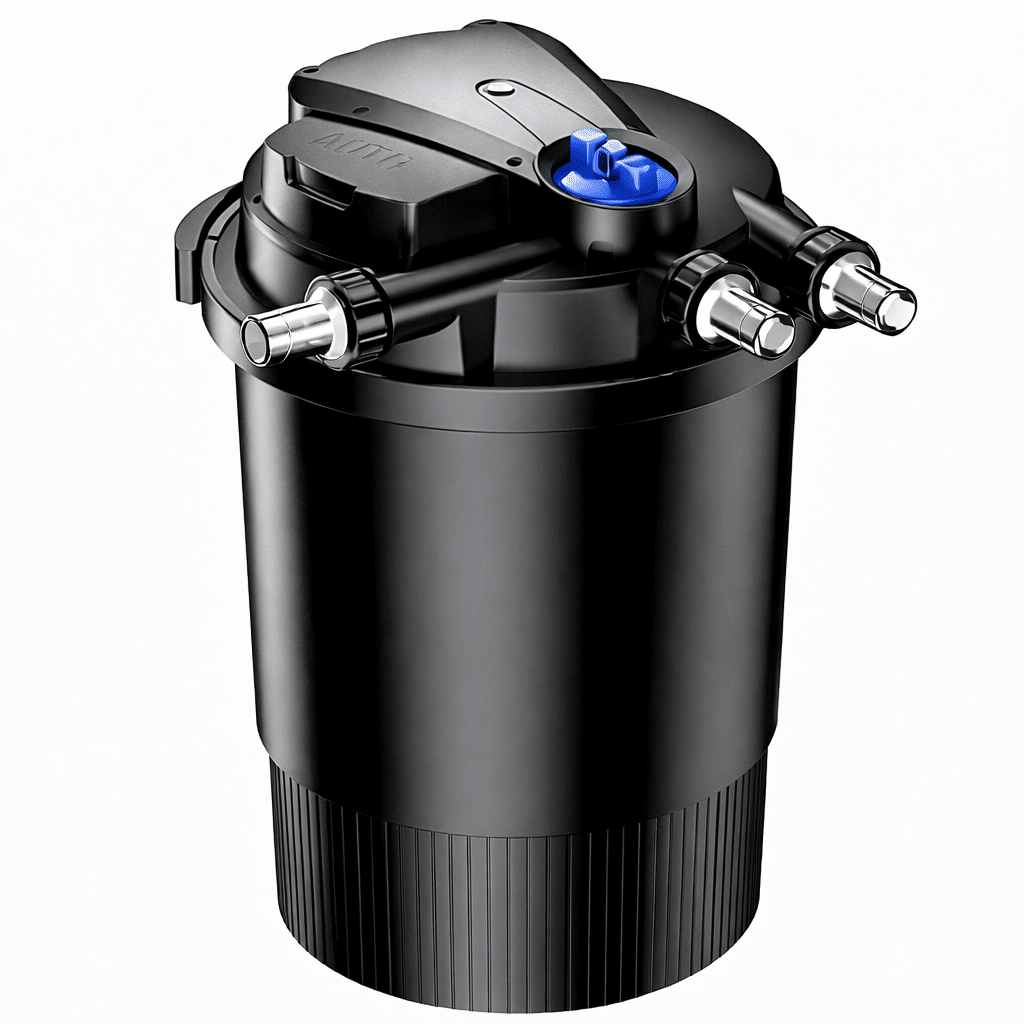
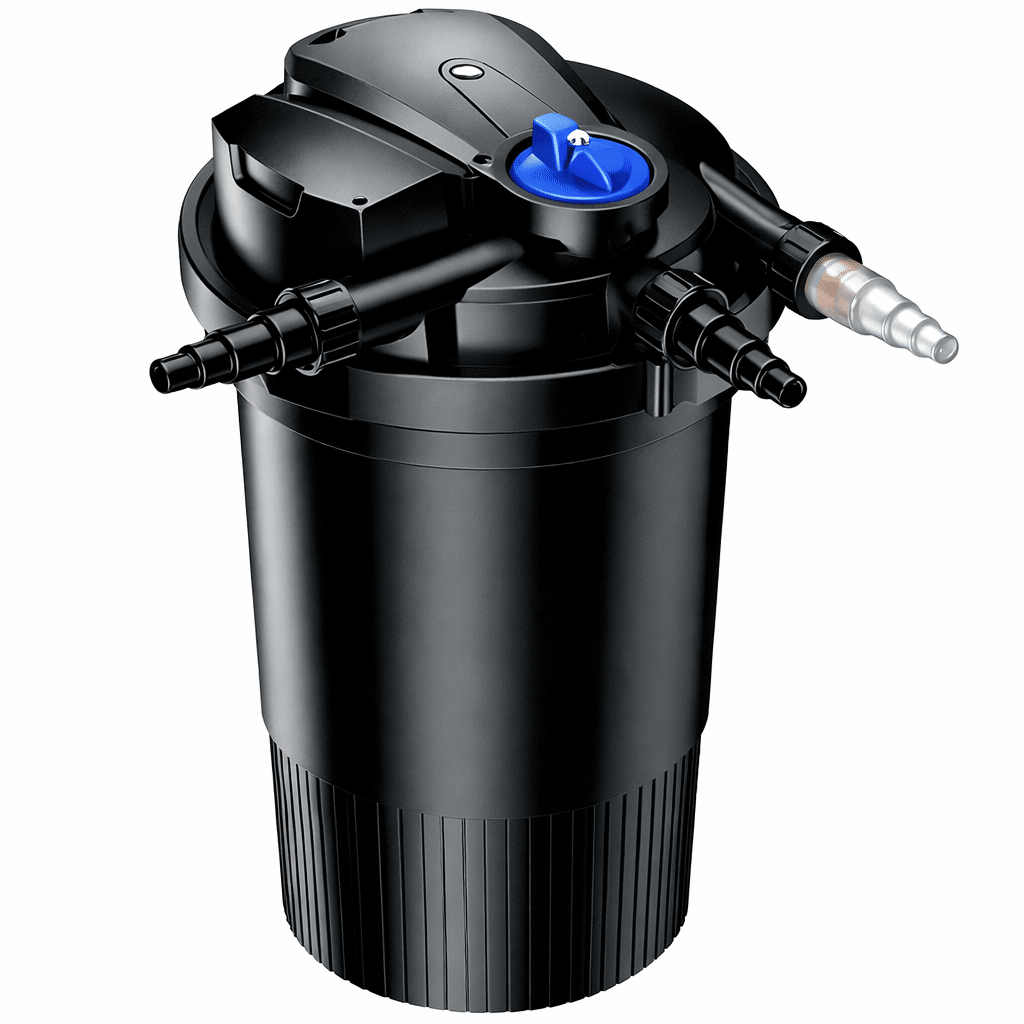
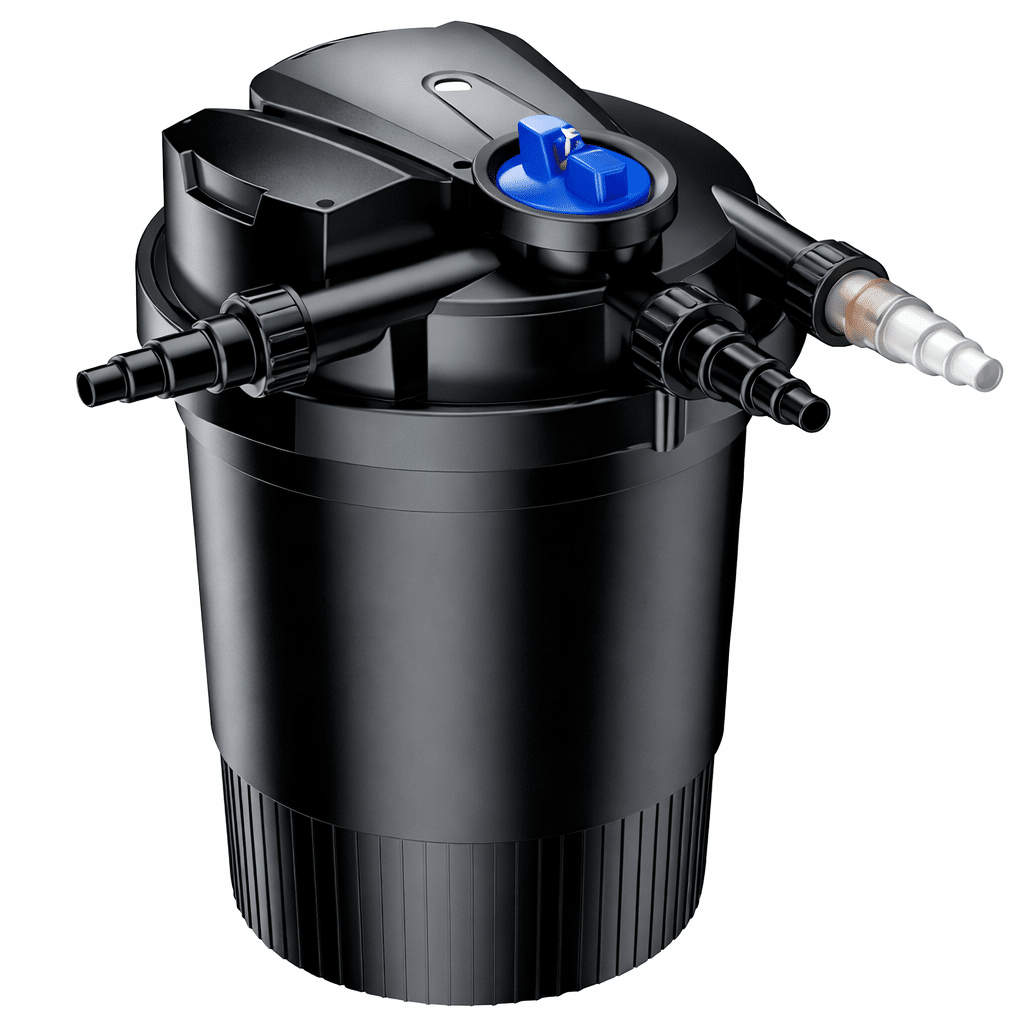
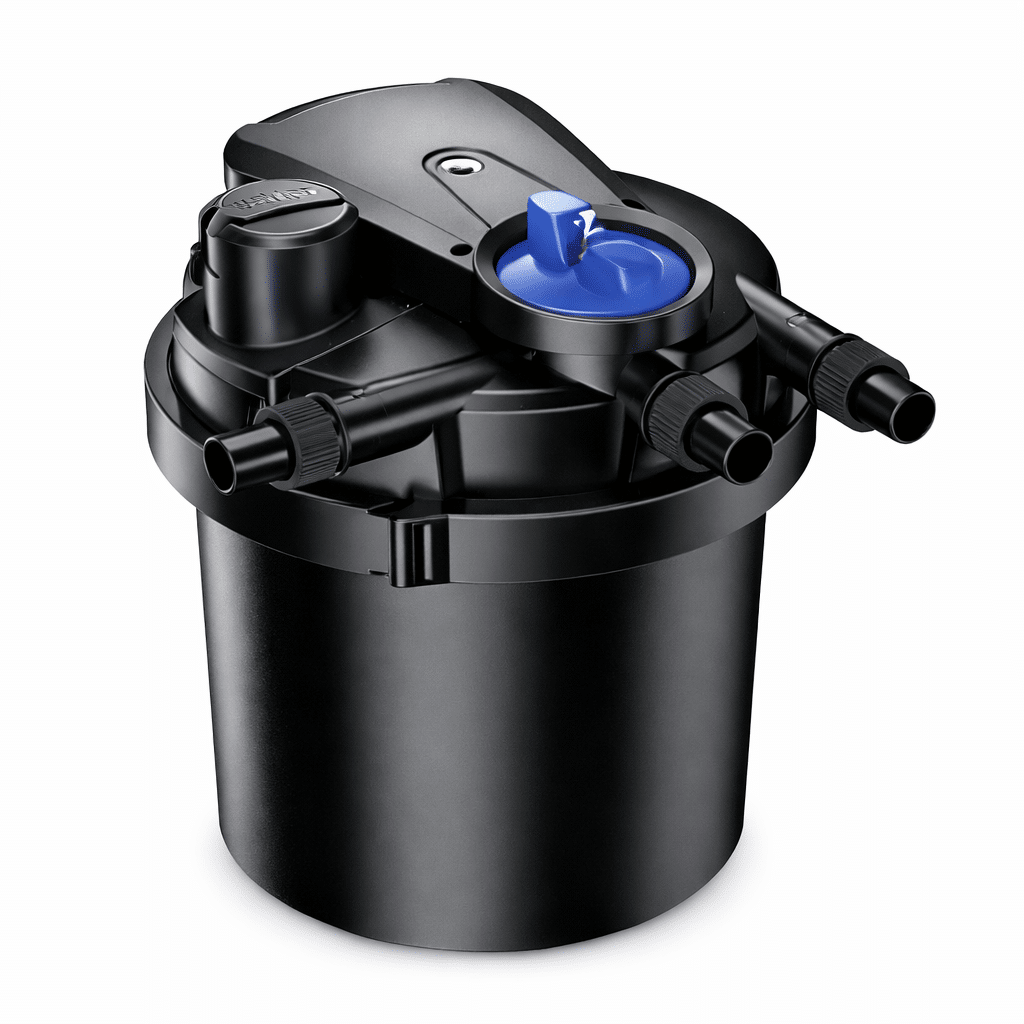
A pressurised pond filter is a sealed filtration system that cleans pond water using mechanical filtration, biological filtration and often a built in UV clarifier. Water is pumped into the filter under pressure and then returned back to the pond clean and filtered. Because the system remains pressurised, it can also feed waterfalls and raised streams after filtration.
How does a pressure pond filter work?
A pressure filter works by pushing pond water through several stages of filtration inside a sealed canister. Mechanical media removes solid waste and debris, biological media supports beneficial bacteria which break down harmful pollutants and UV clarification helps control green water algae.
Are pressure filters good for ponds?
Yes, pressure filters are one of the most popular filtration systems for garden ponds because they are compact, easy to install and relatively simple to maintain. They work particularly well on ornamental ponds, wildlife ponds and medium sized koi ponds where space is limited.
Can a pressure filter clear green water?
Yes, many pressure filters include an integrated UV clarifier which is designed specifically to control green water algae. When correctly sized, a pressure filter and UV system can dramatically improve water clarity.
Are pressure filters suitable for koi ponds?
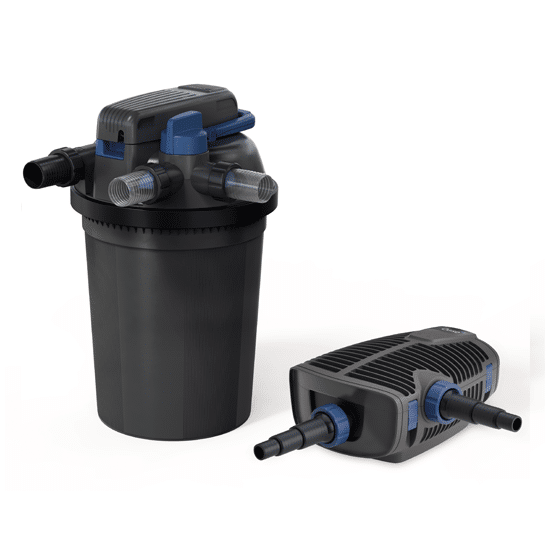
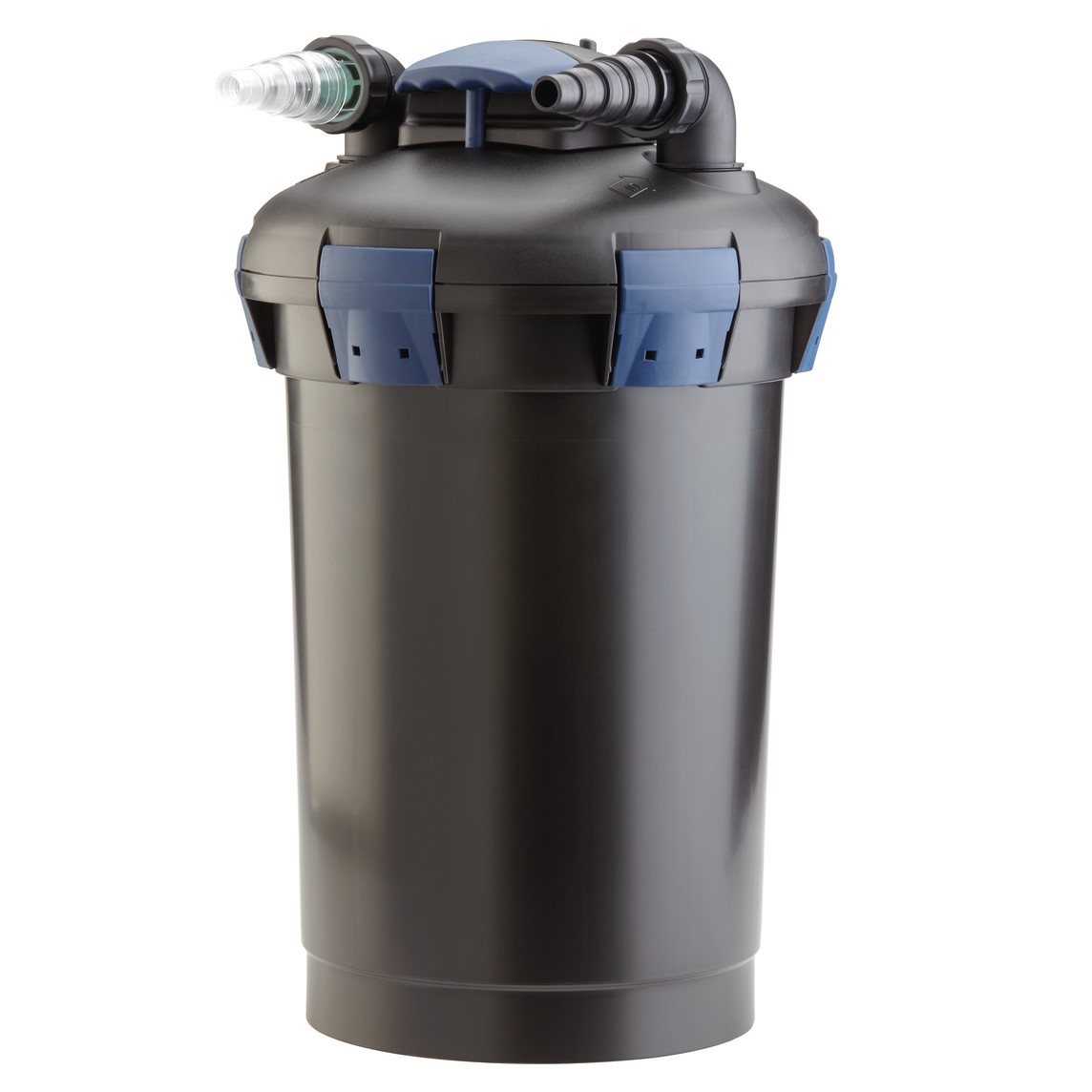
Modern pressure filters can work very well on smaller and medium sized koi ponds when correctly sized. Larger systems such as the Oase FiltoClear range have been specifically developed for more demanding koi pond applications.
For heavily stocked koi ponds, bead filters or drum filters may be more suitable long term.
What size pressure filter do I need?
The correct filter size depends on:
• pond volume
• fish stock
• koi vs ornamental fish
• sunlight exposure
• feeding levels
• waterfalls and streams
In most cases, it is better to slightly oversize filtration rather than choosing the smallest possible system.
Can a pond filter be too big?
In most situations, slightly oversized filtration is beneficial. Larger filters generally provide:
• better biological stability
• clearer water
• lower maintenance
• improved algae control
The important thing is matching the pump flow rate correctly to the filter.
How often should I clean a pressure filter?
Cleaning frequency depends on fish stock, feeding levels and pond conditions. Lightly stocked ponds may only require occasional cleaning, while heavily stocked koi ponds may need more regular maintenance during summer.
If a filter constantly blocks every few days, it is often undersized for the pond.
Why does my pressure filter keep clogging?
The most common causes include:
• undersized filtration
• too many fish
• excessive feeding
• poor circulation
• heavy debris loads
• inadequate pre filtration
Blocked foams usually indicate the system is struggling to cope with the waste load.
Can pressure filters run waterfalls?
Yes. One of the biggest advantages of pressurised filters is that they can pump water uphill after filtration, making them ideal for waterfalls, streams and raised returns.
Can pressure filters be buried?
Yes, many pressure filters are designed to be partially buried beside the pond. This helps create a much neater and more discreet installation.
Always follow the manufacturer’s guidance regarding burial depth and ventilation.
How long does it take for a pressure filter to clear a pond?
Green water can sometimes begin improving within a few days, although full clarity may take several weeks depending on:
• pond condition
• UV strength
• water temperature
• fish stock
• filtration maturity
New filters also need time for beneficial bacteria to establish properly.
Do pressure filters use a lot of electricity?
The filter itself uses very little electricity. Most energy consumption comes from the pond pump and UV clarifier.
Modern energy efficient pumps can significantly reduce long term running costs.
Should I leave my pond filter on all year?
In most cases, yes. Continuous filtration helps maintain stable water quality and supports beneficial bacteria throughout the year.
Turning filtration systems off regularly can reduce oxygen levels and negatively affect biological filtration.
Can pressure filters remove blanketweed?
Not directly. UV clarifiers mainly target suspended green water algae rather than string algae or blanketweed attached to pond surfaces.
However, improved filtration and nutrient reduction can still help reduce blanketweed problems over time. Our blanketweed treatment guide explains this in more detail.
What is the difference between a pressure filter and a box filter?
Pressure filters are sealed systems which can pump water uphill after filtration. Box filters normally rely on gravity return and usually need to sit above pond level.
Pressure filters are generally:
• more compact
• easier to hide
• better for waterfalls
• easier to install on smaller ponds
What is a bead filter?
A bead filter is an advanced type of pressurised filtration system that uses thousands of small plastic beads for mechanical and biological filtration.
Bead filters are especially popular on koi ponds because they provide excellent fine particle removal and strong biological capacity.
What is a polishing filter on a koi pond?
A polishing filter is designed to remove ultra fine suspended particles that standard filtration systems may struggle to capture. These filters are commonly used on koi ponds where exceptional water clarity is important.
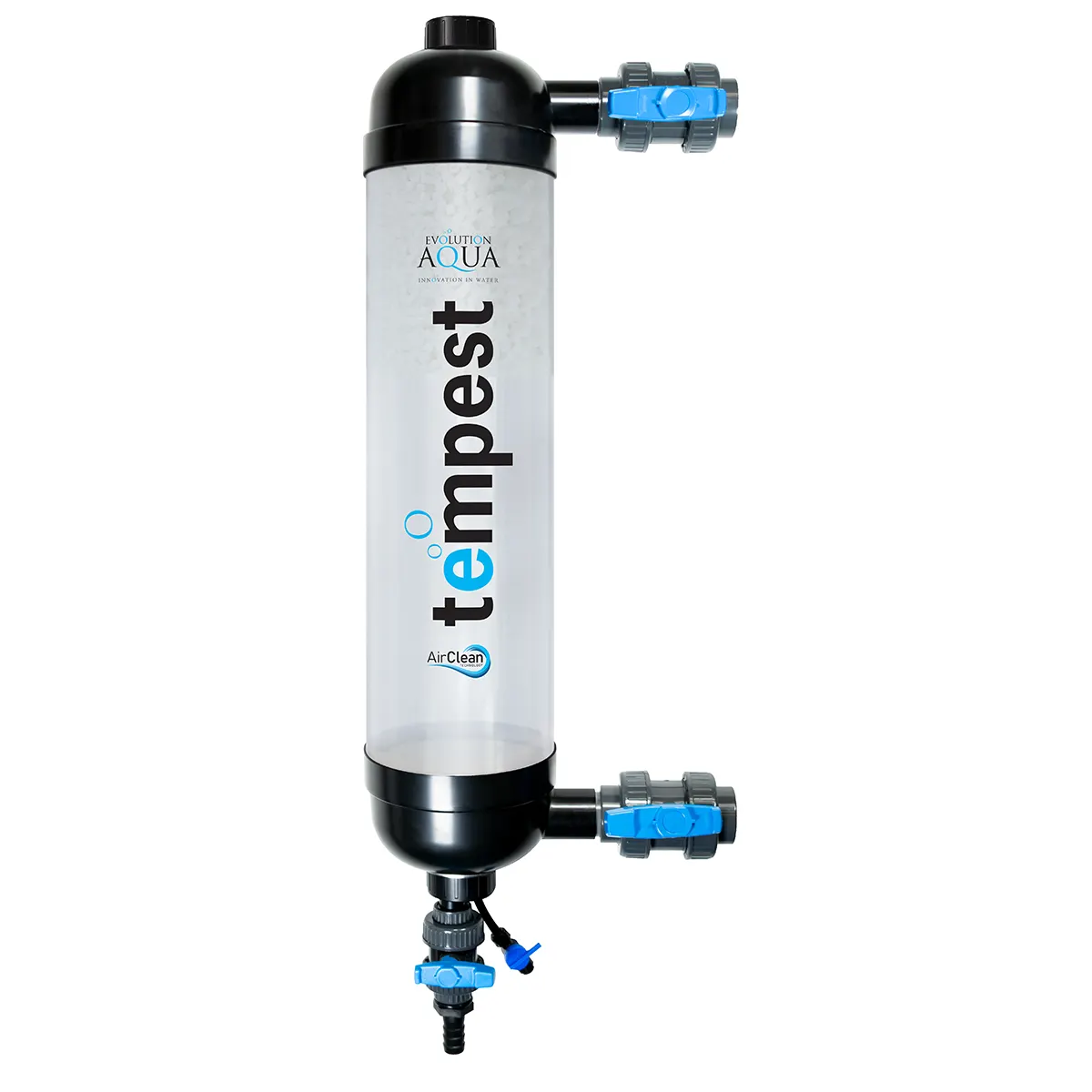
Systems such as the Evolution Aqua Tempest filters are often used as dedicated polishing filters.
Are pressure filters noisy?
Most modern pressure filters themselves are virtually silent. Noise usually comes from the pond pump, waterfalls or air pumps rather than the filter body.
Poorly maintained pumps or partially blocked systems can sometimes create additional vibration or noise.
Why is my pond still cloudy after installing a filter?
Cloudy water can be caused by:
• immature biological filtration
• undersized filtration
• poor circulation
• excessive fish stock
• suspended fine particles
• overfeeding
Newly installed filters also take time to mature biologically before reaching full efficiency.
Do pressure filters need a UV clarifier?
Technically no, but most ponds benefit massively from UV clarification. Without a UV, green water algae can become much harder to control, especially during spring and summer when sunlight levels increase.
For most fish ponds and ornamental ponds, a built in UV clarifier is strongly recommended.
How long do pressure filters last?
A good quality pressure filter can last many years when maintained correctly. Premium systems with strong UV housings, durable seals and quality internal components tend to last significantly longer than cheaper entry level filters.
Regular maintenance and annual UV bulb replacement will also help maximise lifespan.
Can pressure filters handle fish waste?
Yes, provided they are correctly sized for the pond and fish stock. Mechanical filtration removes solid waste while biological filtration breaks down harmful pollutants produced by fish and uneaten food.
However, heavily stocked koi ponds may eventually require larger bead filters or drum filter systems.
Why does my waterfall lose flow over time?
Reduced waterfall flow is often caused by:
• blocked filter foams
• dirty pump cages
• algae build up inside pipework
• worn pump impellers
• undersized pipework
• excessive head height
In many cases, gradual flow reduction is simply a sign that the filtration system requires cleaning or upgrading.
Can I use a pressure filter on a wildlife pond?
Yes, pressure filters can work very well on wildlife ponds, especially where clear water and low maintenance are priorities.
However, wildlife ponds are often lightly stocked, so filtration requirements are usually much lower compared to koi ponds.
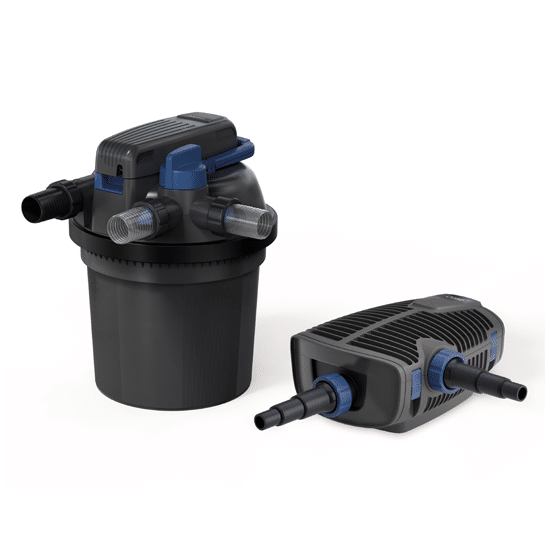
What pump should I use with a pressure filter?
The correct pump depends on:
• pond volume
• filter flow rating
• pipework length
• waterfall height
• desired turnover rate
Matching the pump correctly to the filter is extremely important. Excessive flow can reduce filtration efficiency while insufficient flow may lead to poor circulation.
Are pressure filters easy to maintain?
Most modern pressure filters are designed to be far easier to maintain than older filtration systems.
Many premium models now include:
• cleaning handles
• backwash systems
• integrated waste outlets
• easy access foam cleaning
Systems such as the Oase FiltoClear range are particularly popular for their user friendly cleaning systems.
Why does my pressure filter smell bad?
A strong unpleasant smell can indicate:
• trapped sludge build up
• insufficient cleaning
• poor oxygen levels
• excessive fish waste
• blocked media
Healthy filtration systems should not normally produce strong foul odours.
Can pressure filters be installed above pond level?
Yes, this is one of the biggest advantages of pressurised filtration systems. Because the filter operates under pressure, it can continue pumping water uphill after filtration.
This makes pressure filters ideal for:
• waterfalls
• raised streams
• elevated returns
• hidden filter installations
What is the best pressure filter for a koi pond?
This depends on pond size, stocking levels and maintenance expectations.
For smaller and medium sized koi ponds, systems such as the Oase FiltoClear filters can work very well.
For larger koi ponds, many pond owners move towards:
• bead filters
• polishing filters
• drum filters
• hybrid filtration systems
What are polishing filters used for?
Polishing filters are designed to remove extremely fine suspended particles that standard filtration systems often struggle to capture.
These systems are especially popular on koi ponds where achieving crystal clear water is a major priority.
The Evolution Aqua Tempest range is commonly used as a dedicated polishing filter.
Are bead filters better than standard pressure filters?
Bead filters generally offer:
• increased biological capacity
• improved fine particle removal
• better waste handling
• higher flow capability
However, they are usually designed for larger ponds and more advanced koi pond systems.
Compact pressure filters are often still the better choice for smaller domestic ponds.
Can I use multiple filters on one pond?
Yes, many larger ponds use multiple filtration systems working together.
For example:
• a drum filter on the bottom drain line
• a bead filter on the skimmer line
• a polishing filter for fine particles
This layered approach can significantly improve overall water quality and clarity.
Why is my UV clarifier not clearing green water?
Common causes include:
• old UV bulb
• incorrect flow rate
• undersized UV unit
• dirty quartz sleeve
• poor circulation
• excessive sunlight
• heavy nutrient levels
UV bulbs should normally be replaced annually even if they still appear to be working.
Can pressure filters freeze in winter?
Yes, exposed pipework and filter housings can potentially freeze during severe cold weather.
Insulation, continuous water movement and proper winter preparation all help reduce freezing risk.
How often should a UV bulb be replaced?
Most pond UV bulbs should be replaced every 12 months. Even if the bulb still lights up, UV output gradually weakens over time which reduces algae control effectiveness.
Are pressure filters suitable for swimming ponds?
Smaller natural swimming ponds may use pressure filtration, although larger dedicated swimming ponds often require specialist biological filtration systems designed specifically for swimming applications.
Why does my pond water turn green every spring?
Spring green water is extremely common because increasing sunlight and rising temperatures encourage rapid algae growth before biological filtration has fully become active again after winter.
This is especially noticeable on ponds with undersized UV clarification.
Can pressure filters improve fish health?
Yes. Proper filtration helps maintain:
• stable water quality
• lower ammonia levels
• improved oxygenation
• reduced waste accumulation
• healthier overall pond conditions
Poor water quality is one of the most common causes of fish stress and disease.
Do pressure filters remove sludge?
Pressure filters help trap suspended waste before it settles, but they are not designed to fully remove heavy sludge deposits already sitting on the pond floor.
Severe sludge build up may still require pond cleaning or vacuuming.
Can I turn my pond filter off at night?
No, pond filters should normally run continuously 24 hours a day. Turning the system off overnight reduces circulation and oxygen levels while also starving beneficial bacteria of oxygen rich water.
Frequent shutdowns can weaken biological filtration and negatively affect water quality.
What happens if my pond filter is too small?
Undersized filtration is one of the most common causes of:
• green water
• blanketweed
• cloudy water
• excessive sludge
• poor water quality
• stressed fish
A filter that constantly requires cleaning or struggles during summer is often too small for the pond.
Can I upgrade my existing pressure filter?
Yes, many ponds can be significantly improved by upgrading:
• the filter itself
• the UV clarifier
• the pond pump
• circulation systems
• skimmer filtration
Our pond filtration upgrade services regularly help improve older pond systems.
Do pressure filters work for raised ponds?
Yes, pressure filters are ideal for raised ponds because they can pump water uphill after filtration.
Their compact design also makes them easier to hide beside raised pond structures.
What is biological filtration?
Biological filtration is the process where beneficial bacteria break down harmful fish waste and pollutants inside the filter media.
These bacteria convert:
• ammonia
• nitrite
into the less harmful nitrate as part of the pond nitrogen cycle.
What is mechanical filtration?
Mechanical filtration physically removes solid waste particles from pond water before they begin breaking down.
This includes:
• fish waste
• leaves
• algae debris
• uneaten food
• suspended particles
Good mechanical filtration helps improve clarity and reduce sludge build up.
Can I clean my filter too much?
Yes. Excessive cleaning, especially using chlorinated tap water, can damage beneficial bacteria living inside the filter media.
Most routine cleaning should focus on removing excess debris rather than completely sterilising the filter.
Why does my pond water smell earthy?
A mild earthy smell is usually normal in healthy ponds. Strong foul odours however may indicate:
• trapped sludge
• stagnant areas
• poor circulation
• excessive waste accumulation
• oxygen depletion
What is the best filter for a heavily stocked koi pond?
Heavily stocked koi ponds often benefit from:
• bead filters
• drum filters
• polishing filters
• moving bed filtration
• advanced hybrid systems
While some large pressure filters can work well, heavily stocked koi ponds usually require more advanced filtration long term.
Do pressure filters need an air pump?
Not always, but additional aeration is highly beneficial for many ponds, especially:
• koi ponds
• heavily stocked ponds
• warm summer conditions
• deep ponds
Extra oxygen supports fish health and improves biological filtration efficiency.
What causes foam inside a pressure filter?
Foam and biological media trap waste particles over time. This is completely normal and forms part of the filtration process.
However, excessive organic waste accumulation can eventually reduce flow and require cleaning.
Can pressure filters help reduce algae?
Yes, particularly when combined with properly sized UV clarification and good circulation.
Effective filtration helps reduce excess nutrients which algae relies on for growth.
Why is my pressure filter leaking?
Leaks are commonly caused by:
• worn seals
• damaged O rings
• cracked housings
• incorrectly tightened lids
• blocked outlets causing pressure build up
Regular inspection and maintenance can help prevent leaks developing.
What is the difference between UV clarification and filtration?
Filtration physically removes waste and pollutants from the pond water.
UV clarification specifically targets microscopic green water algae by exposing it to ultraviolet light.
Both systems work together as part of overall pond filtration.
Are pressure filters suitable for small ponds?
Yes, compact pressure filters are ideal for smaller ponds because they:
• save space
• are easy to hide
• are simple to install
• provide effective filtration within a compact unit
Why does my pond water stay cloudy after cleaning?
After major cleaning work, ponds often experience temporary cloudiness while:
• biological filtration re stabilises
• suspended particles settle
• beneficial bacteria rebuild
This is usually temporary provided the filtration system is working correctly.
What is K1 Micro media?
K1 Micro is a specialist floating bead media used within advanced filtration systems such as:
• bead filters
• polishing filters
• hybrid filtration systems
It provides excellent surface area for beneficial bacteria while also helping trap fine suspended particles.
Can pressure filters improve water clarity?
Yes. Good pressure filtration removes suspended waste particles, supports biological filtration and helps control algae, all of which contribute towards clearer water.
Advanced polishing systems can improve clarity even further by removing ultra fine particles.
What are hybrid pond filtration systems?
Hybrid systems combine multiple filtration technologies together to improve overall performance.
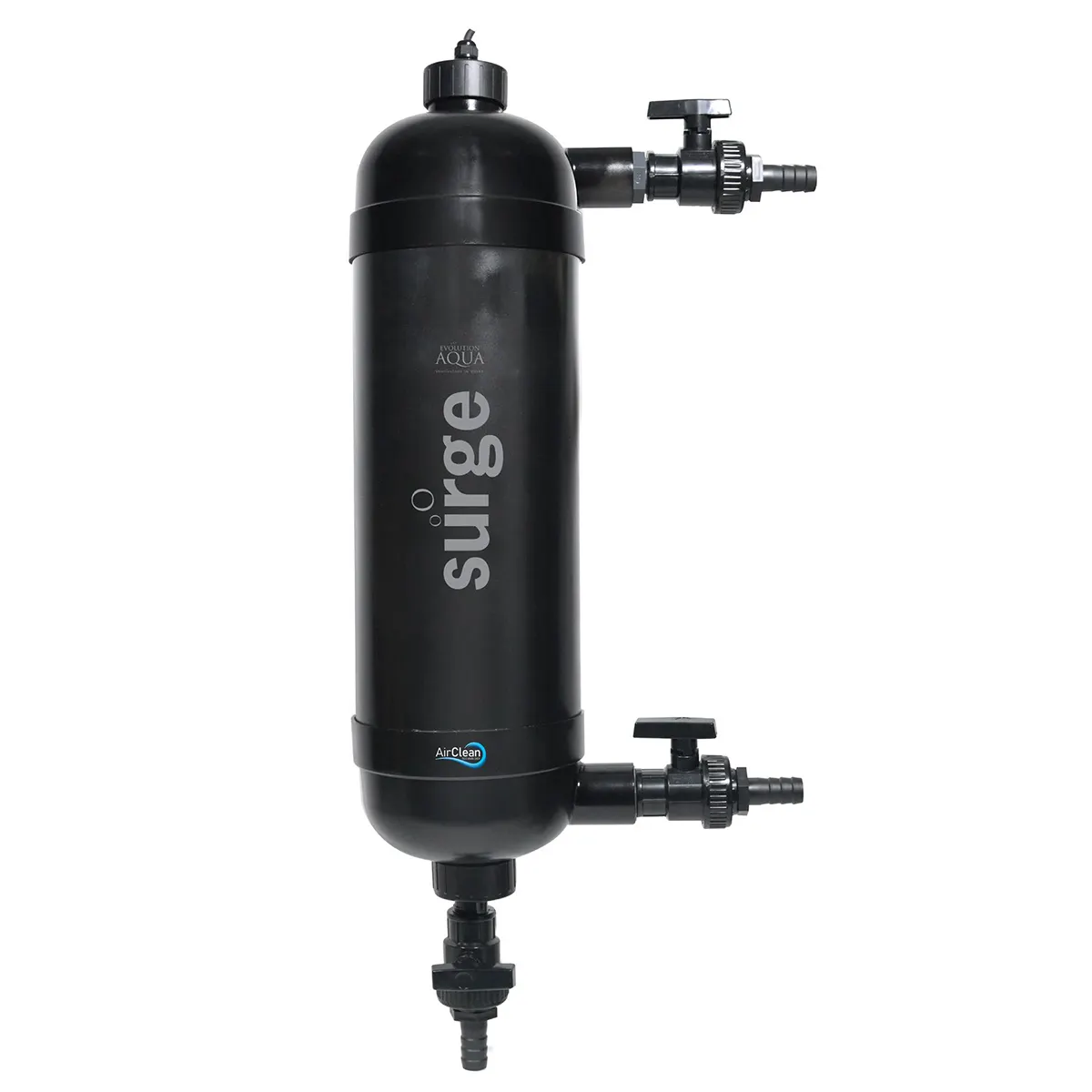
For example, systems such as the Evolution Aqua Surge and Tempest filters combine advanced mechanical separation, biological filtration and polishing filtration within compact modern systems.
Do pressure filters need regular servicing?
Yes. Regular maintenance helps:
• maintain flow rates
• preserve water clarity
• support healthy bacteria
• prevent blockages
• extend equipment lifespan
Most systems benefit from regular cleaning, annual UV bulb replacement and periodic inspection of seals and pipework.
Can I use a pressure filter without fish?
Yes, pressure filters work perfectly well on ornamental and wildlife ponds without fish. In fact, lightly stocked ponds often require far less filtration than koi ponds, making compact pressure filters an excellent low maintenance option.
Why does my pressure filter lose flow after cleaning?
Reduced flow after cleaning can be caused by:
• trapped air inside the system
• incorrectly seated foams
• partially blocked impellers
• kinked pipework
• clogged pump cages
Checking the entire circulation system usually identifies the issue quickly.
What is the best pressure filter for a small pond?
Compact systems such as the Oase FiltoClear filters and PondXpert SpinClean range are very popular for smaller ponds because they are compact, easy to maintain and ideal for waterfalls and streams.
Can pressure filters help with pond smells?
Yes. Good filtration reduces excess organic waste, improves circulation and supports healthier water conditions, all of which help reduce unpleasant pond odours.
Strong foul smells are usually a sign of excessive sludge or poor water quality.
Why does my pond water go brown?
Brown water is commonly caused by:
• tannins from leaves
• suspended sediment
• disturbed sludge
• runoff entering the pond
• decomposing organic matter
Mechanical filtration and good circulation can help improve clarity over time.
Can I install a pressure filter myself?
Many pressure filters are designed for straightforward DIY installation. Most systems simply require:
• a suitable pump
• correct pipework
• electrical supply
• correct flow rates
However, larger koi pond systems may benefit from professional design and installation.
What is the difference between pump fed and gravity fed filtration?
Pump fed systems push water into the filter under pressure, while gravity fed systems allow water to flow naturally into the filter from the pond before being pumped back.
Pressure filters are normally pump fed systems.
Can pressure filters handle leaves and heavy debris?
Pressure filters can remove suspended debris, but excessive leaves and organic matter may quickly clog the mechanical filtration stages.
Pond skimmers and regular maintenance help reduce heavy debris loads.
Should I clean all my filter media at once?
Not usually. Cleaning all media at the same time can reduce beneficial bacteria levels too dramatically.
Many pond keepers stagger cleaning slightly to help preserve biological stability.
Why does my pond go cloudy after feeding fish?
Excess food and fish activity can stir up fine particles while also increasing nutrient levels inside the pond.
Overfeeding is one of the most common causes of poor water quality.
What is the ideal pond turnover rate?
Most garden ponds benefit from turning the full pond volume over approximately every 1 to 2 hours depending on:
• fish stock
• pond design
• filtration type
• waterfalls and streams
Koi ponds often require higher turnover rates than wildlife ponds.
Can pressure filters improve oxygen levels?
Indirectly yes. Better circulation and cleaner water conditions help improve oxygen availability throughout the pond.
However, dedicated aeration systems such as air pumps are still recommended for many koi ponds.
What causes green water in ponds?
Green water is caused by microscopic suspended algae multiplying rapidly due to:
• sunlight
• excess nutrients
• insufficient UV clarification
• immature filtration
Proper UV sizing and good filtration are key to prevention.
Are all pressure filters the same?
No. Pressure filters vary significantly in:
• build quality
• biological capacity
• UV performance
• cleaning systems
• flow rates
• long term reliability
Premium systems often provide noticeably better performance and easier maintenance.
Can pressure filters be hidden?
Yes, this is one of their biggest advantages. Many pressure filters can be:
• partially buried
• hidden behind planting
• concealed beside ponds
• installed inside filter bays
This helps create a much cleaner looking pond setup.
Why does my pond filter foam smell dirty?
Dirty smelling foams are usually caused by trapped organic waste breaking down inside the filter.
Regular maintenance and avoiding excessive fish stocking help reduce this issue.
Can pressure filters be used with pond skimmers?
Yes. Many larger ponds use pressure filters or bead filters directly on skimmer lines to help remove floating debris and fine suspended particles before they sink.
This setup can significantly improve overall water clarity.
What is the benefit of a built in UV clarifier?
Integrated UV clarification helps simplify installation while improving green water control.
Built in UV systems also reduce the need for separate external UV units and additional pipework.
Are pressure filters suitable for heavily planted ponds?
Yes. Planted ponds often produce lower waste loads than heavily stocked koi ponds, making pressure filters a very effective and low maintenance option.
Plants and filtration systems work very well together when balanced correctly.
Why do premium pressure filters cost more?
Higher quality systems usually offer:
• stronger UV clarification
• improved biological capacity
• better cleaning systems
• more durable construction
• improved reliability
• easier maintenance
Over the long term, premium filters are often more cost effective due to improved performance and longevity.
Which pressure filter is easiest to clean?
Modern pressure filters with integrated cleaning handles and waste outlets are generally the easiest to maintain. Systems such as the Oase FiltoClear range and PondXpert SpinClean filters are particularly popular because they allow the foams to be cleaned without fully dismantling the filter.
Are Oase pressure filters worth the money?
In our experience, yes. Premium systems such as the Oase FiltoClear range generally offer:
• stronger UV clarification
• better build quality
• improved cleaning systems
• larger biological capacity
• longer lifespan
While they cost more initially, they are often easier to maintain and more reliable long term.
What is the best pressure filter for a waterfall?
Pressure filters are ideal for waterfalls because they can pump water uphill after filtration.
Compact systems such as the Oase FiltoClear filters work especially well on garden ponds with streams and raised returns.
Can a pressure filter replace a drum filter?
On smaller ponds, sometimes yes. However, heavily stocked koi ponds generally benefit from drum filters because they continuously remove heavy waste loads before they break down.
Pressure filters are usually better suited to:
• ornamental ponds
• wildlife ponds
• smaller koi ponds
• medium domestic ponds
Do pressure filters remove ammonia?
Indirectly yes. Beneficial bacteria living inside the biological media convert harmful ammonia into nitrite and then nitrate as part of the nitrogen cycle.
This biological filtration process is extremely important for maintaining healthy fish conditions.
What pond size is too big for a pressure filter?
This depends heavily on fish stock and pond type.
Modern large pressure filters can comfortably support medium sized koi ponds, especially systems such as the Oase FiltoClear 60000 and 90000 filters.
However, very large or heavily stocked koi ponds will often require:
• bead filters
• drum filters
• moving bed filtration
• multi stage systems
Why does my pressure filter overflow?
Overflowing filters are commonly caused by:
• blocked foams
• clogged outlets
• excessive pump flow
• dirty pipework
• trapped sludge
Regular cleaning and proper pump sizing usually prevent overflow issues.
Can a pressure filter run above ground?
Yes. Because pressure filters operate under pressure, they can be installed above pond water level while still returning water back into the pond or waterfall.
What is the difference between K1 media and foam filters?
Foam filters primarily trap physical debris, while K1 media provides a huge surface area for beneficial bacteria and fine particle filtration.
Advanced systems such as bead filters and polishing filters often use K1 or K1 Micro media instead of traditional foams.
Why is my pond still green with a UV filter?
Common causes include:
• undersized UV unit
• old UV bulb
• excessive flow rate
• poor circulation
• excessive nutrients
• direct sunlight
Even if the UV bulb still lights up, it may no longer be producing effective UV output.
Can pressure filters be used indoors?
Yes. Many pond owners install pressure filters inside:
• sheds
• garages
• filter rooms
• pump houses
This can help protect equipment while keeping the installation discreet.
Are pressure filters safe for wildlife ponds?
Yes, pressure filters are perfectly suitable for wildlife ponds, especially lightly stocked ponds where low maintenance and clear water are priorities.
Can pressure filters be used with bottom drains?
Most compact pressure filters are pump fed systems rather than direct gravity fed bottom drain systems.
However, some larger koi pond setups combine bottom drains with bead filters or advanced pressure filtration on secondary circuits.
Why do koi ponds need larger filters?
Koi produce significantly more waste than most ornamental pond fish. They are larger, heavier feeding fish which place much greater strain on filtration systems.
This is why koi ponds almost always require oversized filtration compared to standard garden ponds.
What is the difference between a koi filter and a normal pond filter?
Koi pond filters are generally designed to handle:
• higher waste loads
• larger fish
• heavier feeding
• increased circulation requirements
They often include larger biological chambers, stronger UV systems and improved mechanical filtration.
Can I run two pressure filters together?
Yes. Some larger ponds use multiple pressure filters together to increase overall filtration capacity and improve circulation.
This can work especially well where ponds have:
• waterfalls
• skimmer lines
• separate circulation circuits
Do pressure filters remove nitrate?
Not directly. Biological filtration converts ammonia into nitrite and then nitrate.
Nitrate is far less harmful than ammonia or nitrite, but it can still build up over time and may require:
• water changes
• plants
• additional biological filtration
What is the best pond filter for crystal clear water?
The best systems for extremely clear water often combine multiple filtration stages together.
For example:
• mechanical filtration
• biological filtration
• UV clarification
• polishing filtration
Systems such as the Evolution Aqua Tempest range are specifically designed to help remove ultra fine suspended particles.
How do I know if my UV bulb is working?
A UV bulb may still light up even after UV output has weakened significantly.
Signs of reduced UV performance include:
• returning green water
• cloudy water
• worsening algae problems
Most pond UV bulbs should be replaced every 12 months.
Why is my pond filter full of sludge?
Sludge build up is caused by trapped organic waste gradually accumulating inside the system.
This may indicate:
• insufficient cleaning
• excessive fish stock
• overfeeding
• poor circulation
• undersized filtration
Regular maintenance helps prevent excessive sludge accumulation.
Why does my koi pond never look crystal clear?
Even ponds with good filtration can still contain ultra fine suspended particles which slightly dull overall water clarity. This is especially common on koi ponds with heavy feeding and high fish stocks.
Many advanced koi ponds use polishing filters such as the Evolution Aqua Tempest range specifically to remove these tiny particles and improve overall clarity.
What is the best filter setup for a koi pond?
The best koi pond filtration systems usually combine multiple filtration stages together.
Larger koi ponds commonly use:
• bottom drains
• drum filters
• bead filters
• polishing filters
• UV clarification
• additional aeration
This layered approach allows each system to target different types of waste and filtration.
Can I use a pressure filter and bead filter together?
Yes, and this can work extremely well. Many koi ponds use:
• a main filtration system
• a bead filter on the skimmer line
• additional polishing filtration
Combining systems together often produces far better clarity and waste handling than relying on a single filter alone.
What is the best filter for a heavily stocked pond?
Heavily stocked ponds usually require advanced filtration systems with large biological capacity and strong mechanical waste removal.
For serious koi ponds, this often means:
• drum filters
• bead filters
• hybrid filtration systems
• polishing filtration
• high circulation rates
Why do some ponds stay clear while others struggle?
The difference usually comes down to:
• correct filtration sizing
• fish stocking levels
• circulation
• UV clarification
• maintenance
• pond design
Many pond problems are caused by undersized filtration rather than poor quality equipment.
Is it better to oversize pond filtration?
In most cases, yes. Oversized filtration generally provides:
• more stable water quality
• lower maintenance
• improved clarity
• better biological performance
• improved long term reliability
This is particularly important on koi ponds where fish grow and feeding levels increase over time.
Why is my pond water cloudy but not green?
Cloudy grey or white water is usually caused by suspended particles or immature biological filtration rather than algae.
Common causes include:
• fine debris
• disturbed sludge
• bacterial blooms
• insufficient mechanical filtration
• overfeeding
Polishing filtration can help significantly with fine suspended particles.
What is the best low maintenance pond filter?
Low maintenance systems generally include:
• large biological capacity
• easy cleaning systems
• integrated waste outlets
• efficient mechanical filtration
Premium systems such as the Oase FiltoClear range and advanced bead filters are particularly popular for reduced maintenance.
Are pressure filters good for natural looking ponds?
Yes. Their compact size and ability to be hidden make them ideal for natural style pond designs where discreet filtration is important.
Many wildlife ponds and ornamental ponds use partially hidden pressure filters very successfully.
Can pressure filters be hidden underground?
Many pressure filters are specifically designed to be partially buried beside the pond. This helps hide the equipment while still allowing easy access for maintenance.
Always follow manufacturer guidance regarding burial depth and ventilation.
How long should I run my pond UV for?
Most pond UV clarifiers should run continuously during the warmer months when algae growth is active.
Many pond owners run UV clarification throughout most of the year, especially on koi ponds.
Should pond filters run in winter?
Yes, in most cases filtration should continue running throughout winter to help maintain stable water quality and preserve beneficial bacteria.
Feeding levels should however normally reduce as water temperatures fall.
Can a pressure filter improve pond circulation?
Yes. Proper filtration systems help improve overall water movement and circulation which supports:
• oxygenation
• debris removal
• biological filtration
• overall water quality
Good circulation is extremely important for healthy ponds.
What causes fine particles in pond water?
Fine suspended particles are commonly caused by:
• fish waste
• algae debris
• heavy feeding
• disturbed sludge
• insufficient mechanical filtration
Standard filters sometimes struggle to remove ultra fine particles completely which is why polishing filters have become increasingly popular.
What is the difference between a bead filter and a polishing filter?
Bead filters are normally used as primary filtration systems and provide both mechanical and biological filtration.
Polishing filters are designed specifically to target ultra fine suspended particles and improve overall clarity.
Some advanced systems can perform elements of both roles together.
Can I upgrade from a pressure filter to a bead filter?
Yes, many pond owners eventually upgrade to bead filters as ponds become larger or fish stocks increase.
Bead filters generally offer:
• improved fine particle filtration
• increased biological capacity
• higher flow capability
• better waste handling
Do pressure filters work without chemicals?
Yes. Proper filtration, UV clarification and healthy biological bacteria can maintain excellent water quality naturally without relying heavily on pond chemicals.
Good filtration is always the foundation of a healthy pond.
Are pressure filters suitable for goldfish ponds?
Absolutely. Pressure filters are ideal for goldfish ponds because they provide reliable filtration while remaining compact and easy to maintain.
Many ornamental goldfish ponds use pressure filtration very successfully.
What happens if my pond pump is too powerful?
Excessive flow can reduce filtration efficiency by forcing water through the system too quickly.
This may lead to:
• reduced waste capture
• poor biological contact time
• overflowing filters
• excessive pressure build up
Matching the pump correctly to the filter is extremely important.
Do pressure filters help stop algae?
Yes, especially when combined with properly sized UV clarification and good circulation.
Effective filtration helps reduce excess nutrients and suspended algae while supporting a healthier overall pond environment.