Evolution Aqua Nexus Pond Filters – Frequently Asked Questions
Below is a comprehensive guide to help you understand how Evolution Aqua Nexus filters work, how to size them correctly, and how to get the best long term performance from your system.
1. What is the Evolution Aqua Nexus pond filter and how does it work?
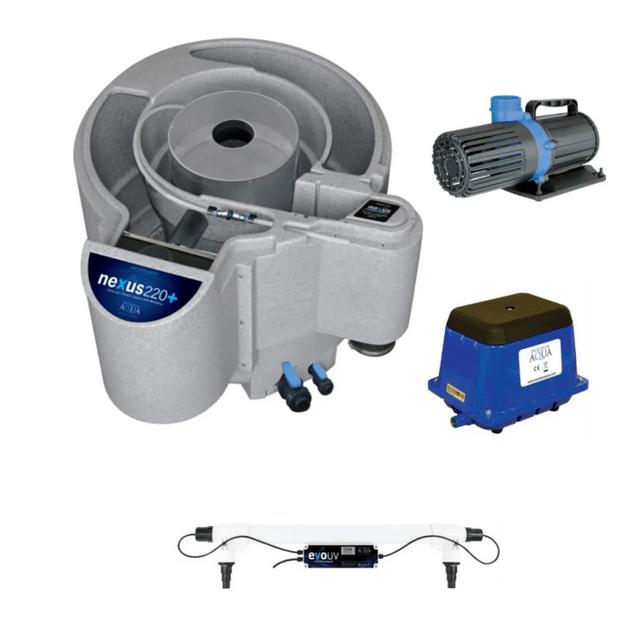
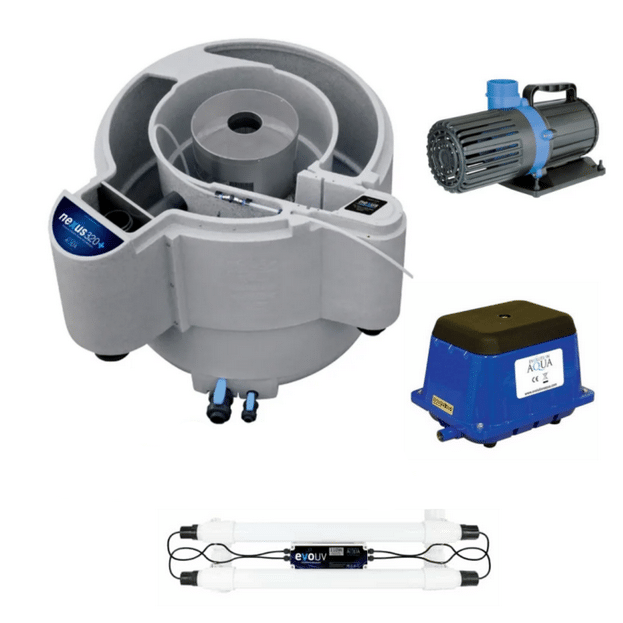
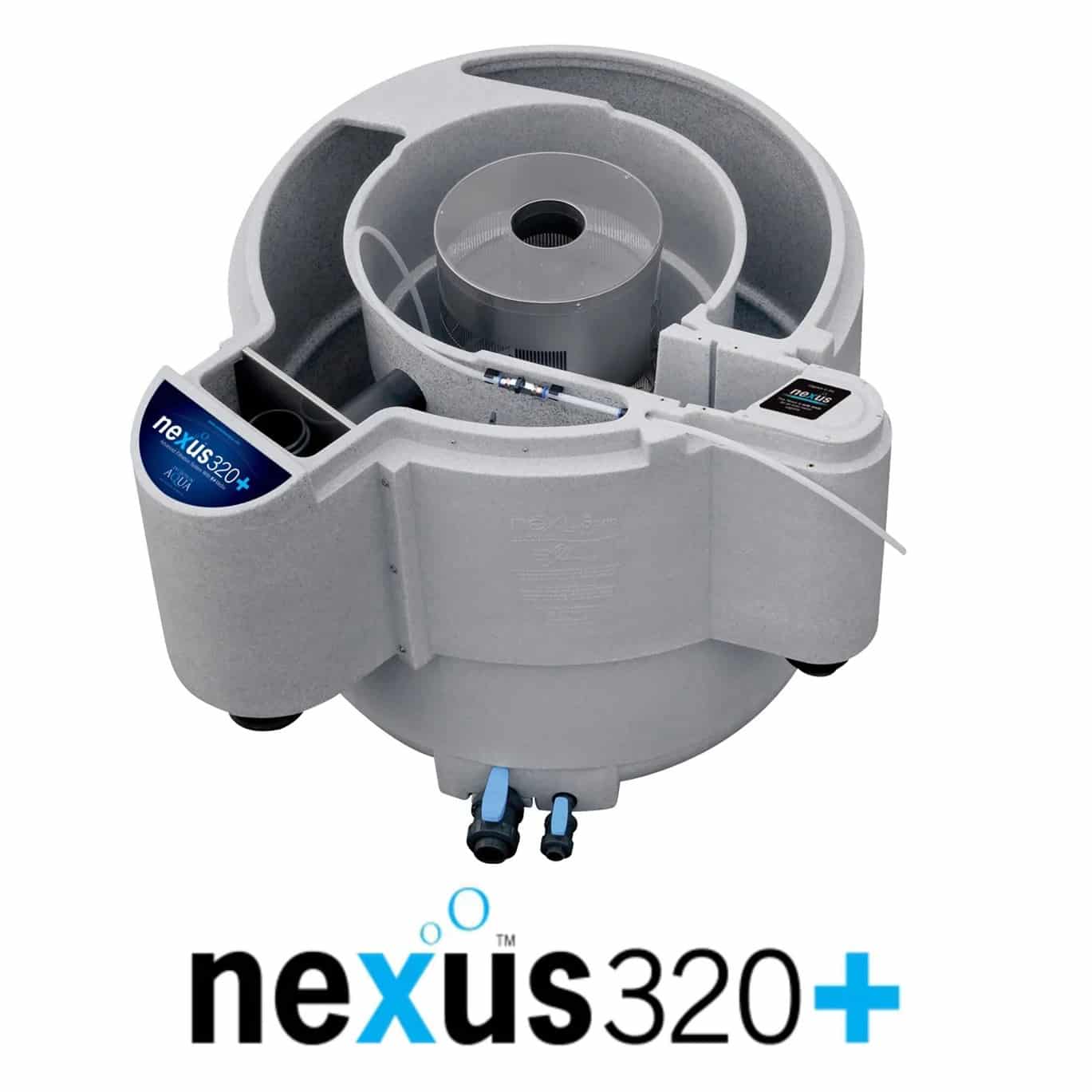
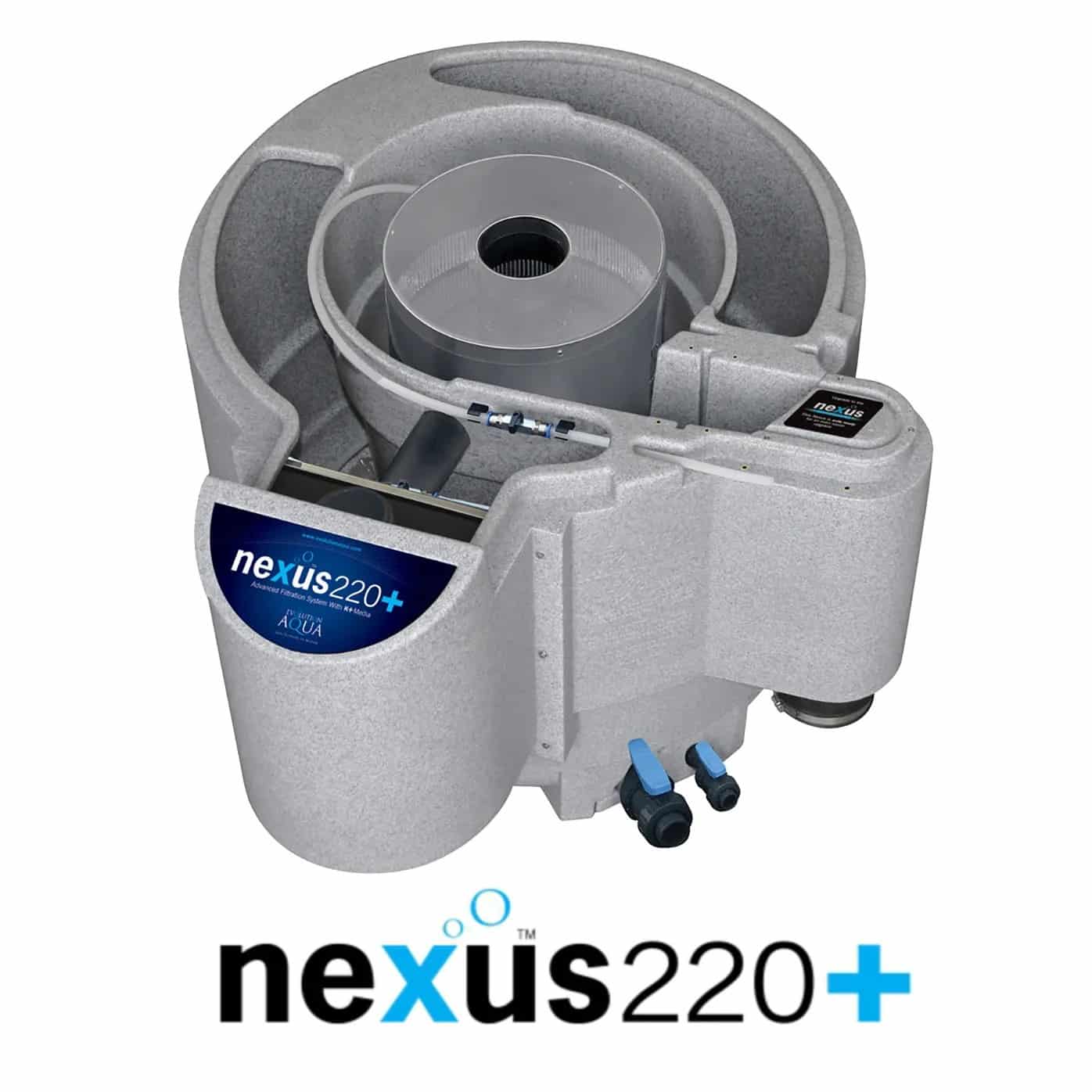
The Evolution Aqua Nexus is a combined mechanical and biological filtration system designed specifically for koi ponds and heavily stocked ornamental ponds.
It operates in two core stages:
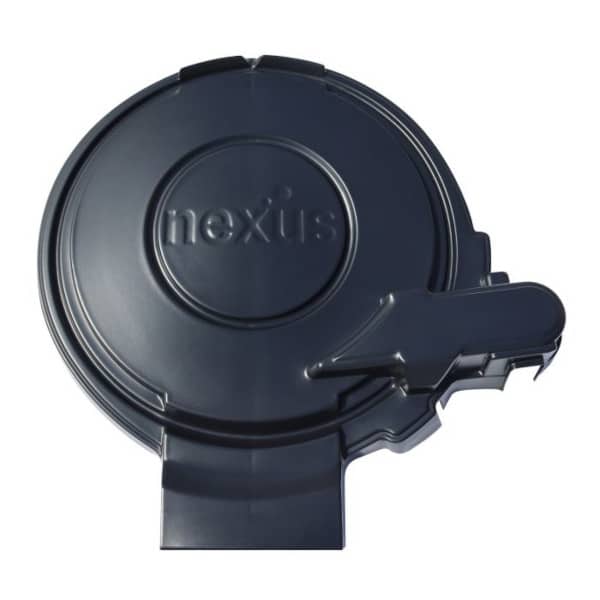
Firstly, water enters the central vortex and Eazy chamber where mechanical filtration removes solid waste and suspended debris using K1 Micro media.
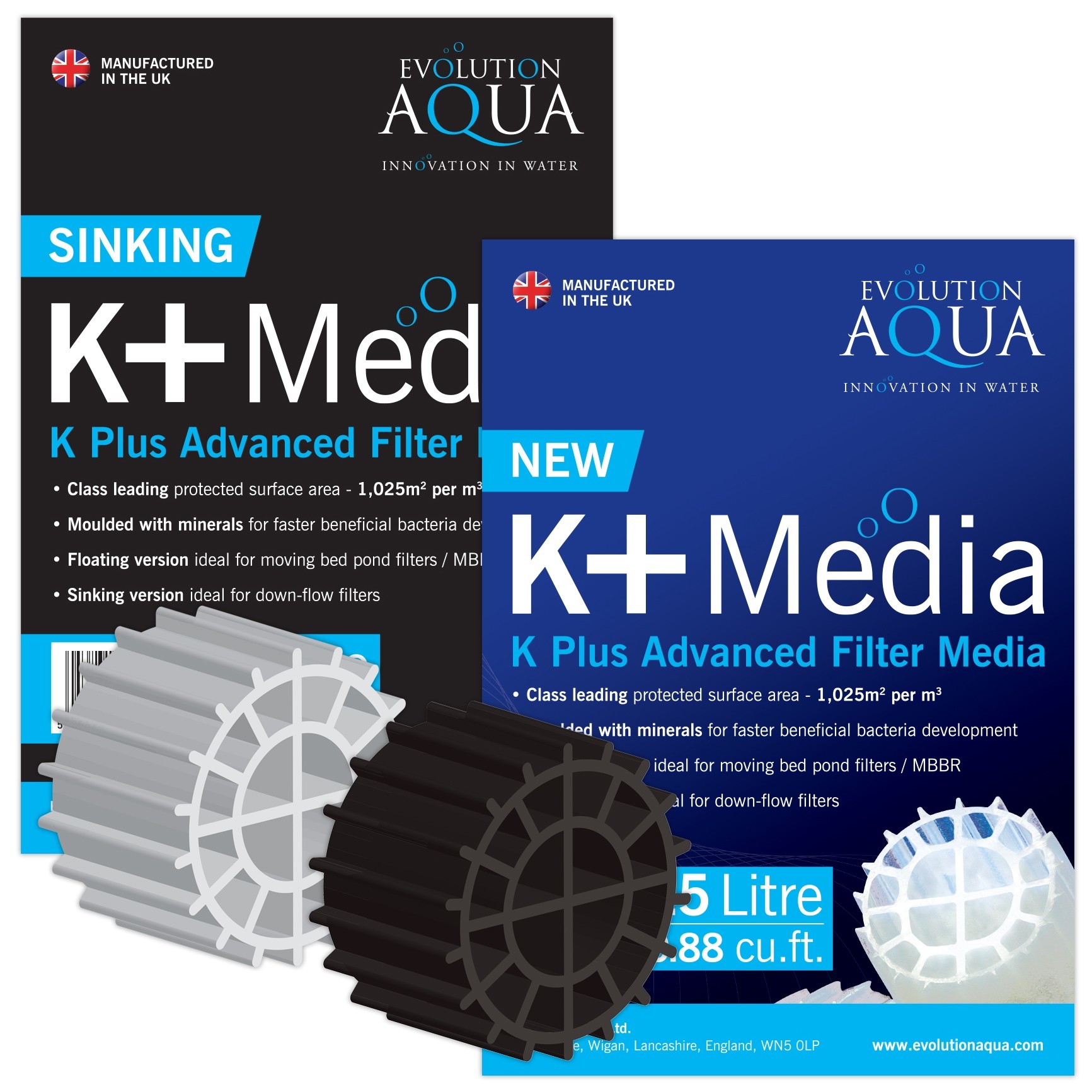
Secondly, water flows into the outer moving bed chamber where K+ media provides high surface area for nitrifying bacteria. These bacteria convert harmful ammonia and nitrite into nitrate.
Because the system integrates both processes into one unit, it simplifies installation while maintaining high filtration performance.
2. What sizes are available in the Nexus range?
The current Nexus range includes:
- Nexus 220+
- Nexus 320+
- Nexus 220+ Ti
- Nexus 320+ Ti
The 220 models suit ponds up to approximately 18,000 litres depending on stocking levels.
The 320 models suit ponds up to approximately 34,000 litres.
However, final sizing always depends on fish load, feeding rates and turnover requirements.
3. What is the difference between the standard Nexus and the Ti version?
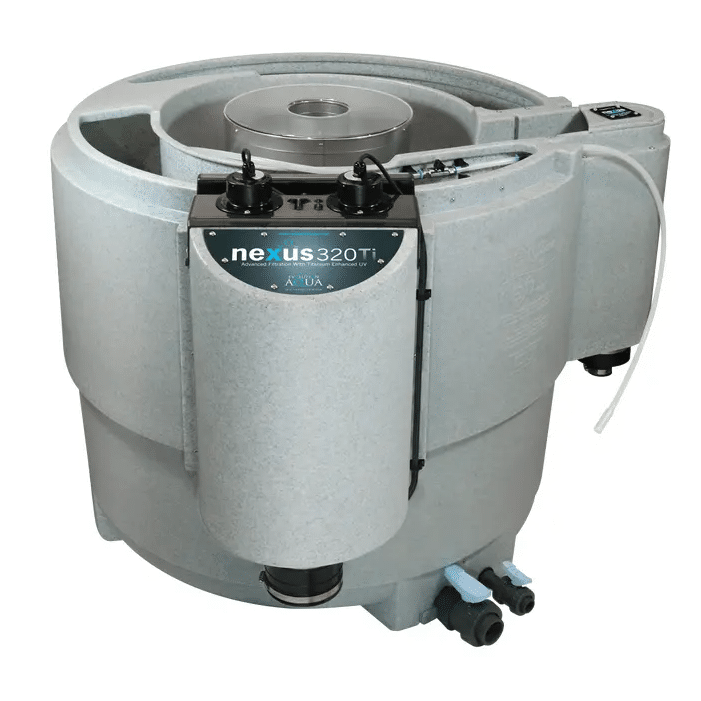
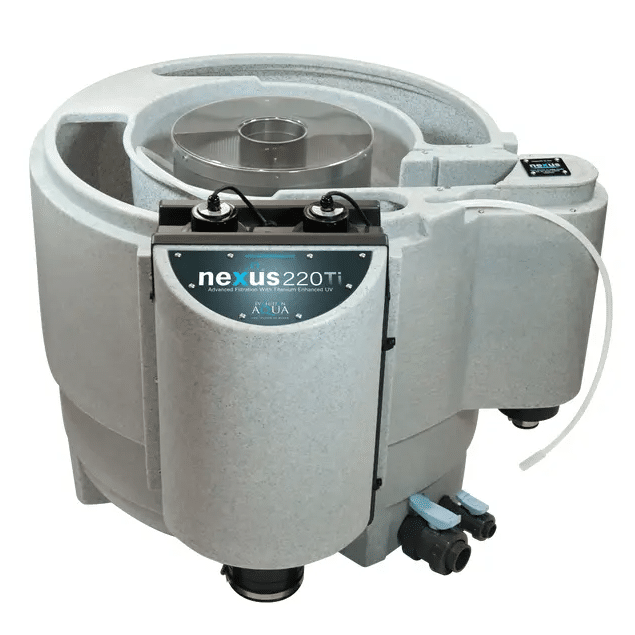
The Ti versions include an integrated ultraviolet clarifier built directly into the filter body.
The UV output differs between models:
- Nexus 220+ Ti includes 72 watts of built in UV
- Nexus 320+ Ti includes 110 watts of built in UV
Both Ti models use a titanium UV chamber. Titanium improves corrosion resistance and long term durability while maintaining strong UV output.
Because the UV is integrated internally, installation is cleaner and pipework is reduced. In addition, head loss is often lower compared to some external UV setups.
The mechanical and biological filtration performance remains identical to the standard Nexus models. The Ti version simply adds powerful internal green water control.
4. What is K1 and K+ media?
K1 Micro media is used in the Eazy chamber for mechanical filtration. It captures fine solids and suspended waste before water enters the biological stage.
K+ media is used in the outer moving bed chamber. It provides a protected surface area where beneficial bacteria colonise and convert ammonia and nitrite.
Because the media constantly moves under aeration, oxygen levels remain high. This improves bacterial efficiency and prevents clogging.
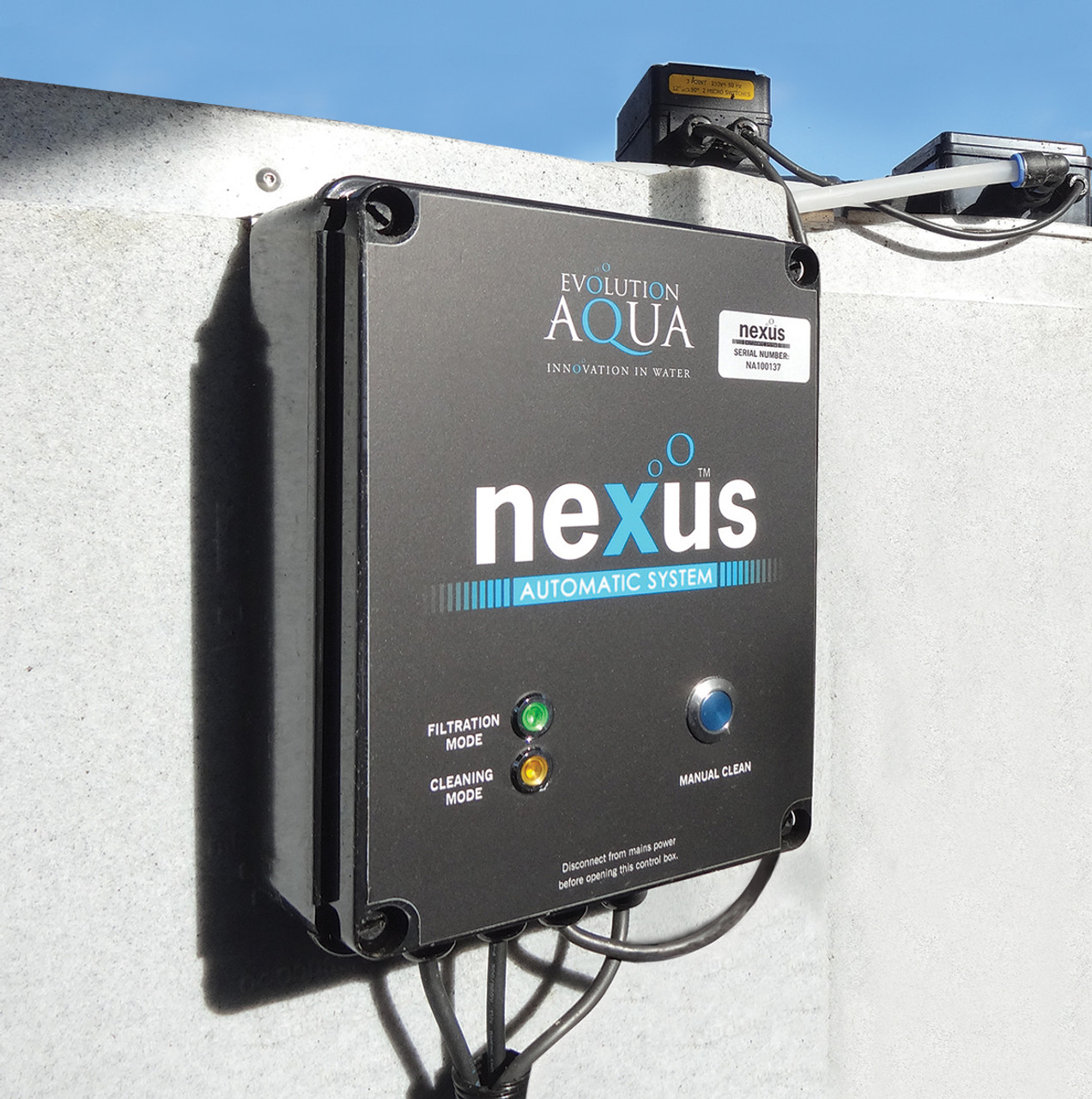
5. Can the Nexus be upgraded to automatic cleaning?
Yes.
The Nexus 220 and Nexus 320 filters manufactured from 2006 onwards can be upgraded with the Evolution Aqua Automatic Cleaning Kit.
The newer Nexus 220+, 320+, 220+ Ti and 320+ Ti models are supplied auto ready. This allows straightforward installation of the automatic kit without modification.
Once installed, the system runs programmed cleaning cycles automatically. As a result, it removes the need for manual valve operation and significantly reduces maintenance time.
6. Is the Nexus gravity fed or pump fed?
The Nexus can operate in either configuration.
Gravity fed systems allow water to flow directly from bottom drains into the filter. A pump then returns clean water to the pond. This setup often provides optimal stability and flow balance.
Pump fed systems push water into the filter under pressure. While easier to retrofit, they may require careful flow control to maintain correct dwell time.
Choosing the correct configuration depends on your pond design and pipework layout.
7. How often should a Nexus filter be cleaned?
Manual systems typically require cleaning every few days, depending on stocking density and feeding rates.
Automatic systems can be programmed to clean every three days as a default. However, you can increase frequency during heavy feeding seasons.
Regular cleaning maintains mechanical efficiency and prevents solids from breaking down inside the system.
8. What pump size should I use with a Nexus filter?
Correct flow rate is critical.
For the Nexus 220+, the recommended flow rate is approximately 6,000 litres per hour, with a maximum of 10,000 litres per hour.
For the Nexus 320+, the recommended flow rate is approximately 11,000 litres per hour, with a maximum of 13,000 litres per hour.
Variable speed pumps such as the Evolution Aqua Varipump range allow fine tuning. Maintaining proper dwell time ensures both mechanical capture and biological conversion remain effective.
9. What air pump is required for the moving bed chamber?
The outer chamber relies on constant aeration.
For standard media volumes:
- Nexus 220+ typically pairs well with an Airtech 75 or Charles Austen ET80
- Nexus 320+ typically requires higher air output depending on media load
If you expand the biological chamber to maximum K+ capacity, you should upgrade to a larger air pump such as an Airtech 130 or Charles Austen ET120.
Stronger aeration improves oxygen transfer and prevents dead spots within the media.
10. How long does a Nexus filter last?
With proper installation and maintenance, Nexus filters commonly last many years.
The rotational moulded body provides long term durability. Internal components such as UV lamps and air pumps require periodic replacement, but the main filter housing remains structurally robust.
Regular cleaning and correct flow rates significantly extend system lifespan.
11. Do I still need a UV clarifier with a Nexus?
Standard Nexus 220+ and 320+ models require an external UV clarifier for green water control.
However, the Nexus 220+ Ti and Nexus 320+ Ti include integrated UV units:
- 220+ Ti: 72 watts
- 320+ Ti: 110 watts
These provide powerful internal green water management without external UV units.
12. Is the Nexus suitable for heavily stocked koi ponds?
Yes.
The Nexus system was specifically designed for koi ponds. Its moving bed design handles high feeding regimes and significant waste production.
However, correct sizing remains essential. Oversizing the filter generally improves stability and long term water quality.
13. Can I increase biological capacity later?
Yes.
The Nexus 220+ can hold up to 150 litres of K+ media.
The Nexus 320+ can hold up to 300 litres of K+ media.
This scalability allows the filter to grow alongside your koi collection.
14. What pre filtration works best with a Nexus?
In gravity fed systems, bottom drains feeding directly into the Nexus are standard.
In larger systems, some keepers add a drum filter or sieve before the Nexus to reduce solids load. This can improve water clarity and reduce cleaning frequency.
System design depends on pond size and stocking level.