





Pond Filters
Clear, Healthy Water Starts With Proper Filtration
A pond filter is one of the most important pieces of equipment in any pond system. Whether you have a small garden pond, a wildlife pond or a heavily stocked koi pond, effective filtration is essential for maintaining clear water, stable water quality and healthy fish.
Without proper filtration, ponds quickly accumulate waste from fish food, fish waste, decaying plants and environmental debris. As this organic material breaks down it releases harmful compounds such as ammonia and nitrite, which can damage water quality and stress fish.
A well designed pond filtration system removes solid waste while supporting beneficial bacteria that naturally break down toxins. The result is clearer water, healthier fish and a pond that is easier to maintain throughout the year.
For koi ponds in particular, strong filtration is critical because koi produce significantly more waste than most ornamental fish. This means the filtration system must be capable of handling higher organic loads while maintaining stable water conditions.
How Pond Filters Work
Most pond filtration systems combine two essential processes to maintain water quality.
Mechanical filtration removes solid debris such as leaves, uneaten food and fish waste before it has time to break down in the water. This helps prevent excess nutrients from building up in the pond.
Biological filtration supports beneficial bacteria that convert ammonia into nitrite and then nitrate through the natural nitrogen cycle. This process is vital for maintaining safe water conditions for fish.
Many pond filters also include a UV clarifier, which destroys single celled algae responsible for green water and helps improve overall water clarity.
Together, these processes create a balanced filtration system that keeps pond water clear, stable and healthy.
Choosing the Right Pond Filter
Selecting the correct pond filter involves more than simply matching the filter to the pond size. Fish stocking levels, feeding intensity, pump flow rate and pipework layout all influence which filtration system will perform best.
A lightly stocked wildlife pond and a heavily stocked koi pond of the same size will require very different levels of filtration. Koi ponds typically need significantly more filtration capacity due to the amount of waste produced by the fish.
Choosing a properly sized filter ensures the pond remains stable, clear and easy to maintain over the long term.
Types of Pond Filters
Different types of pond filters are designed for different pond sizes, fish stocking levels and installation layouts.
Pressure Filters
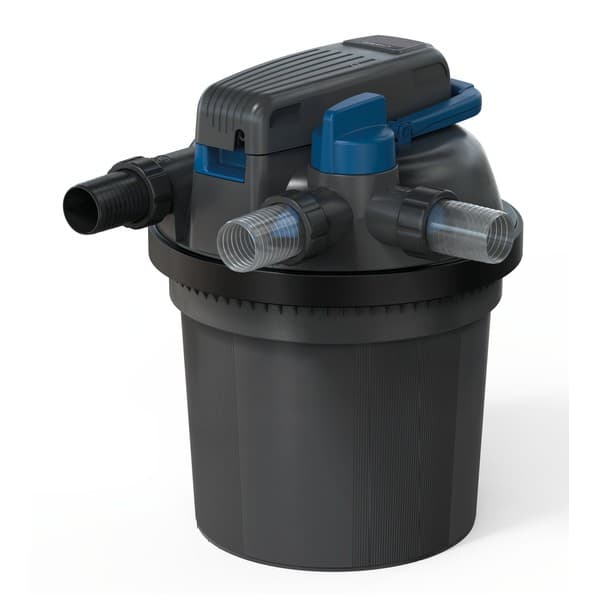
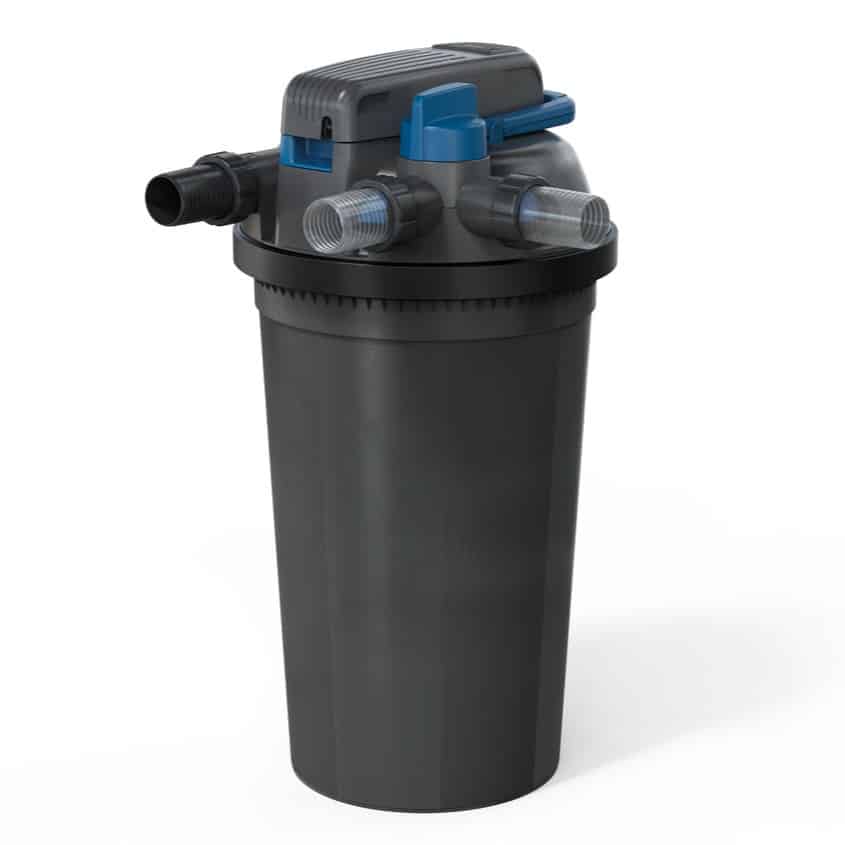
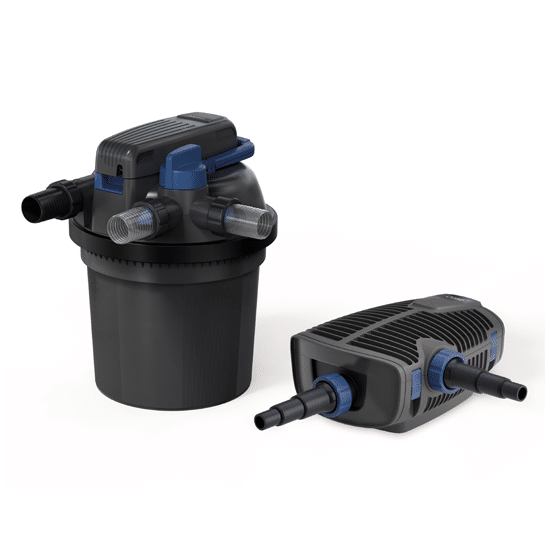
Pressure filters are compact filtration systems commonly used on small to medium garden ponds. These sealed units combine mechanical and biological filtration inside a pressurised housing, allowing the filtered water to be returned to the pond under pressure.
Because of this design, pressure filters can easily feed waterfalls or raised return points while remaining hidden beside the pond or buried within landscaping.
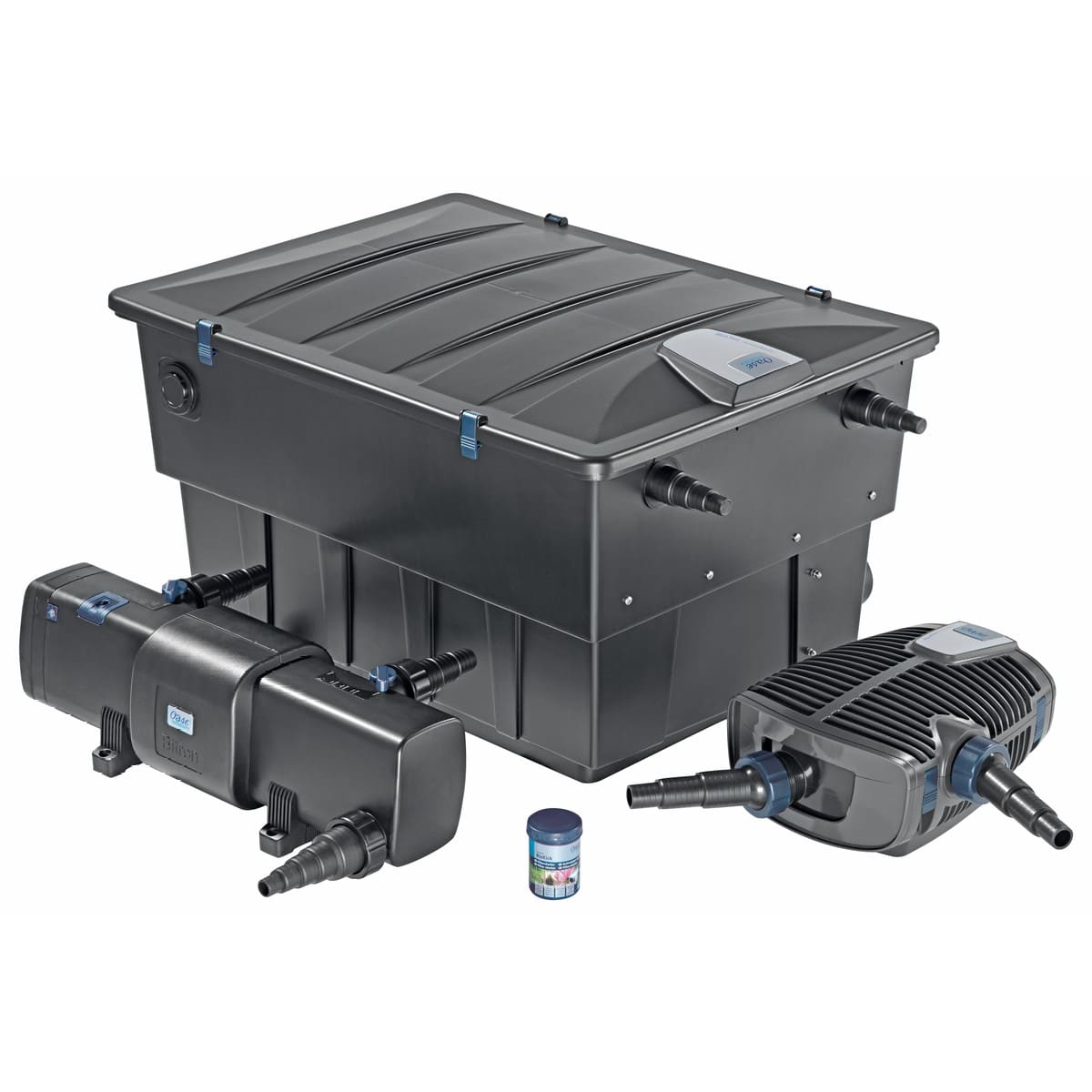
Popular examples include systems such as the Oase FiltoClear, Oase Biopress and Evolution Aqua Advanced Bead filter range, which combine mechanical filtration, biological media and integrated UV clarification in a single compact unit.
Flow Through Pond Filters
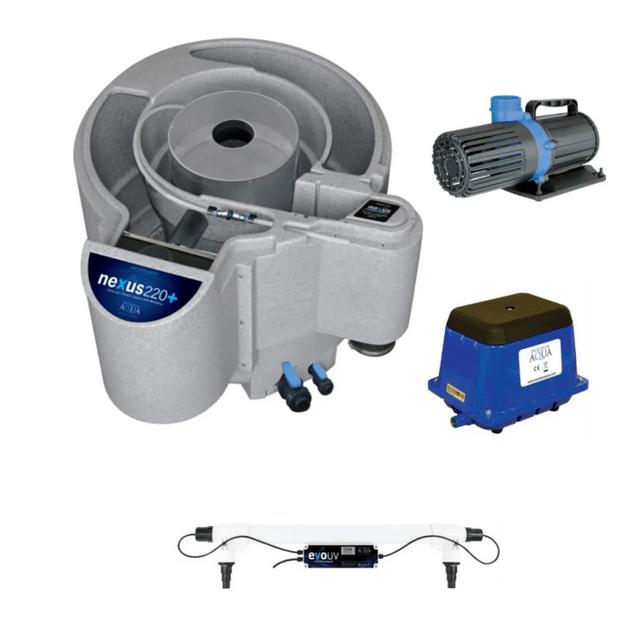
Flow through filters are one of the most widely used filtration systems for koi ponds, ornamental ponds and larger garden ponds. These filters operate in a pump fed configuration where a pond pump pushes water into the filter housing before it flows through multiple filtration chambers and returns to the pond by gravity.
Inside the unit, water passes through mechanical filtration stages that remove debris and suspended solids before moving into biological media that supports beneficial bacteria.
Flow through systems offer strong filtration capacity while remaining relatively simple to install and maintain. They are commonly used on both garden ponds and koi ponds.
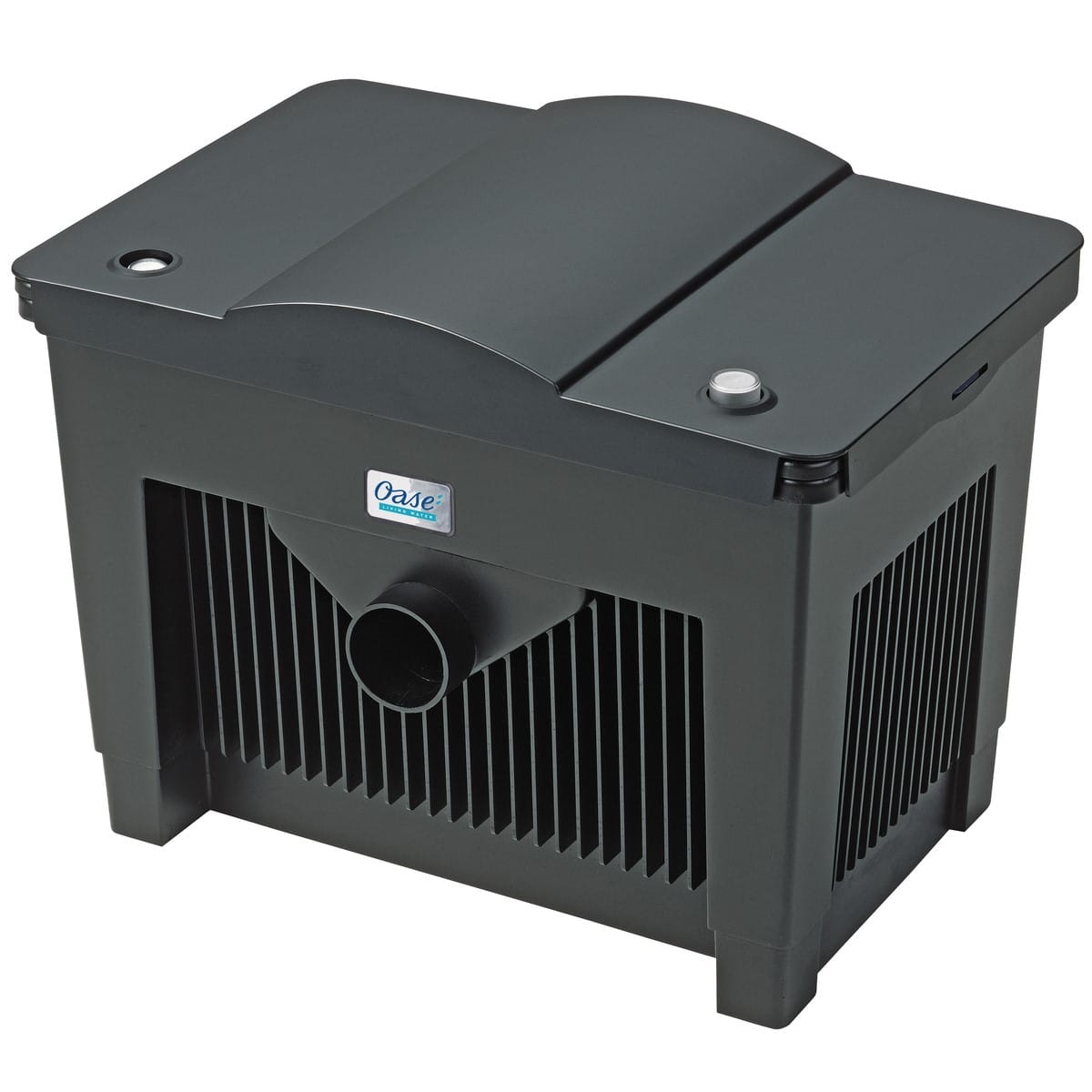
Well known examples of flow through filters include systems such as the Evolution Aqua Nexus, Evolution Aqua EazyPod, Oase ScreenMatic and Oase BioSmart ranges.
Drum Filters
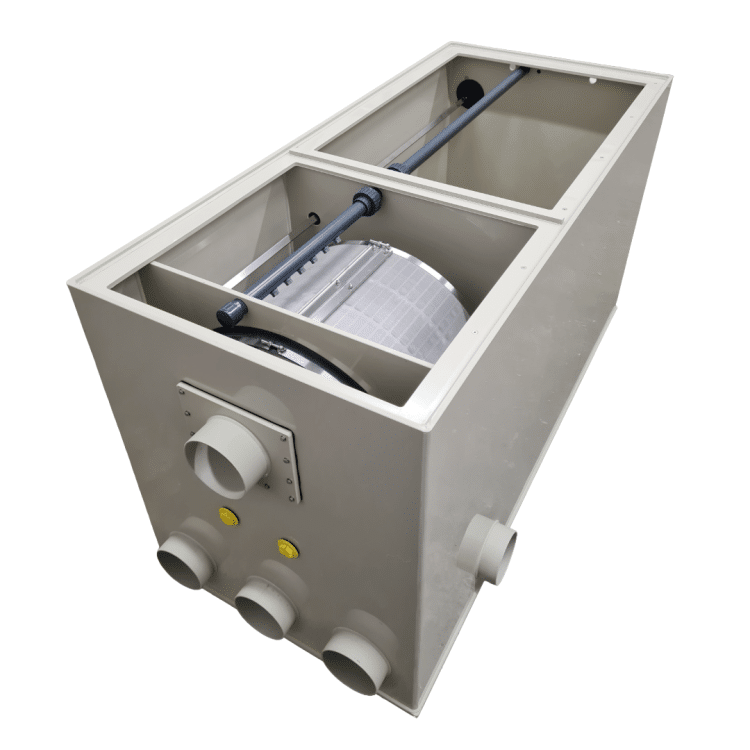
Drum filters provide advanced automatic mechanical filtration using a rotating stainless steel drum screen. As pond water passes through the drum, fine debris and solid waste are trapped on the screen surface.
When the screen becomes dirty, an automated cleaning cycle activates. High pressure spray jets flush the debris to waste while the drum rotates, allowing the system to maintain strong filtration performance with minimal manual maintenance.
Because of their efficiency, drum filters are widely considered the most effective mechanical filtration system for heavily stocked koi ponds.
Examples include systems such as the Burtons Drum Filters range and high performance units like the Oase ProfiClear Premium drum filtration systems.
Biological Filters
Biological filtration is responsible for processing the dissolved waste produced by fish. While mechanical filtration removes solid debris, biological filters support beneficial bacteria that convert harmful ammonia into nitrite and then nitrate through the natural nitrogen cycle.
There are several types of biological filtration systems used in pond filtration setups.
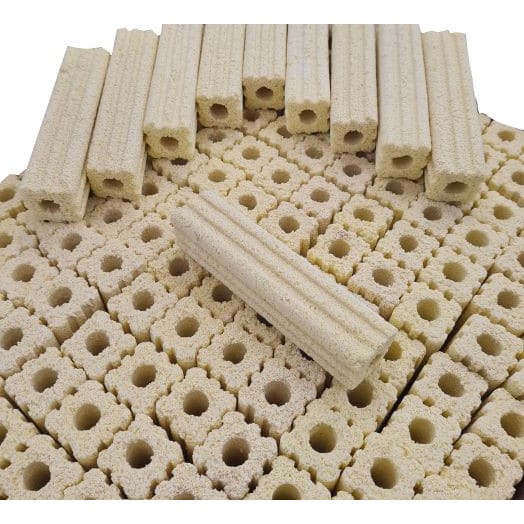
Moving bed filters are one of the most popular options for koi ponds. These systems use constantly circulating filter media that is kept moving with air pumps. The movement of the media provides high oxygen levels and large surface area for beneficial bacteria to grow, allowing the filter to process significant amounts of fish waste.
Bakki showers are another highly effective biological filtration system. In these systems, pond water flows over specialised shower media arranged in stacked trays. As the water cascades through the media it becomes highly oxygenated, encouraging extremely efficient biological activity and helping improve overall water quality.
When combined with effective mechanical filtration, these biological filter systems help create a stable pond environment capable of supporting healthy fish and clear water.
All in One Pond Filters
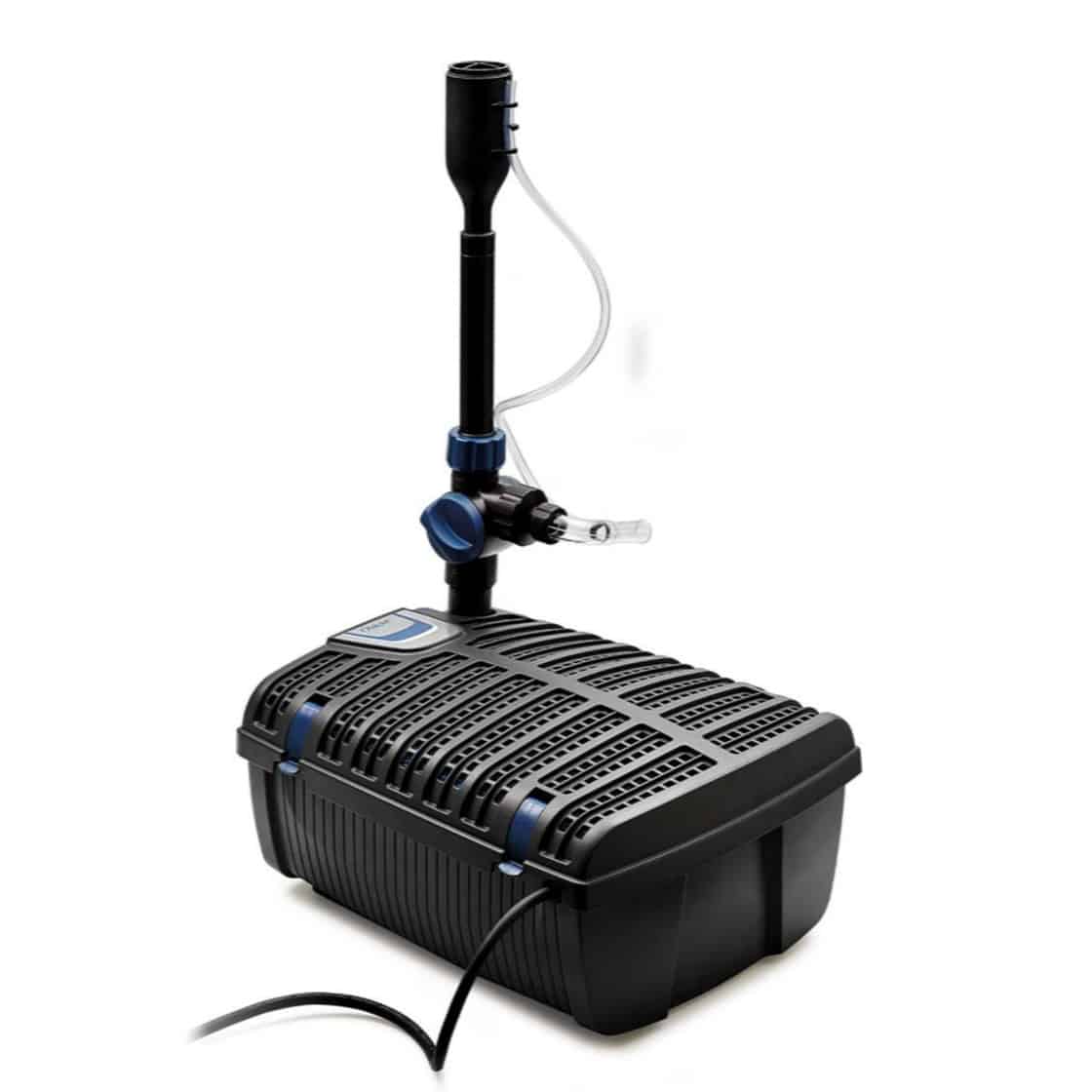
All in one pond filters combine pump, mechanical filtration, biological filtration and UV clarification within a single compact unit.
These systems are designed primarily for small garden ponds where a simple installation is preferred. Because the pump and filtration components are integrated into one unit, setup is straightforward and maintenance requirements remain relatively low.
All in one filters like the Oase Filtral are often used in small decorative ponds, patio ponds and water features where space is limited.
Why Buy Your Pond Filter From Us
Choosing the right pond filtration system can be confusing, especially with so many different filter types available.
Unlike many retailers, we are not simply an online shop selling pond equipment. We design, build and maintain ponds, which means we regularly install filtration systems and see how they perform in real world conditions.
This allows us to recommend pond filters based on practical experience rather than just manufacturer specifications.
When helping customers choose a filtration system we consider factors such as pond size, fish stocking levels, pump flow rate, pipework layout and long term maintenance requirements.
Our goal is to help you choose a filtration system that keeps your pond clear, stable and easy to manage for many years to come.
Pond Filters – Frequently Asked Questions
Choosing the right pond filter is essential for clear water, stable water quality and healthy fish. Below are some of the most common questions pond owners ask when choosing a pond filtration system.
What is a pond filter?
A pond filter is a system that removes waste and harmful compounds from pond water. Most pond filters combine mechanical filtration to remove debris and biological filtration to process dissolved fish waste.
Why do I need a pond filter?
Without filtration, fish waste, uneaten food and organic debris quickly break down in the pond and release ammonia. A pond filter helps remove this waste, support beneficial bacteria and maintain safer, clearer water.
What size pond filter do I need?
Your pond filter should be matched to the pond volume, fish stocking levels, pump flow rate and the amount of waste being produced. As a general rule, koi ponds need much larger filtration systems than lightly stocked ornamental ponds.
Should I size my pond filter based only on pond volume?
No. Pond volume is important, but you also need to consider fish stocking levels, feeding levels, pump flow rate, pond depth and pipework layout. Two ponds of the same size can require very different levels of filtration.
Can a pond filter be too small?
Yes. If a pond filter is undersized, it may struggle to remove debris and process fish waste properly. This can lead to cloudy water, unstable water quality and higher ammonia levels.
Can a pond filter be too big?
In most cases, slightly oversizing a pond filter is beneficial. A larger filter often improves water stability, reduces maintenance and gives you more flexibility if fish stocking levels increase later.
How do pond filters work?
Most pond filters use two main stages. Mechanical filtration removes physical debris such as leaves, fish waste and uneaten food. Biological filtration supports beneficial bacteria that convert harmful ammonia into nitrite and then nitrate through the nitrogen cycle.
What is the difference between mechanical and biological filtration?
Mechanical filtration removes solid debris from the water. Biological filtration processes dissolved fish waste by supporting bacteria that convert ammonia and nitrite into less harmful compounds. Both stages are essential for a healthy pond.
Why is mechanical filtration important?
Mechanical filtration removes waste before it has time to break down in the water or inside the filter. This reduces organic waste, improves water clarity and helps protect the biological stage of filtration.
Why is biological filtration important?
Biological filtration prevents harmful ammonia and nitrite from building up in the pond. Beneficial bacteria living on the filter media process these toxins and help maintain stable water conditions for fish.
What is the nitrogen cycle in pond filtration?
The nitrogen cycle is the natural process where beneficial bacteria convert ammonia into nitrite and then nitrate. This is one of the most important functions of a pond filter, especially in ponds containing fish.
Do pond filters remove ammonia?
Mechanical filtration does not remove dissolved ammonia directly. Biological filtration converts ammonia into nitrite and then nitrate through bacterial activity.
Do pond filters remove nitrite?
Yes, but only through biological filtration. Beneficial bacteria convert nitrite into nitrate as part of the nitrogen cycle.
Do pond filters remove nitrate?
Most standard pond filters do not remove nitrate. Nitrate is usually reduced through water changes, plants or specialist filtration systems.
Do pond filters remove fish waste?
Yes. Mechanical filtration removes solid fish waste from the water before it can break down and pollute the pond.
Do pond filters remove uneaten food?
Yes. Mechanical filtration traps uneaten food before it decomposes and affects water quality.
How does a pond filter keep water clear?
A pond filter keeps water clear by removing suspended particles, fish waste and organic debris before they can build up in the pond. Strong mechanical filtration combined with good biological stability is key to clear water.
Can pond filters help with cloudy water?
Yes. Mechanical filtration removes the suspended particles that often cause cloudy water. However, if the cloudiness is caused by bacterial imbalance or a new pond cycle, it may take longer to clear.
Why is my pond water still cloudy even with a filter?
Cloudy water can be caused by an undersized filter, poor circulation, a clogged filter, overfeeding or an immature biological system. In some cases, the filter may simply not be strong enough for the pond’s waste load.
Why is my pond still green after installing a filter?
Green water is usually caused by suspended algae. A pond filter helps remove waste, but a UV clarifier is usually required to kill the microscopic algae that cause green water.
Do I need a UV clarifier with my pond filter?
In many cases, yes. A UV clarifier helps control green water by destroying suspended algae cells. Many modern pond filters include an integrated UV clarifier.
Do pond filters reduce algae growth?
Yes. Pond filters help reduce nutrients and organic waste that algae depend on. However, a UV clarifier is usually required for effective green water control.
Can pond filters reduce blanket weed?
Pond filters help reduce nutrients that contribute to blanket weed growth, but they do not directly kill blanket weed. Additional treatment or pond management may still be required.
What is a pressure pond filter?
A pressure filter is a sealed compact filtration system usually used on small to medium garden ponds. These filters combine mechanical and biological filtration and can often feed waterfalls or raised returns.
What is a flow through pond filter?
A flow through filter is a pump fed filtration system where water is pushed into the filter and then flows through one or more filtration chambers before returning to the pond by gravity. Examples include systems such as the Evolution Aqua Nexus, Evolution Aqua EazyPod and Oase ScreenMatic.
What is a drum filter?
A drum filter is an automatic mechanical filtration system that uses a rotating stainless steel screen to remove fine debris. When the screen becomes dirty, it is cleaned automatically with spray jets and the waste is flushed to drain.
Are drum filters worth it?
For heavily stocked koi ponds, yes. Drum filters provide excellent mechanical filtration, dramatically reduce manual cleaning and help maintain very clear water.
What is a combi drum filter?
A combi drum filter combines automatic mechanical filtration with an integrated biological chamber in a single unit. This makes it a compact all in one filtration system.
What is a sieve filter?
A sieve filter is a mechanical pre filter that removes debris using a fine wedge wire screen. It is often used before biological filtration.
What is a multi bay pond filter?
A multi bay filter uses several chambers filled with different types of media to provide both mechanical and biological filtration. These systems are common on older koi ponds and larger traditional setups.
What is a bead filter?
A bead filter uses floating plastic beads to trap debris and support biological filtration. It requires regular backwashing to remove the trapped waste.
What is the difference between drum filters and bead filters?
Drum filters automatically remove waste before it breaks down, while bead filters trap waste inside media and require regular backwashing. Drum filters are generally considered lower maintenance for heavily stocked koi ponds.
What is a moving bed filter?
A moving bed filter is a biological filtration system that uses floating media kept in constant motion by air. The movement provides high oxygen levels and excellent surface area for beneficial bacteria.
What is a moving bed chamber?
A moving bed chamber is the vessel that holds moving bed media and air, allowing the media to circulate and support bacterial growth.
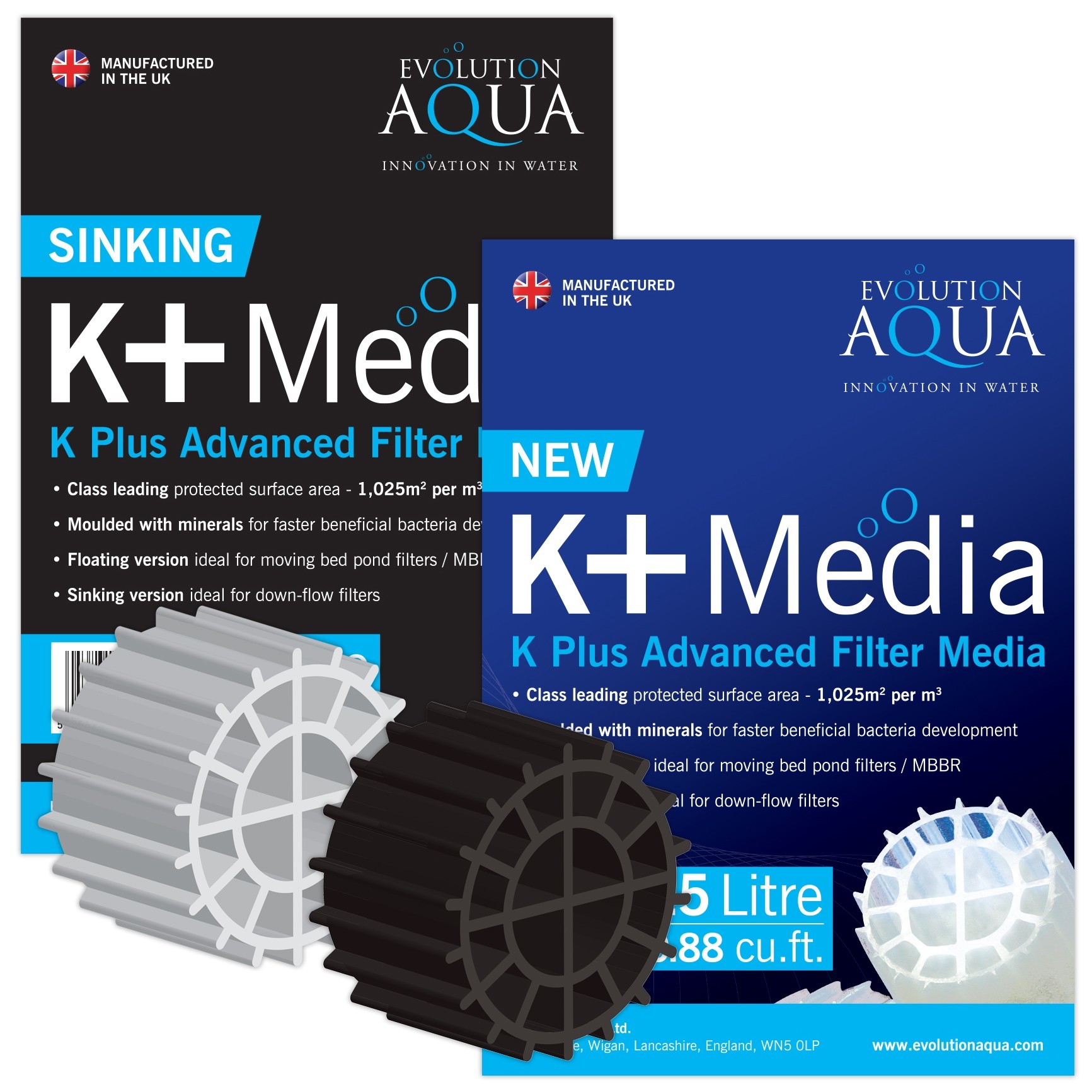
What is K1 filter media?
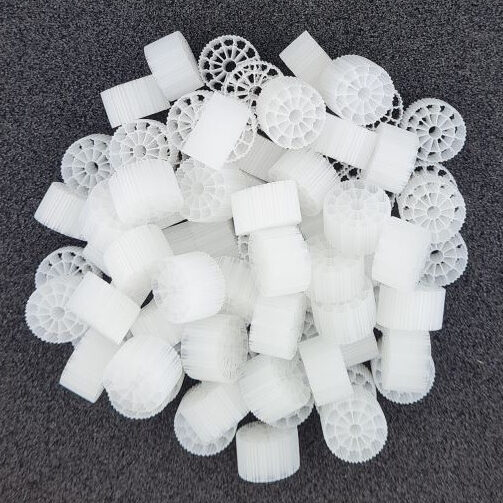
K1 is a floating plastic biological filter media designed to provide a high surface area for beneficial bacteria. It is commonly used in moving bed filters.
What is K1 Micro media?
K1 Micro is a smaller version of K1 media. It is commonly used in filters such as the EazyPod and some compact biological systems.
What is a bakki shower filter used for?
A bakki shower is a highly effective biological filtration system where water flows over stacked trays of specialised media. It improves oxygenation and supports excellent biological performance.
What is the best pond filter for a koi pond?
The best pond filter for a koi pond is usually a high capacity filtration system with strong mechanical and biological stages. Drum filters combined with moving bed filters or bakki showers are among the most effective setups for koi ponds.
What is the best pond filter for a small garden pond?
Small garden ponds often benefit from compact pressure filters or all in one filtration systems that combine pump, filtration and UV clarification in a single unit.
What is the best pond filter for a wildlife pond?
Wildlife ponds often need gentle filtration that supports water clarity without disturbing the natural ecosystem. Simple low flow biological systems can work well.
What is the best pond filter for beginners?
Pressure filters and all in one pond filters are often the easiest options for beginners because they are compact, simple to install and relatively straightforward to maintain.
What is the best pond filter for low maintenance?
Drum filters and combi drum filtration systems are among the best low maintenance options because they automate the mechanical cleaning stage.
What is the best pond filter for large ponds?
Large ponds often benefit from drum filtration combined with strong biological filtration such as moving bed chambers or bakki showers.
What is the best pond filter for a 1000 litre pond?
For very small ponds around 1000 litres, compact all in one filters or small pressure filters are usually the most suitable option.
What is the best pond filter for a 2000 litre pond?
Ponds around 2000 litres often use compact pressure filters or small flow through filters. It is sensible to choose a filter rated for more than the pond volume.
What is the best pond filter for a 5000 litre pond?
A 5000 litre pond often benefits from a medium sized pressure filter or a compact flow through system with biological media and UV clarification.
What is the best pond filter for a 10000 litre pond?
For ponds around 10000 litres, larger pressure filters or compact pump fed flow through systems are commonly used, depending on fish stocking levels.
What is the best pond filter for a 20000 litre pond?
Ponds of this size often require larger flow through filters or entry level drum filtration systems, particularly if fish are present.
What is the best pond filter for a 50000 litre pond?
Large koi ponds of this size usually benefit from drum filtration combined with strong dedicated biological filtration.
How often should pond water circulate through the filter?
Most ponds benefit from circulating the entire pond volume every one to two hours. Koi ponds often aim for a faster turnover rate than ornamental ponds.
What is pond turnover rate?
Pond turnover rate refers to how often the full volume of the pond passes through the filtration system.
What turnover rate is best for koi ponds?
Many koi ponds aim to circulate the entire pond volume roughly once every hour, depending on the filtration design and stocking levels.
What turnover rate is best for ornamental ponds?
Ornamental ponds often run well with the pond volume circulating every one to two hours.
What happens if my pond pump is too powerful for my filter?
If the pump flow rate exceeds the filter’s capacity, debris may pass through the filter without being properly removed and the system may not work efficiently.
What happens if my pond pump is too small?
If the pump is too small, circulation may be poor and the filter may not process the pond water quickly enough.
What is the difference between a pond pump and a pond filter?
A pond pump moves water through the system. A pond filter cleans the water by removing debris and processing waste.
Can I use two pond filters on one pond?
Yes. Multiple filters can be used together to increase filtration capacity or separate the mechanical and biological stages.
Can I combine multiple filtration systems?
Yes. Many koi ponds use more than one type of filtration, for example a drum filter for mechanical waste removal and a moving bed filter for biological filtration.
Can I run a pond filter without fish?
Yes. A pond filter can still help maintain water clarity and support beneficial bacteria even if the pond contains no fish.
Can I use a garden pond filter for koi?
Usually not for anything other than a very lightly stocked koi pond. Koi produce much more waste than ornamental fish, so they require stronger filtration.
How much filtration does a koi pond need?
Koi ponds require significantly more filtration than ornamental ponds because of the amount of waste produced by the fish and their feeding intensity.
How much biological filtration do koi need?
Koi ponds need large biological filtration capacity to process ammonia and nitrite safely, especially in heavily stocked systems.
How long does it take for a pond filter to start working?
Mechanical filtration works immediately, but biological filtration usually takes several weeks to mature as beneficial bacteria establish.
How long does it take for a pond filter to mature?
Most biological filtration systems take around 4 to 8 weeks to mature properly, depending on temperature and water conditions.
What is biological filter maturation?
Biological filter maturation is the process of beneficial bacteria colonising the filter media and establishing the nitrogen cycle.
Can I add bacteria to speed up filter maturation?
Yes. Beneficial bacteria products can help accelerate the maturation process, although they do not replace proper cycling time.
What is the best way to start a new pond filter?
Run the filter continuously, avoid overstocking, feed lightly and allow time for the biological media to mature naturally.
How long does it take for a pond to cycle?
Most ponds take between 4 and 8 weeks to fully cycle, depending on temperature and stocking levels.
How do I know if my biological filter is working?
A healthy biological filter typically results in stable ammonia and nitrite readings and clearer, more stable pond water.
What causes biological filtration failure?
Biological filtration can fail because of low oxygen, excessive cleaning, chemical treatments, power cuts or very cold water.
Can medications affect pond filters?
Yes. Some pond treatments can harm beneficial bacteria and temporarily weaken biological filtration.
Should I turn off filtration when treating fish?
That depends on the treatment. Always follow the manufacturer’s instructions for the product being used.
Can salt affect pond filtration?
Low levels of salt are often tolerated, but high concentrations can affect biological filtration performance.
How do I restart a pond filter after medication?
Continue running the filter, monitor water quality and allow time for beneficial bacteria to recover. Bacteria products may also help.
What maintenance does a pond filter require?
Typical maintenance includes cleaning mechanical media, checking pumps, ensuring biological media remains unobstructed and monitoring water flow.
How often should I clean my pond filter?
Cleaning frequency depends on the filter type, pond size and debris load. Pressure filters often need regular cleaning, while drum filters clean themselves automatically.
What is the easiest pond filter to maintain?
Drum filters and moving bed biological systems are among the easiest filtration systems to maintain once installed correctly.
How do I clean pond filter sponges?
Filter sponges should be rinsed in pond water rather than tap water to preserve beneficial bacteria.
Can I wash filter media with tap water?
Tap water can kill beneficial bacteria, so biological media should normally only be rinsed with pond water.
Should I clean biological filter media?
Only gently, and only when needed. Over cleaning biological media can reduce beneficial bacteria levels.
How do I maintain biological filtration?
Avoid over cleaning media, ensure good oxygen levels and keep water flowing continuously through the filter.
How often should I check my pond filter?
Routine checks should be carried out regularly to make sure pumps, filters, spray bars and pipework are operating correctly.
How often should pond filter pumps be serviced?
Pumps should be inspected regularly and cleaned periodically to maintain good flow and efficiency.
Do pond filters use a lot of electricity?
The filter itself usually uses little power. Most of the electricity consumption in a pond system comes from the pump, UV and aeration equipment.
What is the most energy efficient pond filter?
Energy efficiency depends mainly on the pump used and the overall filtration design rather than the filter body alone.
Can I run a pond filter with a solar pump?
Some small pond filters can work with solar pumps, but larger filtration systems usually require mains powered pumps.
Should my pond filter run continuously?
Yes. Pond filters should usually run continuously to maintain water circulation and biological stability.
How long should a pond filter run each day?
A pond filter should normally run 24 hours a day.
Can pond filters run continuously all year?
Yes. Most pond filtration systems are designed to operate all year round.
Can pond filters run during winter?
Yes. Most filters can run during winter, although feeding levels and biological activity usually decrease.
Should I turn off my pond filter in winter?
In most cases, no. Keeping filtration running helps maintain circulation and supports the biological system.
Can pond filters freeze?
Filters installed above ground may require protection or insulation during very cold weather.
How do I prepare my pond filter for winter?
Reduce feeding, check water flow, remove excess debris and ensure the filtration system continues operating reliably.
Can beneficial bacteria survive winter?
Yes, although bacterial activity slows significantly in cold water.
What happens if my pond filter stops working?
If filtration stops, ammonia levels can rise quickly and oxygenation may fall, which can stress or harm fish.
What happens if I turn off my pond filter for several days?
Beneficial bacteria may begin to die back without water flow and oxygen, which can destabilise the pond.
Can pond filters fail suddenly?
Yes. Common causes include electrical faults, pump failure, blocked pipework or clogged mechanical filtration.
How do I troubleshoot a pond filter problem?
Start by checking water flow, cleaning mechanical media, inspecting pumps and checking for blockages or airlocks.
Why is my pond filter full of sludge?
Sludge buildup usually means too much waste is entering the system or mechanical filtration is not being cleaned often enough.
How do I prevent pond filter sludge?
Reduce debris entering the pond, improve mechanical filtration and clean the filter regularly.
Why is my pond filter overflowing?
Overflowing filters are often caused by clogged media, restricted flow or poor maintenance.
Why is my pond filter not clearing the water?
This may be caused by an undersized filter, poor circulation, clogged media or an immature biological stage.
Why does my pond filter smell bad?
A bad smell can indicate decomposing organic waste, low oxygen levels or poor filter maintenance.
Why is my pond filter producing foam?
Foam is often caused by excess dissolved proteins or organic waste in the water.
Why does my pond filter foam after feeding fish?
Foam after feeding can indicate excess protein and organic waste, often due to overfeeding.
Why is my pond filter making noise?
Noise may come from pumps, air pumps, restricted flow or, in the case of drum filters, cleaning cycles.
Why is my pond filter water level fluctuating?
Fluctuating water levels may indicate clogged media, restricted pipework or pump flow problems.
Why is my pond still green with a filter and UV?
This can happen if the UV is too small for the pond or if the flow rate is too fast for the UV unit to work efficiently.
Can a pond filter clear muddy water?
Yes. Mechanical filtration can remove suspended particles that cause muddy water, although it may take time depending on the cause.
Why is my pond water cloudy after cleaning the filter?
Cloudy water can occur if beneficial bacteria are disturbed or if fine debris has been released back into the system during cleaning.
What causes brown pond water?
Brown pond water is often caused by tannins from leaves or organic material.
What causes milky pond water?
Milky water may be caused by bacterial blooms or very fine suspended particles.
Do pond filters reduce sludge buildup?
Yes. Effective mechanical filtration removes organic debris before it settles and forms sludge.
Do pond filters reduce pond smell?
Yes. By removing waste and improving water quality, pond filters help prevent unpleasant odours.
Do pond filters reduce algae growth?
Yes. They reduce the waste and nutrients that algae depend on, although UV is usually still needed for green water.
Do pond filters reduce mosquito breeding?
Yes. Water movement and filtration make conditions less suitable for mosquitoes.
Can pond filters improve fish health?
Yes. Stable water quality helps reduce stress and supports stronger fish health.
Do pond filters help prevent fish disease?
Good filtration reduces stress and improves water quality, both of which help fish resist disease.
Can pond filters reduce fish stress?
Yes. Stable, clean water is one of the most important factors in reducing stress in pond fish.
Do pond filters help koi grow?
Stable water quality supports good digestion, better health and steady growth.
Can pond filters improve fish colour?
Stable water quality and lower stress levels can help fish maintain stronger colouration.
Do pond filters help fish survive winter?
Yes. Filtration helps maintain oxygenation and water circulation during colder months.
Can pond filters improve oxygen levels?
Some systems improve oxygenation through water movement, aeration or biological design.
Do pond filters increase oxygen levels?
Moving bed filters, bakki showers and well designed return systems can all help increase oxygen levels.
Why do pond filters need oxygen?
Beneficial bacteria need oxygen to process fish waste effectively.
Why do koi ponds often include air pumps?
Air pumps improve oxygen levels and support high performance biological filtration.
Can pond filters run with air pumps?
Yes. Many biological systems rely on air pumps to improve oxygenation and circulate media.
Can filtration increase dissolved oxygen?
Yes. Some filtration systems improve oxygenation through water movement and aeration.
What happens if oxygen levels drop in the filter?
Low oxygen can reduce biological activity and harm beneficial bacteria.
Do moving bed filters increase oxygen levels?
Yes. Moving bed systems are highly oxygenated and support strong biological activity.
Why are bakki showers effective biological filters?
Bakki showers expose water to large amounts of oxygen as it cascades over the media, creating excellent biological conditions.
What is the most important part of pond filtration?
Mechanical waste removal is often the first and most important stage because removing solids early helps protect the rest of the filtration system.
What is the most common pond filtration mistake?
One of the most common mistakes is choosing a filter that is too small for the pond’s fish stocking level and flow rate.
How do I choose the best pond filter?
Choose a pond filter based on pond size, fish stocking levels, pump capacity, maintenance preference and whether you need a simple or advanced system.
What pond filter should I choose for my pond?
That depends on the pond volume, number of fish, how much maintenance you want to do and what kind of installation space you have available.
What is the best filtration setup for a koi pond?
A high performance koi pond usually benefits from strong mechanical filtration such as a drum filter combined with powerful biological filtration such as moving bed filters or bakki showers.
What is the most powerful pond filtration system?
Drum filtration combined with large dedicated biological chambers is widely considered one of the most powerful pond filtration setups.
What is the most advanced pond filtration system?
High end drum filtration paired with large biological filtration systems is considered among the most advanced setups for koi ponds.
Are automatic pond filters better?
Automatic filters such as drum filters reduce manual cleaning and maintain more consistent mechanical filtration.
Can I upgrade my pond filtration system?
Yes. Many pond owners upgrade filtration as fish grow, feeding levels increase or water quality expectations rise.
How do I upgrade my pond filtration system?
Upgrading may involve installing a larger filter, adding better biological filtration, improving mechanical waste removal or upgrading the pump.
Should pond filters be upgraded as fish grow?
Yes. As fish grow, waste production increases, which often means more filtration is needed.
Can filtration support larger fish populations?
Yes. Adequate filtration allows ponds to support more fish safely.
Do heavily stocked ponds need more filtration?
Yes. Heavily stocked ponds produce more waste and therefore require stronger filtration.
Can pond filters improve water circulation?
Yes. Filtration systems help circulate water, improving oxygen levels and reducing stagnant areas.
Can pipework affect filtration performance?
Yes. Pipe diameter, length and layout all influence water flow and filter performance.
Does pond depth affect filtration requirements?
Deeper ponds can require stronger circulation and careful filtration planning.
Does feeding frequency affect filtration?
Yes. Frequent feeding increases waste production and can require stronger filtration.
What happens to fish waste in a pond filter?
Fish waste is trapped by the mechanical stage and dissolved waste is then processed by the biological stage.
How do pond filters remove waste?
Mechanical filtration captures debris while biological filtration processes dissolved waste through bacterial activity.
Do pond filters remove leaves?
Yes. Mechanical filtration stages are designed to trap leaves and debris before they break down.
Can pond filters handle leaves and debris?
Yes, although heavy debris loads may require more frequent maintenance.
What is a static media filter?
A static media filter uses fixed media to trap debris and support beneficial bacteria.
Do pond filters work without biological media?
Mechanical filtration may still remove debris, but biological media is essential for processing dissolved fish waste properly.
What type of filter media is best for biological filtration?
Media with a large surface area, such as moving bed media or specialist ceramic media, is highly effective for biological filtration.
How much biological media does a pond filter need?
The amount of media needed depends on fish stocking levels, feeding intensity and waste production.
Should pond filter media be replaced?
Most biological media does not need replacing unless it becomes damaged or permanently clogged.
Do pond filters work better with plants?
Yes. Plants can help absorb excess nutrients and work alongside filtration to improve water quality.
Do pond filters affect pond plants?
Healthy filtration usually supports better plant growth by maintaining cleaner, more stable water.
Can pond filters help plants grow?
Yes. Stable water conditions and balanced nutrients support healthy aquatic plants.
Do wildlife ponds need filters?
Some wildlife ponds can function naturally without filters, but gentle filtration can improve clarity and stability.
Can pond filters be hidden?
Yes. Many filters can be concealed in filter bays, behind landscaping or partially buried.
Can pond filters be buried?
Some pressure filters are specifically designed to be buried beside the pond.
Can I install a pond filter above water level?
Some pump fed filtration systems can be installed above pond water level.
What is the best filter for a raised pond?
Pump fed filtration systems are often suitable for raised ponds because they can be installed above pond level.
Can pond filters run above the pond?
Yes, some pump fed systems can operate successfully above pond water level.
Can pond filters work with waterfalls?
Yes. Many filtration systems return clean water through waterfalls or streams.
Can pond filters work with bottom drains?
Yes. Many koi pond filtration systems connect directly to bottom drains.
What pond filter brands are most popular?
Popular pond filtration brands include Evolution Aqua, Oase and Burtons Aquatics.
How long do pond filters last?
High quality pond filtration systems can last many years with proper maintenance.
What is the lifespan of a drum filter?
A high quality drum filter can operate reliably for many years when properly maintained.
What is the best way to maintain pond filtration?
Regular inspection, correct pump sizing, periodic cleaning and stable running conditions help maintain good filter performance.
How do I maintain clear pond water year round?
Clear pond water year round depends on correct filtration, balanced fish stocking, sensible feeding, UV clarification where needed and regular maintenance.
Can pond filtration improve water stability?
Yes. Filtration helps stabilise water parameters by processing waste continuously.
Can pond filters help prevent pond crashes?
Yes. Reliable filtration helps prevent sudden water quality issues and supports overall pond stability.
Can pond filters help maintain pond ecosystems?
Yes. Proper filtration helps create stable water conditions that support fish, plants and other aquatic life.
What is the future of pond filtration technology?
Modern pond filtration continues to move towards automated mechanical filtration, highly efficient biological systems and lower maintenance setups.
Still Need Advice?
Choosing the correct pond filter depends on pond size, fish stocking levels, pump flow rate, installation layout and how much maintenance you want to do. If you are unsure which filtration system is best for your pond, contact us and we will be happy to help you choose the most suitable setup.
