






Remora Professional Heat Pumps
High performance inverter heating and cooling for koi ponds, garden ponds, swimming ponds and swimming pools
Remora Professional heat pumps provide powerful, efficient and intelligent temperature control for ponds and swimming pools. The range combines advanced inverter technology with durable construction, quiet operation and built in Wi Fi control.
Each model automatically adjusts its compressor and fan speed to match the current heating demand. Therefore, the heat pump can increase its output when the water needs warming and reduce its running speed as the target temperature approaches. This helps maintain a stable water temperature while reducing unnecessary electricity use and operating noise.
The Remora Professional range is particularly well suited to koi ponds where consistent temperature control matters. However, the models can also heat and cool garden ponds, swimming ponds and residential swimming pools. With outputs from 8.6kW to 41.15kW, the range covers smaller domestic installations through to large and demanding aquatic systems.
Why choose a Remora Professional heat pump?
Remora Professional heat pumps use full stepless DC inverter technology. Unlike traditional fixed speed heaters, they do not simply switch between full power and off. Instead, they continually adjust their output to suit the water temperature and current demand.
Built in Wi Fi connects each model to the Smart Life app. As a result, you can check the water temperature, adjust the target setting, change operating modes and monitor the heat pump from a compatible smartphone or tablet.
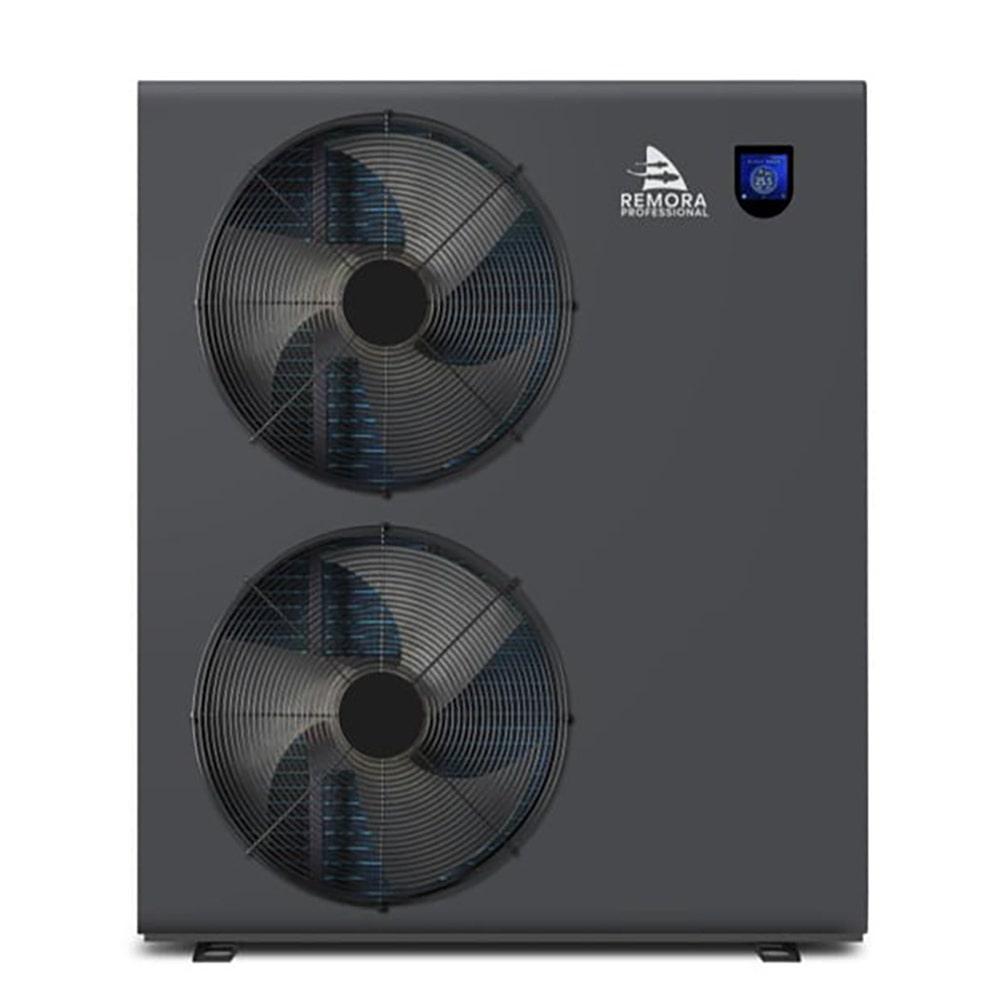
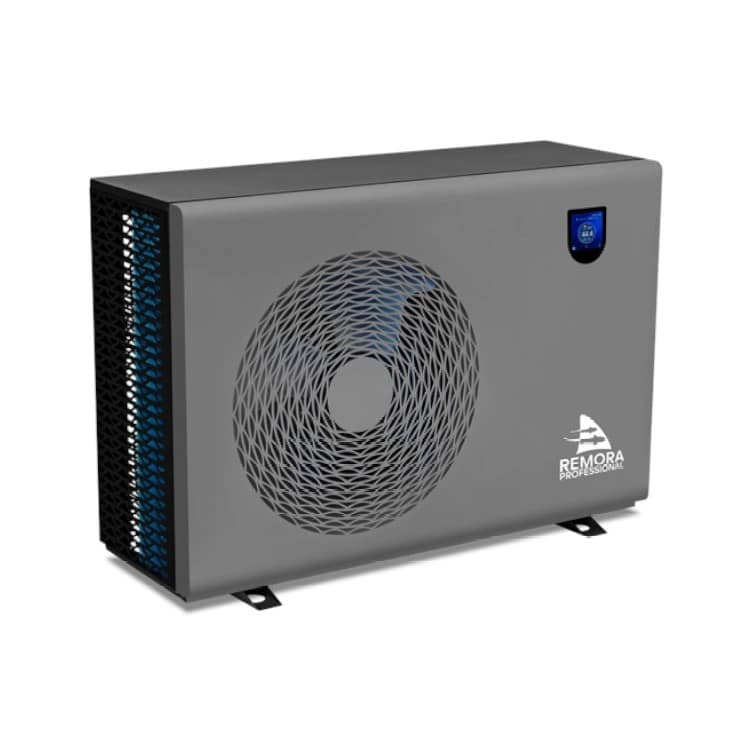
A flush fitting waterproof colour LCD touchscreen provides simple local control. Meanwhile, the powder coated galvanised steel casing protects the internal components and gives the Professional range its distinctive premium appearance.
Each model also includes a corrosion resistant titanium heat exchanger, R32 refrigerant and automatic hot gas defrosting. Therefore, the range can continue operating in ambient air temperatures down to minus 15°C, although heating output will reduce as the outdoor temperature falls.
Choosing the correct Remora Professional heat pump
The following recommendations provide general guidance for insulated and covered koi ponds. The lower figure represents dependable year round heating, while the higher figure represents seasonal heating from spring through to autumn.
Remora Professional 8 Inverter Heat Pump with Wi Fi
Suitable for ponds up to approximately 5,700 litres year round or 7,500 litres seasonally. This plug and play model comes with a 2.8m mains cable, UK plug and integrated RCD.
Remora Professional 10 Inverter Heat Pump with Wi Fi
Suitable for ponds up to approximately 7,500 litres year round or 9,000 litres seasonally. This plug and play model also comes with a 2.8m mains cable, UK plug and integrated RCD.
Remora Professional 15 Inverter Heat Pump with Wi Fi
Suitable for ponds up to approximately 10,500 litres year round or 12,500 litres seasonally. This is the largest plug and play model in the Remora Professional range.
Remora Professional 19 Inverter Heat Pump with Wi Fi
Suitable for ponds up to approximately 13,800 litres year round or 16,500 litres seasonally. A qualified electrician must install a dedicated hardwired electrical supply.
Remora Professional 26 Inverter Heat Pump with Wi Fi
Suitable for ponds up to approximately 17,850 litres year round or 21,000 litres seasonally. This model also requires professional hardwired installation.
Remora Professional 41 Inverter Heat Pump with Wi Fi
Suitable for ponds up to approximately 28,000 litres year round or 33,000 litres seasonally. A qualified electrician must install a dedicated hardwired supply, and we recommend individual sizing for installations of this scale.
Actual sizing will depend on the pond’s surface area, depth, insulation, wind exposure and target temperature. Waterfalls, exposed filtration equipment and uncovered pipework can also increase heat loss. However, a properly fitted insulated winter cover can greatly improve performance and reduce running costs.
Intelligent operating modes
Every Remora Professional heat pump includes 4 operating modes, allowing you to adapt its performance to suit different requirements.
- Boost Mode increases the output when faster heating is required.
- Silent Mode reduces the compressor and fan speed for quieter evening or overnight operation.
- Eco Mode focuses on maximum energy efficiency once the water approaches the selected temperature.
- Smart Mode automatically balances heating output, efficiency and stable temperature control.
The range can both heat and cool the water, with a selectable temperature range from 5°C to 40°C. Therefore, the cooling function can also help swimming pools, swimming ponds and specialist aquatic systems during warmer weather.
Why buy a Remora Professional heat pump from That Pond Guy?
Choosing the correct heat pump involves more than matching a model to the pond volume. We consider the pond’s construction, surface area, insulation, location, target temperature and intended heating season before recommending a model.
- Expert sizing advice for koi ponds, garden ponds and swimming ponds
- Practical guidance based on real pond installations
- Help choosing between plug and play and hardwired models
- Advice on bypass pipework, water flow and filtration integration
- Support with Wi Fi setup and operating modes
- Access to professional pond heating installation where required
- Ongoing product support after purchase
- Experience with complete pond filtration and heating systems
As pond specialists, we understand how heat pumps work alongside pond pumps, filters, bottom drains, returns and waterfalls. Therefore, we can help you choose a system that works with the complete pond rather than looking at the heat pump in isolation.
Warranty and long term support
Remora Professional heat pumps include a 4 year parts and labour warranty. In addition, the compressor and titanium heat exchanger receive 10 years of cover, with parts only cover applying after the first 4 years.
Customers should follow the installation, operation and maintenance requirements to retain the full warranty protection. Correct water flow, suitable electrical installation and regular inspection will also help the heat pump deliver reliable long term performance.
For help choosing the correct Remora Professional model, contact That Pond Guy for practical advice based on your pond size, construction and heating requirements.
Remora Professional Heat Pumps – Frequently Asked Questions
The following frequently asked questions explain how Remora Professional heat pumps work, how to choose the correct model and what you need for installation. They also cover pond sizing, winter performance, Wi Fi control, running efficiency and the differences between plug and play and hardwired models.
What is a Remora Professional heat pump?
A Remora Professional heat pump is an inverter heating and cooling system for koi ponds, garden ponds, swimming ponds and swimming pools. It extracts heat from the surrounding air and transfers it into the water through a corrosion resistant titanium heat exchanger.
Unlike a fixed output electric heater, the heat pump adjusts its compressor and fan speed to match the current temperature demand. Therefore, it can reduce its energy use once the water approaches the selected temperature.
Are Remora Professional heat pumps suitable for koi ponds?
Yes. Remora Professional heat pumps are particularly well suited to koi ponds because they provide controlled and gradual temperature management. Stable temperatures can help reduce sudden seasonal fluctuations and create a more consistent environment for koi.
However, you must choose the correct size for the pond. Insulation, surface area, wind exposure, pipework and the use of a winter cover will all affect performance.
Can a Remora Professional heat pump heat a swimming pool?
Yes. Every model in the Remora Professional range can heat swimming pool water. The larger models can support bigger domestic pools, swimming ponds and more demanding installations.
The heat pump can also cool the water. Therefore, it provides useful temperature control during both warmer and colder weather.
Can Remora Professional heat pumps heat and cool water?
Yes. Remora Professional heat pumps can both heat and cool the water. You can select a target temperature between 5°C and 40°C.
The cooling function may help swimming pools and specialist aquatic systems during hot summer weather. It can also help prevent excessive water temperatures where stable conditions matter.
How does a Remora Professional heat pump work?
The heat pump draws warmth from the surrounding air and transfers it into the pond or pool water. It uses a compressor, refrigerant circuit and titanium heat exchanger to complete this process.
The inverter system then adjusts the heating output to match demand. As a result, the unit can provide more heat during initial warming and reduce its speed once the water approaches the target temperature.
How does inverter technology reduce energy use?
The inverter system continuously adjusts the compressor and fan speed. When the water needs more heat, the unit increases its output. Then, as the water approaches the chosen temperature, it gradually slows down.
This differs from a traditional fixed speed heater that repeatedly switches between full output and off. Consequently, inverter operation can maintain a steadier water temperature while reducing unnecessary electricity use.
What does stepless inverter technology mean?
Stepless inverter technology allows the compressor and fan to adjust smoothly across a range of operating speeds. The heat pump does not rely on a small number of fixed power settings.
Instead, it continually responds to the water temperature and heating demand. This helps improve efficiency, reduce operating noise and maintain more stable conditions.
What does COP mean on a heat pump?
COP means Coefficient of Performance. It compares the amount of heat transferred into the water with the electricity used by the heat pump.
For example, a COP of 10 means the heat pump transfers approximately 10 units of heat for every 1 unit of electricity it consumes under those test conditions. However, COP changes with air temperature, water temperature, operating speed and installation conditions.
Does a higher COP always mean lower running costs?
A higher COP generally indicates better efficiency under the stated test conditions. However, it does not provide a fixed running cost because real performance changes throughout the year.
Cold air, high target temperatures, poor insulation and uncovered water will increase heat loss. Therefore, correct sizing and good pond insulation remain just as important as the maximum advertised COP.
What operating modes are available on Remora Professional heat pumps?
Every Remora Professional heat pump offers 4 operating modes.
• Boost Mode increases output when faster heating is required.
• Silent Mode reduces compressor and fan speed for quieter running.
• Eco Mode prioritises energy efficiency once the water approaches the target temperature.
• Smart Mode automatically balances heating demand, energy use and stable temperature control.
What is Boost Mode used for?
Boost Mode runs the heat pump at a higher output to increase the water temperature more quickly. It can help during initial setup, after a large water change or when restarting the system after winter.
However, Boost Mode uses more electricity than the lower output modes. Therefore, it is usually best for temporary use rather than continuous temperature maintenance.
What is Silent Mode used for?
Silent Mode lowers the compressor and fan speed to reduce operating noise. It is particularly useful during the evening, overnight or where the heat pump sits close to a seating area.
Because the unit runs at a lower speed, it may heat the water more slowly. Silent Mode works best once the pond or pool is already close to the selected temperature.
What is Eco Mode used for?
Eco Mode prioritises energy efficiency and aims to achieve the highest practical COP. It works particularly well when the water is already close to the target temperature.
The heat pump reduces its electrical demand and maintains the temperature at a lower operating speed. As a result, Eco Mode can help reduce ongoing running costs.
What is Smart Mode used for?
Smart Mode automatically adjusts the compressor and fan speed according to the current water temperature and heating demand. It balances output, efficiency and temperature stability without requiring constant manual adjustment.
For most day to day use, Smart Mode provides the simplest option. The heat pump can increase its output when needed and then reduce its speed as the water reaches the target temperature.
Which Remora Professional heat pumps are plug and play?
The Remora Professional 8, 10 and 15 are the plug and play models in the range. They come with a 2.8m mains cable, UK plug and integrated RCD.
You can connect them to a correctly installed and suitably rated weatherproof outdoor socket. However, you should not use an extension lead.
Is the Remora Professional 15 the largest plug and play model?
Yes. The Remora Professional 15 is the largest plug and play model in the range. It provides a maximum heating output of 14.5kW while retaining a UK plug, mains cable and integrated RCD.
Customers who need more output must move to the Professional 19. That model requires a dedicated hardwired electrical supply installed by a qualified electrician.
Which Remora Professional models require an electrician?
The Remora Professional 19, 26 and 41 require a dedicated hardwired electrical supply. A qualified electrician must choose the correct cable, circuit protection, isolation and connection method.
The electrical installation must suit the maximum current of the chosen model and the conditions within the equipment area.
Can a plug and play heat pump connect to any outdoor socket?
No. The outdoor socket must have the correct rating, suitable weather protection and a safe electrical supply. The circuit must also cope with the continuous load created by the heat pump.
Avoid sharing the circuit with other high demand equipment. Where there is any uncertainty, ask a qualified electrician to inspect the socket and circuit before installation.
Can I use an extension lead with a Remora Professional heat pump?
No. Connect a plug and play Remora Professional heat pump directly to a properly installed weatherproof outdoor socket.
Extension leads can cause voltage drop, overheating and unreliable connections. They may also create an unnecessary electrical safety risk, especially during prolonged outdoor use.
Can plug and play Remora heat pumps share an electrical circuit?
The Professional 8, 10 and 15 use a UK plug, but they still place a significant continuous load on the circuit. Therefore, avoid sharing the same supply with pumps, heaters or other equipment that draws a large amount of power.
The Professional 15 needs particular care because it is the largest plug and play model. A qualified electrician can confirm whether the existing circuit has enough capacity.
What size pond can the Remora Professional 8 heat?
We recommend the Remora Professional 8 for insulated and covered ponds up to approximately 5,700 litres for dependable year round heating. For seasonal use from spring through to autumn, it may suit suitable ponds up to approximately 7,500 litres.
These figures provide general guidance rather than a guaranteed capacity. The pond’s surface area, insulation, exposure and target temperature will all affect performance.
What size pond can the Remora Professional 10 heat?
We recommend the Remora Professional 10 for insulated and covered ponds up to approximately 7,500 litres for dependable year round heating. For seasonal use, it may suit suitable ponds up to approximately 9,000 litres.
This model provides a useful step up from the Professional 8 while retaining plug and play electrical installation.
What size pond can the Remora Professional 15 heat?
We recommend the Remora Professional 15 for insulated and covered ponds up to approximately 10,500 litres for dependable year round heating. For seasonal heating, it may suit suitable ponds up to approximately 12,500 litres.
It is also the largest plug and play model in the range, making it a strong choice for customers who want higher output without moving to a hardwired unit.
What size pond can the Remora Professional 19 heat?
We recommend the Remora Professional 19 for insulated and covered ponds up to approximately 13,800 litres for dependable year round heating. For seasonal use, it may suit suitable ponds up to approximately 16,500 litres.
Unlike the smaller models, the Professional 19 requires a dedicated hardwired electrical supply installed by a qualified electrician.
What size pond can the Remora Professional 26 heat?
We recommend the Remora Professional 26 for insulated and covered ponds up to approximately 17,850 litres for dependable year round heating. For seasonal use, it may suit suitable ponds up to approximately 21,000 litres.
Its higher output makes it suitable for larger koi ponds, swimming ponds and residential swimming pools.
What size pond can the Remora Professional 41 heat?
We recommend the Remora Professional 41 for insulated and covered ponds up to approximately 28,000 litres for dependable year round heating. For seasonal use, it may suit suitable ponds up to approximately 33,000 litres.
Because installations of this size can vary considerably, we recommend individual sizing before choosing the Professional 41.
Are the recommended pond sizes guaranteed?
No. The stated pond sizes provide general guidance for insulated and covered installations. They should not be treated as guaranteed maximum capacities.
The pond’s surface area, depth, insulation, exposure, target temperature and pipework will all affect heat loss. Waterfalls, streams and exposed filtration systems can also increase the amount of heating required.
Why is the year round pond size lower than the seasonal size?
Year round heating includes the coldest periods, when the heat pump has less warmth available in the surrounding air. At the same time, the pond loses more heat through its surface and structure.
Seasonal heating usually takes place during milder weather. Therefore, the same heat pump can often manage a larger pond from spring through to autumn than it can during winter.
Why does pond surface area affect heat pump sizing?
A large amount of pond heat escapes through the water surface. Therefore, 2 ponds with the same volume may need different heat pumps if one has a much larger surface area.
Wide and shallow ponds usually lose more heat than deeper ponds with a smaller surface area. For this reason, pond dimensions can be just as important as the total water volume.
Does pond depth affect heat loss?
Yes. Pond depth can influence both the total volume and how quickly the water temperature changes. Deeper ponds often retain temperature more steadily than very shallow ponds.
However, depth alone does not determine the correct heat pump size. Surface area, insulation, exposure and the use of a cover remain equally important.
Does pond insulation make a significant difference?
Yes. Insulation around the pond walls and base reduces heat transfer into the surrounding ground. As a result, it can improve heating performance and reduce running costs.
Insulating pipework and exposed equipment may also help. However, the water surface often remains the largest source of heat loss.
Why does a koi pond need a winter cover?
A suitable winter cover reduces heat loss through the water surface. This makes it easier for the heat pump to maintain a stable temperature during colder weather.
A cover can also reduce running costs and shorten heating cycles. However, the pond still needs suitable ventilation and gas exchange beneath the cover.
Can I use a Remora Professional heat pump on an uncovered pond?
Yes, but an uncovered pond will usually lose much more heat. Therefore, you may need a larger heat pump and should expect higher electricity use.
For dependable winter heating, we recommend combining suitable insulation with a properly fitted pond cover. This gives the heat pump a much better chance of maintaining the selected temperature.
Can polycarbonate sheets be used as a winter pond cover?
Yes. Many koi pond owners use multiwall polycarbonate sheets because they provide insulation while allowing light into the pond.
The sheets should sit securely above the water and allow suitable ventilation. They must also withstand wind and weather without falling into the pond.
Can waterfalls and streams affect heat pump performance?
Yes. Waterfalls and streams expose more water to cold air, so they can remove a considerable amount of heat during winter.
You may choose to reduce or bypass exposed water features during colder weather. Alternatively, you may need a larger heat pump to compensate for the additional heat loss.
Do exposed filters and pipework increase heat loss?
Yes. Exposed filters, pumps, pipework and return lines can lose heat to the surrounding air. Long outdoor pipe runs can make this problem worse.
Insulating suitable pipework and protecting exposed equipment may improve efficiency. Keeping the filtration area sheltered can also help reduce unnecessary heat loss.
Should I choose a larger heat pump than the minimum recommendation?
In some cases, yes. A larger model can provide faster warming and greater capacity during cold weather. It may also operate more quietly because it does not need to run at maximum output as often.
A larger heat pump may suit exposed ponds, higher target temperatures, waterfalls or long pipe runs. However, the filtration flow and electrical supply must also suit the larger model.
Can a Remora Professional heat pump be too large for a pond?
An inverter heat pump can reduce its output once the water approaches the selected temperature. Therefore, moderate oversizing can provide useful spare capacity.
However, an excessively large unit may require unnecessary electrical work, water flow and installation costs. Correct sizing should balance winter performance, efficiency and practical installation requirements.
How quickly can a Remora Professional heat pump warm a pond?
The heating time depends on the pond volume, starting temperature, outdoor conditions and heat loss. Larger ponds and colder starting temperatures will take longer to warm.
Boost Mode can help during the initial heating period. However, gradual temperature changes are generally preferable for koi, so rapid heating should still remain controlled.
What information is needed to choose the correct heat pump?
To size a Remora Professional heat pump properly, we need the pond’s length, width, depth and approximate volume. We also need to know whether the pond has wall and base insulation.
Other useful details include the target temperature, heating season, location, exposure and whether you use a winter cover. Photographs of the pond and equipment area can also help with the recommendation.
Where should a Remora Professional heat pump be installed?
Install the heat pump outdoors in a well ventilated position with clear space around the air inlet and outlet. The unit needs unrestricted airflow so it can collect heat from the surrounding air and discharge colder air safely.
Avoid placing it too close to walls, fences or dense planting. Otherwise, the cold exhaust air may recirculate and reduce performance.
Can a Remora Professional heat pump go inside a filter house?
Only if the filter house provides enough ventilation and unrestricted airflow. A heat pump moves a large volume of air, so a small enclosed room can quickly become too cold.
In many cases, an outdoor position beside the filter house works better. Always follow the manufacturer’s clearance requirements.
Can I install the heat pump close to the pond?
Yes, provided the position remains safe, level and well ventilated. The unit should also sit where it can connect to the filtration return without creating unnecessarily long pipe runs.
However, keep the heat pump away from areas that may flood. You should also allow enough space for future servicing and airflow.
Does the heat pump need a solid base?
Yes. Install the heat pump on a firm, level and stable base. A concrete slab or suitable equipment base usually provides the best support.
A level base helps reduce vibration and keeps the condensate drainage working correctly. It also prevents the unit from sinking or moving over time.
Does a Remora Professional heat pump produce condensation?
Yes. Heat pumps remove moisture from the air during operation, so water may drip from the base of the unit. This is normal and does not usually indicate a leak.
However, the installation area should allow the condensate to drain away safely. During humid weather, the amount of water can appear significant.
How can I tell the difference between condensation and a leak?
Condensation usually appears beneath the heat pump while the unit runs. It often increases during humid weather and stops when the heat pump switches off.
A plumbing leak may continue even when the unit is off. If you are unsure, switch off the circulation pump and inspect the unions, pipework and fittings carefully.
Where should the heat pump connect to the pond filtration system?
Install the heat pump in the return line after the pond filter and UV system. This allows clean water to pass through the titanium heat exchanger before returning to the pond.
In addition, placing it after the filtration system reduces the risk of debris entering the heat exchanger. A bypass arrangement then allows you to control the flow.
Why does a heat pump need a 3 valve bypass?
A 3 valve bypass lets you control how much water passes through the heat pump. This helps you achieve the correct flow without restricting the main filtration circuit.
The bypass also allows you to isolate the unit for maintenance. Therefore, the main pond filtration can continue running even when the heat pump is disconnected.
Can I install the heat pump without a bypass?
It may be possible in some simple systems, but we strongly recommend a bypass. Without one, you may struggle to control the flow through the heat pump.
A bypass also makes servicing, winter draining and future replacement much easier. For this reason, it forms part of most professional installations.
What happens if the water flow is too low?
Low water flow can reduce heat transfer and may trigger a flow error. The heat pump may then stop to protect itself.
Blocked filters, undersized pumps, restrictive pipework and incorrect valve positions can all cause low flow. Therefore, check the complete system rather than the heat pump alone.
What happens if the water flow is too high?
Excessive flow may reduce the temperature difference across the heat exchanger and make setup more difficult. It can also create unnecessary pressure within the pipework.
A correctly adjusted bypass helps regulate the flow. Always use the recommended range for the chosen model.
Do all Remora Professional models need the same water flow?
No. Larger models need a higher flow rate because they transfer more heat into the water.
For example, the smaller Professional models need less flow than the Professional 26 or 41. Therefore, always check the technical specifications before choosing the circulation pump and pipework.
What pipe size do Remora Professional heat pumps use?
The Remora Professional range uses 1½ inch water connections. Suitable unions and adaptors can connect the heat pump to pond or pool pressure pipework.
However, the main filtration system may use larger pipework. In that case, reduce the pipe size only where necessary and avoid creating unnecessary restrictions.
Can I connect a Remora Professional heat pump to flexible hose?
Suitable reinforced pressure hose may work in some installations. However, rigid pressure pipe usually provides a neater and more secure long term connection.
Avoid lightweight corrugated hose because it can restrict flow, leak or collapse. The chosen hose must suit the pressure, flow and outdoor conditions.
Should I insulate the pipework connected to the heat pump?
Insulating exposed pipework can reduce heat loss, especially during winter. This becomes more important where the heat pump sits far from the pond.
Use suitable waterproof pipe insulation and protect it from weather and physical damage. Short and direct pipe runs will also improve efficiency.
Can the heat pump work with an existing pond pump?
Possibly. The existing pump must provide enough flow after accounting for the filter, UV, pipe length, bends and height changes.
If the flow falls below the heat pump’s requirement, you may need a larger circulation pump or a different pipework arrangement. A variable flow pump can make final adjustment easier.
Does the filtration system need to run while the heat pump is operating?
Yes. Water must continue flowing through the heat pump whenever it runs. Without circulation, the unit cannot transfer heat safely.
For this reason, the filtration pump and heat pump controls should work together. The heat pump will normally stop if it detects insufficient flow.
Do Remora Professional heat pumps include Wi Fi control?
Yes. Every model in the Professional range includes built in Wi Fi for use with the Smart Life app.
Once connected, you can check the water temperature, change the target setting, select operating modes and monitor the running status from a compatible smartphone or tablet.
What happens if the Wi Fi signal does not reach the heat pump?
The heat pump can still operate through its front touchscreen. However, remote app control and online diagnostic features will not work without a reliable connection.
A Wi Fi extender or mesh system may improve coverage near the equipment area. You should test the signal before completing the installation.
How quiet are Remora Professional heat pumps?
The smaller single fan models operate very quietly, with published sound levels below approximately 29dB(A) or 30dB(A) at 10m. The larger twin fan Professional 41 has a higher published rating below 45dB(A) at 10m.
Actual noise will depend on the operating mode, installation surface and surrounding walls. Silent Mode can reduce sound further once the water approaches the target temperature.
Can I control a Remora Professional heat pump when I am away from home?
Yes. Once the heat pump connects to the Smart Life app and a reliable internet connection, you can access supported controls remotely.
You can check the water temperature, adjust the target setting, change operating modes and confirm that the unit remains active. This can be especially useful while you are away from home.
Can the Smart Life app show the current pond temperature?
Yes. The Smart Life app can display the current water temperature reported by the heat pump.
You can also use the app to change the target temperature and monitor the current operating status. However, a stable Wi Fi connection must reach the equipment area.
Can I change the operating mode through the Smart Life app?
Yes. The app allows you to switch between Boost, Silent, Eco and Smart modes.
Therefore, you can change how the heat pump operates without visiting the unit. This makes it easier to increase heating speed or reduce noise at different times of day.
Can Remora Professional heat pumps provide remote fault diagnostics?
The connected system can provide access to operating parameters, fault history and diagnostic information. As a result, technical support may identify certain sensor faults, setup problems or error codes remotely.
However, remote access cannot resolve every issue. Plumbing restrictions, electrical faults and physical damage may still require an engineer to inspect the installation.
Do Remora Professional heat pumps receive software updates?
The connected control system supports automatic software updates through the internet. This can help keep the controls current without arranging a site visit.
However, the heat pump needs a reliable Wi Fi connection for online updates. Hardware faults and mechanical repairs will still require physical servicing.
Can I use the heat pump without Wi Fi?
Yes. The heat pump can operate through the waterproof touchscreen even when no Wi Fi connection is available.
You can adjust the temperature and operating mode directly from the unit. However, app control, remote monitoring and online diagnostics will not work until you connect it to Wi Fi.
Can a Remora Professional heat pump operate during winter?
Yes. Remora Professional heat pumps can operate in ambient air temperatures down to minus 15°C.
The automatic hot gas defrost system helps remove ice from the evaporator during cold and damp weather. However, output and efficiency will reduce as the outdoor temperature falls.
Will the heat pump still produce its full output at minus 15°C?
No. The maximum output figures come from warmer test conditions. As the outside air becomes colder, the heat pump has less available heat to collect.
Therefore, the unit will produce less heat at minus 15°C than it will during mild weather. Correct sizing, insulation and a suitable winter cover become especially important during cold periods.
What is automatic hot gas defrosting?
Frost can form on the rear evaporator when the heat pump operates in cold and damp conditions. The automatic defrost cycle temporarily changes the refrigerant flow to warm the evaporator and melt the ice.
Once the defrost cycle finishes, the unit returns to normal heating. This helps maintain airflow and protects cold weather performance.
How often will the heat pump enter a defrost cycle?
The frequency depends on the air temperature, humidity and operating conditions. Cold and damp weather will usually cause more frequent defrost cycles.
The heat pump manages this process automatically. Therefore, the user does not need to start the cycle manually.
Will the water temperature drop during defrosting?
The heat pump briefly pauses normal heating while it clears ice from the evaporator. As a result, it will not add heat to the water during that short period.
However, a correctly sized and insulated pond should not experience a noticeable temperature drop from a normal defrost cycle.
How much electricity does a Remora Professional heat pump use?
Electricity use depends on the model, outdoor temperature, selected water temperature and heat loss from the pond or pool.
The unit will usually use more electricity during initial heating and colder weather. Once the water reaches the target temperature, the inverter system can reduce its speed and power consumption.
Is a heat pump cheaper to run than a direct electric pond heater?
In most suitable installations, yes. A direct electric heater generally converts 1 unit of electricity into roughly 1 unit of heat.
A heat pump can transfer several units of heat for each unit of electricity it uses. Therefore, it can provide much lower running costs, especially when the pond has good insulation and a winter cover.
How can I reduce the running cost of my pond heat pump?
Use suitable insulation around the pond walls, base and exposed pipework. A properly fitted winter cover can also reduce heat loss through the water surface.
In addition, choose a sensible target temperature and keep waterfalls or exposed water features to a minimum during winter. Correct sizing and water flow will also help the heat pump operate efficiently.
Should I keep the heat pump running continuously?
In many cases, continuous temperature maintenance works better than repeatedly allowing the pond to cool and reheating it.
The inverter system can reduce its output once the water reaches the target temperature. Therefore, maintaining a stable setting may use less energy than frequent large temperature changes.
What maintenance does a Remora Professional heat pump need?
Keep the air inlet and outlet clear of leaves, plants and other debris. You should also inspect the casing, evaporator, water connections and bypass valves regularly.
In addition, check that the filtration system continues to provide the correct water flow. Always isolate the electrical supply before cleaning or carrying out maintenance.
How should I clean the heat pump evaporator?
Switch off and isolate the heat pump before cleaning. Then remove loose leaves and debris carefully without bending the delicate metal fins.
Use gentle cleaning methods and avoid high pressure washing. If the evaporator needs a deeper clean, ask a suitable service engineer for advice.
Should I drain the heat pump when it is not in use during winter?
Yes, if you plan to shut down the heat pump during freezing conditions. Water trapped inside the heat exchanger or pipework can freeze, expand and cause damage.
Follow the winter shutdown instructions and drain the unit fully. You should also isolate the bypass correctly before fitting the winter cover.
Does every Remora Professional heat pump include a winter cover?
The smaller and mid sized models include a winter cover. However, the Professional 41 does not include one as standard.
A winter cover should only go onto a switched off and correctly drained unit. Do not cover a heat pump while it is operating because the unit needs unrestricted airflow.
What warranty comes with a Remora Professional heat pump?
The range includes a 4 year parts and labour warranty. In addition, the compressor and titanium heat exchanger receive 10 years of cover.
After the first 4 years, the compressor and heat exchanger receive parts only cover. Customers must follow the installation, operation and maintenance requirements to retain the full warranty protection.
What can affect the heat pump warranty?
Incorrect installation, unsuitable water flow, poor electrical connections and a lack of routine maintenance may affect warranty cover.
The heat pump should operate within the stated technical requirements. Therefore, customers should follow the installation instructions and keep the filtration system working correctly.
Does the warranty cover frost damage?
Frost damage may not receive warranty cover if water remains trapped inside a switched off heat pump during freezing conditions.
For this reason, customers should drain the unit properly before winter shutdown. They should also follow the manufacturer’s winter protection guidance.
Does incorrect water flow affect the warranty?
It can. Running the heat pump with unsuitable water flow may cause errors, reduce performance and place unnecessary strain on internal components.
Therefore, the circulation pump, bypass and pipework must deliver the required flow for the chosen model.
Does a qualified electrician need to install every Remora Professional heat pump?
No. The Professional 8, 10 and 15 come with a UK plug, mains cable and integrated RCD. However, the outdoor socket and electrical circuit must still suit the load.
The Professional 19, 26 and 41 require a dedicated hardwired supply. A qualified electrician must complete this electrical work.
Does a Remora Professional heat pump need commissioning?
Yes. Proper commissioning confirms that the water flow, bypass setting, electrical supply and control settings all work correctly.
The installer should also check the temperature difference across the unit and confirm that the heat pump responds correctly in each operating mode.
What happens during heat pump commissioning?
Commissioning normally includes checking the pipework, valves, water flow and electrical connection. The installer will then start the heat pump and set the required operating mode and temperature.
In addition, the Wi Fi connection and Smart Life app may be configured. The installer should also check for error codes, leaks and unusual noise.
How long should a newly installed heat pump take to start heating?
Most heat pumps include a short protection delay before the compressor starts. This prevents rapid restarting and protects the internal components.
Once the compressor begins running, the return water should gradually become warmer. However, the temperature increase across the unit may only be a few degrees.
Why does the heat pump not start immediately?
The unit may be waiting through its built in compressor protection delay. It may also have reached the selected water temperature.
Low water flow, incorrect valve positions or an active error code can also prevent startup. Therefore, check the display before assuming the unit has developed a fault.
Why does the heat pump keep switching off?
The heat pump may switch off because the water has reached the target temperature. It may also pause during a defrost cycle or due to insufficient flow.
Blocked filters, air locks, closed valves and unstable electrical supplies can also interrupt operation. The display or app may provide an error code that helps identify the cause.
Why is the heat pump running but the pond is not getting warmer?
The pond may be losing heat as quickly as the unit can add it. This commonly happens with uncovered ponds, waterfalls, poor insulation or very cold weather.
The heat pump may also be undersized for the installation. In addition, incorrect flow or bypass adjustment can reduce the amount of heat transferred into the water.
Why does the return water not feel very hot?
A heat pump does not normally produce extremely hot return water. Instead, it moves a large volume of water and raises the temperature gradually.
The temperature difference may feel quite small by hand. However, the continuous circulation allows the pond or pool temperature to increase steadily over time.
How do I know whether the heat pump is producing heat?
Compare the water temperature entering and leaving the heat pump using accurate thermometers or the unit’s displayed readings.
You should normally see a small temperature increase across the heat exchanger while the unit heats. The air leaving the fan should also feel colder than the surrounding air.
Why is cold air coming from the heat pump?
Cold exhaust air is normal. The heat pump removes warmth from the surrounding air before transferring that energy into the water.
As a result, the discharged air will feel colder. This is why the unit needs clear space and must not recirculate its own exhaust air.
Why is there ice on the back of the heat pump?
Frost can form on the evaporator during cold and damp weather. The heat pump should detect this and start an automatic defrost cycle.
A light frost that clears during defrosting is normal. However, heavy ice that remains in place may indicate restricted airflow, a sensor problem or a refrigerant fault.
What should I do if the heat pump shows a flow error?
First, check that the filtration pump is running and that the bypass valves sit in the correct positions. Then inspect the filter and pipework for blockages.
You should also confirm that the circulation pump can provide the minimum required flow. If the error continues, contact technical support.
What should I do if the heat pump displays an error code?
Record the complete error code and check the operating manual. Avoid repeatedly resetting the unit without identifying the cause.
You can also provide the code to That Pond Guy or the technical support team. Wi Fi diagnostic access may help identify certain faults remotely.
Can a blocked pond filter stop the heat pump working?
Yes. A dirty or blocked pond filter can reduce the water flow through the complete system.
If the flow falls below the heat pump’s minimum requirement, the unit may display an error and stop. Therefore, regular filter maintenance supports both water quality and heating performance.
Can air inside the pipework cause heat pump problems?
Yes. Air locks can reduce water flow, create unusual noise and interfere with the flow switch.
Careful filling and correct valve adjustment can help remove trapped air. The pipework should also avoid unnecessary high points where air can collect.
Can a variable speed pond pump work with a Remora Professional heat pump?
Yes. A variable speed pump can make it easier to achieve the correct flow rate while controlling electricity use.
However, the pump must still provide enough flow at the selected speed after accounting for filters, bends, pipe length and height changes.
How do I choose the correct Remora Professional heat pump?
Begin with the pond or pool volume, but also consider the surface area, insulation, exposure and target temperature. The required heating season will also affect the recommendation.
For example, year round koi pond heating needs more capacity than mild weather seasonal use. Therefore, provide complete installation details before selecting a model.
Is heating a koi pond beneficial for the fish?
Heating can help reduce sudden temperature changes and create a more stable environment for koi. It also gives the pond owner greater control over seasonal feeding, treatment and winter temperatures.
However, a heat pump does not replace good water quality, filtration or oxygenation. Temperature changes should also remain gradual to avoid unnecessary stress.
What temperature should I keep a koi pond during winter?
Many koi keepers choose a winter temperature of approximately 12°C to 15°C. This keeps the pond above very cold conditions while avoiding the cost of maintaining summer temperatures.
The most suitable temperature will depend on your koi, feeding plan and reasons for heating. Whatever target you choose, aim to maintain it steadily rather than making frequent large adjustments.
Can I heat a koi pond above 15°C during winter?
Yes, but a higher target temperature increases heat loss and electricity use. It may also require a larger heat pump than the standard pond size guidance suggests.
Therefore, customers planning to maintain higher winter temperatures should request individual sizing. Pond insulation and a suitable cover become even more important.
How quickly should I increase the temperature of a koi pond?
Increase the temperature gradually rather than making a sudden change. A slow adjustment gives the fish time to adapt and reduces unnecessary stress.
The appropriate rate will depend on the starting temperature, fish health and reason for heating. Where treatment or illness is involved, seek advice from a suitably experienced aquatic professional.
Can a heat pump help when treating sick koi?
Stable, controlled temperatures can support some koi treatment plans. Certain treatments and recovery processes work best within a suitable temperature range.
However, always follow the instructions for the chosen treatment. A heat pump should support the treatment plan rather than replace diagnosis or professional fish health advice.
Does warmer pond water need more oxygen?
Yes. Warmer water holds less dissolved oxygen than colder water, while koi and beneficial bacteria may use more oxygen as temperatures rise.
Therefore, ensure the pond has suitable aeration whenever you heat it. Air pumps, diffusers, waterfalls and well designed returns can all support oxygen levels.
Will heating a pond affect biological filtration?
Warmer and more stable temperatures can increase biological activity within the filter. Beneficial bacteria may process waste more effectively than they do in very cold conditions.
However, feeding and fish metabolism may also increase. Therefore, the filter must still suit the fish load and water quality should remain regularly tested.
Can I continue feeding koi while using a heat pump?
Yes, but the food type and amount should suit the water temperature. Koi digest food differently as temperatures change.
A heat pump can help maintain a more predictable feeding temperature. Nevertheless, avoid overfeeding and continue monitoring ammonia, nitrite and general water quality.
Can a Remora Professional heat pump work with solar panels?
Yes. A heat pump can use electricity generated by a home solar system, provided the electrical installation supports it.
Solar generation may help offset some daytime running costs. However, the heat pump will still need a reliable mains supply when solar production falls or heating demand exceeds the available generation.
Can I run the heat pump mainly during the daytime?
Yes. Daytime operation may benefit from warmer air temperatures and any available solar generation. A heat pump often works more efficiently when the surrounding air is warmer.
However, allowing the pond to cool significantly overnight may reduce temperature stability. The best schedule will depend on the pond’s insulation, cover and target temperature.
Can I use a timer with a Remora Professional heat pump?
The controls support scheduled operation, although the exact settings will depend on the model and controller configuration.
When using a timer, make sure the filtration pump also provides water flow whenever the heat pump operates. The heat pump should never run without adequate circulation.
Can I calculate the expected daily running cost?
Yes. You can estimate the maximum cost by multiplying the unit’s electrical input in kilowatts by the number of running hours and your electricity price per kilowatt hour.
However, inverter heat pumps do not always run at maximum input. Once the water reaches temperature, the unit may reduce its speed, so the real cost can be lower than a maximum load calculation.
Why can nobody give an exact heat pump running cost?
Running costs change with the weather, pond temperature, insulation, cover and selected model. The heat pump also varies its electrical input through the inverter system.
Therefore, any quoted cost can only provide an estimate. A cold, uncovered pond will cost more to heat than a well insulated and covered pond of the same volume.
Will a larger heat pump always cost more to run?
Not necessarily. A larger inverter heat pump may reach the target temperature faster and then reduce its output.
In some installations, a slightly larger unit can run more efficiently and quietly than an undersized model working continuously at full power. However, it will still have higher maximum electrical and flow requirements.
Can 2 Remora Professional heat pumps work on the same pond?
Yes. Large or demanding installations may use 2 heat pumps to provide enough output, additional flexibility or backup capacity.
The filtration flow, bypass pipework and electrical supply must support both units. Therefore, multiple heat pump installations need individual design and professional commissioning.
Can I add a second heat pump later?
Yes, provided the filtration system, pipework and electrical supply can accommodate another unit.
Planning for a future second heat pump during the first installation can make expansion easier. This may include leaving space, adding suitable valves and allowing for additional electrical capacity.
Are Remora Professional heat pumps suitable for natural swimming ponds?
Yes. They can heat and cool natural swimming ponds, provided the water flow and filtration design suit the selected model.
Natural swimming ponds often have large surface areas and planted regeneration zones. Therefore, they may lose more heat than a conventional covered pool and require careful sizing.
Can a Remora Professional heat pump work with a pool cover?
Yes. A suitable pool cover can significantly reduce surface heat loss and improve efficiency.
Using a cover may shorten heating times and lower running costs. It also helps the pool retain heat overnight and during windy weather.
Can the heat pump heat a pond with a viewing window?
Yes. A viewing window does not prevent the use of a heat pump.
However, large windows can allow additional heat loss compared with well insulated pond walls. The window size, material and exposure should therefore form part of the sizing assessment.
How long should a Remora Professional heat pump last?
Service life depends on installation quality, usage, maintenance and environmental conditions. Correct water flow, good ventilation and a suitable electrical supply will all help protect the unit.
Regular inspection and prompt attention to faults can also extend its working life. The long compressor and heat exchanger warranty reflects the durable construction of the Professional range.
Can an existing pond heating system be replaced with a Remora heat pump?
Yes. A Remora Professional heat pump can replace or supplement an existing electric heater or older heat pump.
Before installation, check the pipework, circulation flow and electrical supply. The new system may also need a bypass arrangement or changes to the return line.
Can I keep an electric heater as a backup?
Yes. Some pond owners keep a direct electric heater as backup for extreme weather or emergencies.
The controls and pipework must prevent the systems from conflicting with each other. An electrician should also confirm that the electrical supply can safely support both heaters.
What happens during a power cut?
The heat pump will stop during a power cut because both the compressor and circulation system need electricity.
Once power returns, the unit may restart automatically after its normal protection delay. Check the controller and pond temperature after any prolonged outage.
Will the heat pump remember its settings after a power cut?
Most modern heat pump controls retain their main temperature and operating settings after a brief power interruption.
However, you should check the unit after a longer outage. Confirm that the operating mode, target temperature and Wi Fi connection remain correct.
When should I contact That Pond Guy for sizing advice?
Contact us before ordering if you plan to heat through winter, maintain water above 15°C or heat an exposed or uncovered pond. You should also ask for advice where the pond has a large surface area, waterfalls or long outdoor pipe runs.
We can make a better recommendation when you provide the pond dimensions, volume, insulation, target temperature and photographs of the pond and equipment area.
