





Pond Building
Professional Pond Building for Gardens, Wildlife and Ornamental Ponds
A professionally designed pond can completely transform a garden. It creates a calm focal point that adds movement, sound, and life to the space. Whether you want a natural wildlife pond, a traditional ornamental pond, or a more structured formal feature, long term success comes down to thoughtful design, correct construction methods, and using the right materials from the start.
At That Pond Guy, we design and build bespoke ponds across Kent and the South East. Our work ranges from simple garden ponds through to larger ornamental builds with filtration systems, streams, waterfalls, and integrated landscaping. Every pond is designed around the available space, the surrounding garden, and how you want to enjoy it long term.
Designed for Long Term Enjoyment
Our focus goes beyond how a pond looks when it is first finished. We consider how it will perform months and years down the line. A well built pond should be reliable, easy to maintain, and something you enjoy rather than constantly having to fix.
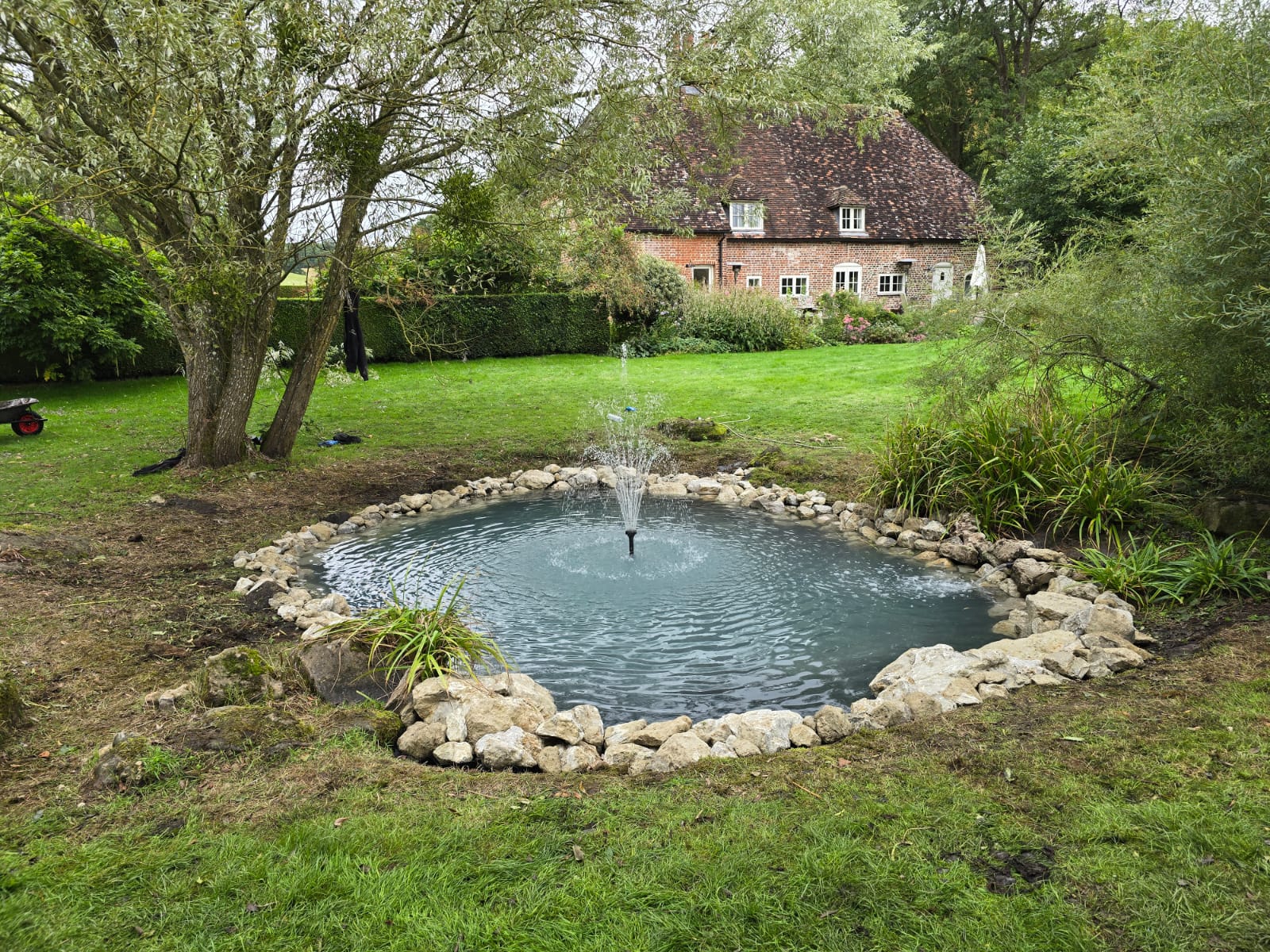
Bespoke Pond Design, Not Off the Shelf Builds
No two gardens are the same, and we never treat ponds as identical projects. We take time to understand how you want your pond to look, how prominent it should be within the garden, and how much involvement you want when it comes to ongoing care and maintenance.
During the design stage, we consider:
• Overall pond size, depth, and proportions
• Positioning within the garden and exposure to sunlight
• Whether the pond should feel natural or more formal
• Safety considerations for children and pets
• Planting zones, shelves, and marginal areas
• Filtration and circulation requirements
• Integration with patios, decking, paving, or landscaping
By addressing these details early, we avoid common issues such as leaks, green water, poor circulation, and ponds that become difficult to manage over time.
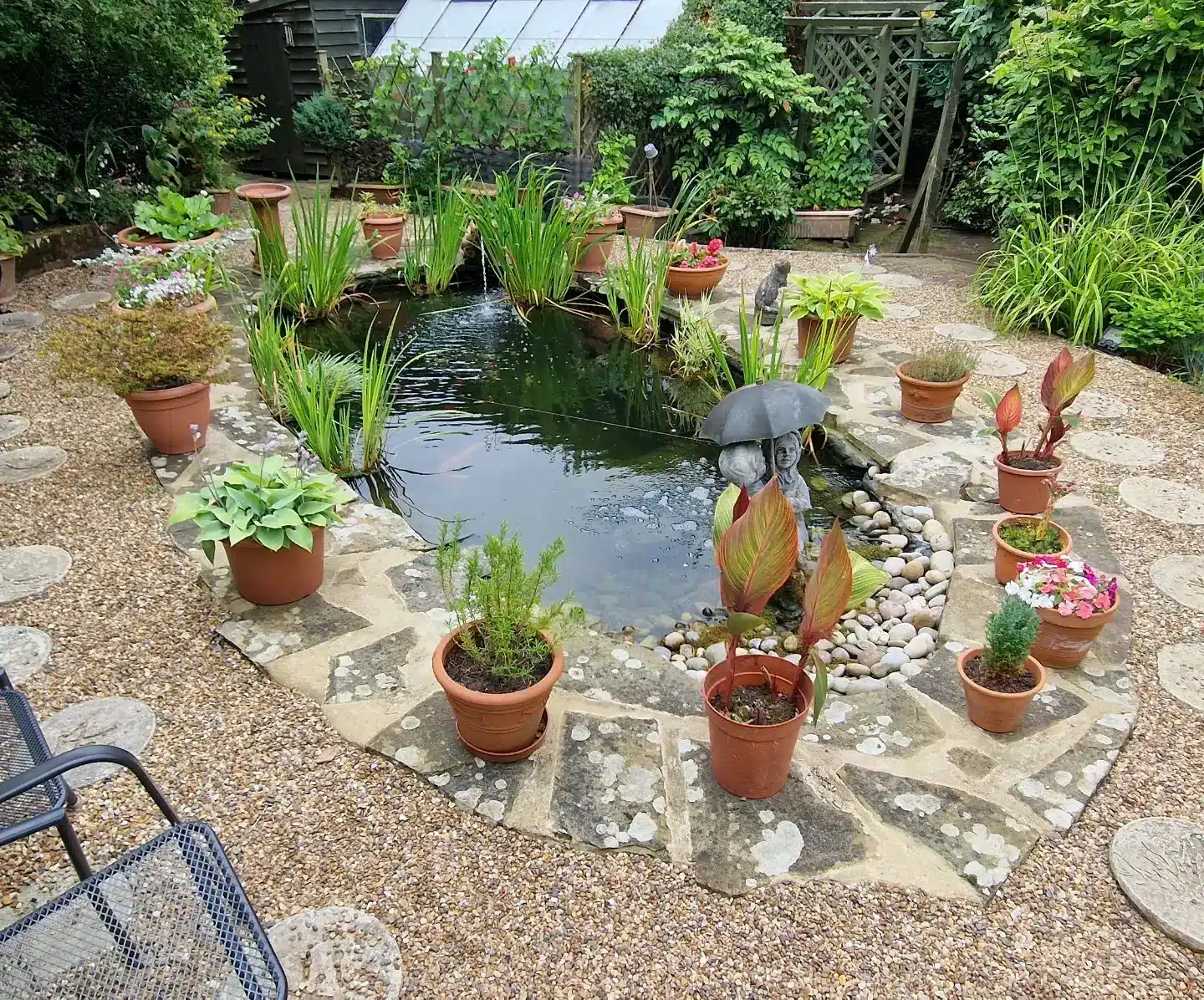
Types of Ponds We Build
Every pond we build is designed around how it will be used, how it should look within the garden, and how much maintenance the owner wants to take on. Below is an overview of the different types of ponds we regularly design and construct.
Garden and Ornamental Ponds
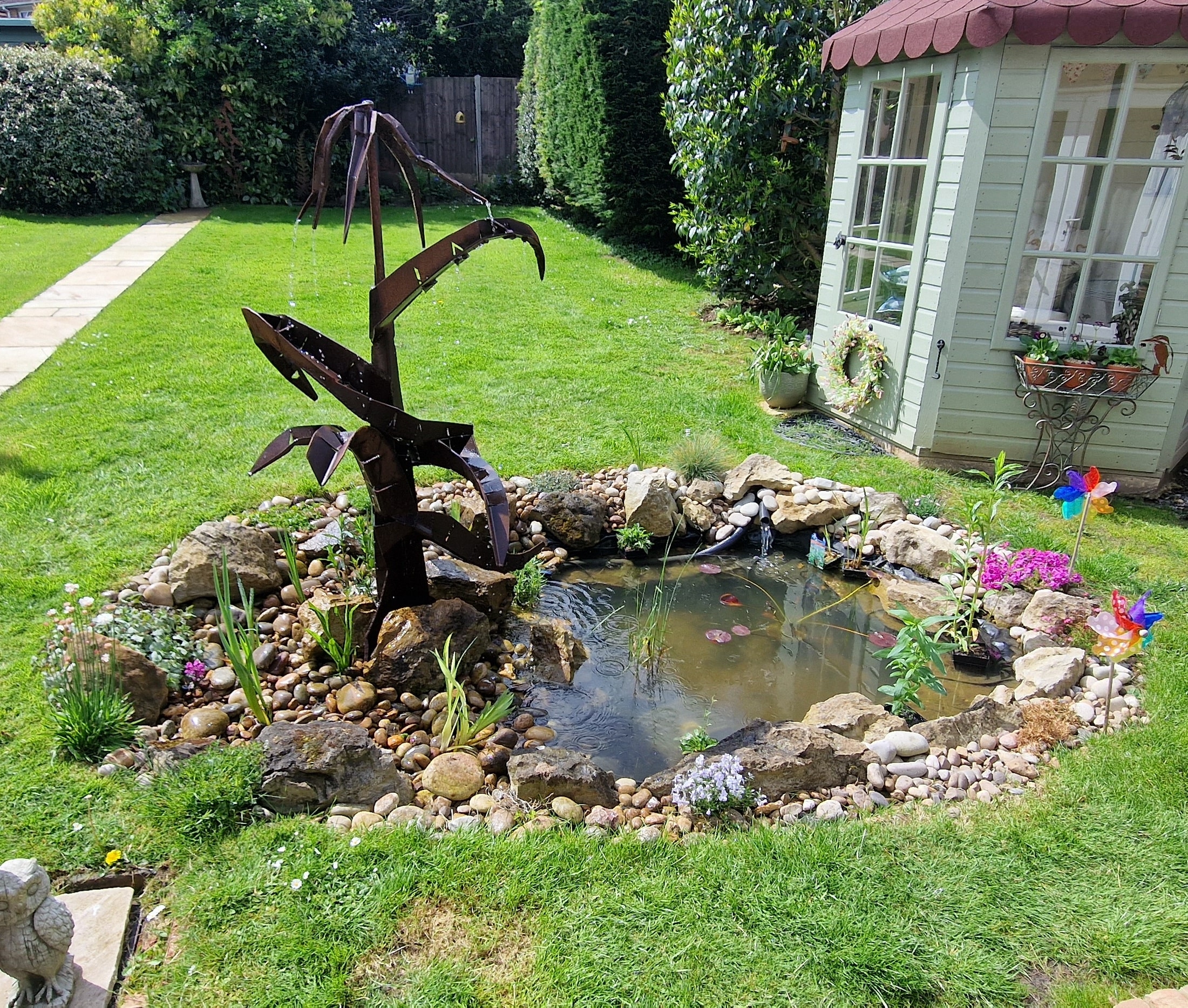
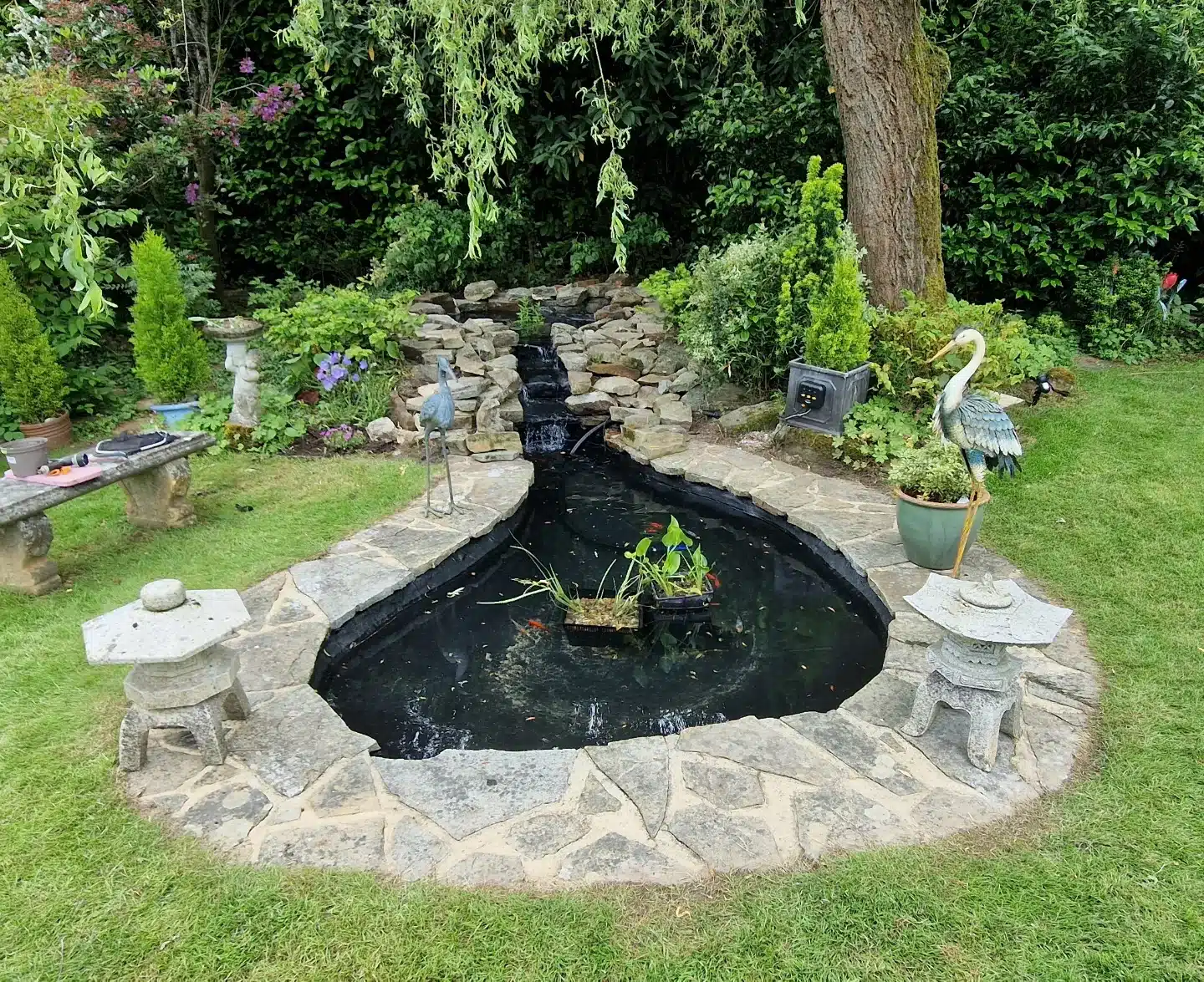
Garden and ornamental ponds are typically designed as visual centrepieces, forming a calm focal point within the garden. These ponds often include a mix of aquatic plants such as lilies and marginals, and may be stocked lightly with fish depending on the size and filtration setup.
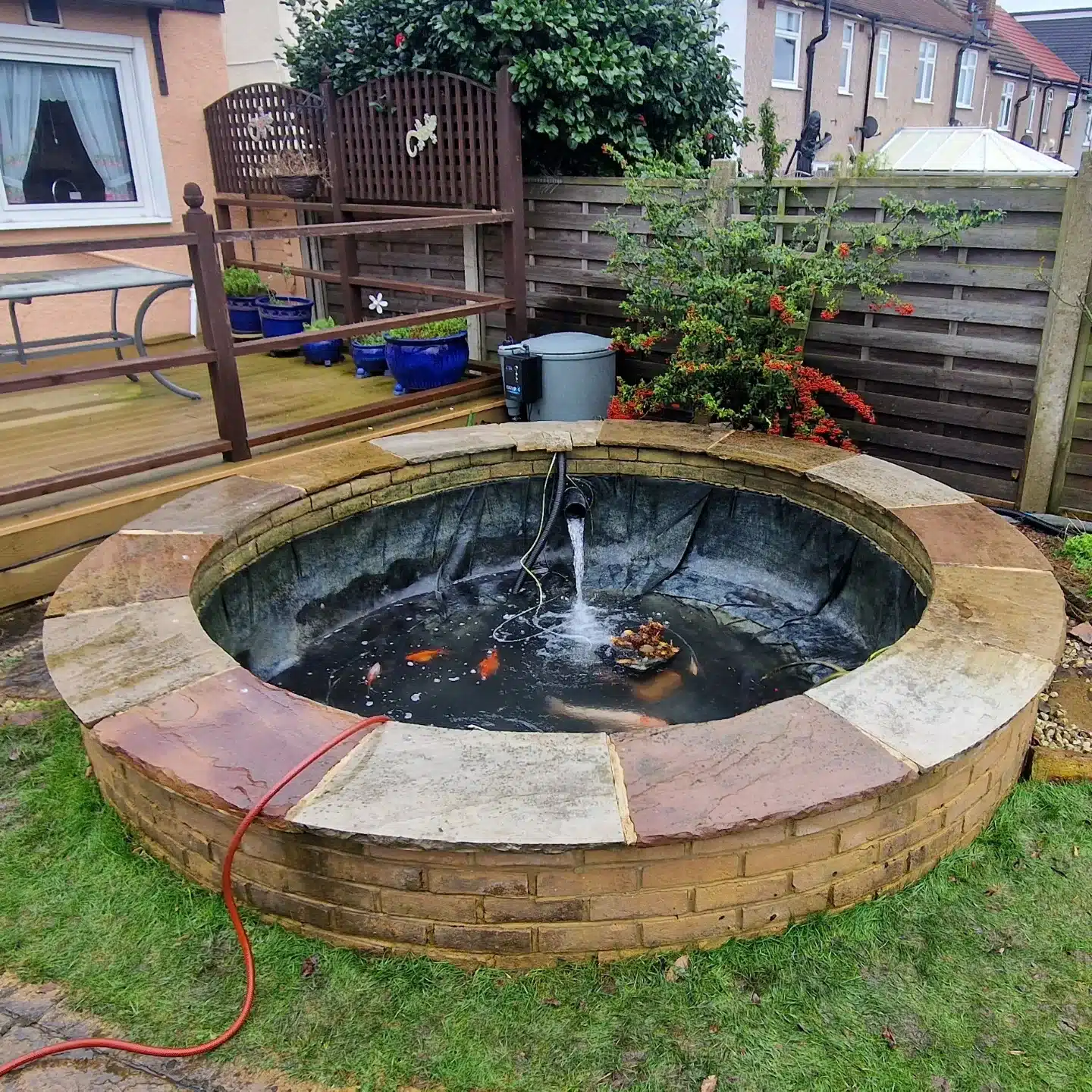
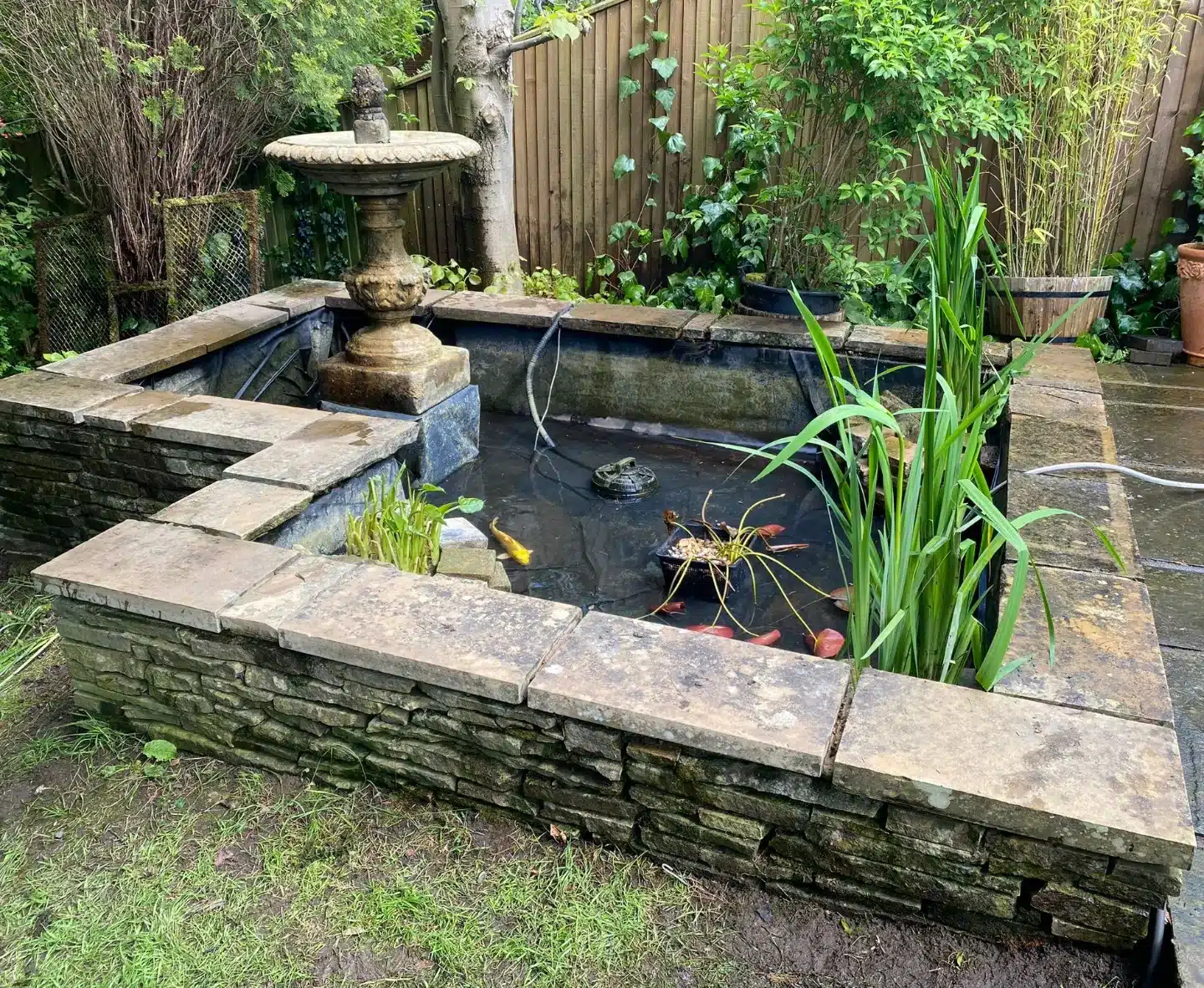
We build garden ponds in a wide range of styles, from soft, natural designs that blend seamlessly into lawns and planting, through to more structured ornamental ponds with defined edges, paving, stone coping, or raised walls. Depth, shape, and positioning are carefully considered to improve water quality, reduce overheating in summer, and limit excessive debris buildup.
Filtration is always specified to suit the pond rather than over complicating the system. Many ornamental ponds use discreet pressure filters which can be hidden within planting or buried out of sight, keeping the garden clean and uncluttered while remaining easy to access and clean. When designed correctly, garden ponds should be clear, stable, and enjoyable without becoming a constant maintenance burden.
Wildlife Ponds
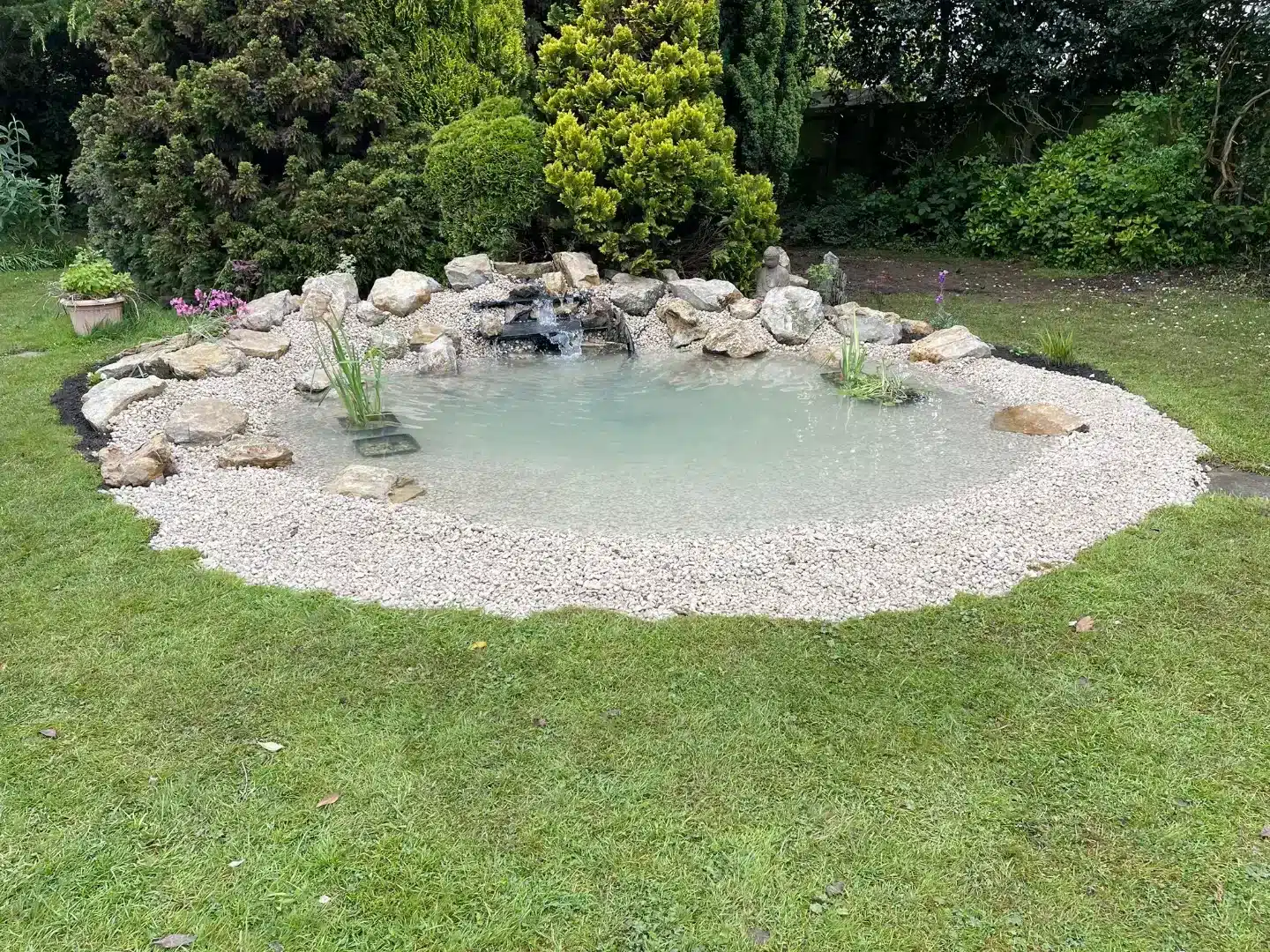
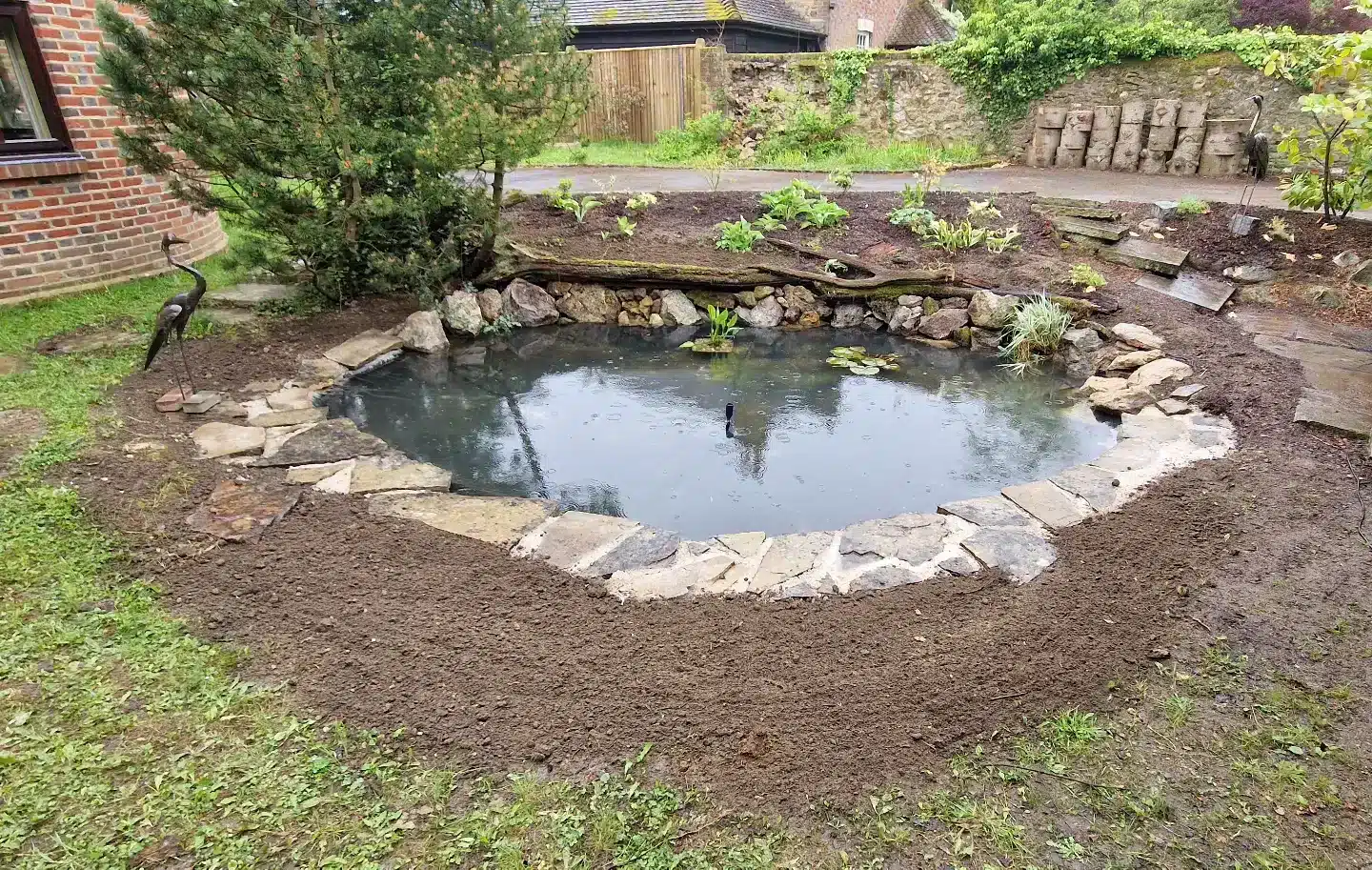
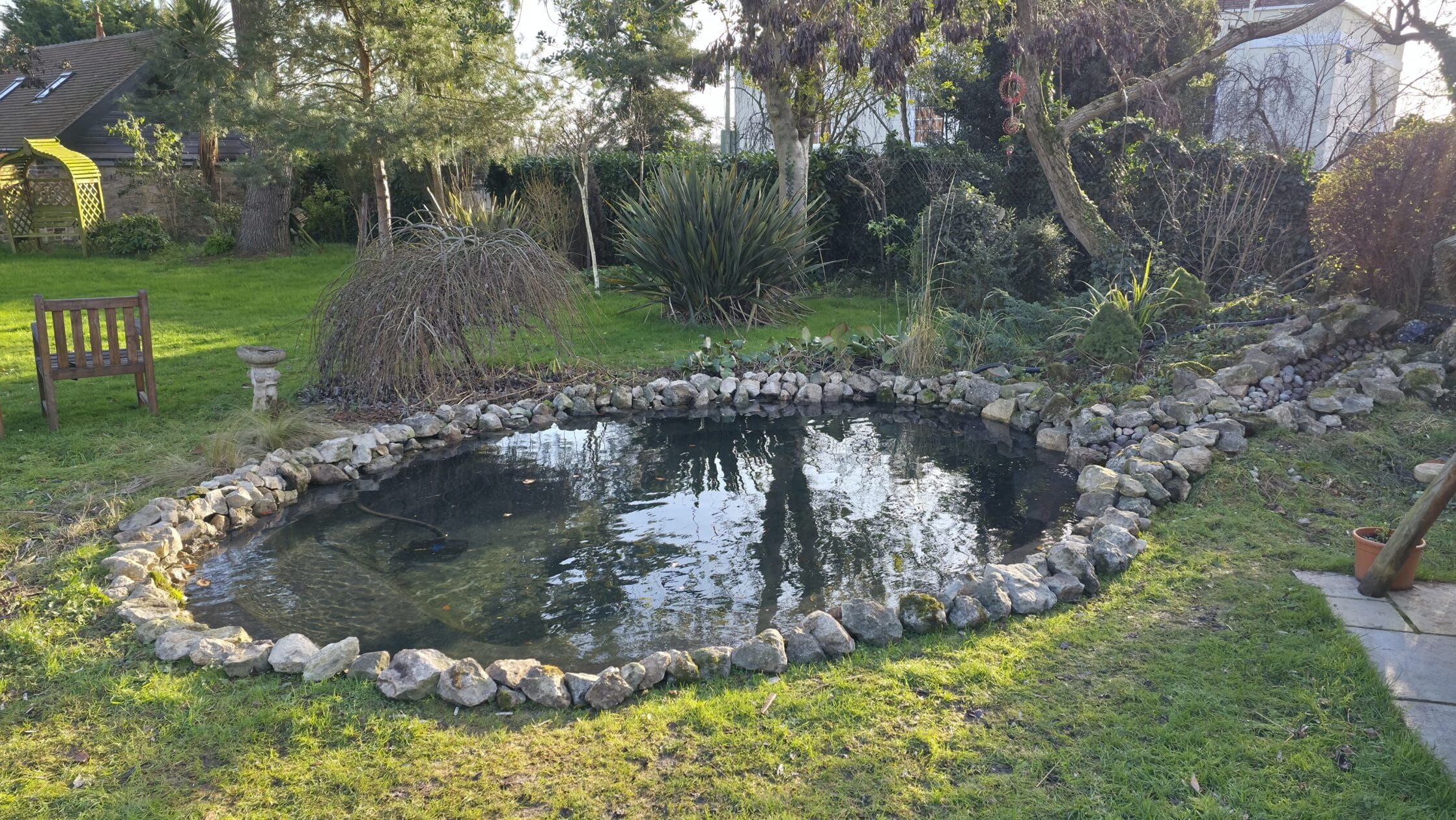
Wildlife ponds are designed to support frogs, newts, insects, birds, and other native wildlife, creating a natural habitat that evolves over time. These ponds prioritise gentle slopes, varied depths, and wide shallow margins to allow safe access for wildlife.
Planting plays a key role in wildlife pond construction, with oxygenating plants, marginals, and surrounding vegetation carefully selected to encourage biodiversity. Mechanical filtration is usually kept to a minimum or avoided entirely, allowing natural processes to regulate water quality.
When properly designed, wildlife ponds require very little ongoing intervention and become one of the most rewarding pond types to own, changing with the seasons and supporting a wide range of species.
Natural and Formal Ponds
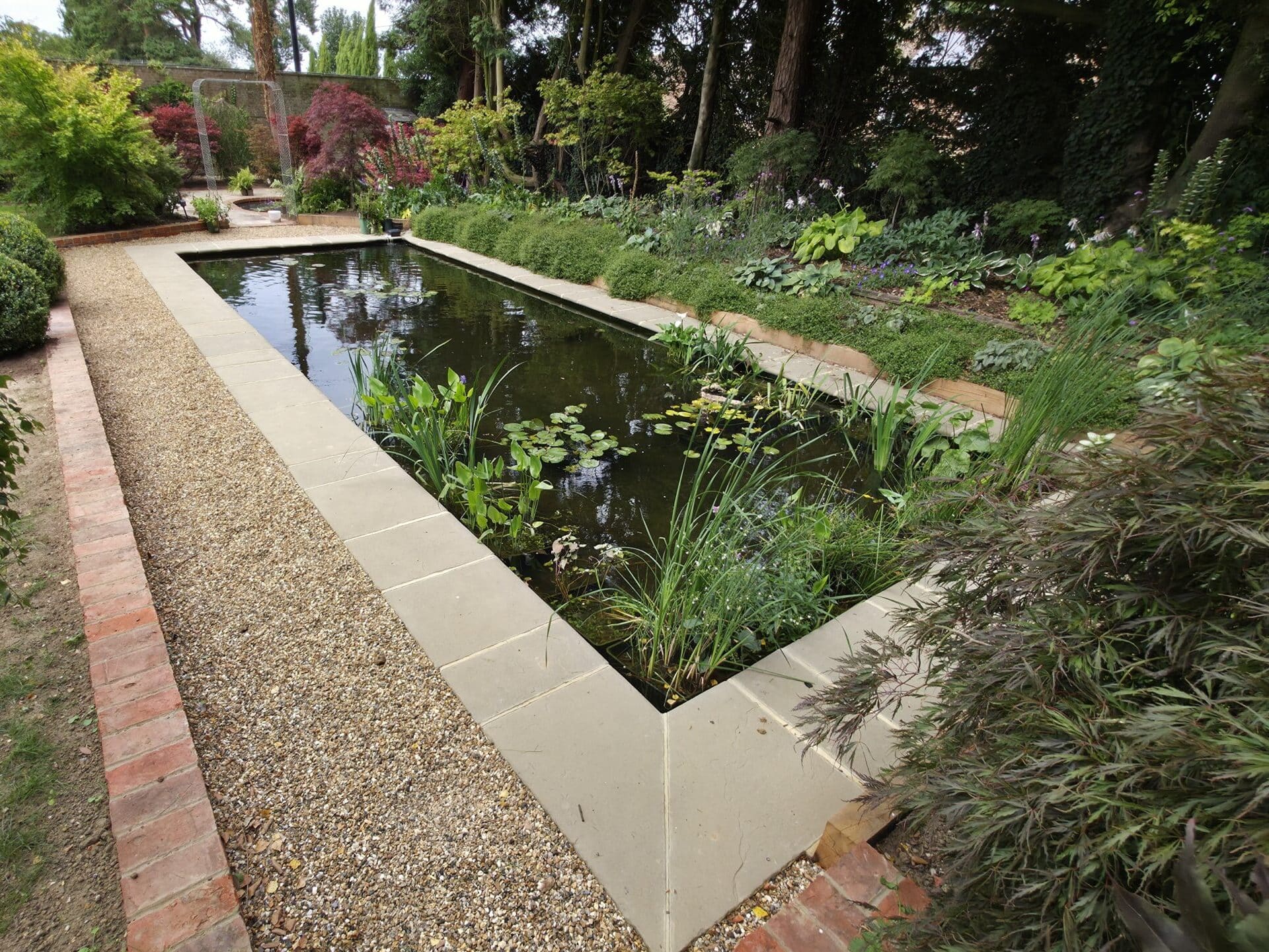
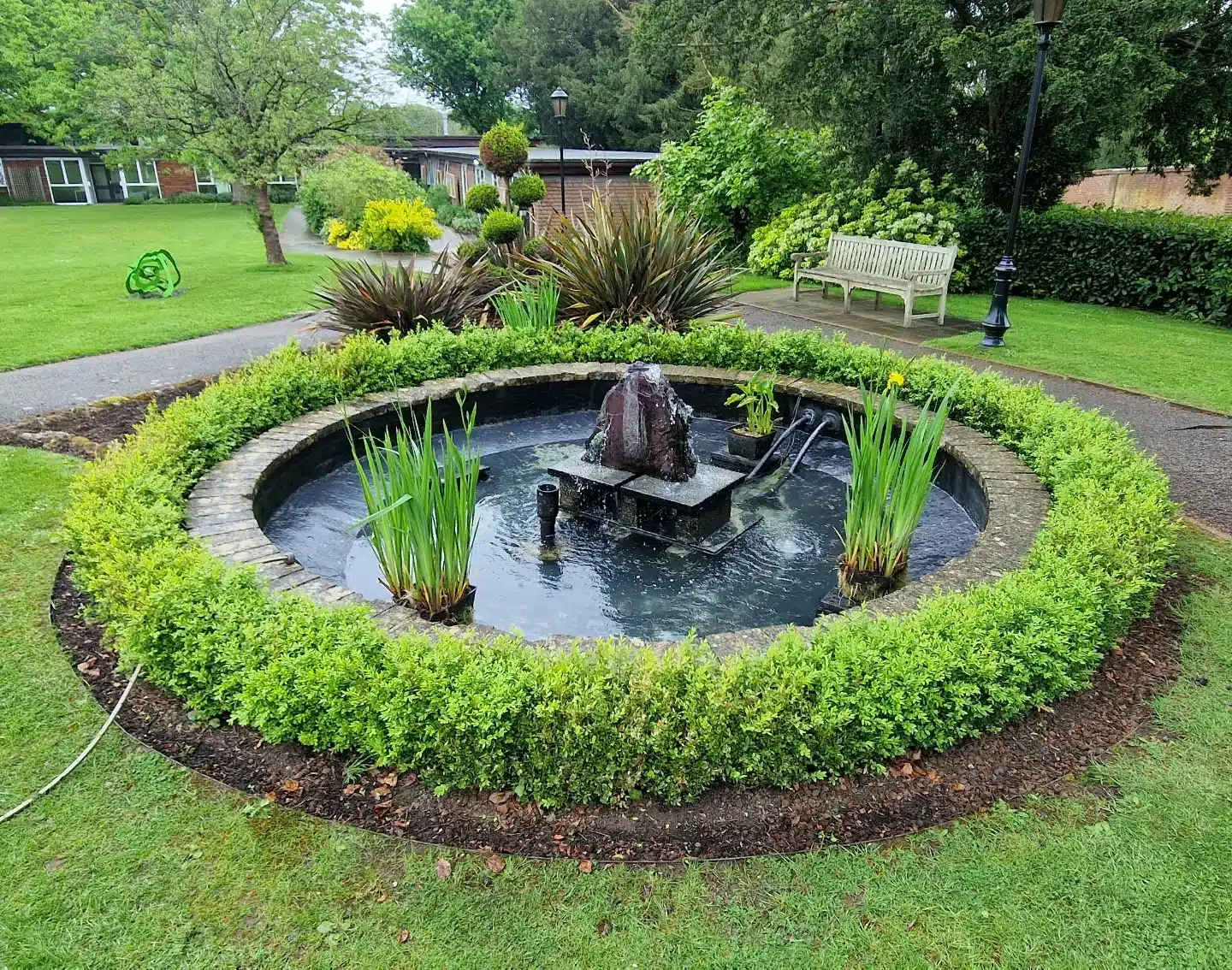
Some gardens suit a pond that feels organic and informal, blending into the landscape as though it has always been there. Others benefit from a more architectural approach with clean lines, symmetry, and strong visual definition.
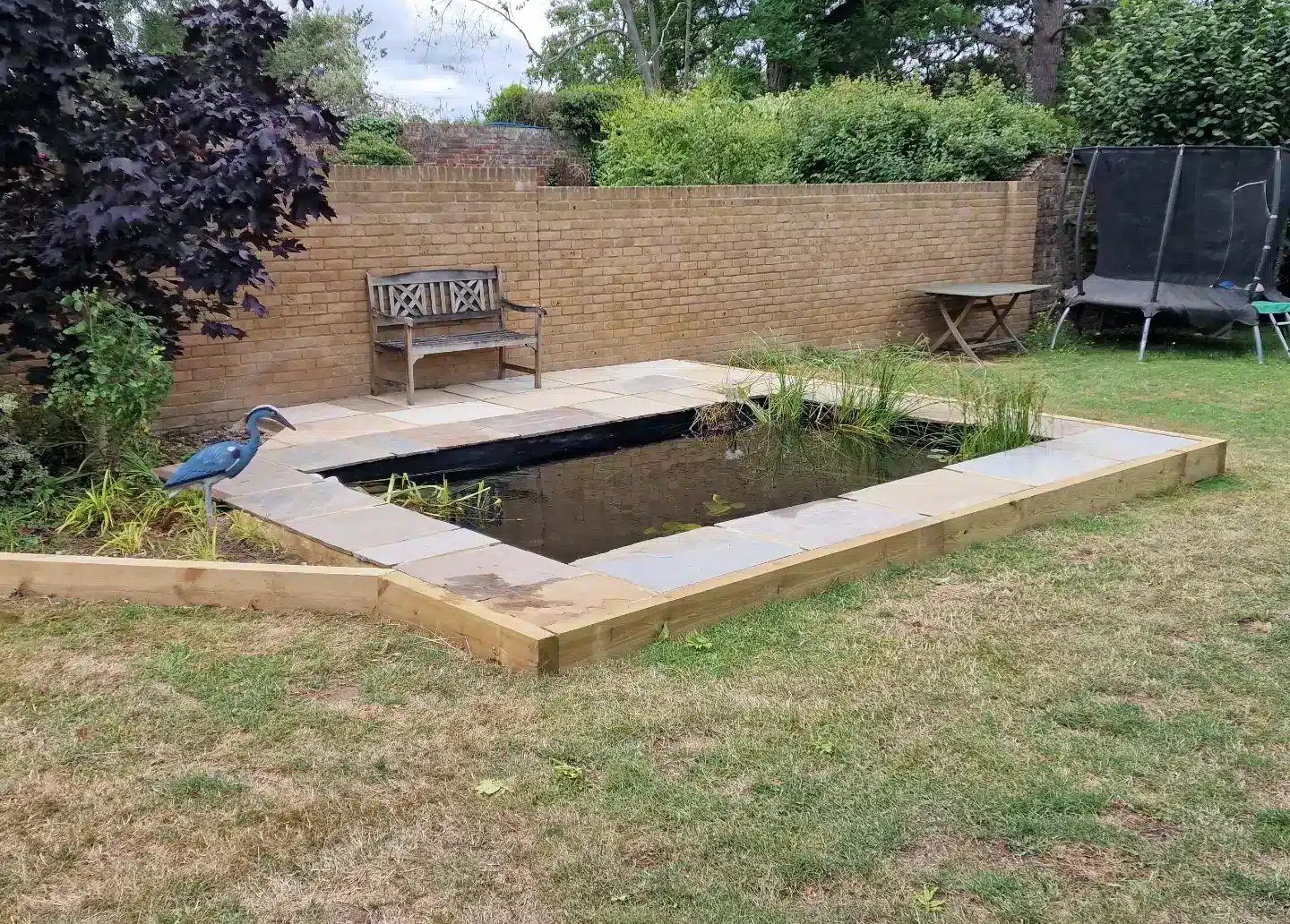
Natural ponds often feature irregular shapes, stone or gravel edging, soft planting, and flowing transitions into the surrounding garden. Formal ponds may include rendered or fibreglass finishes, cut stone coping, paving details, or raised walls to create a bold statement feature.
Construction methods and materials are always chosen to suit the desired look while ensuring structural strength, water retention, and long term reliability.
Streams and Waterfalls
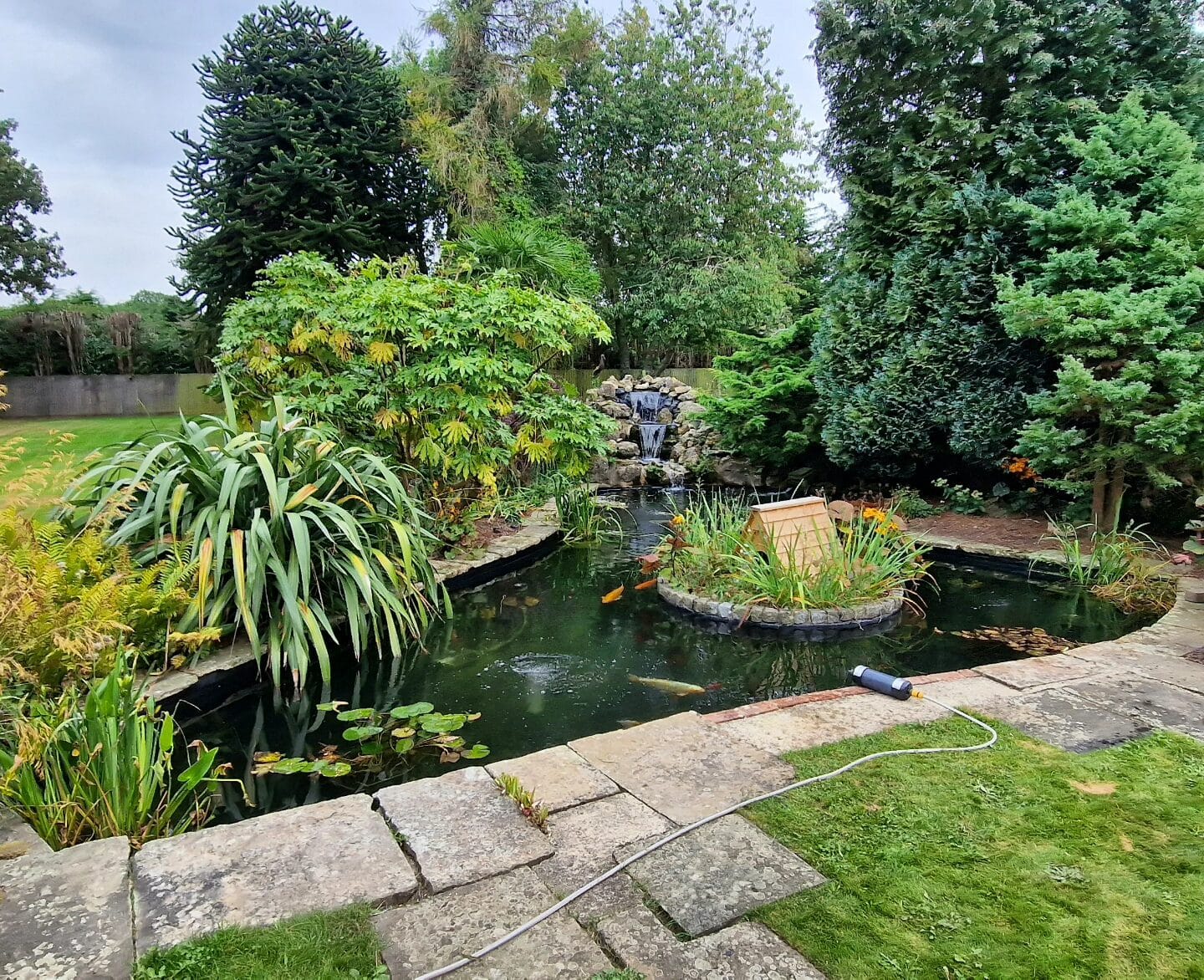
Streams and waterfalls add movement, sound, and oxygen to a pond, creating a more engaging and immersive feature. They can be incorporated into new pond builds or added to existing ponds as part of a wider renovation.
Careful design is essential to ensure correct water flow, minimise splash and evaporation, and prevent hidden leaks beneath stonework or planting. When built properly, streams and waterfalls not only enhance the visual appeal of a pond but also help improve circulation and water quality.
Koi Ponds and High Performance Pond Builds
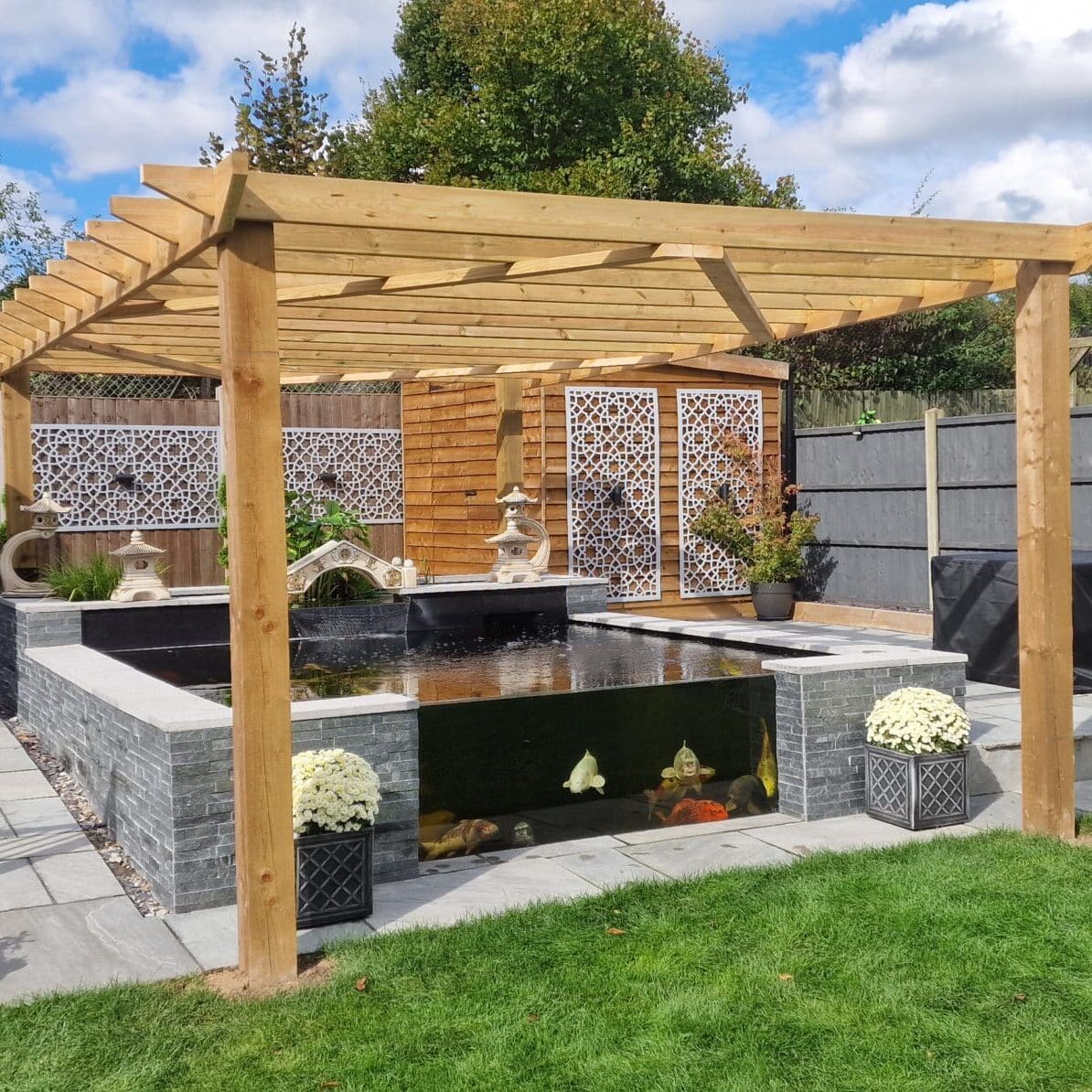
Koi ponds require a very different approach to standard garden and ornamental ponds. These builds involve greater depth, specialist filtration systems, precise circulation, and construction methods designed specifically for the long term health of koi.
While koi ponds may appear similar to ornamental ponds on the surface, they are technically far more complex and should always be designed and built as dedicated systems rather than adapted garden ponds.
If you are considering a koi pond, we recommend visiting our dedicated koi pond building page where the full process, filtration options, and construction methods are explained in detail. You can also view examples of our completed koi projects on our koi pond showcase page to see the level of design and finish involved.
Filtration Options and Water Quality
Filtration plays a major role in how clear, healthy, and easy a pond is to manage over its lifetime. The right system removes debris before it breaks down, supports beneficial bacteria, and helps keep water conditions stable. This reduces the amount of hands on maintenance required.
The most suitable filtration setup depends on several factors, including pond size, depth, planting, fish stocking levels, and how involved you want to be with routine care. A well designed filtration system should quietly support the pond in the background rather than becoming something that constantly needs attention.
Pressure Filters for Garden and Ornamental Ponds
For small to medium sized ponds, pressure filters are a popular and practical solution. These systems combine mechanical and biological filtration in a compact unit and can be discreetly hidden within planting or buried out of sight, keeping the garden looking clean and uncluttered.
Pressure filters are simple to operate and easy to clean, making them well suited to ornamental ponds and lightly stocked fish ponds. Systems such as the Oase FiltoClear range are commonly used in garden pond builds, offering reliable filtration with integrated ultraviolet clarification to help maintain clear water.
When correctly sized and paired with the appropriate pump, pressure filters provide an effective and low impact solution for many traditional garden ponds.
Low Maintenance and Self Cleaning Filtration Systems
For clients looking to minimise hands on maintenance, we also install more advanced self cleaning filtration systems. These systems remove debris from the water automatically before it has a chance to break down, significantly reducing manual cleaning and improving long term water clarity.
Screenmatic filters, such as the Oase BioTec ScreenMatic range, use an automatic debris screen to capture waste and transport it away from the filter media. This makes them ideal for larger ornamental ponds where reduced maintenance is a priority.
For even higher levels of automation, compact drum filters such as the Oase ProfiClear Compact M and Compact L Drum Filters provide mechanical filtration down to very fine levels while cleaning themselves automatically. These systems are well suited to larger ornamental ponds or clients who want clear water with minimal ongoing involvement.
Choosing the Right Filtration for Your Pond
Rather than fitting the same filtration system to every pond, we specify equipment based on what the pond actually needs. Over filtration can add unnecessary cost and complexity, while under filtration often leads to water quality issues and frustration.
By carefully matching the filtration system to the pond design, intended stocking levels, and maintenance expectations, we create ponds that are stable, clear, and straightforward to look after over the long term.
For specialist filtration systems designed specifically for koi ponds and high performance builds, we cover this in far more detail on our koi pond building page.
How Our Pond Builds Are Constructed
Groundworks and Excavation
Every successful pond build starts with accurate groundworks and excavation. This stage determines the pond’s final shape, depth, and positioning within the garden and has a direct impact on long term water quality and stability.
Depth is particularly important. Shallow ponds are more prone to overheating, algae issues, and rapid temperature fluctuations, while correctly designed depths help regulate conditions naturally throughout the year. During excavation, shelves and margins are carefully formed to suit planting, wildlife access, and visual balance.
We also consider spoil removal, access constraints, and ground conditions at this stage, ensuring the site is prepared properly before construction progresses.
Base Preparation and Structural Support
Once excavation is complete, the base is prepared to provide a solid and stable foundation. Poor base preparation is one of the most common causes of long term pond problems, including liner failure, uneven settlement, and structural movement.
Depending on the pond type, this may involve compacted sub bases, reinforced concrete bases, or structural layers designed to support blockwork and finishes. Time spent getting this stage right ensures the pond remains level, watertight, and structurally sound for many years to come.
Blockwork Construction and Earth Forming
For formal and structured ponds, blockwork construction is used to create strong, rigid walls capable of supporting raised water levels, stone finishes, or coping details. Blockwork allows for precise shaping and long term durability, making it ideal for ornamental and architectural ponds.
For natural style ponds, earth forming is carried out with care to achieve smooth contours, shelves, and transitions without compromising stability. This approach allows the pond to blend seamlessly into the landscape while still being structurally reliable.
Both methods are chosen based on the desired appearance, ground conditions, and long term expectations for the pond.
Pipework, Filtration and Circulation Installation
Pipework and filtration are installed before the pond is lined or finished, ensuring everything is correctly positioned and easily accessible. This includes pipe runs for filtration, returns, skimmers, waterfalls, and streams where applicable.
Correct circulation is essential for maintaining water clarity and preventing stagnant areas. We design pipework layouts to encourage even water movement throughout the pond while keeping equipment discreet and practical to maintain.
This stage is often hidden once the pond is finished, but it plays one of the biggest roles in how easy the pond is to live with over time.
Lining Installation and Finishing Touches
Once all structural and mechanical elements are in place, the chosen lining system is installed. This is followed by edge detailing, stonework, paving, planting, and any additional features such as waterfalls or streams.
Every finish is installed with durability in mind, ensuring edges are protected, liners are not exposed, and materials are securely fixed. Attention to detail at this stage is what separates a professionally built pond from one that quickly deteriorates.
A properly constructed pond should remain watertight, stable, and visually appealing for decades, not just a few seasons.
Lining Options and Finishes
Rubber Pond Liners
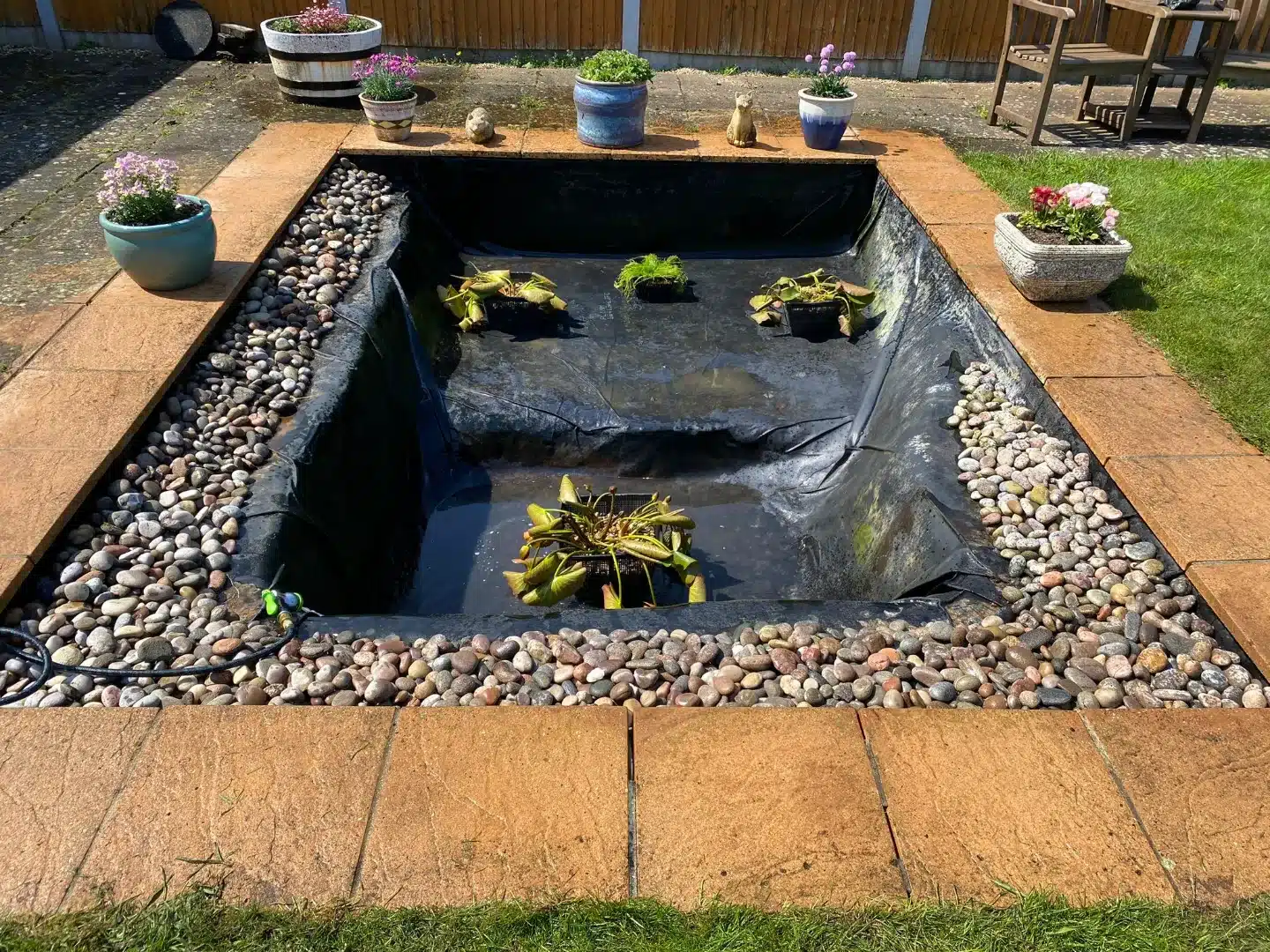
High quality rubber pond liners are a proven and flexible solution for many garden and wildlife ponds. When installed with appropriate base preparation, underlay, and protection, rubber liners offer excellent water retention and accommodate minor ground movement without cracking.
Rubber liners are particularly well suited to natural shaped ponds, wildlife ponds, and projects where flexibility and adaptability are important. Correct installation is key to avoiding wrinkles, stress points, or exposed edges that can shorten lifespan.
Fibreglass Pond Linings
Fibreglass pond linings provide a permanent, seamless finish with exceptional strength and durability. Once cured, fibreglass forms a rigid shell that is extremely resistant to punctures, ground movement, and long term wear.
This lining method is ideal for formal ponds, raised ponds, and projects where clean lines and minimal maintenance are priorities. Fibreglass is also easy to clean and well suited to ponds with filtration systems where long term reliability is essential.
While fibreglass requires more preparation during installation, the result is one of the most robust pond lining solutions available.
Stone, Paving and Coping Finishes
The finish around a pond has a major influence on how it integrates with the surrounding garden. Natural stone, paving slabs, or coping stones can be used to create anything from soft, subtle edges to bold architectural features.
In addition to aesthetics, these finishes protect the pond edge, conceal liners, and provide a practical surface for access and maintenance. Materials are chosen to complement existing patios, paths, or landscaping, ensuring the pond feels like a natural part of the garden rather than an add on.
Choosing the Right Lining and Finish
There is no single lining or finish that suits every pond. The correct choice depends on the pond design, intended use, ground conditions, and long term expectations.
We always take the time to explain the advantages and limitations of each option, allowing you to make an informed decision based on durability, appearance, and maintenance requirements rather than guesswork.
Maintenance and Aftercare Considerations
A pond should be something you enjoy as part of your garden, not a constant source of work or frustration. From the very beginning of the design process, we consider how the pond will be accessed, maintained, and cared for over the long term.
Good pond design is not just about appearance. It is about making sensible decisions that reduce maintenance, prevent avoidable problems, and keep the pond enjoyable year after year.
Designing for Ease of Maintenance
The layout and structure of a pond have a major influence on how easy it is to maintain. During the design stage we consider factors such as depth, shape, shelving, and circulation to minimise debris buildup and stagnant areas.
Deeper ponds tend to be more stable, while well planned shelves and margins make planting easier and reduce the amount of organic waste that settles on the pond base. These details help keep water clearer and reduce the need for frequent intervention.
Access to Filters and Equipment
Filtration systems need to be accessible to work properly. We design pond layouts so filters, pumps, and equipment can be reached easily for inspection and cleaning without disturbing planting or surrounding landscaping.
Whether filtration is hidden within planting, housed in a discreet filter area, or installed below ground, accessibility is always considered. Poor access is one of the most common reasons pond owners avoid routine maintenance, which can quickly lead to water quality issues.
Sensible Filtration Choices
Choosing the right filtration system plays a key role in long term ease of ownership. We specify filtration that matches the pond size, stocking levels, and maintenance expectations rather than over complicating the setup.
Well matched filtration helps maintain clear water, reduces manual cleaning, and allows beneficial bacteria to thrive. This balanced approach keeps ponds stable and manageable rather than overly complex.
Seasonal Pond Care
All ponds require some level of seasonal care. During design we consider how the pond will perform throughout the year, including leaf fall in autumn, colder winter conditions, and increased biological activity during warmer months.
By planning for seasonal changes, we help ensure the pond remains healthy and attractive without requiring excessive effort at any one time of year.
Ongoing Maintenance and Professional Cleaning
For clients who prefer not to carry out maintenance themselves, we offer ongoing pond maintenance and professional cleaning services. This can range from periodic health checks through to full cleans and seasonal maintenance, depending on your requirements.
Having a professionally built pond supported by professional aftercare ensures it continues to perform as intended long after installation.
Costs and What to Expect
Pond building costs vary significantly because no two projects are ever the same. Size, depth, site access, ground conditions, lining method, filtration specification, and surrounding landscaping all influence the final cost.
A small garden pond with a simple layout and basic filtration will cost far less than a large ornamental pond that includes stonework, advanced filtration, streams, waterfalls, or wider garden works.
Honest Guidance, Not Misleading Prices
Rather than offering generic or misleading fixed prices, we prefer to discuss your ideas in detail. This allows us to provide an honest and realistic guide based on what you want to achieve. We explain what drives costs, where savings may be possible, and where cutting corners is likely to cause problems later.
We will always explain what is driving costs, where savings may be possible, and where cutting corners is likely to lead to problems in the future.
A Bespoke Approach to Every Build
Every pond we build is bespoke, designed around your garden, your preferences, and how you want to use the pond. This means pricing is tailored to the project rather than forced into a one size fits all model.
By taking the time to understand your goals, we can advise on the most suitable design and construction approach, helping you achieve a pond that delivers long term enjoyment and value.
Is a Pond Right for Your Garden?
A pond can be a valuable addition to many gardens, not just large or rural spaces. Even smaller gardens can often accommodate a well designed pond when planned correctly. Positioning, depth, safety, and access all play an important role.
During early discussions, we look at how a pond would sit within your garden, how it would be viewed from the house or seating areas, and how it would interact with existing planting and landscaping. The aim is always to enhance the space rather than overpower it.
Creating a Pond That Works Long Term
A well designed pond should feel like a natural part of the garden. It should offer visual interest, movement, and a sense of calm without creating extra work or concern. With the right design and construction approach, ponds can be practical, low maintenance, and enjoyable for many years.
If you are unsure what is possible in your space, we are always happy to offer honest advice and guidance. In some cases this means refining an idea. In others, it means explaining what is realistically achievable within the available space and budget.
When a Specialist Pond Build Is Required
For high end koi ponds, advanced filtration systems, and specialist builds, the requirements differ significantly from standard garden ponds. These projects demand greater depth, specialist filtration, and carefully planned circulation.
If this is what you are considering, we recommend visiting our koi pond building page for a more detailed explanation. You can also view completed examples on our koi pond showcase page to see the level of design and finish involved.

Contact Us
Please get in touch to discuss your pond needs and we will get back to you as soon as possible.
matt@thatpondguy.co.uk
07368 372129
Pond Building – Frequently Asked Questions
Do I need planning permission to build a pond in my garden in the UK
In most cases, a typical domestic garden pond falls under permitted development, so planning permission is not usually required. That said, it is still worth checking with your local planning authority if you are unsure, especially if you live in a listed property, a conservation area, or you are planning something unusually large or close to boundaries.
If the pond is not a normal residential garden pond, for example on farmland or as part of a larger land project, the rules can differ and you may need to check permissions earlier in the process.
What is the best place to put a pond in the garden
The best position balances looks, practicality, and water quality. As a rule, we look for:
-
A clear viewing angle from the house or seating area
-
Reasonable sunlight without being in full sun all day in summer
-
Good access for maintenance and future cleaning
-
Enough space for planting around the pond edges
-
Avoiding spots directly beneath heavy leaf dropping trees if possible
If you want a stream or waterfall, we also consider levels and where the water will return to the pond so circulation works properly.
How deep should a garden or ornamental pond be
Depth depends on what the pond is for. Wildlife ponds tend to include shallow shelves and gently sloped margins. Ornamental ponds usually benefit from a deeper central area for more stable water conditions.
Rather than chasing a single number, we design depth in zones, margins, planting shelves, and a deeper section, so the pond is practical, looks right, and is easier to manage across the seasons.
What type of pond is best for wildlife
Wildlife ponds work best when they include:
-
A wide shallow margin for safe access
-
Gently sloped sides rather than steep drops
-
Varied depths to support different species
-
Plenty of planting, including marginals and oxygenators
-
Minimal mechanical filtration, letting the ecosystem balance naturally
The goal is a pond that supports biodiversity with low intervention, rather than a pond that relies on constant equipment cleaning.
Can I have fish in a garden pond without it becoming hard work
Yes, but it depends on stocking levels and filtration choice. Lightly stocked fish ponds can be straightforward if:
-
Filtration is sized correctly for the pond volume
-
The pond has sensible depth and circulation
-
You avoid overfeeding and avoid overstocking
-
You plan for seasonal maintenance like leaf removal
If you want a more automated setup, we can specify low maintenance filtration options that reduce hands on cleaning.
What is the best filtration for a small or medium garden pond
For many small to medium ponds, a pressure filter is a great choice because it can be hidden neatly in planting or buried out of sight, while still being accessible for cleaning. They are compact, tidy, and generally easy to operate, which is why they suit ornamental ponds so well.
A popular example is the Oase FiltoClear range, which includes an easy clean function and a dedicated waste outlet so dirty water can be discharged during cleaning rather than returned to the pond.
How do self cleaning filters like ScreenMatic systems work
ScreenMatic style systems are designed to remove debris automatically before it breaks down in the filter. In simple terms, a rotating screen captures waste and periodically cleans itself, pushing debris into a collection area. This reduces how often you have to open up the filter and manually remove muck.
This automatic screen cleaning approach is described in the BioTec ScreenMatic manuals, including the way debris is conveyed into a debris tray and cleaning is triggered by sensor or timed intervals.
Are drum filters worth it for a non koi pond
They can be, depending on your priorities. Drum filters are usually chosen for:
-
Larger ornamental ponds
-
Higher stocking levels
-
Clients who want clear water with minimal hands on maintenance
-
Situations where debris load is high, for example heavy planting nearby
Compact drum systems such as the Oase ProfiClear Compact M and Compact L Drum Filters are a good example of the type of self cleaning setup that can suit larger ornamental projects where low maintenance is the main goal.
If you are specifically planning a dedicated koi system, it is better to read the deeper detail on your [Koi Pond Building] page and browse real examples on the [Koi Pond Showcase] page.
Do I need a UV clarifier for clear water
UV clarification can be very helpful for green water control, especially in ornamental ponds with fish. It does not remove debris, but it can help clump single cell algae so filtration can catch it more easily. Many pressure filter systems include integrated UV, while larger systems often use standalone UV units.
Clear water still depends on the full picture: filtration, circulation, stocking, feeding, planting, and seasonal debris management.
What is the difference between a wildlife pond and an ornamental pond build
A wildlife pond is designed to support biodiversity and normally relies more on planting and natural balance. It prioritises shallow margins and access points. An ornamental pond is designed more as a visual feature and often uses filtration and circulation to keep water clearer, especially if fish are present.
Both can look beautiful, but they are built for different outcomes, which is why we plan them differently from day one.
Rubber liner or fibreglass, which is better
Both have a place, it depends on the design and expectations.
Rubber liners are a proven option for natural shapes and wildlife ponds. They are flexible and can work well with gentle curves and planting shelves.
Fibreglass is a permanent lining that creates a seamless rigid finish. It is especially suitable for formal ponds, raised ponds, and projects where you want maximum durability and a clean finish that is easy to keep tidy.
If you want a long lifespan and a very crisp look, fibreglass is often the premium option.
How do you stop a pond leaking
Leaks are usually avoided by getting the fundamentals right:
-
Correct excavation and base preparation
-
Proper underlay and liner protection if using a liner
-
Correct detailing around edges, pipework, and waterfalls
-
Avoiding sharp stones, roots, and stress points
-
Designing waterfalls and streams so water cannot escape into hidden gaps
Most pond leaks are not mysterious, they are design or detailing issues, which is why we focus heavily on the build method and finishing details.
How do you build a stream or waterfall without losing water
Water loss is usually caused by splash, wind drift, or water finding a route out under stonework. We design streams and waterfalls to:
-
Keep the water running where it should, even at higher flow rates
-
Control splash zones and edges
-
Ensure the liner or fibreglass is correctly detailed beneath rockwork
-
Prevent capillary action where water wicks out through gravel and soil
A stream should look natural, but it still needs engineered waterproofing underneath.
How do you make a pond safe for children
Open water always requires sensible safety planning. Practical options include barriers, secure fencing, covers or grids, and creating physical separation through planting and garden layout. RoSPA recommends taking practical steps to reduce risk and stresses close supervision around water.
If you have young children or regular visiting children, tell us early so we can design safety into the layout from the start rather than trying to retrofit it later.
Can I build a pond if I live in a conservation area or a listed property
Possibly, but you should check with your local planning authority before making major changes. Even if ponds are often permitted development, restrictions can apply depending on the site. Planning Portal guidance is the safest starting point, and your council can confirm what applies to your property.
Will a wildlife pond cause problems with protected species
Most gardens will not have issues, but it is important to be aware that some species are protected and can affect what work is appropriate, particularly if you are altering an existing pond or working near known habitats.
Froglife notes that while ponds themselves are not legally protected, some species that use them are, and surveys may be required in certain development contexts.
If you are building a new pond in a normal domestic garden, this is rarely an obstacle, but it is good practice to be mindful of wildlife considerations.
How do you keep a pond clear in autumn when leaves fall
Autumn is when many ponds struggle because decaying leaves add organic load and feed algae problems later. The best approach is a mix of prevention and maintenance:
-
Use netting during peak leaf drop where appropriate
-
Skim leaves regularly before they sink
-
Keep filtration maintained so it can cope with the extra load
-
Plan planting and surrounding trees with leaf fall in mind
Design also matters. Ponds built with sensible access and equipment placement are much easier to keep on top of.
How much maintenance does a pond actually need
It depends on pond type and filtration:
-
Wildlife ponds can be low intervention but still benefit from occasional plant management
-
Ornamental ponds with fish usually need routine filter checks and seasonal cleaning
-
Low maintenance systems like ScreenMatic filters and drum filters reduce hands on cleaning by removing debris automatically
We always design based on the level of involvement you want, then match filtration and access accordingly.
How long does it take to build a pond
Timescales vary depending on size, access, finishes, and whether you are adding streams, waterfalls, patios, or stonework. A straightforward garden pond can be much quicker than a large ornamental build with structural work and filtration.
If you send us a few photos and a rough idea of what you want, we can usually give a sensible initial indication of likely timescale before any detailed planning.
Why do pond build costs vary so much
The biggest drivers of cost are:
-
Size, depth, and spoil removal
-
Access, especially if materials and waste must be moved manually
-
Lining choice, for example liner versus fibreglass
-
Filtration level, from simple pressure filters to self cleaning systems
-
Finishes like paving, coping stones, stone walls, and landscaping
-
Extras like streams, waterfalls, lighting, and electrics
A pond is not a single product, it is a construction project, so costs change with design choices.
Can you help maintain the pond after it is built
Yes. Many clients want the pond built properly, then either maintained professionally or cleaned seasonally so it stays looking its best. We can support with ongoing pond maintenance and professional cleaning, especially for owners who want the pond to be low hassle long term.
I want a serious koi pond, should I use this page or the koi page
If koi are the goal, use the koi specific pages. Koi ponds require different depth, filtration, circulation, and construction methods compared to standard ornamental ponds.
Use your [Koi Pond Building] page for the full technical explanation, and your [Koi Pond Showcase] page to see completed examples and finishes.
