







10 Common Pond Problems and How to Solve Them
Pond owners often encounter challenges that can disrupt the beauty and health of their aquatic environments. From algae overgrowth to equipment failures, addressing these issues promptly is essential. This guide explores 10 common pond problems and solutions, offering practical advice to maintain a thriving pond ecosystem.
1. Algae Overgrowth

Manual Removal of Blanketweed in a Pond
Problem:
Algae overgrowth is a persistent challenge for many pond owners. Green water, caused by free-floating algae, reduces visibility and detracts from the pond’s aesthetic appeal. String algae, such as blanketweed, forms long, fibrous strands that entangle plants and equipment. Both types disrupt the pond’s ecosystem by depleting oxygen levels, especially at night when photosynthesis ceases, and respiration dominates. Algae can also block sunlight from reaching submerged vegetation, stunting growth and harming beneficial aquatic plants. If left unchecked, excessive algae growth can create a hostile environment for fish, causing stress and promoting disease.
Solution:
- Manual Removal: For string algae, physically removing it with a rake or skimmer is an effective first step. This not only improves the appearance of the pond but also reduces the nutrient load that fuels algae growth. Dispose of removed algae away from the pond to prevent nutrient runoff.
- UV Clarifiers: Install UV clarifiers to tackle green water algae. The ultraviolet light destroys algae cells, causing them to clump together for easier removal by the filtration system. Ensure the UV bulb is replaced annually for optimal performance.
- Algaecides and Natural Treatments: Use environmentally safe treatments like the Best Blanketweed Treatment to target algae without harming fish or plants. Alternatively, natural treatments, such as barley straw extract, can be used to inhibit algae growth over time.
- Nutrient Reduction: Minimize excess nutrients by regularly removing debris like fallen leaves and uneaten fish food. Introduce marginal plants like water lilies or cattails to absorb nitrates and phosphates that algae thrive on. Use high-quality fish food that minimizes waste and doesn’t contribute to nutrient build-up.
2. Poor Water Quality
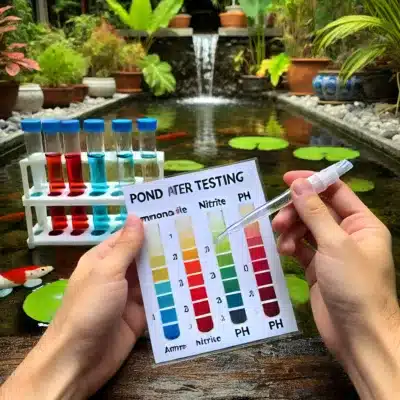
Testing Pond Water Quality with a Kit
Problem:
Poor water quality can silently wreak havoc on your pond’s ecosystem. High ammonia and nitrite levels are toxic to fish, while pH imbalances can cause stress and illness. Low dissolved oxygen levels, often exacerbated by poor circulation or overfeeding, create a hostile environment for aquatic life. Poor water quality also hinders the growth of beneficial bacteria, allowing harmful substances to accumulate and promoting algae blooms. Over time, this creates a vicious cycle of declining pond health.
Solution:
- Testing: Regularly monitor water parameters using a reliable pond test kit. Check ammonia, nitrite, nitrate, pH, and dissolved oxygen levels weekly, especially during seasonal transitions or after introducing new fish.
- Filtration Upgrade: Install a high-performance system like a Drum Filter. Drum filters automate solid waste removal, ensuring that toxins like ammonia and nitrites are broken down efficiently.
- Aeration: Boost oxygen levels with aerators, fountains, or waterfalls. Increased oxygen supports beneficial bacteria and prevents stagnation.
- Water Changes: Perform partial water changes (10-20%) weekly to dilute toxins and maintain balance. Use dechlorinated water to avoid harming fish or beneficial bacteria. For more guidance, explore our Water Hardness and pH Stability Guide.
3. Fish Illness and Stress
Problem:
Fish are highly sensitive to changes in their environment. Stress is often caused by poor water quality, sudden temperature fluctuations, overcrowding, or parasite infestations. Symptoms include reduced appetite, erratic swimming, lethargy, gasping at the surface, and visible sores or redness. Prolonged stress weakens the immune system, leaving fish vulnerable to bacterial infections, fungal diseases, and parasites such as ich or flukes.
Solution:
- Water Quality: Ensure ammonia, nitrite, and pH levels are within safe ranges. Clean filters regularly and perform water changes to maintain pristine conditions.
- Behavioral Monitoring: Observe fish behavior daily for early signs of illness or abnormal activity. Quick action is crucial for effective treatment.
- Treatment and Prevention: Use targeted treatments for specific diseases, such as anti-parasitic medications or antibacterial solutions. Salt baths can help heal minor infections and reduce stress. Regularly quarantine new fish to prevent the introduction of diseases.
- Stocking Levels: Avoid overcrowding by adhering to recommended stocking guidelines. Overstocking increases competition for resources and creates excessive waste, stressing fish. For detailed insights, explore our guide on Understanding Koi Behavior.
4. Filter and Equipment Failure

A Drum Filter System in Operation
Problem:
Your pond’s filtration and pumping systems are its lifeline. Equipment failure, such as a clogged filter, a pump burnout, or a drop in water flow, can quickly compromise water clarity and oxygen levels. Clogged filters may cause water to stagnate, while pump issues disrupt circulation, leading to uneven water temperatures and poor oxygen distribution. Neglecting equipment maintenance can also lead to costly repairs or replacements.
Solution:
- Routine Maintenance: Clean filters and pumps every few weeks to prevent blockages. Inspect pipes for leaks or buildup and ensure all components are securely connected. Replace filter media as needed to maintain efficiency.
- Upgrades: Invest in advanced systems like Drum Filters, which automate cleaning cycles and drastically reduce manual maintenance. These systems are particularly effective for heavily stocked or large ponds.
- Redundancy: Keep spare pumps or parts on hand to minimize downtime in case of emergencies. Redundancy ensures continuous operation, even during repairs.
- Replacement Parts: Use high-quality, compatible parts to avoid further failures. Regularly check seals, impellers, and motors for signs of wear and replace them promptly.
5. Low Oxygen Levels
Problem:
Low oxygen levels can severely impact fish health, particularly during hot weather when warm water holds less dissolved oxygen. Overstocking, poor circulation, and decomposing organic matter exacerbate the problem, leaving fish gasping for air at the surface. Low oxygen levels also disrupt the activity of beneficial bacteria, slowing the breakdown of harmful substances.
Solution:
- Aerators: Install aerators, fountains, or waterfalls to enhance oxygen exchange at the water’s surface. Aeration devices are especially vital for large or deep ponds where oxygen depletion can occur in the lower layers.
- Circulation: Use pumps to ensure even water movement, preventing stagnant areas that deplete oxygen. Combine bottom drains and skimmers for comprehensive circulation.
- Plant Management: Avoid excessive plant growth, especially floating plants like duckweed, which can consume oxygen at night. Maintain a balanced ratio of submerged and marginal plants to oxygenate the pond.
- Temperature Control: Shade your pond with floating plants or shade structures to reduce water temperature during the summer. Cooler water holds more oxygen, benefiting fish and beneficial bacteria. For additional insights, explore our Oxygenation and Aeration Guide.
water, overstocking, and decomposing organic matter exacerbate the issue, leaving fish gasping at the surface.
Solution:
- Aerators: Add aerators, fountains, or waterfalls to increase oxygen exchange at the water’s surface.
- Circulation: Ensure proper water movement with pumps to prevent stagnant areas.
- Plant Management: Avoid excessive plant growth, as plants can deplete oxygen at night.
- Temperature Control: Use shading techniques or floating plants to reduce water temperature in the summer. Explore our Oxygenation and Aeration Guide for more tips.
6. Seasonal Challenges
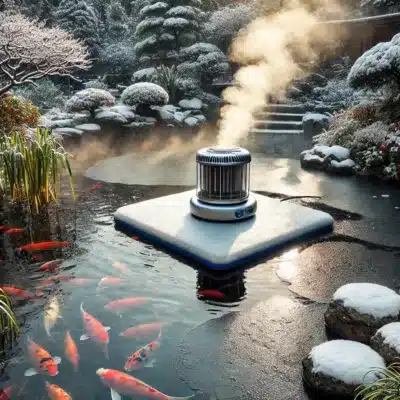
A Pond Heater Preventing Ice Formation in Winter
Problem:
Seasonal changes create dynamic challenges that can disrupt the stability of your pond’s ecosystem. In winter, freezing temperatures can lead to ice covering the pond’s surface, trapping harmful gases and preventing oxygen exchange. During summer, high temperatures encourage algae blooms, deplete oxygen levels, and stress fish. Spring and autumn bring their own challenges, such as fluctuating temperatures, spawning activity, and increased debris from seasonal foliage.
Solution:
- Winter Care: Use a pond heater or a floating de-icer to maintain a small opening in the ice. This allows harmful gases like carbon dioxide to escape and oxygen to enter, ensuring fish remain healthy. If the pond freezes completely, fish can suffocate or become stressed. Avoid breaking the ice manually, as the shockwaves can harm your fish.
- Summer Management: High temperatures can lead to overheating and oxygen depletion. Provide shade using floating plants, pergolas, or shade sails to reduce water temperature. Aerators or fountains can boost oxygen levels. Monitor algae growth closely and remove blooms promptly to prevent further oxygen loss.
- Year-Round Maintenance: Adapt your care routine for each season. Clean the pond thoroughly in autumn to minimize debris entering the water during winter. In spring, monitor water parameters closely as fish become active and algae growth surges. For a comprehensive guide, refer to our Pond Care Guide.
7. Excessive Debris
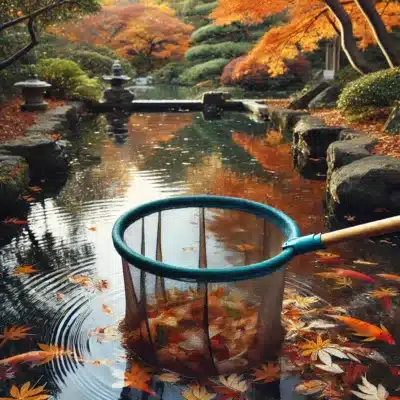
Removing Leaves from a Pond with a Skimmer
Problem:
Organic debris, such as leaves, twigs, uneaten fish food, and dead plant material, accumulates in ponds over time. This matter decomposes, releasing nutrients like nitrates and phosphates into the water. These nutrients fuel algae blooms and disrupt the pond’s natural balance. Debris can also clog filters, reduce water flow, and create areas of stagnation where harmful bacteria thrive.
Solution:
- Manual Removal: Regularly skim leaves and debris from the water’s surface using nets or skimmers. This simple step prevents organic matter from decomposing and releasing nutrients into the water.
- Pond Vacuum: Use a Pond Vacuum to clean the pond floor. This tool is essential for removing sediment, fish waste, and debris that settle at the bottom, where they can degrade water quality.
- Preventative Measures: Install netting or covers over the pond during autumn to catch falling leaves before they enter the water. Trim overhanging branches and regularly maintain plants around the pond to minimize organic debris.
8. Overstocking
Problem:
Overstocking occurs when a pond contains more fish than its ecosystem or filtration system can support. Overstocked ponds produce excessive waste, leading to high ammonia and nitrite levels. Oxygen levels also drop as fish compete for resources, increasing stress and the likelihood of disease outbreaks. Overstocking often exacerbates existing problems, such as algae growth and poor water clarity.
Solution:
- Stocking Guidelines: Follow recommended stocking levels based on the pond’s size and filtration capacity. For koi, a general rule is one inch of fish per 10 gallons of water, but this may vary depending on the filtration system.
- Filtration Upgrade: If reducing the fish population isn’t feasible, upgrade to a high-capacity filtration system, like a Drum Filter, which can handle large bioloads efficiently.
- Population Control: Rehome or relocate excess fish to maintain balance. Consider setting up a separate quarantine or grow-out pond for new or excess fish. Managing fish populations prevents overcrowding and helps maintain water quality.
9. Leakages or Pond Liner Damage
Problem:
Leaks or damaged liners cause water levels to drop, destabilizing the pond’s ecosystem. Sudden water loss can stress fish and expose aquatic plants to air, potentially harming them. Over time, even small leaks can cause significant issues by requiring constant refilling, which dilutes water quality and increases maintenance demands.
Solution:
- Inspection: Regularly inspect the pond for signs of leaks. Look for wet areas around the pond’s perimeter, particularly under rocks or plants. Monitor water levels daily, especially during dry periods.
- Repairs: For minor tears, use repair kits designed for pond liners. Clean and dry the affected area before applying patches to ensure a secure seal.
- Upgrade to Fibreglass: For a long-term solution, consider replacing liners with a durable Fibreglass Pond. Fibreglass is highly resistant to wear and tear, ensuring years of reliable performance.
10. Invasive Plants

Balanced Aquatic Planting in a Pond
Problem:
Invasive plants like duckweed, cattails, and water hyacinths can quickly dominate a pond, blocking sunlight, depleting oxygen, and outcompeting native plants. Over time, these aggressive growers can reduce biodiversity and create an unbalanced ecosystem. Excessive plant growth also increases debris as plants die back, adding to maintenance challenges.
Solution:
- Manual Control: Regularly remove invasive plants by hand or with a pond rake. Dispose of these plants away from the water to prevent seeds or fragments from re-entering the pond.
- Balanced Planting: Introduce a variety of native aquatic plants, such as water lilies or oxygenators like hornwort, to create a balanced ecosystem. These plants help absorb excess nutrients and provide habitat for beneficial organisms.
- Ongoing Maintenance: Routinely monitor plant growth and remove overgrowth before it becomes unmanageable. For planting ideas, check out our guide on Best Plants for Koi Pond.
Conclusion
By understanding these common pond problems and solutions, you can create and maintain a thriving aquatic environment. Regular maintenance, quality equipment, and proactive care will keep your pond beautiful, healthy, and enjoyable year-round. Explore our Pond Maintenance Services for expert assistance.
