





Evolution Aqua Airtech Air Pumps

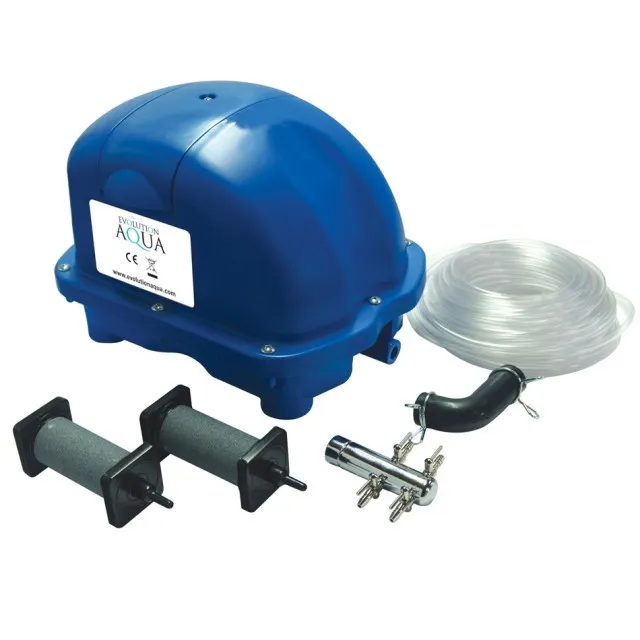
Products in the Current Evolution Aqua Airtech Air Pumps Range
The Evolution Aqua Airtech Air Pumps models are linked so you can compare their live specifications. Size from airflow at the diffuser depth and pipe resistance, with sensible spare capacity for summer demand and servicing.
Evolution Aqua Airtech Air Pump – Frequently Asked Questions
Below you’ll find detailed answers to the most common questions about the Evolution Aqua Airtech range. This will help you choose the correct model, understand performance at depth, and maximise pond oxygenation for long term stability.
What is the Evolution Aqua Airtech Air Pump designed for?
The Evolution Aqua Airtech Air Pump range is specifically developed to deliver essential oxygen into ponds, koi systems and filtration units. These diaphragm air pumps supply consistent airflow to maintain dissolved oxygen levels, supporting fish health, biological filtration and overall water quality.
They are suitable for koi ponds, garden ponds, quarantine systems, moving bed filters, aerated bottom drains and large aquaria.
Why is oxygen so important in a pond system?
Oxygen is critical for both fish and filtration bacteria. Fish rely on dissolved oxygen for respiration, while nitrifying bacteria require oxygen to convert ammonia into nitrite and then into nitrate.
Without adequate oxygen:
- Fish become stressed
- Ammonia conversion slows
- Water clarity declines
- Harmful waste accumulates
Strong aeration keeps the ecosystem stable and supports consistent biological performance.
What makes the Airtech range different from other pond air pumps?
Airtech pumps are engineered to maintain higher airflow at depth compared to many standard diaphragm pumps. Each model has been tested for real world performance, not just maximum surface output.
They also feature:
- Weather resistant aluminium housings
- Integrated thermal protection devices
- Quiet operation under 50 dBA
- Energy efficient continuous duty design
As a result, they are trusted by serious koi keepers across the UK.
How do I choose the correct Airtech model for my pond?
Choosing the correct model depends on pond size, depth and stocking density.
As depth increases, airflow decreases due to back pressure. Therefore, you should always size the pump based on delivered airflow at your operating depth, not just the maximum litres per minute rating.
Heavily stocked koi ponds, deep systems and large moving bed filters require higher output models such as the 130 or 150.
How does depth affect airflow?
Water pressure increases as depth increases. Consequently, the pump must work harder to push air downward.
For example:
The Airtech 150 delivers 150 litres per minute at maximum output, however it still maintains approximately 130 litres per minute at 1 metre depth and around 119 litres per minute at 2 metres.
Therefore, checking depth performance ensures proper oxygen delivery where it matters most.
Should an air pump run continuously?
Yes. For koi ponds and filtered systems, continuous 24 hour aeration is strongly recommended.
Biological filters depend on a stable oxygen supply. If aeration stops for extended periods, beneficial bacteria can weaken, potentially causing ammonia or nitrite instability.
Most pond keepers run Airtech pumps year round.
Can you have too much aeration?
In most koi systems, it is very difficult to over aerate. Excess oxygen simply escapes at the water surface.
However, during winter some pond keepers reduce surface agitation slightly to avoid excessive heat loss, while still maintaining aeration within the filter.
Does aeration improve fish growth?
Yes, indirectly.
Higher oxygen levels improve fish metabolism and digestion. When oxygen remains stable, koi convert food more efficiently, grow more consistently and experience reduced stress.
Aeration supports growth but must work alongside correct feeding and filtration.
Can one Airtech pump run multiple air stones?
Yes. Using a manifold allows a single pump to supply multiple air stones or bottom drains.
However, adding more outlets increases resistance. Therefore, you should ensure the pump has sufficient spare capacity to maintain strong airflow across all connections.
How does aeration improve biological filtration?
Nitrifying bacteria are aerobic organisms. They require oxygen to break down waste compounds.
By increasing dissolved oxygen within bio chambers and moving beds, Airtech pumps:
- Accelerate ammonia conversion
- Improve nitrite processing
- Stabilise water parameters
- Reduce long term water quality issues
Consequently, filtration systems operate more efficiently.
Where should I install my air pump?
Air pumps should be placed:
- Above water level where possible
- In a dry, ventilated location
- Protected from heavy rainfall
- On a solid surface to reduce vibration
Although Airtech pumps feature weather resistant housings, additional shelter extends lifespan.
How quiet are Evolution Aqua Airtech pumps?
The Airtech range is designed for low noise output, typically operating below 50 dBA depending on model.
Placing the pump on a rubber mat or vibration dampening surface can further reduce perceived sound levels in domestic gardens.
What maintenance do Airtech air pumps require?
Maintenance requirements are minimal. However, periodic checks should include:
- Inspecting airlines for blockages
- Cleaning or replacing clogged air stones
- Replacing diaphragms when airflow reduces
Because Airtech pumps are serviceable, diaphragm replacement can restore performance without replacing the entire unit.
Are Airtech pumps suitable for winter use?
Yes. In fact, winter aeration can help prevent full surface freezing.
Some pond keepers adjust diffuser depth seasonally. For example, they may raise air stones slightly in winter to avoid super cooling deeper water layers, while still maintaining oxygen levels.
How do I know if my pond lacks oxygen?
Common signs of low dissolved oxygen include:
- Fish gasping at the surface
- Reduced feeding
- Lethargic behaviour
- Cloudy water
- Rising ammonia readings
If these symptoms occur, insufficient aeration could be a contributing factor.
Can I oversize my air pump?
Moderate oversizing is often beneficial, particularly for koi ponds.
Choosing a pump with spare capacity allows for:
- Future fish growth
- Additional air stones
- Deeper installations
- Seasonal demand increases
However, extreme oversizing may create unnecessary surface turbulence. Therefore, balance output with pond design.
