





What is Pond Fibreglassing?
How fibreglass pond lining works and why it is used
Fibreglass, also known as GRP, is a lightweight yet extremely strong composite material made from glass fibres reinforced with resin. It has been used for many years across a wide range of industries due to its durability, flexibility, and resistance to water, chemicals, and environmental conditions.

What is fibreglass made of
Fibreglass is made from two main components that work together to create a strong and durable material.
The first component is glass fibres. These are extremely fine strands of molten glass that are formed into sheets or matting. The fibres provide the structural strength of the system, giving the finished surface its rigidity, impact resistance, and ability to withstand pressure over time.
The second component is resin. This is applied to the fibreglass matting and acts as a binding agent. Once applied, the resin soaks into the fibres and then cures to form a hard, non porous surface. This process locks the fibres together and creates a completely waterproof barrier.
When combined, these materials form a lining that is both strong and lightweight, making it ideal for use in ponds where water pressure, environmental exposure, and long term durability are key considerations.
How pond fibreglassing works
Pond fibreglassing is a hands on process that involves applying layers of material directly to the prepared pond structure.
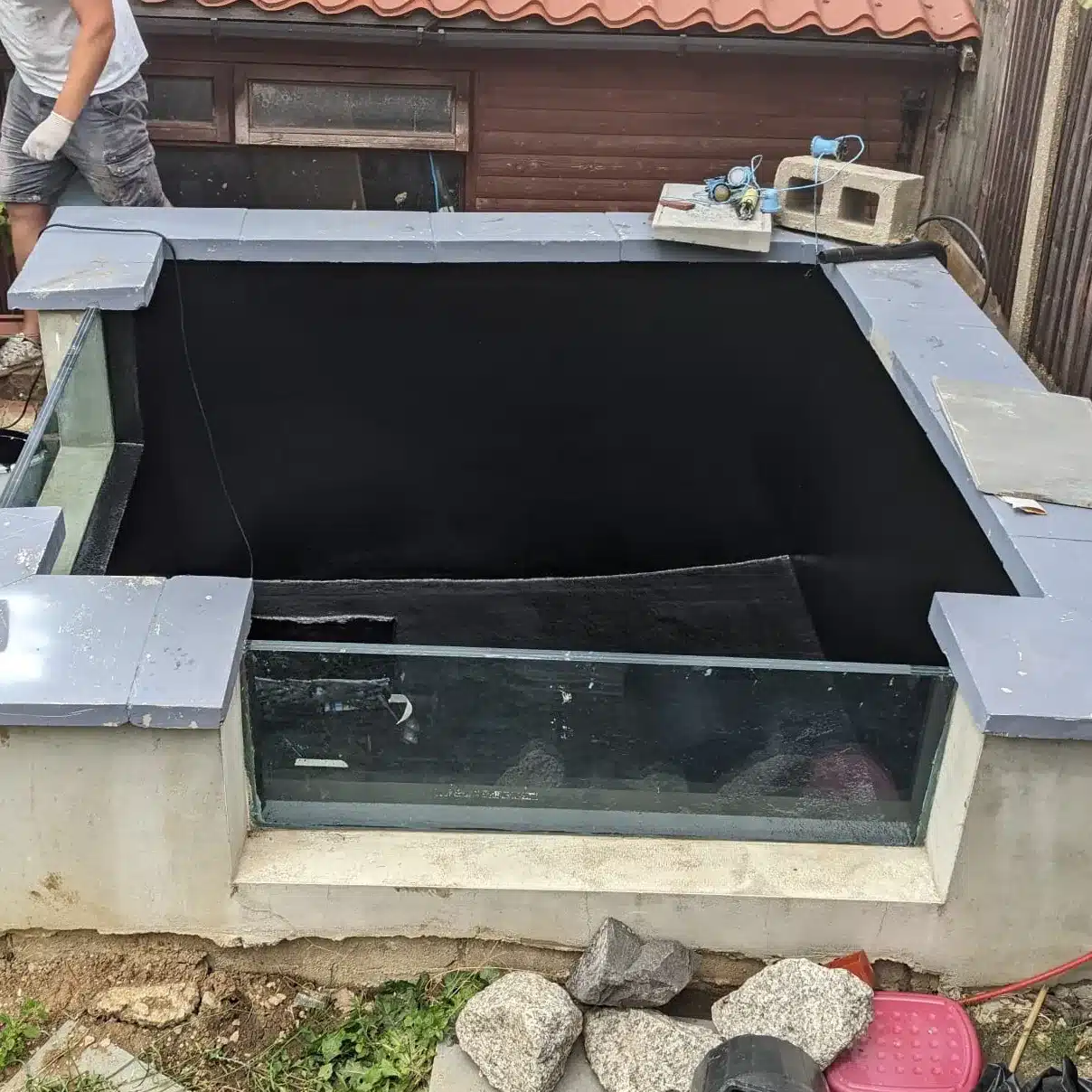
Before any fibreglass is applied, the surface must be properly prepared. This includes cleaning, smoothing, and ensuring the structure is solid and suitable for fibreglassing. Any imperfections or weaknesses in the base need to be addressed at this stage, as they can affect the final result.
Once the surface is ready, layers of fibreglass matting and resin are applied. Each layer is carefully worked to remove air pockets and ensure even coverage across all areas of the pond, including corners, steps, shelves, and detailing. This stage requires attention to detail, as it directly impacts the strength and finish of the lining.
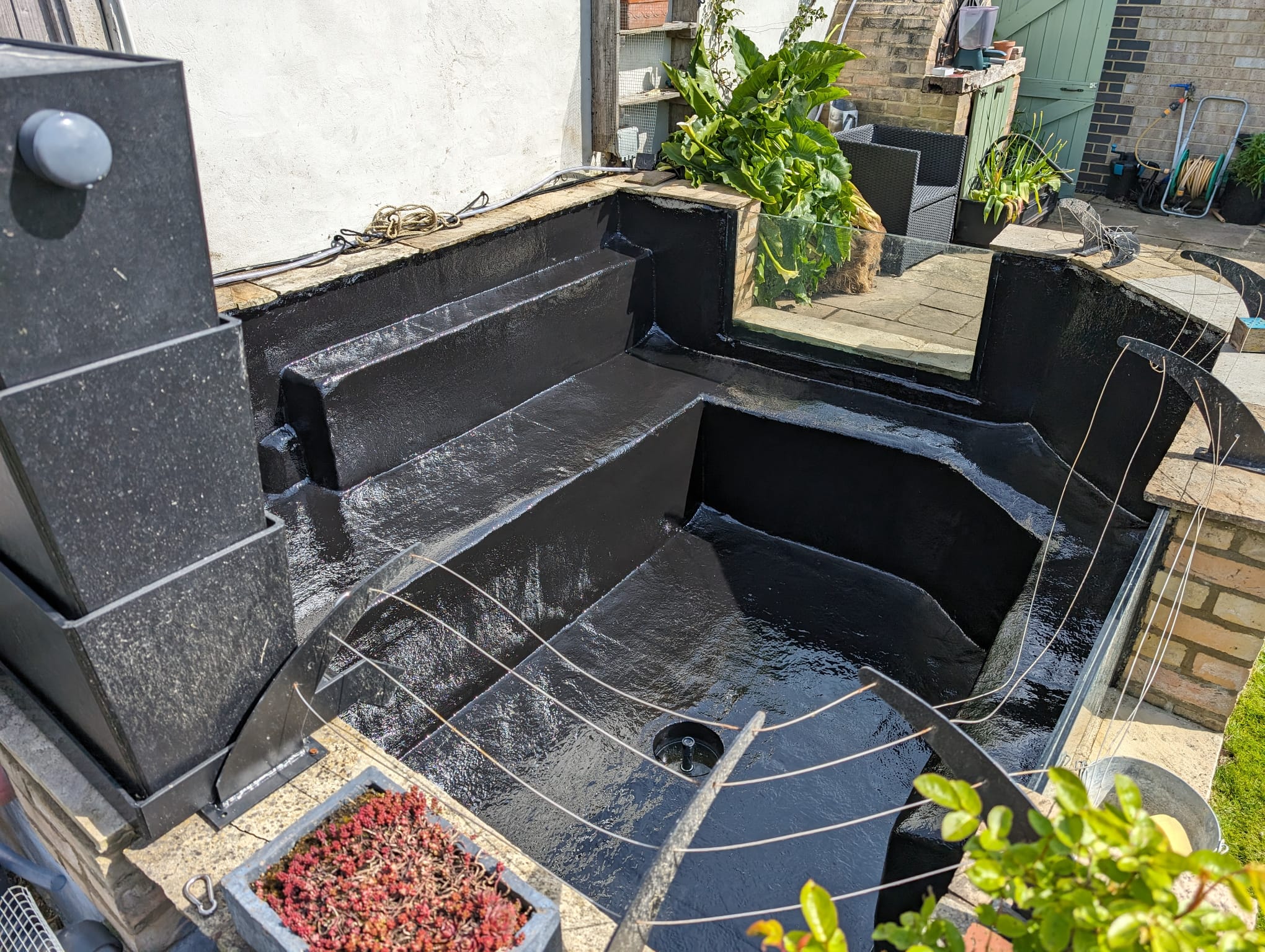
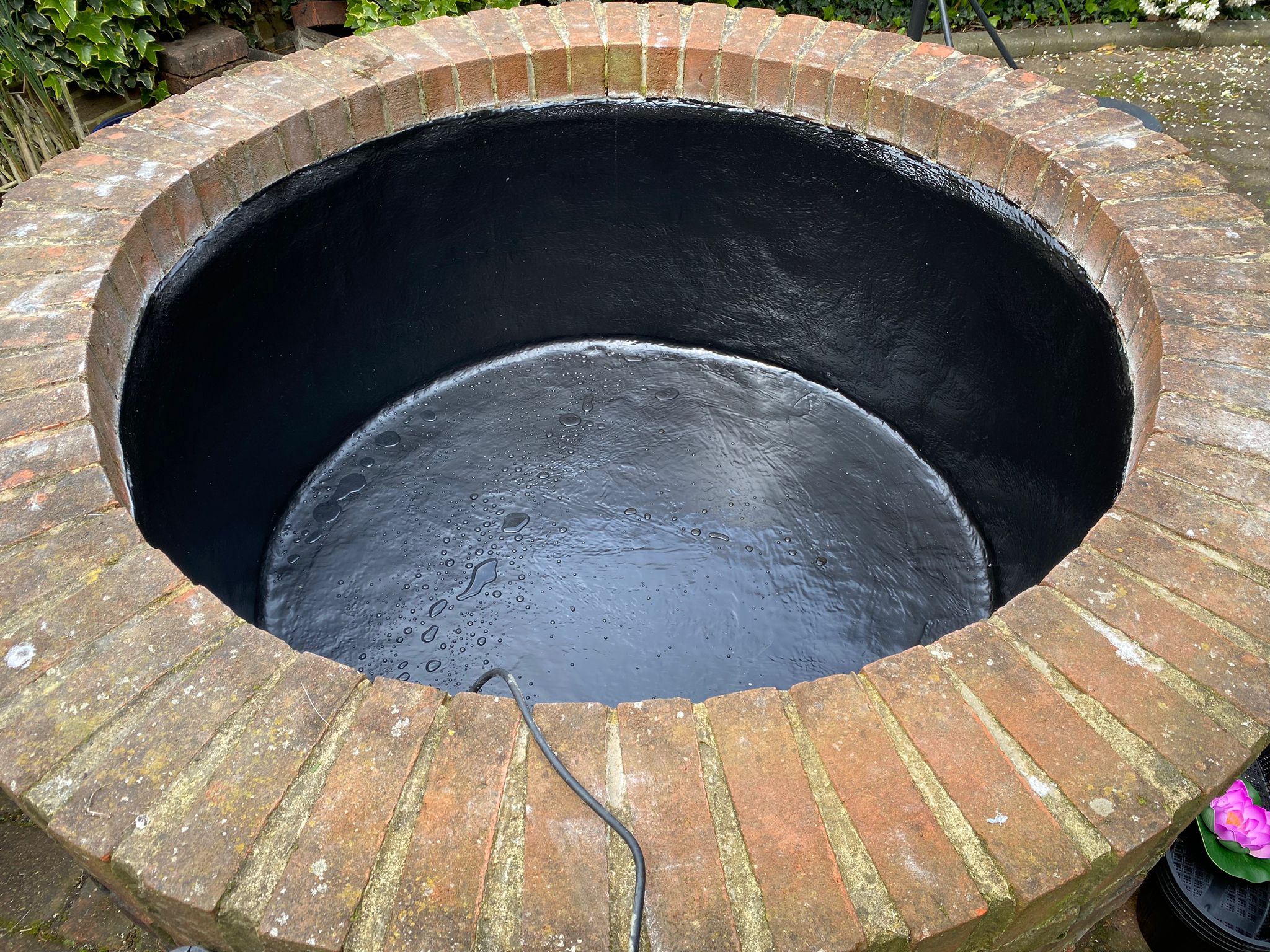
As the material cures, it hardens into a rigid shell that bonds to the structure beneath it. This creates a seamless, watertight lining with no joints or folds. A final topcoat is then applied to protect the surface and give the pond its finished appearance, resulting in a smooth and professional finish.
Why fibreglass is used for ponds
Fibreglass has become increasingly popular in pond construction due to its ability to deliver a long lasting and reliable finish.
One of the main reasons it is used is its seamless nature. Unlike liners, which can develop folds and creases, fibreglass creates a continuous surface. This removes weak points and significantly reduces the risk of leaks over time.
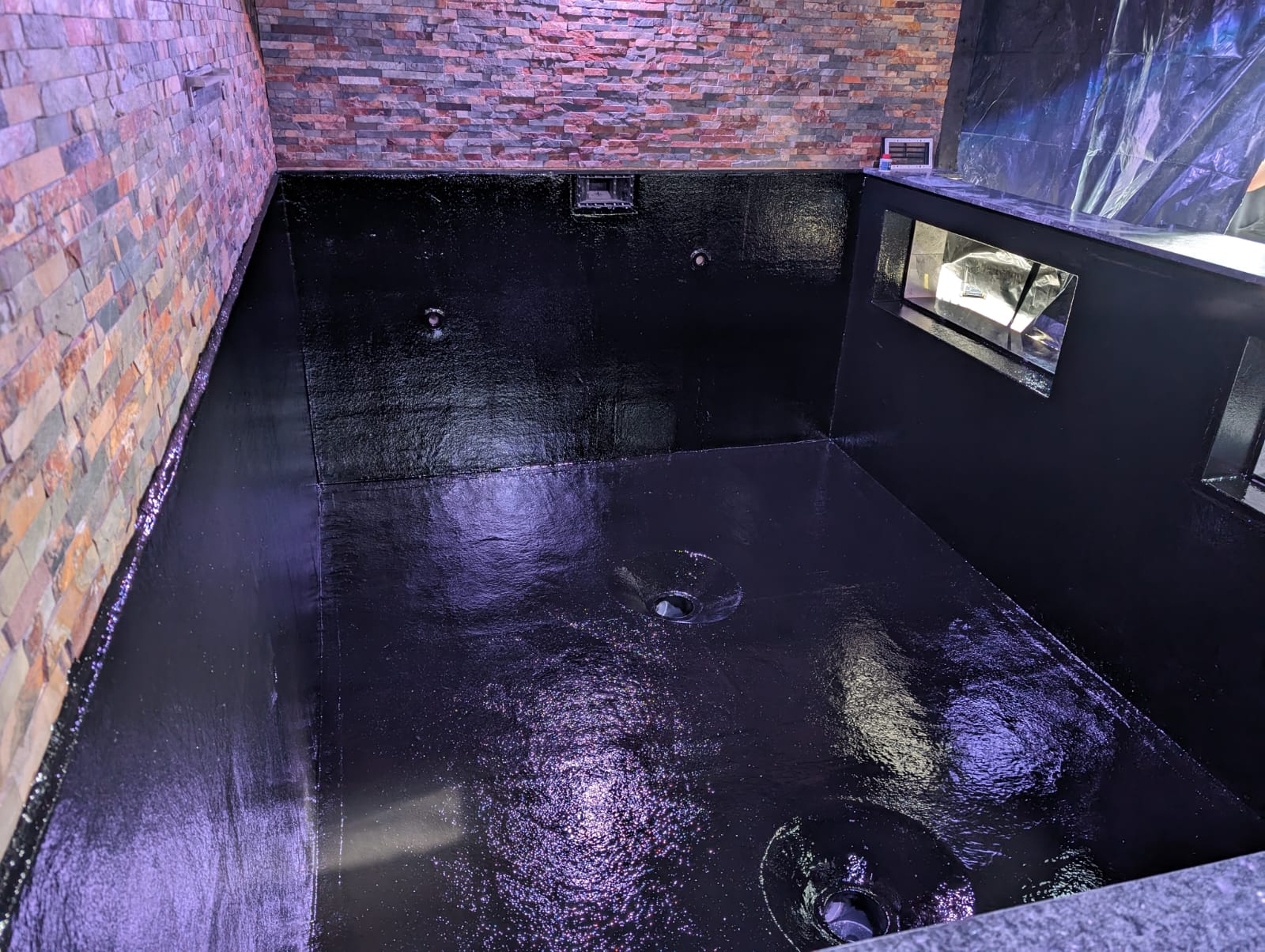
It also improves the overall function of the pond. The smooth internal surface allows water to flow more efficiently and reduces areas where debris and waste can collect. This can make filtration systems more effective and help maintain better water quality.
In addition, fibreglass is highly adaptable. It can be shaped to suit a wide range of pond designs, from simple garden ponds through to more complex koi ponds with steps, windows, and detailed features. This makes it a versatile option for both new builds and upgrades.
Common uses of fibreglass in ponds
Fibreglass is used across a wide range of pond types and water features, making it one of the most versatile lining options available.
It is particularly popular in koi ponds, where a smooth and easy to clean surface is essential for maintaining water quality and fish health. The clean finish also improves visibility, which is important for enjoying and monitoring koi.
In formal garden ponds, fibreglass is often chosen for its ability to create straight edges and a neat internal appearance. This suits modern garden designs where clean lines and structure are important.
Fibreglass is also used in swimming ponds and natural pools, where a strong and watertight lining is required. Its ability to be shaped around different features makes it suitable for a wide range of bespoke designs.
Why fibreglass is a long term solution
One of the biggest advantages of fibreglass is its long term performance.
It is highly resistant to UV exposure, temperature changes, and general wear, which means it maintains its strength and integrity over time. Unlike liners, it does not become brittle or develop weak points due to movement or ageing.
Because fibreglass forms a solid structure, it eliminates many of the issues associated with flexible liners. There are no folds to trap debris and no areas that are prone to stretching or shifting.
The smooth surface also contributes to reduced maintenance. It is easier to clean and helps prevent the buildup of waste and algae, making it a practical choice for pond owners who want a low maintenance solution.
Fibreglass vs traditional pond liners
When comparing fibreglass to traditional pond liners, the main differences come down to durability, finish, and long term reliability.
Pond liners such as PVC and rubber are flexible and often more affordable upfront. They can be a suitable option for smaller or simpler ponds, particularly where budget is a key factor.
However, liners rely on a loose membrane, which means they can crease, shift, and develop weak points over time. These folds can trap debris and make cleaning more difficult, and they can eventually lead to leaks.
Fibreglass, by comparison, creates a solid and seamless structure. It eliminates folds, improves water flow, and provides a more durable and professional finish. For pond owners looking for a long term solution, fibreglass is often the preferred option.

Is fibreglass safe for ponds
Fibreglass is completely safe for use in ponds once it has been installed correctly and allowed to fully cure.
The finished surface is non porous and does not release harmful substances into the water. This makes it suitable for use with fish, plants, and wildlife, including sensitive species such as koi.
In addition to being safe, the smooth surface also helps reduce the risk of injury to fish. There are no rough edges or folds, which creates a more controlled and stable environment within the pond.
Why choose fibreglass for your pond
Choosing fibreglass for your pond offers a number of practical advantages, particularly if you are looking for a long lasting and reliable solution.
It provides a strong and durable lining that is designed to withstand the demands of a working pond. The seamless finish improves both the appearance and performance of the pond, while the reduced maintenance makes it easier to manage over time.
Fibreglass is particularly well suited to ponds where quality, longevity, and a clean finish are important. Whether you are building a new pond or upgrading an existing one, it offers a solution that is built to last.
Pond fibreglassing advice and guides
If you are looking for more detailed information about pond fibreglassing, we have created a range of in depth guides covering installation, preparation, lifespan, and long term performance.
These guides are based on real projects and practical experience, helping you understand what to expect and how to get the best results from your pond.
You can explore the full guides below:
What is pond fibreglassing?
Converting a liner pond to a fibreglass pond
Fibreglass vs liner
How to prepare your pond for fibreglass installation
The lifespan of a fibreglass pond and how to extend it
How fibreglass is installed
The difference between DIY fibreglassing and hiring a professional
Insulating and fibreglassing koi ponds
Areas we cover
We provide professional pond and swimming pool fibreglassing services across the South East, covering a wide range of residential and commercial projects.
Our core service areas include Kent, London, Essex, Surrey, and Sussex. We also regularly carry out fibreglassing work in Hertfordshire, Suffolk, Cambridgeshire, Norfolk, Buckinghamshire, Bedfordshire, Berkshire, and Oxfordshire, with many of these areas supported by dedicated service pages.
Each project is assessed individually, taking into account access, structure, intended use, and long term performance. This allows us to plan the installation properly and ensure the finished pond performs as expected.
We are able to travel further for larger or more specialised projects, particularly where full pond builds or fibreglass conversions are involved. If you are based outside these areas, feel free to get in touch as we may still be able to help.
Final thoughts
Pond fibreglassing is a modern and highly effective method of lining ponds, offering a strong, seamless, and long lasting finish.
By bonding directly to the structure, it creates a reliable and durable system that improves both the appearance and function of the pond. With proper preparation and installation, fibreglass provides a solution that can perform consistently for many years.
For pond owners looking to invest in a high quality finish with minimal long term issues, fibreglass remains one of the best options available.
Contact Us
Please get in touch to discuss your pond needs and we will get back to you as soon as possible.
matt@thatpondguy.co.uk
07368 372129
Frequently asked questions about pond fibreglassing
What is pond fibreglassing in simple terms
Pond fibreglassing is a method of lining a pond using fibreglass matting and resin to create a strong, waterproof shell.
The material is applied directly to the pond structure and cures into a rigid, seamless surface. Unlike flexible liners, it does not crease or move, making it a more durable and long lasting solution.
How does fibreglass pond lining work
Fibreglass pond lining works by applying layers of matting and resin that cure into a solid, watertight surface.
Each layer is carefully applied to a prepared base, creating a seamless finish that bonds directly to the pond structure. This eliminates joints and weak points where leaks can develop.
Is fibreglass better than a pond liner
Fibreglass pond lining is generally more durable and longer lasting than a pond liner.
It forms a rigid, seamless surface with no folds, while liners can crease, shift, and deteriorate over time. This makes fibreglass a better option for ponds where reliability and low maintenance are important.
How long does fibreglass pond lining last
A properly installed fibreglass pond lining can last for several decades.
Its lifespan depends on preparation and installation quality, but it is designed to withstand UV exposure, temperature changes, and general wear far better than most liners.
Is fibreglass safe for fish and plants
Fibreglass pond lining is safe for fish, plants, and wildlife once fully cured.
It creates a non porous surface that does not release harmful substances into the water. This makes it suitable for koi ponds, wildlife ponds, and ornamental water features.
Can any pond be fibreglassed
Most ponds can be fibreglassed as long as the structure is solid and properly prepared.
Block built and rendered ponds are ideal, while liner ponds usually need the liner removed and the base prepared before fibreglass can be applied successfully.
Can you fibreglass over a pond liner
Fibreglass cannot usually be applied directly over a pond liner.
The liner must be removed so the fibreglass can bond to a stable surface. Applying fibreglass over a flexible liner can lead to failure over time.
What is fibreglass made from
Fibreglass is made from glass fibres combined with resin to create a strong composite material.
The fibres provide strength and structure, while the resin binds them together and forms a hard, waterproof surface once cured.
Why is fibreglass used in koi ponds
Fibreglass is used in koi ponds because it creates a smooth, easy to clean and durable surface.
The seamless finish improves water flow and reduces areas where waste can collect, helping maintain better water quality for fish.
Does fibreglass crack or fail over time
Fibreglass pond lining does not normally crack when installed correctly.
Issues are usually caused by poor preparation or movement in the structure beneath the lining rather than the material itself.
Is fibreglass suitable for small garden ponds
Fibreglass can be used for small garden ponds as well as larger builds.
While liners are often chosen for budget reasons, fibreglass offers better durability and a cleaner finish for those looking for a long term solution.
Can fibreglass be used for complex pond shapes
Fibreglass is ideal for complex pond shapes and detailed designs.
It can be applied to shelves, steps, curves, and features while maintaining a seamless and consistent finish throughout the pond.
Does fibreglass make a pond easier to clean
Fibreglass pond lining makes ponds easier to clean due to its smooth surface.
It reduces areas where algae and debris can stick, helping to improve water clarity and simplify maintenance.
Can fibreglass be used for swimming ponds
Fibreglass can be used to line swimming ponds and natural pools.
It provides a strong, waterproof base that can be shaped to suit larger and more complex designs.
What preparation is needed before fibreglassing a pond
Proper surface preparation is essential before fibreglassing a pond.
The structure must be clean, smooth, and stable to ensure the fibreglass bonds correctly and performs reliably over time.
Does fibreglass affect pond temperature
Fibreglass itself does not significantly affect pond temperature.
However, insulation can be added during preparation to help improve temperature stability, especially in koi ponds.
Is fibreglass a permanent pond lining solution
Fibreglass is considered a long term pond lining solution designed to last for many years.
While no material is completely permanent, fibreglass offers far greater durability and reliability than most liner systems.
Can fibreglass be repaired if damaged
Fibreglass pond lining can be repaired if damage occurs.
Localised repairs can usually be carried out by preparing the affected area and applying new fibreglass layers to restore the seal.
Is fibreglass pond lining a good investment
Fibreglass pond lining is a worthwhile investment for long term durability and performance.
Although it costs more upfront than a liner, it reduces maintenance and avoids many of the common issues associated with ageing liners.
How do I know if fibreglass is right for my pond
Fibreglass is the right choice if you want a durable, low maintenance and long lasting pond lining.
It is particularly suited to ponds where reliability, appearance, and long term performance are priorities.
