






How is Fibreglass Installed?
Understanding the fibreglass pond lining process
Fibreglass installation is a multi stage process that transforms a prepared pond structure into a strong, seamless, and fully waterproof finish. When carried out correctly, it creates a rigid lining that bonds directly to the surface and is designed to last for many years.
While the principles are straightforward, the quality of the result depends heavily on preparation, application technique, and the conditions during installation. This guide explains how fibreglass pond lining is installed and what is involved at each stage.
Why fibreglass is used for pond relining
GRP fibreglass is widely used for pond relining because it provides a durable and long lasting alternative to traditional liners.
Unlike flexible liners, fibreglass forms a solid shell that does not crease or move over time. This creates a more reliable waterproof barrier and improves the overall structure of the pond.
It is particularly effective when relining concrete or block built ponds, where it can bond directly to the surface and create a clean, seamless finish.

The fibreglass pond installation process
Preparing the pond surface
The first stage is preparation, which is critical to the success of the installation.
The pond must be completely drained, clean, and free from debris, dust, and moisture. Any contamination can affect how the fibreglass bonds to the surface.
The structure is then inspected for cracks, holes, or uneven areas. These are repaired and smoothed to create a stable base. Fibreglass must be applied to a solid and consistent surface, so any defects need to be addressed at this stage.
Ensuring a dry and stable base
Before fibreglass can be applied, the pond must be fully dry.
Moisture within the surface can cause poor adhesion, bubbling, or long term failure. Depending on conditions, the pond may need to be left to dry for a period of time to ensure it is suitable for fibreglassing.
A stable base is equally important. Movement in the structure beneath the fibreglass can lead to cracking, so the pond must be structurally sound before installation begins.
Applying the fibreglass matting and resin
Once the surface is prepared, fibreglass matting is applied in sections and saturated with resin.
The resin binds the fibres together and allows the material to conform to the shape of the pond. Each section is carefully worked to remove air pockets and ensure full contact with the surface.
This process is repeated across the entire pond, including corners, shelves, and detailing, creating a continuous and seamless layer.
Building up layers for strength
Fibreglass lining is typically built up in multiple layers to achieve the required strength.
Each layer adds reinforcement, creating a durable shell that can withstand water pressure and environmental conditions. The consistency of these layers is important, as uneven application can affect both strength and finish.
Finishing and topcoat application
Once the fibreglass layers have cured, a topcoat is applied to seal the surface and provide the final finish.
This topcoat protects the fibreglass from UV exposure and gives the pond its smooth, clean appearance. Different colours can be used depending on the design of the pond.
The result is a seamless lining with no joints or folds, which is one of the key advantages over traditional liners.
Curing and final checks
After installation, the fibreglass needs time to fully cure.
During this period, the surface should be kept dry and protected from dust and debris. Once cured, the pond is inspected to ensure the finish is consistent and free from defects.
Final checks are carried out before the pond is filled, ensuring the lining is fully watertight and ready for use.
Why installation quality matters
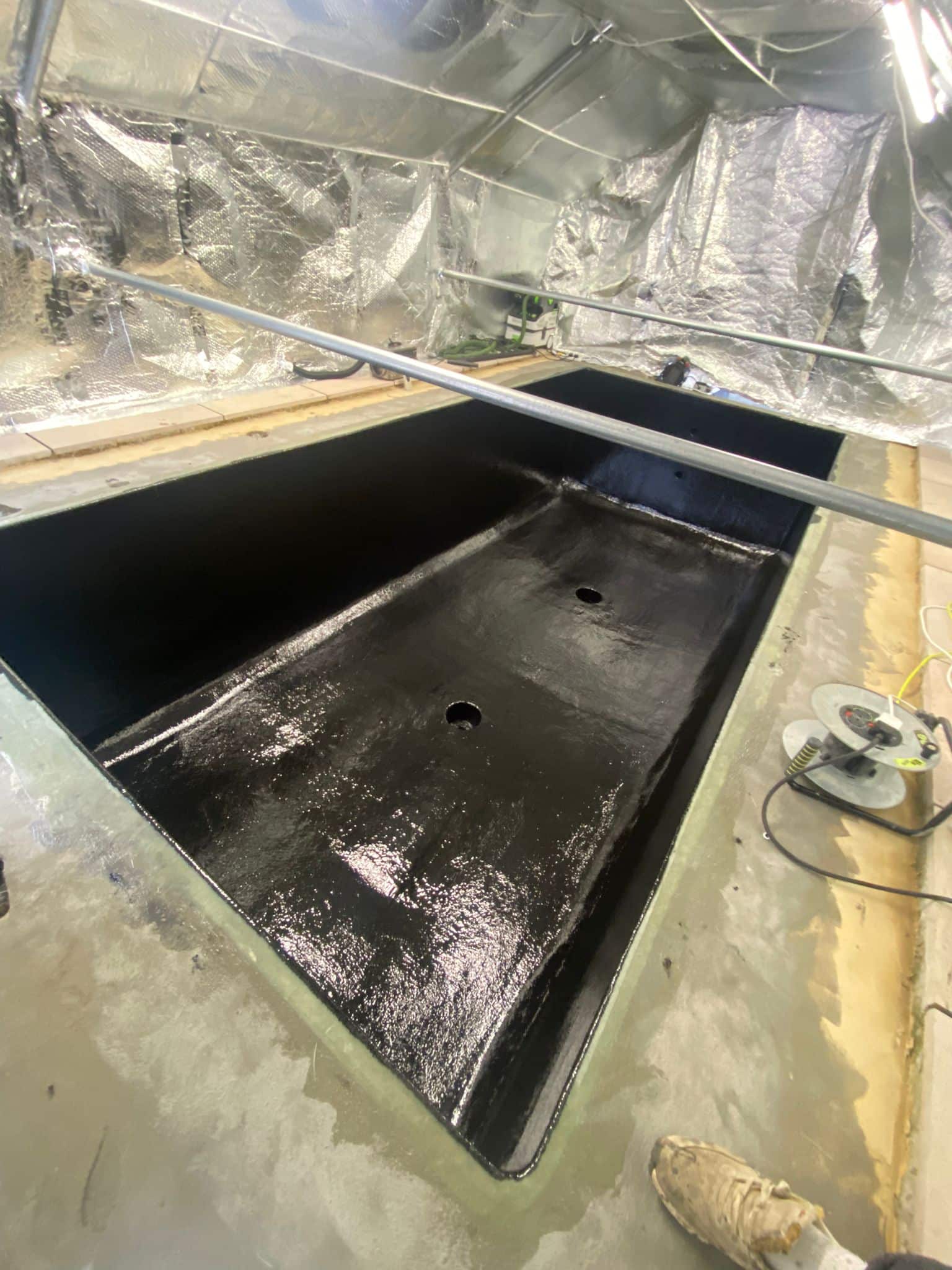
Fibreglass is only as good as the preparation and installation behind it.
Even though the process itself is well established, small mistakes can lead to issues such as poor adhesion, surface defects, or reduced lifespan. Factors such as temperature, moisture, and application technique all play a role in the final result.
For this reason, fibreglass installation requires attention to detail at every stage.
DIY vs professional fibreglass installation
While fibreglassing a pond can be carried out as a DIY project, it is not always straightforward.
Achieving a consistent finish requires the right conditions, materials, and experience. Working with resin also involves time sensitive application, where mistakes can be difficult to correct once the material begins to cure.
Professional installation ensures that the pond is properly prepared, the fibreglass is applied correctly, and the finished result is reliable over the long term.
Pond fibreglassing advice and guides
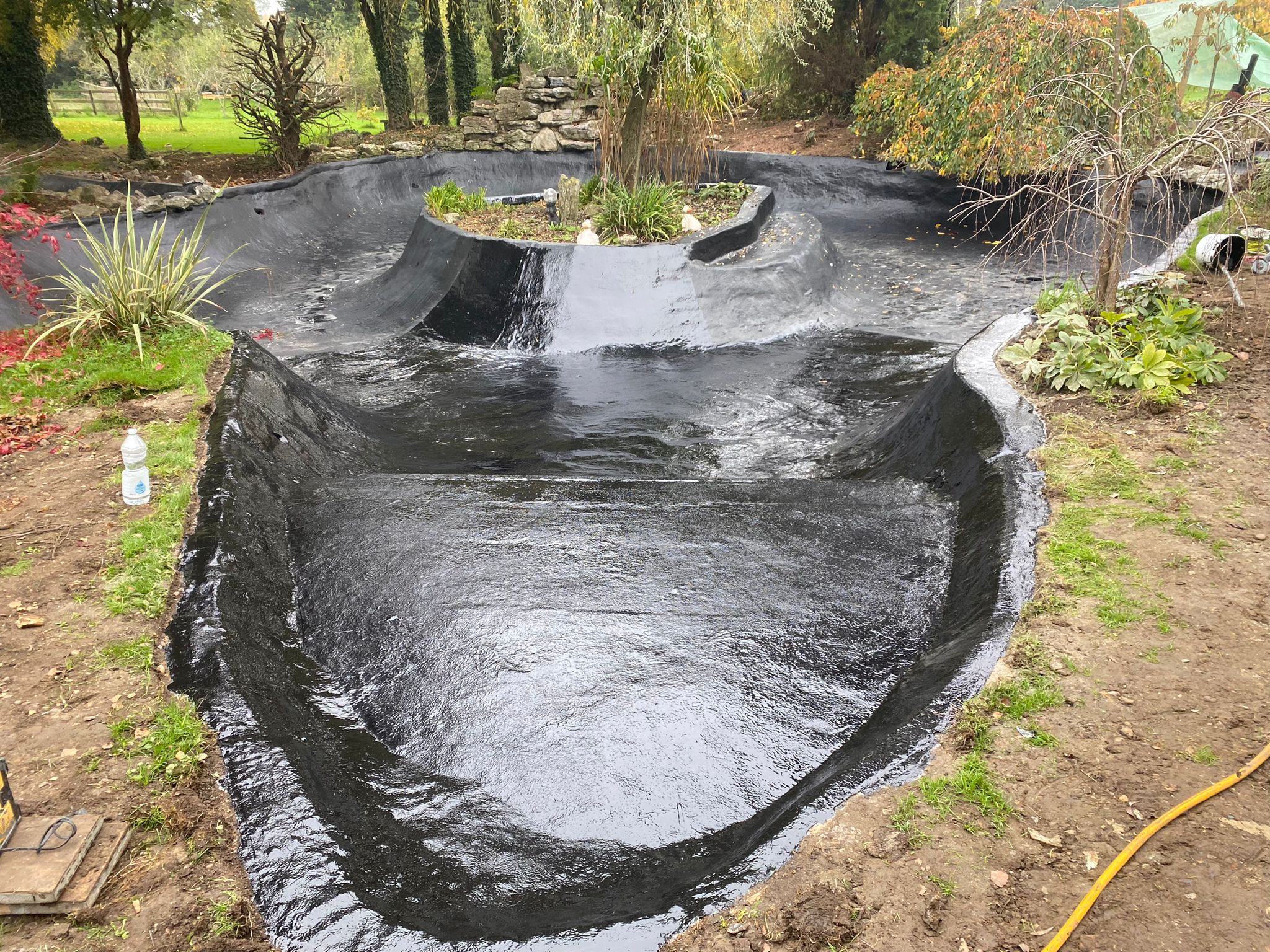
If you are looking for more detailed information about pond fibreglassing, we have created a range of in depth guides covering installation, preparation, lifespan, and long term performance.
These guides are based on real projects and practical experience, helping you understand what to expect and how to get the best results from your pond.
You can explore the full guides below:
What is pond fibreglassing?
Converting a liner pond to a fibreglass pond
Fibreglass vs liner
How to prepare your pond for fibreglass installation
The lifespan of a fibreglass pond and how to extend it
How fibreglass is installed
The difference between DIY fibreglassing and hiring a professional
Insulating and fibreglassing koi ponds
Areas we cover
We provide professional pond and swimming pool fibreglassing services across the South East, covering a wide range of residential and commercial projects.
Our core service areas include Kent, London, Essex, Surrey, and Sussex. We also regularly carry out fibreglassing work in Hertfordshire, Suffolk, Cambridgeshire, Norfolk, Buckinghamshire, Bedfordshire, Berkshire, and Oxfordshire, with many of these areas supported by dedicated service pages.
Each project is assessed individually, taking into account access, structure, intended use, and long term performance. This allows us to plan the installation properly and ensure the finished pond performs as expected.
We are able to travel further for larger or more specialised projects, particularly where full pond builds or fibreglass conversions are involved. If you are based outside these areas, feel free to get in touch as we may still be able to help.
Final thoughts
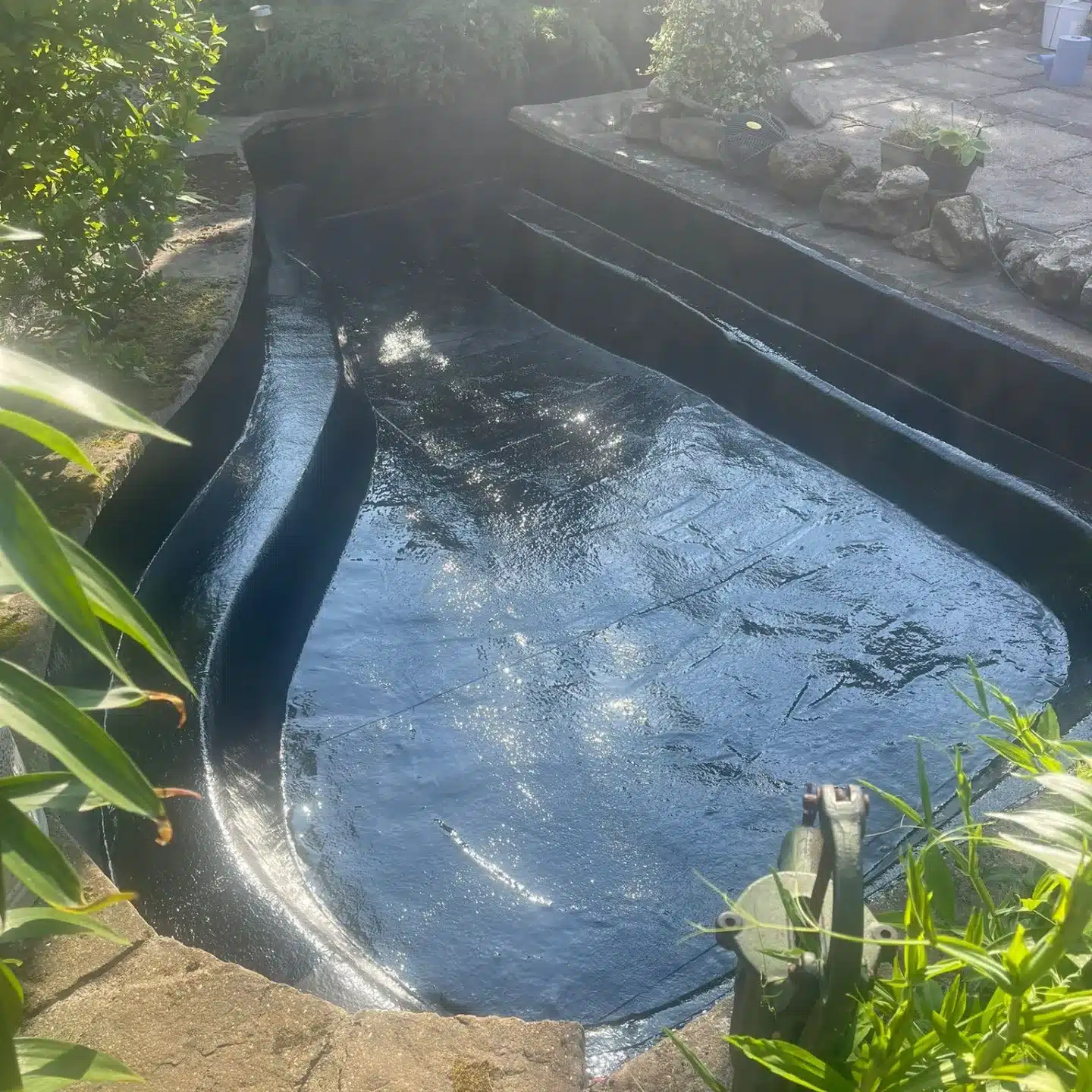
Fibreglass pond installation is a structured process that relies on proper preparation, careful application, and the right conditions.
When carried out correctly, it produces a strong, seamless, and long lasting lining that improves both the performance and appearance of the pond.
Understanding how fibreglass is installed helps highlight why attention to detail is so important and why the quality of installation has a direct impact on the lifespan of the pond.
Contact Us
Please get in touch to discuss your pond needs and we will get back to you as soon as possible.
matt@thatpondguy.co.uk
07368 372129
Frequently asked questions about fibreglass pond installation
How is fibreglass installed in a pond
Fibreglass is installed by applying layers of matting and resin to a prepared pond surface to create a waterproof lining.
The material bonds directly to the structure and cures into a solid, seamless shell that holds water and resists movement over time.
What surface is required before fibreglass installation
Fibreglass must be applied to a solid, smooth, and stable surface.
Concrete or rendered blockwork is ideal, as flexible surfaces such as liners are not suitable for proper adhesion.
Can fibreglass be applied over an existing pond liner
Fibreglass should not be applied over an existing pond liner.
The liner must be removed so the fibreglass can bond directly to a rigid base and create a reliable finish.
How long does it take to install fibreglass in a pond
Fibreglass installation typically takes a few days depending on the size and condition of the pond.
Preparation, application, and curing all need to be completed properly to achieve a long lasting result.
How long does fibreglass take to cure
Fibreglass usually takes 24 to 48 hours to cure fully under normal conditions.
Curing time can vary depending on temperature, humidity, and the materials used during installation.
What happens if fibreglass is applied in poor conditions
Applying fibreglass in damp or cold conditions can lead to poor adhesion and surface defects.
Moisture and temperature play a key role in how the resin cures, so correct conditions are essential.
Is fibreglass pond installation a DIY job
Fibreglass pond installation can be done as a DIY project, but it requires experience and careful preparation.
Achieving a consistent and reliable finish can be difficult without the right tools, materials, and conditions.
Why is preparation important before fibreglassing
Preparation is critical because fibreglass relies on strong adhesion to the surface beneath it.
Any dust, moisture, or defects can affect bonding and reduce the lifespan of the lining.
How many layers of fibreglass are used in a pond
Fibreglass pond lining is built up in multiple layers to create strength and durability.
The exact number of layers depends on the system used and the requirements of the pond.
What is the purpose of the topcoat in fibreglass ponds
The topcoat seals the fibreglass and provides a smooth, protective finish.
It helps protect against UV exposure and gives the pond its final appearance.
Can fibreglass be applied to complex pond shapes
Fibreglass can be applied to almost any pond shape, including steps, shelves, and curves.
This makes it ideal for both simple and bespoke pond designs.
Does fibreglass create a seamless pond lining
Fibreglass creates a completely seamless lining with no joints or folds.
This reduces weak points and improves both durability and ease of maintenance.
What tools are used during fibreglass installation
Fibreglass installation uses rollers, brushes, and specialist tools to apply resin and remove air pockets.
These tools help ensure even coverage and a strong bond across the surface.
What are air bubbles in fibreglass and why are they a problem
Air bubbles are trapped pockets of air within the fibreglass layers.
They can weaken the structure and affect waterproofing if not removed during installation.
Can fibreglass fail if installed incorrectly
Fibreglass can fail if it is applied to a poorly prepared or unstable surface.
Incorrect installation can lead to weak bonding, surface defects, or reduced lifespan.
How do you know if fibreglass has been installed properly
A properly installed fibreglass pond will have a smooth, consistent finish with no visible defects.
There should be no soft spots, bubbles, or uneven areas across the surface.
Is fibreglass installation messy or disruptive
Fibreglass installation can be messy during the process but is controlled when managed properly.
Most disruption comes during preparation and application stages, with minimal impact once completed.
Can fibreglass be installed in any weather
Fibreglass installation should be carried out in suitable weather conditions.
Dry, mild conditions are ideal, as excessive moisture or cold temperatures can affect curing.
What is the biggest risk during fibreglass installation
The biggest risk is poor preparation or incorrect application.
Both can lead to long term issues that affect performance and durability.
Why choose professional fibreglass installation
Professional installation ensures correct preparation, application, and long term reliability.
It reduces the risk of errors and helps achieve a consistent, high quality finish.
