





Pond Fibreglassing
A long lasting, watertight finish for ponds of all shapes and sizes
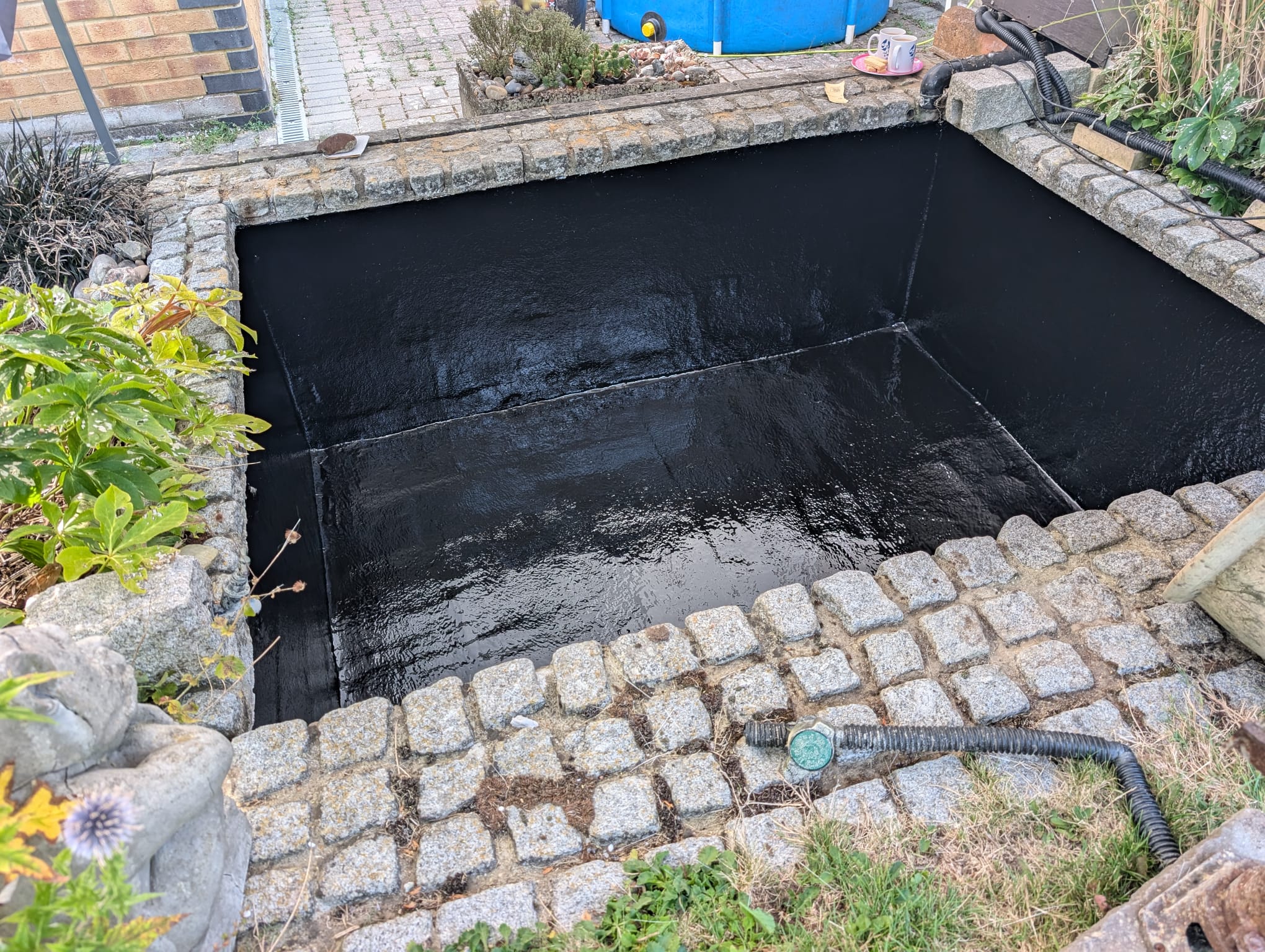
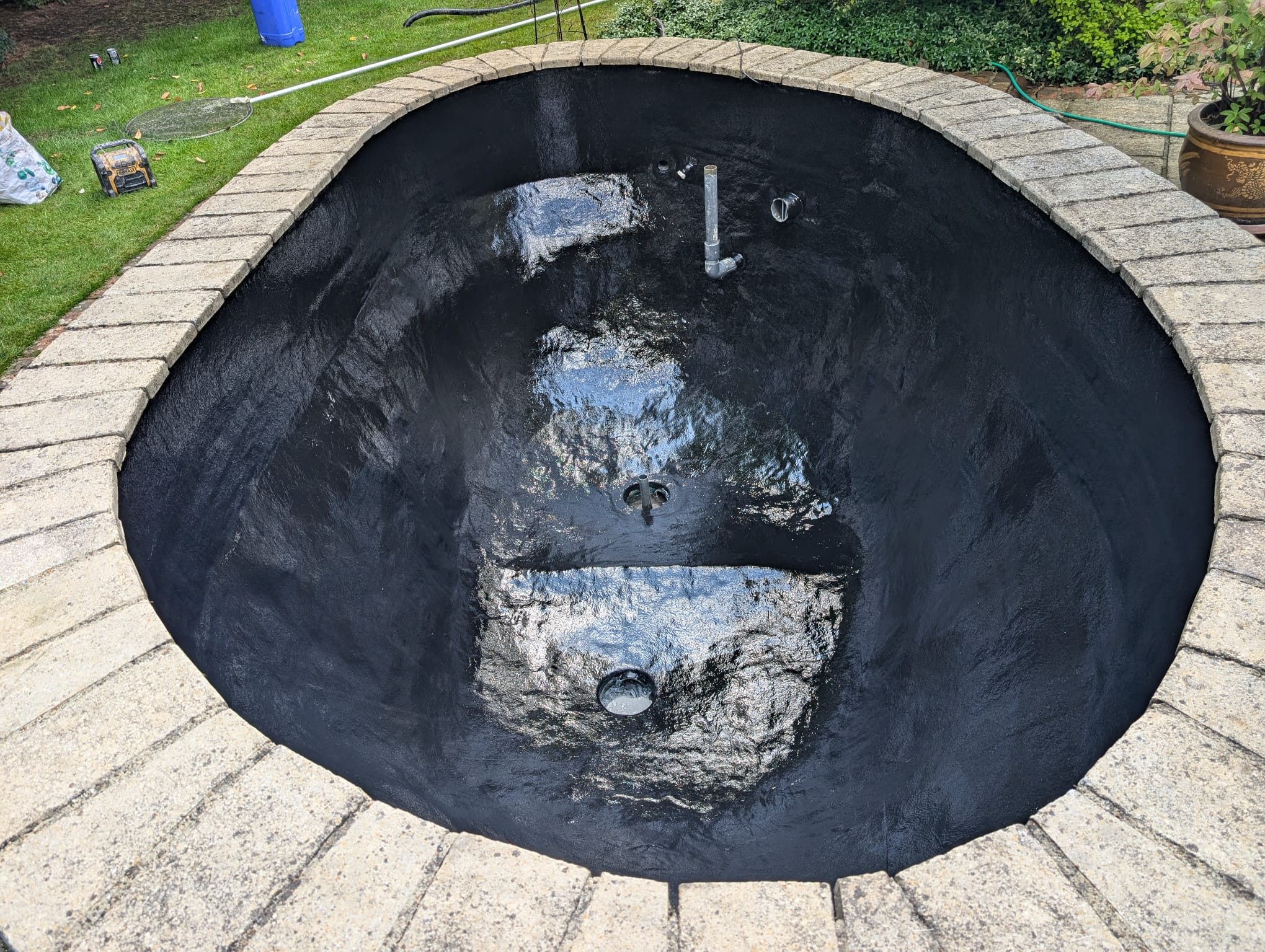
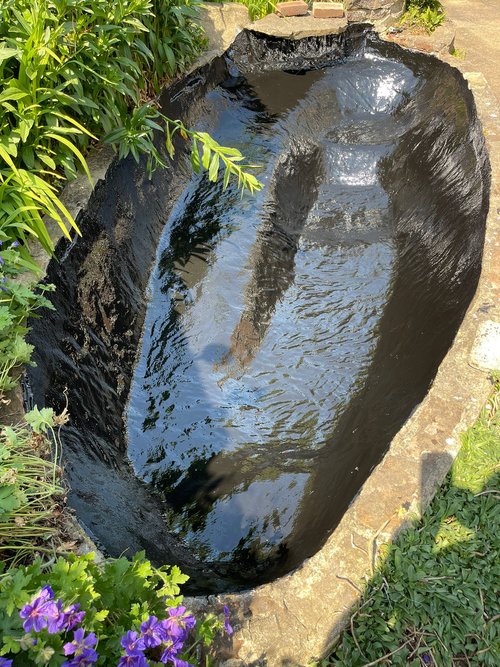
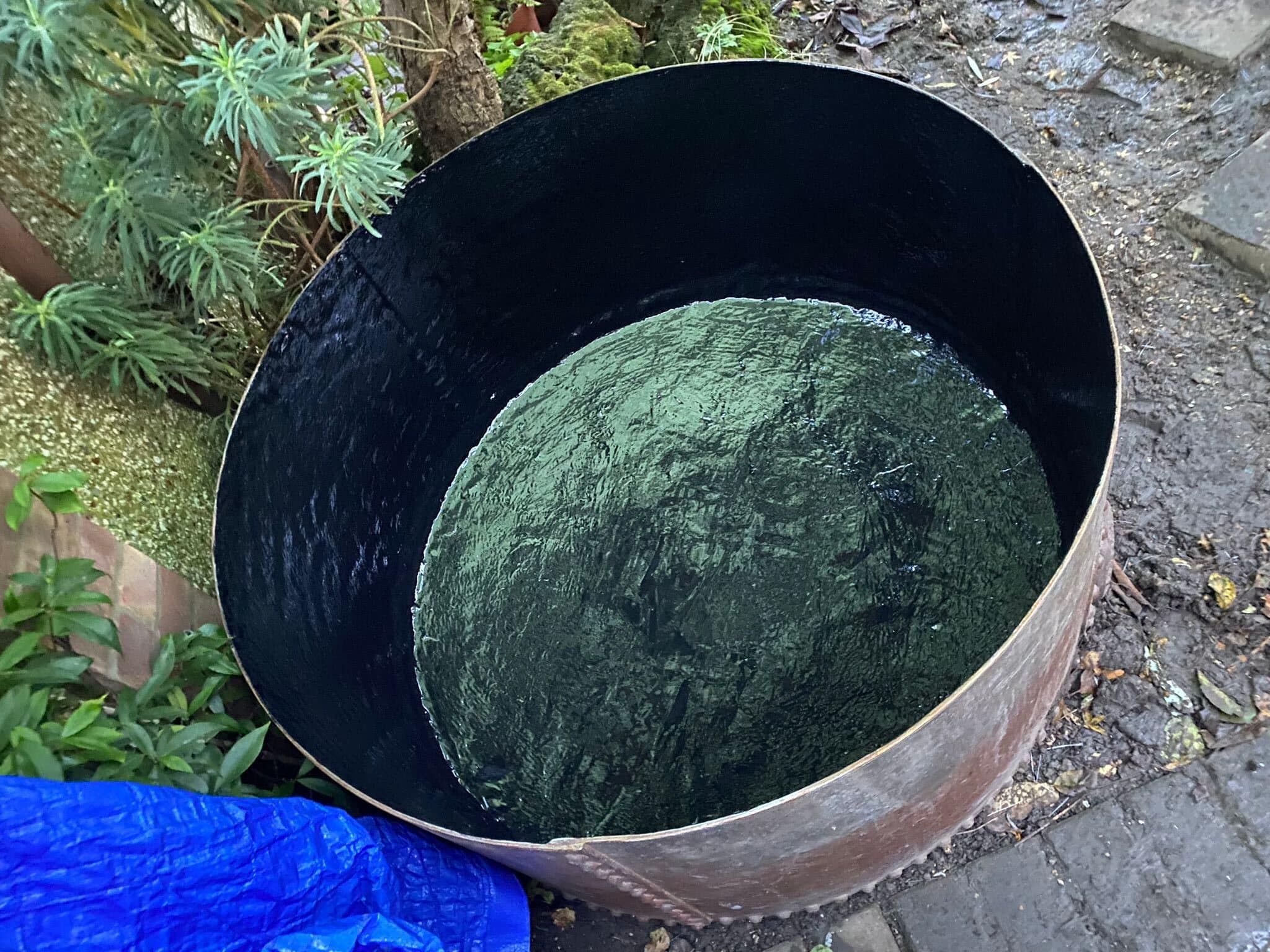
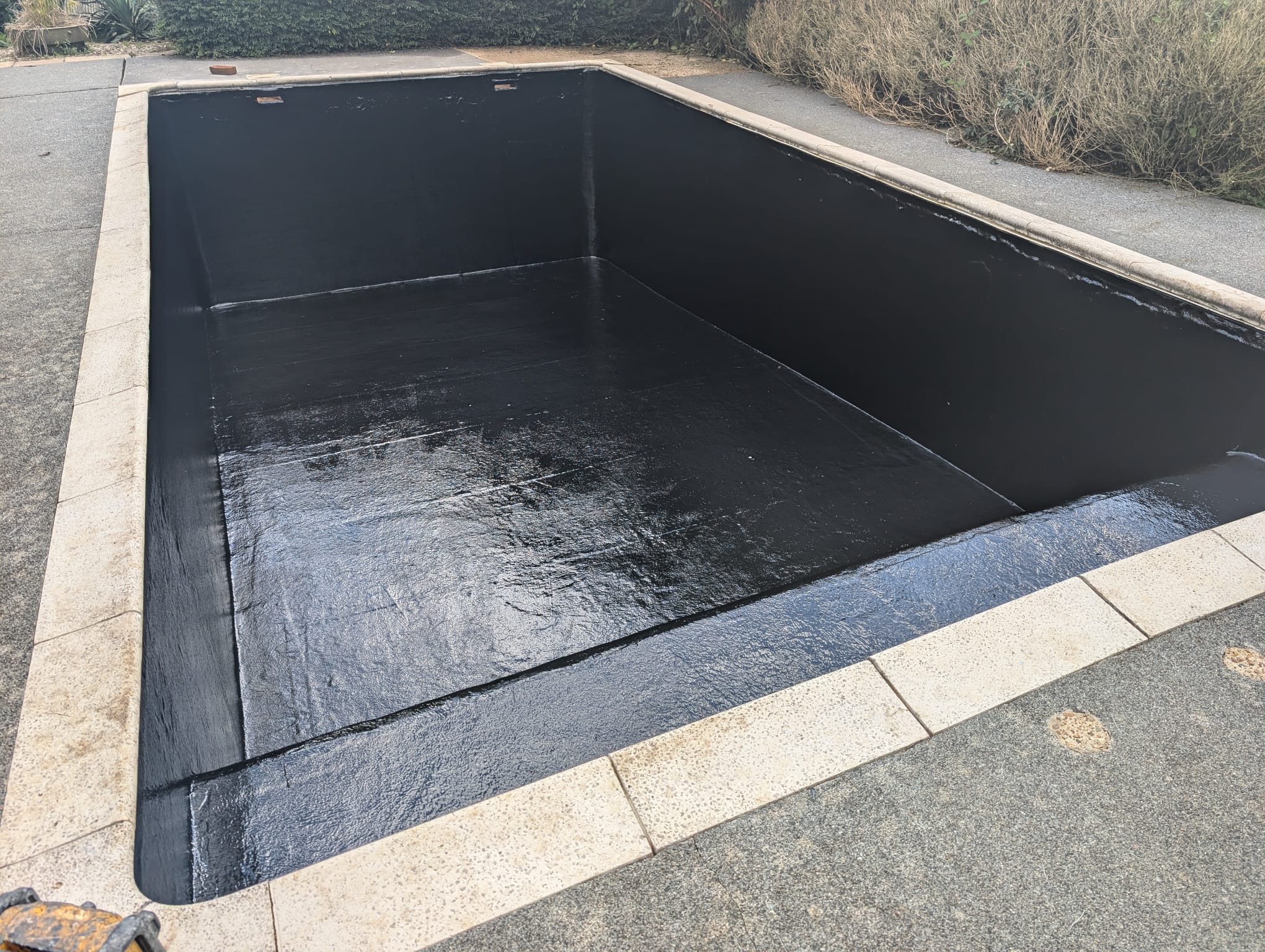
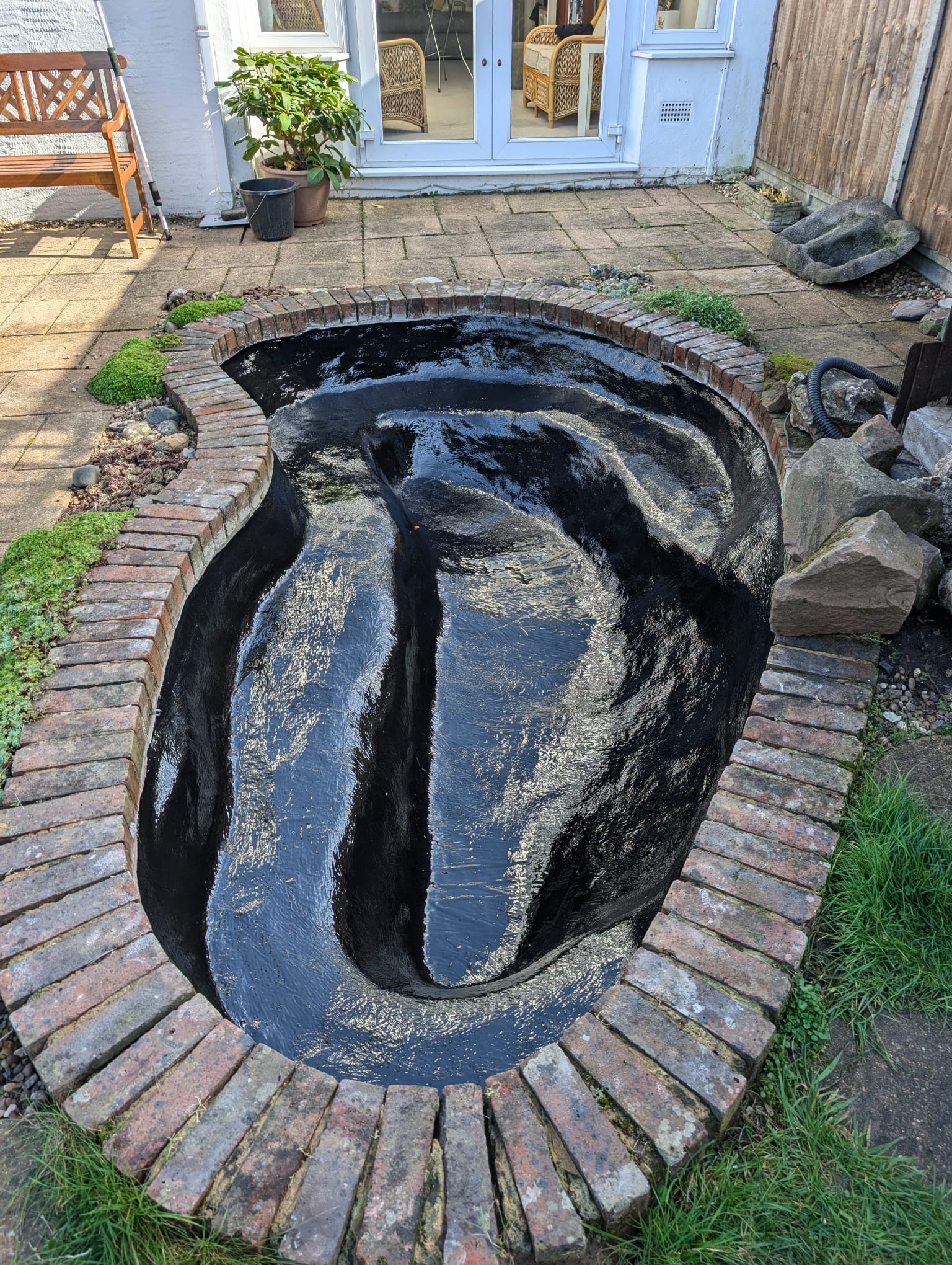
Fibreglassing a pond is one of the most reliable ways to create a completely waterproof, durable, and low maintenance finish. Unlike traditional liners, a fibreglass pond forms a solid structure that will not fold, crease, or shift over time, making it ideal for both new pond builds and upgrading existing ponds.
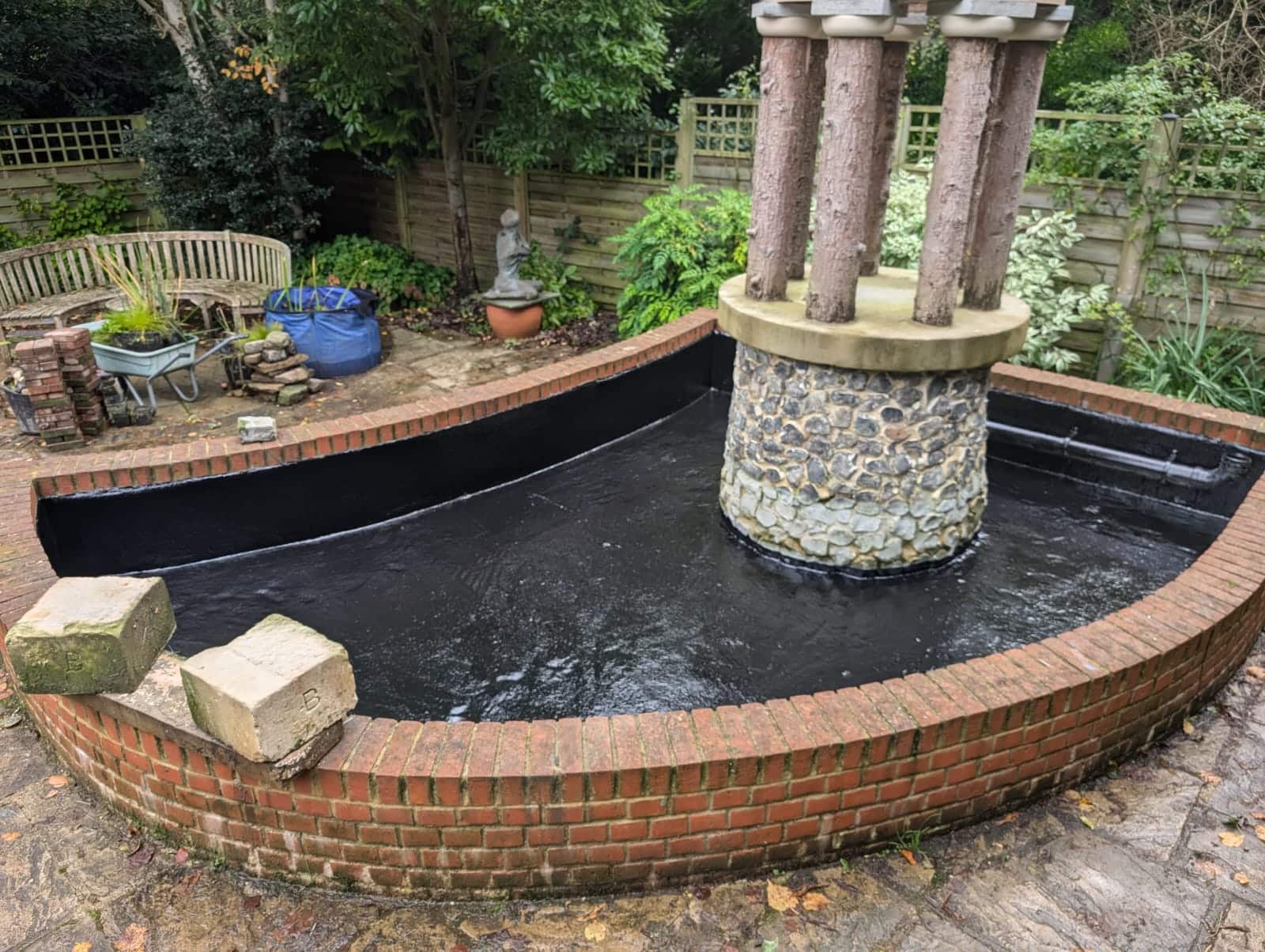
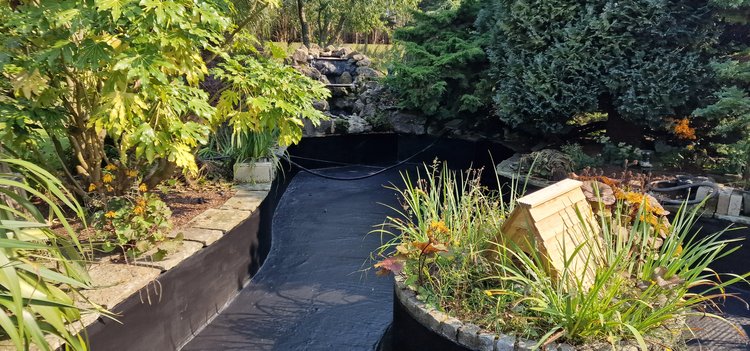
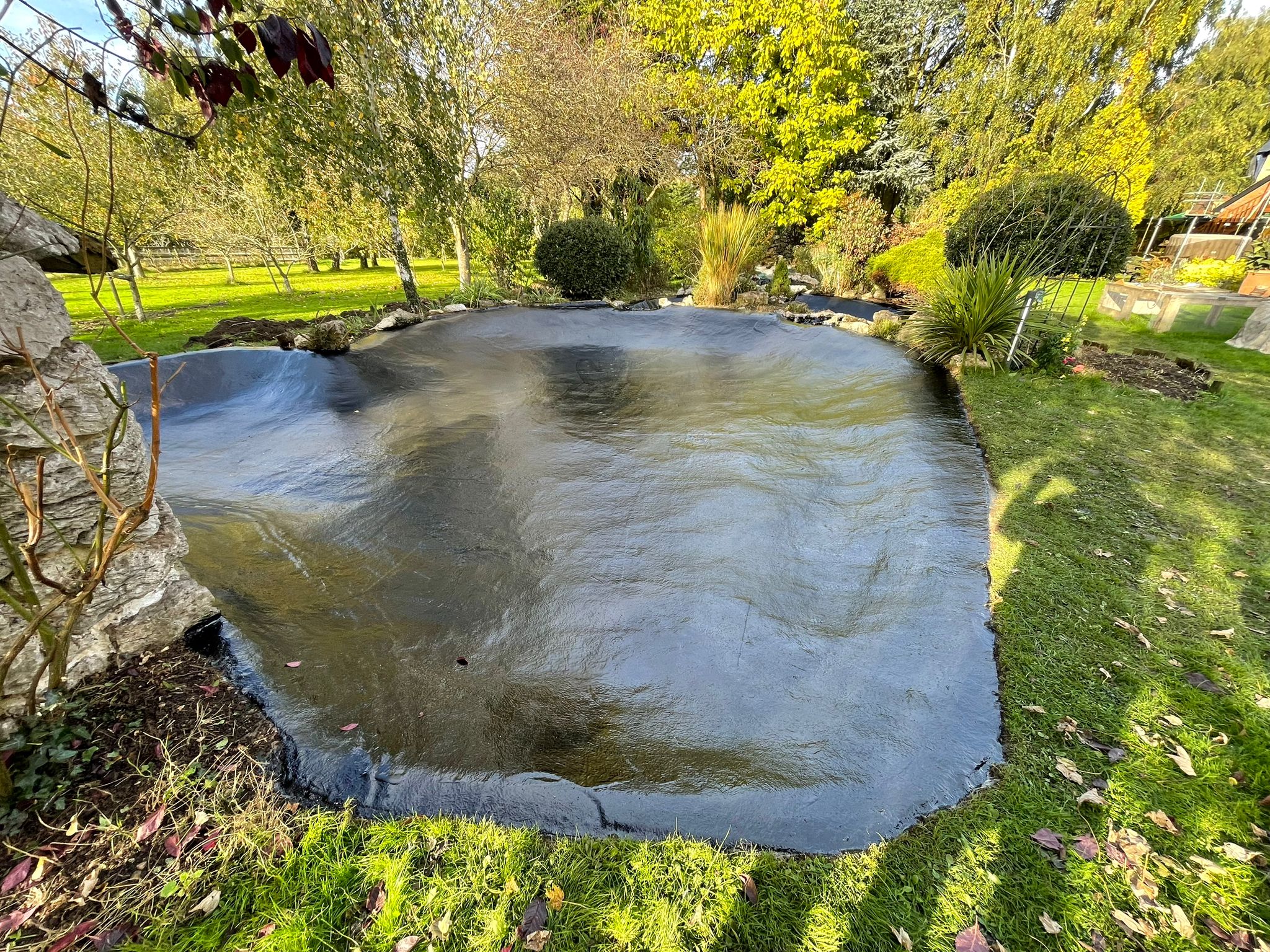
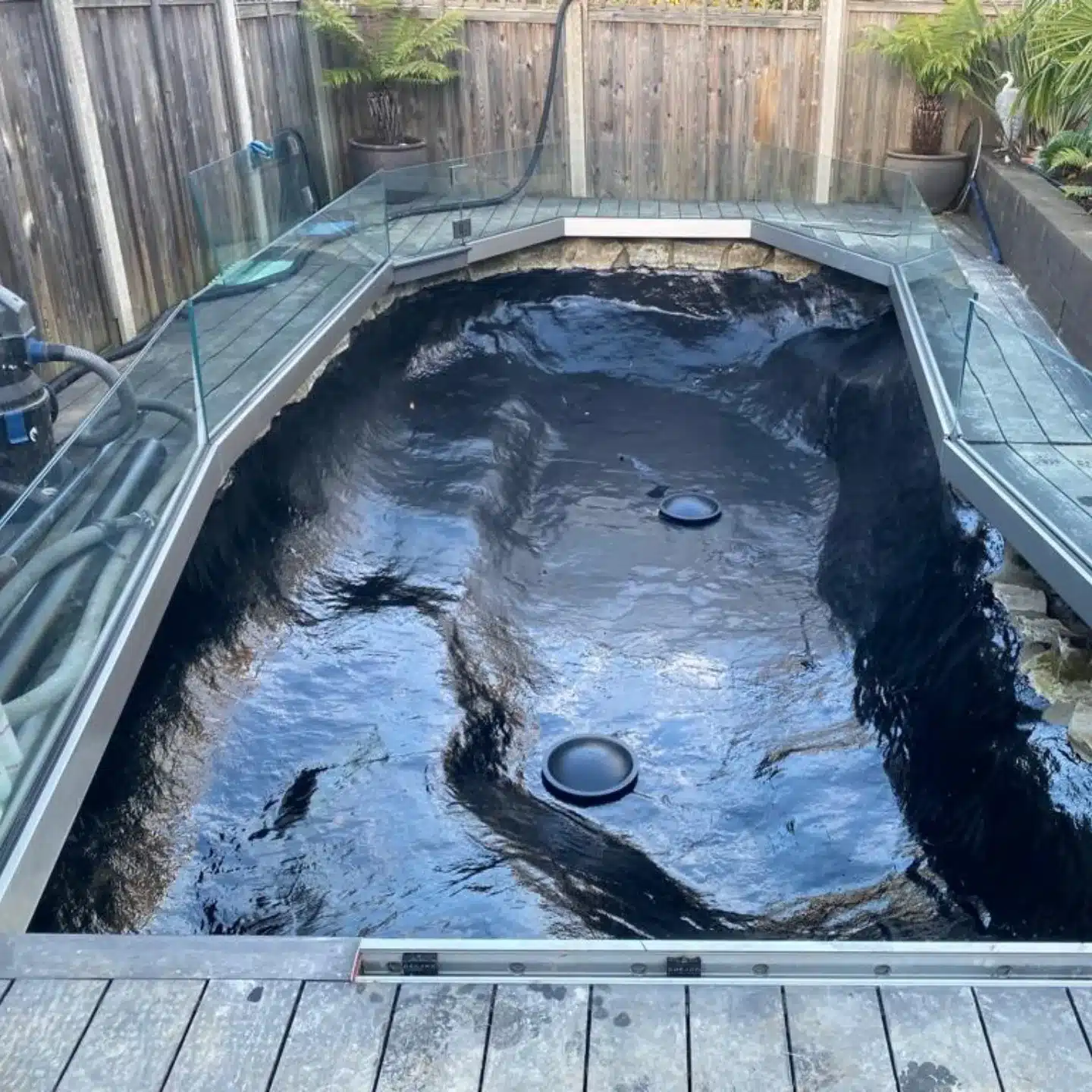
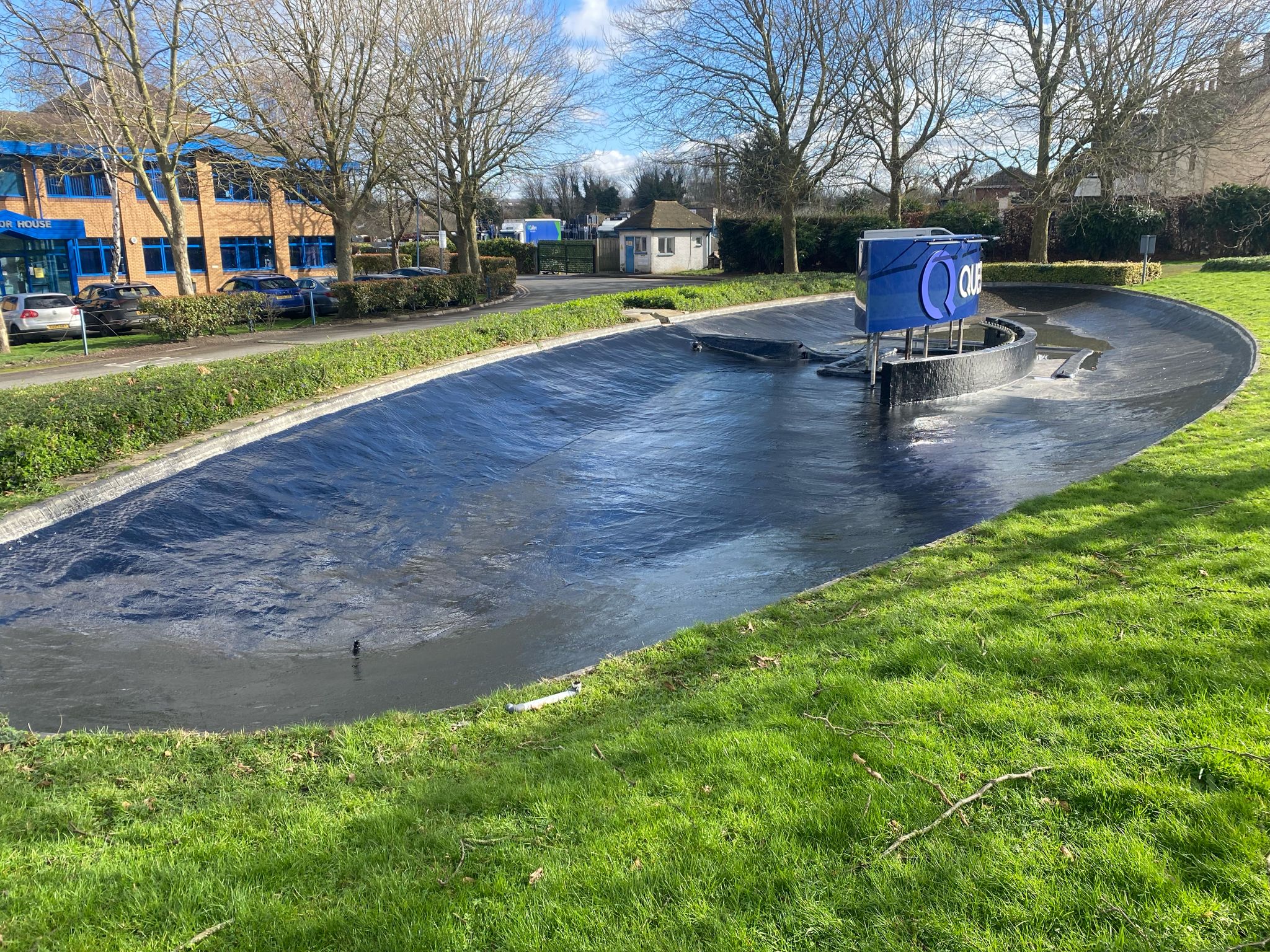
At That Pond Guy, we use fibreglass on a wide range of projects, from small garden ponds through to large koi ponds and full garden transformations. It provides a clean, professional finish that not only improves the appearance of the pond but also significantly increases its lifespan.
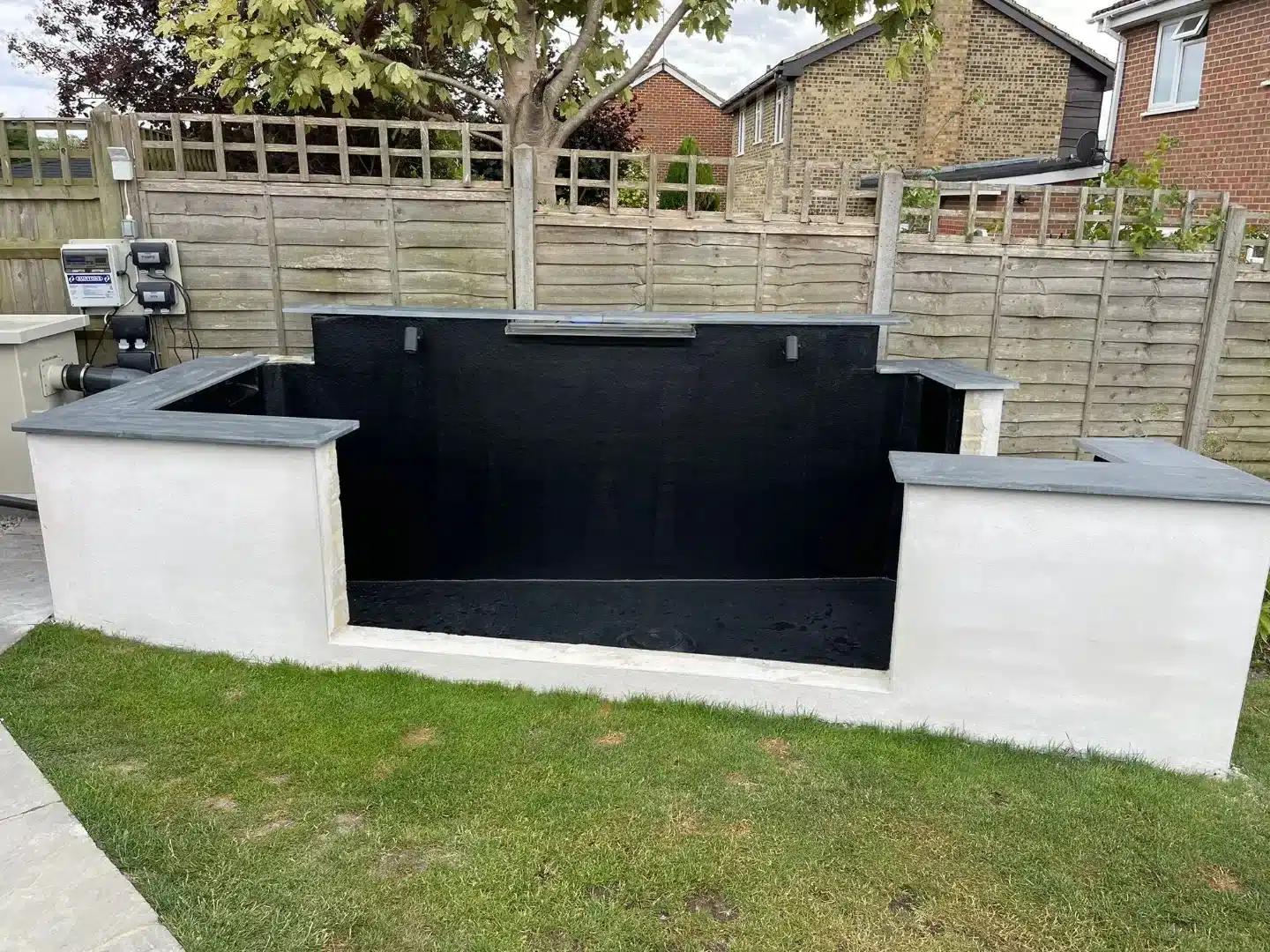
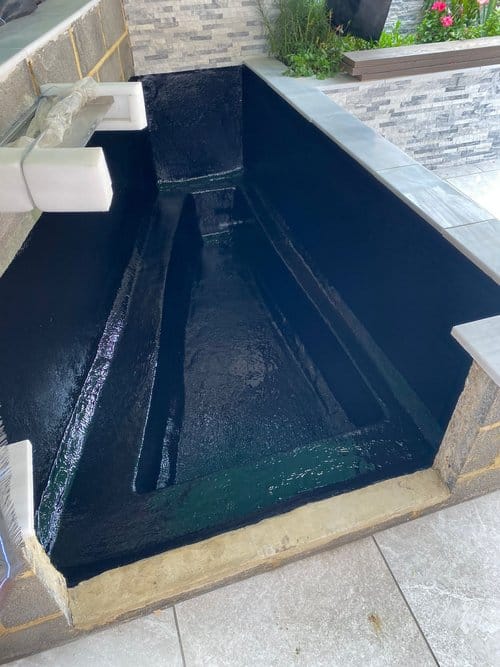
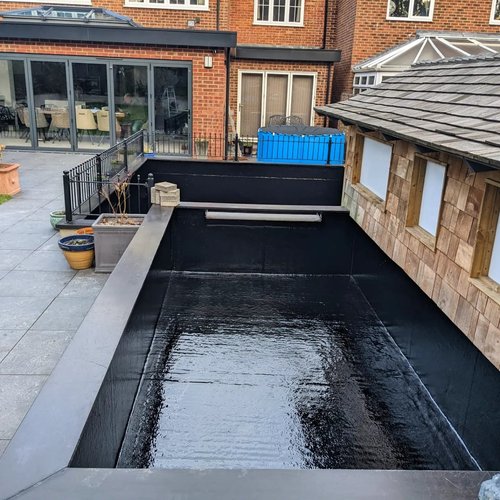
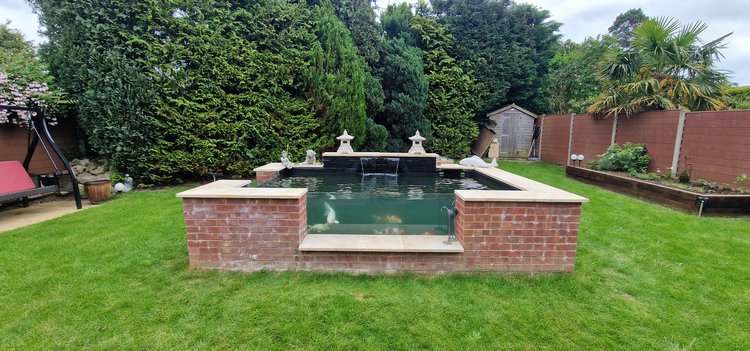
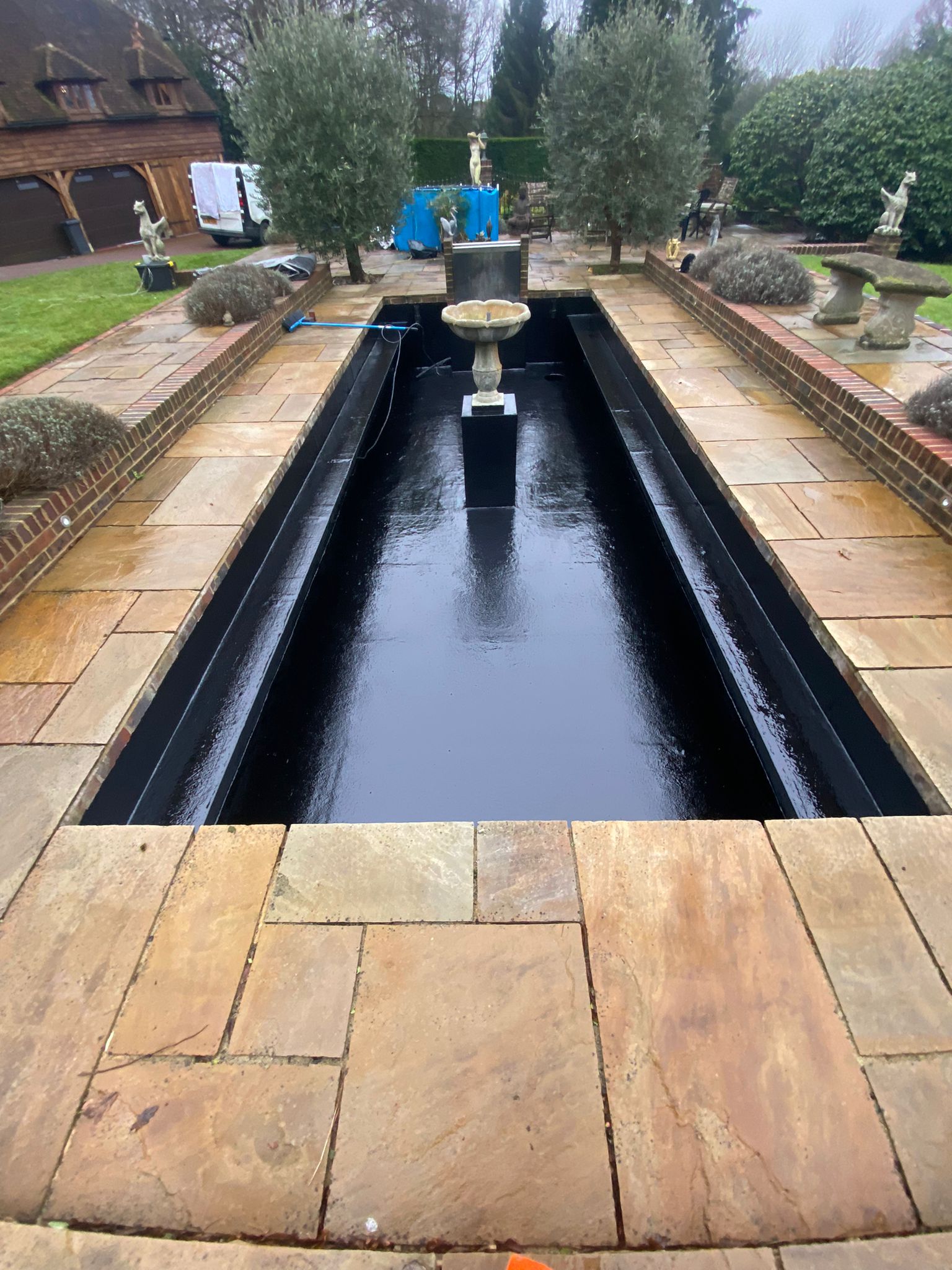
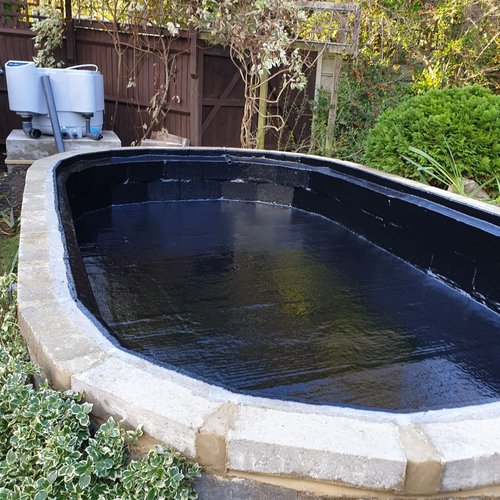
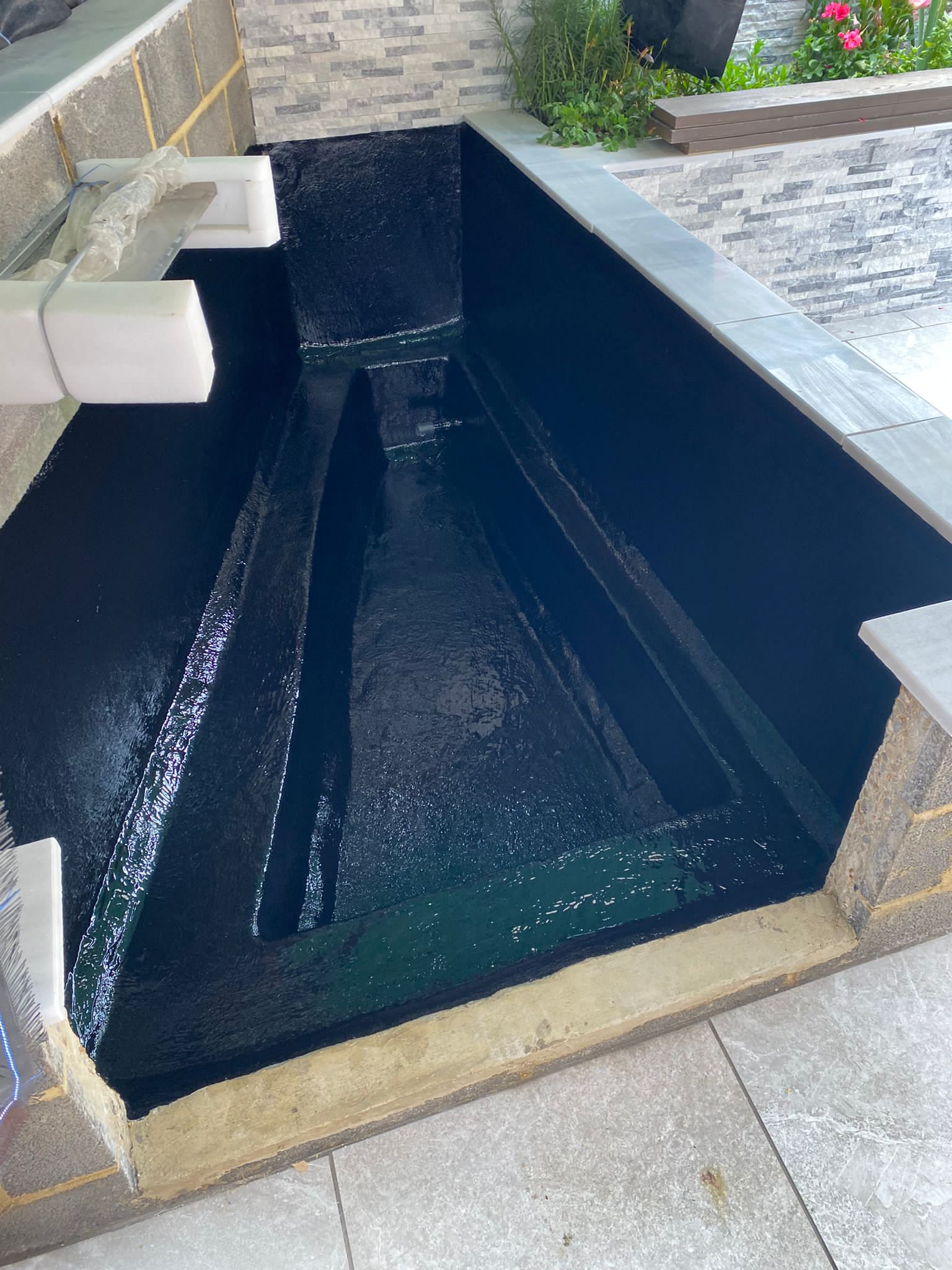
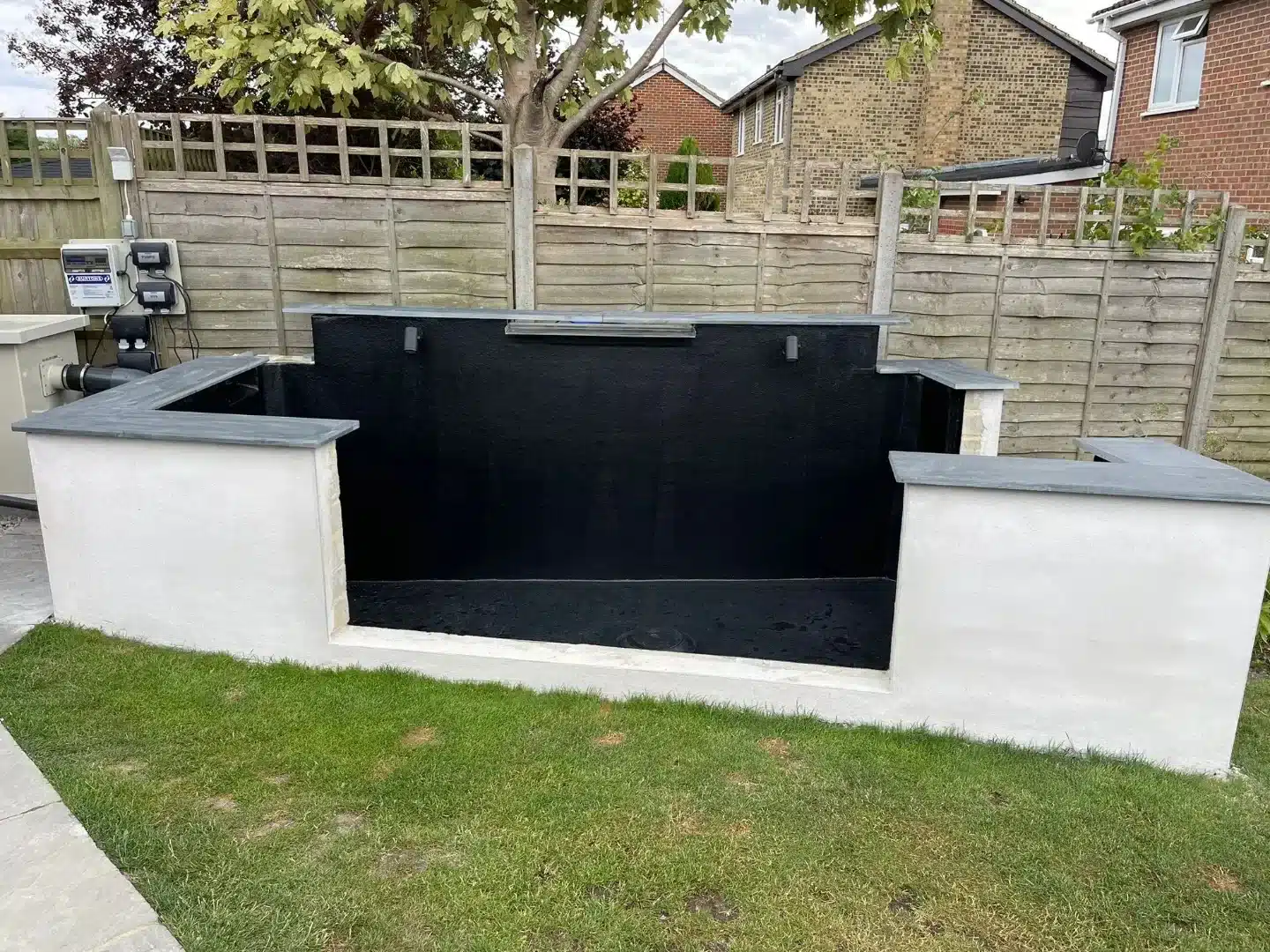
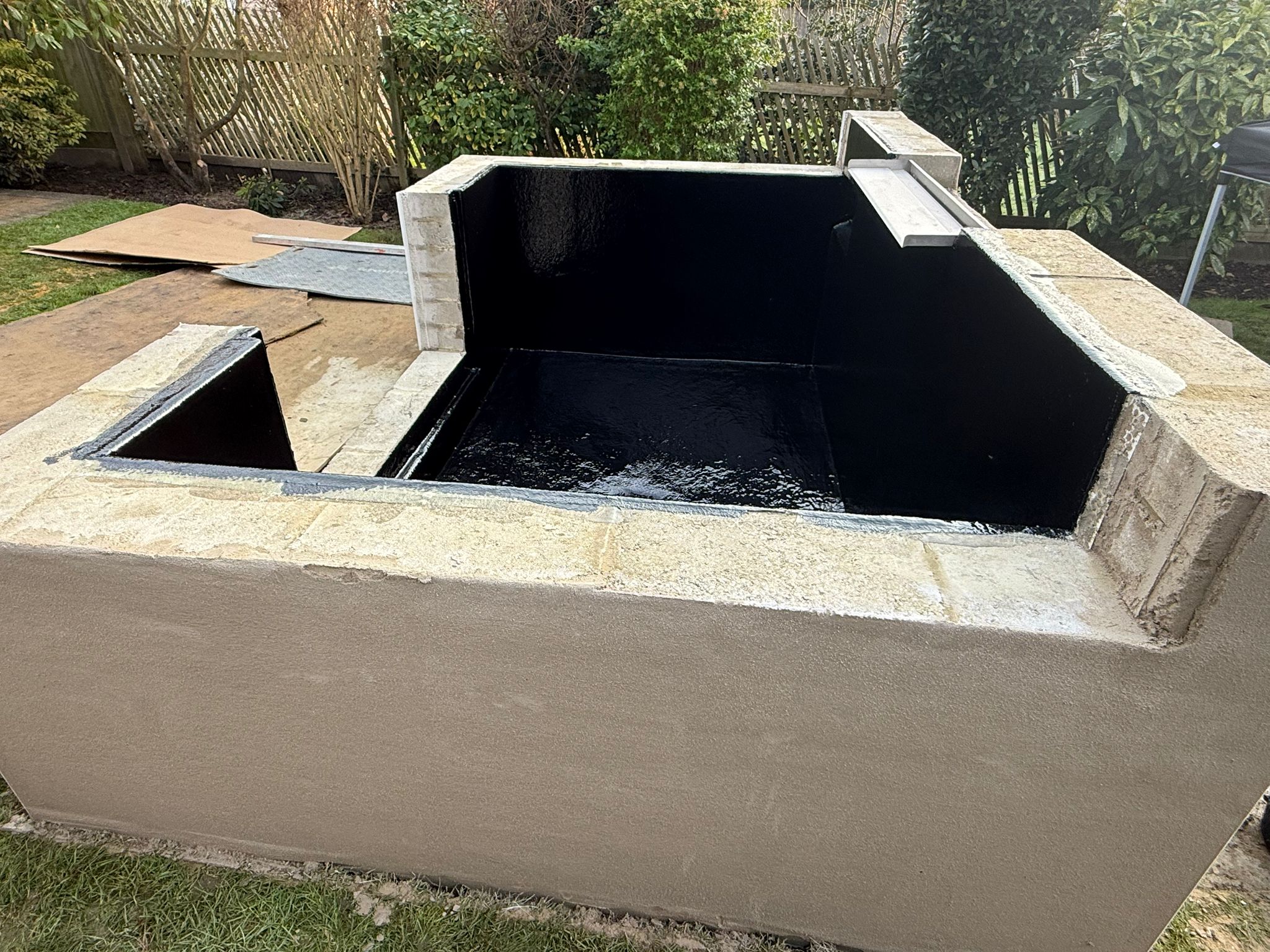
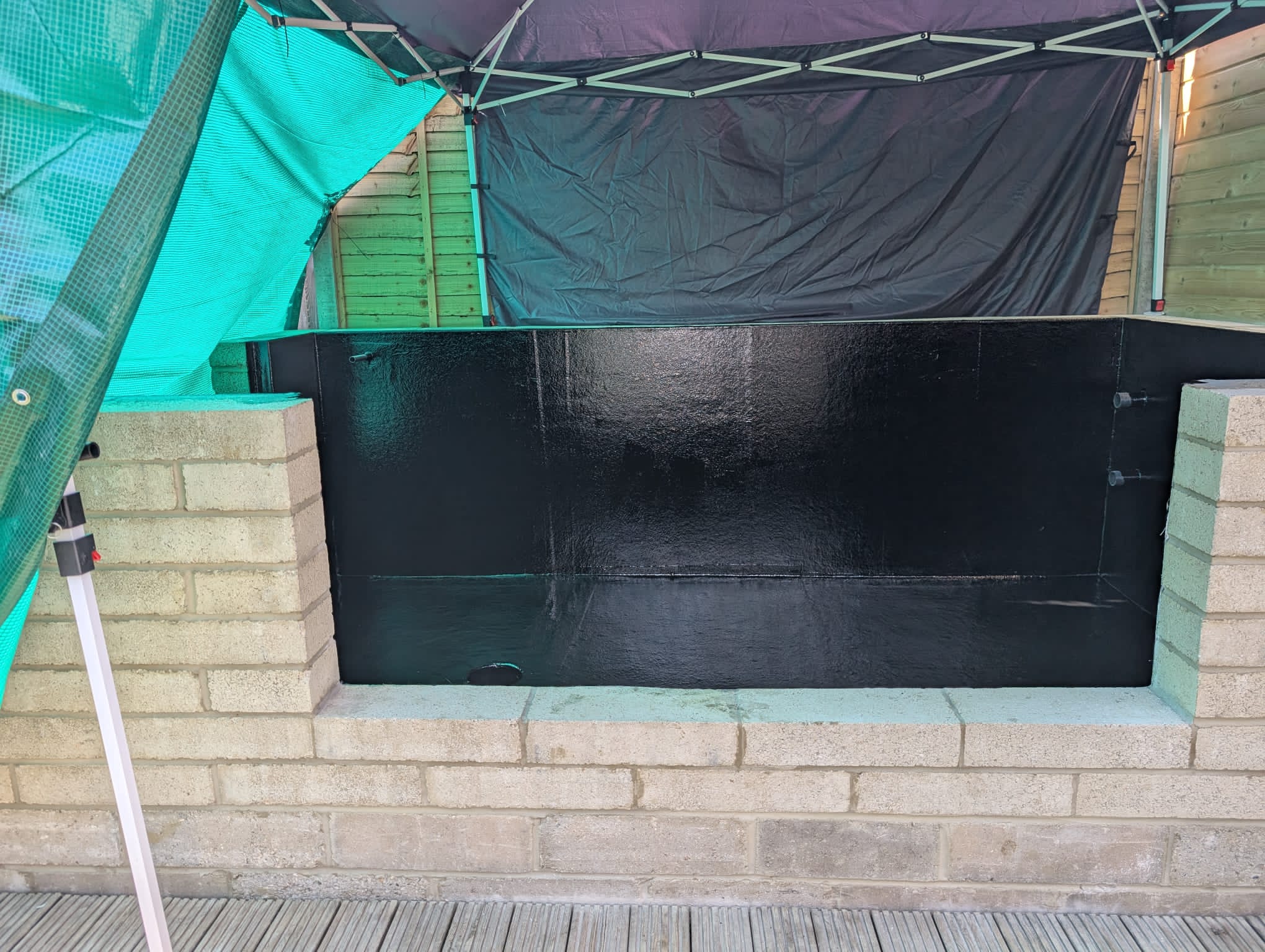
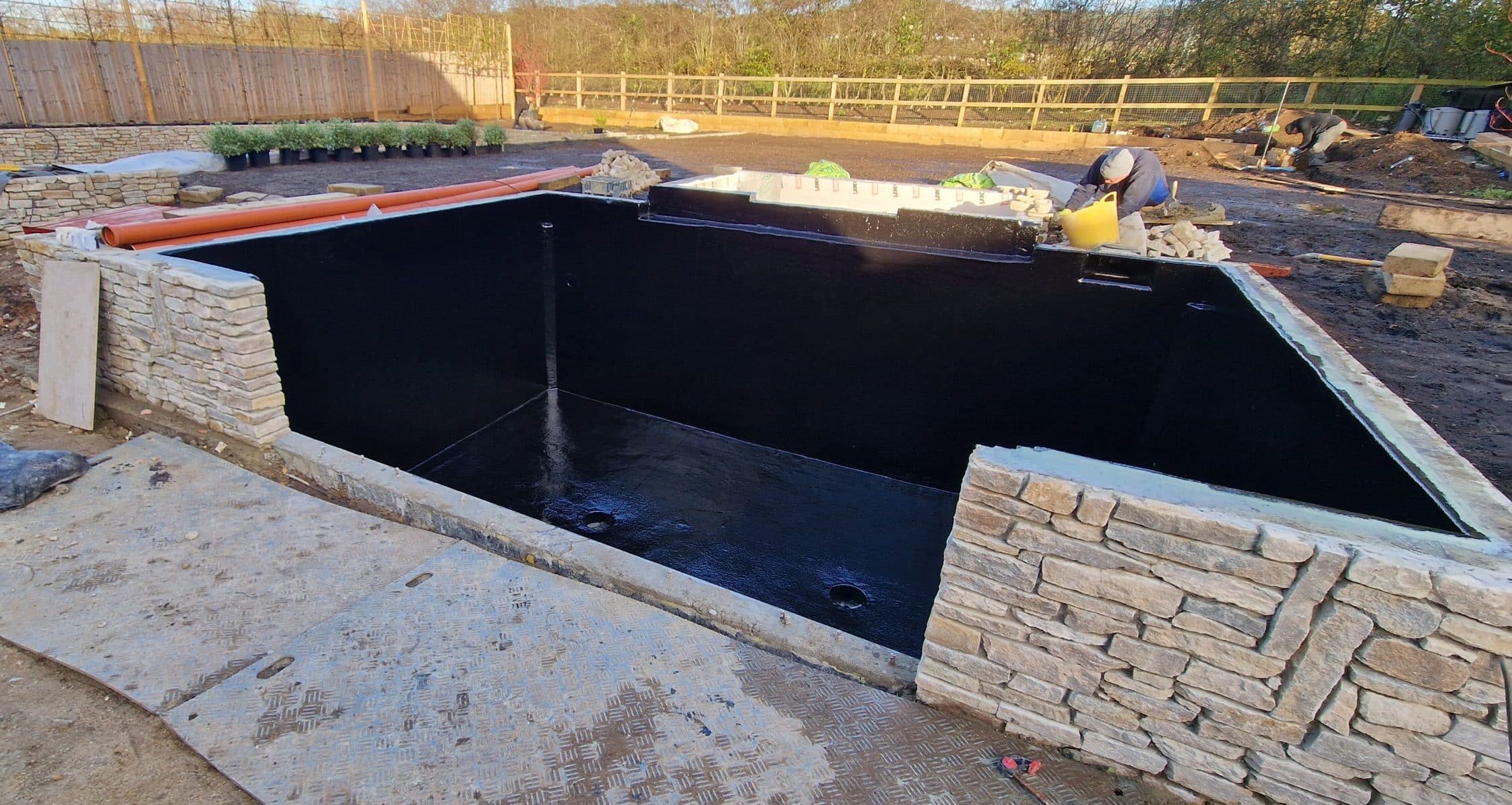
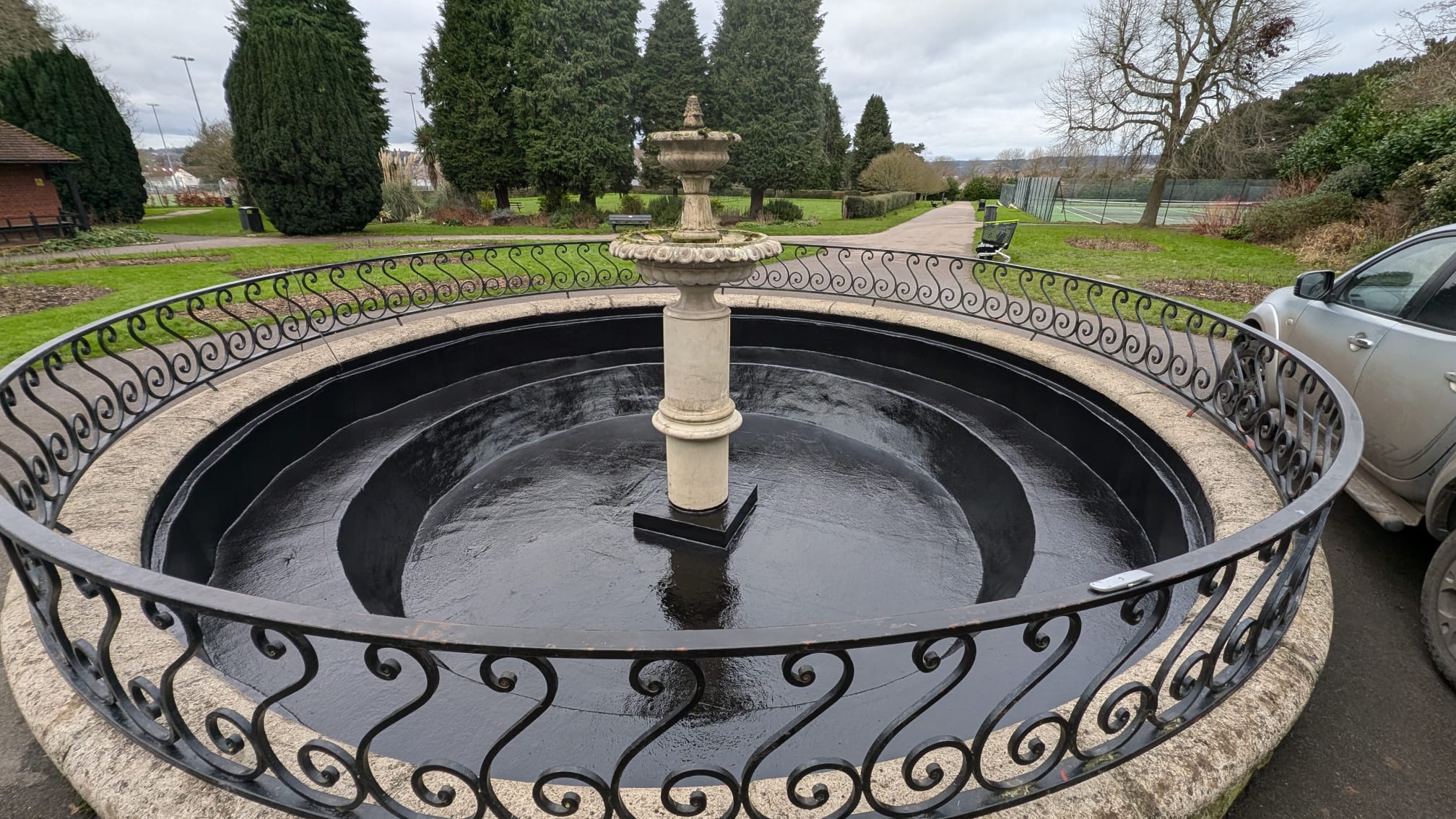
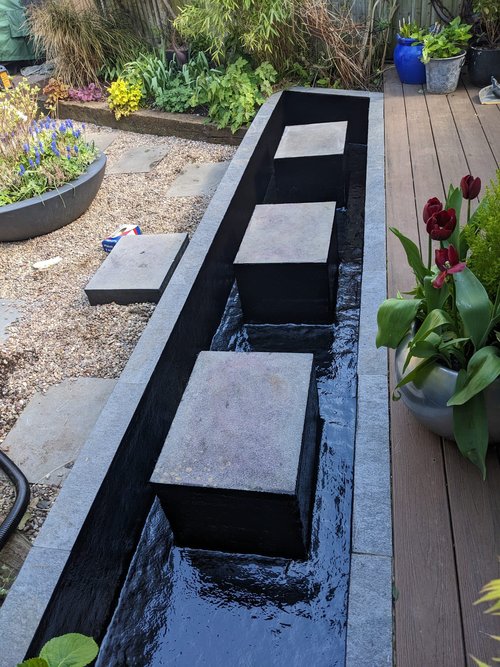
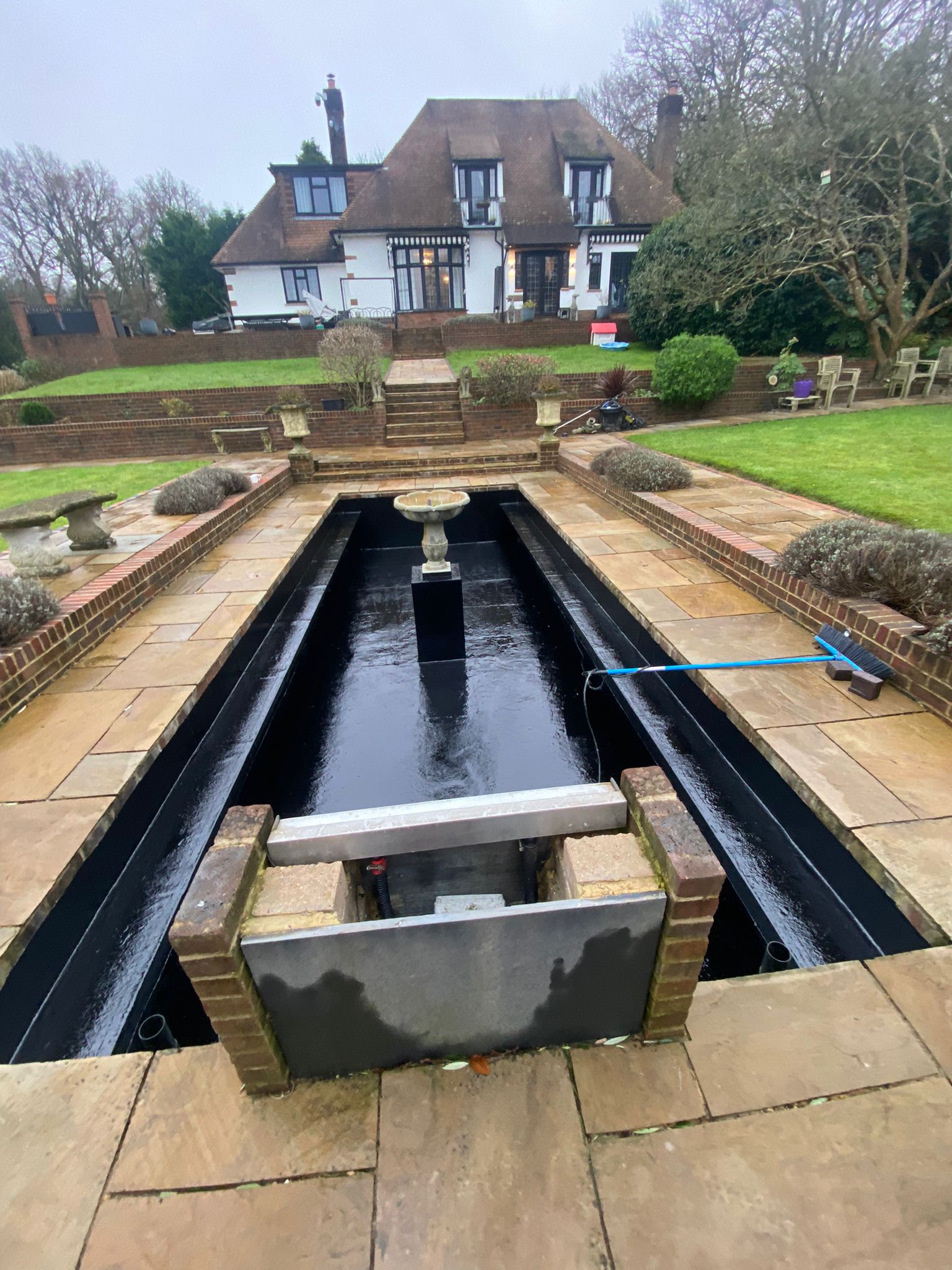
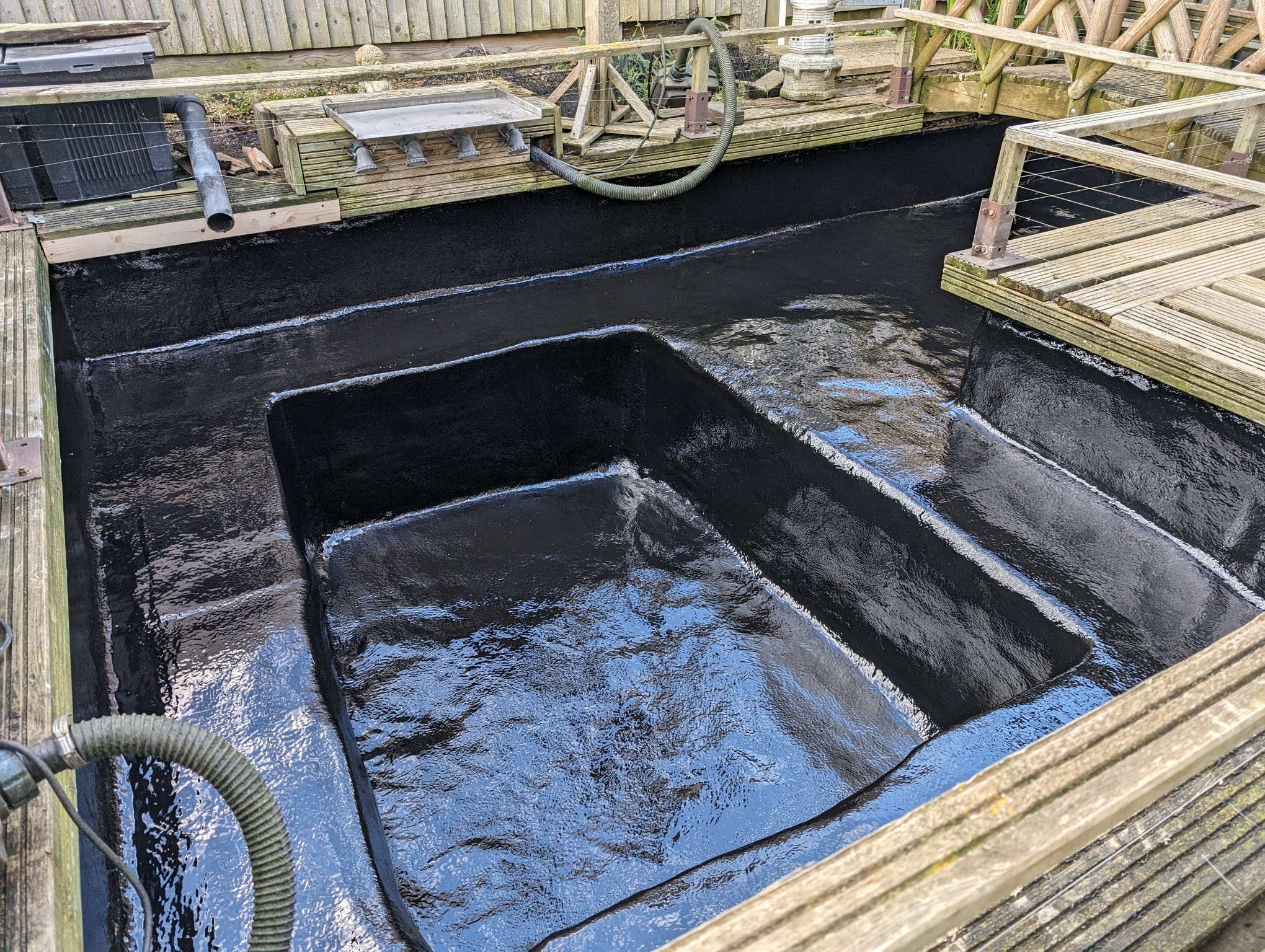
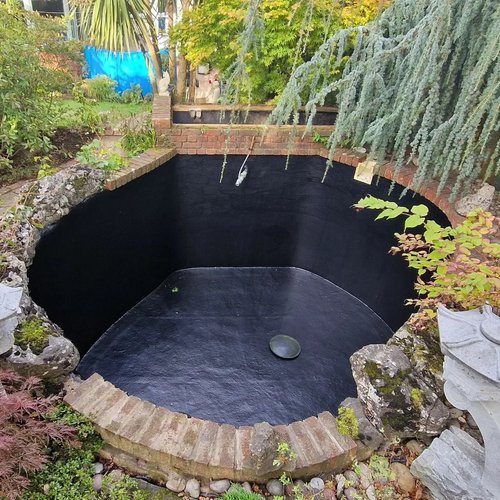
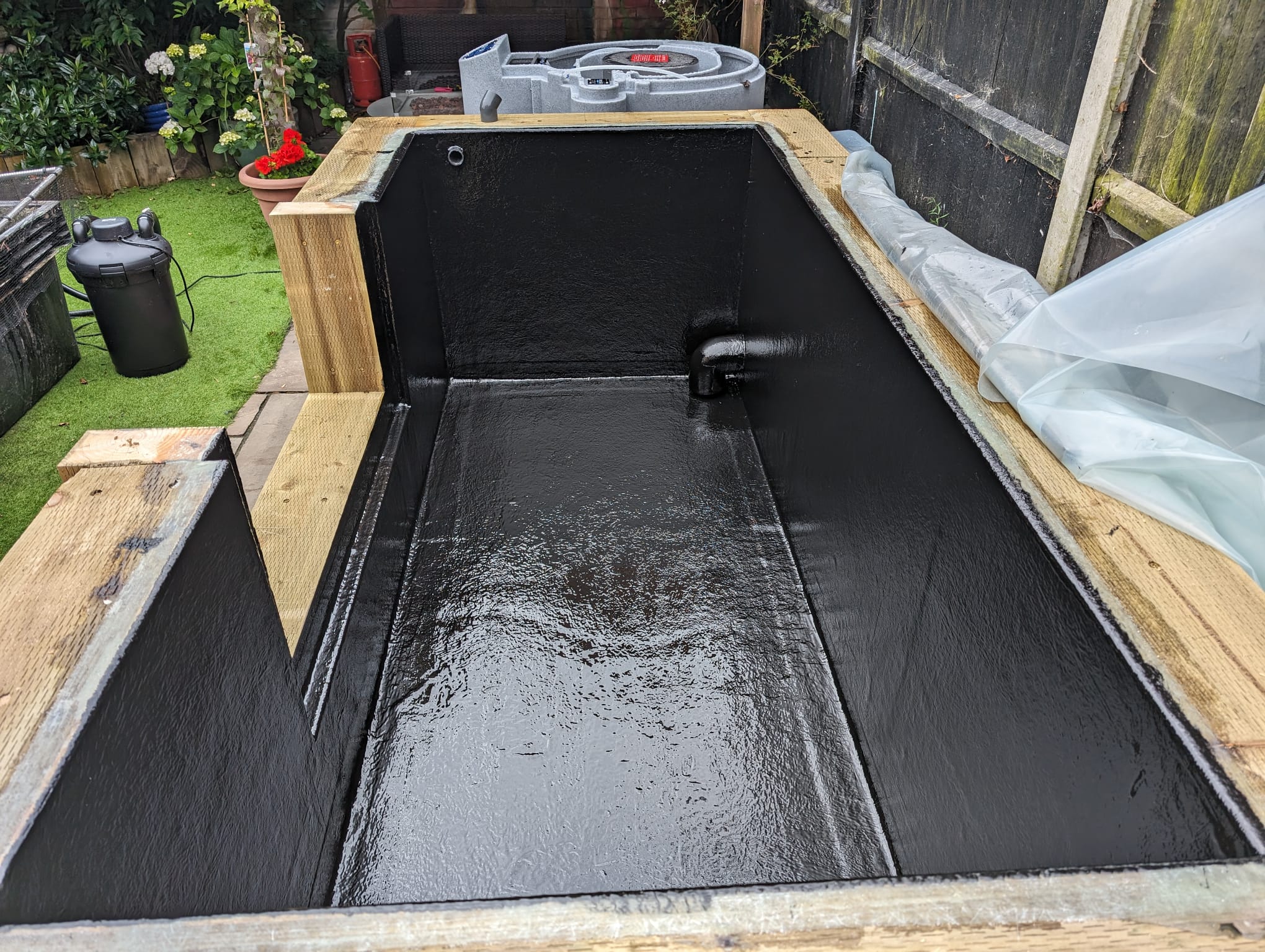
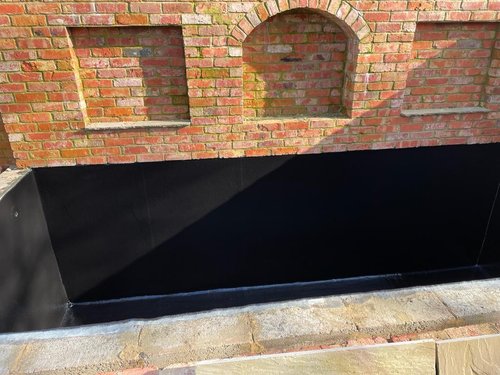
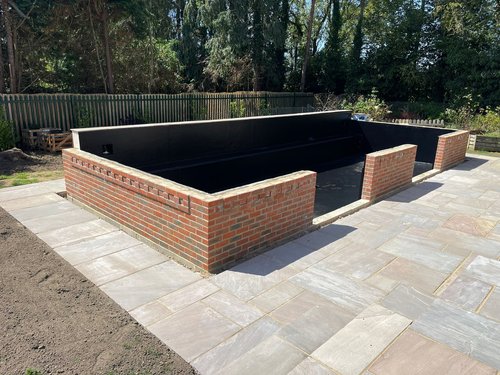
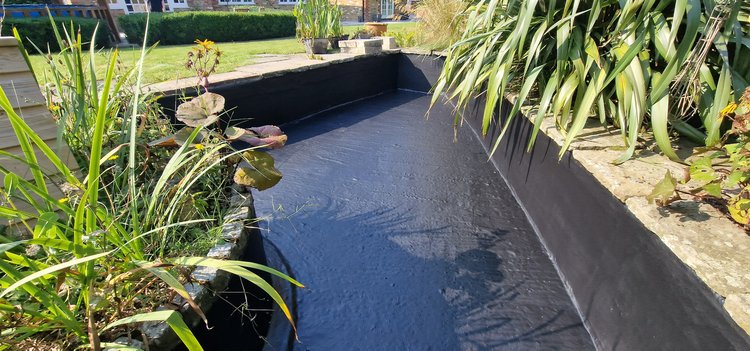
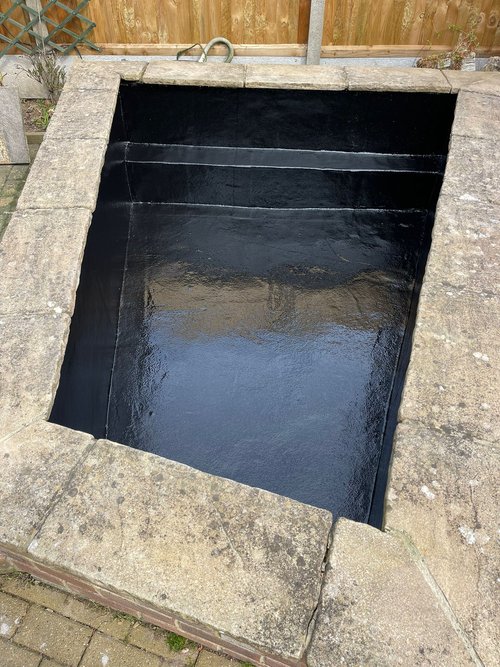
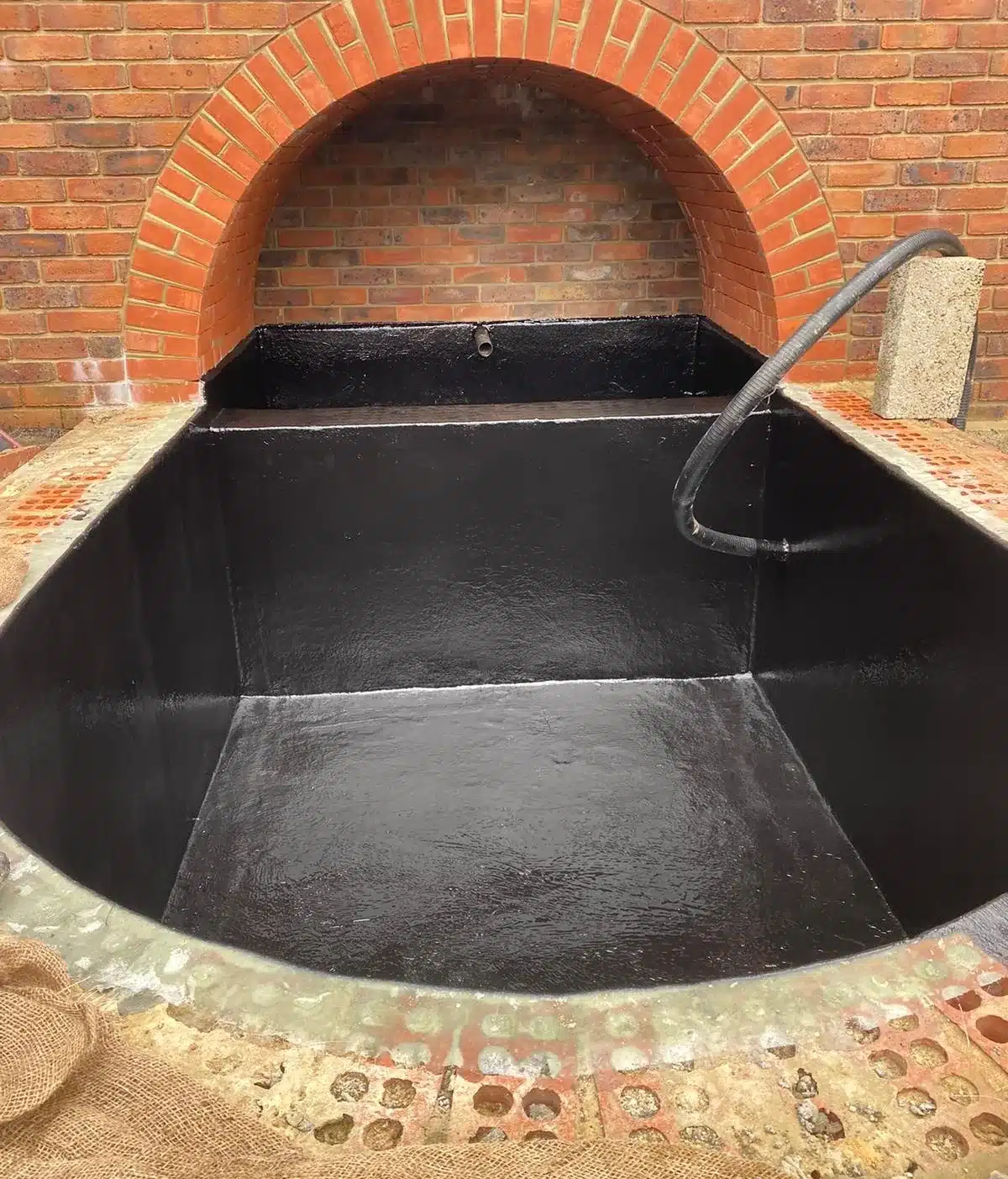
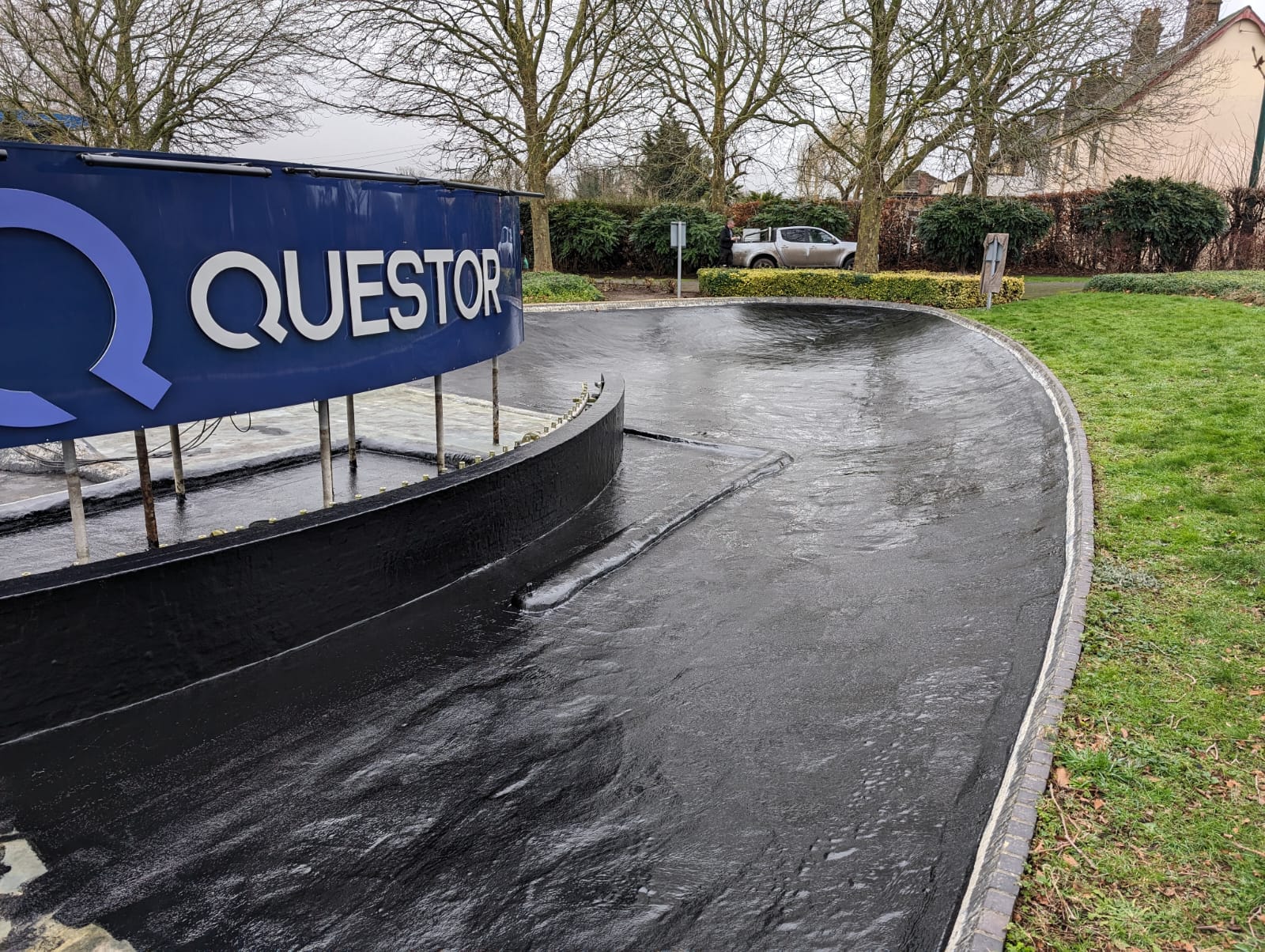
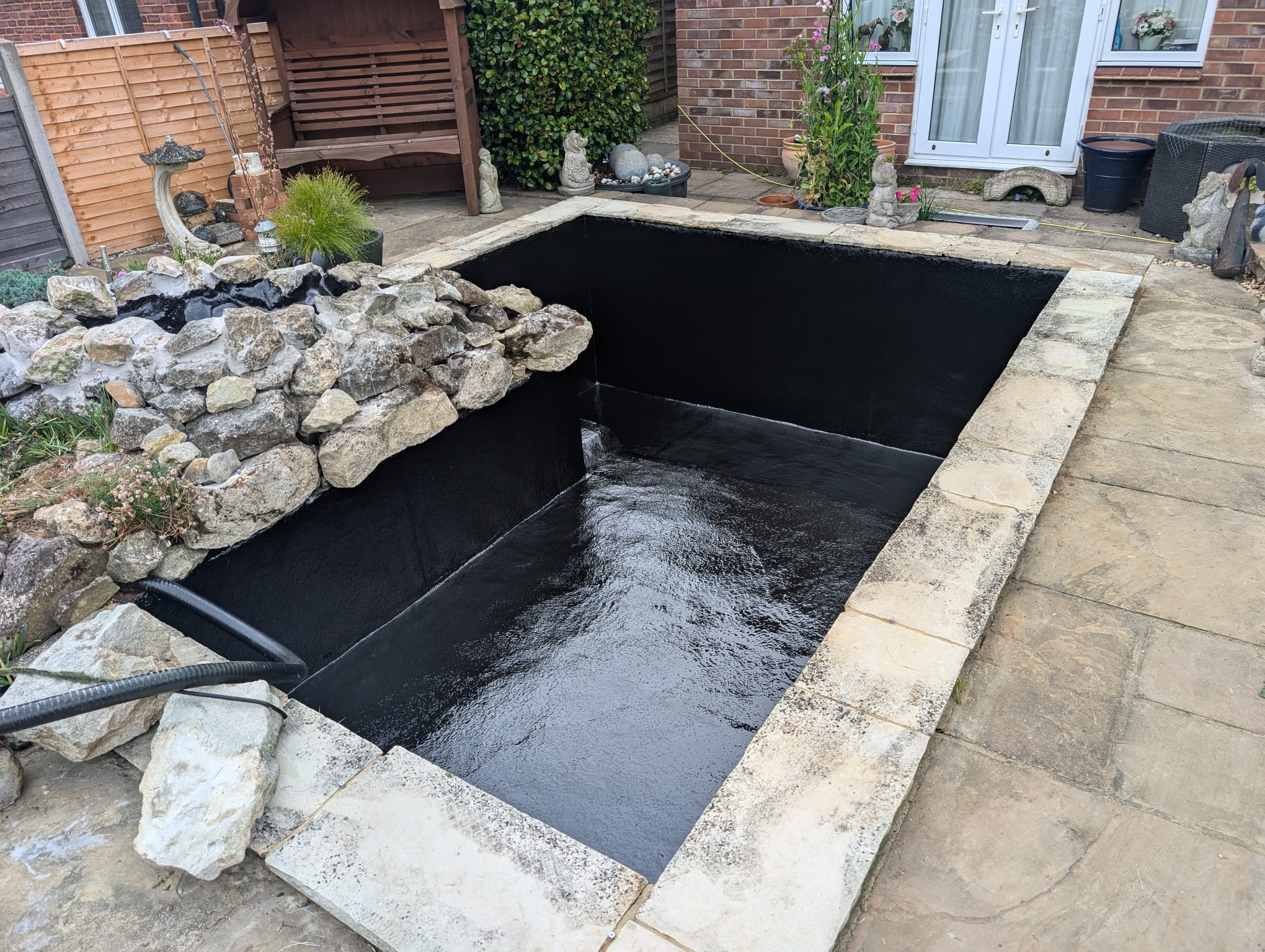
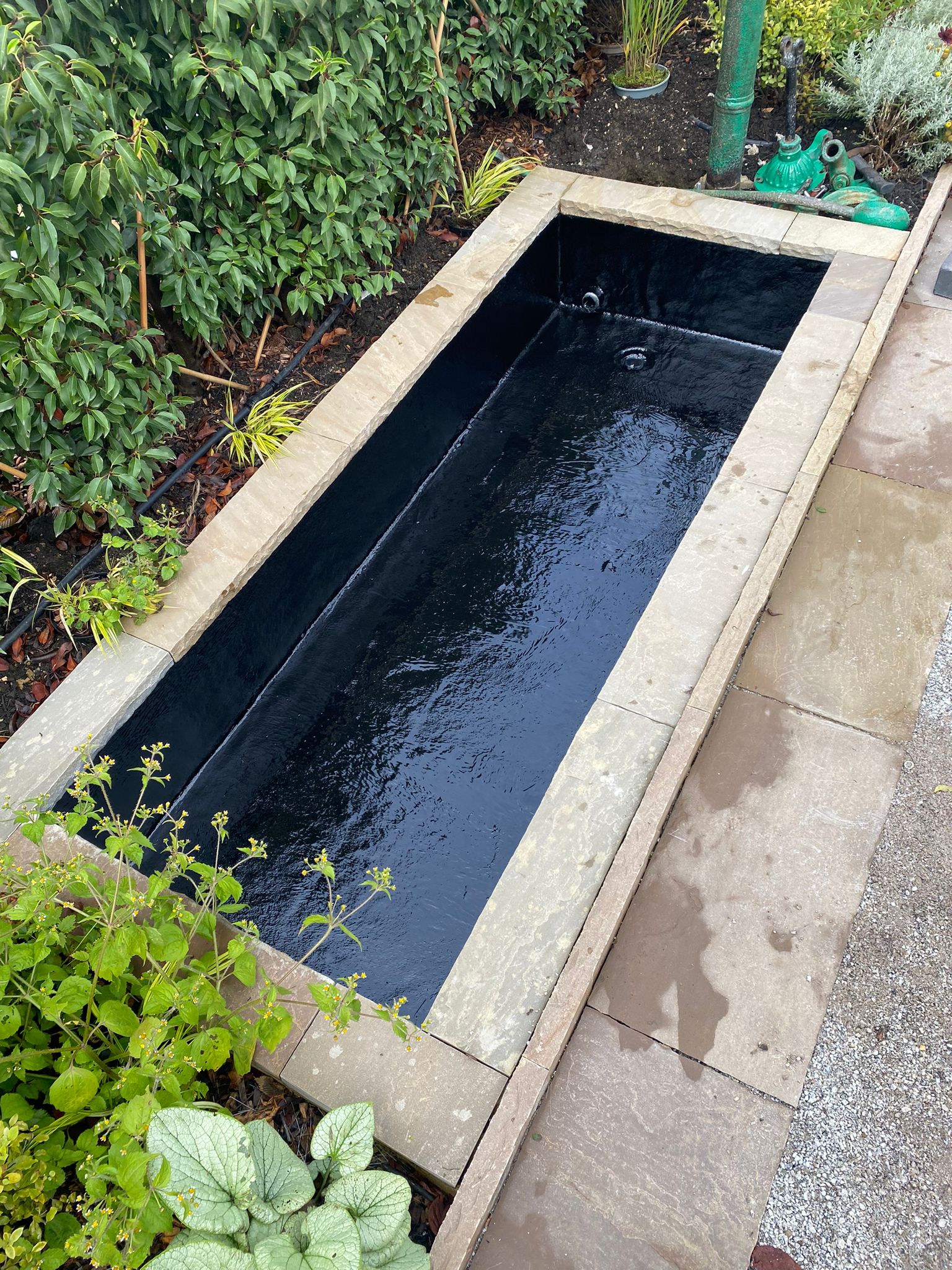
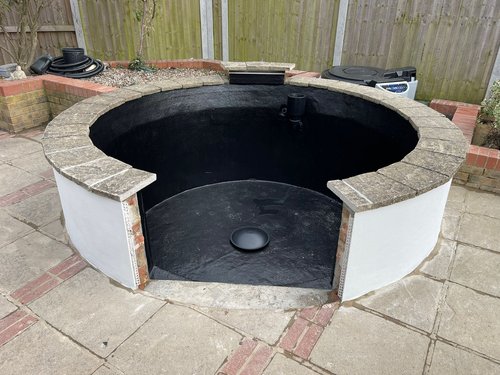
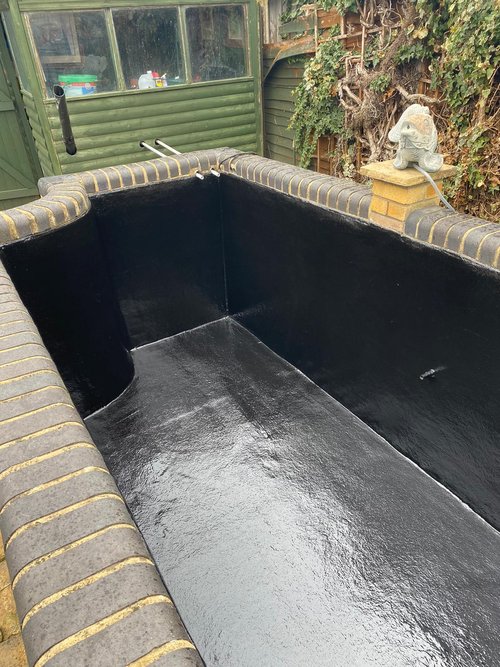
Fibreglass is particularly popular for koi ponds and formal pond designs where strength, reliability, and a neat internal finish are important. It allows for straight edges, smooth walls, and a more controlled water flow, which is harder to achieve with traditional liner systems.
We can carry out full fibreglass installations, repairs, and conversions, including upgrading existing liner ponds to fibreglass. Whether you are starting from scratch or improving an older pond, fibreglass offers a long term solution that is built to last.
Why choose fibreglass for ponds
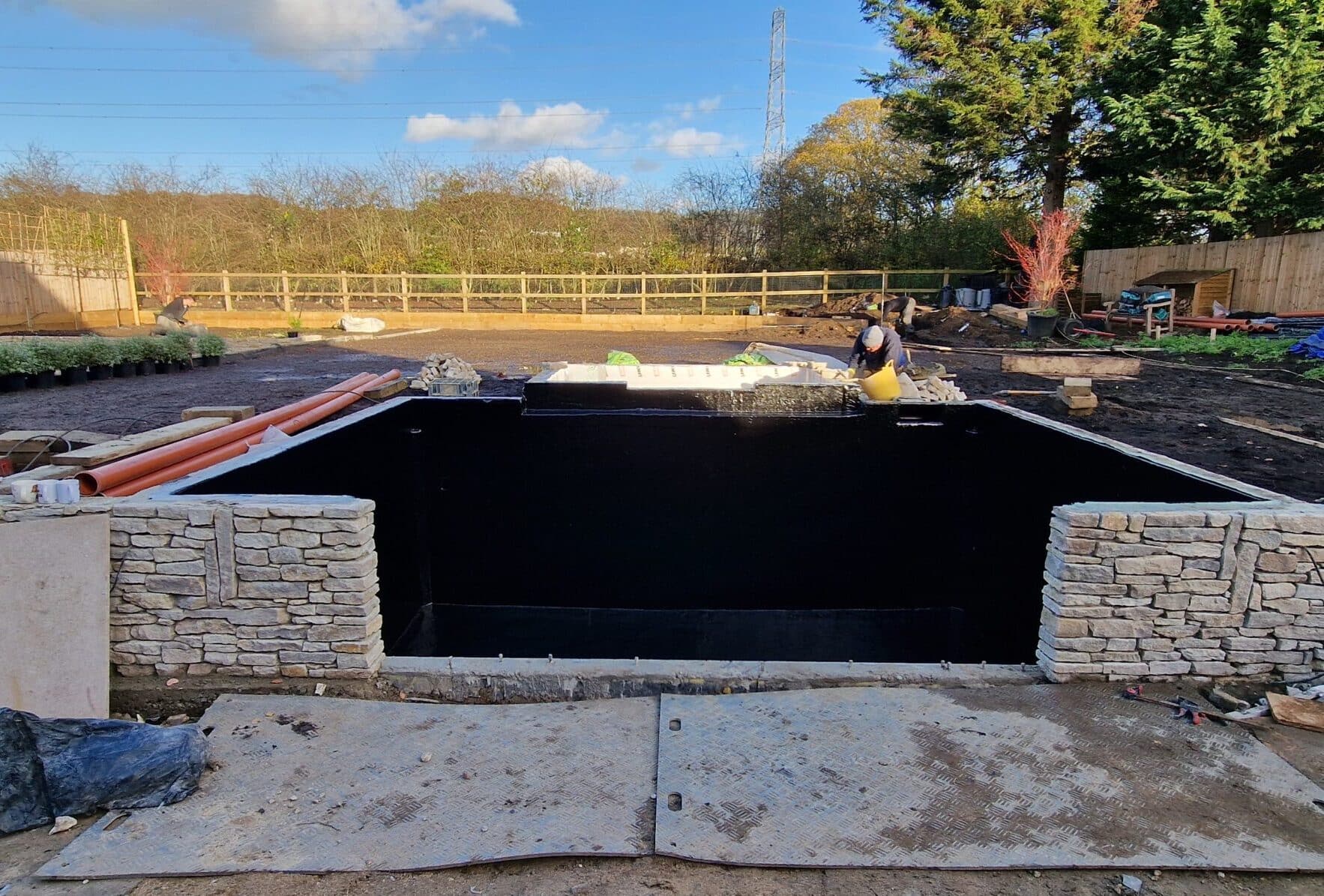
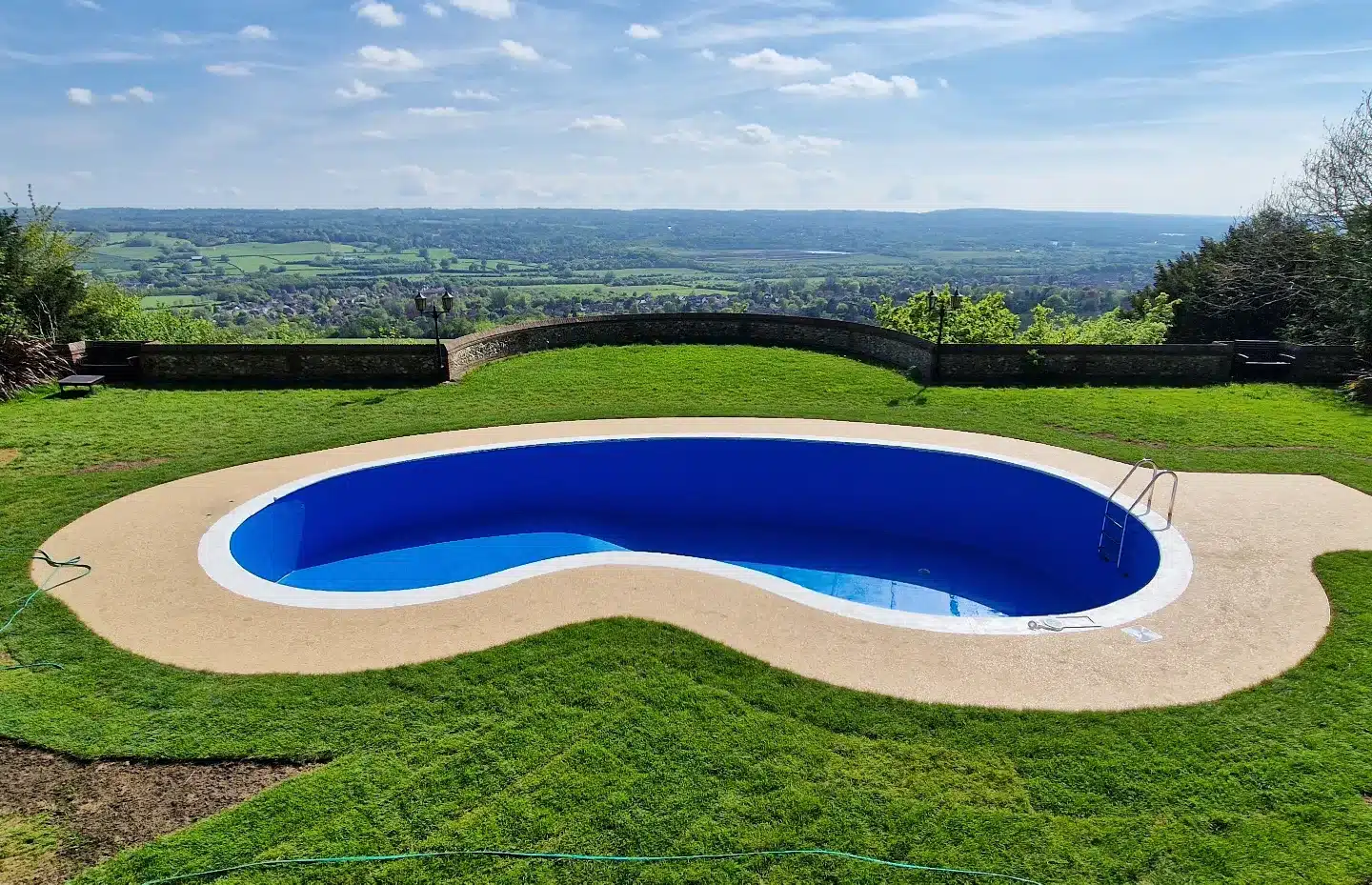
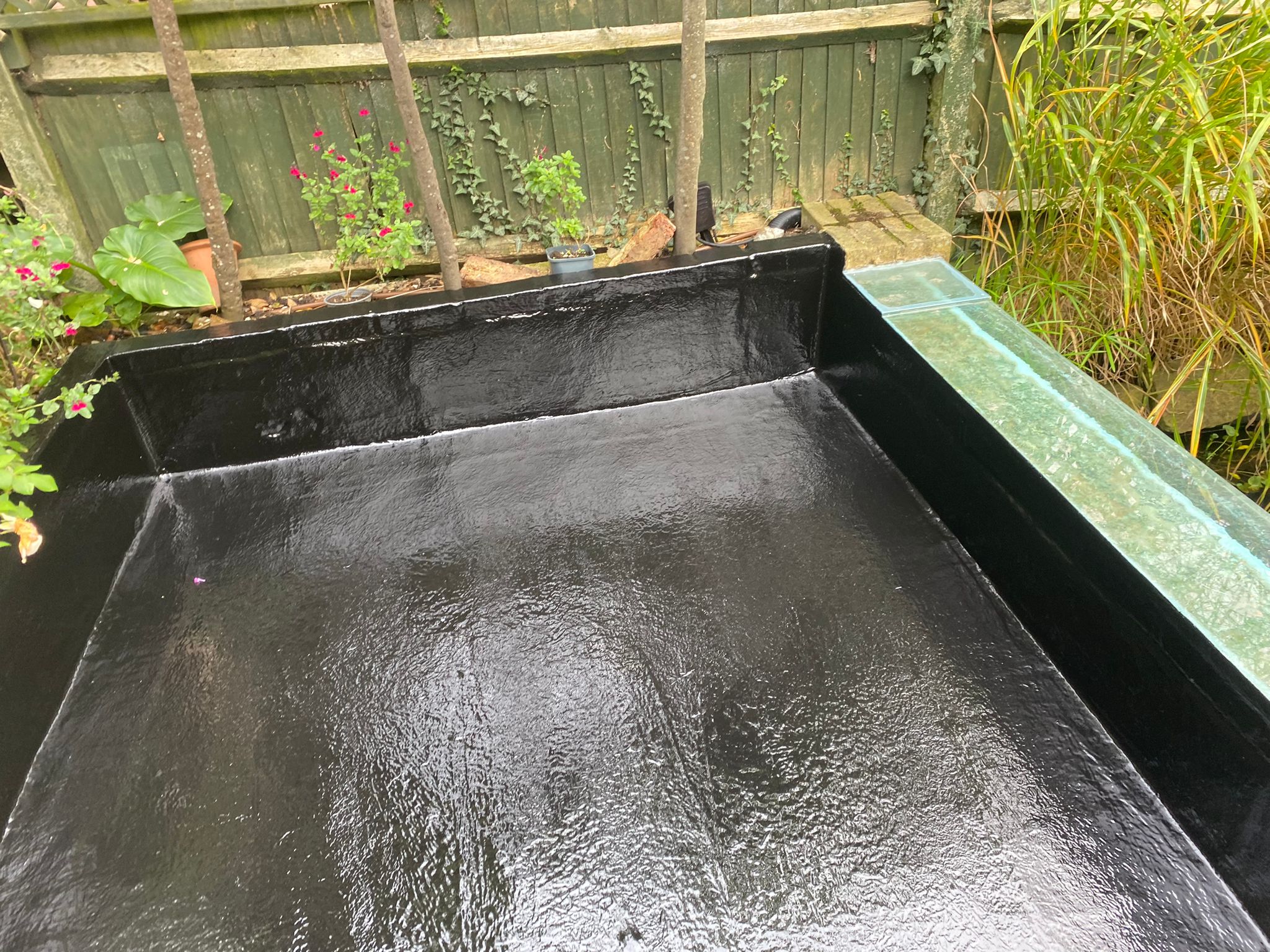
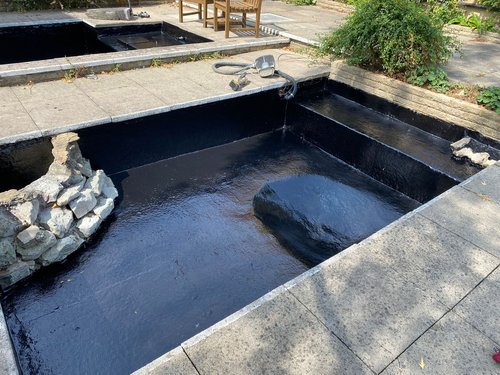
Fibreglass is one of the most reliable ways to create a watertight, long lasting pond finish. It is widely used in both domestic and professional pond builds due to its strength, longevity, and versatility. Unlike flexible liners or painted finishes, fibreglass forms a solid, continuous shell that bonds directly to the structure beneath it. This creates a fully sealed and durable finish that does not move or shift over time.
Once installed, a fibreglass lining resists UV exposure, temperature changes, ground movement, and everyday wear. This greatly reduces the risk of leaks, splitting, or gradual deterioration. The seamless finish also helps maintain consistent water levels, reducing water loss and the need for frequent top ups.
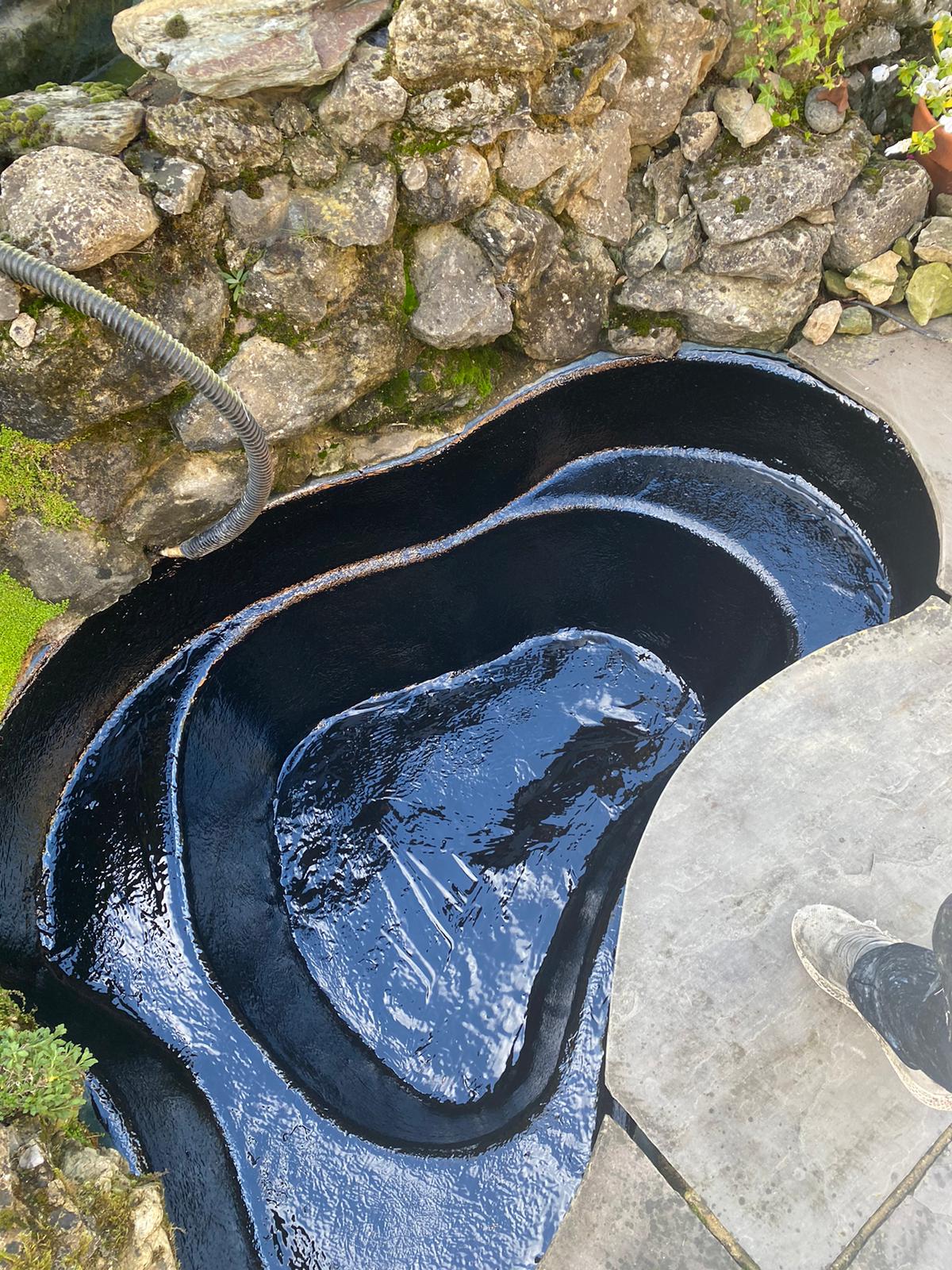
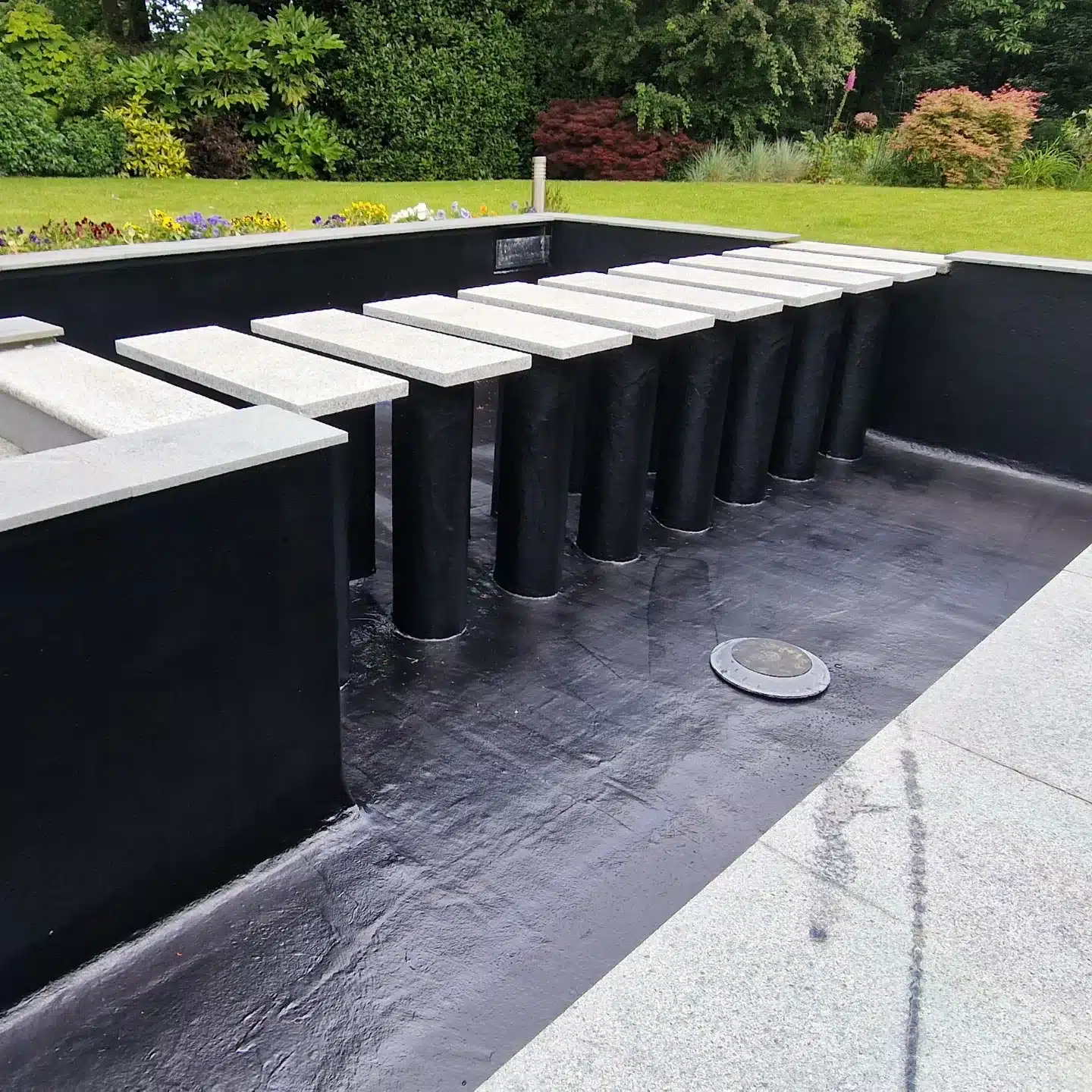
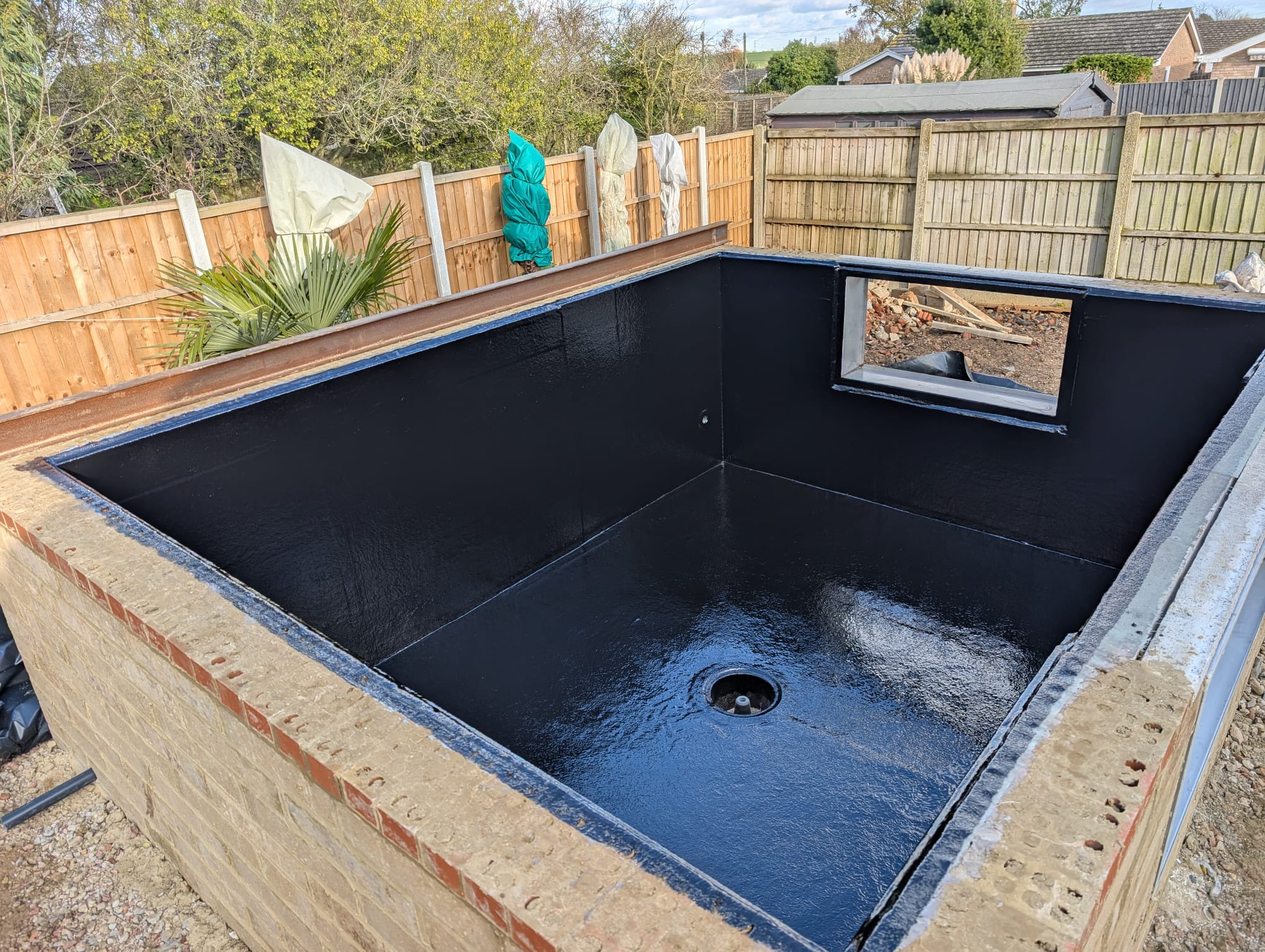
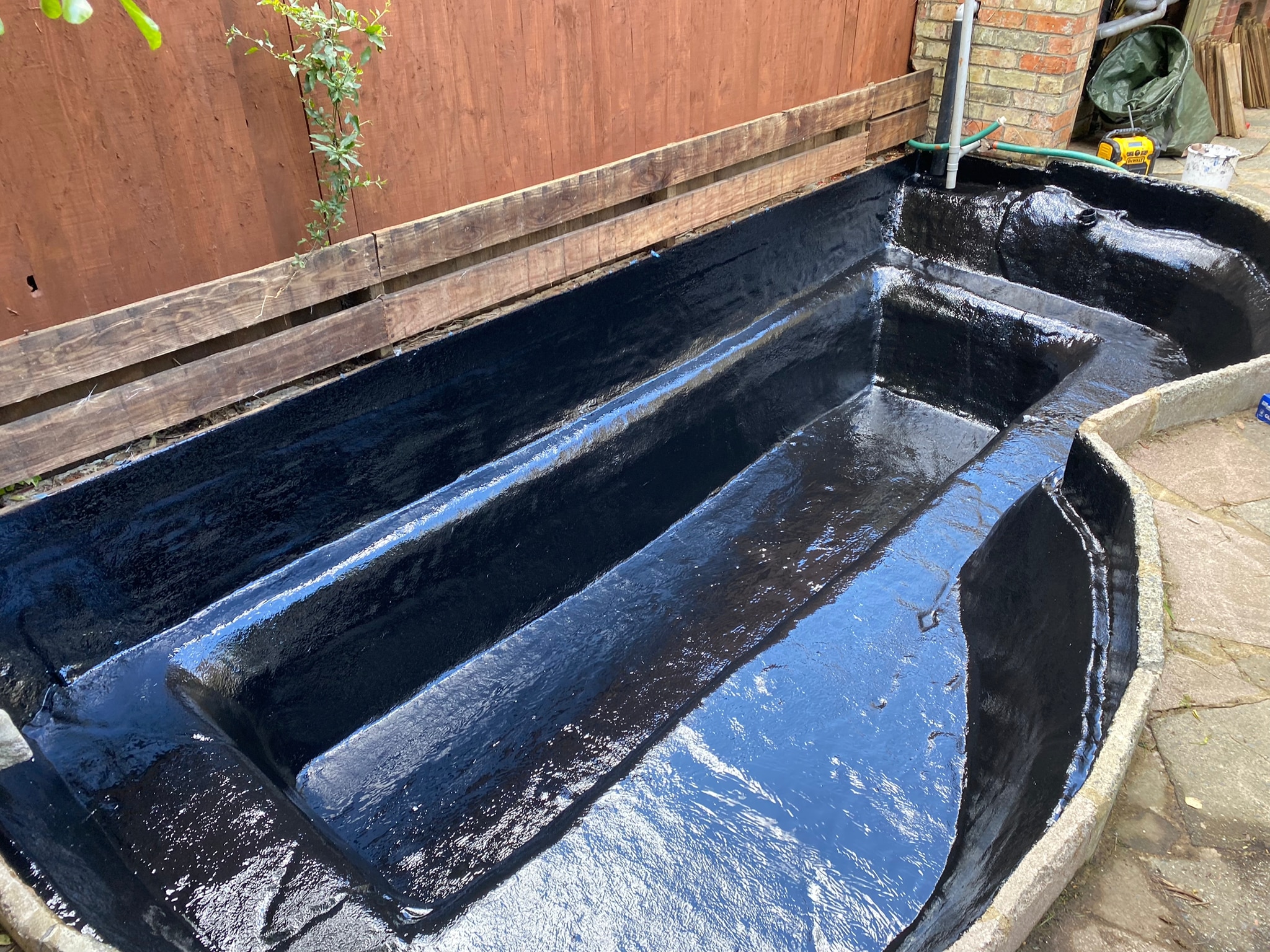
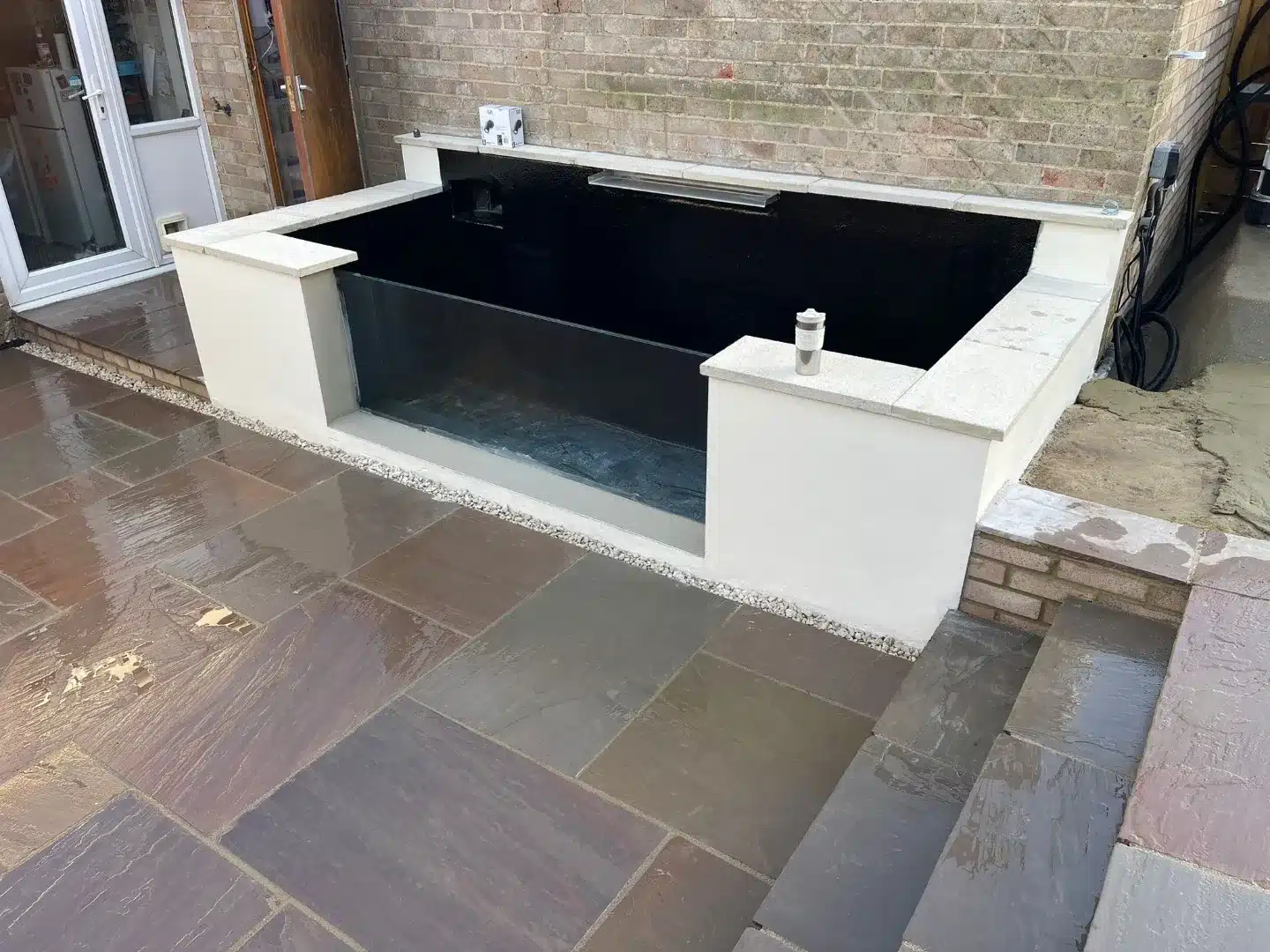
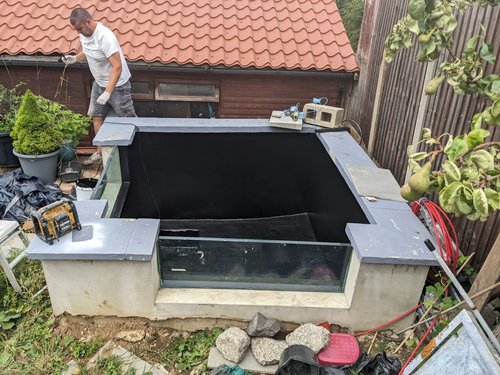
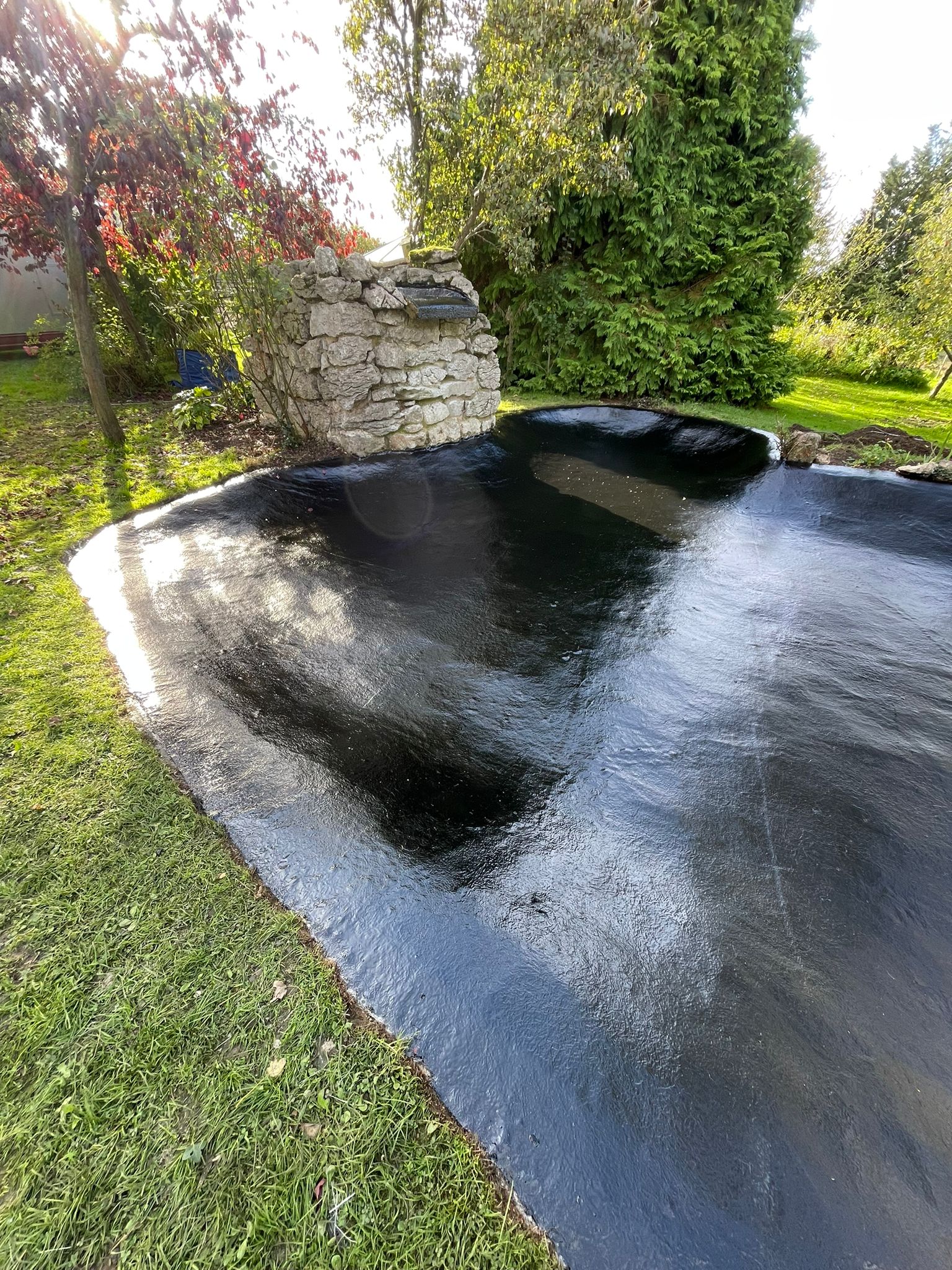
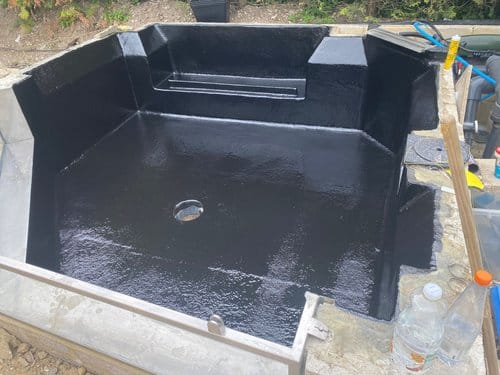
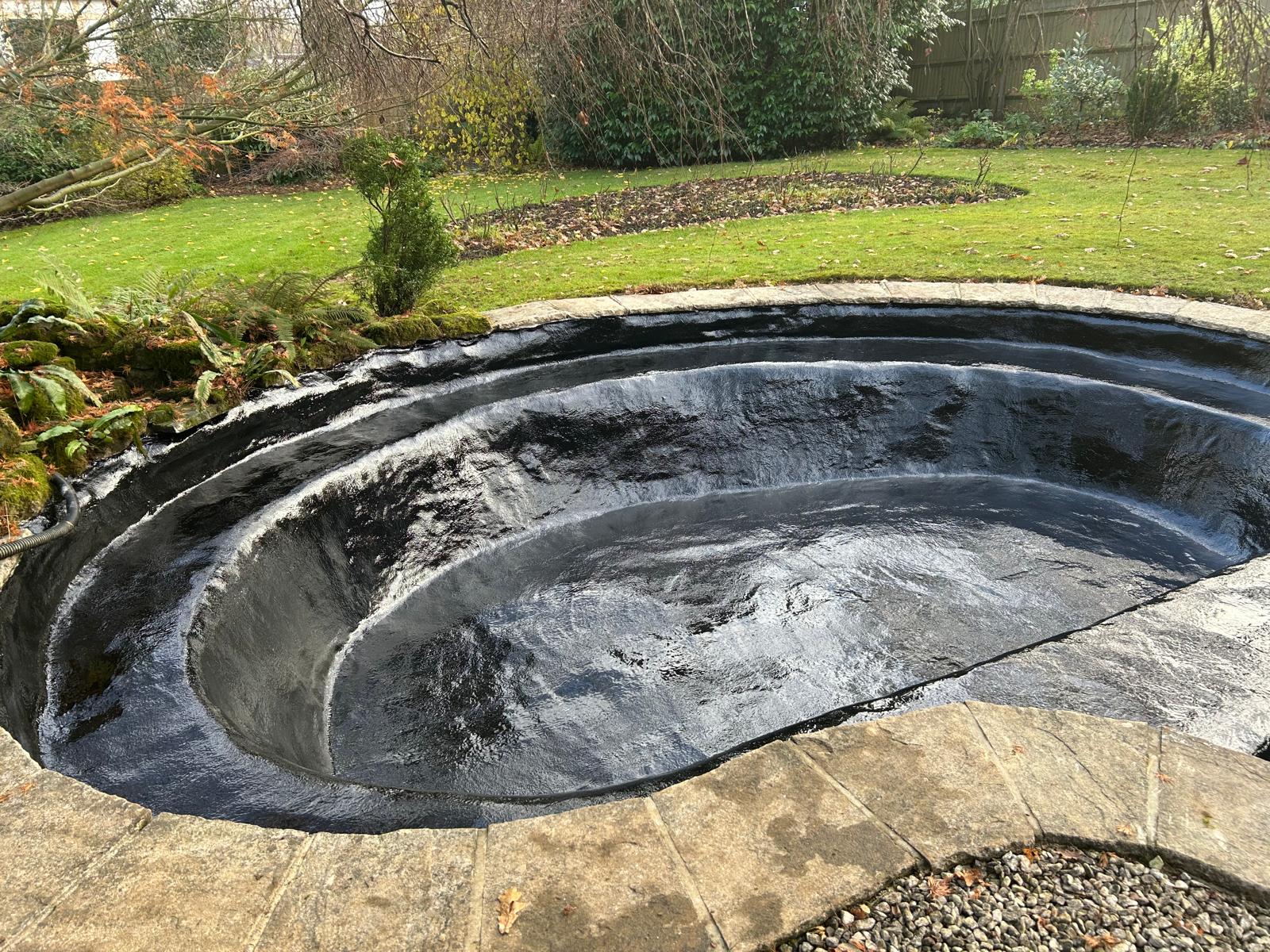
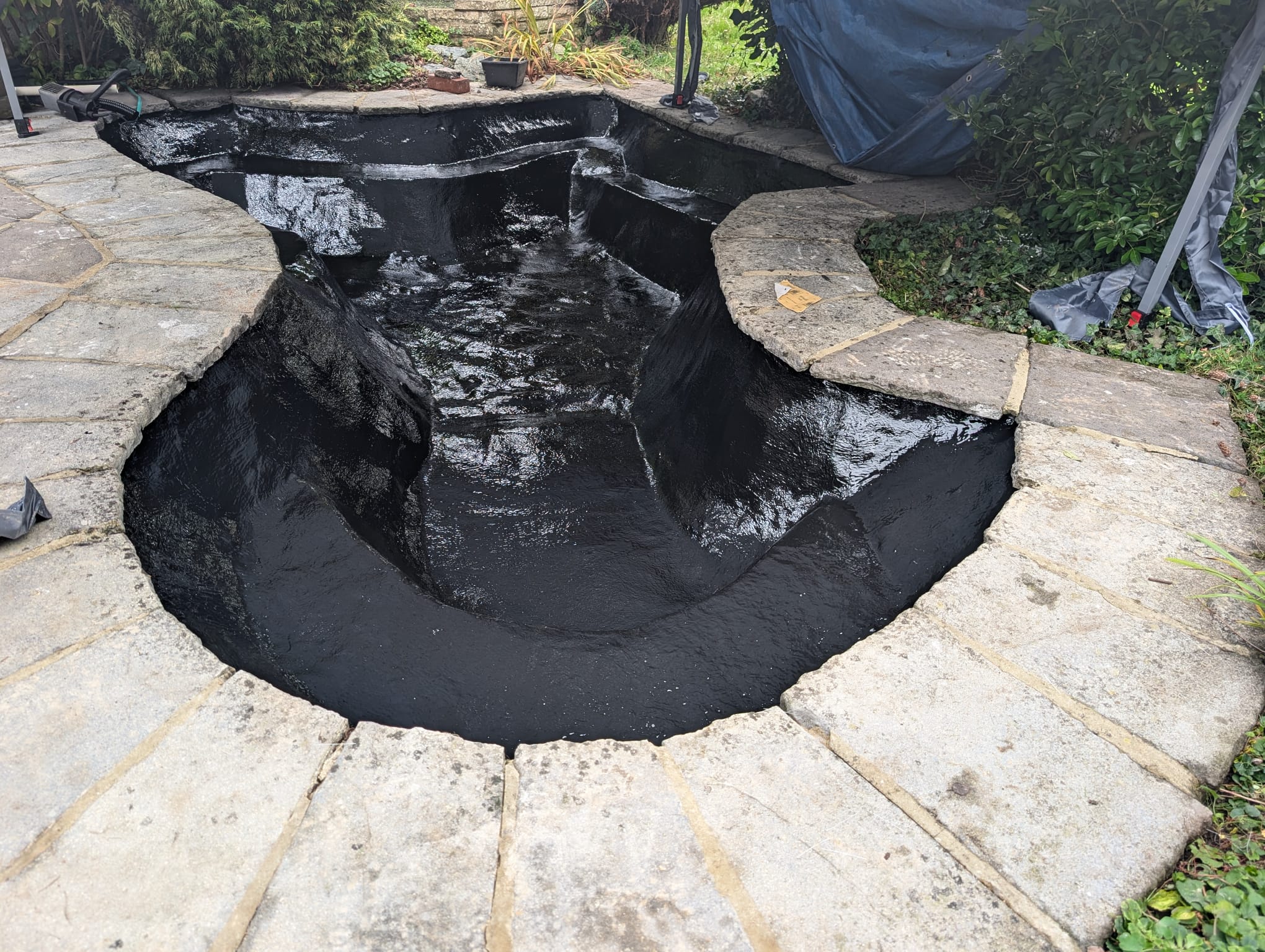
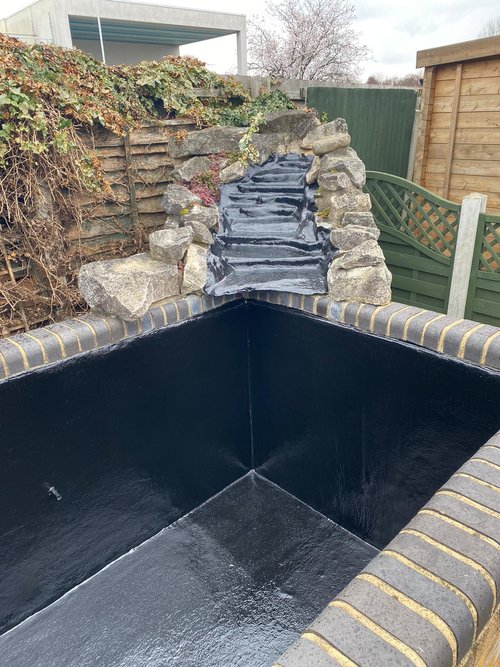
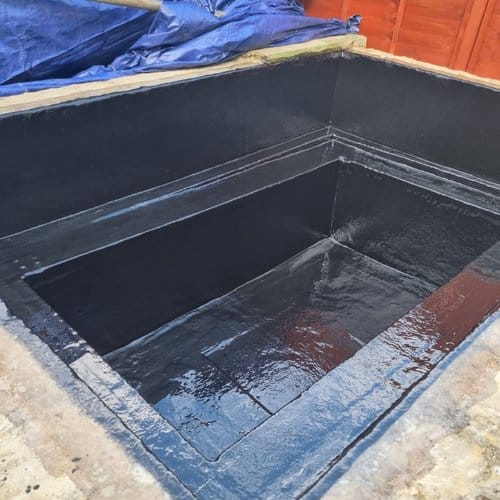
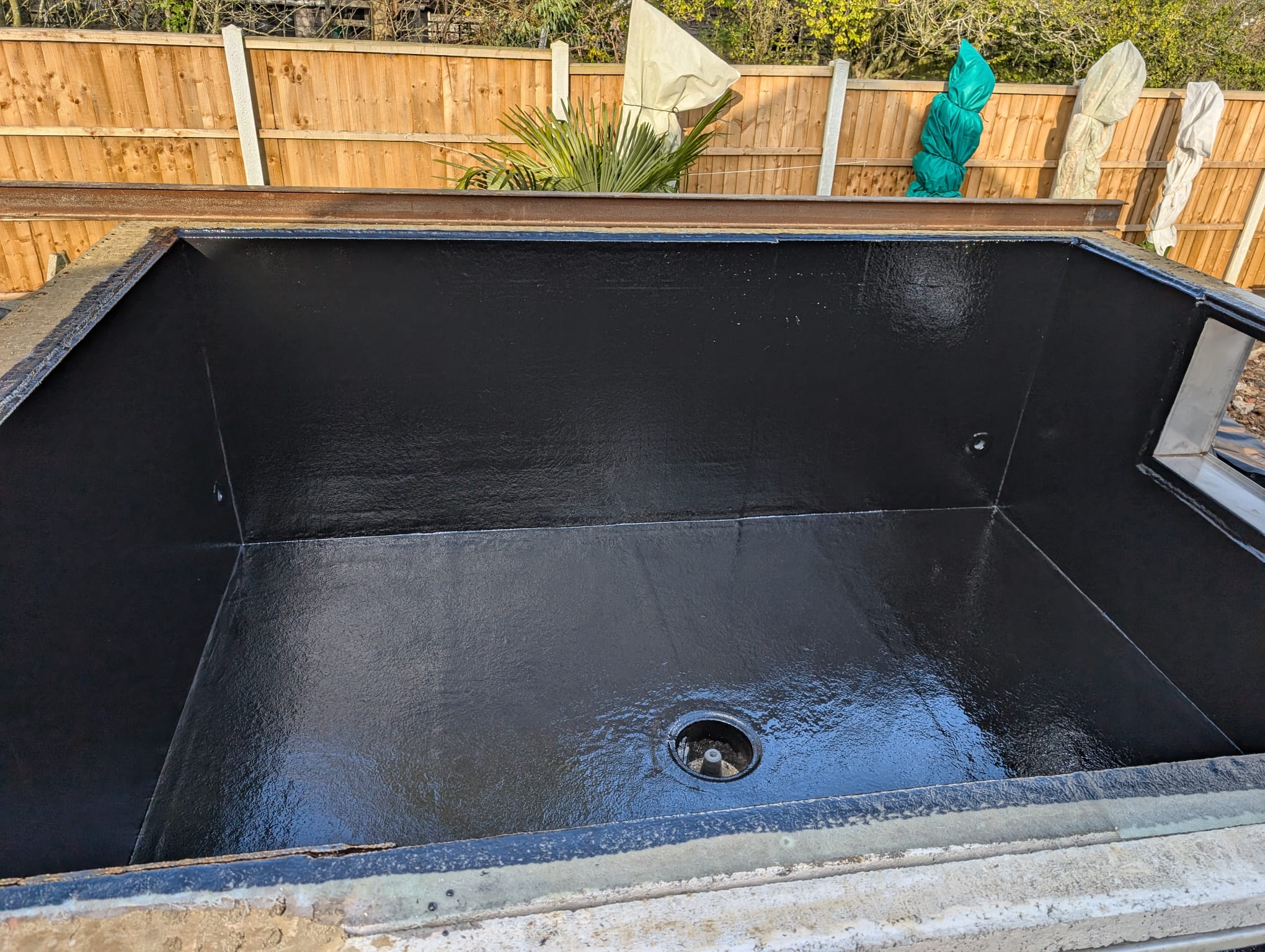
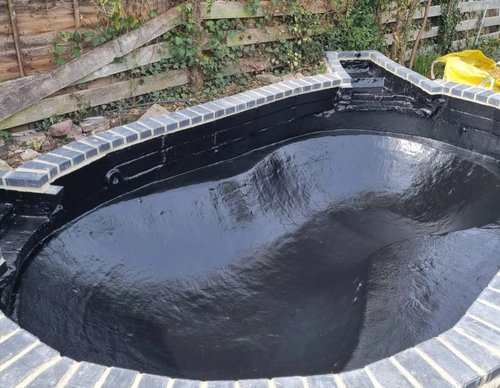
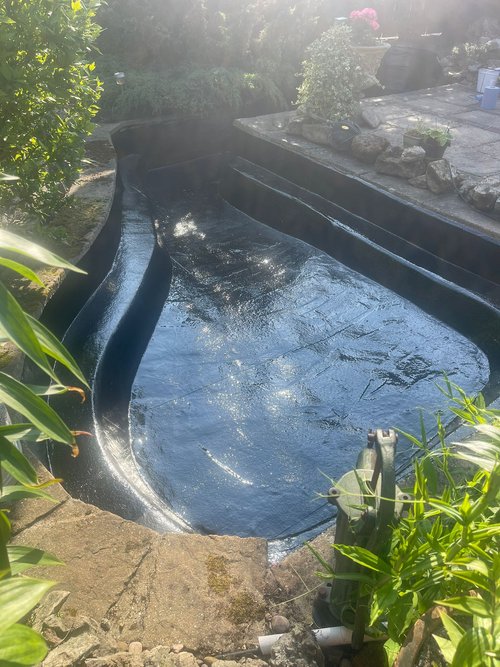
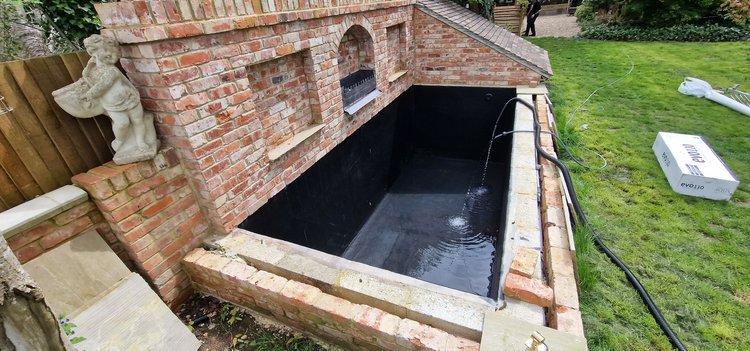
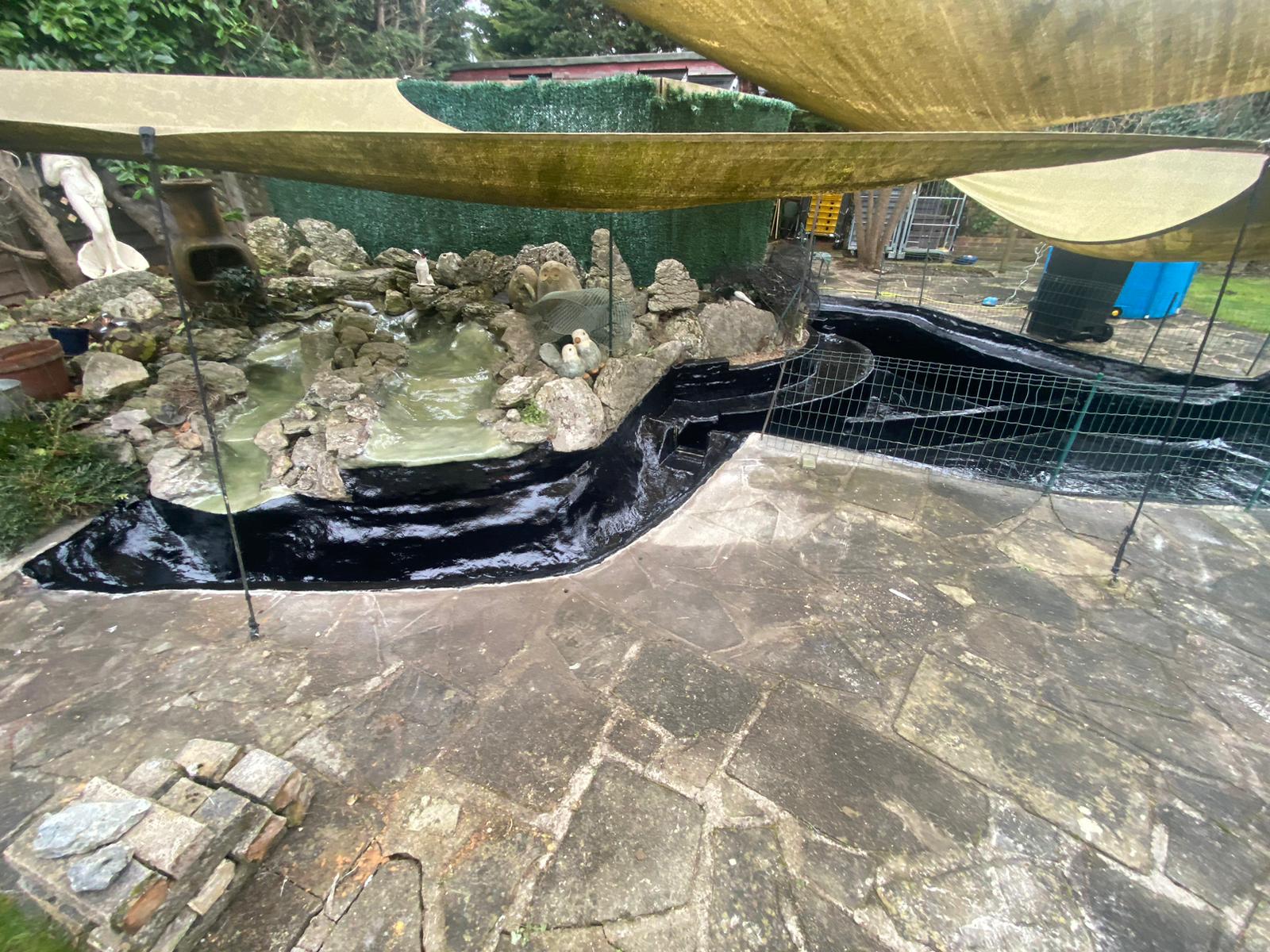
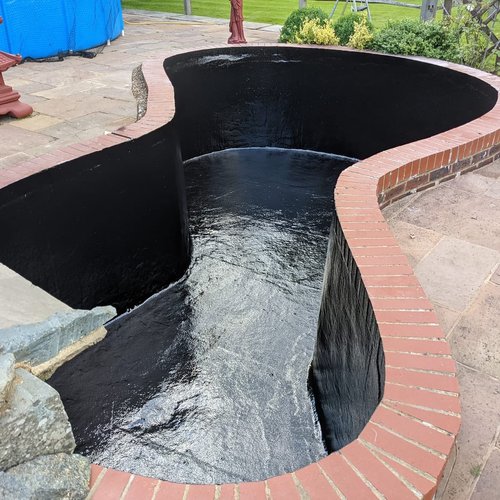
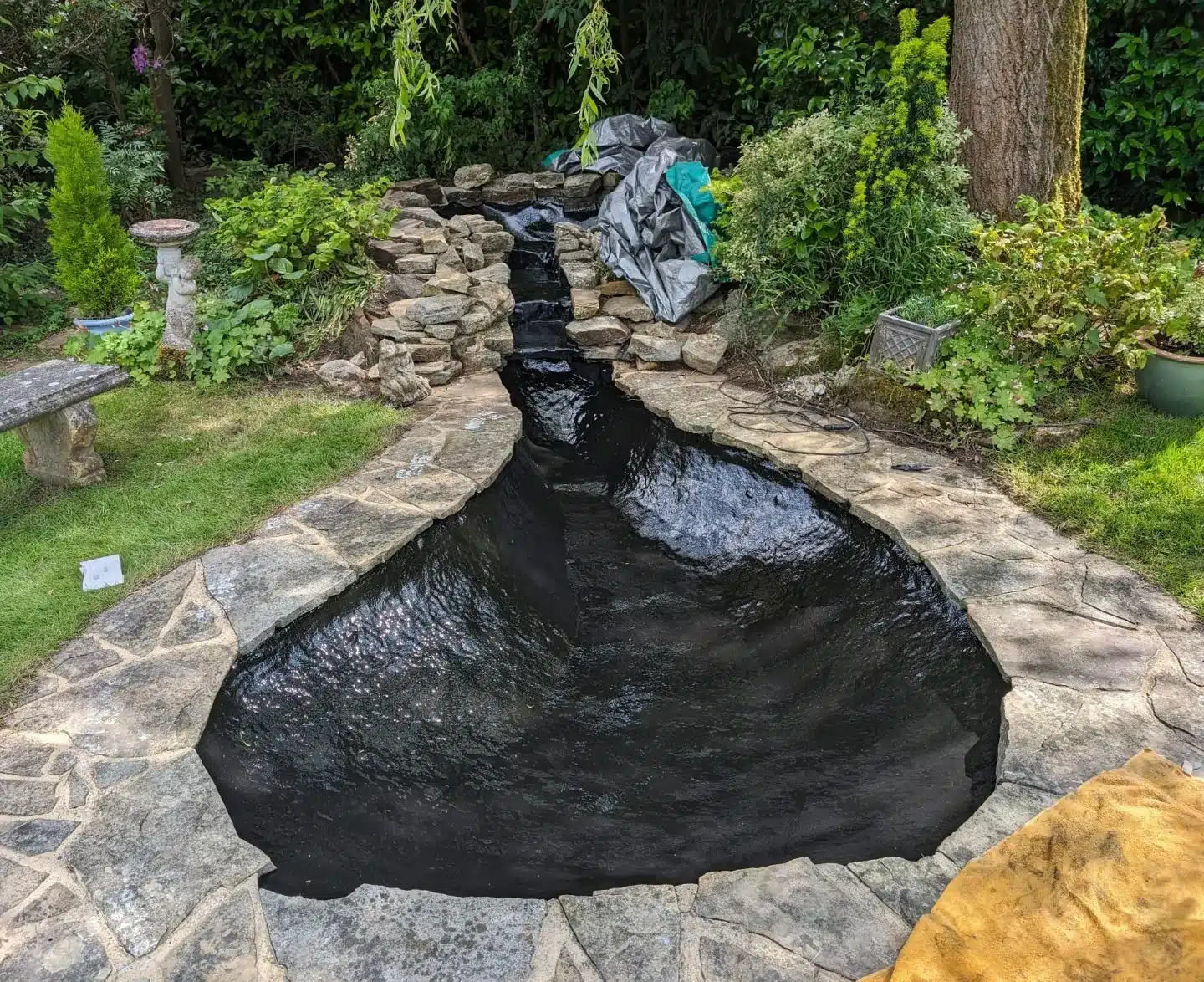
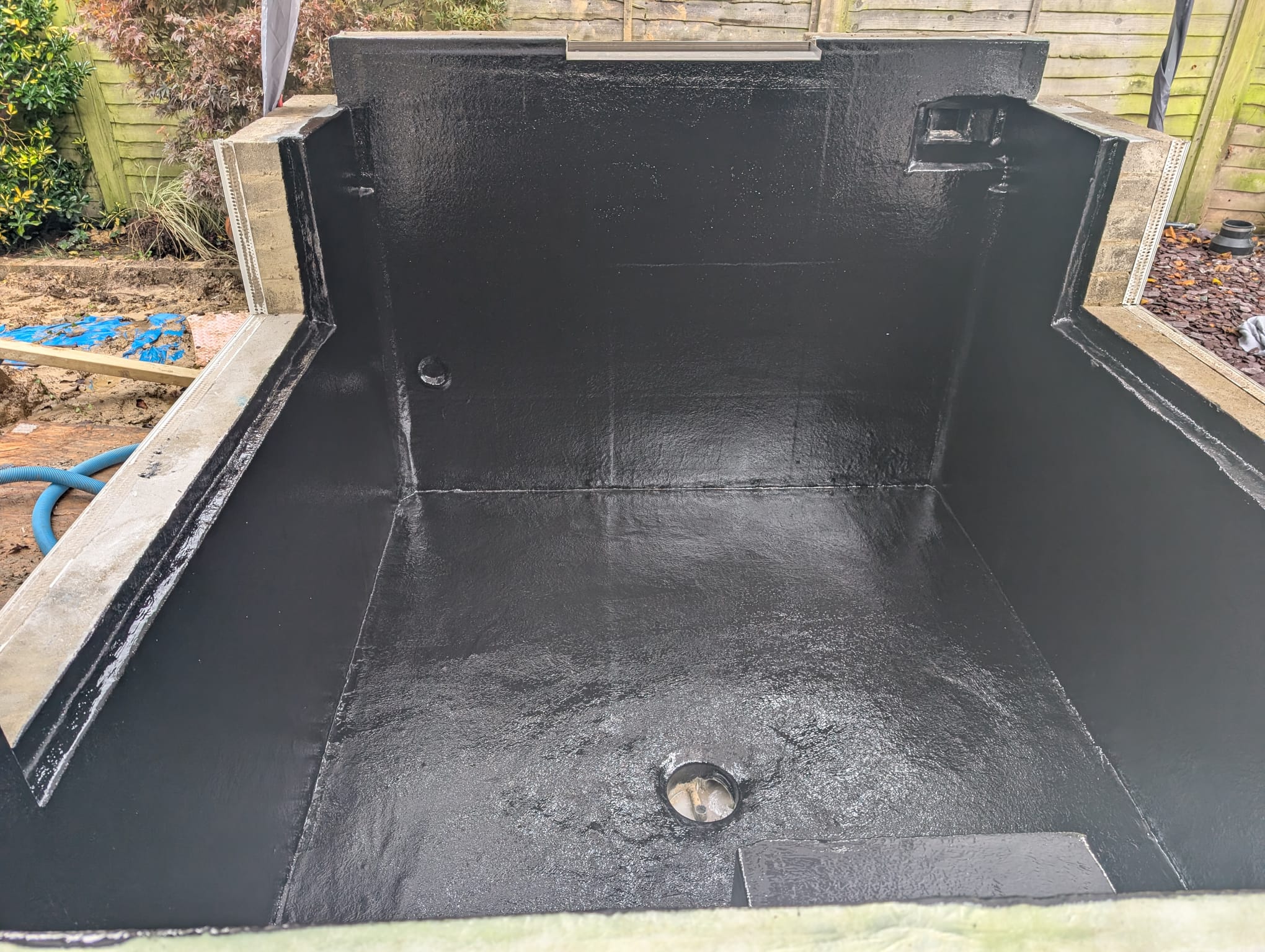
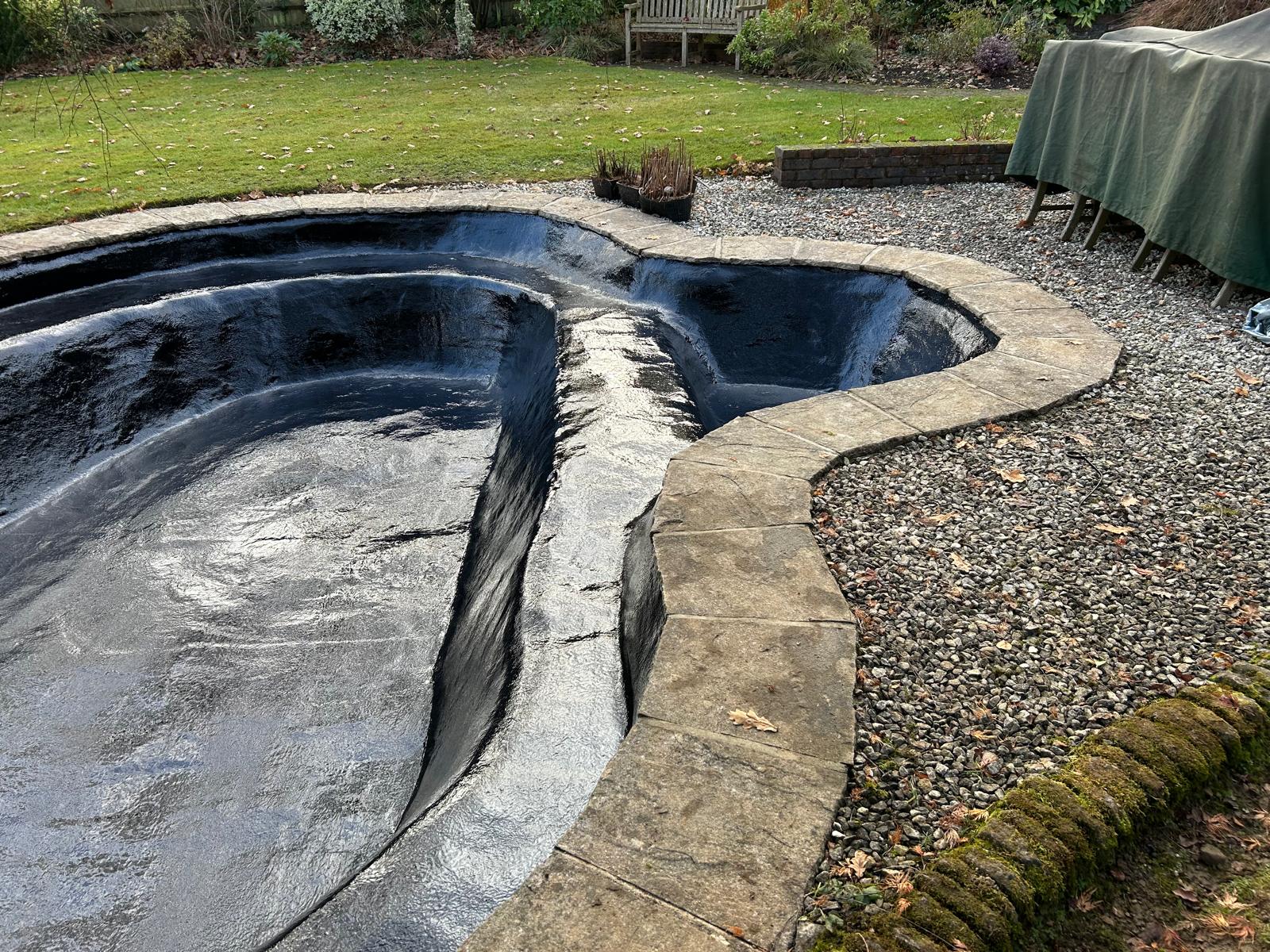
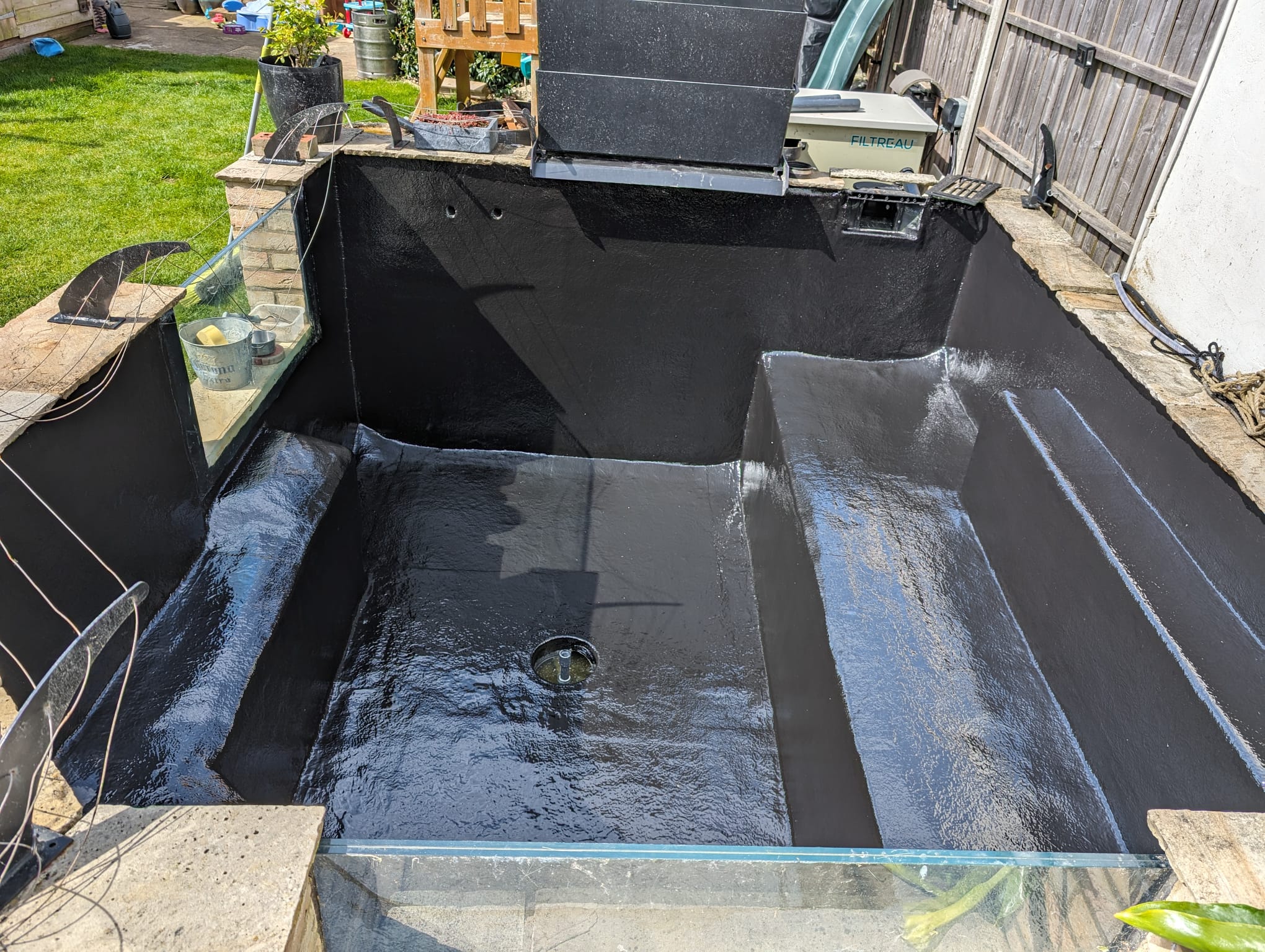
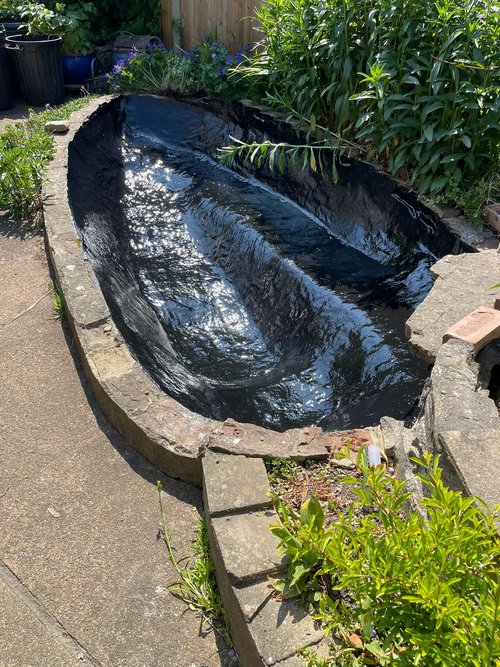
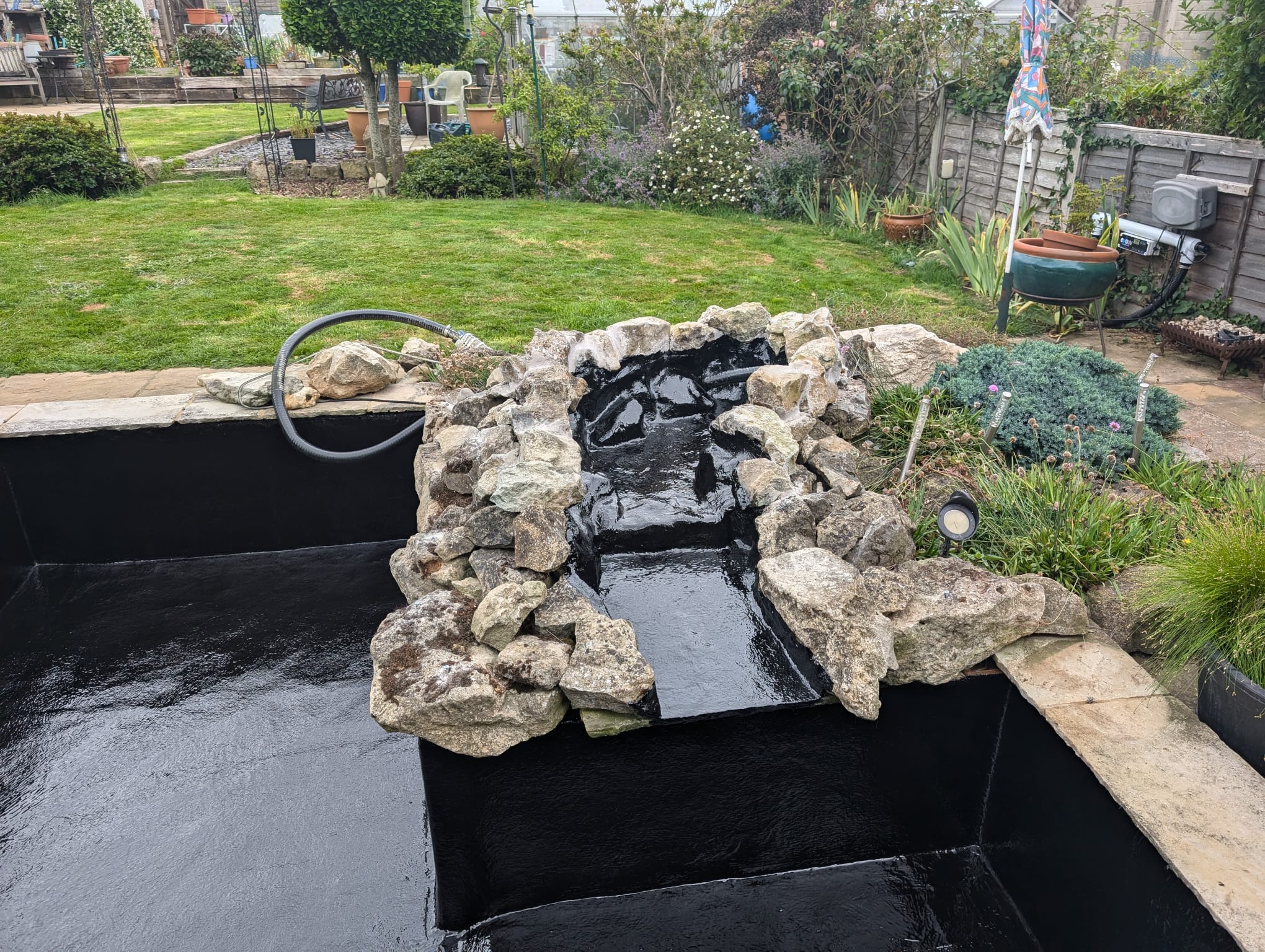
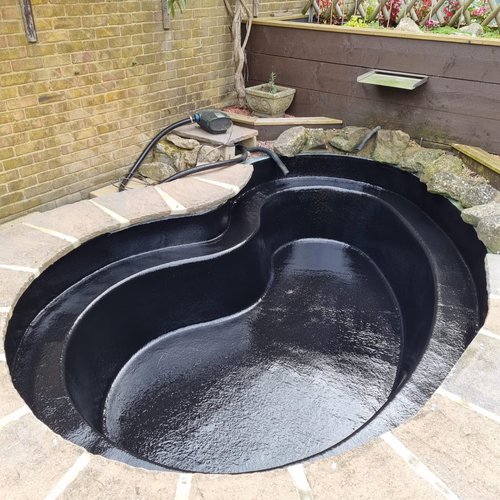
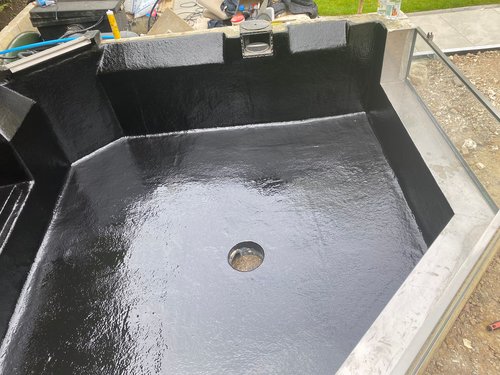
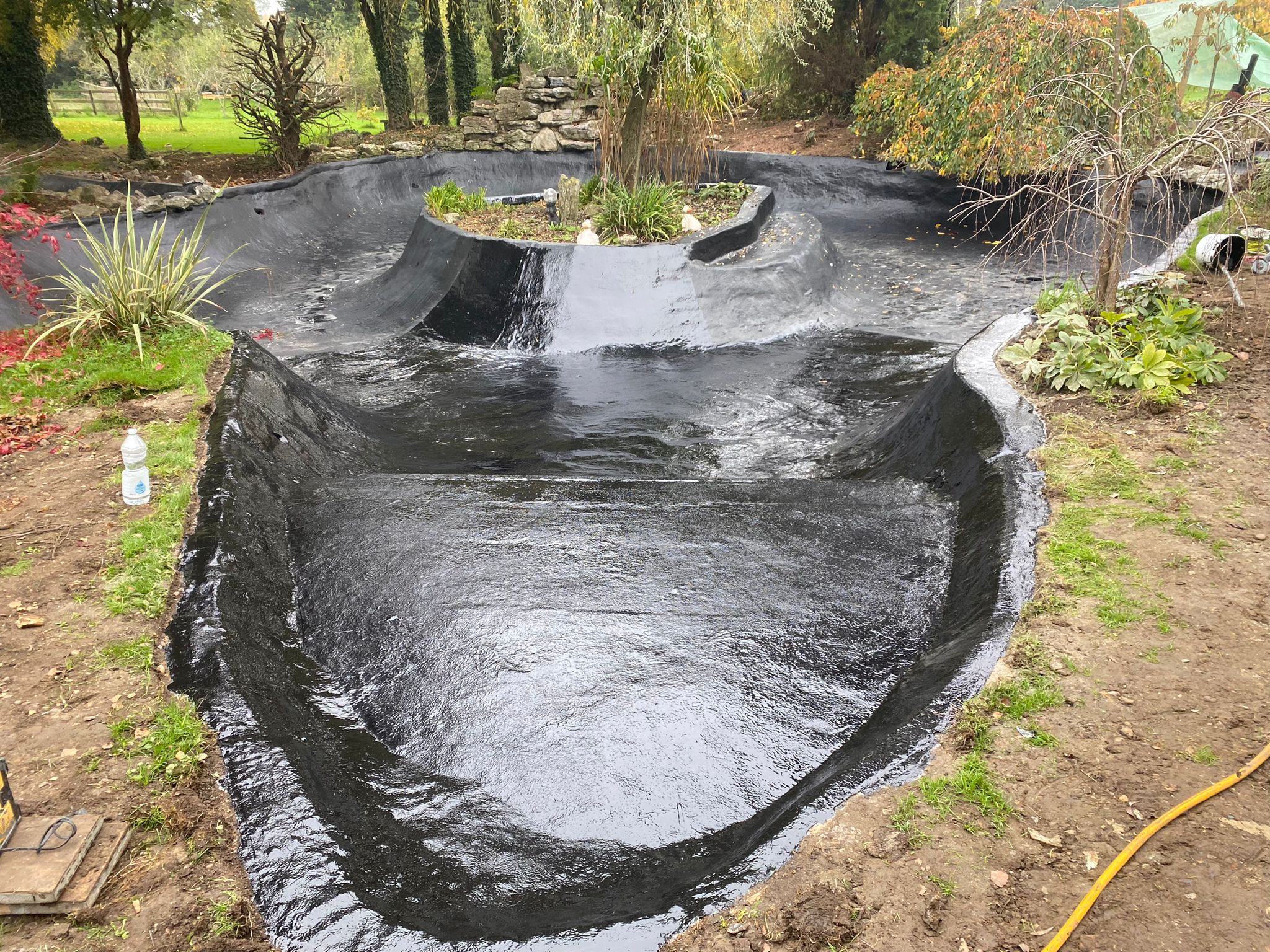
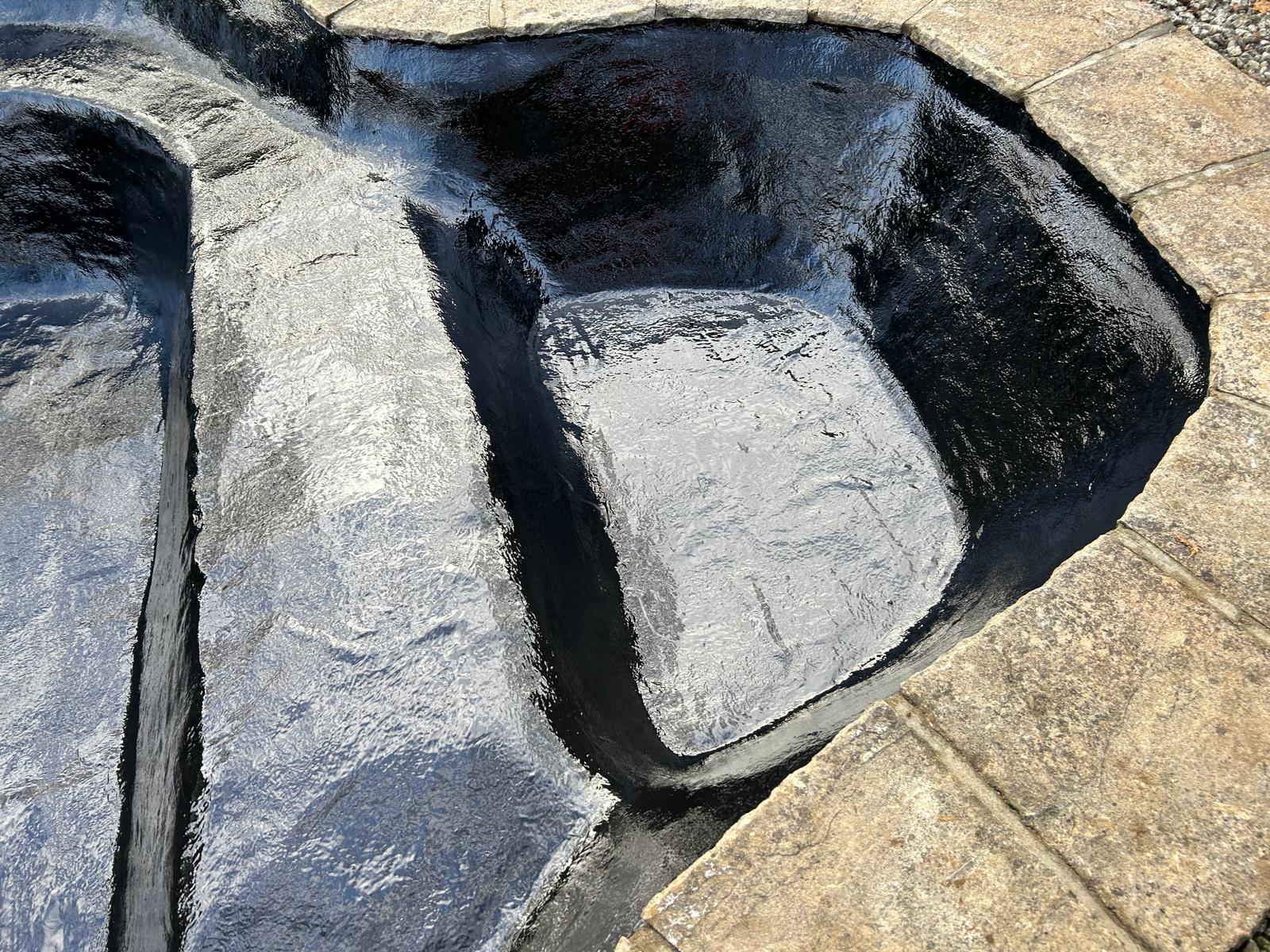
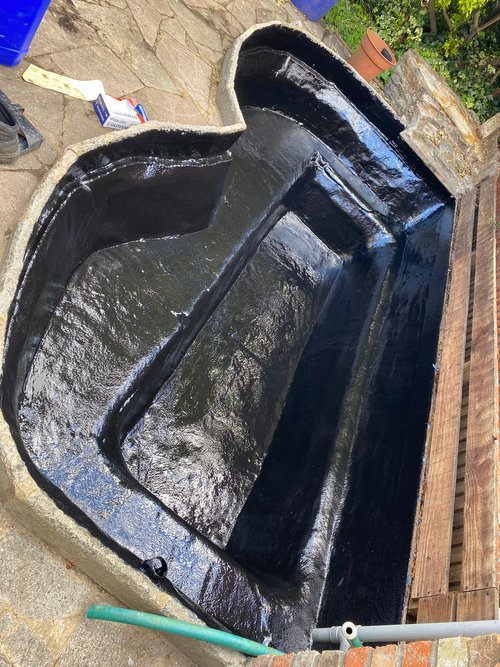
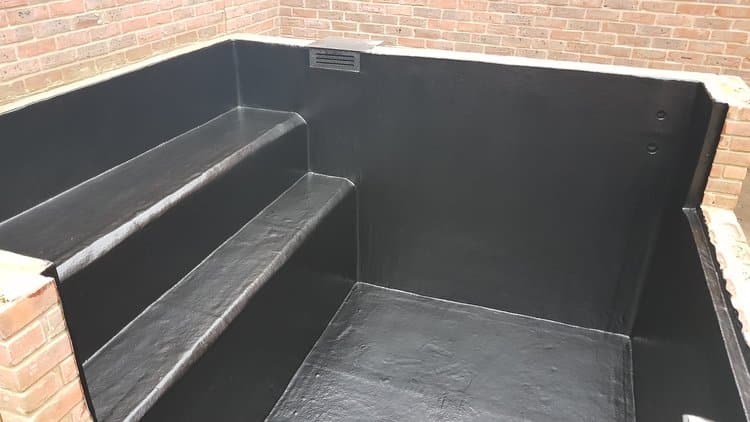
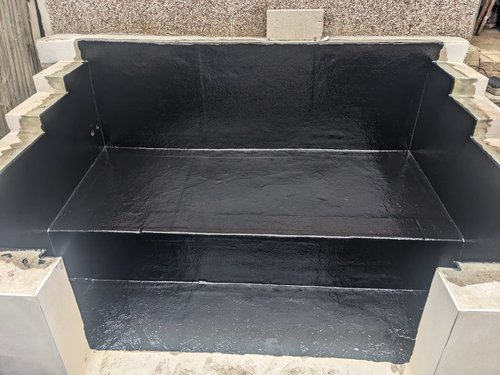
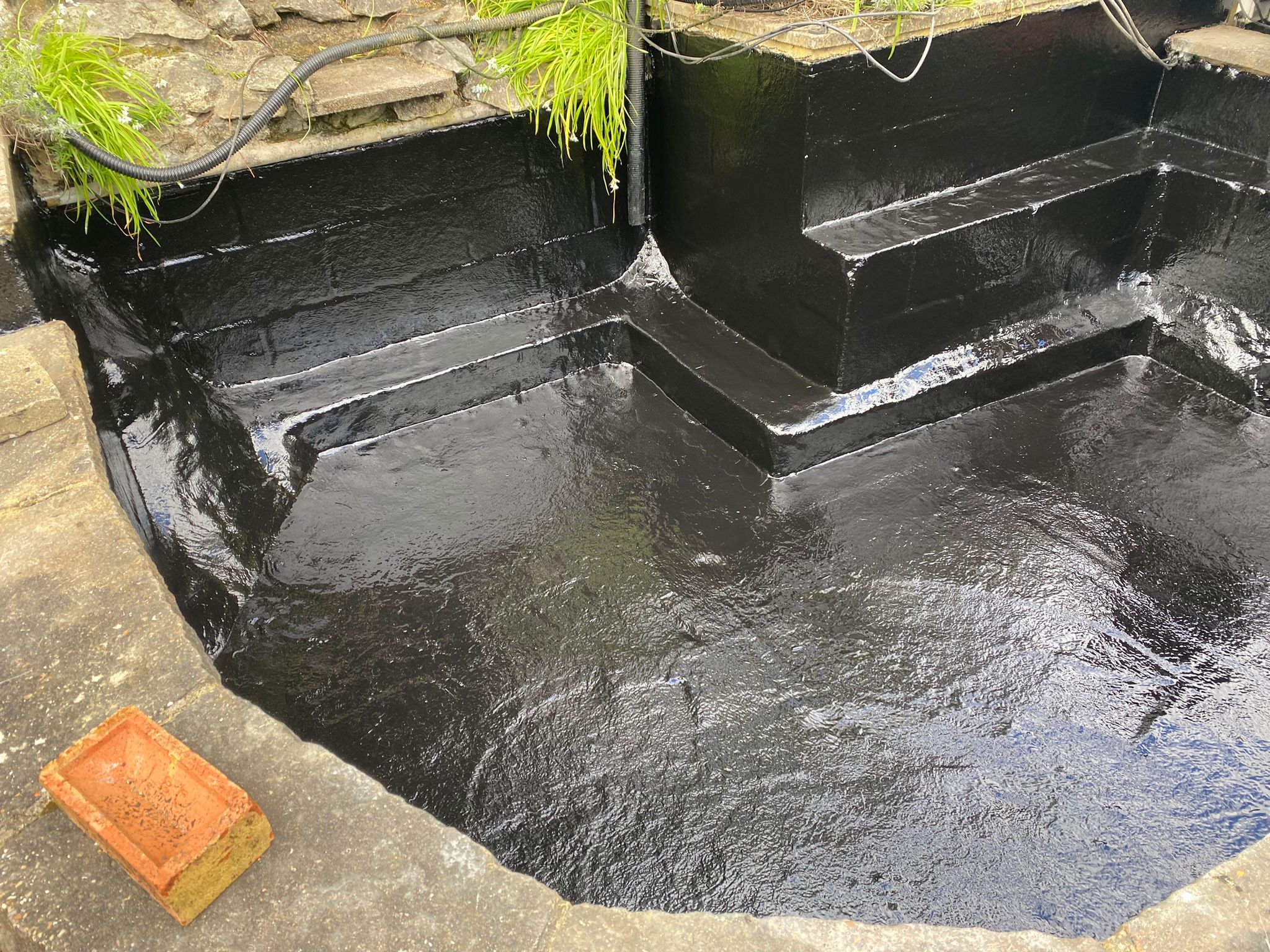
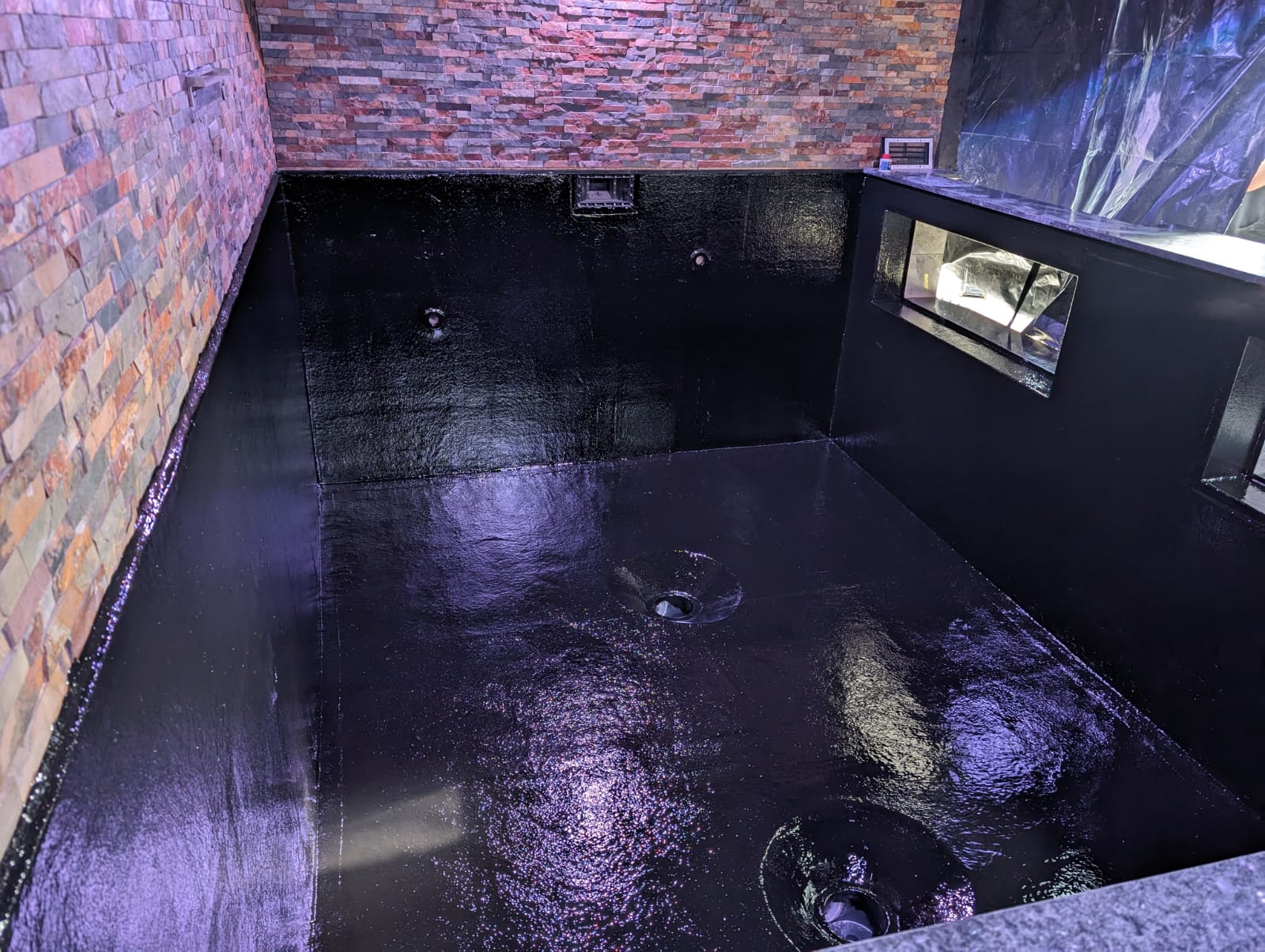
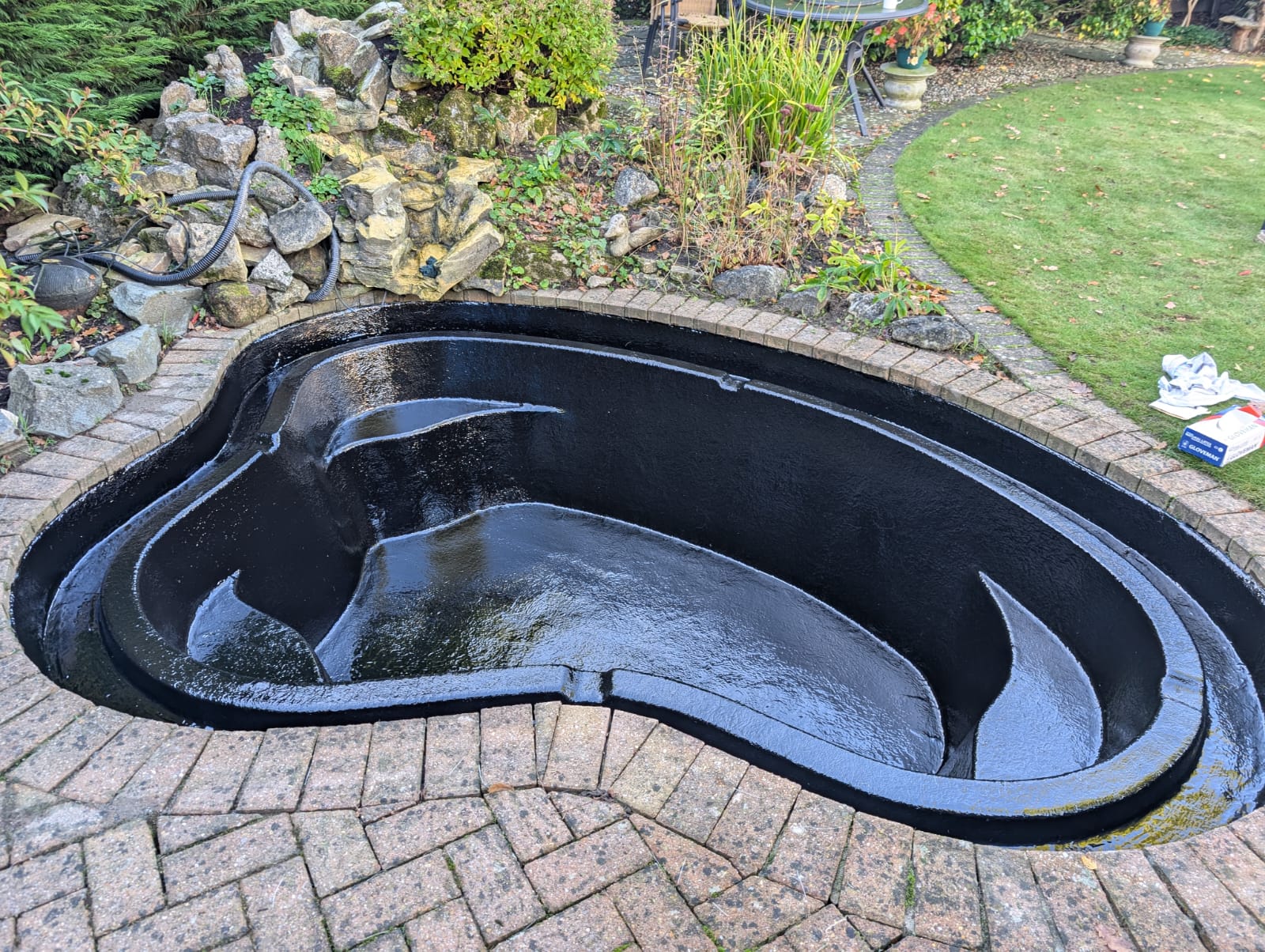
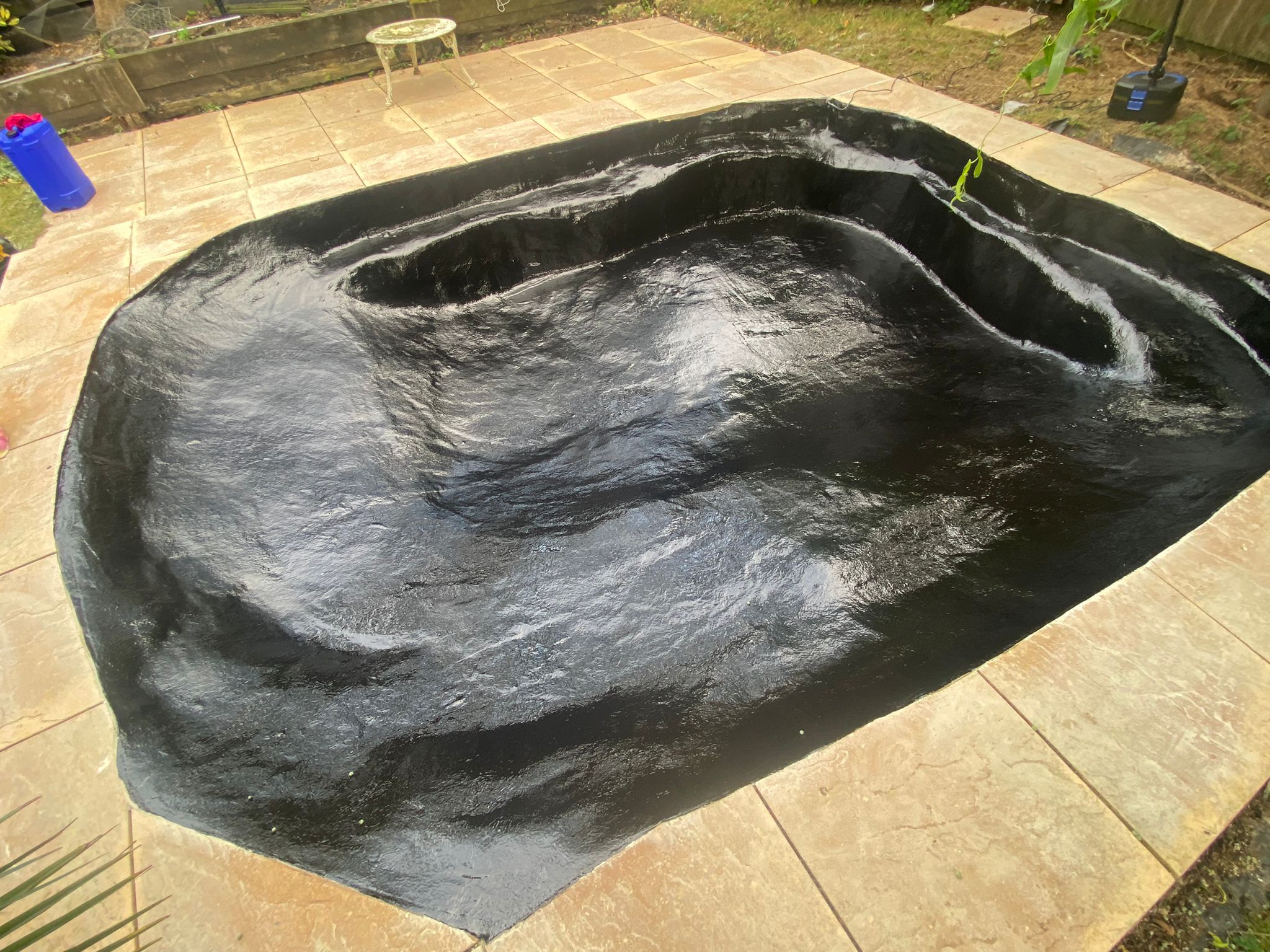
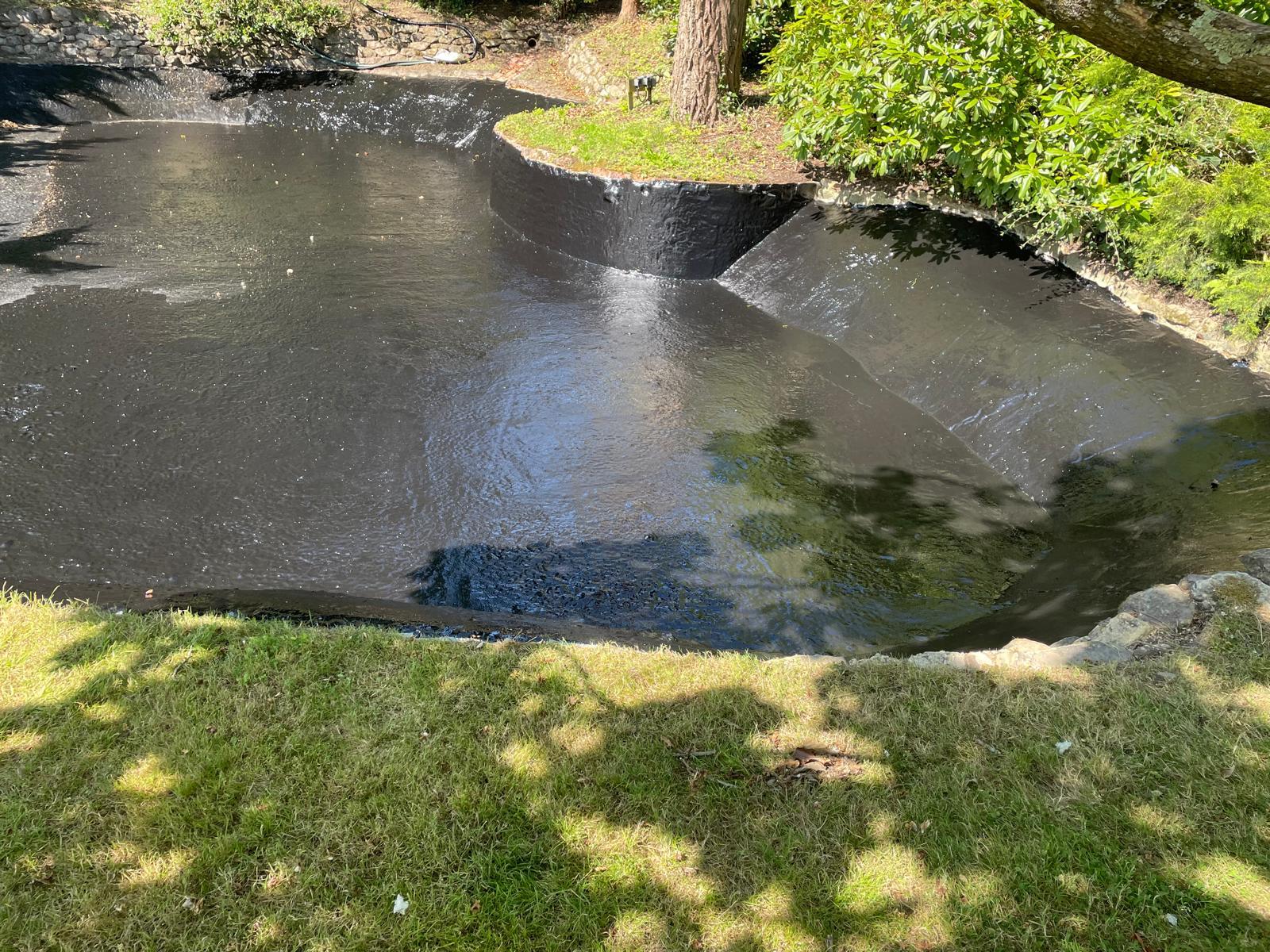
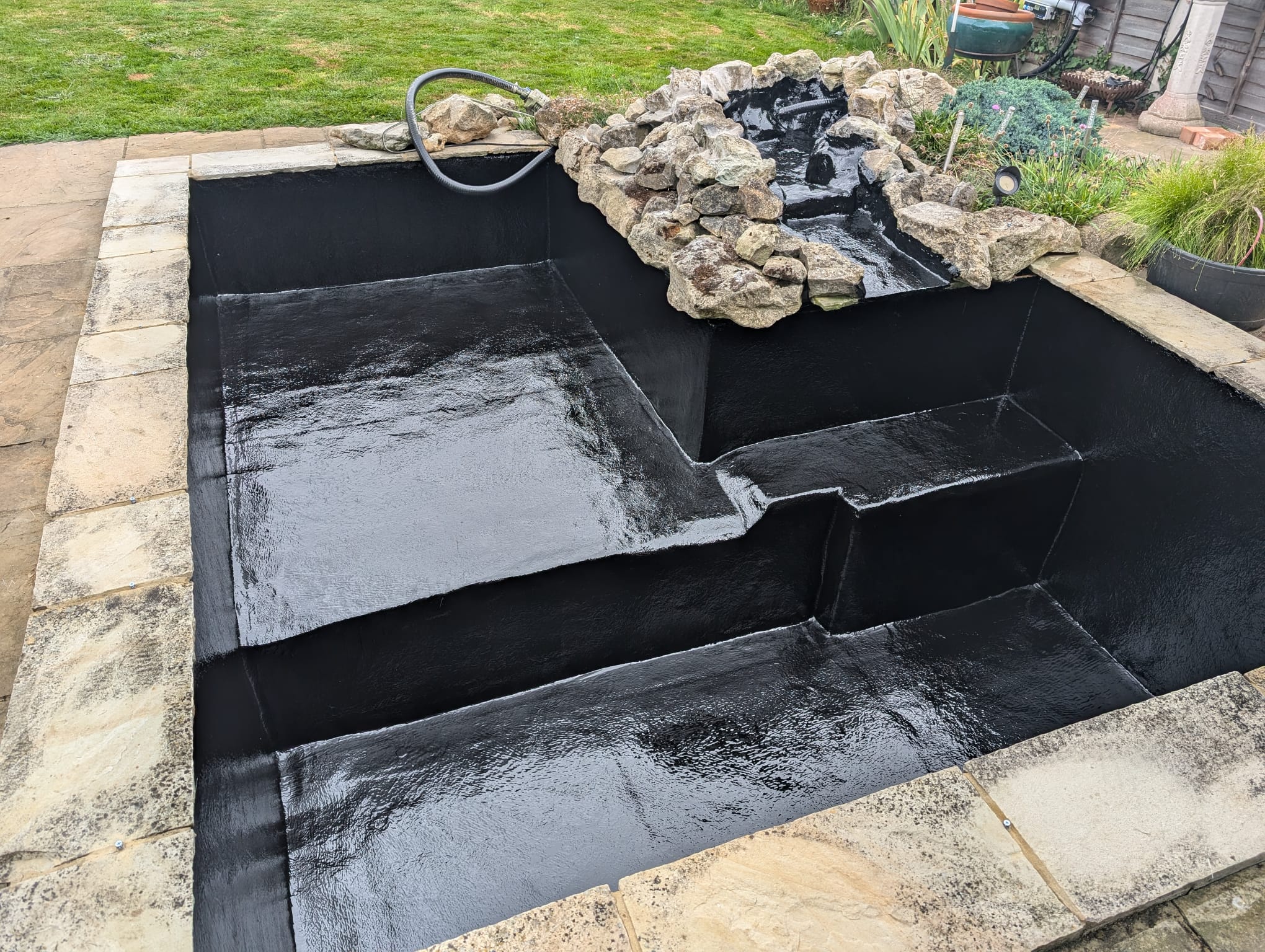
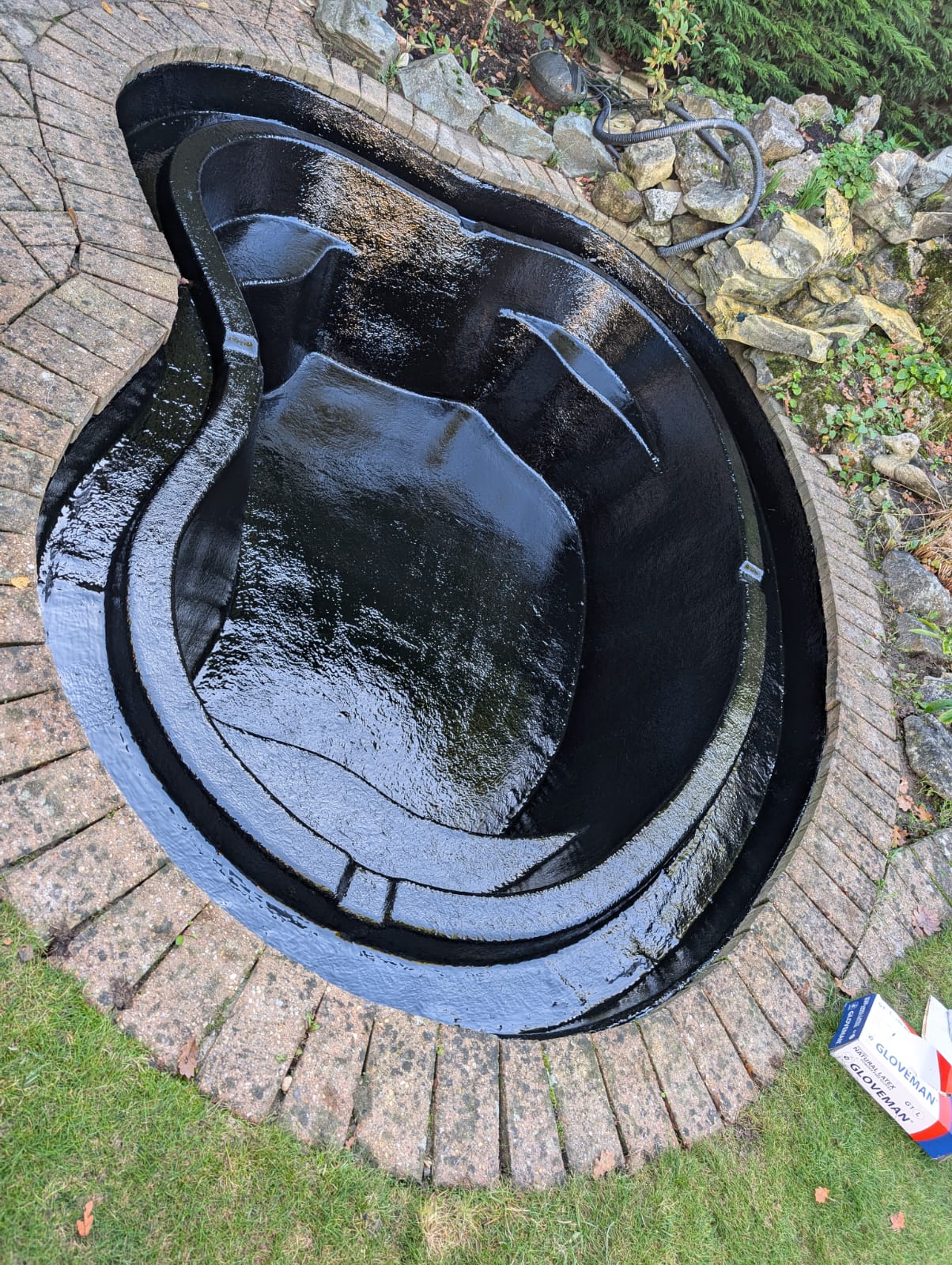
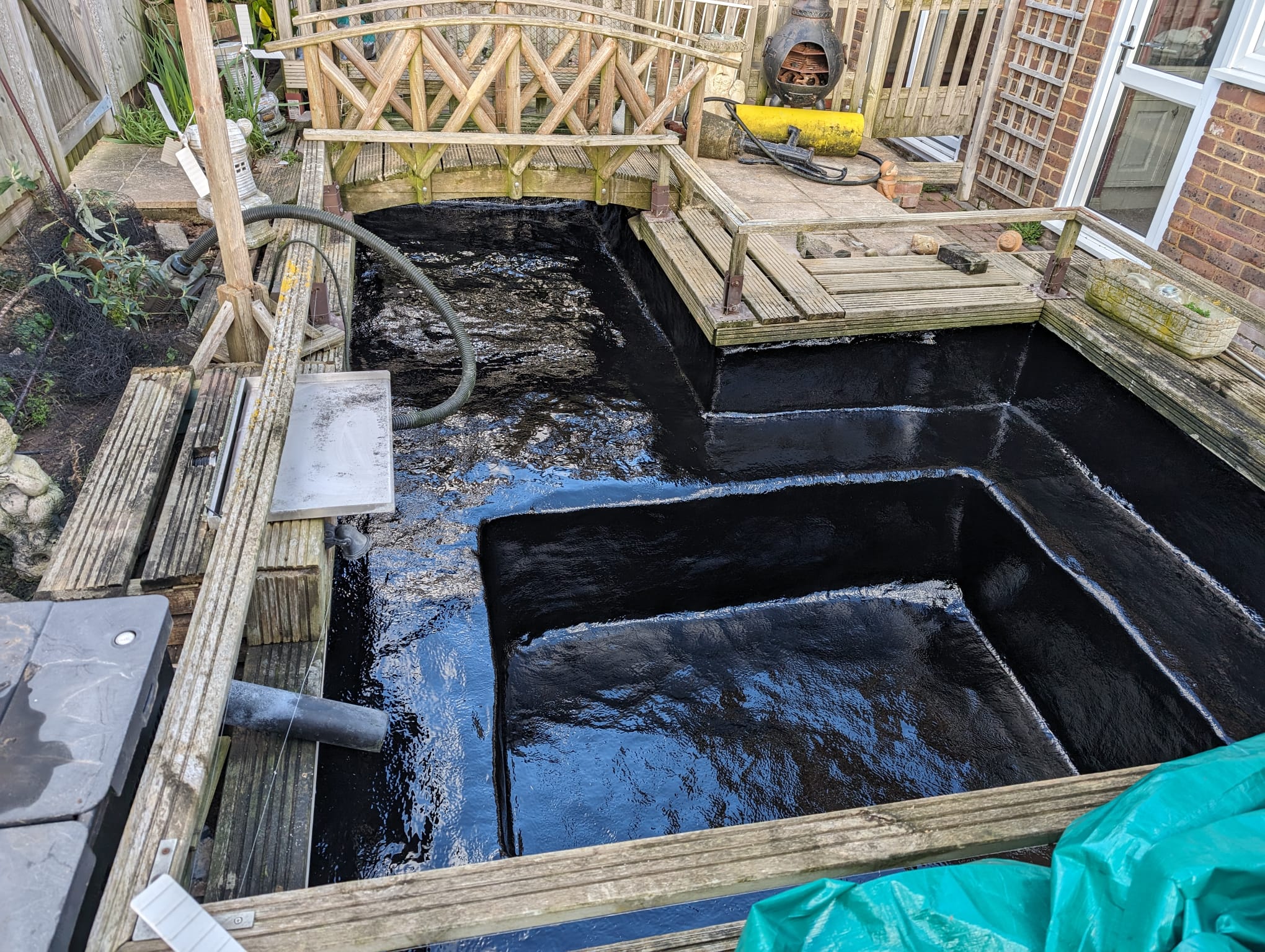
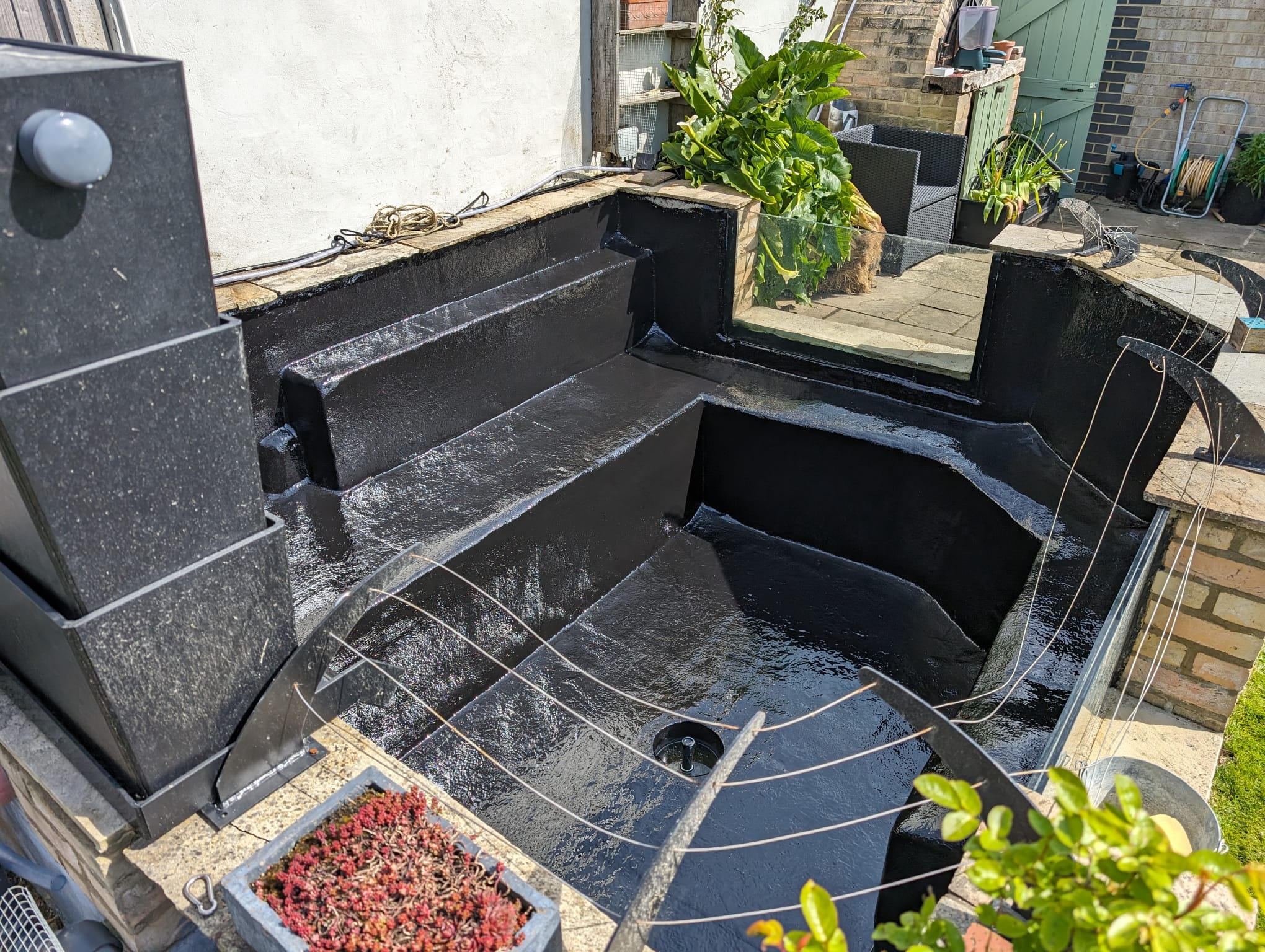
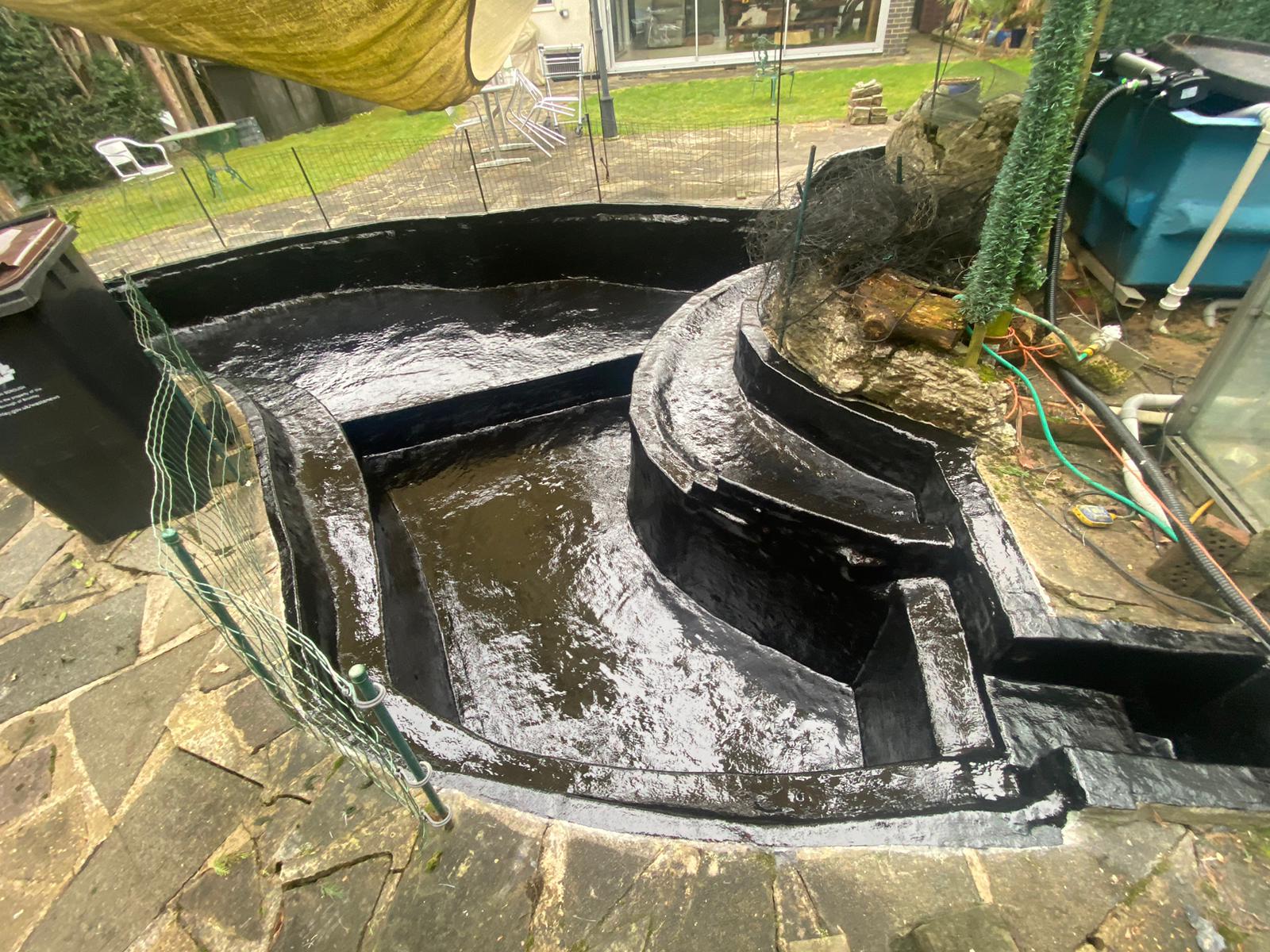
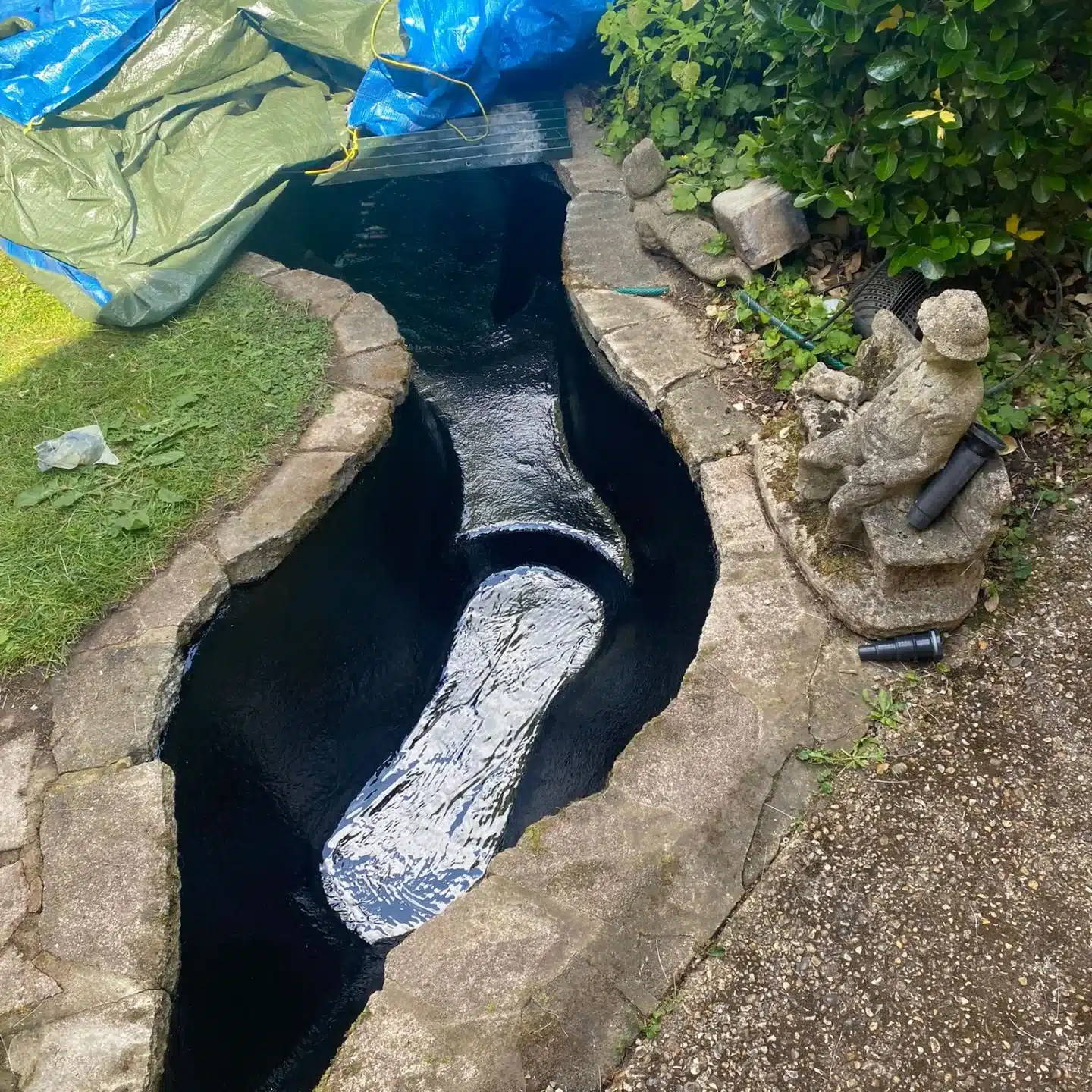
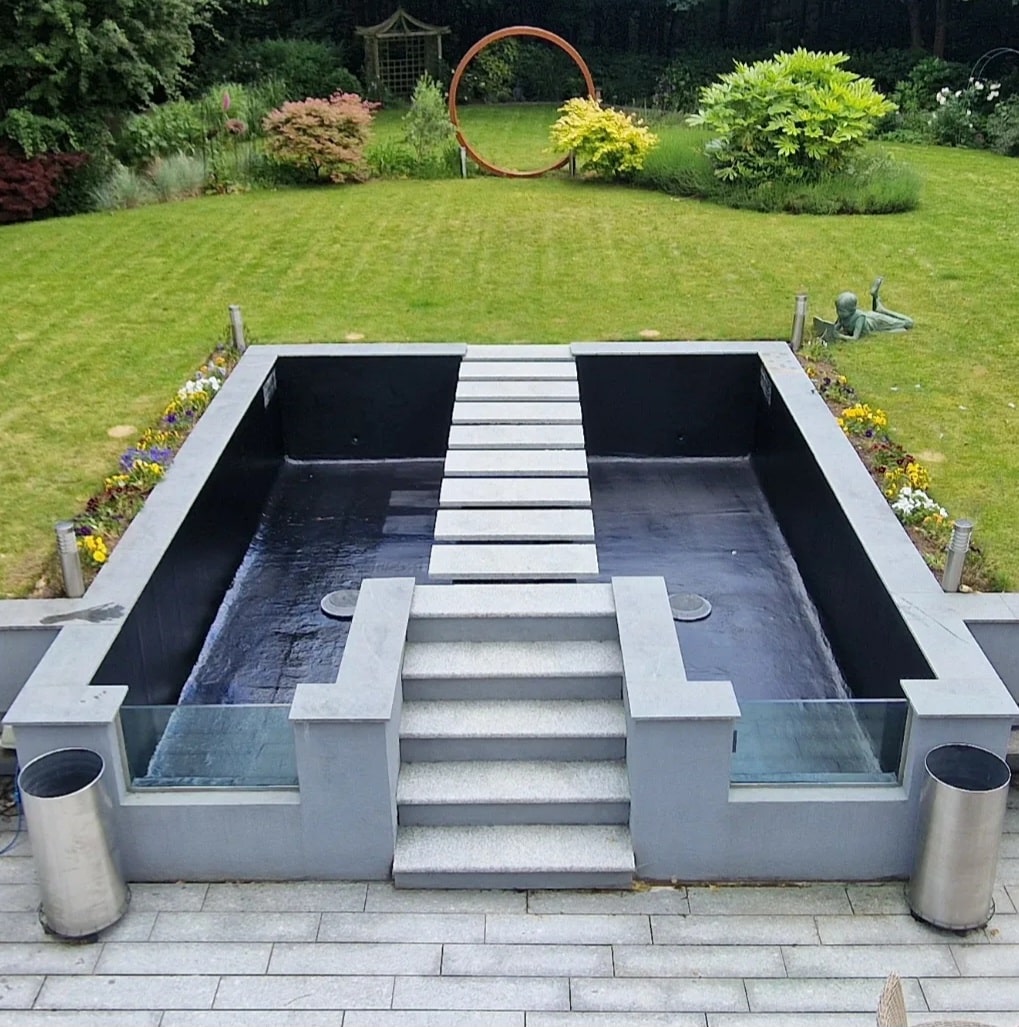
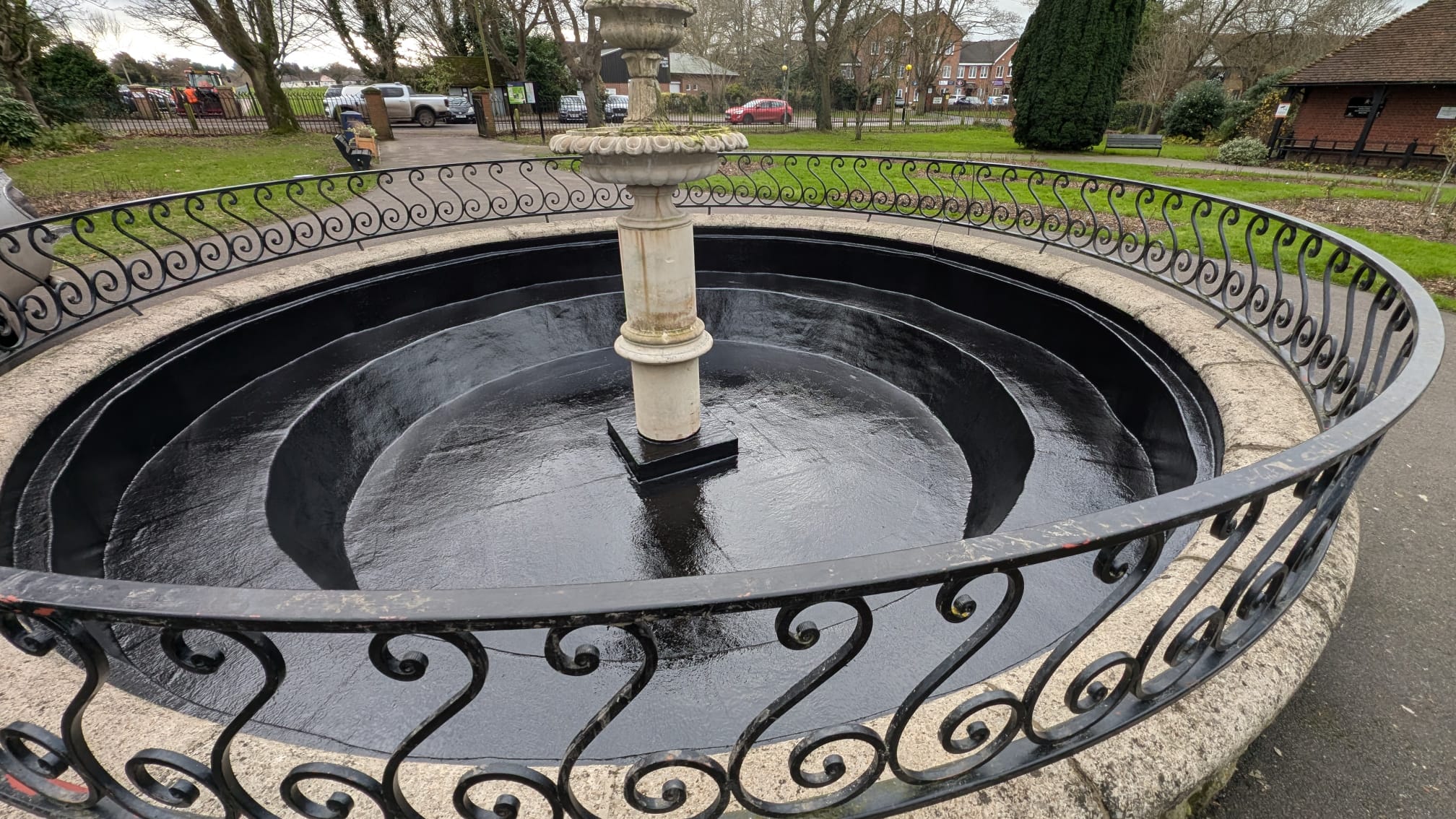
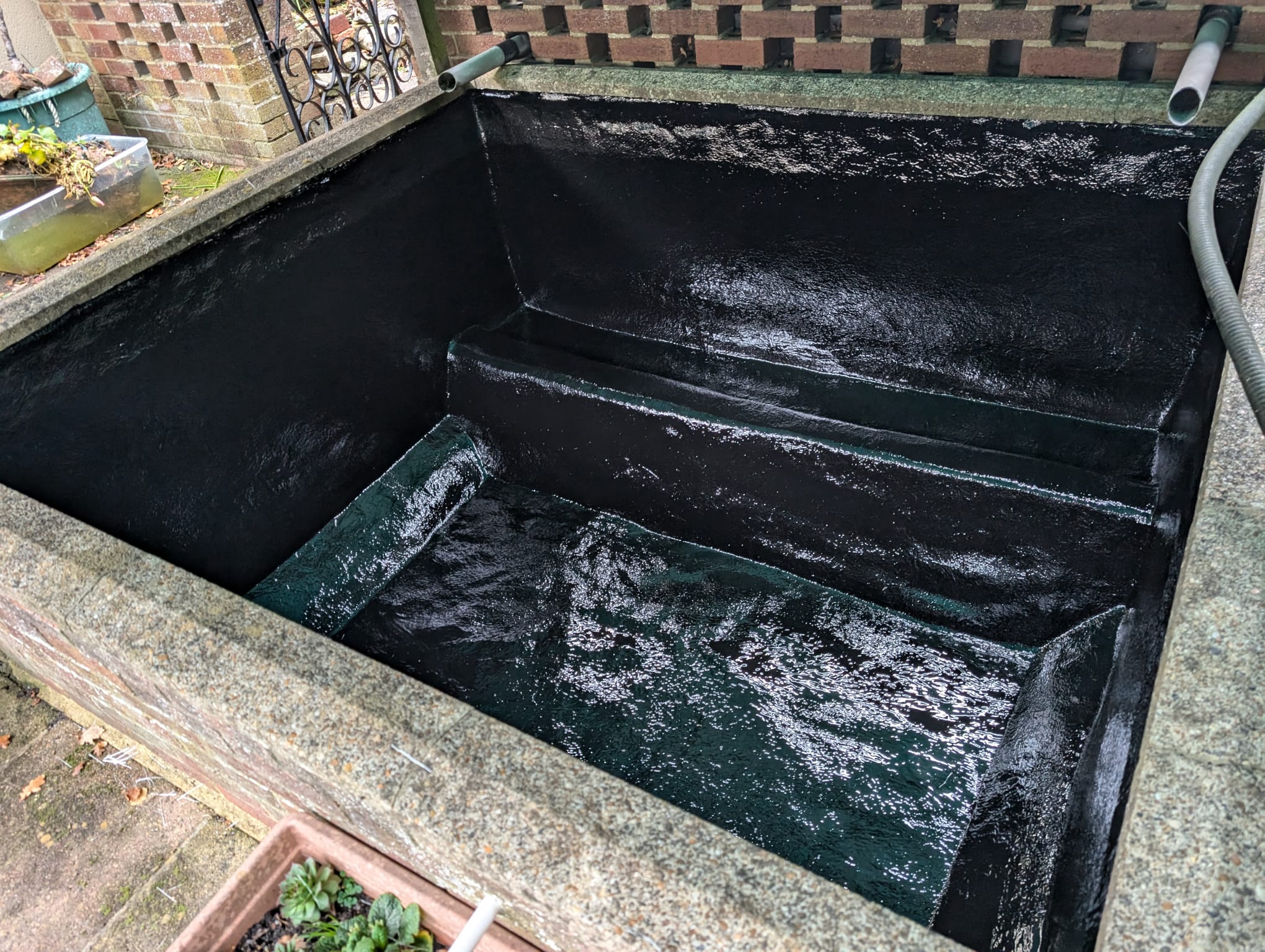
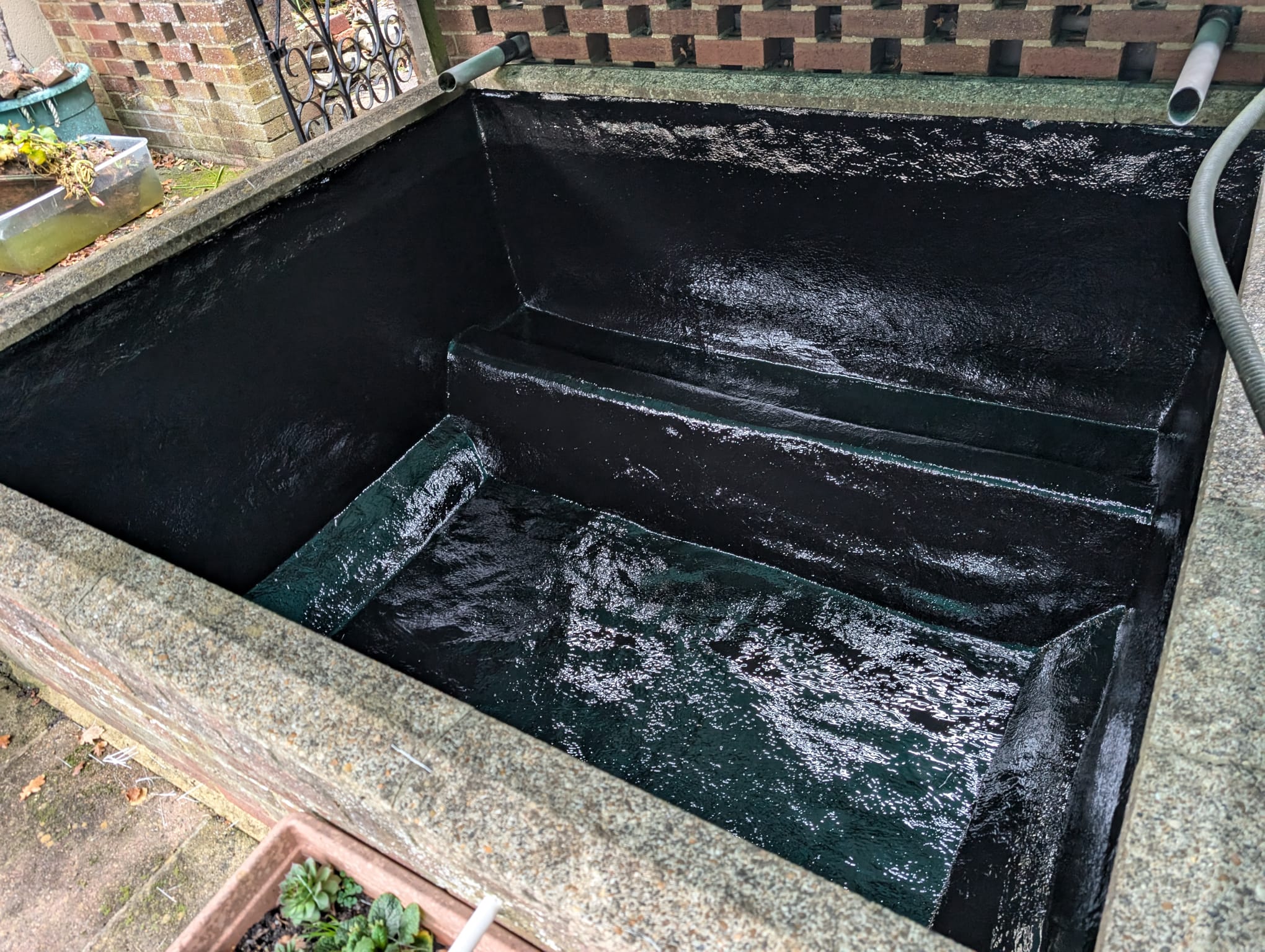
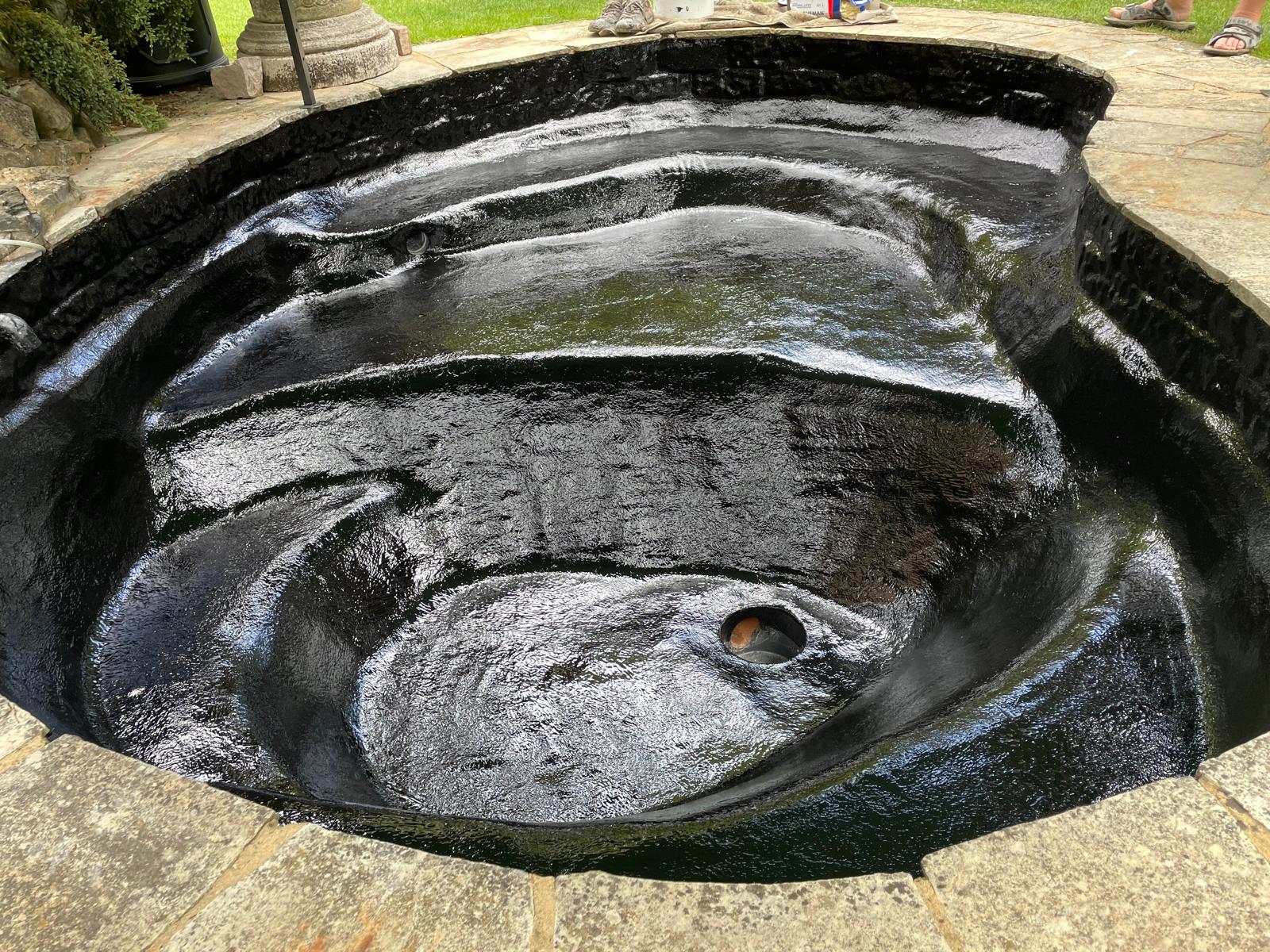
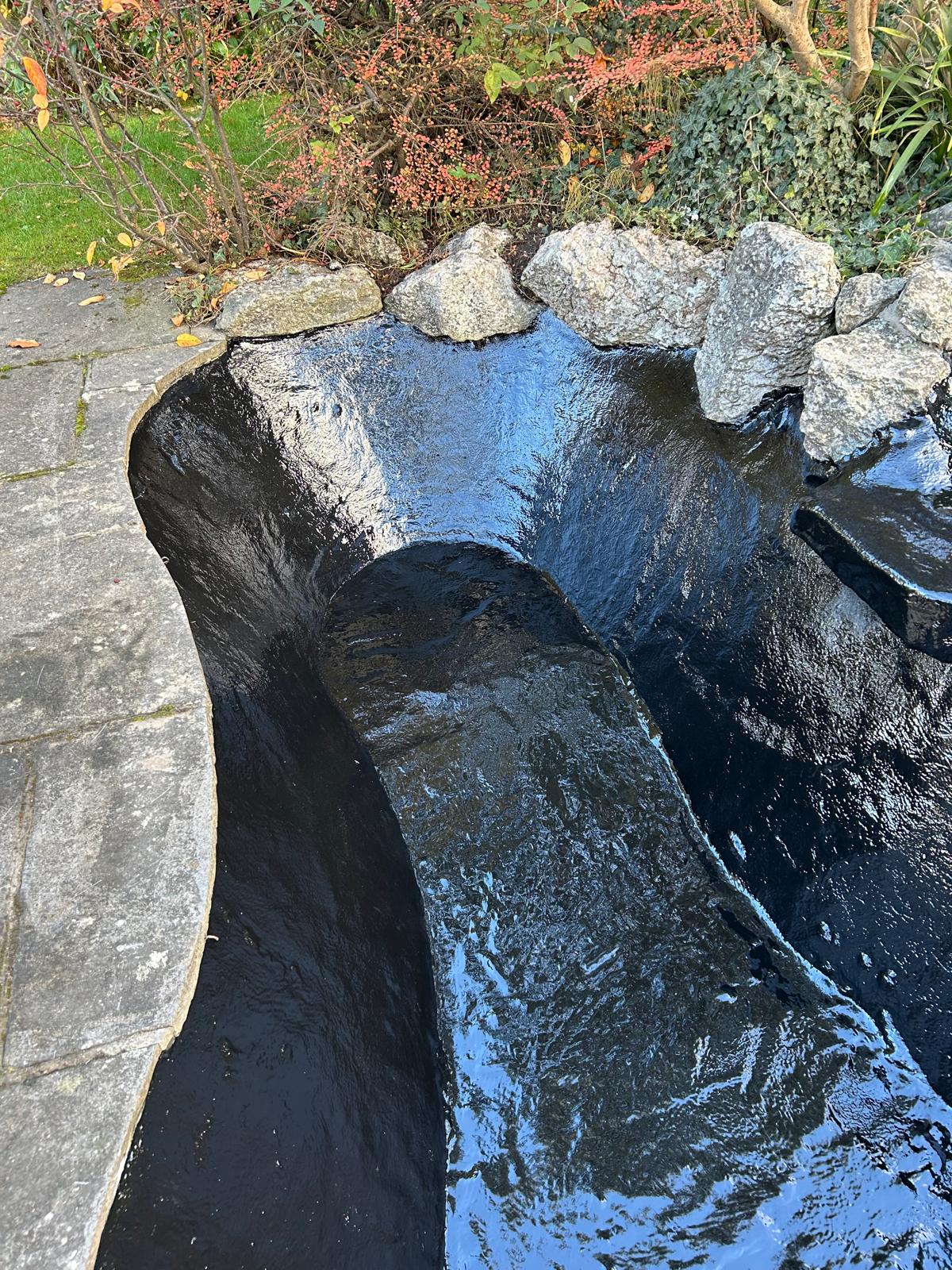
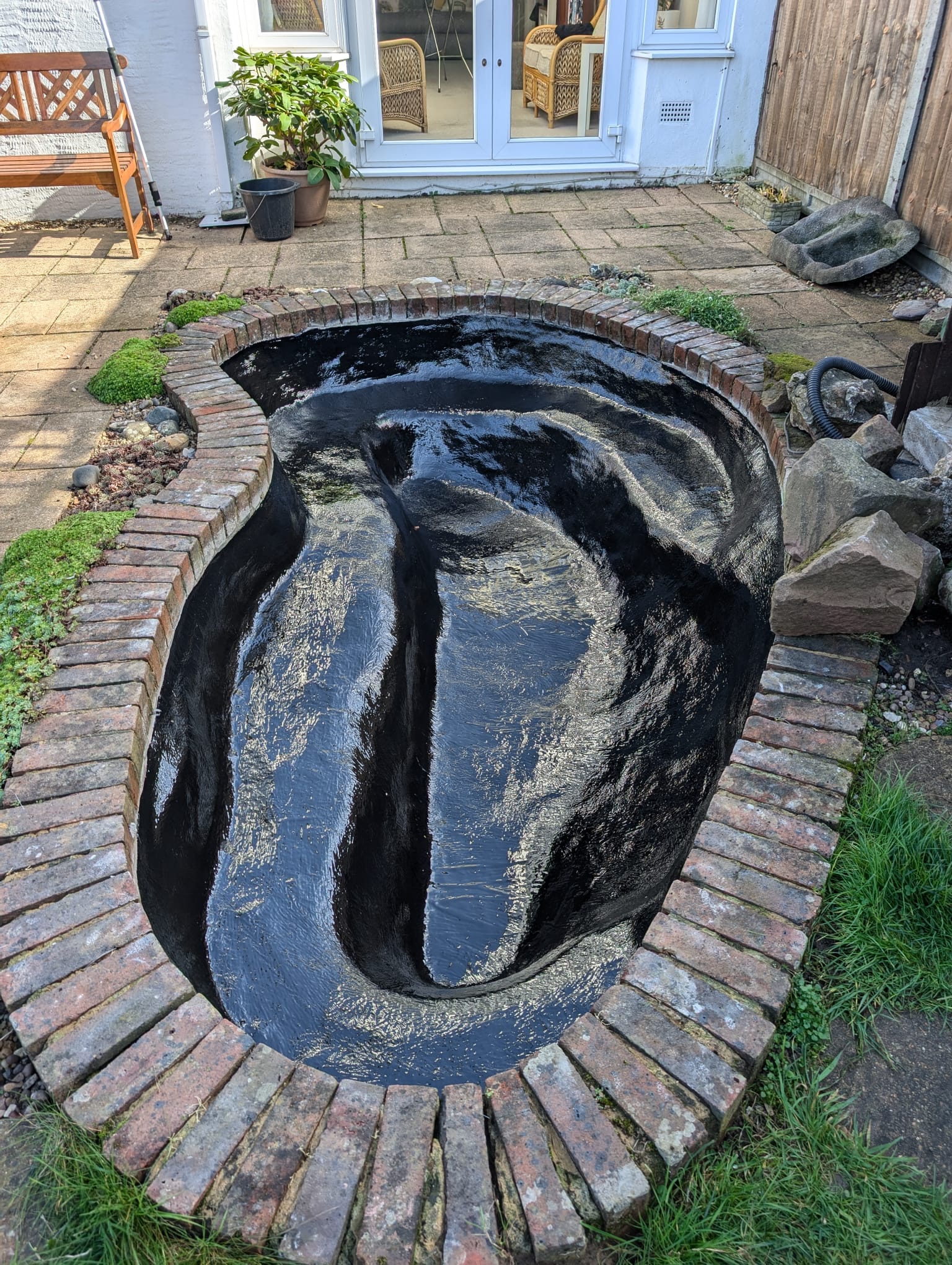
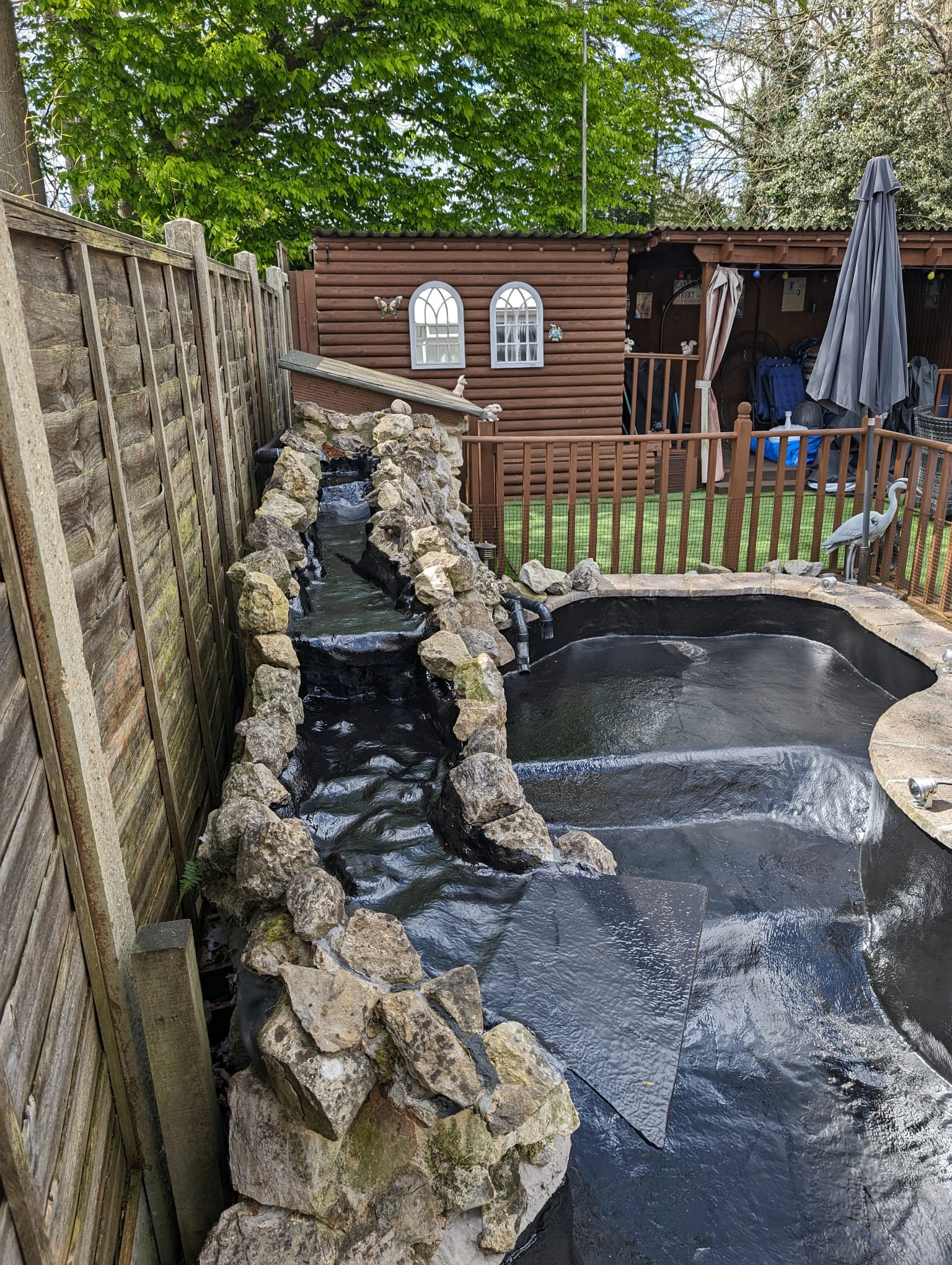
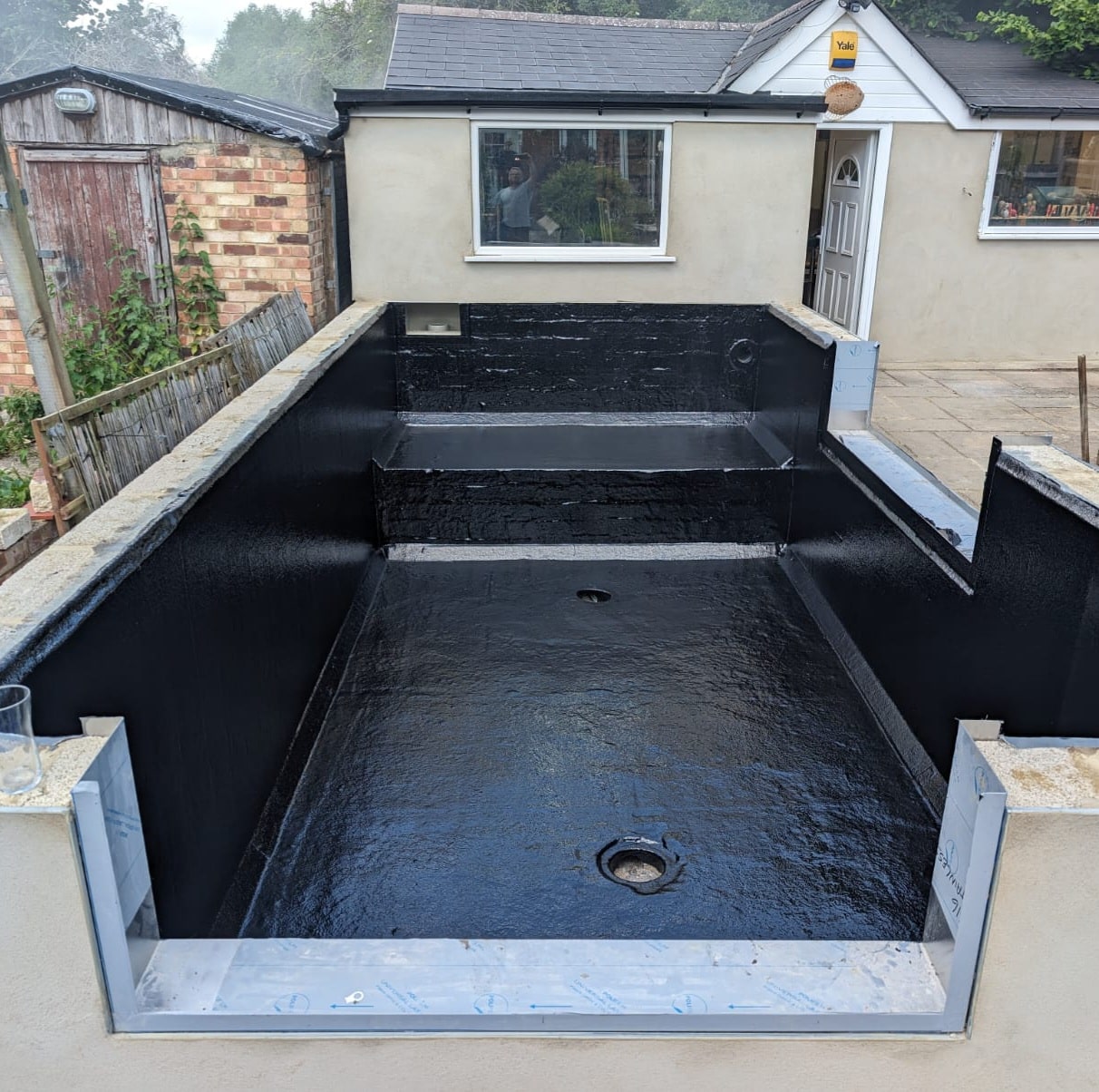
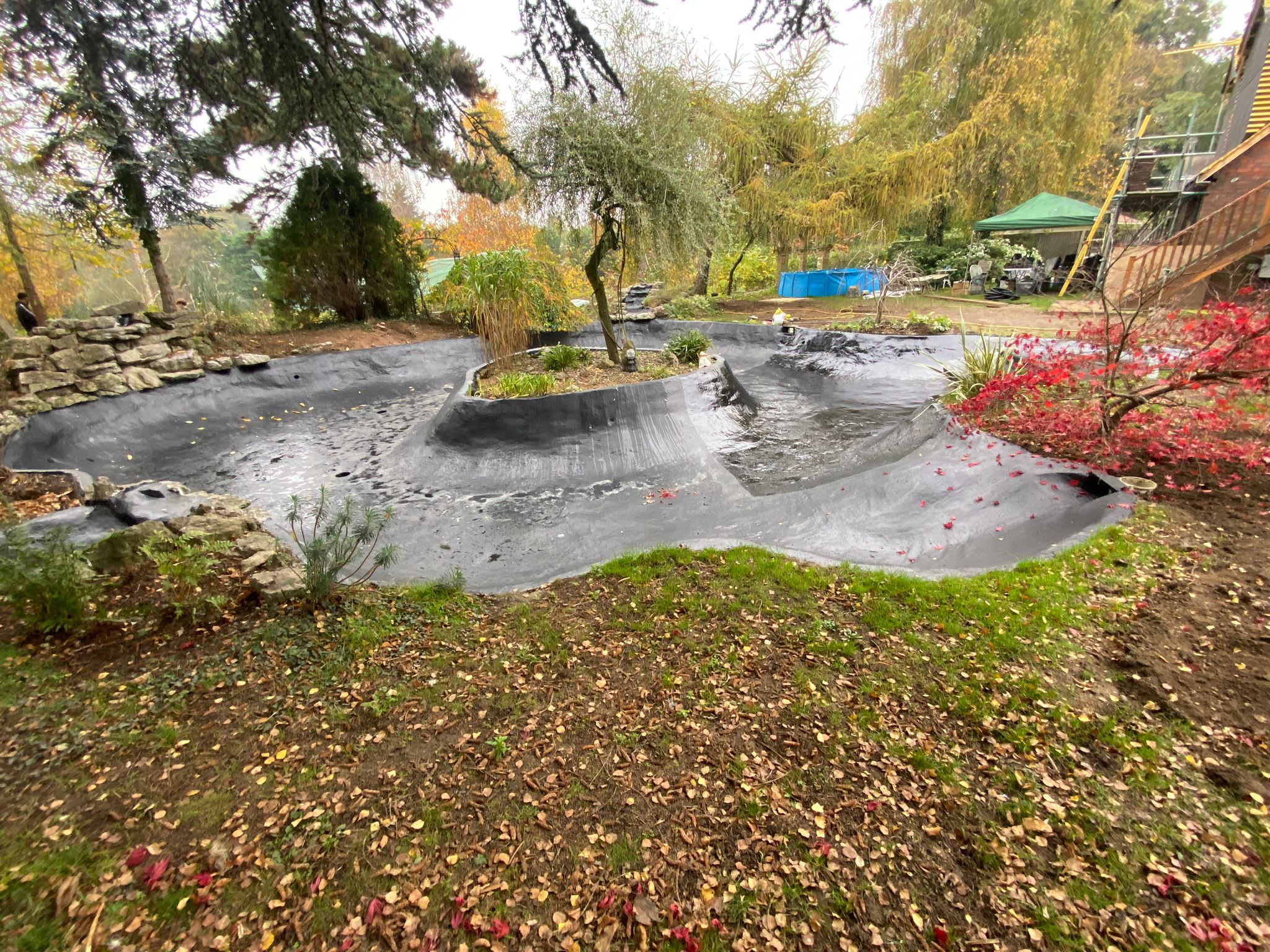
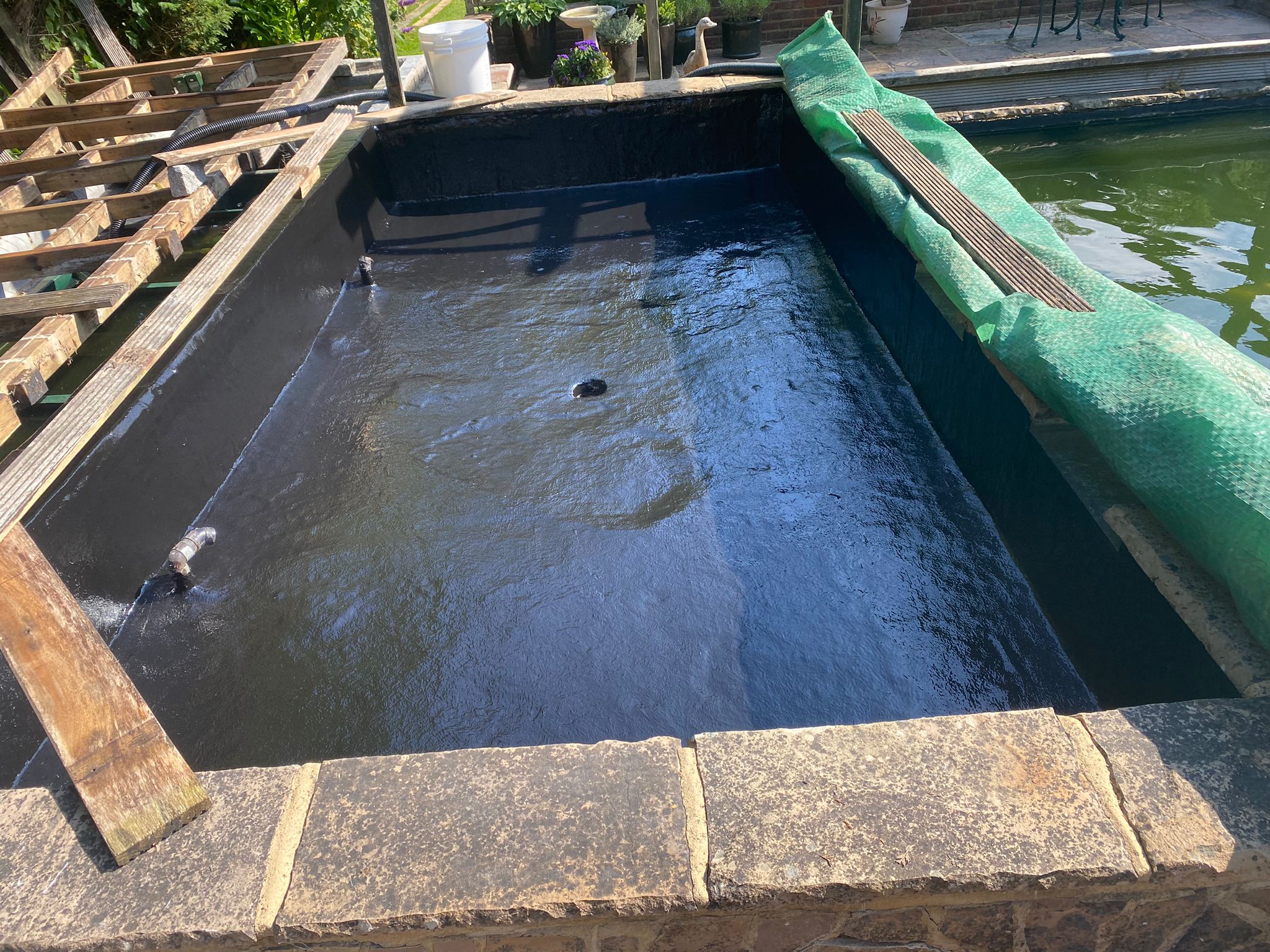
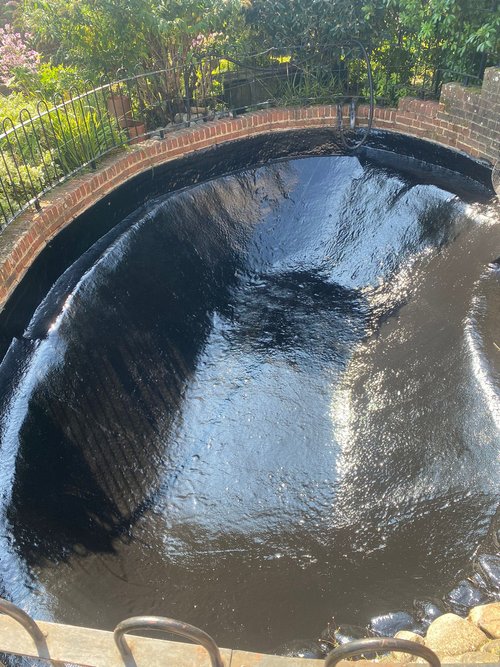
We regularly use fibreglass across a wide range of pond builds, from small garden ponds through to large koi ponds and more complex designs. It works particularly well in ponds with shelves, steps, windows, curves, and bespoke features, where strength and a clean internal finish are important.
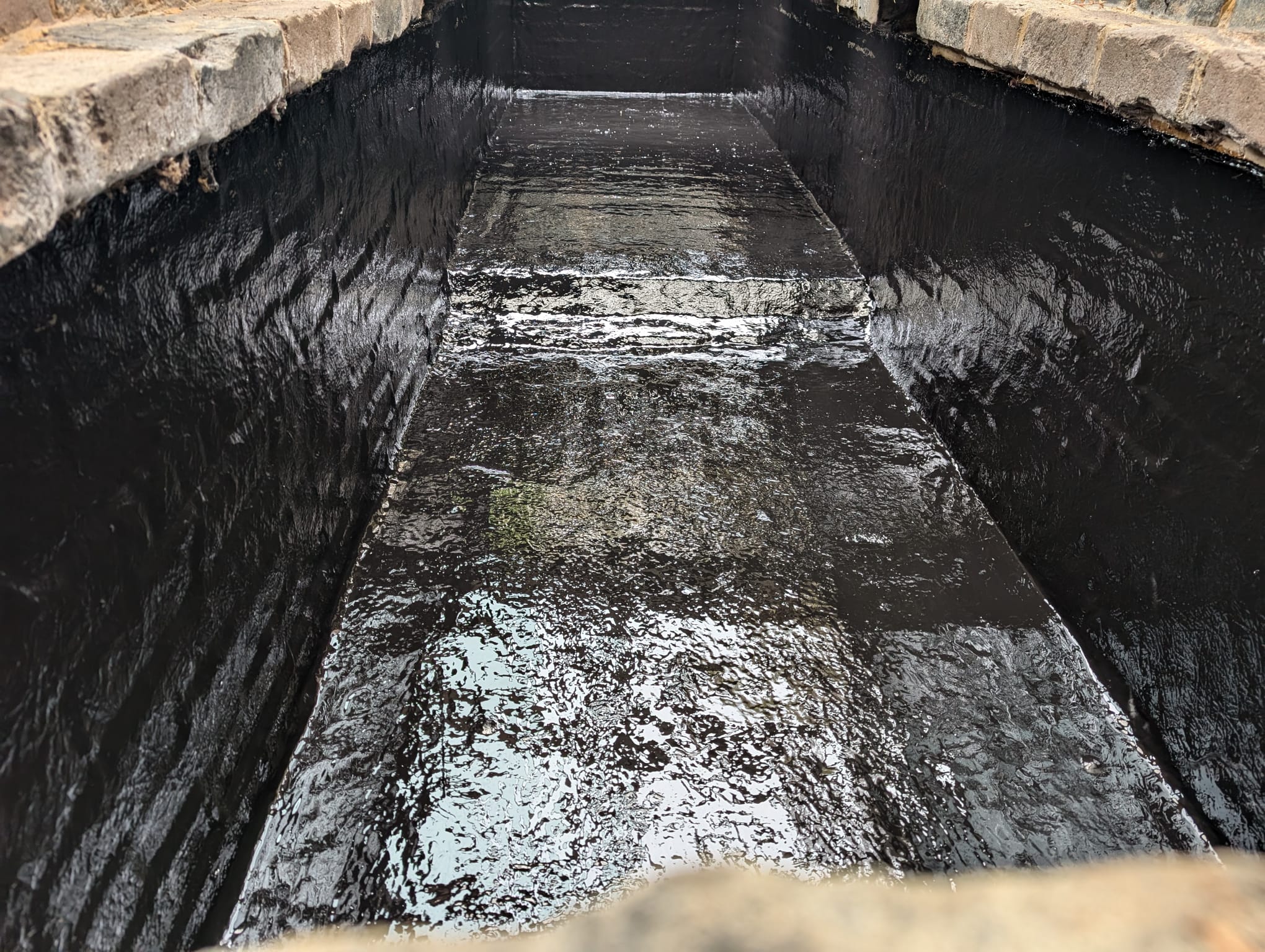
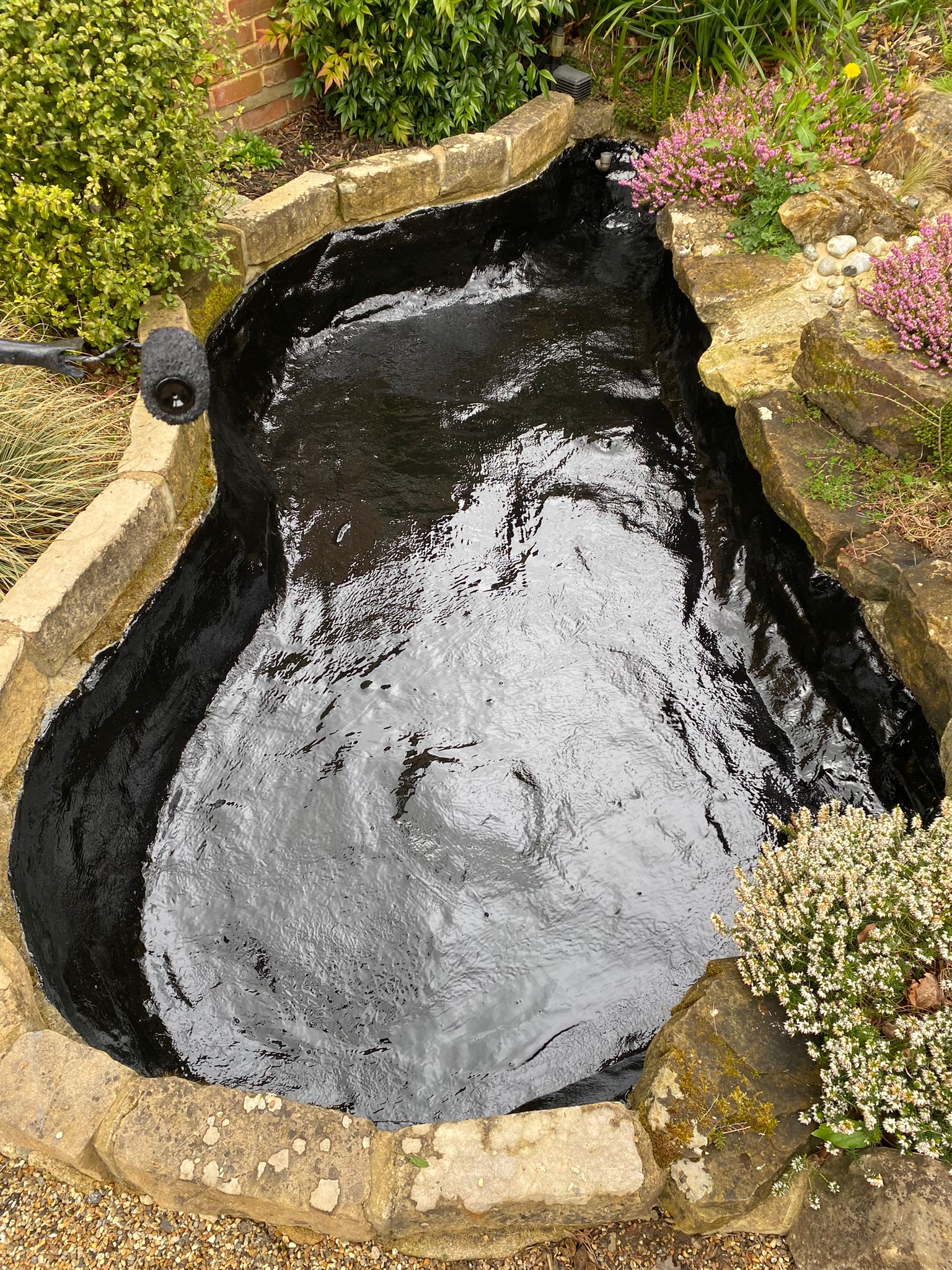
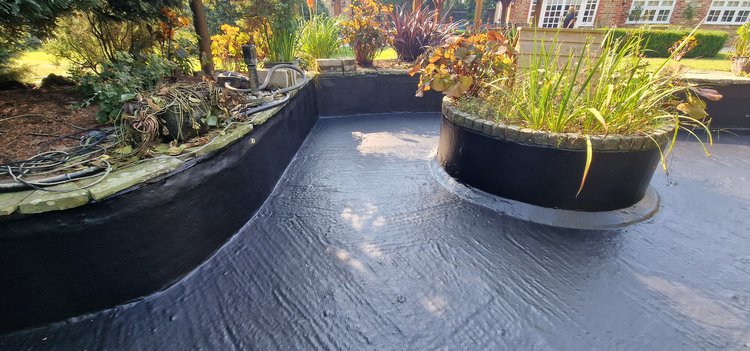
The smooth, non porous surface also makes a noticeable difference in day to day maintenance. It discourages algae from attaching to the surface and makes cleaning much easier, helping to keep the pond looking clean and well maintained with less effort.
Our pond fibreglassing process
Every fibreglass installation is carried out in a structured and controlled way to achieve a clean finish and long term reliability.
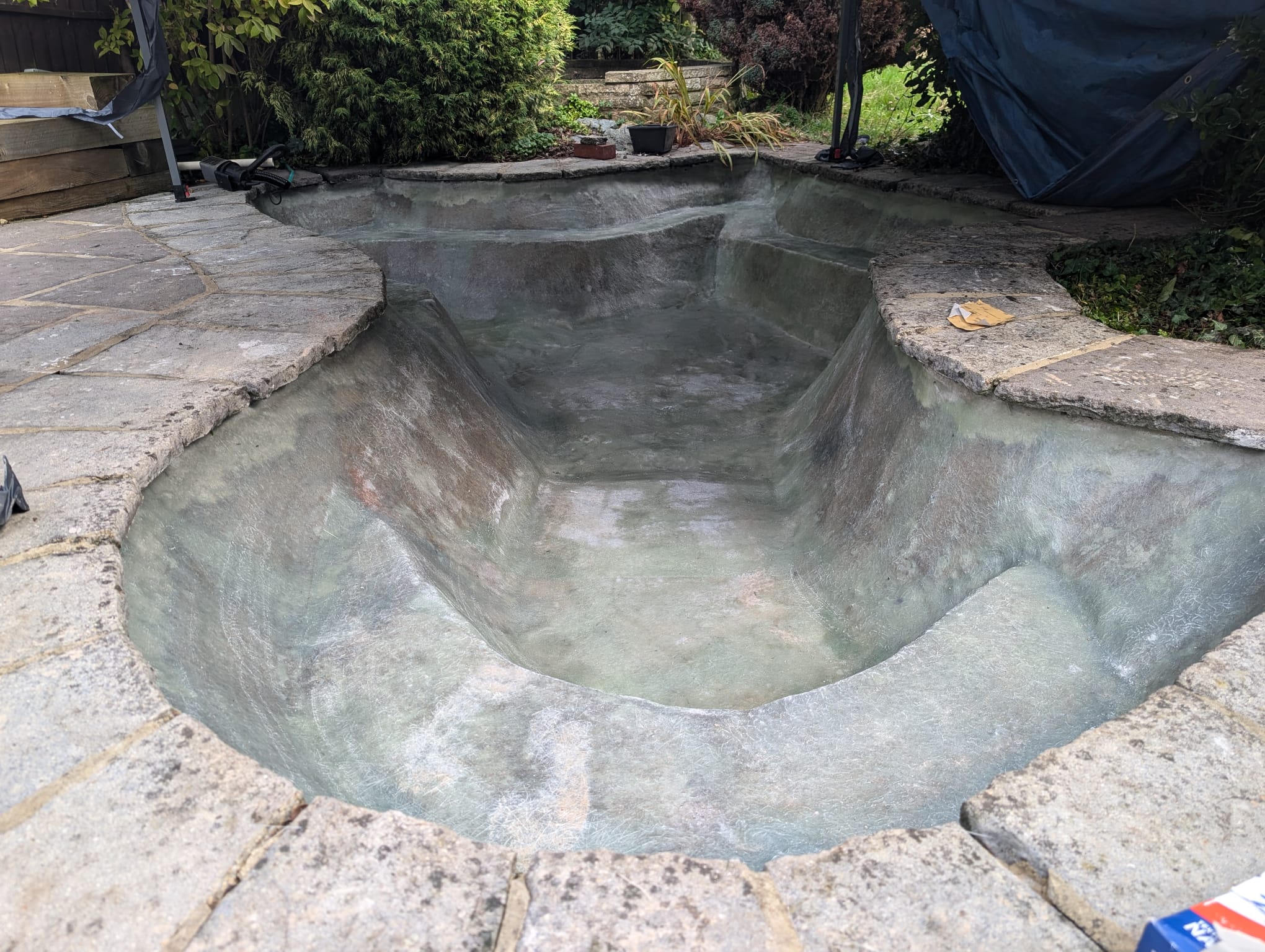
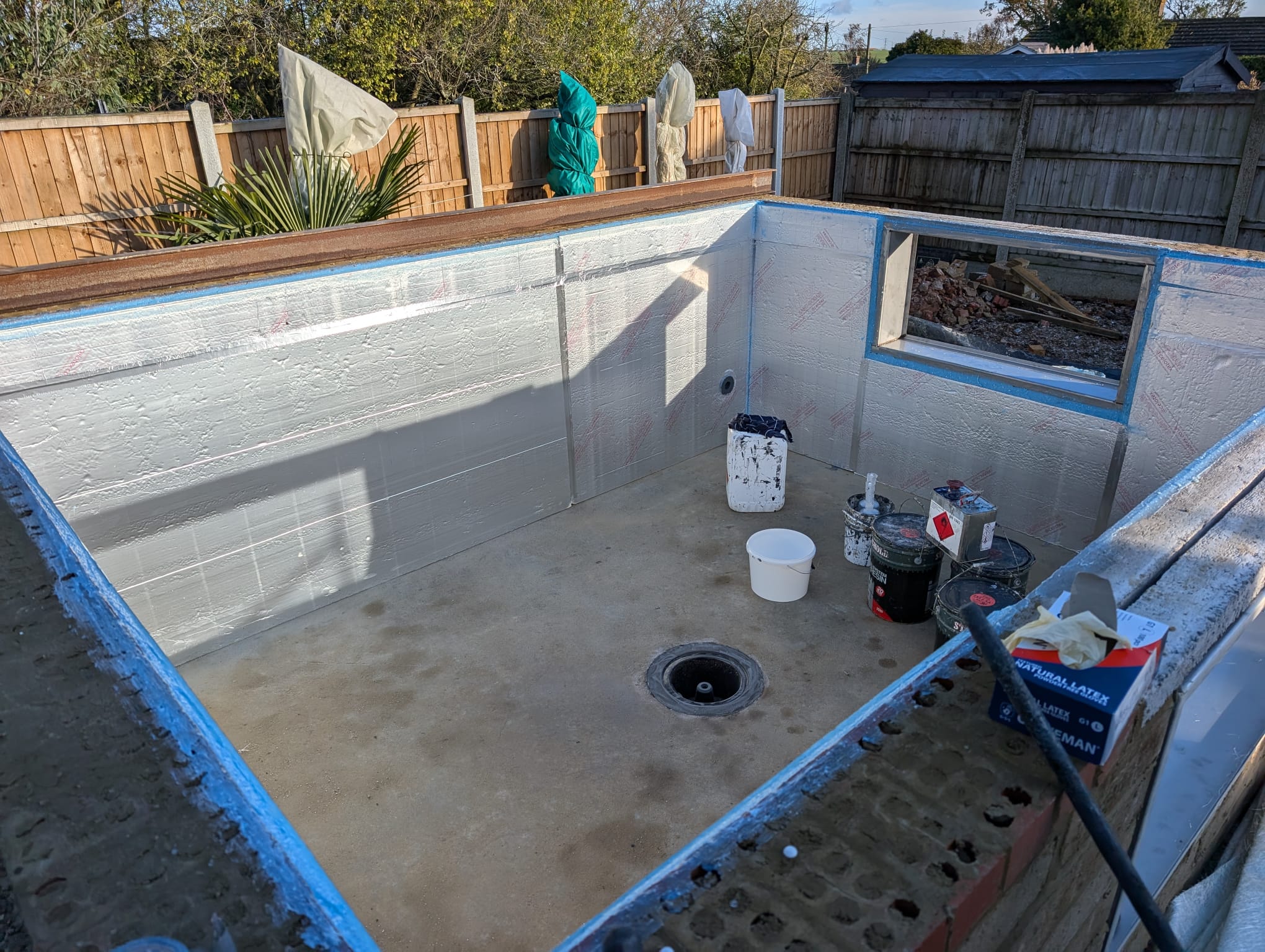
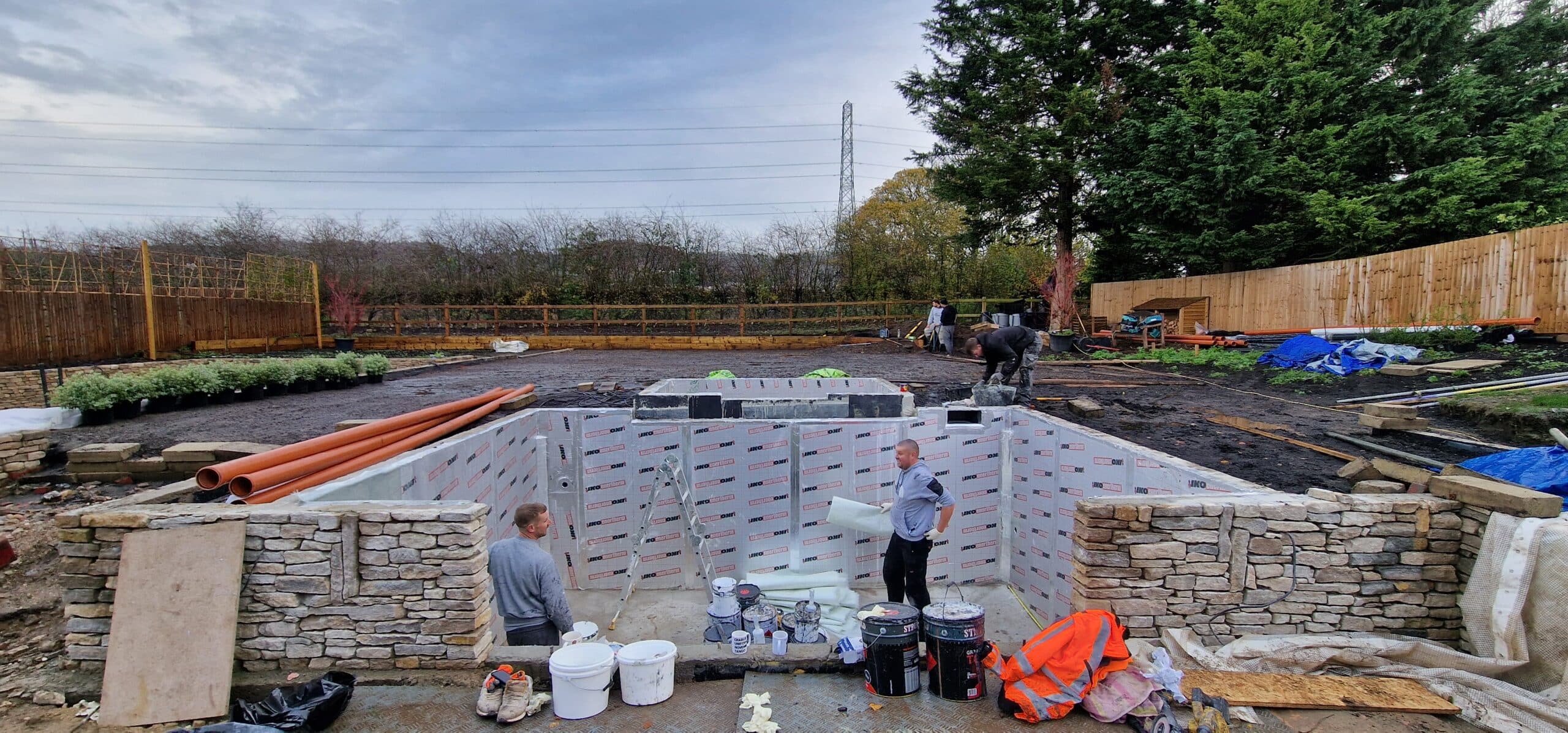
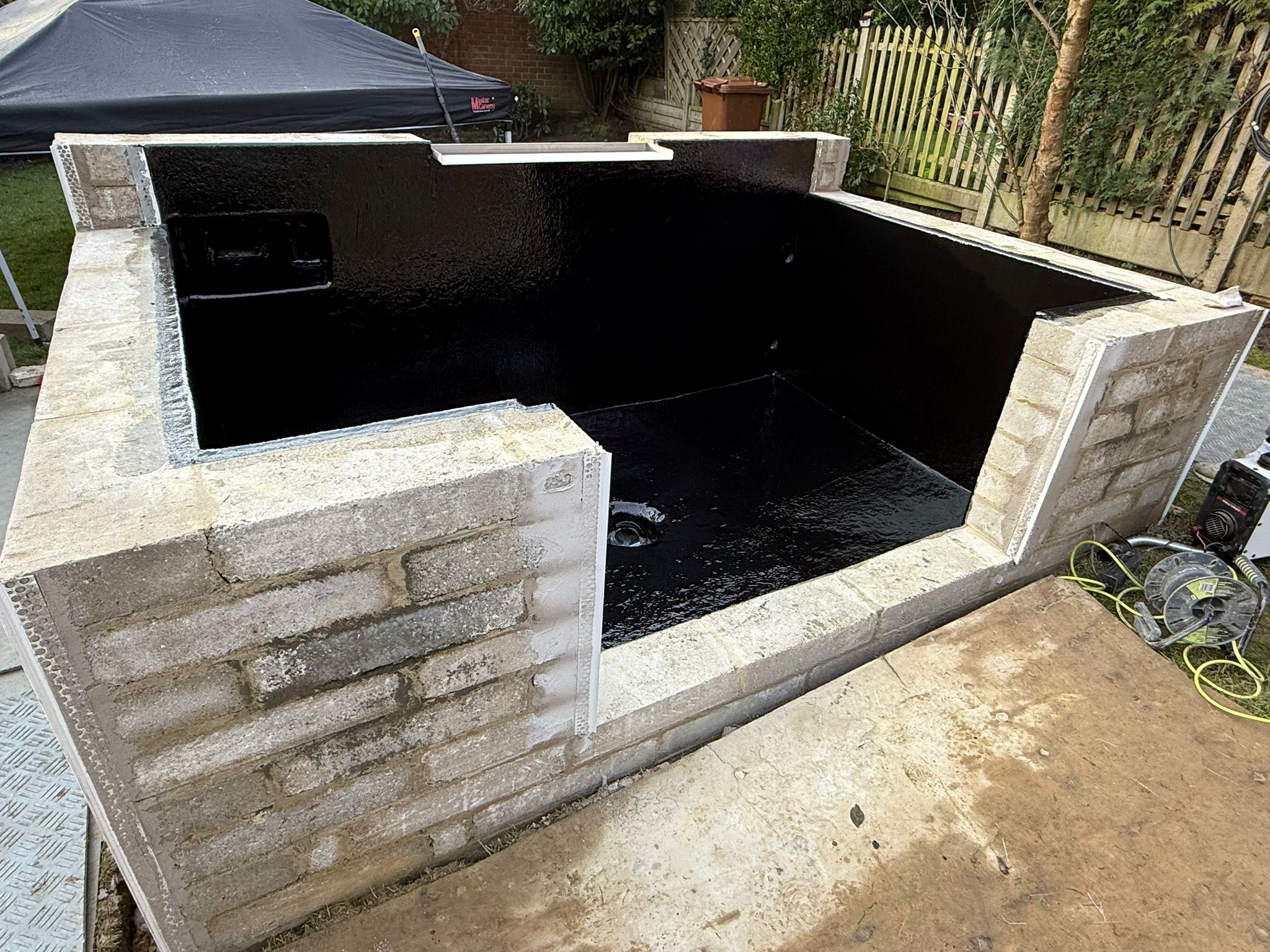
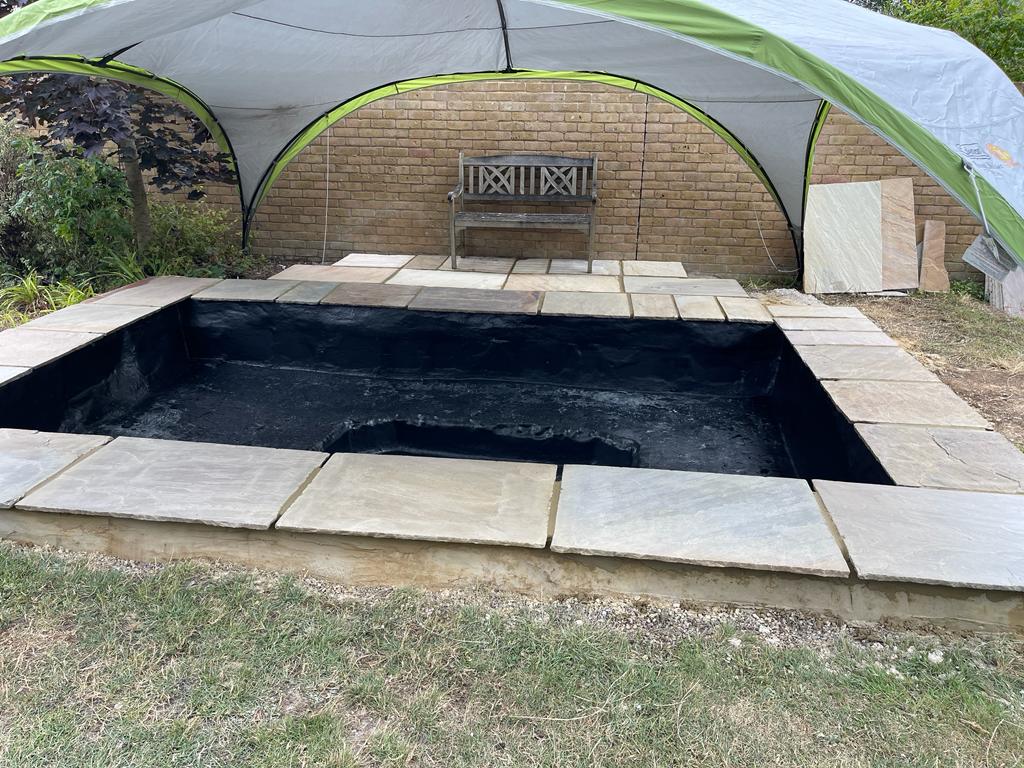
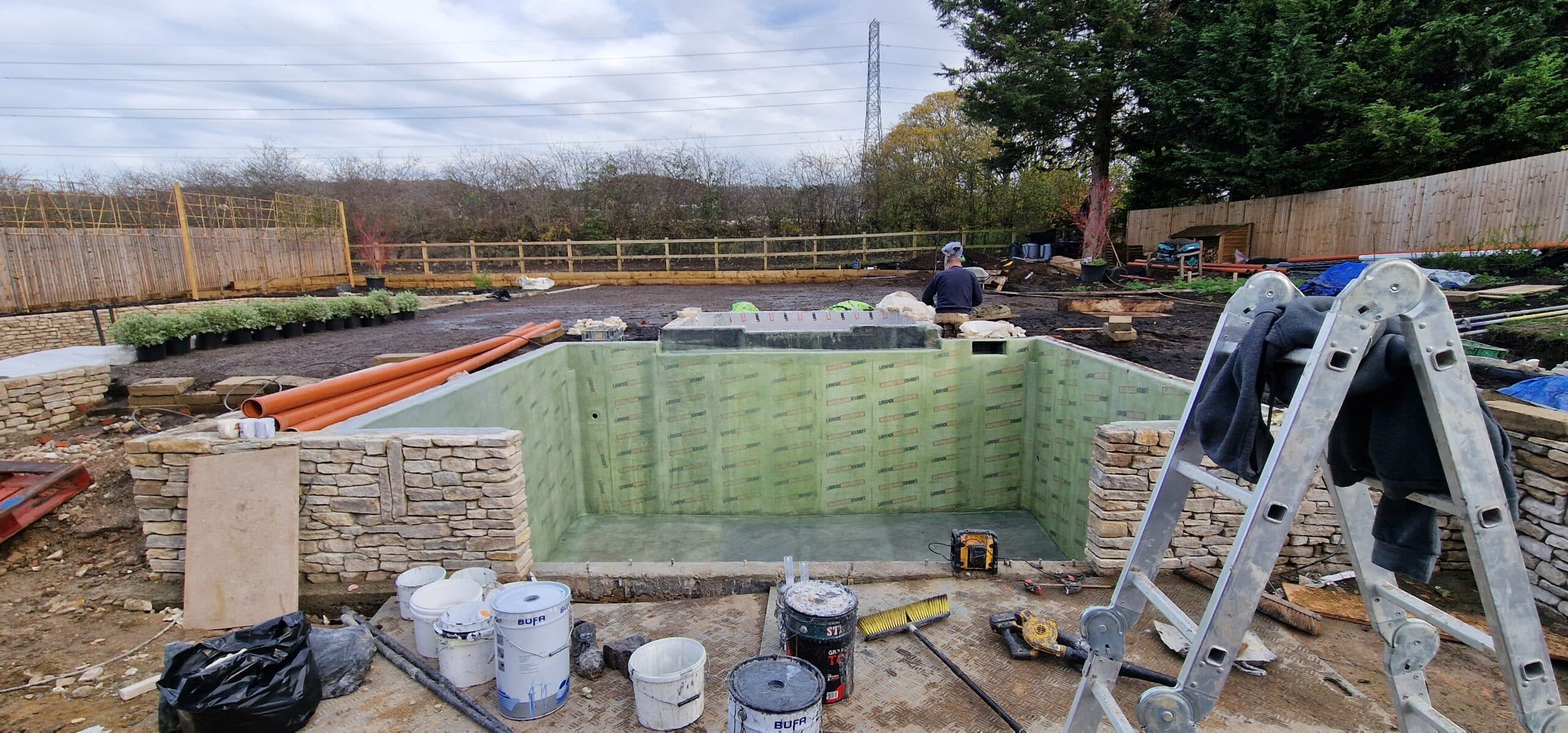
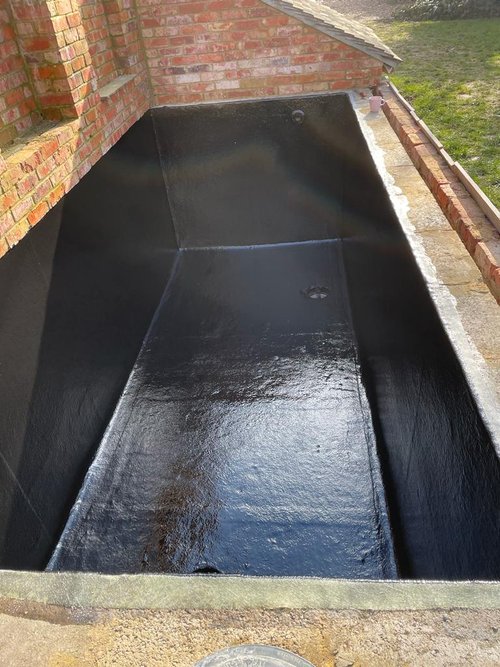
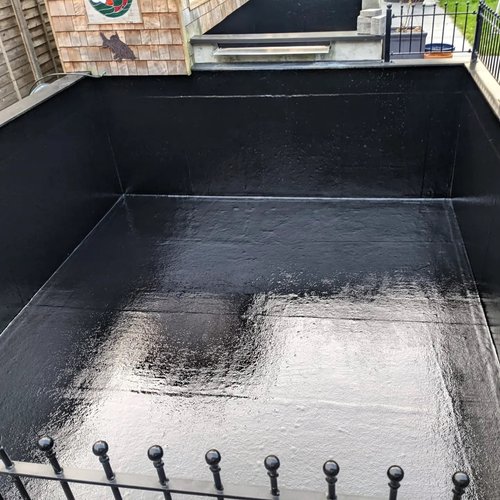
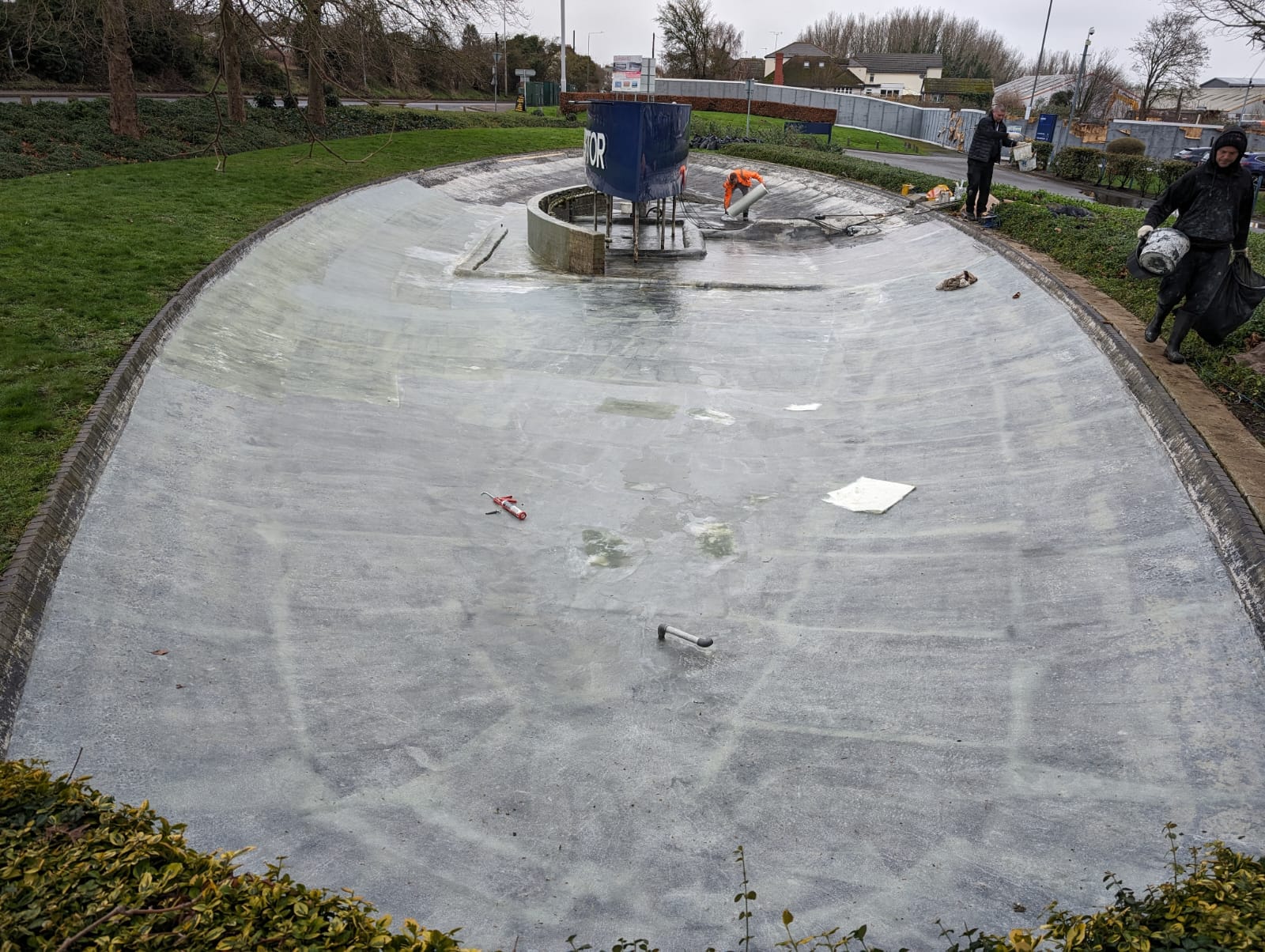
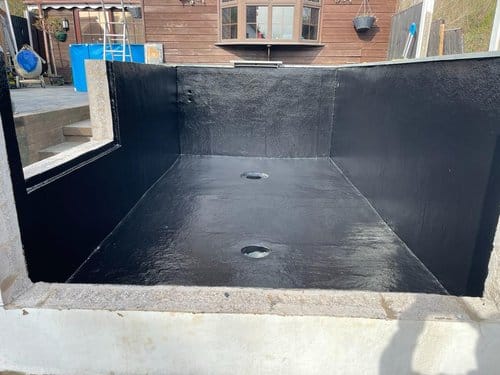
The process starts with thorough preparation of the pond structure. We clean, level, and smooth all surfaces to create a solid base for the fibreglass. Any imperfections are corrected at this stage, and where needed, we install insulation boards or carry out structural adjustments to improve strength and overall performance.
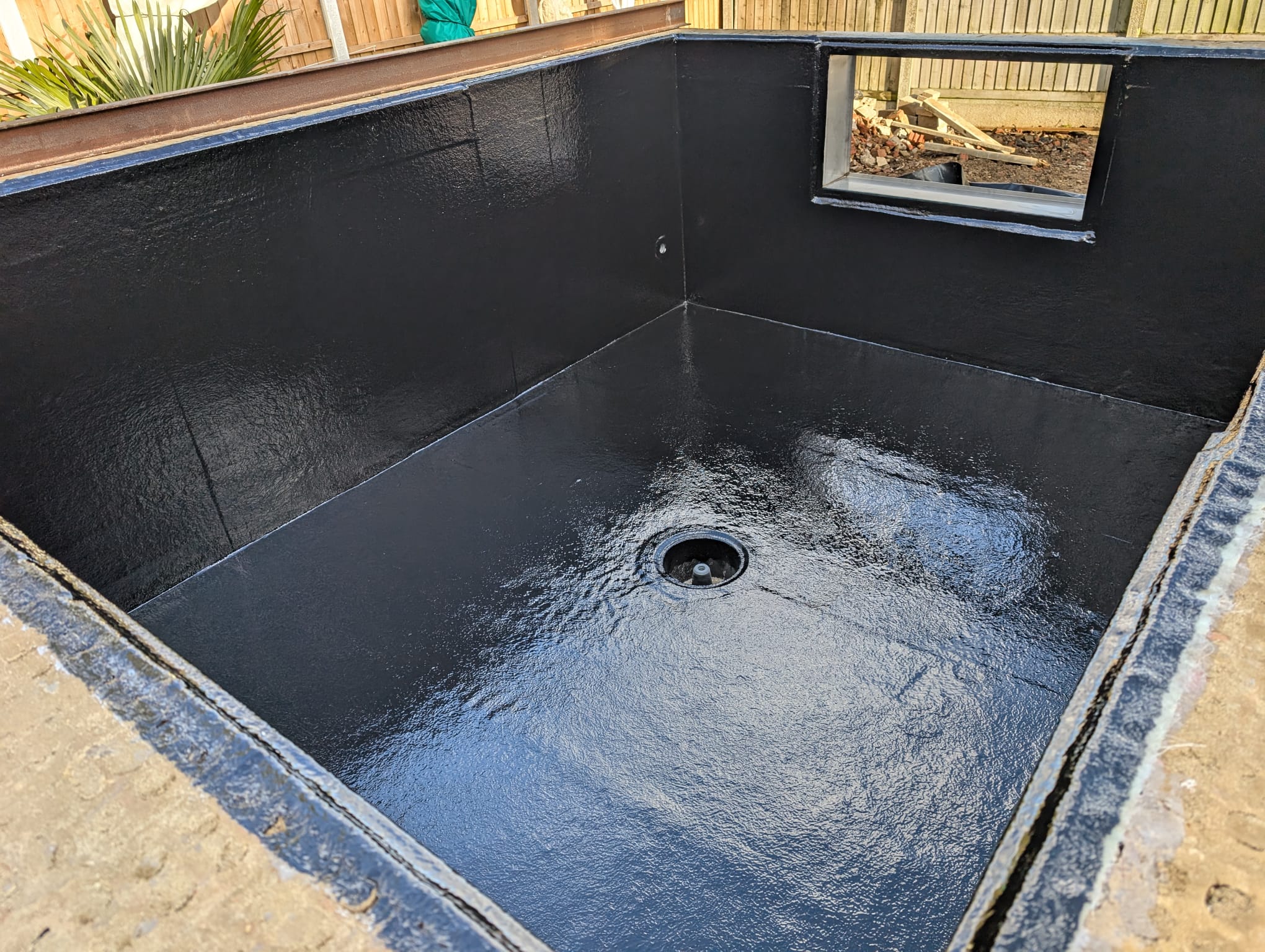
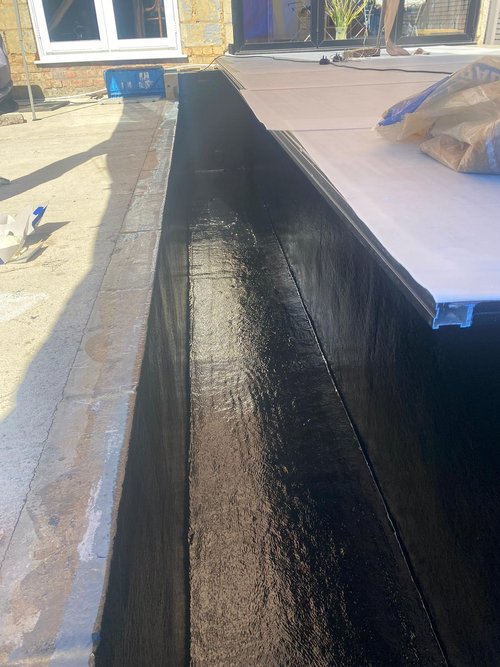
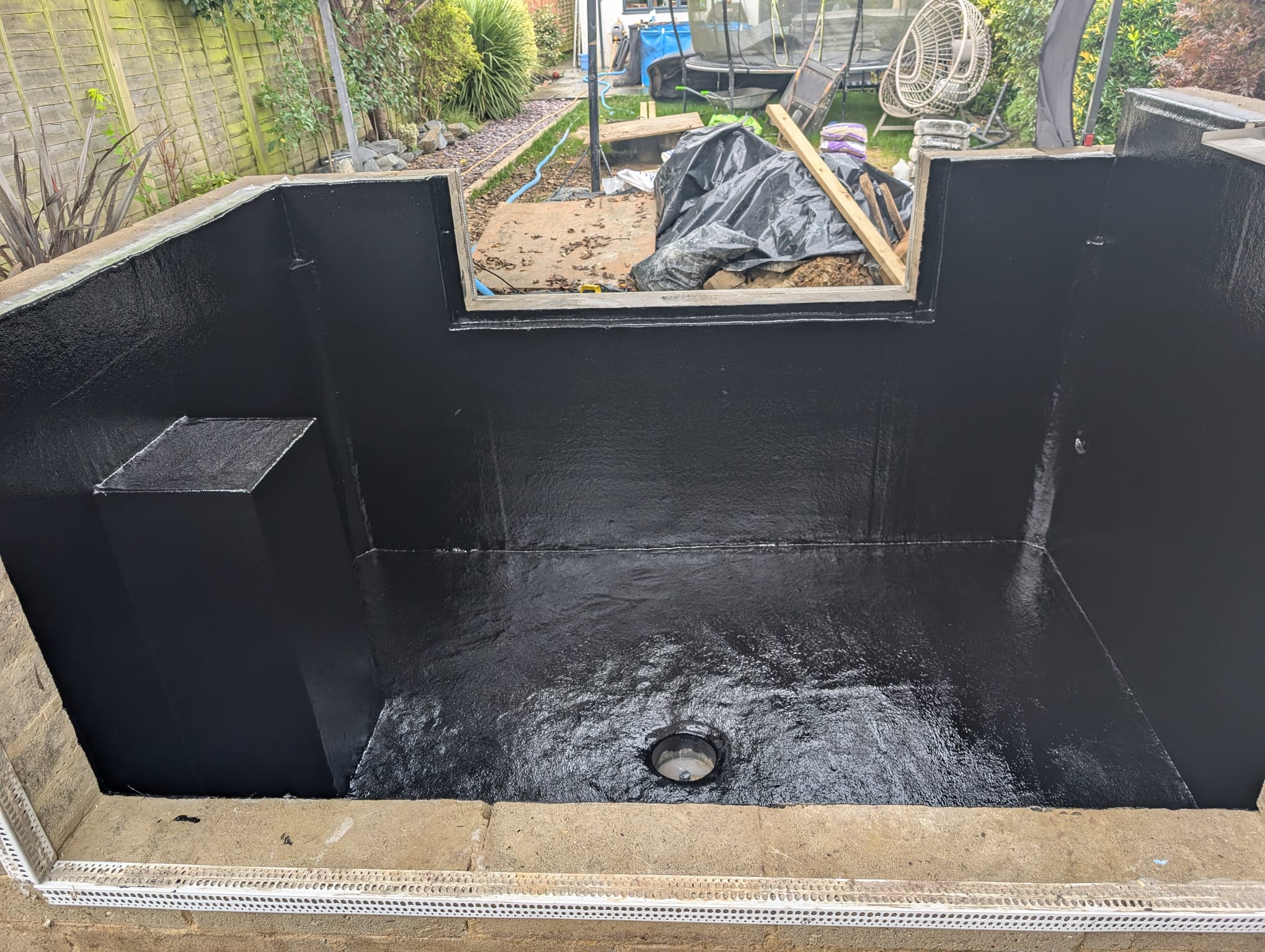
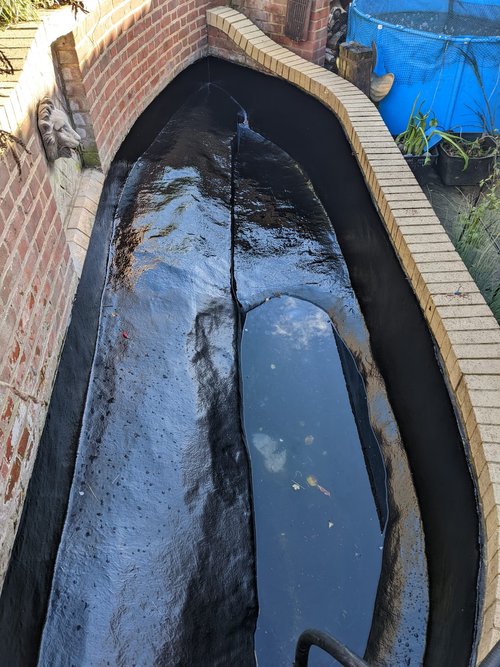
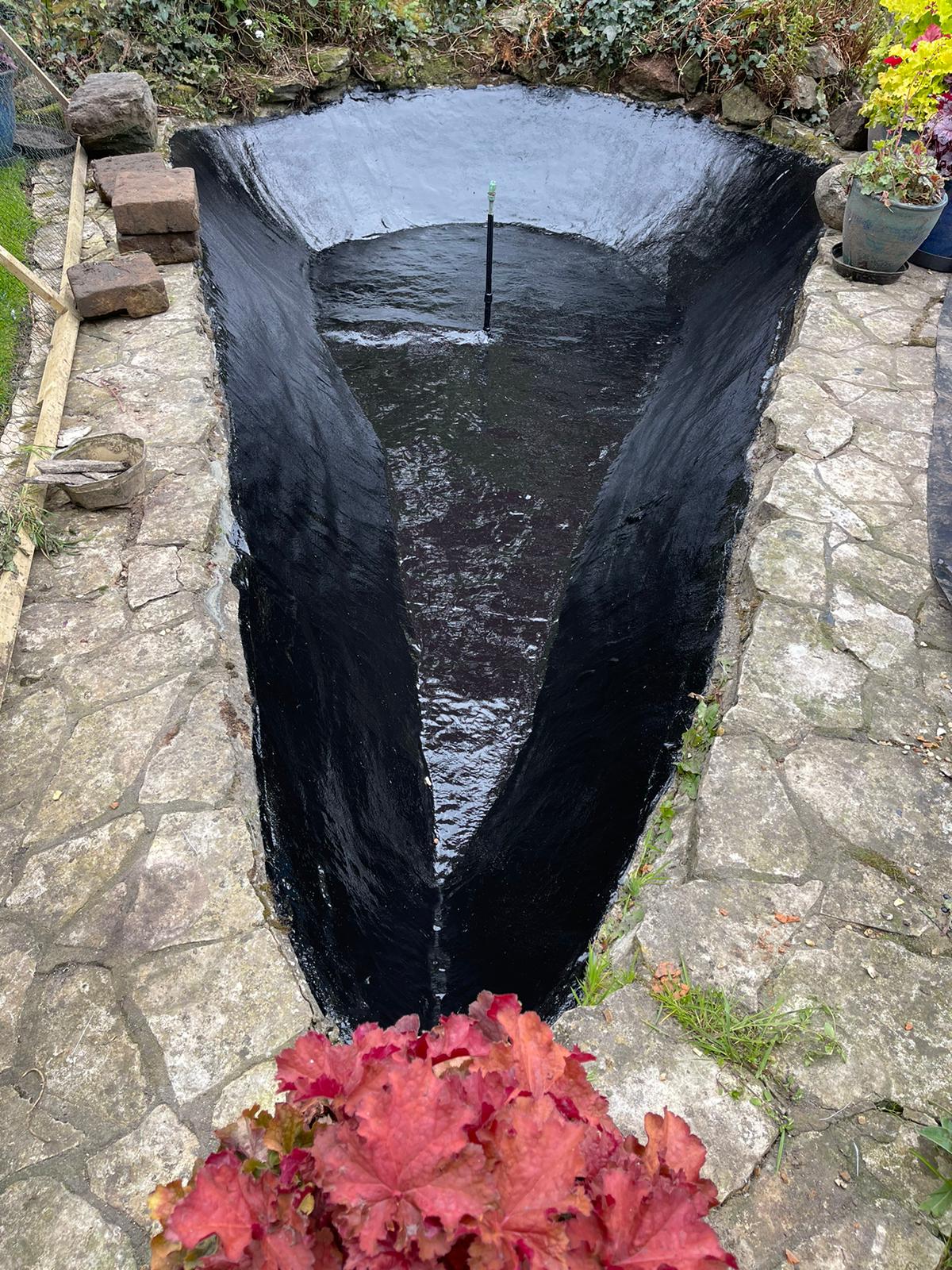
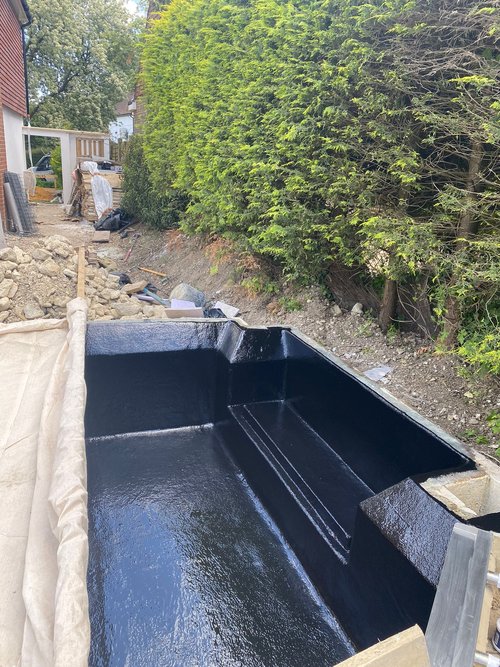
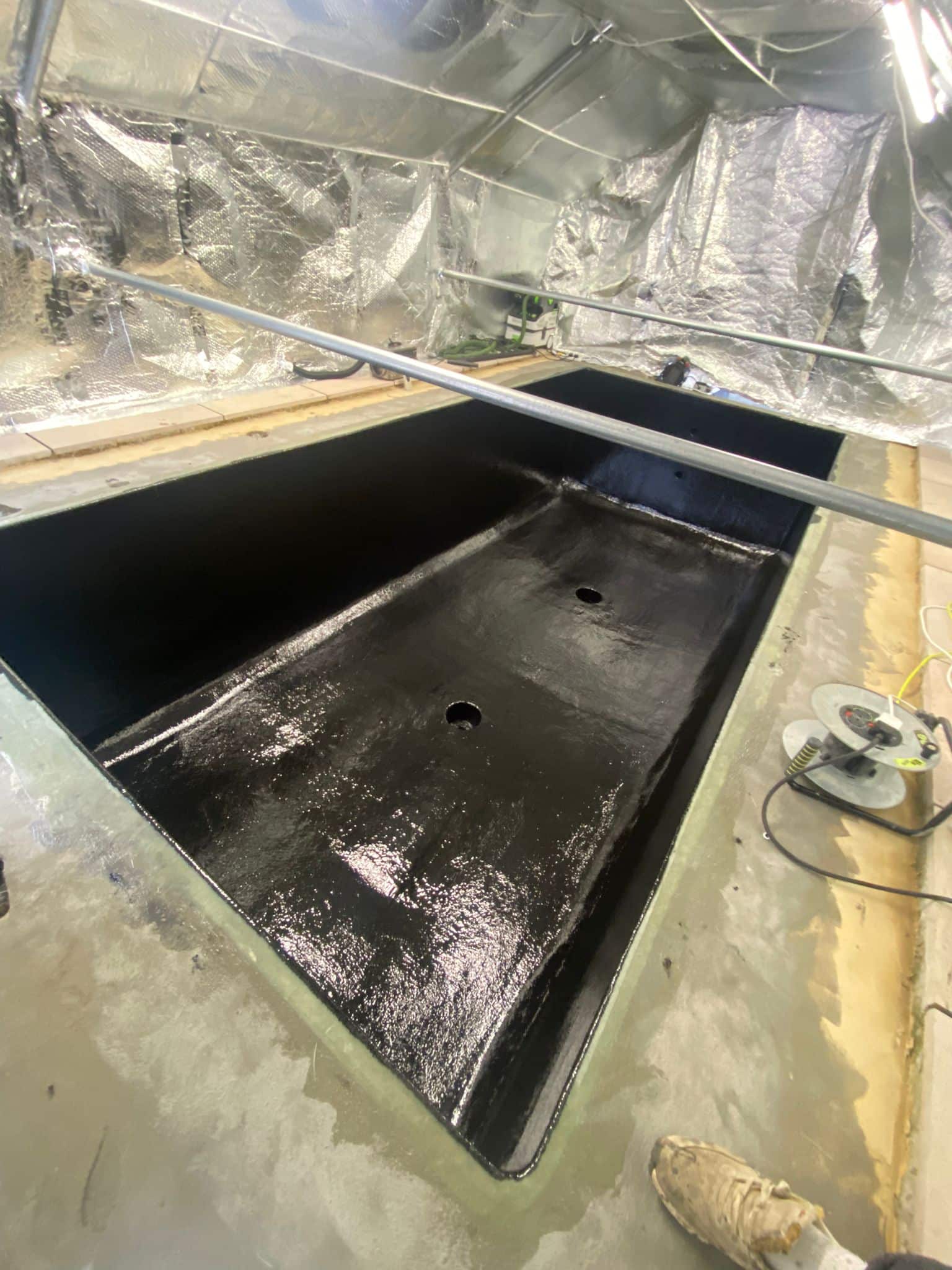
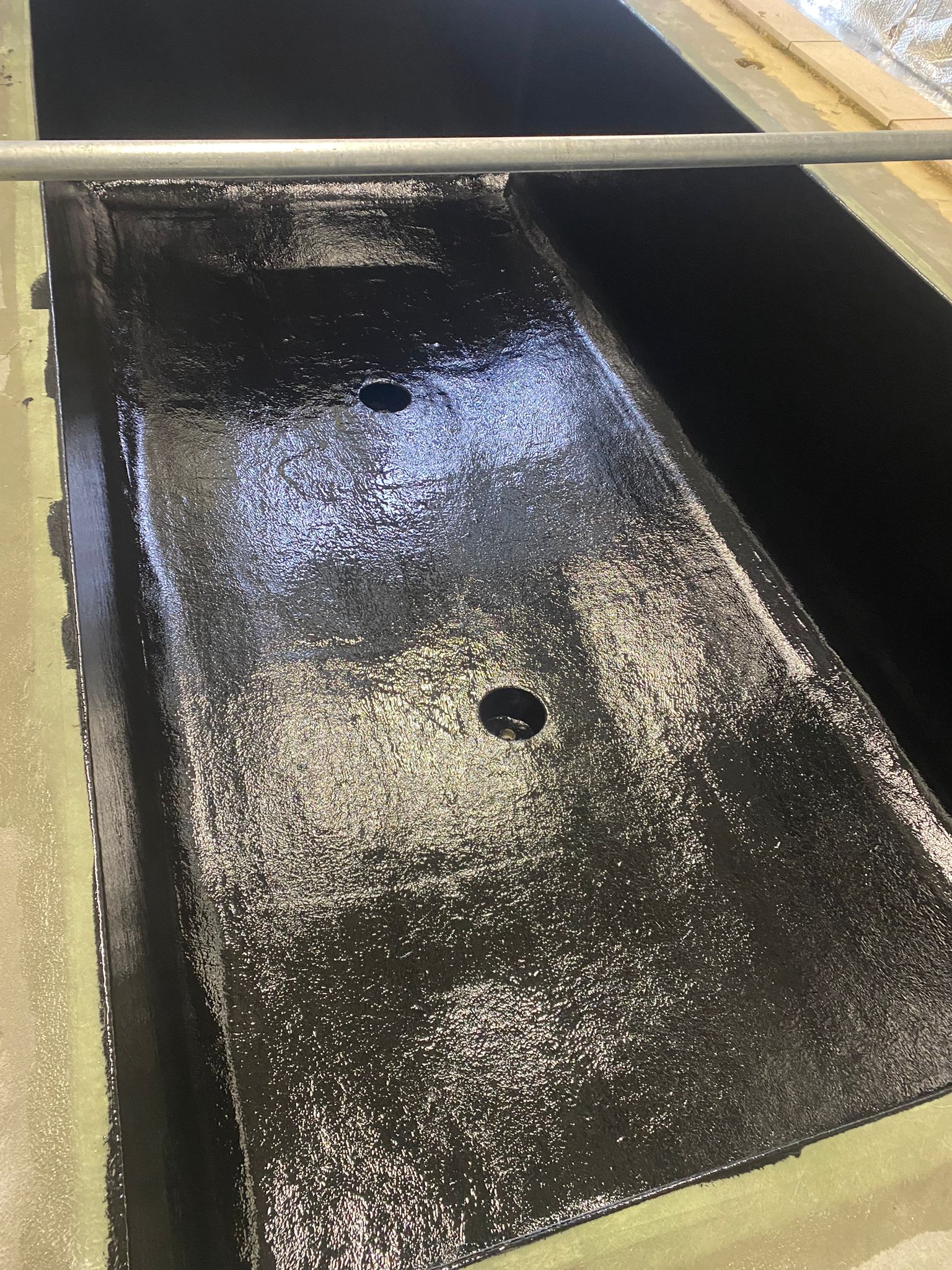
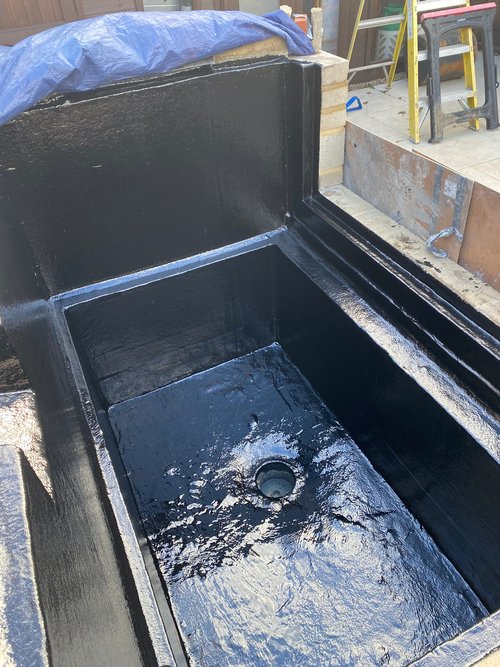
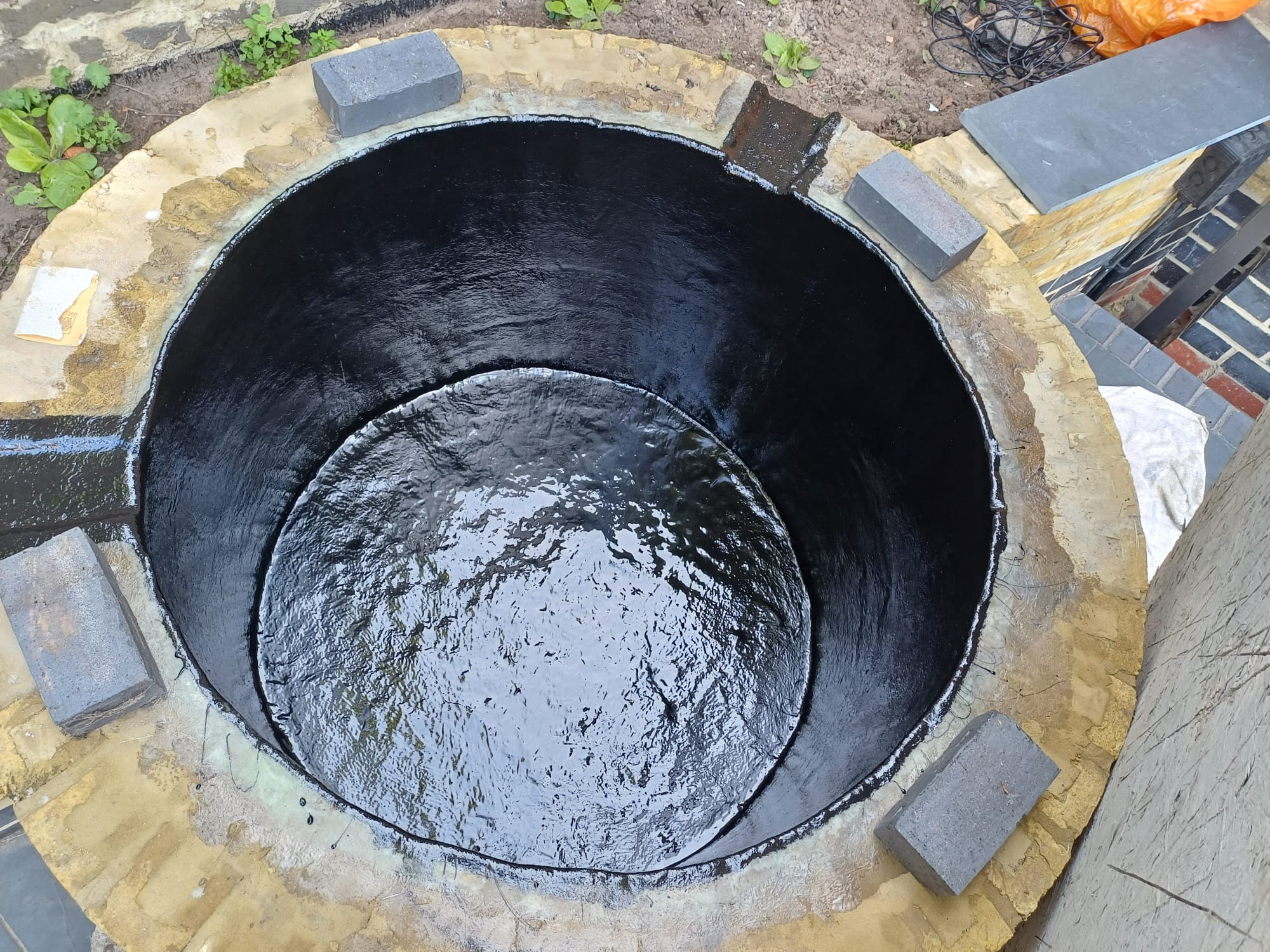
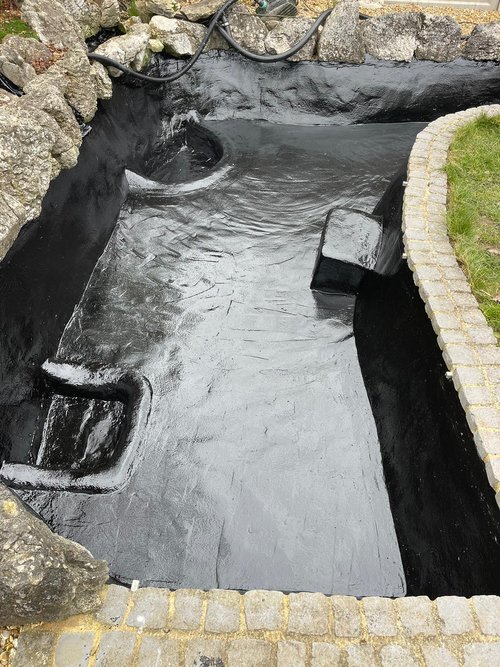
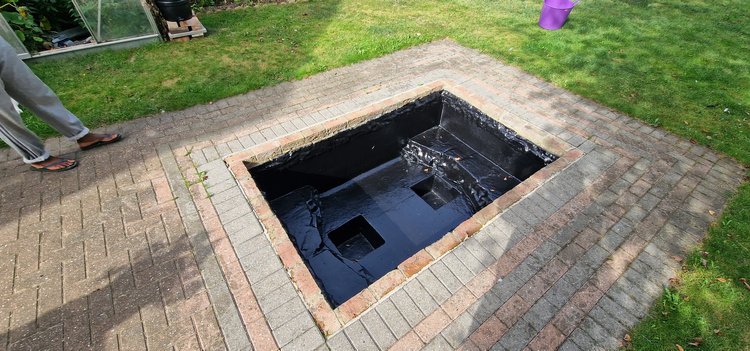
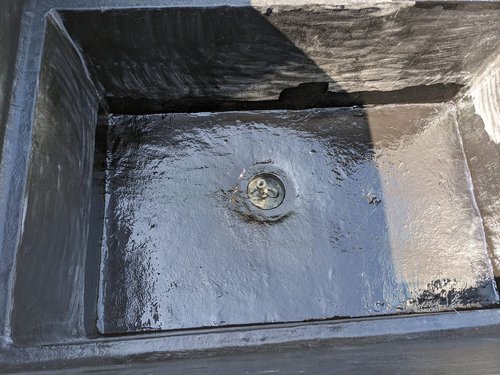
Once prepared, we apply layers of fibreglass matting and resin to build up a strong and fully sealed lining. Each layer is carefully worked by hand to remove air pockets and ensure even coverage across all surfaces, including corners, steps, and detailing. This stage is key to achieving a consistent and durable finish.
As the fibreglass cures, it forms a rigid, watertight shell that bonds directly to the structure beneath. This creates a solid lining that will not move, crease, or degrade in the same way as traditional liners.
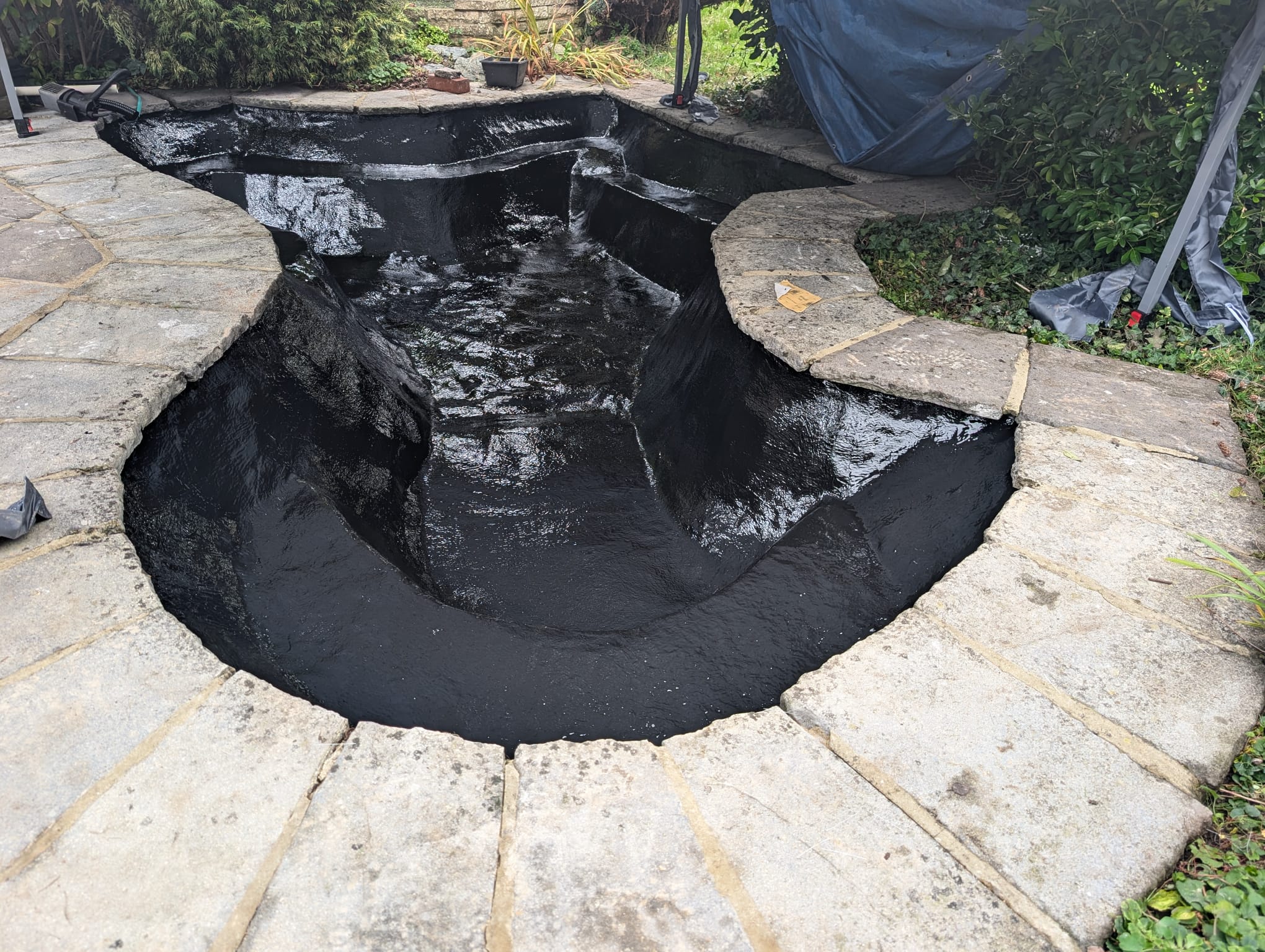
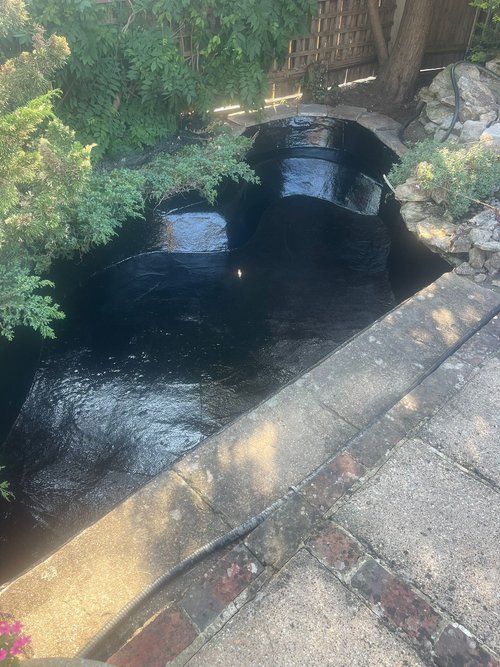
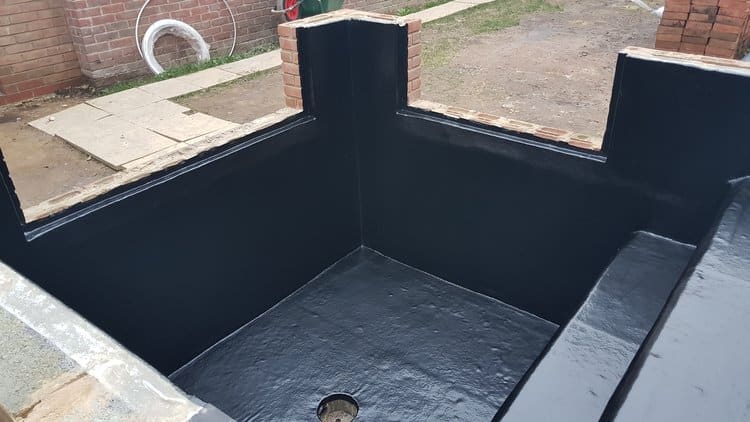
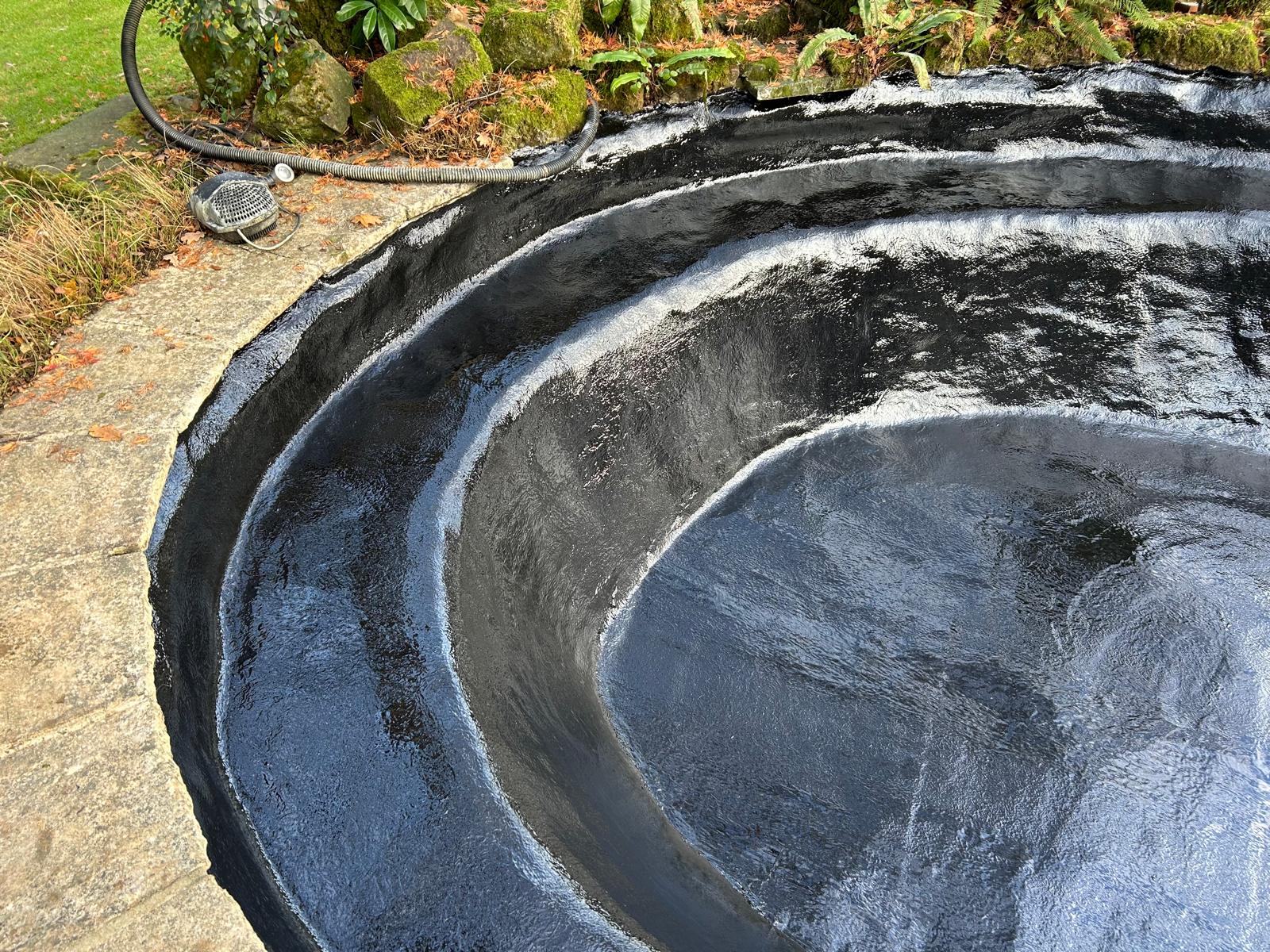
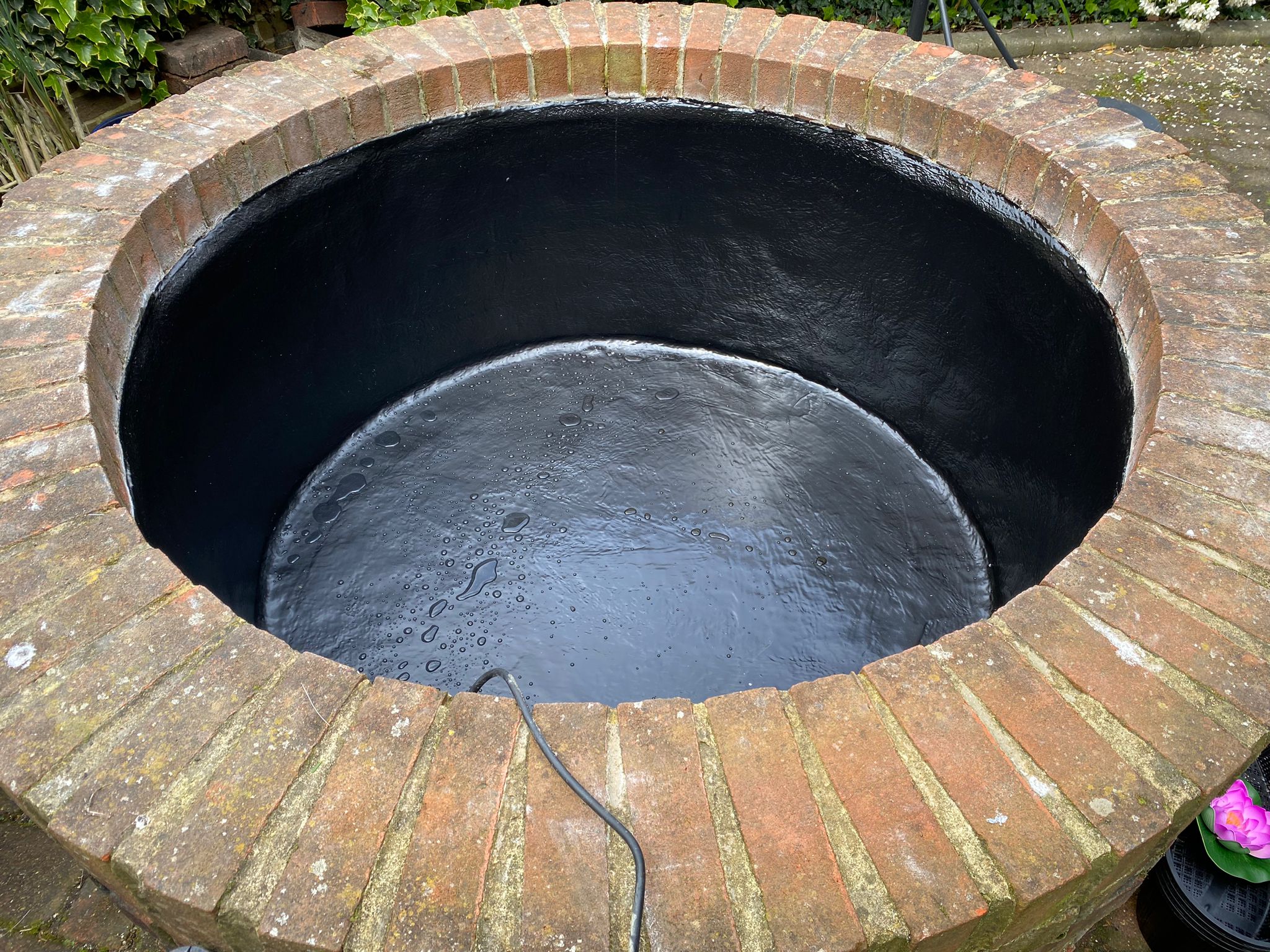
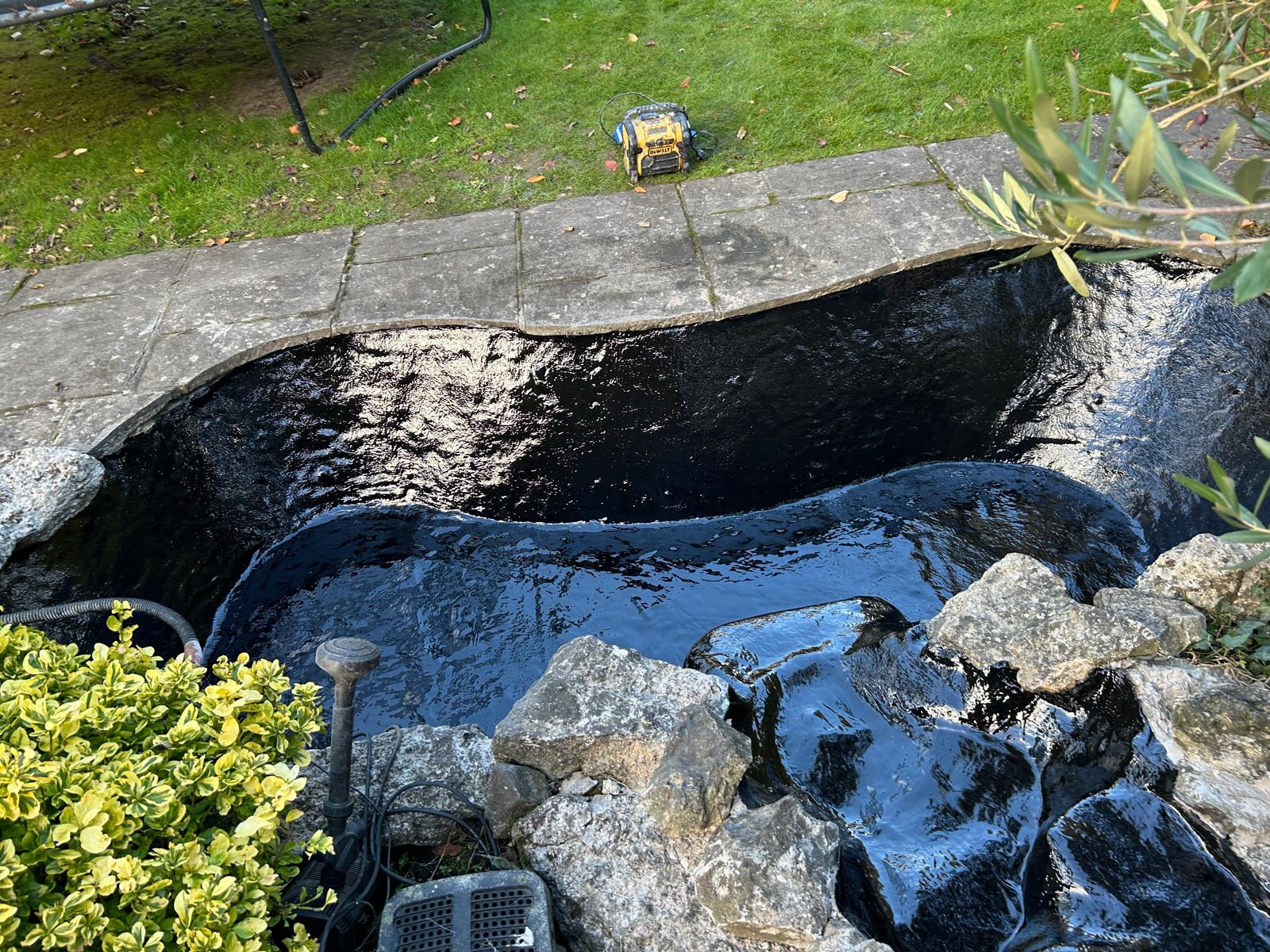
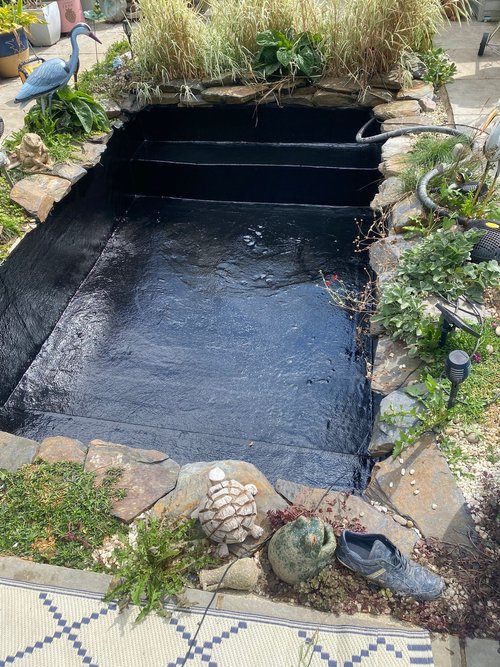
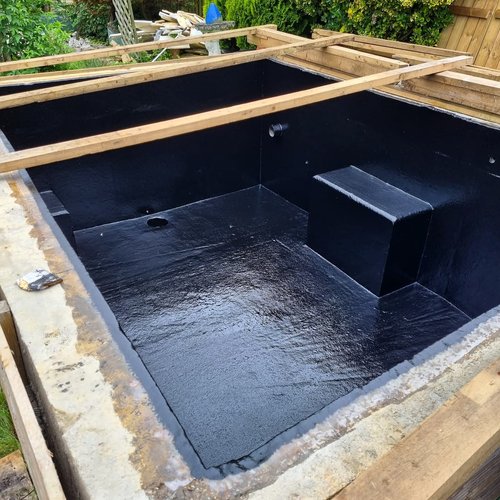
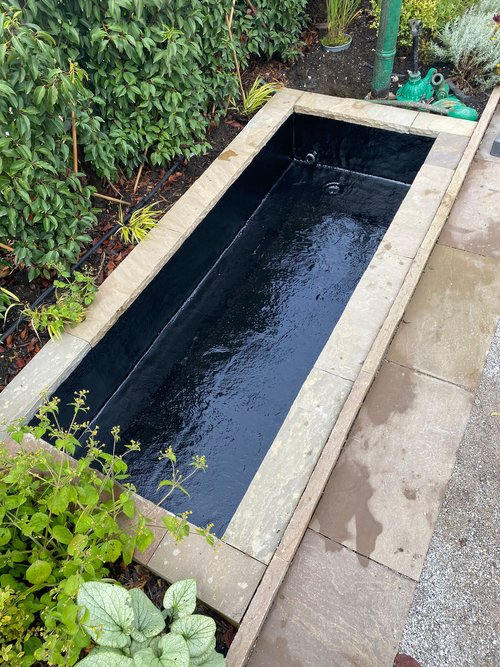
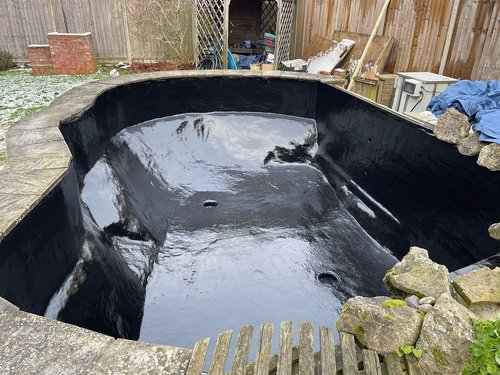
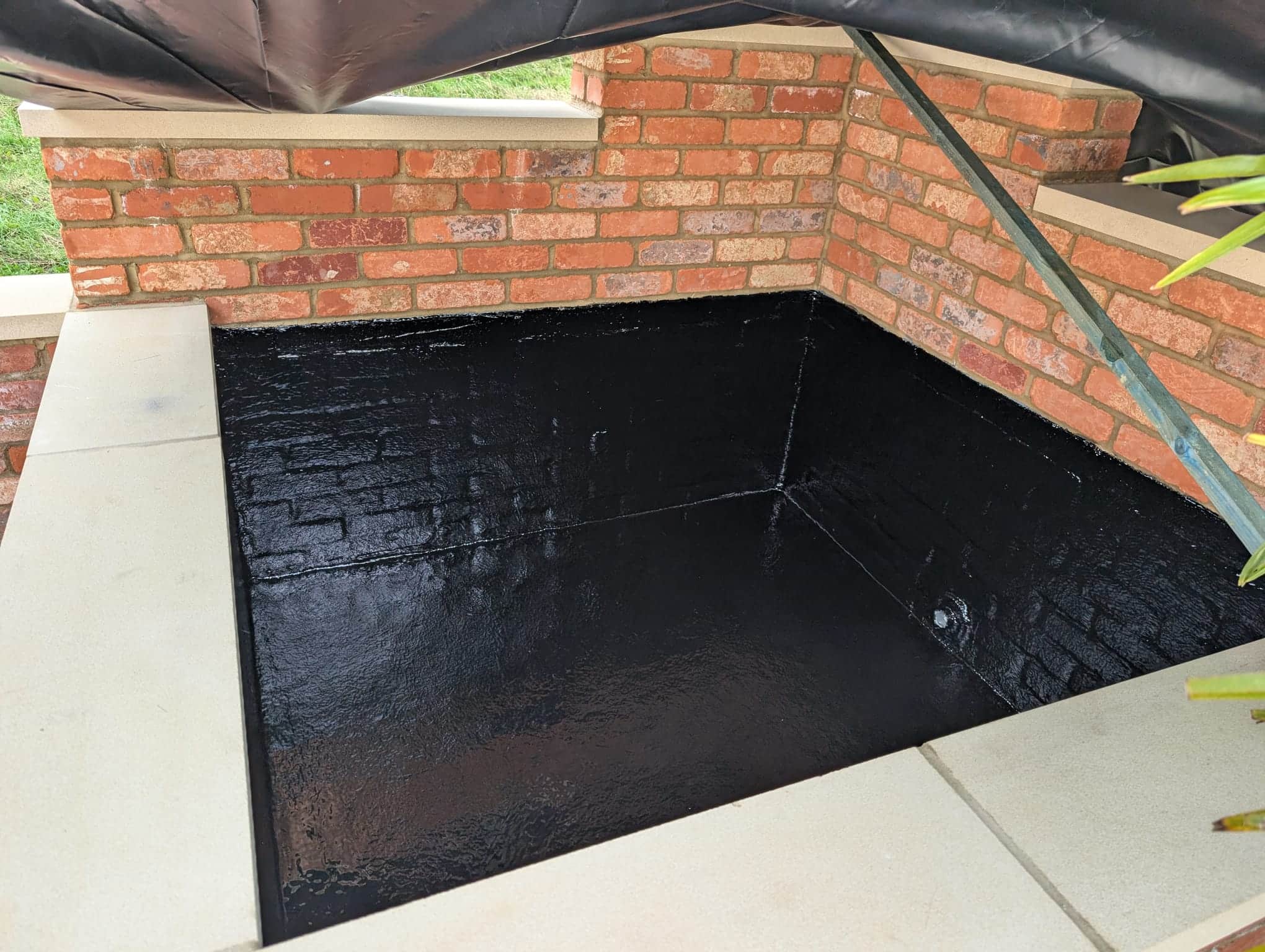
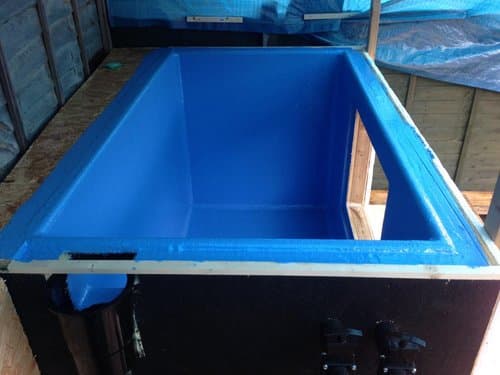
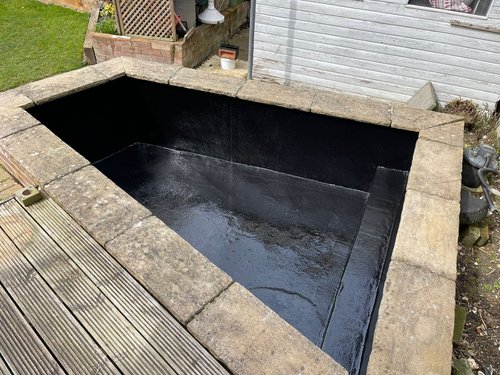
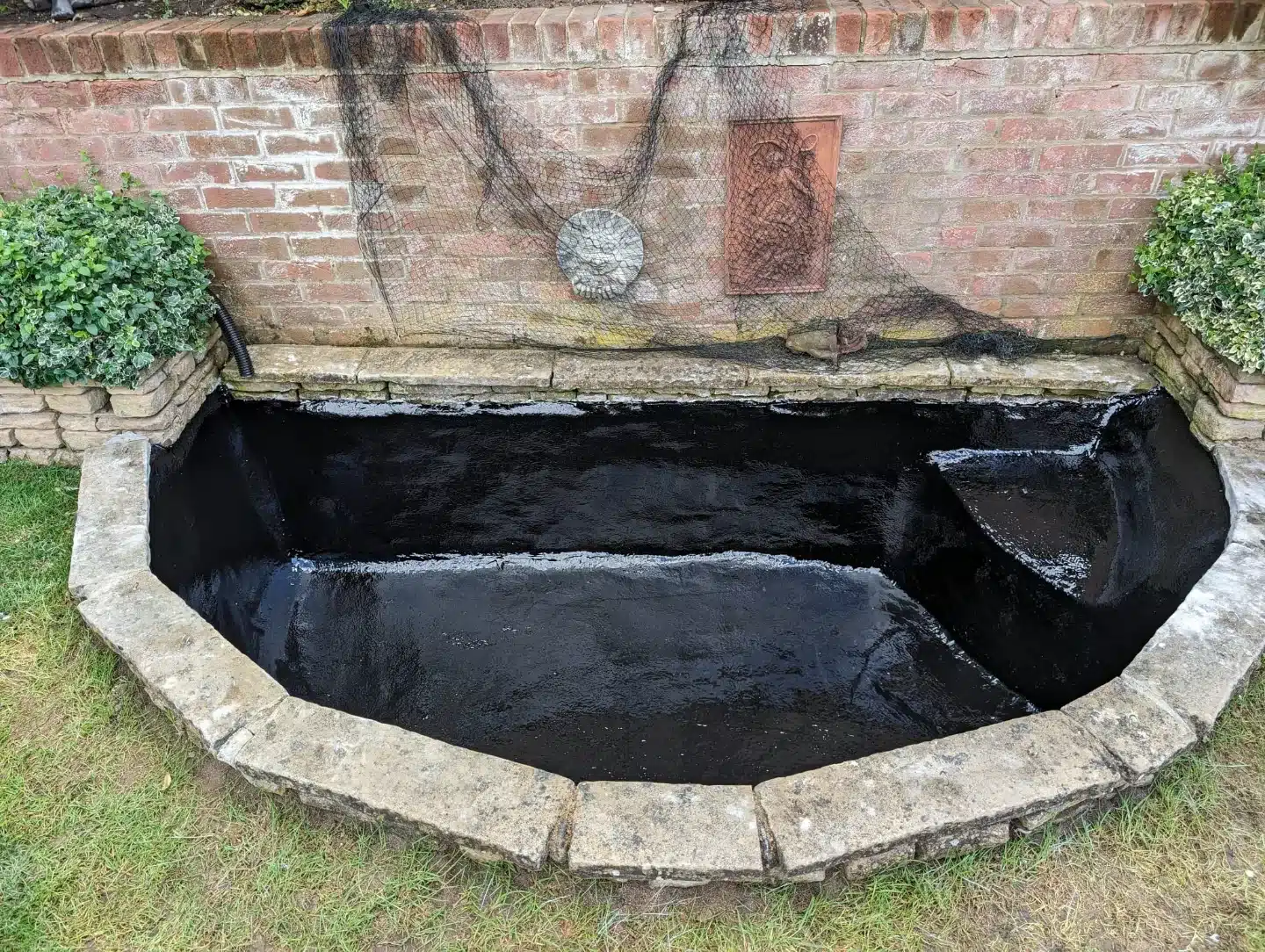
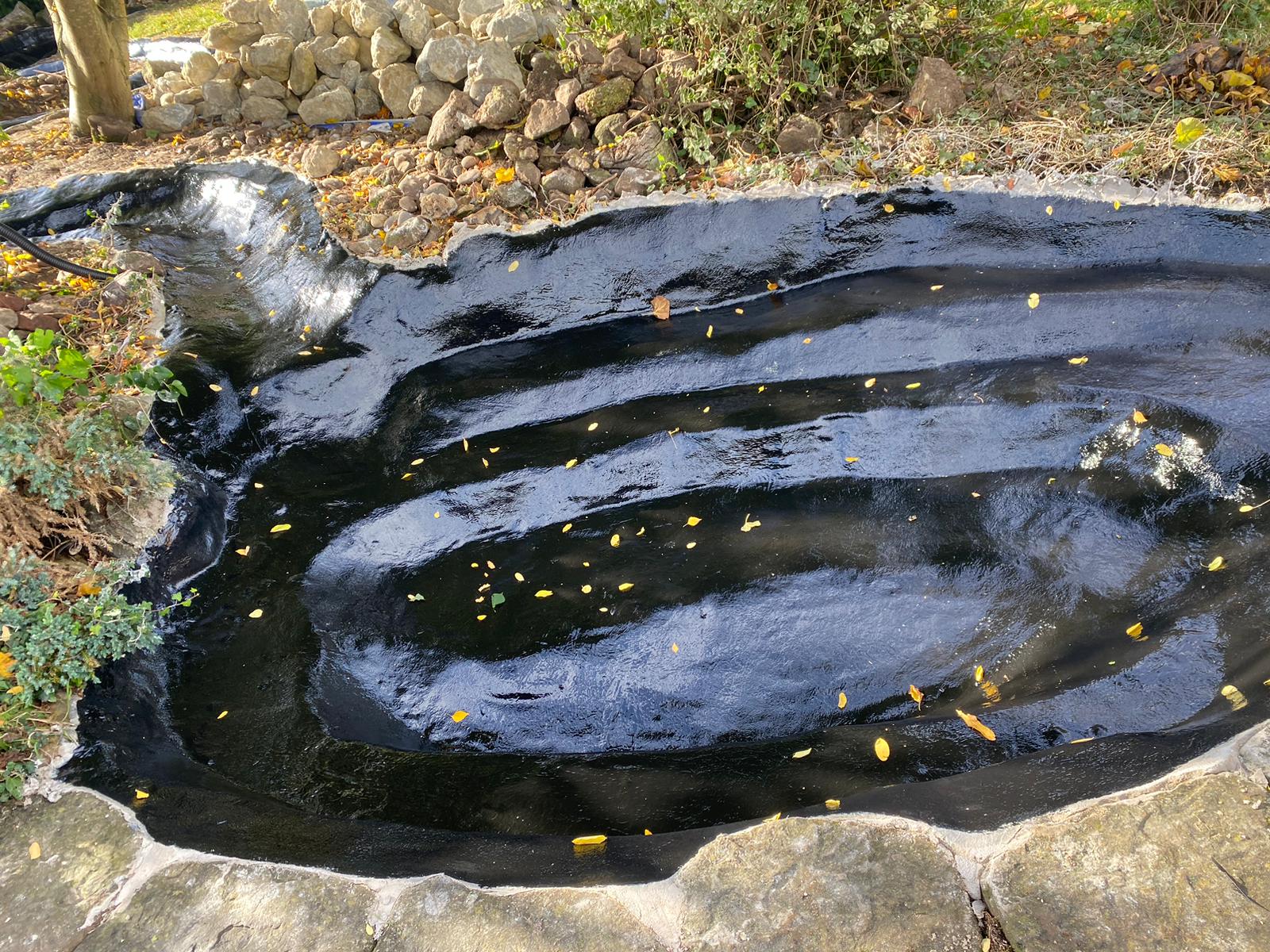
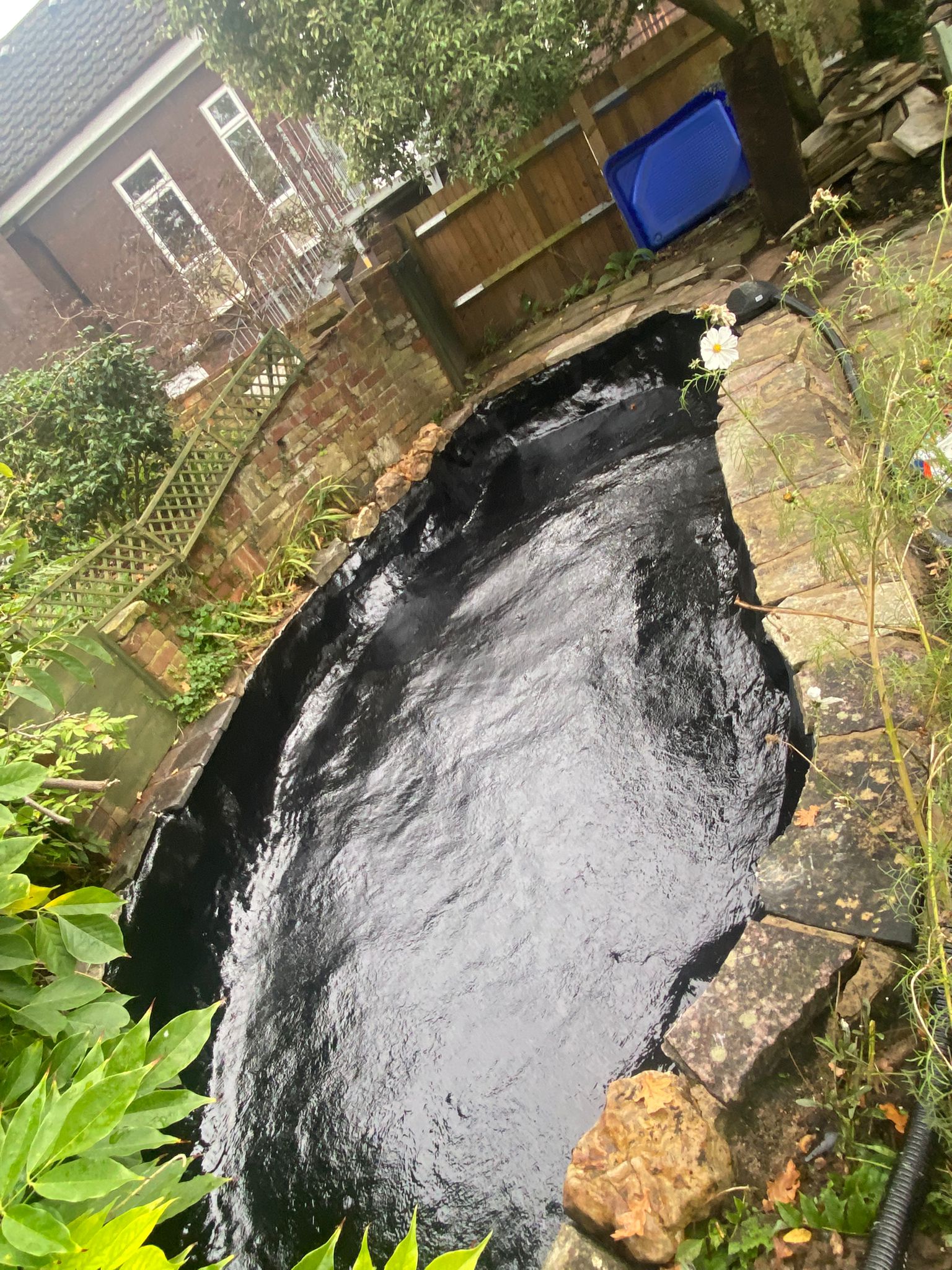
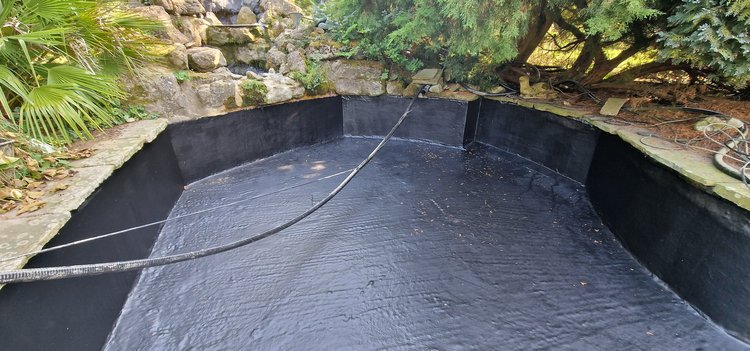
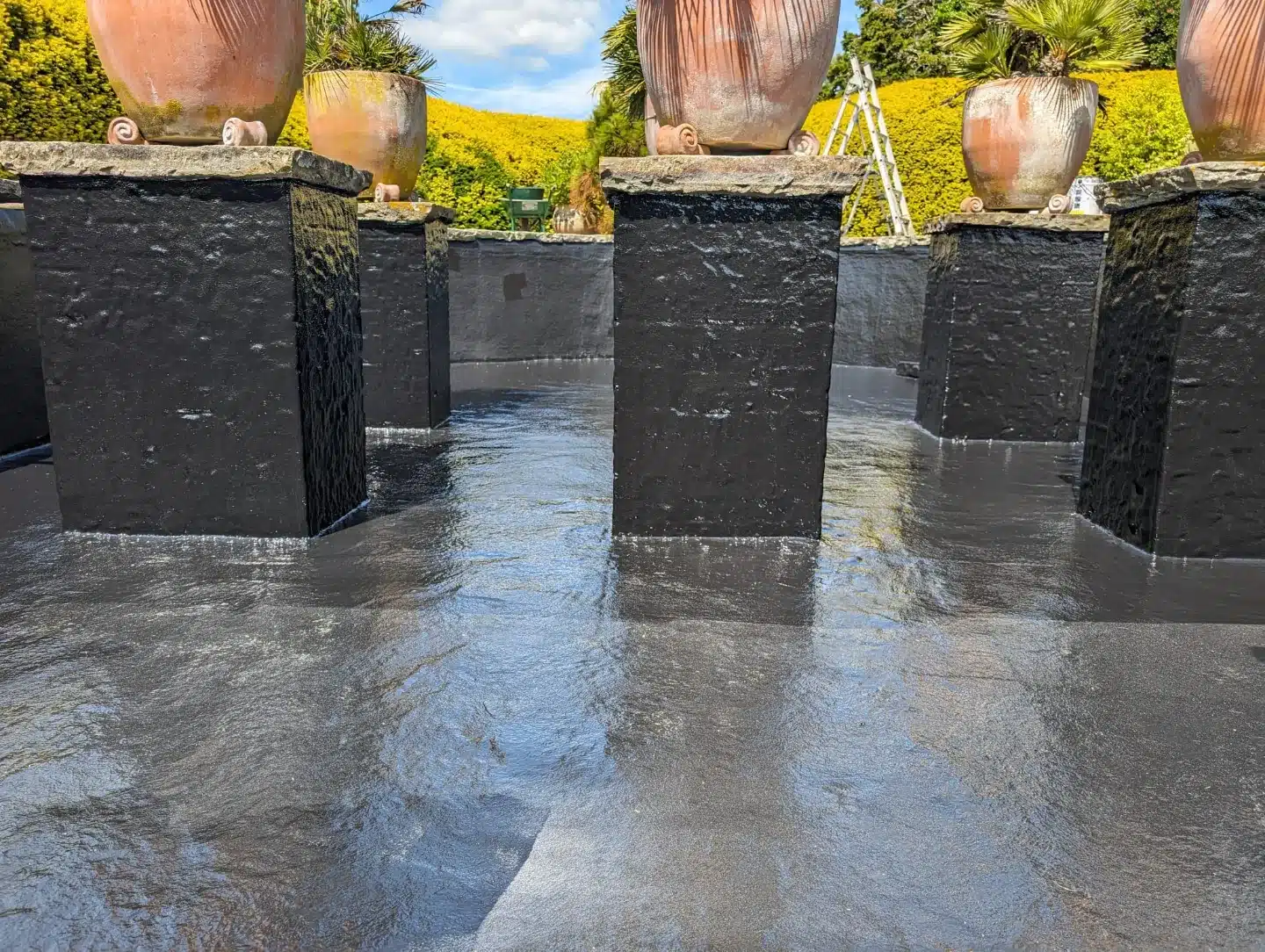
We then apply finishing coats to protect the surface and improve appearance. These can be tailored depending on the type of pond, whether it is a garden pond, koi pond, or swimming pond. The result is a smooth, seamless finish that is easy to maintain and built to last.
Fibreglass vs pond liner
Choosing between fibreglass and a traditional pond liner is one of the most important decisions when building or upgrading a pond. Both options can work well, but they offer very different long term performance.
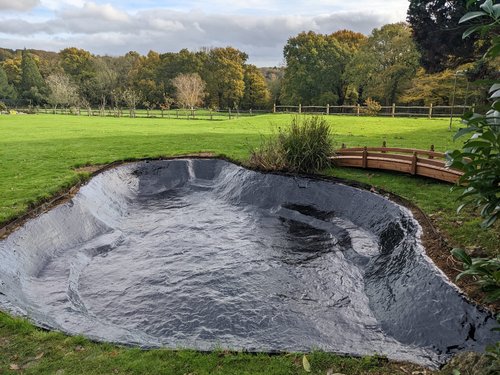
Pond liners, whether PVC or EPDM, are flexible and cost effective. They are widely used in garden ponds and can be installed relatively quickly. However, over time liners can shift, crease, or become damaged. This can lead to leaks, trapped debris, and ongoing maintenance issues, particularly in older ponds.
Fibreglass, on the other hand, creates a solid and permanent structure. It bonds directly to the pond base and walls, forming a completely sealed and rigid shell. This eliminates folds, reduces weak points, and provides a much cleaner internal finish.
In terms of durability, fibreglass is a long term solution. It resists UV exposure, temperature changes, and ground movement far better than most liners. This makes it particularly well suited to koi ponds, formal ponds, and projects where reliability is important.
Maintenance is also reduced with fibreglass. The smooth, non porous surface makes it harder for algae and debris to attach, which helps keep the pond cleaner and easier to manage.
Liners can still be a good option for smaller or more budget focused builds. However, for pond owners looking for a permanent upgrade with improved performance and a cleaner finish, fibreglass is often the better choice.
Converting a liner pond to a fibreglass pond
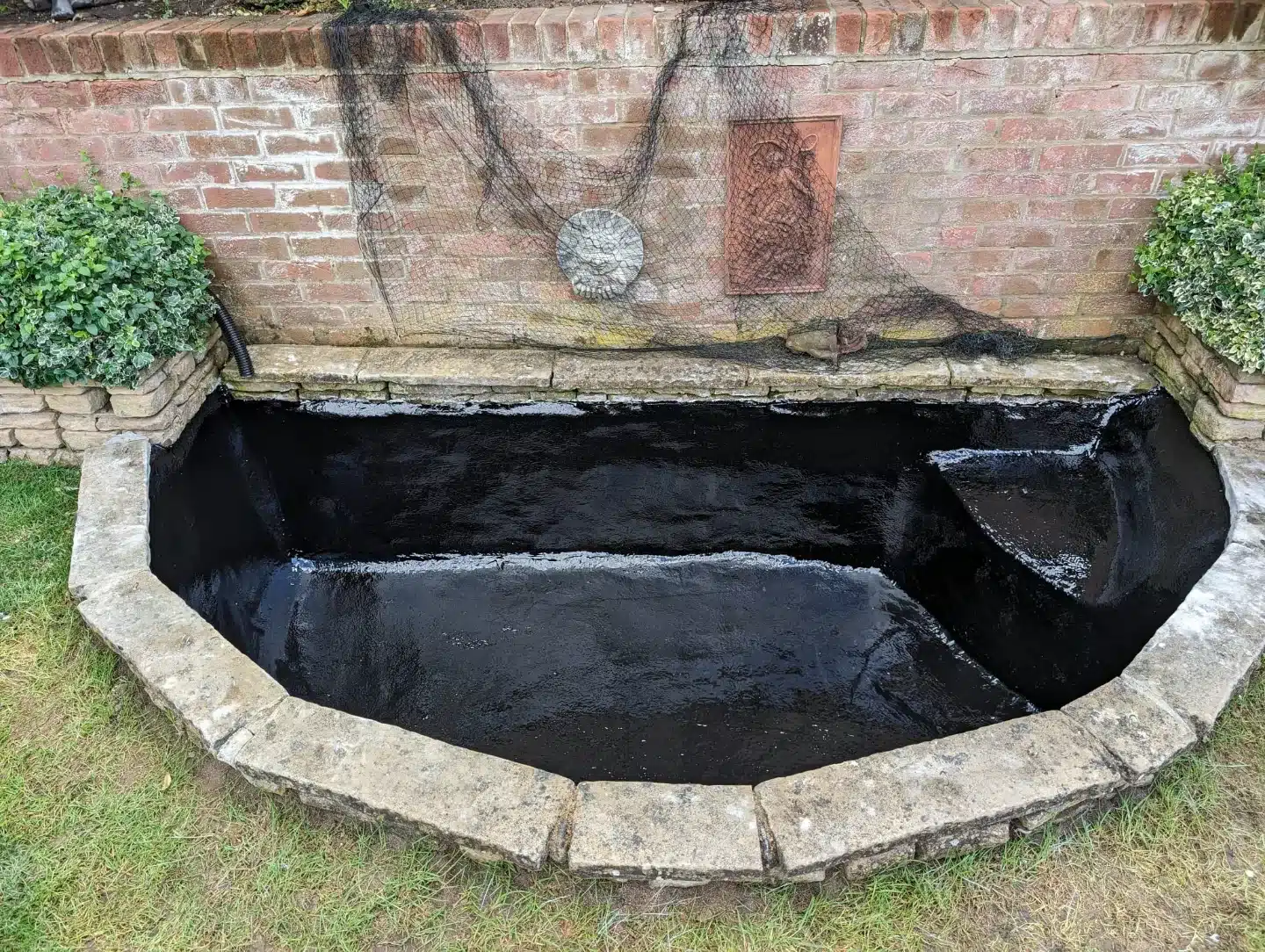
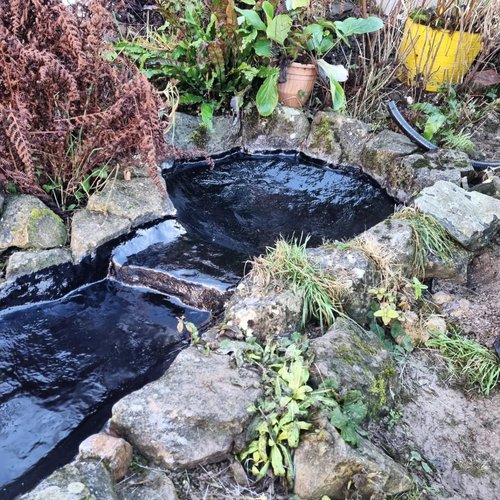
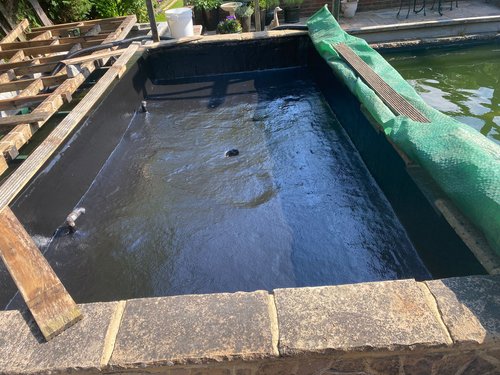
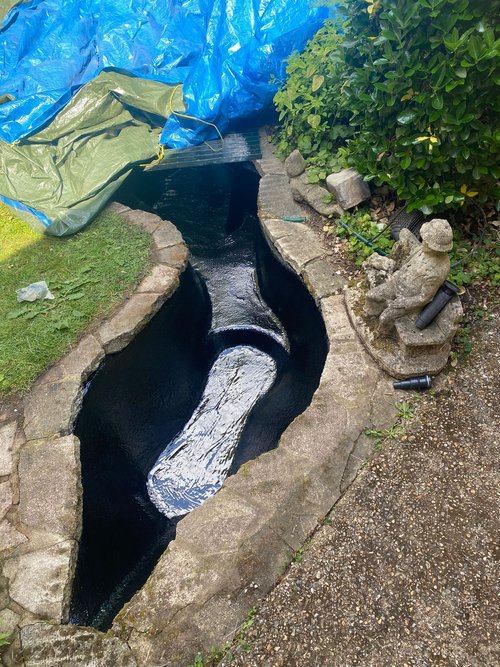
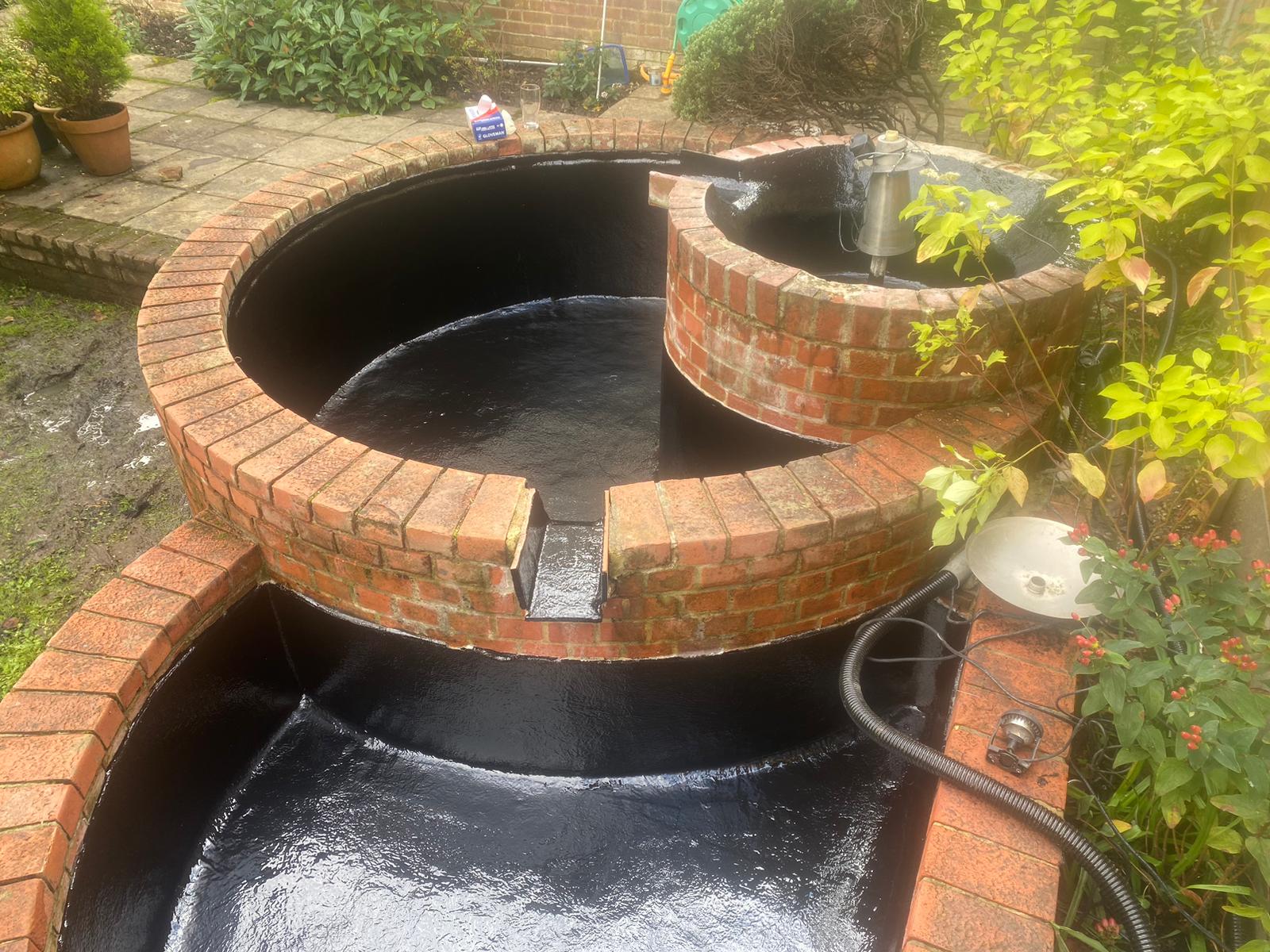
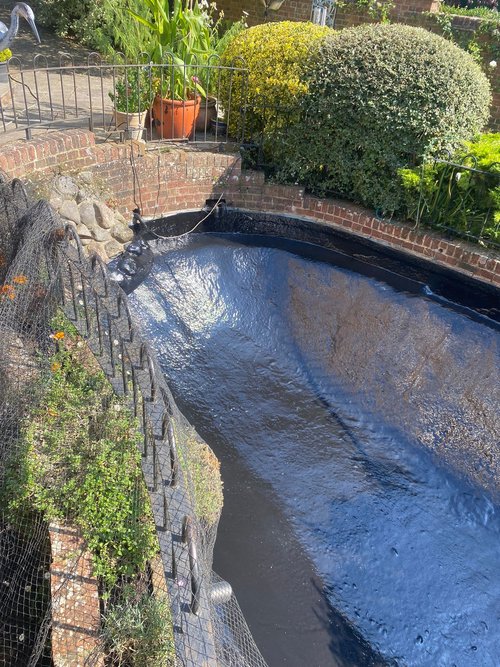
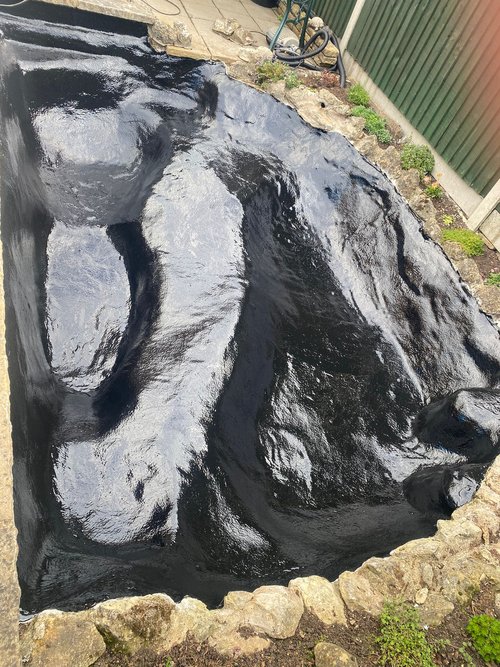
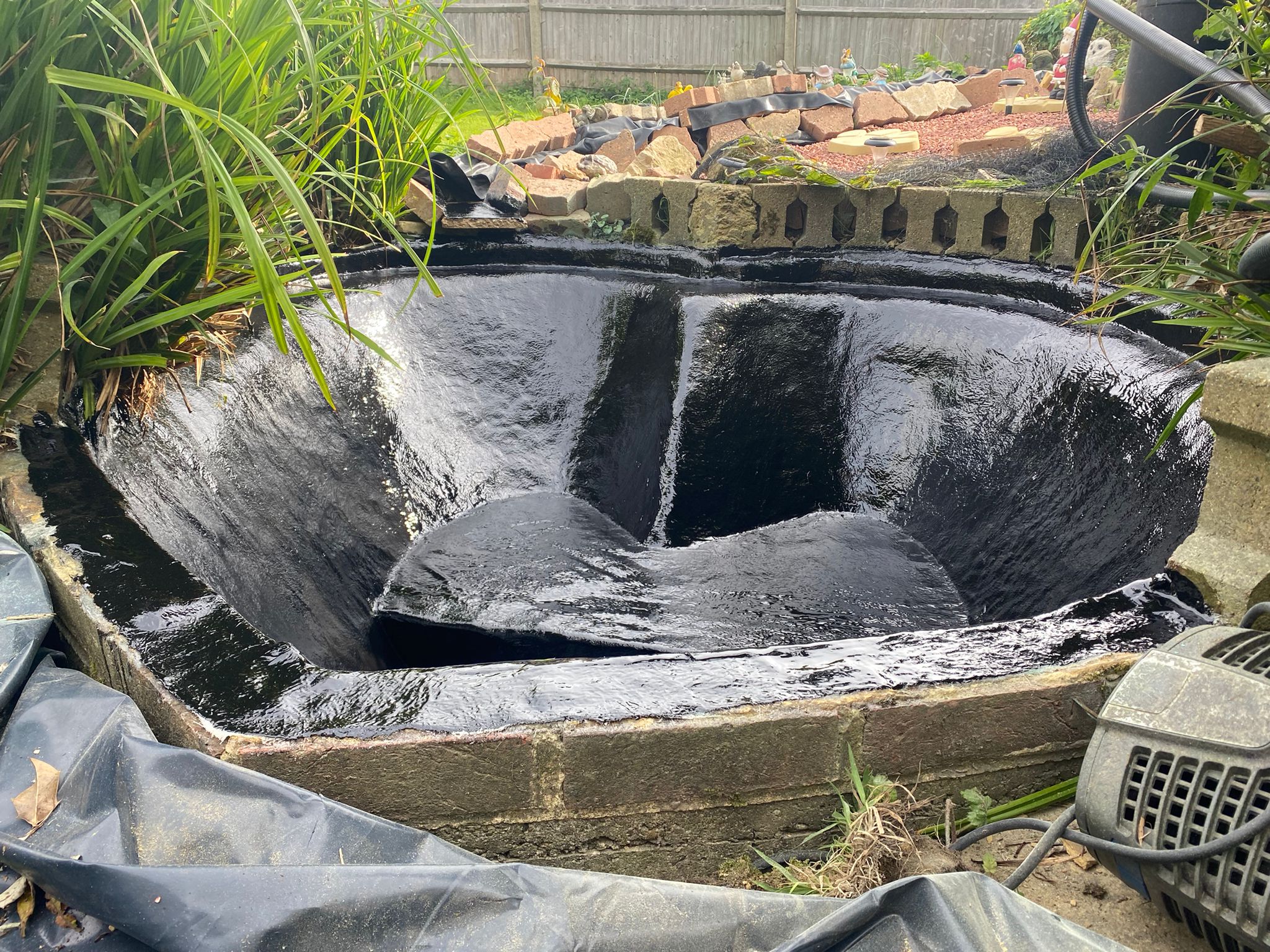
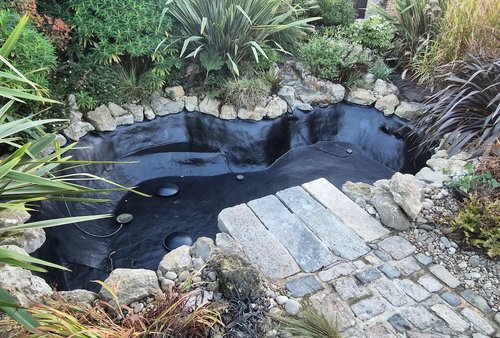
Many of the ponds we fibreglass were originally built using rubber or PVC liners. While liners can work well initially, they often become brittle, shift, crease, or fail over time. This can lead to leaks, trapped debris, and ongoing maintenance issues. Converting an existing liner pond to fibreglass is a popular upgrade that provides a permanent and seamless solution.
The process starts by fully draining the pond and carefully removing the existing liner and underlay. Once exposed, we assess the underlying structure to make sure it is suitable for fibreglassing. This may involve minor repairs, smoothing surfaces, or carrying out additional preparation work to create a solid and stable base.
Where required, we can install insulation boards to improve temperature stability, which is particularly beneficial for koi ponds. We then apply a GRP fibreglass system, forming a strong, watertight shell that bonds directly to the structure and follows the exact shape of the pond. Once cured, this creates a smooth, durable surface that is easy to maintain and built to last.
Converting a liner pond to fibreglass removes the risk of future liner failure. It also eliminates folds where debris can collect and improves water flow within the pond. The result is a cleaner, more reliable system that requires less ongoing maintenance.
For many pond owners, this is a long term upgrade that avoids repeated repairs and ongoing issues associated with ageing liners. This is one of the most common upgrades we carry out.
If you would like a more detailed breakdown of the process, including preparation, insulation options, and what to expect during installation, you can read our full guide here: 👉 Converting a liner pond to a fibreglass pond
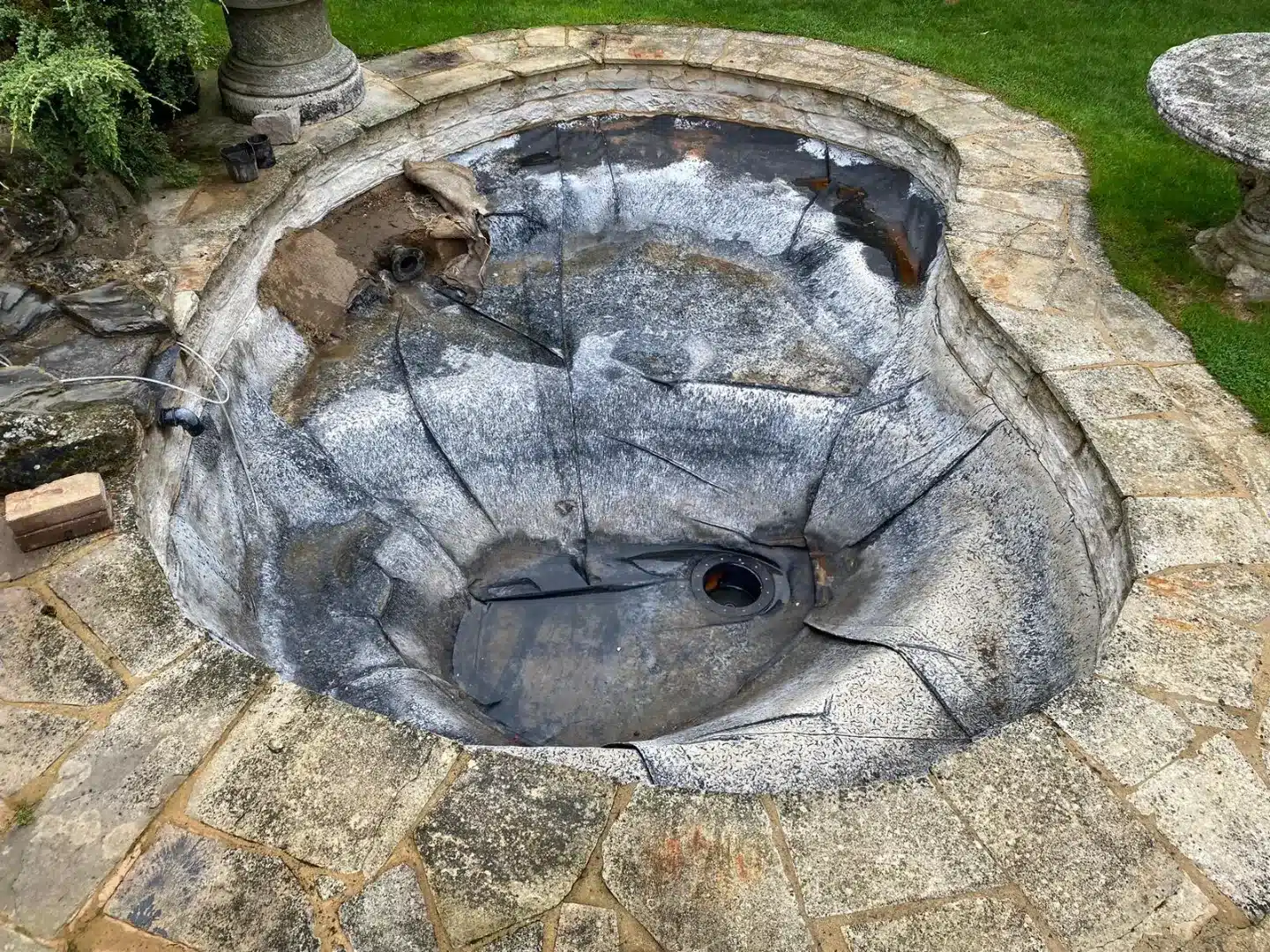
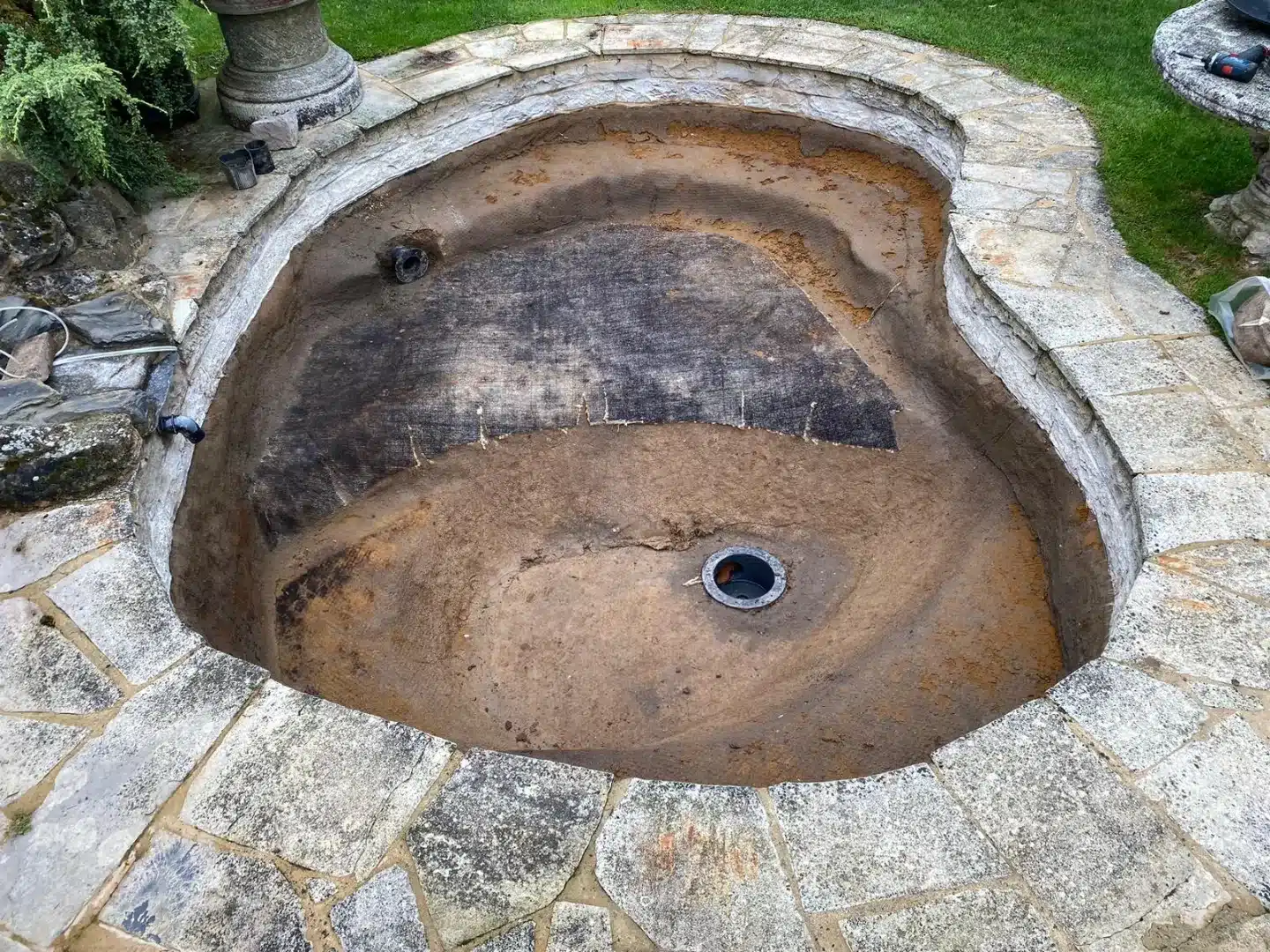
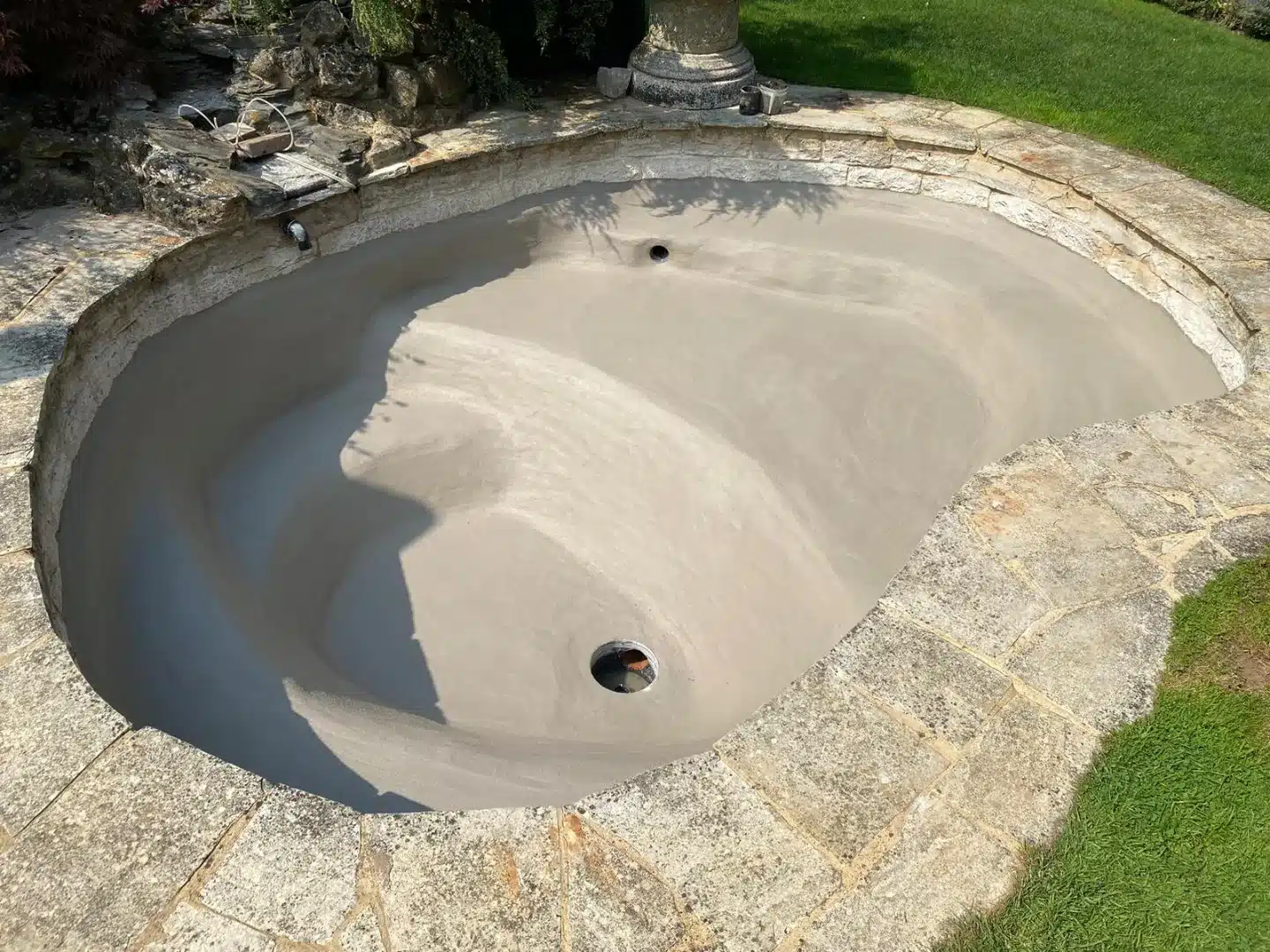
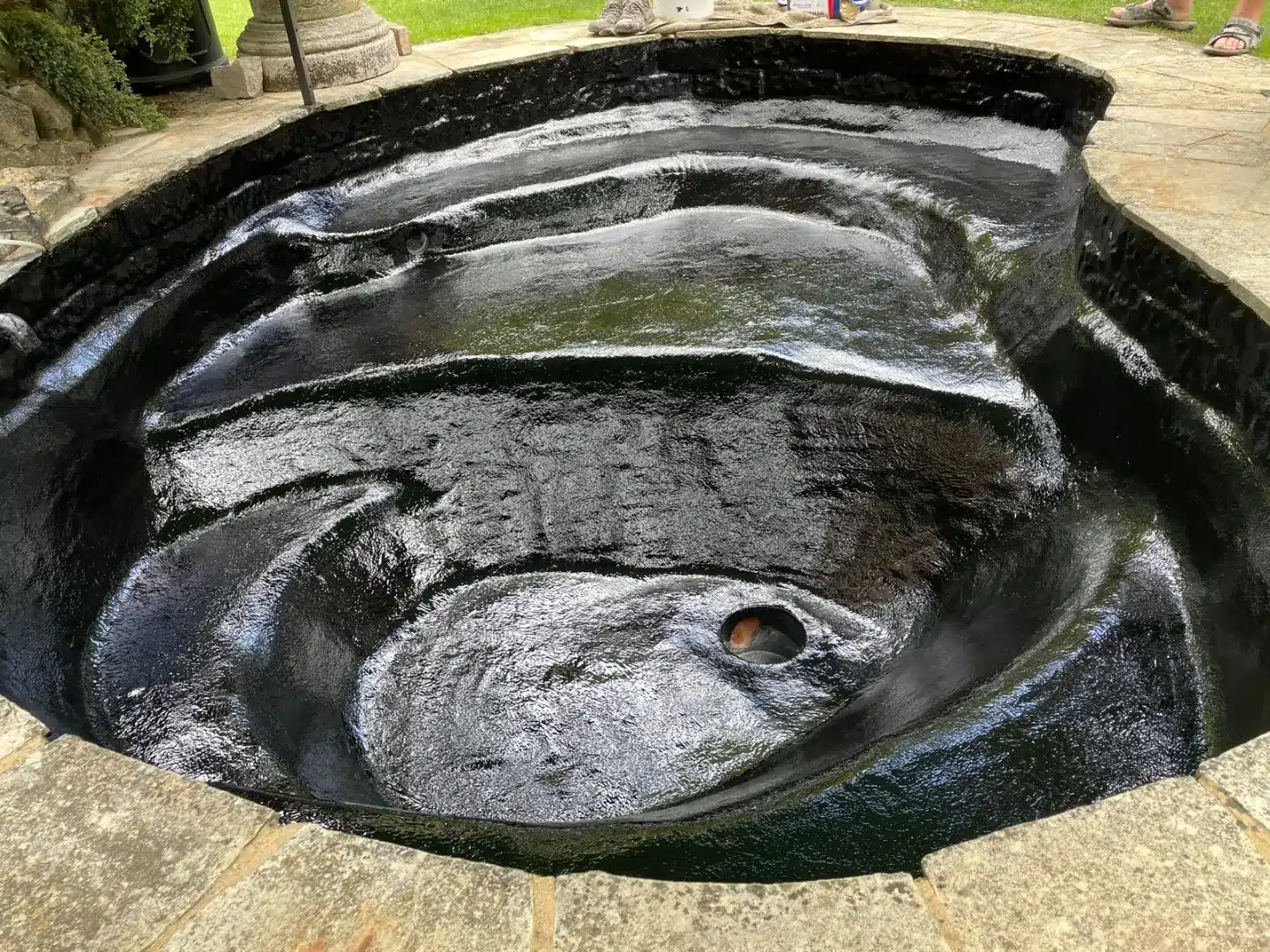
Pond and swimming pool fibreglassing specialists
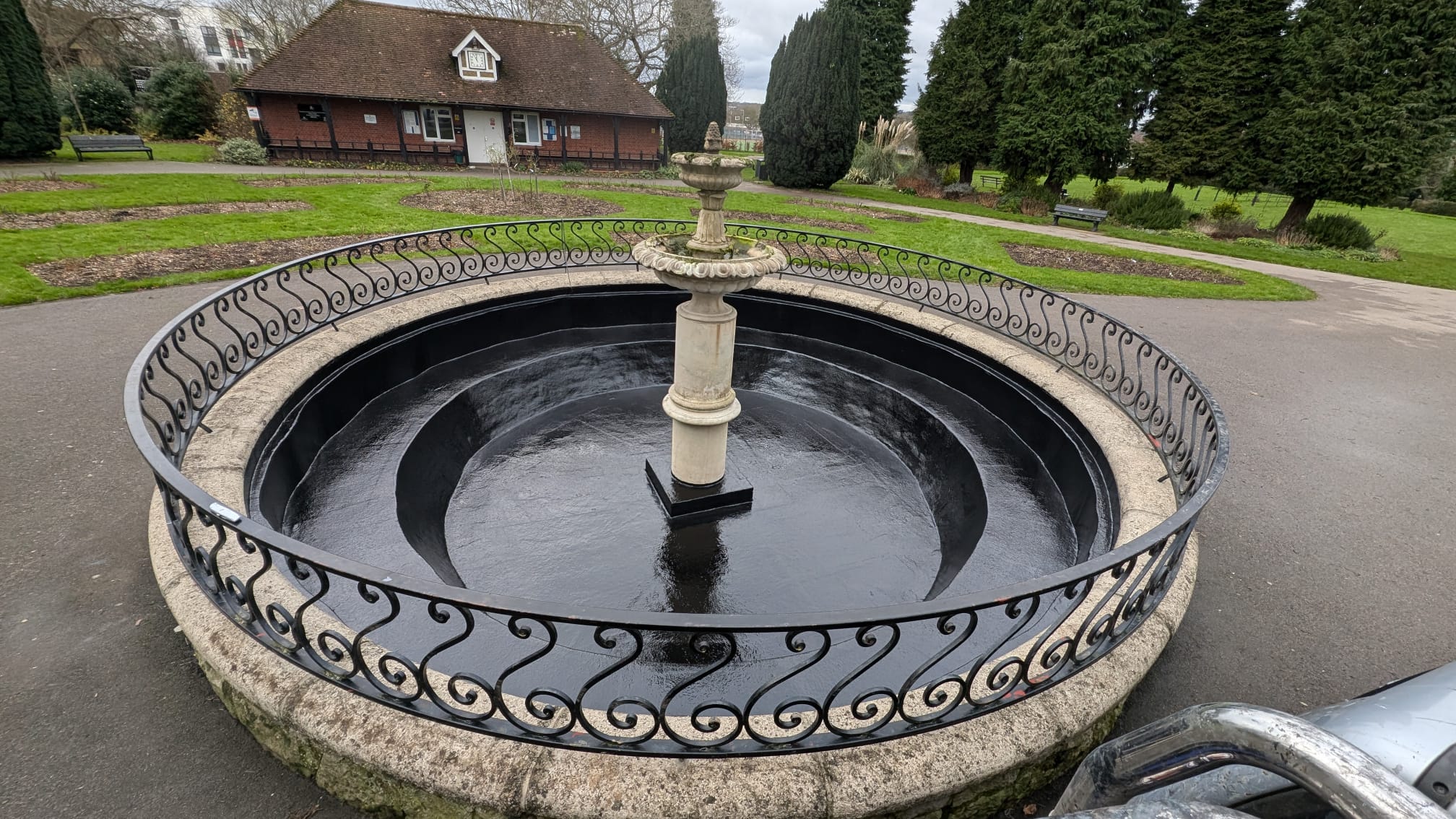
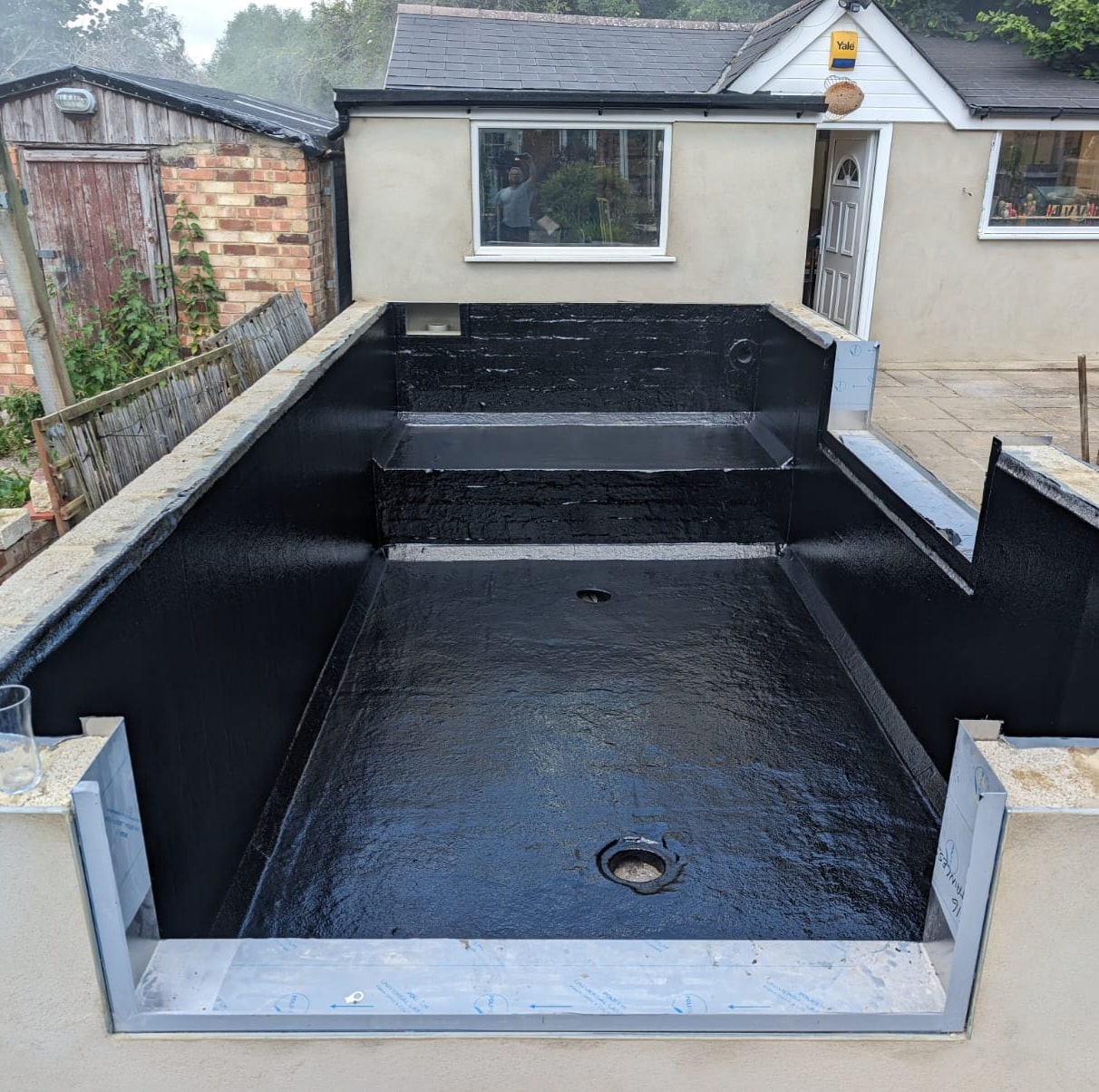
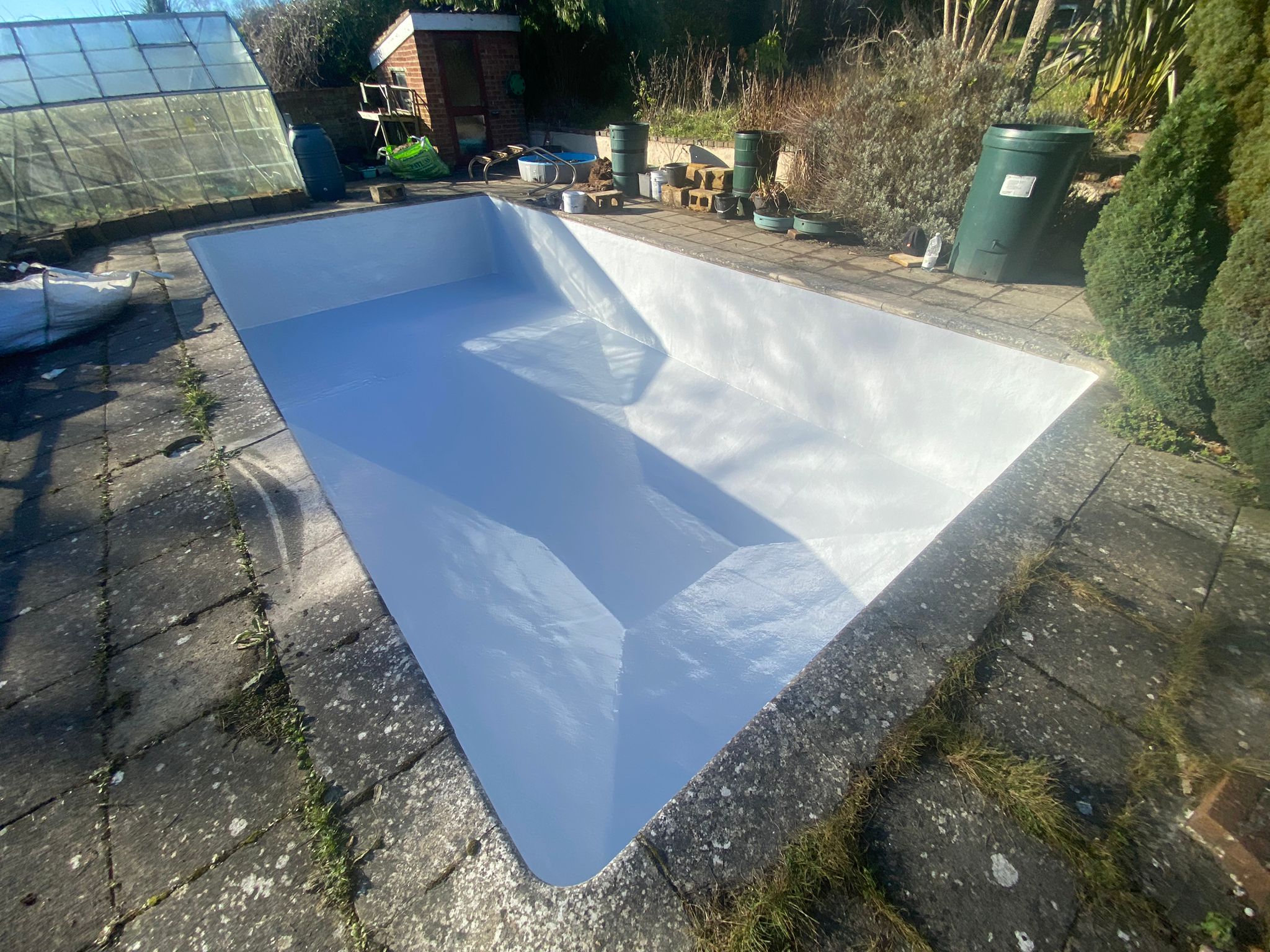
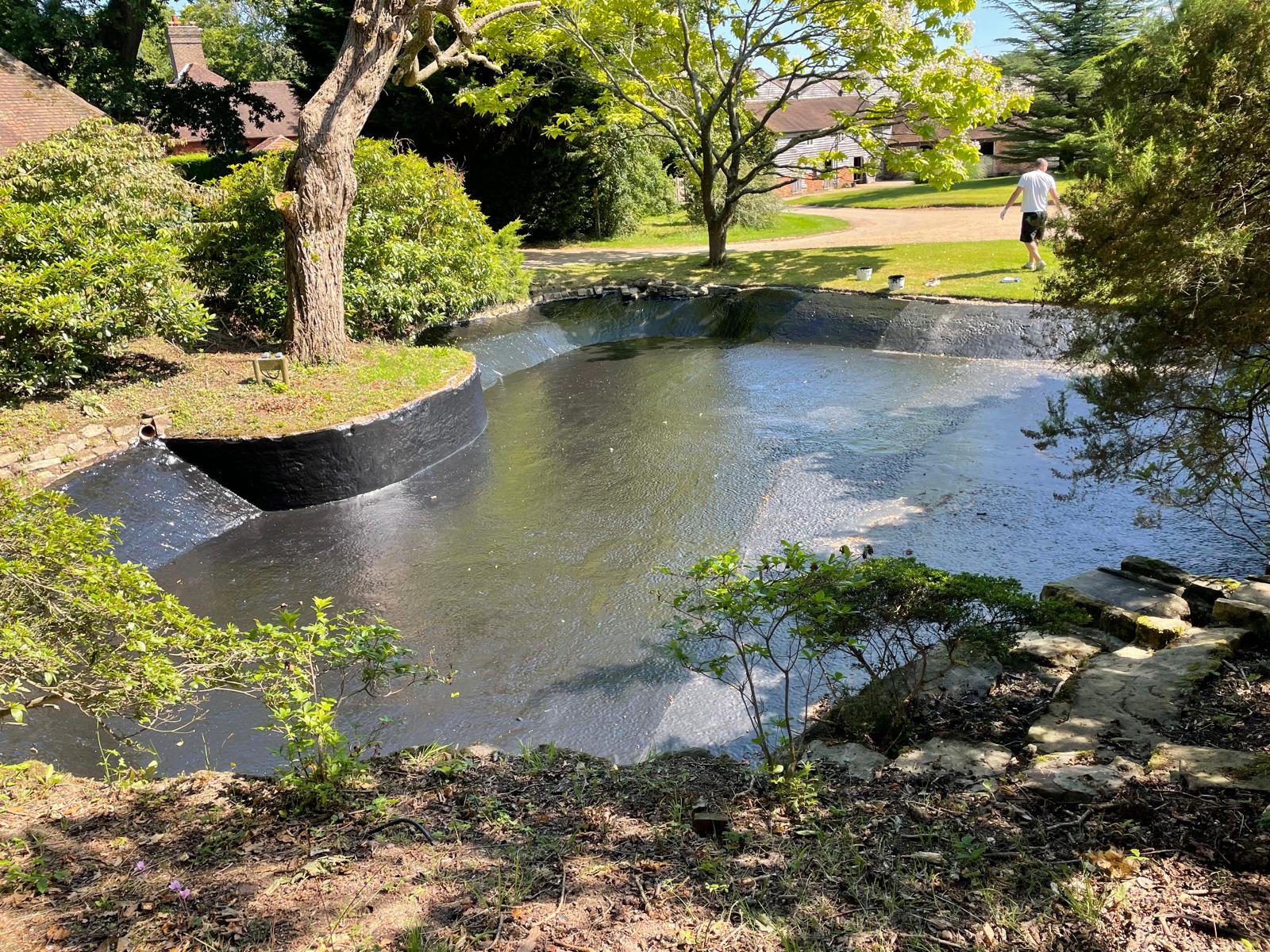
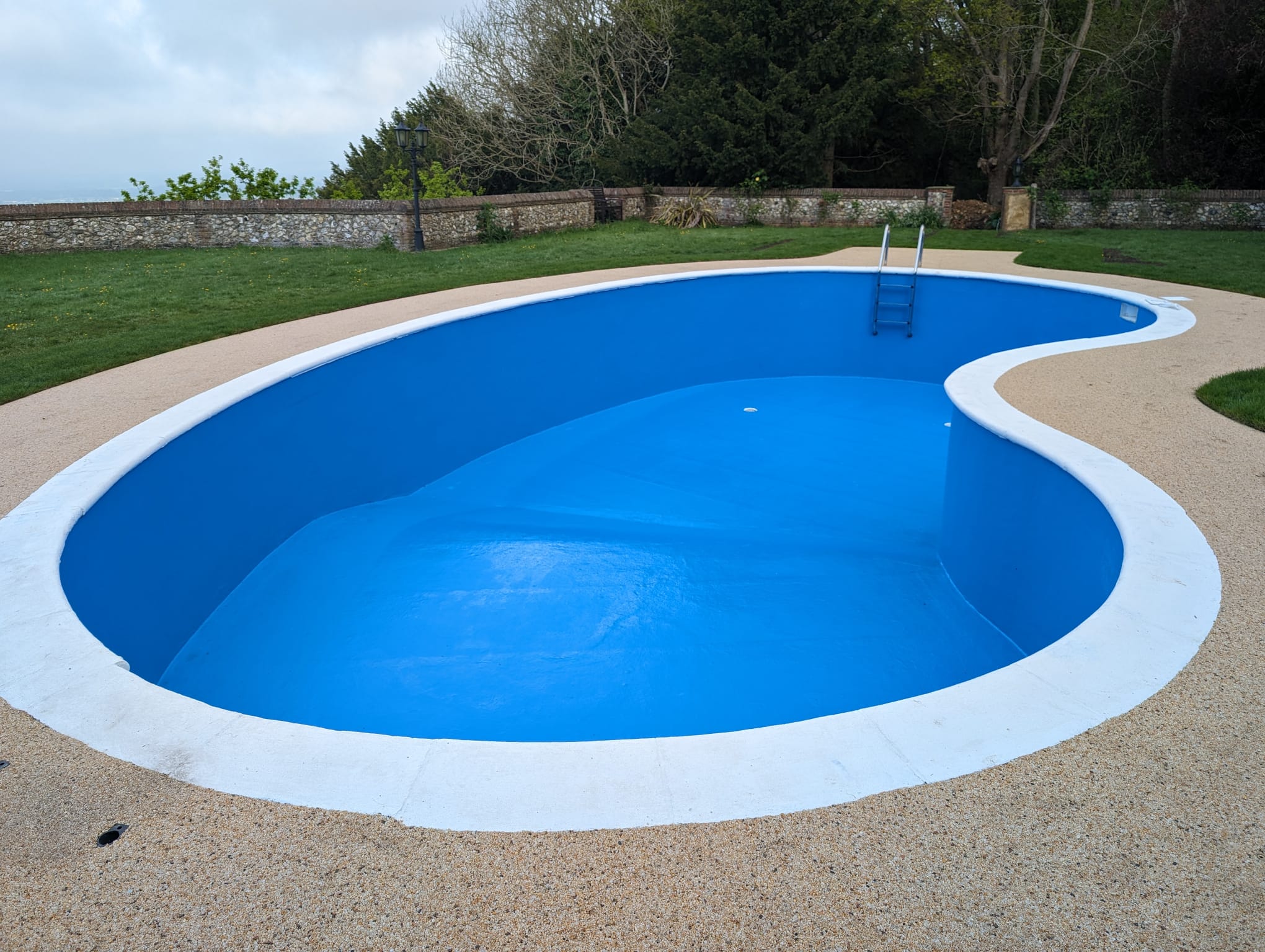
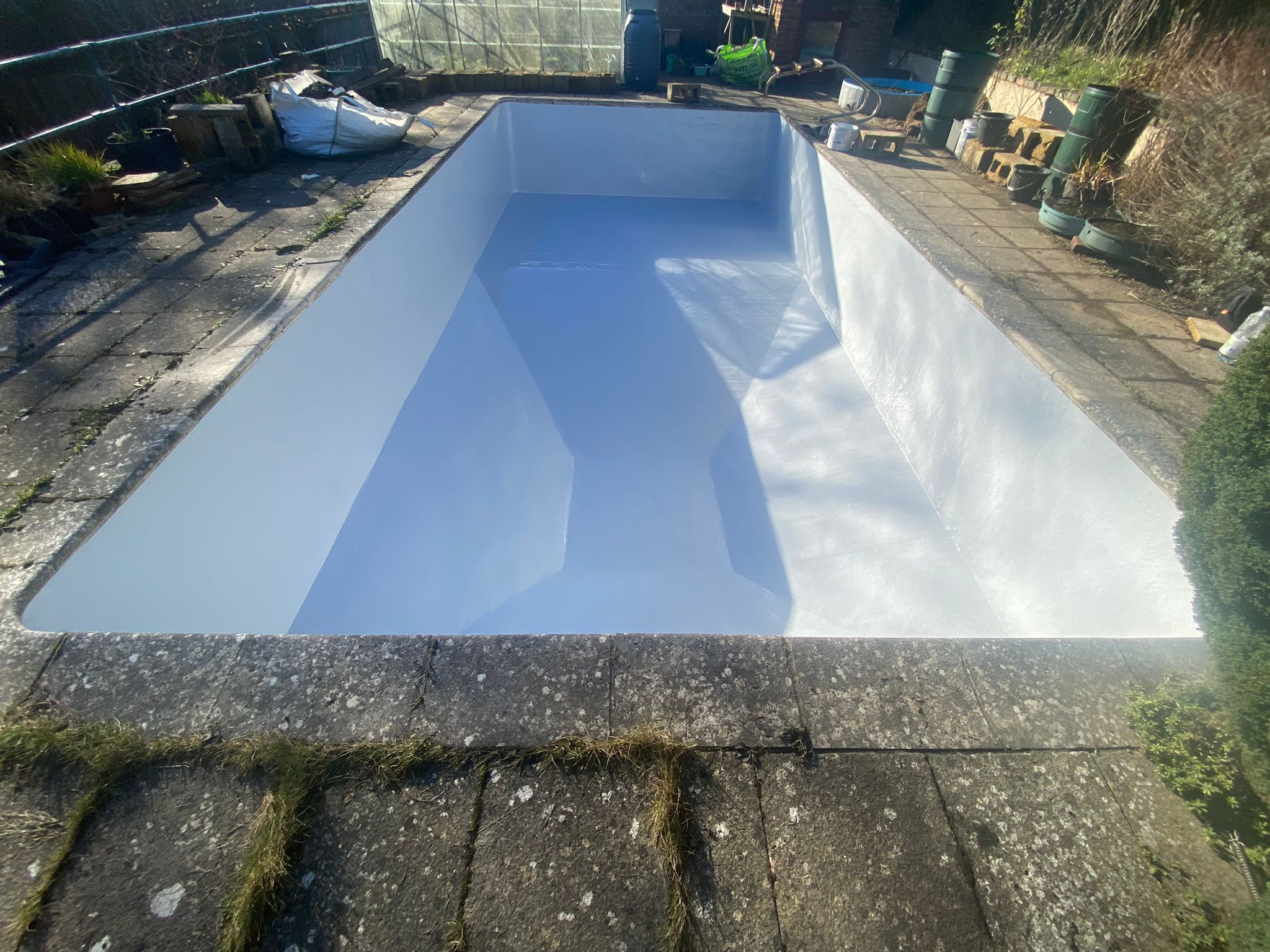
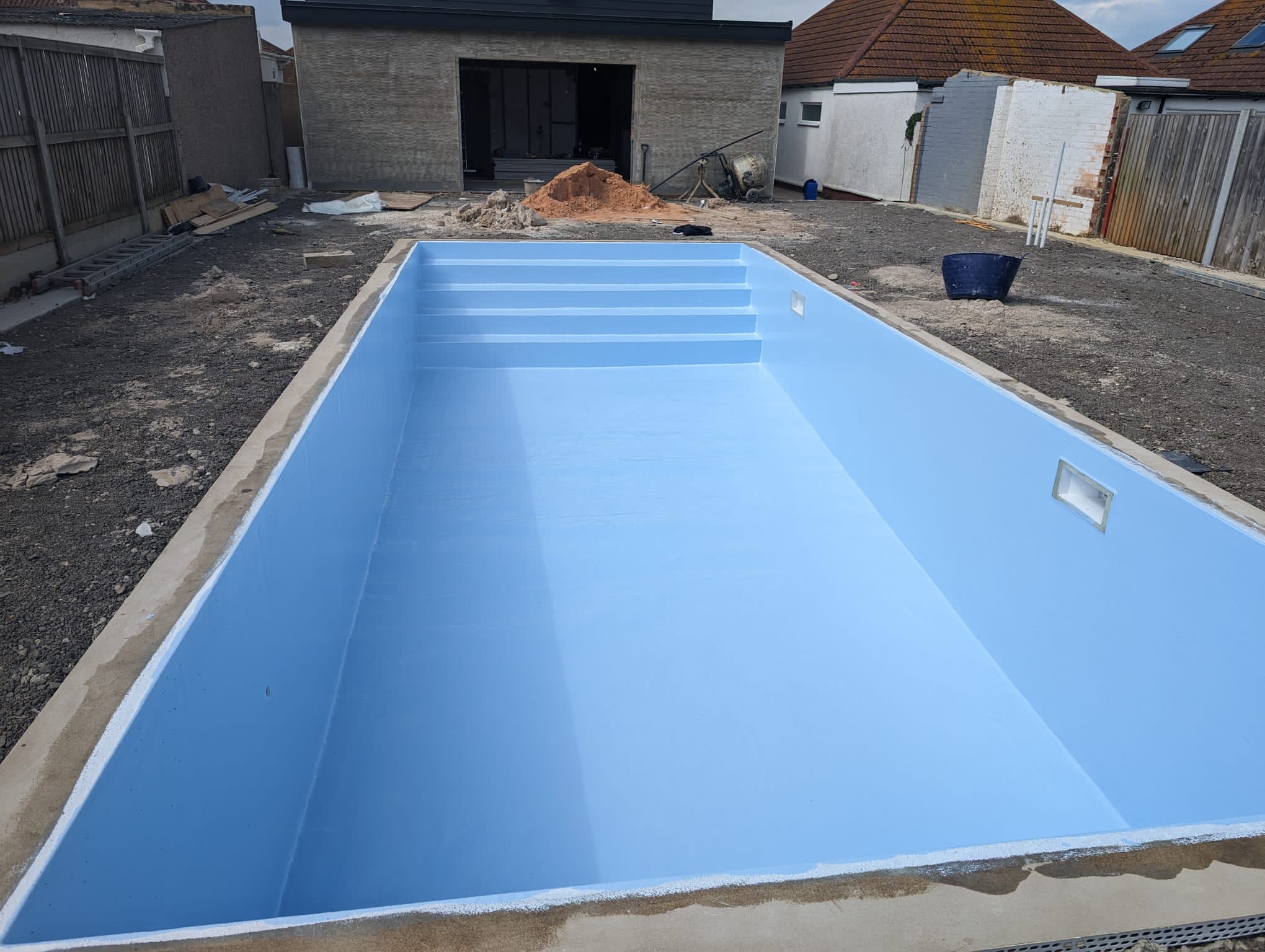
We carry out fibreglassing across a wide range of projects, from small garden ponds through to large koi ponds and more complex water features. This includes new pond builds, converting existing liner ponds to fibreglass, repairing and refurbishing leaking ponds, as well as swimming ponds and natural pools.
We also complete structural preparation work where required, including upgrades and insulation prior to fibreglassing. This ensures the final finish is not only watertight, but also built on a solid and reliable base.
With extensive hands on experience across both ponds and pools, we understand the technical requirements involved in creating a durable, long lasting finish. No two ponds are the same, which is why we tailor each fibreglass installation to the specific build. Every project is approached with the same level of care and attention to detail, ensuring the fibreglass system is suited to its intended use and performs properly over time.
Areas we cover
We provide professional pond and swimming pool fibreglassing services across the South East, covering a wide range of residential and commercial projects.
Our core service areas include Kent, London, Essex, Surrey, and Sussex. We also regularly carry out fibreglassing work in Hertfordshire, Suffolk, Cambridgeshire, Norfolk, Buckinghamshire, Bedfordshire, Berkshire, and Oxfordshire, with many of these areas supported by dedicated service pages.
Each project is assessed individually, taking into account access, structure, intended use, and long term performance. This allows us to plan the installation properly and ensure the finished pond performs as expected.
We are able to travel further for larger or more specialised projects, particularly where full pond builds or fibreglass conversions are involved. If you are based outside these areas, feel free to get in touch as we may still be able to help.
Why work with That Pond Guy for pond fibreglassing
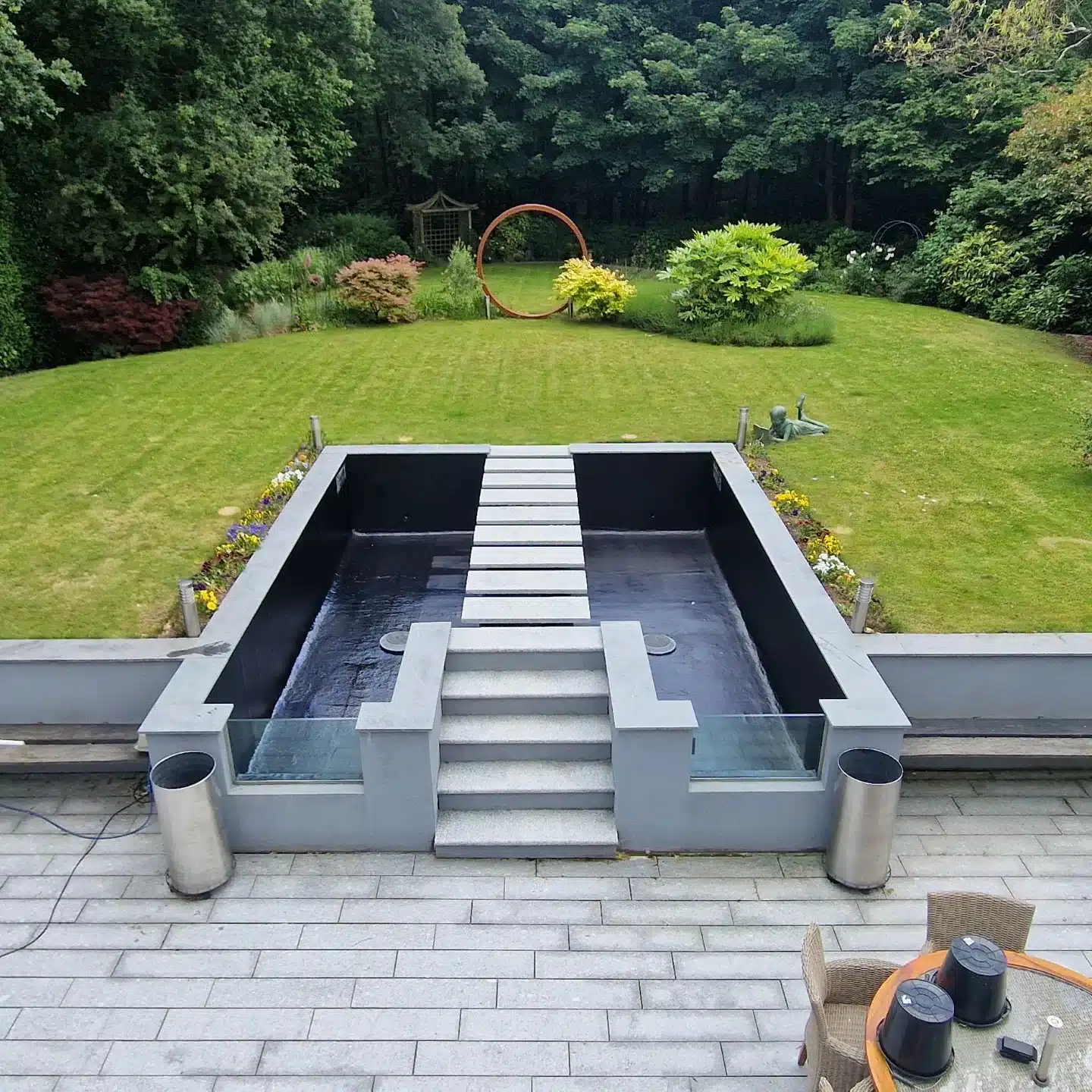
Choosing the right contractor for fibreglassing work is critical. Poor preparation or rushed installation often leads to problems later on. At That Pond Guy, we focus on doing the job properly, using the correct materials, proven methods, and the right level of preparation for each project.
We have extensive hands on experience in pond construction, maintenance, and refurbishment, which means we understand how fibreglassing fits into the wider pond system. This allows us to deliver reliable results across a range of projects, from koi ponds and swimming ponds through to more complex upgrades and conversions.
Every pond is different, and we approach each job with that in mind. We take the time to assess the structure, plan the installation correctly, and carry out the work to a high standard rather than rushing through the process.
We also place a strong focus on clear communication and honest advice. From the first enquiry through to completion, we aim to make the process straightforward and ensure you know exactly what to expect at each stage.
Pond fibreglassing advice and guides
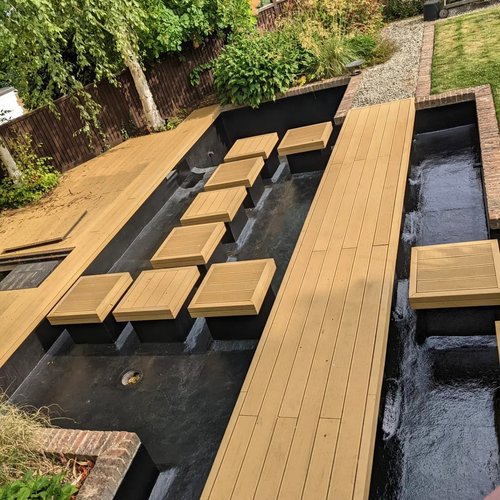
If you are looking for more detailed information about pond fibreglassing, we have created a range of in depth guides covering installation, preparation, lifespan, and long term performance.
These guides are based on real projects and practical experience, helping you understand what to expect and how to get the best results from your pond.
You can explore the full guides below:
What is pond fibreglassing?
Converting a liner pond to a fibreglass pond
Fibreglass vs liner
How to prepare your pond for fibreglass installation
The lifespan of a fibreglass pond and how to extend it
How fibreglass is installed
The difference between DIY fibreglassing and hiring a professional
Insulating and fibreglassing koi ponds
Contact us
If you are considering fibreglass lining for your pond or swimming pool, get in touch to discuss your project. We offer clear advice, realistic timescales, and free, no obligation quotations.
Whether you are planning a new pond, upgrading an existing liner, or looking for repairs, we are happy to help you find the right solution.
You can contact us using the form below or visit our contact page for full details. 👉 Contact us
Let That Pond Guy help you achieve a strong, seamless, and long lasting fibreglass finish you can rely on.




Pond Fibreglassing Frequently Asked Questions
What is pond fibreglassing and how does it work
Pond fibreglassing is a method of waterproofing a pond using a GRP system made up of fibreglass matting and resin. These materials are applied in layers over a prepared surface, forming a solid and fully sealed lining that bonds directly to the structure beneath.
Once cured, the fibreglass creates a rigid, watertight shell that does not move, crease, or shift over time. This is what makes it different from traditional pond liners, which sit loosely within the pond and can develop folds or weak points.
Fibreglassing is widely used in koi ponds, formal ponds, and high end garden ponds where durability and a clean finish are important.
Is fibreglass better than a pond liner
Fibreglass is generally considered a more permanent and durable solution compared to traditional pond liners.
Liners can work well, especially in smaller or budget builds, but they can crease, move, and eventually deteriorate over time. These folds can trap debris and lead to maintenance issues or leaks.
Fibreglass creates a smooth, seamless surface with no folds, which improves water flow, makes cleaning easier, and provides a longer lasting finish. For many pond owners, it is the preferred option when reliability and appearance are a priority.
How long does fibreglass pond lining last
A properly installed fibreglass pond lining can last for decades.
In most cases, you can expect a lifespan of 20 to 30 years or more, depending on how well the pond was prepared and the quality of the installation. The fibreglass itself is highly resistant to UV, temperature changes, and general wear.
The key factor is preparation. A well prepared base and correctly applied system will always outperform a rushed or poorly installed job.
Is fibreglass safe for koi and pond fish
Yes, fibreglass is completely safe for koi and other pond fish once it has been installed and fully cured.
It is widely used in koi ponds because it provides a smooth, non porous surface that does not trap dirt or bacteria in the same way as a creased liner. This helps improve overall pond hygiene and water quality.
As long as the fibreglass has been installed correctly and allowed to cure fully before filling, it is perfectly suitable for fish.
Can you fibreglass over an existing pond liner
In most cases, a pond liner cannot be left in place under fibreglass.
Fibreglass needs to bond directly to a solid and properly prepared surface. Liners are flexible and move over time, which makes them unsuitable as a base for fibreglassing.
This is why liner conversions usually involve draining the pond, removing the liner, and preparing the structure underneath before fibreglass is applied.
Can a liner pond be converted to fibreglass
Yes, converting a liner pond to fibreglass is one of the most common upgrades we carry out.
Older liner ponds often develop issues such as leaks, creases, and trapped debris. Fibreglass removes these problems by creating a smooth, rigid, and permanent lining.
The process involves removing the existing liner, preparing the structure, and applying a fibreglass system that transforms the pond into a more durable and easier to maintain setup.
Why do pond liners fail over time
Pond liners can fail for a number of reasons, particularly as they age.
Over time, liners can become brittle due to UV exposure, shift due to ground movement, or develop weak points where folds and creases occur. These areas can trap debris and create stress points that eventually lead to leaks.
This is one of the main reasons many pond owners choose to upgrade to fibreglass.
Does fibreglass crack or fail
A properly installed fibreglass pond should not crack under normal conditions.
Fibreglass is strong and durable, but it relies on a solid base. If the structure beneath is unstable or poorly prepared, problems can develop over time.
This is why correct preparation and installation are critical to ensuring long term performance.
How much does it cost to fibreglass a pond
The cost of fibreglassing a pond depends on several factors, including size, shape, access, condition of the existing structure, and the amount of preparation required.
A simple pond will be quicker and more cost effective than a complex pond with repairs, insulation, or structural work needed beforehand.
Because every pond is different, fibreglassing is usually priced based on the specific project rather than a fixed rate.
Is fibreglassing a pond worth it
For many pond owners, fibreglassing is a worthwhile investment.
Although it costs more upfront than installing a liner, it provides a long term solution that reduces maintenance, improves appearance, and eliminates many of the common issues associated with liners.
If you are looking for a permanent upgrade rather than a short term fix, fibreglass is often the better option.
How long does pond fibreglassing take
The time required to fibreglass a pond depends on the size of the pond and the amount of preparation needed.
A straightforward job can be completed relatively quickly, while larger or more complex projects may take longer, particularly if structural work or repairs are required first.
Weather conditions also play a role, as fibreglassing needs suitable temperatures and dry conditions to achieve the best results.
Can fibreglass be repaired if it gets damaged
Yes, fibreglass can usually be repaired if damage occurs.
Small areas can often be repaired locally without needing to redo the entire pond. The repair process involves preparing the damaged area and applying new fibreglass layers to restore the seal.
As with installation, proper preparation is important to ensure the repair is long lasting.
Is fibreglass suitable for all types of ponds
Fibreglass is suitable for most types of ponds, including garden ponds, koi ponds, formal ponds, and swimming ponds.
It is particularly beneficial in ponds where a clean finish, strong structure, and long term durability are important.
However, the structure must be suitable for fibreglassing, which is why each project is assessed individually.
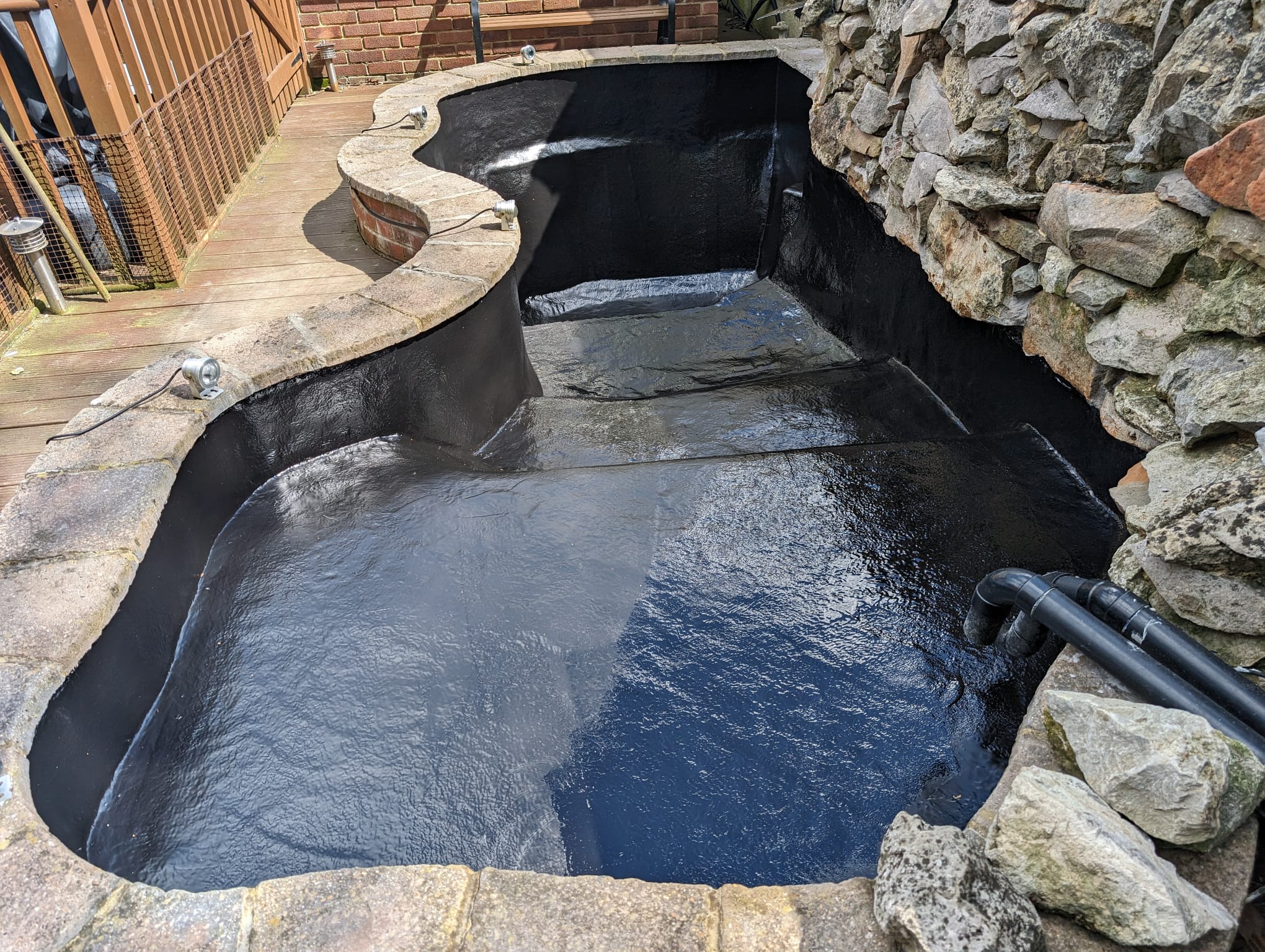
Can fibreglass be used on complex pond shapes
Yes, fibreglass is ideal for complex pond designs.
It can be applied to shelves, steps, curves, windows, and detailed features while maintaining a seamless finish. This makes it a popular choice for bespoke pond builds.
Does fibreglass make a pond easier to clean
Yes, fibreglass ponds are generally easier to clean.
The smooth surface reduces the ability of algae and debris to stick to the sides, which helps improve water clarity and makes maintenance more straightforward.
Can fibreglass be used for swimming ponds
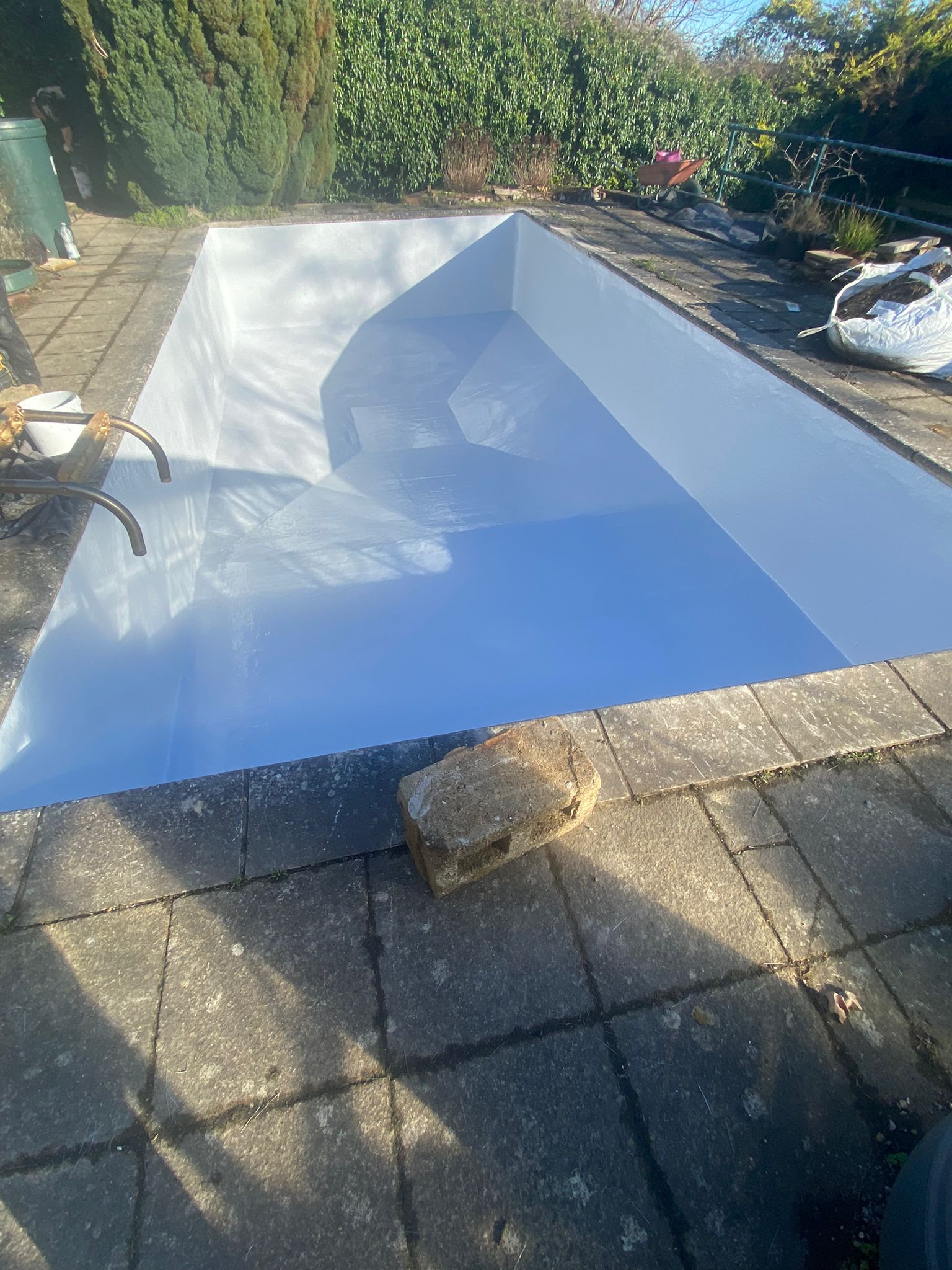
Yes, fibreglass is often used in swimming ponds and natural pools.
It provides a watertight and durable finish that can be tailored to suit larger and more complex designs. Proper preparation and finishing are especially important in ponds used for swimming.
Do you need to prepare the pond before fibreglassing
Yes, preparation is one of the most important parts of the process.
The surface must be clean, smooth, and structurally sound before fibreglass is applied. Any issues with the base need to be addressed first to ensure the final result is reliable.
Can fibreglass be applied in cold weather
Fibreglassing can be affected by temperature and weather conditions.
Cold or damp conditions can impact how the materials cure, which is why timing and planning are important. In many cases, fibreglassing is carried out in suitable weather conditions to ensure the best finish.
What is the main advantage of fibreglass over liners
The main advantage is long term reliability.
Fibreglass creates a solid, seamless structure that does not crease, move, or deteriorate in the same way as a liner. This improves durability, reduces maintenance, and provides a cleaner finish overall.
Is fibreglass a good option for upgrading an old pond
Yes, fibreglass is one of the best ways to upgrade an older pond.
It replaces ageing liners with a more durable and long lasting solution, improves the appearance of the pond, and reduces ongoing maintenance issues.
For many pond owners, it is a practical way to modernise and improve an existing pond without starting from scratch.
How much does it cost to convert a pond liner to fibreglass
The cost of converting a liner pond to fibreglass depends on the size of the pond, the condition of the existing structure, access, and how much preparation work is required.
Smaller ponds with a solid base will be more straightforward, while larger ponds or those needing repairs, insulation, or structural work will take more time and materials. Because of this, most fibreglass conversions are priced individually rather than using a fixed rate.
Is fibreglass cheaper than a pond liner
Fibreglass is not usually cheaper upfront than a pond liner, but it can be more cost effective over time.
Liners are generally cheaper to install initially, but they may need replacing or repairing as they age. Fibreglass offers a longer lasting solution with fewer issues, which can reduce long term costs and maintenance.
What is the best base for a fibreglass pond
A solid and stable structure is essential for fibreglassing.
Most fibreglass ponds are built using block and render construction or a similar solid base. The surface needs to be smooth, dry, and properly prepared to ensure the fibreglass bonds correctly.
A strong base is key to achieving a long lasting and reliable finish.
Can fibreglass be applied to any pond structure
Fibreglass can be applied to most solid pond structures, but not all surfaces are suitable without preparation.
Block built ponds, rendered ponds, and properly constructed bases are ideal. If the structure is poor or unstable, preparation or repairs may be needed before fibreglassing can take place.
How thick is fibreglass pond lining
Fibreglass pond lining is built up in layers using matting and resin rather than a single sheet thickness like a liner.
The final thickness depends on the system used and the number of layers applied, but the aim is to create a strong, durable shell that can withstand water pressure and long term use.
Does fibreglass fade or discolour over time
Fibreglass can change slightly in appearance over many years, but high quality finishes are designed to resist fading.
A protective topcoat is applied during installation to help maintain colour and protect the surface. Proper care and maintenance will help keep the pond looking clean and consistent.
Can fibreglass ponds leak
A correctly installed fibreglass pond should not leak.
Because it forms a continuous, sealed surface, there are no joins or seams where water can escape. If leaks do occur, they are usually due to poor preparation or damage rather than the fibreglass system itself.
Is fibreglass better for pond filtration systems
Fibreglass works very well with modern filtration systems.
The smooth internal finish improves water flow and reduces areas where waste can collect. This helps filtration systems work more efficiently and can improve overall pond performance.
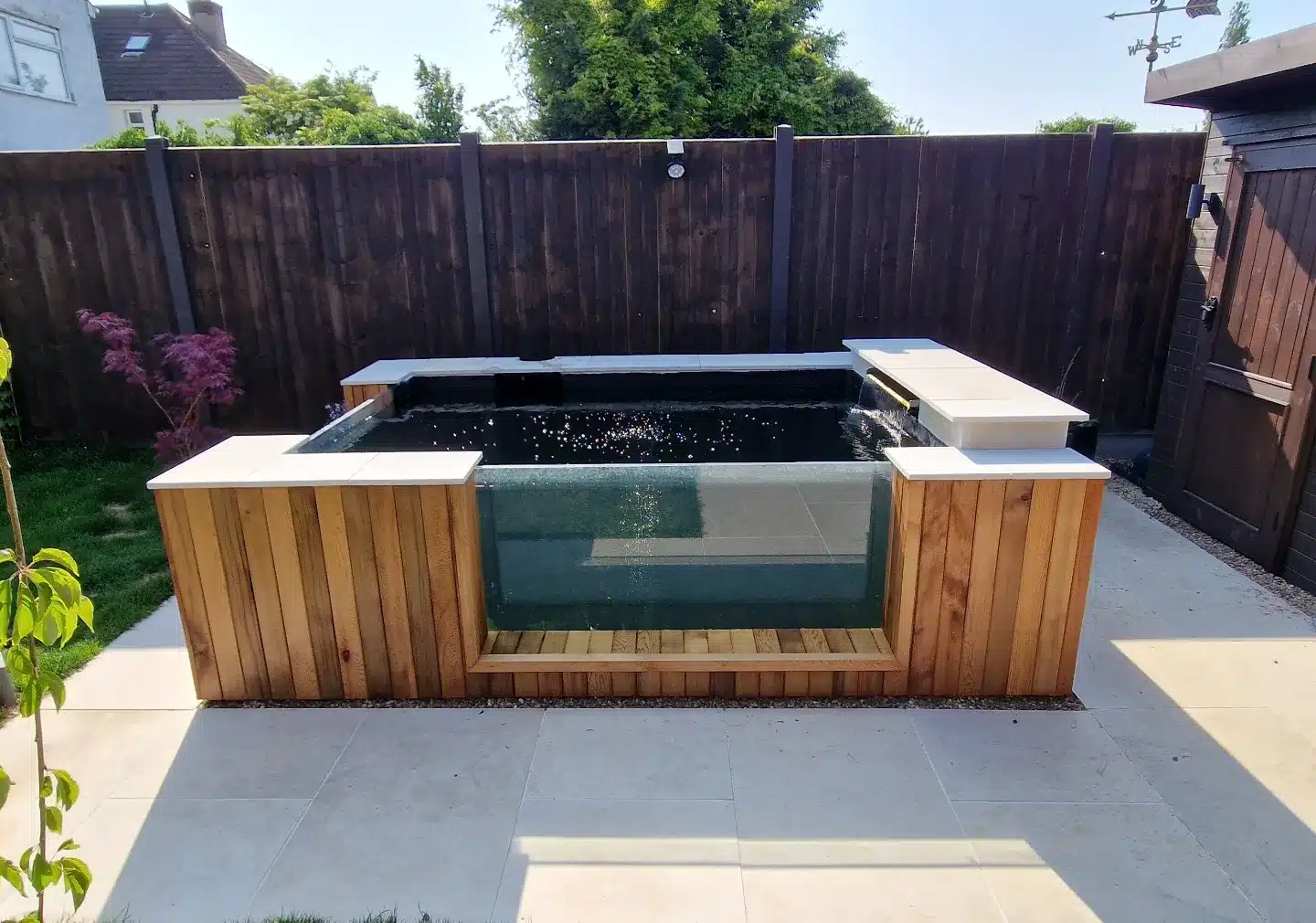
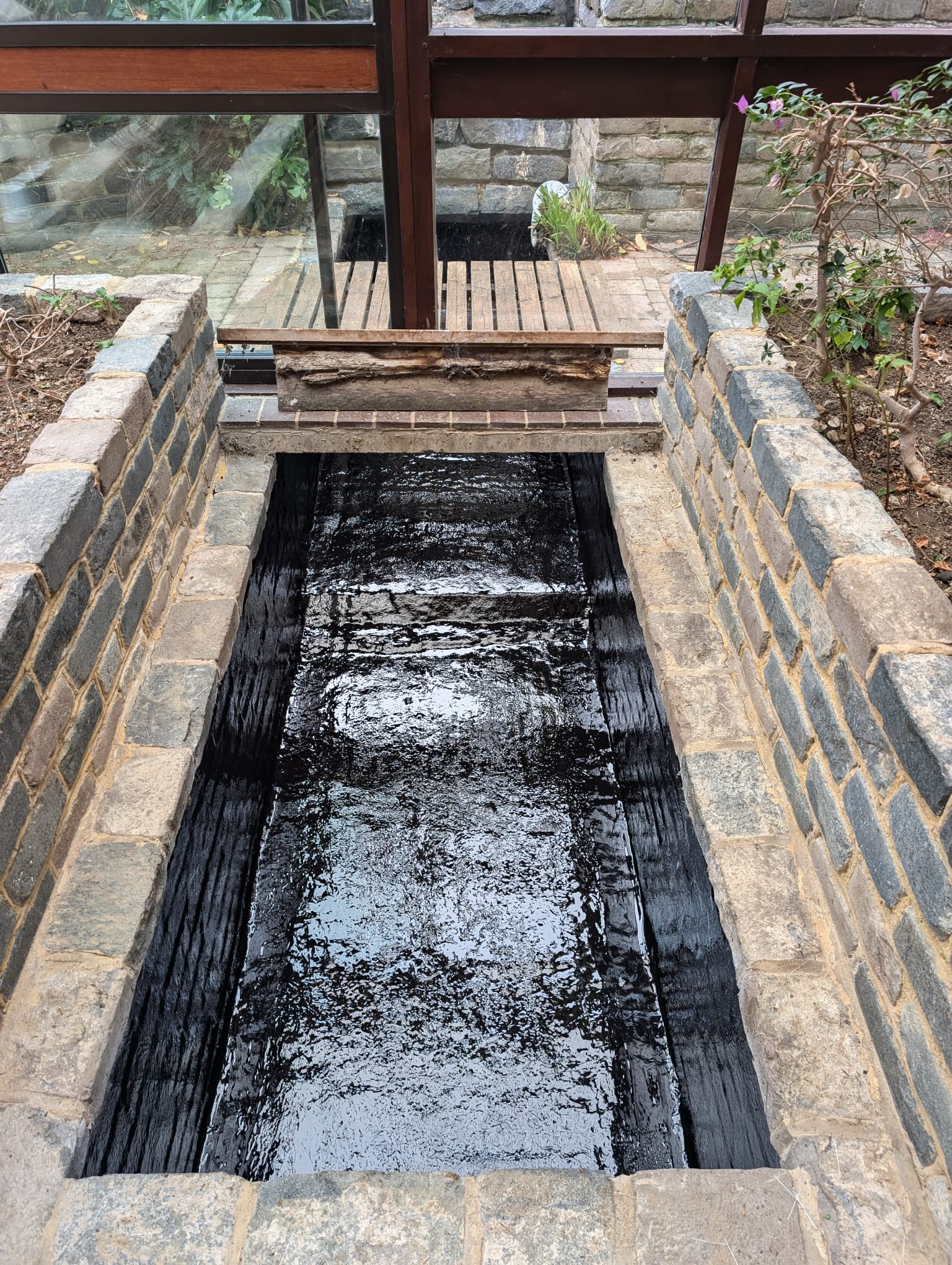
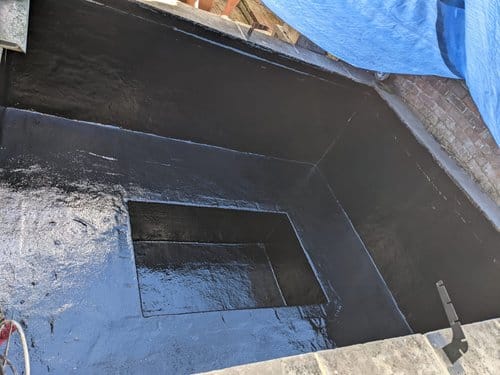
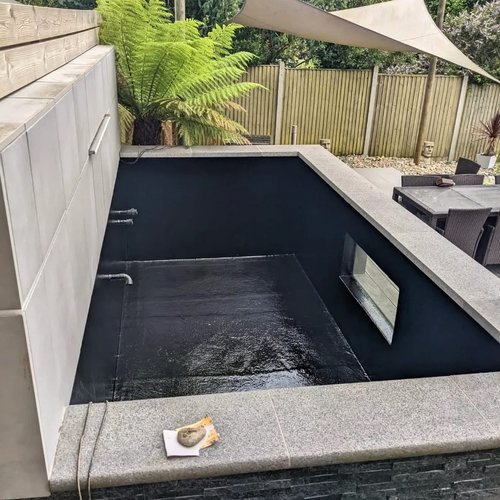
Can you fibreglass a pond with a window
Yes, fibreglass can be applied around pond windows.
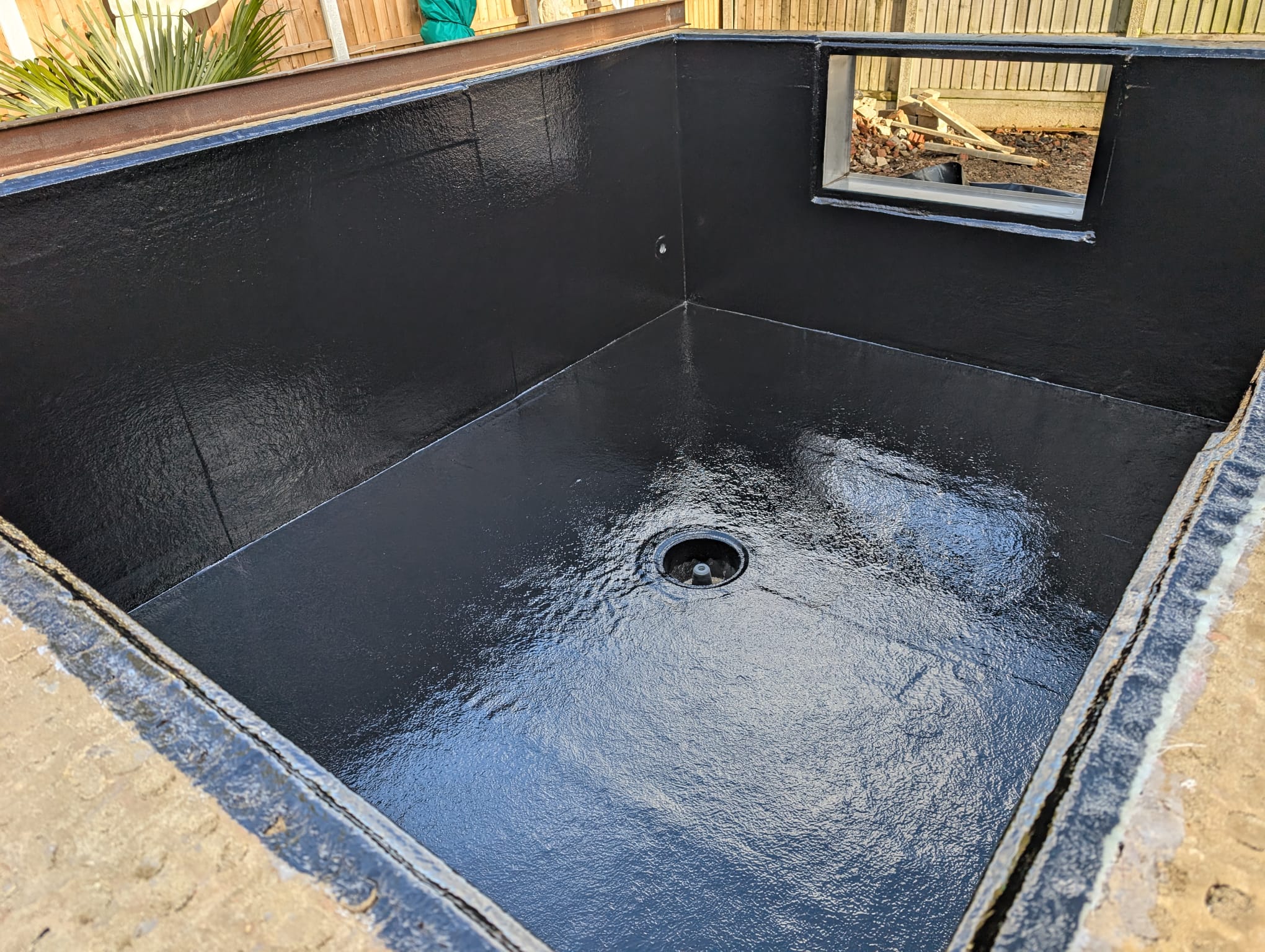
It is commonly used in ponds with viewing panels, as it can create a neat and secure seal around the window frame. Proper installation is important to ensure the join between the fibreglass and the window remains watertight.
How do I maintain a fibreglass pond
Fibreglass ponds are relatively low maintenance.
Regular pond care such as cleaning filters, removing debris, and monitoring water quality is still required, but the lining itself does not need much attention. The smooth surface helps reduce buildup and makes cleaning easier.
Do fibreglass ponds need repainting
In most cases, fibreglass ponds do not need frequent repainting.
The topcoat applied during installation is designed to last for many years. Over time, some ponds may benefit from a refresh, but this is not usually needed for a long period if the pond has been installed correctly.
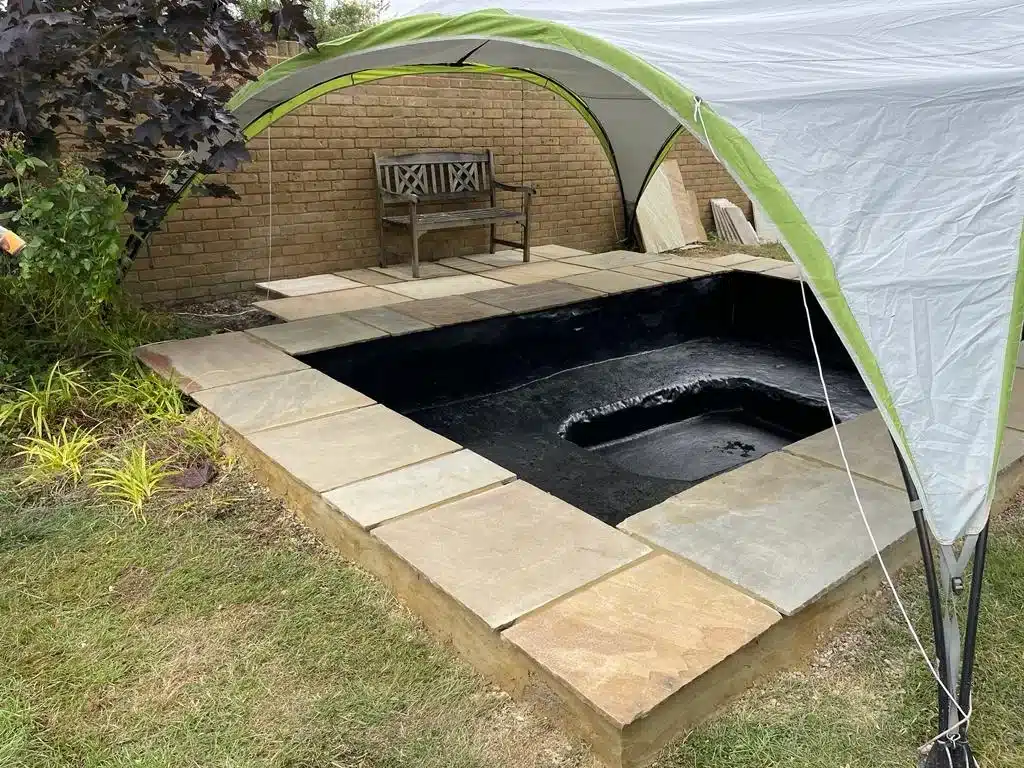
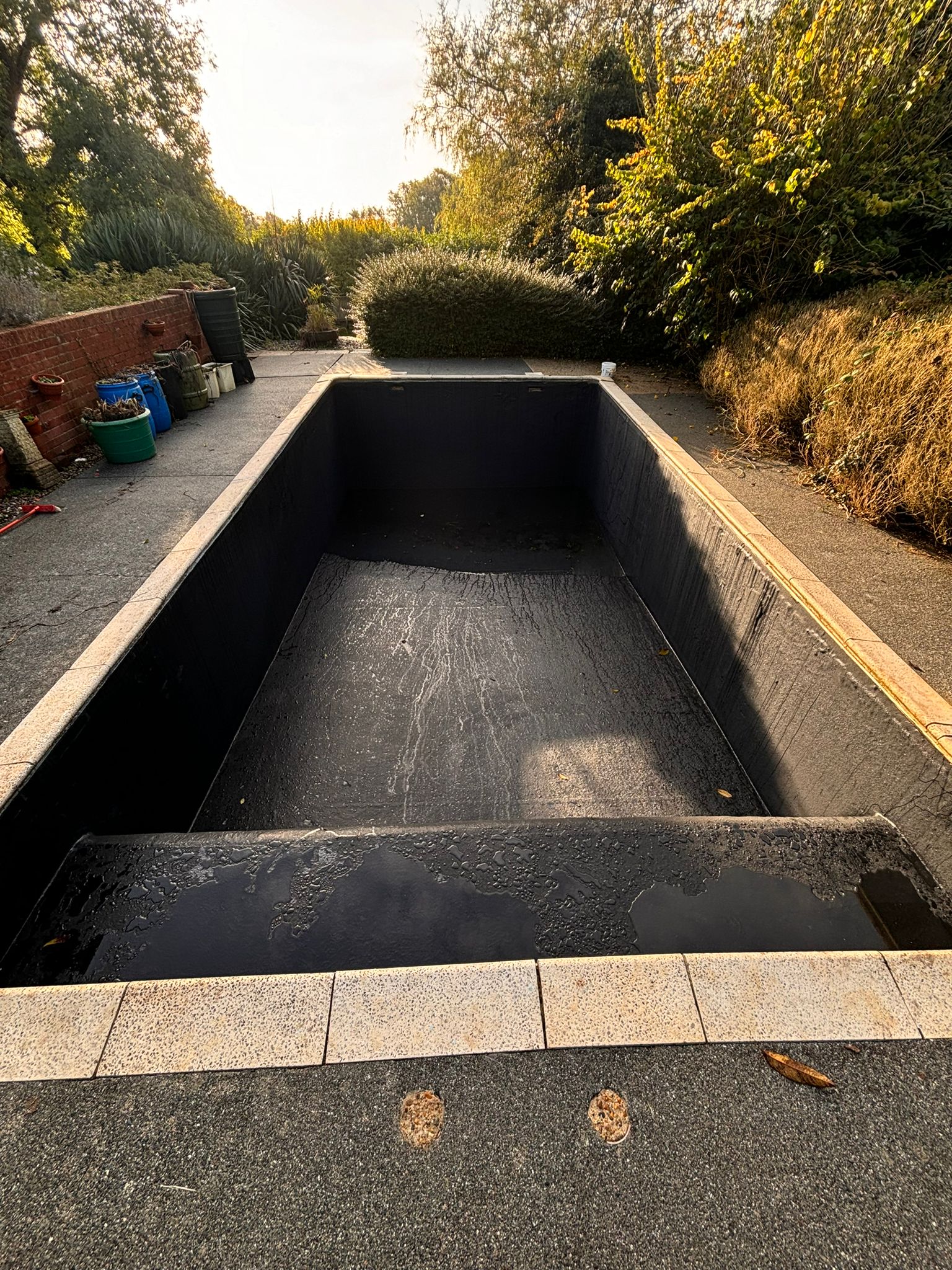
Can fibreglass be used for formal pond designs
Yes, fibreglass is ideal for formal pond designs.
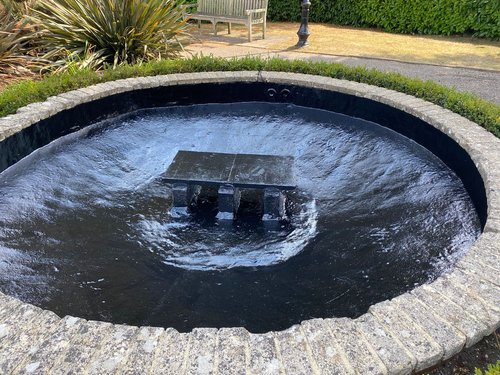
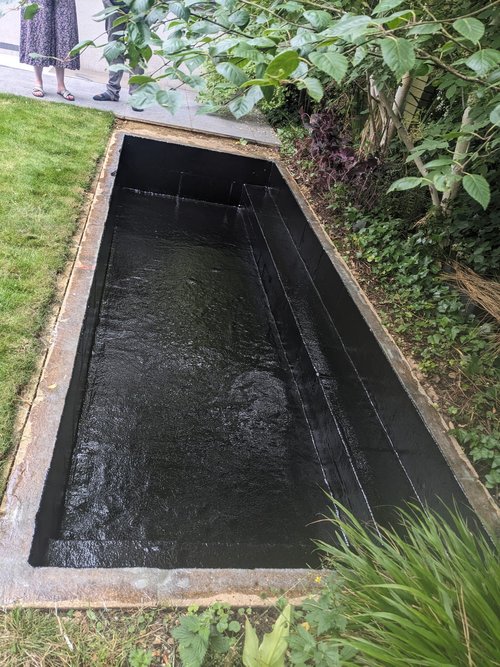
It allows for straight edges, sharp corners, and a clean internal finish. This makes it particularly popular for modern garden designs and koi ponds where appearance is important.
What is the difference between GRP and fibreglass
GRP stands for glass reinforced plastic, which is the technical name for fibreglass.
In pond construction, the terms are often used interchangeably. Both refer to the same system of using fibreglass matting and resin to create a strong, waterproof lining.
Can fibreglass be applied vertically
Yes, fibreglass can be applied to vertical surfaces.
This makes it suitable for pond walls, raised ponds, and vertical features. The material bonds to the surface and forms a continuous lining across both horizontal and vertical areas.
Does fibreglass affect pond temperature
Fibreglass itself does not significantly change pond temperature, but insulation can be added during preparation.
In koi ponds, insulation boards are often installed before fibreglassing to help retain heat and improve temperature stability.
Is fibreglass suitable for deep ponds
Yes, fibreglass is well suited to deep ponds.
Its strength and ability to bond to the structure make it capable of handling increased water pressure. This makes it a reliable option for deeper koi ponds and larger builds.
Can fibreglass ponds be pressure washed
Yes, fibreglass ponds can be cleaned using appropriate methods, including pressure washing if done carefully.
The smooth surface makes cleaning easier, but care should always be taken to avoid damaging the finish or fittings within the pond.
What colour options are available for fibreglass ponds
Fibreglass ponds are typically finished in a range of colours depending on the application.
Dark colours are commonly used in koi ponds to enhance fish visibility, while lighter colours may be used in swimming ponds or decorative features. The final finish can be tailored to suit the design of the pond.
Is fibreglass environmentally friendly for ponds
Fibreglass itself is an inert material once cured, meaning it does not release harmful substances into the water.
It provides a stable and long lasting solution, which reduces the need for replacements and repairs over time.
Why do people upgrade from liners to fibreglass
Many pond owners upgrade from liners to fibreglass due to ongoing issues with ageing liners.
Common problems include leaks, creases, trapped debris, and deterioration over time. Fibreglass removes these issues by creating a solid, seamless lining that is easier to maintain and more reliable long term.
Is fibreglass the best option for my pond
Fibreglass is often the best option if you are looking for a long lasting, low maintenance, and reliable finish.
It is particularly suited to koi ponds, formal ponds, and ponds where you want a clean internal appearance. If the priority is longevity and performance rather than the lowest upfront cost, fibreglass is usually the better choice.
When should I choose fibreglass instead of a liner
Fibreglass is a better option when the pond is larger, deeper, or more complex in shape.
It is also recommended when upgrading an older pond that has ongoing issues with leaks or maintenance. If you want a more permanent solution that avoids future liner problems, fibreglass is the right choice.
Is fibreglass worth it for a small pond
For smaller ponds, it depends on budget and long term plans.
A liner can be a good option for simple builds, but fibreglass still offers advantages in terms of durability and finish. If you want a small pond that will last for many years without issues, fibreglass can still be worth considering.
Can fibreglassing fix a leaking pond permanently
In most cases, yes.
Fibreglass creates a completely sealed lining that removes the weak points found in traditional liners. As long as the underlying structure is sound and the installation is done correctly, it provides a long term solution to leaks.
Will fibreglass improve my pond water quality
Fibreglass can help improve overall pond conditions.
The smooth surface reduces areas where debris and waste can collect, which helps filtration systems work more effectively. While it does not replace proper filtration, it does support a cleaner and more stable pond environment.
Does fibreglass make a pond look better
Yes, fibreglass significantly improves the appearance of a pond.
It creates a smooth, uniform finish with clean lines and no visible folds. This is particularly noticeable in formal ponds and koi ponds where presentation is important.
Can fibreglass be used on an uneven or old pond
Yes, but preparation is key.
Older ponds or uneven structures often need to be repaired or adjusted before fibreglass is applied. Once the base is properly prepared, fibreglass can transform the pond into a more durable and reliable system.
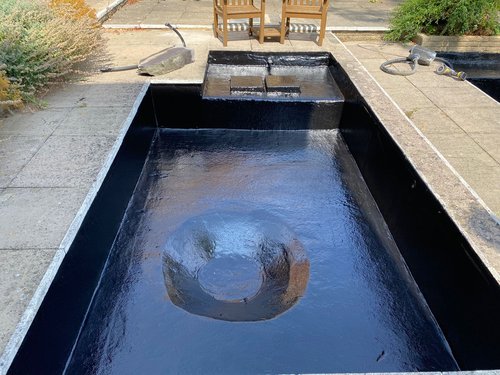
Is fibreglass suitable for ponds with bottom drains and pipework
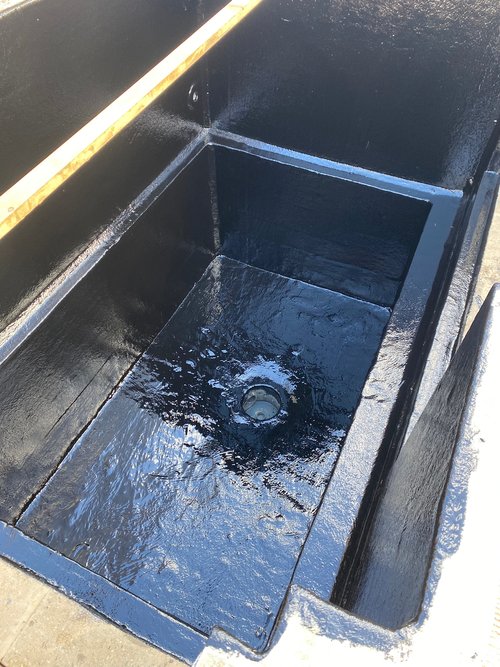
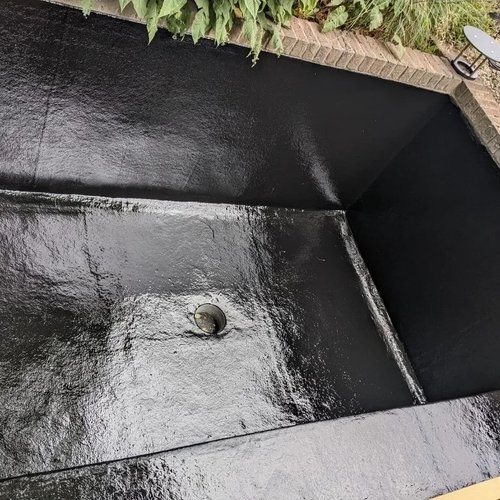
Yes, fibreglass works very well with bottom drains, returns, and pipework.
It can be carefully applied around fittings to create a sealed and watertight finish. This is one of the reasons it is commonly used in koi pond construction.
Can fibreglassing be done as part of a full pond build
Yes, fibreglassing is often included as part of a full pond build.
It is typically one of the final stages after the structure has been completed and prepared. Combining construction and fibreglassing ensures everything is designed to work together.
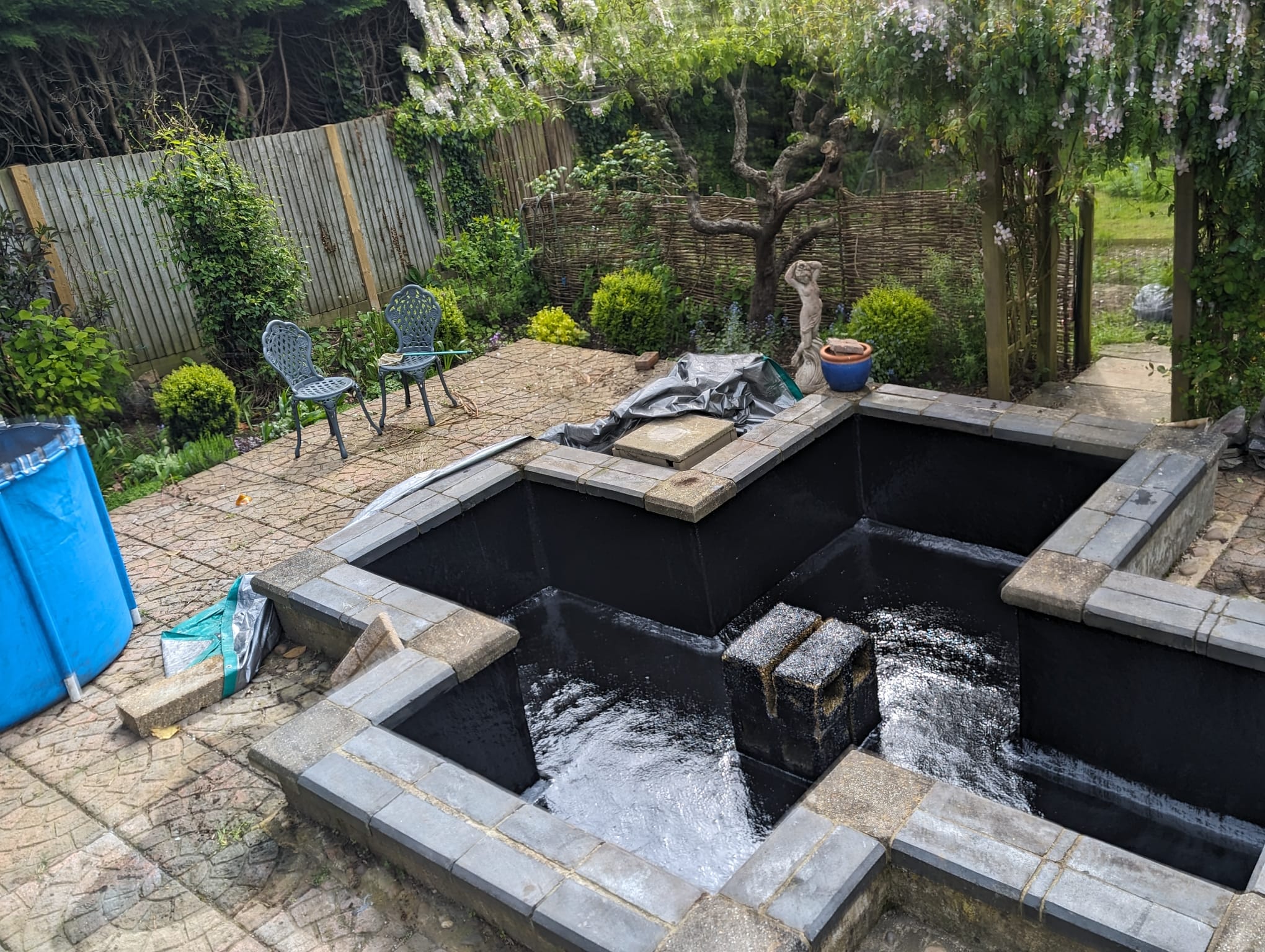
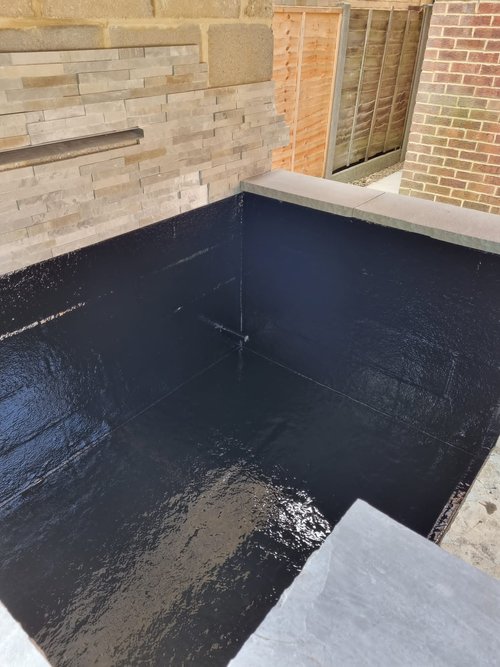
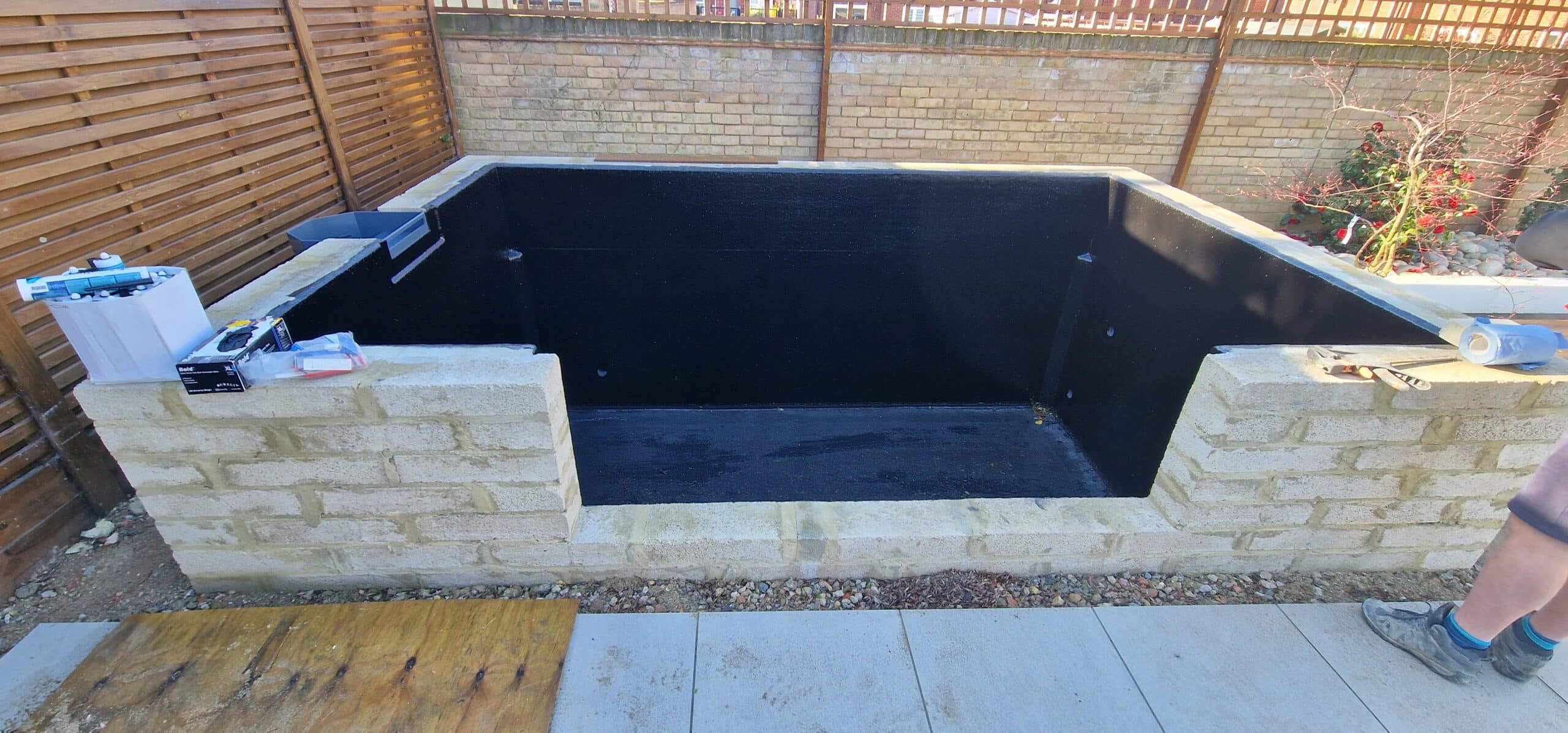
Is fibreglass better for raised ponds
Yes, fibreglass is an excellent choice for raised ponds.
It provides a neat and durable finish that works well with vertical walls and formal designs. It also eliminates the folds that are often seen with liners in raised structures.
How do I know if my pond is suitable for fibreglassing
The suitability depends on the structure and condition of the pond.
A solid base, such as block and render, is usually required. If the pond is currently lined or in poor condition, preparation work may be needed before fibreglassing can take place.
Will fibreglassing increase the value of my pond
Fibreglassing can increase the value of a pond by improving its durability, appearance, and long term reliability.
It creates a more professional finish and reduces the likelihood of future problems, which can make the pond more attractive as part of the overall garden.
Can fibreglass be applied to vertical pond walls
Yes, fibreglass can be applied to vertical walls without issue.
It bonds to the surface and creates a continuous lining across both walls and floors. This makes it ideal for structured and formal pond builds.
Does fibreglass reduce pond maintenance
Fibreglass can help reduce maintenance compared to liners.
The smooth surface makes it harder for waste to accumulate and easier to clean. While regular pond maintenance is still required, the lining itself does not create additional issues.
Can fibreglass ponds be modified later
Some modifications can be made, but it depends on the changes required.
Adding new features or altering the structure may require additional fibreglass work. It is always best to plan the pond carefully before installation to minimise future changes.
Is fibreglass suitable for ponds with fish and plants
Yes, fibreglass works well for both fish and planted ponds.
It provides a stable environment and does not release harmful substances once cured. It is commonly used in both ornamental and wildlife pond setups.
Can fibreglassing be done on site
Yes, pond fibreglassing is carried out on site.
The materials are applied directly to the prepared structure, allowing the lining to be formed to the exact shape of the pond. This ensures a precise and seamless finish.
Does fibreglass smell during installation
There can be a noticeable smell during installation due to the resin.
However, this is temporary and disappears once the fibreglass has cured. Proper ventilation and working conditions are used during the process.
Can fibreglass be used in shaded or covered ponds
Yes, fibreglass performs well in both shaded and exposed environments.
It is resistant to moisture and environmental conditions, making it suitable for a wide range of pond locations.
What is the biggest reason people choose fibreglass
The main reason is long term reliability.
Pond owners often choose fibreglass to avoid the ongoing issues associated with liners. It provides a cleaner finish, better performance, and a more permanent solution that is built to last.
Can fibreglass be applied to an outdoor pond in the UK climate
Yes, fibreglass is well suited to UK conditions.
It handles rain, temperature changes, and seasonal weather very well once installed. The key factor is applying it in suitable conditions so it cures properly. Once complete, it performs reliably throughout the year.
What temperature is needed for fibreglassing a pond
Fibreglassing works best in dry conditions with moderate temperatures.
Cold, damp, or wet weather can affect how the resin cures. This is why installations are planned carefully to ensure the best conditions and finish quality.
How smooth is a fibreglass pond finish
A fibreglass pond has a very smooth and consistent finish.
This smooth surface improves water flow and reduces areas where dirt and algae can attach. It also gives the pond a clean and professional appearance.
Can fibreglass be used on ponds with complex pipework
Yes, fibreglass can be applied around returns, bottom drains, skimmers, and pipework.
It can be worked into tight areas and detailed sections to create a watertight seal. This is one of the reasons it is widely used in more advanced pond systems.
Does fibreglass shrink or expand over time
Fibreglass is very stable once cured.
It does not shrink or expand in the same way as flexible liners, which helps maintain a consistent shape and seal over time. This contributes to its long term reliability.
Can fibreglass be used on natural swimming ponds
Yes, fibreglass is often used in natural swimming ponds.
It provides a strong, watertight base that can be integrated with planting zones and filtration systems. Proper design and installation are important to ensure the pond functions as intended.
What preparation is needed before fibreglassing a pond
Preparation includes cleaning, smoothing, and ensuring the structure is stable and suitable.
Any loose material, sharp edges, or uneven areas need to be addressed before fibreglass is applied. In some cases, insulation or additional structural work may also be required.
Can fibreglass ponds handle heavy use
Yes, fibreglass ponds are very durable.
They are designed to withstand water pressure, environmental conditions, and regular maintenance. This makes them suitable for ponds that are used frequently or have higher demands.
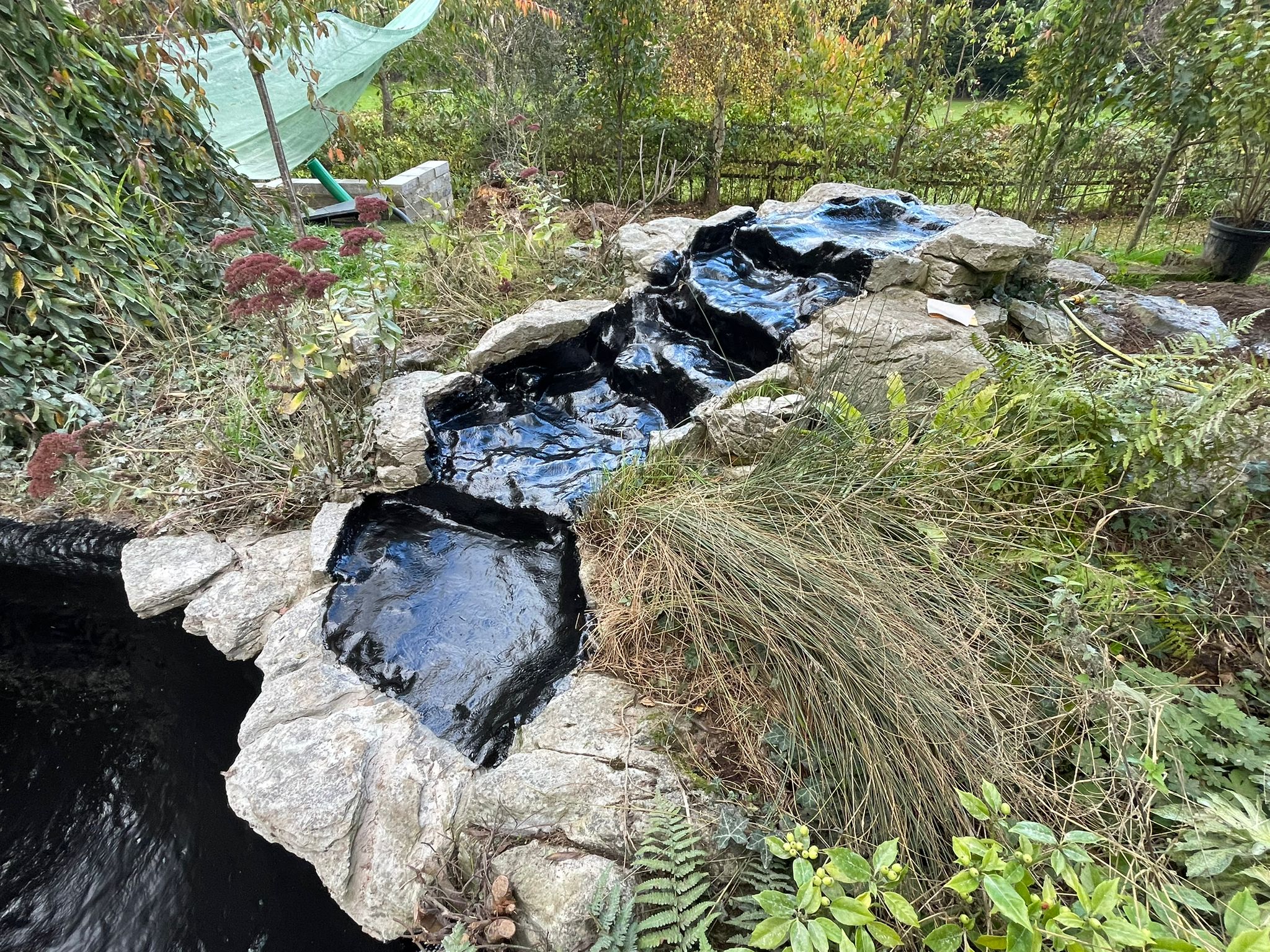
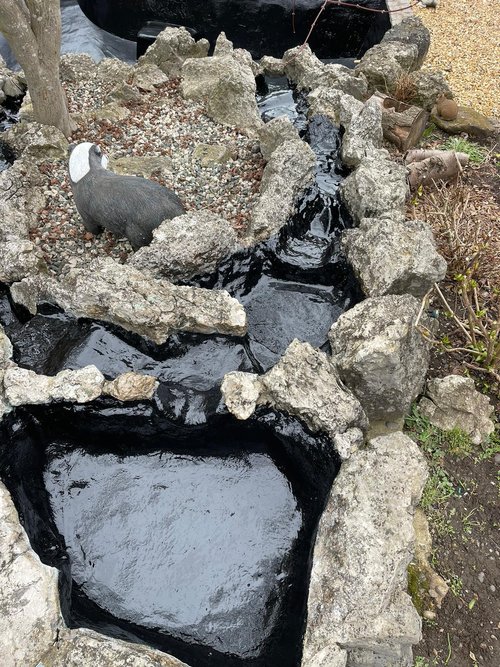
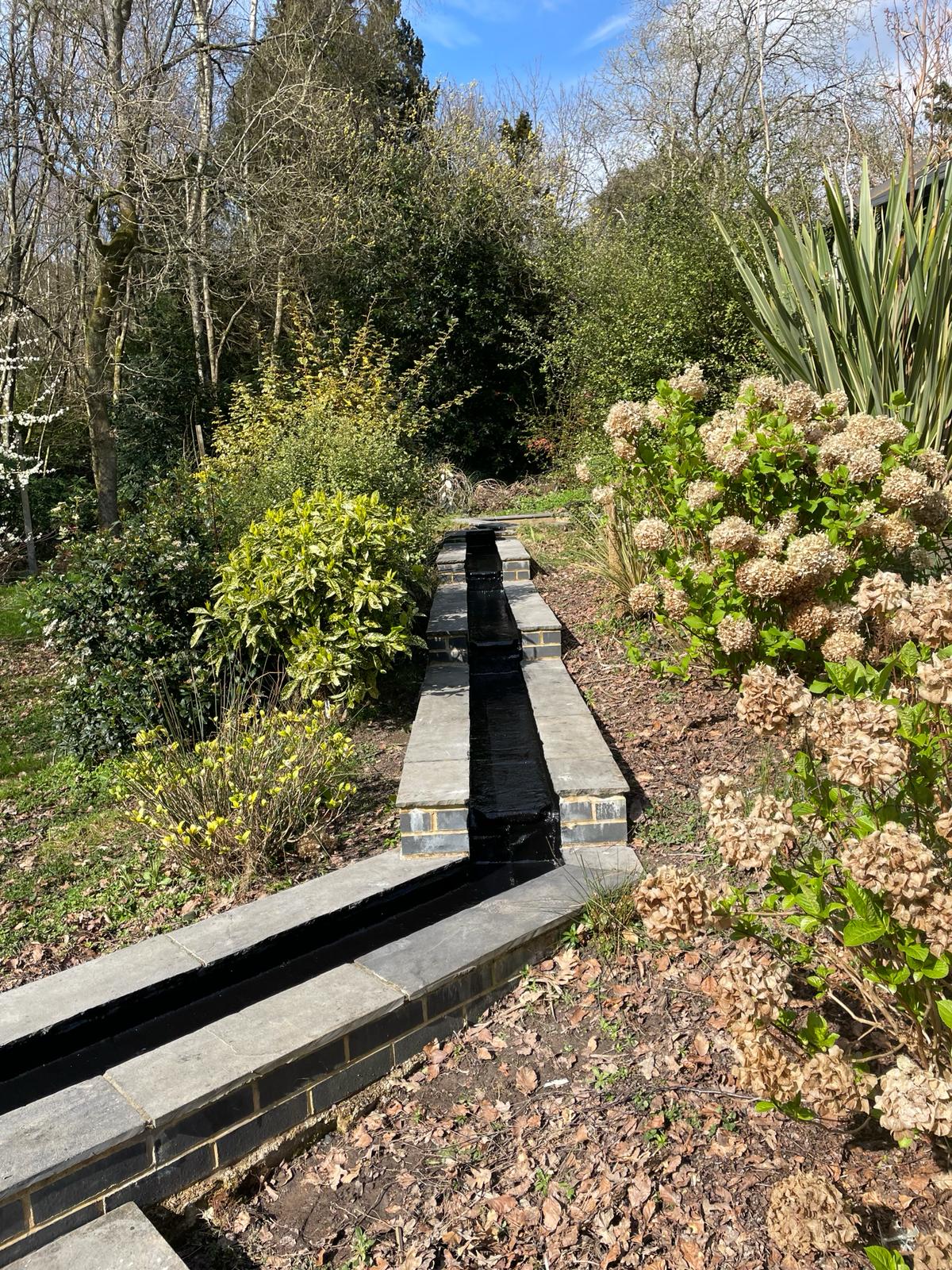
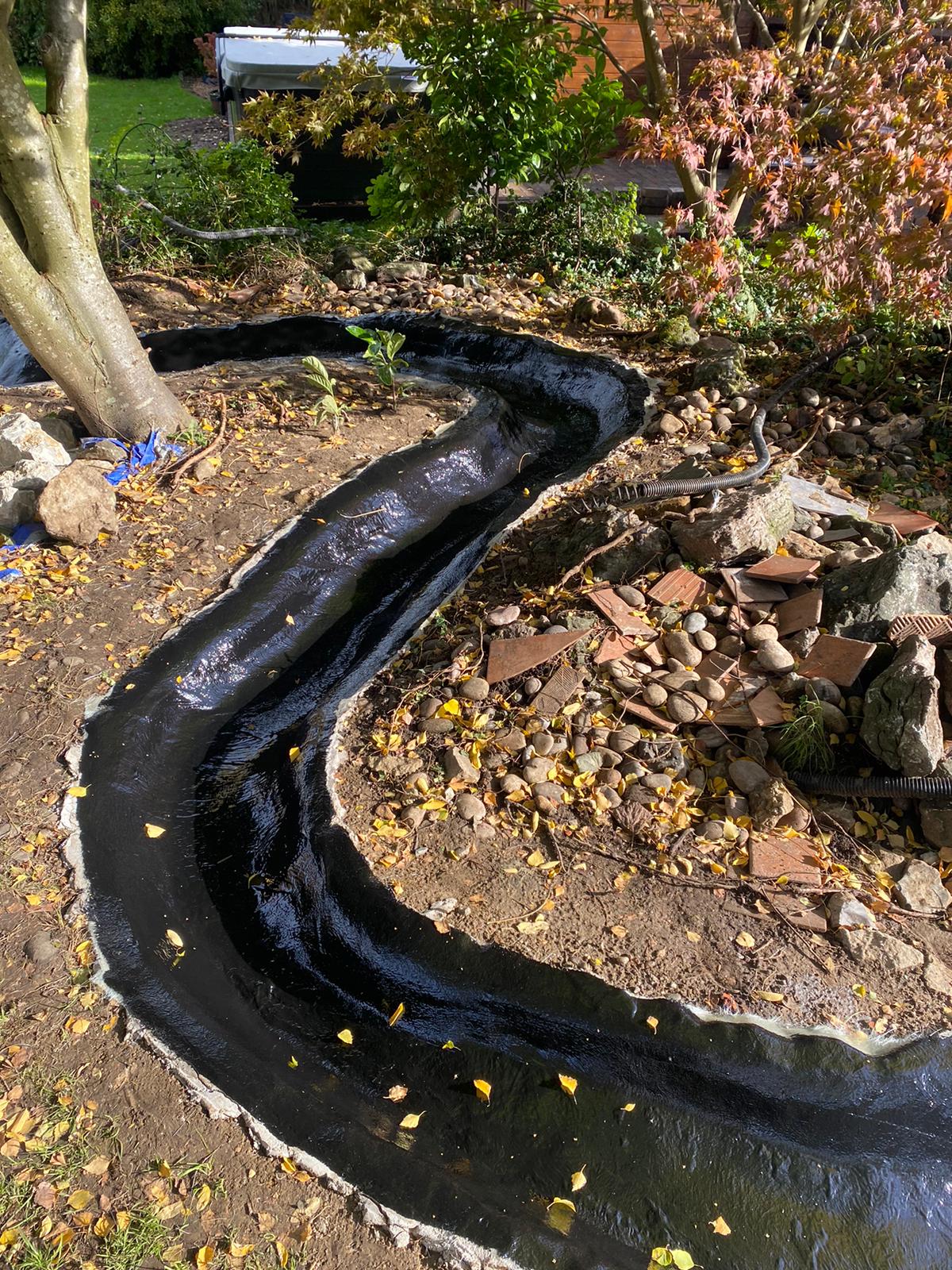
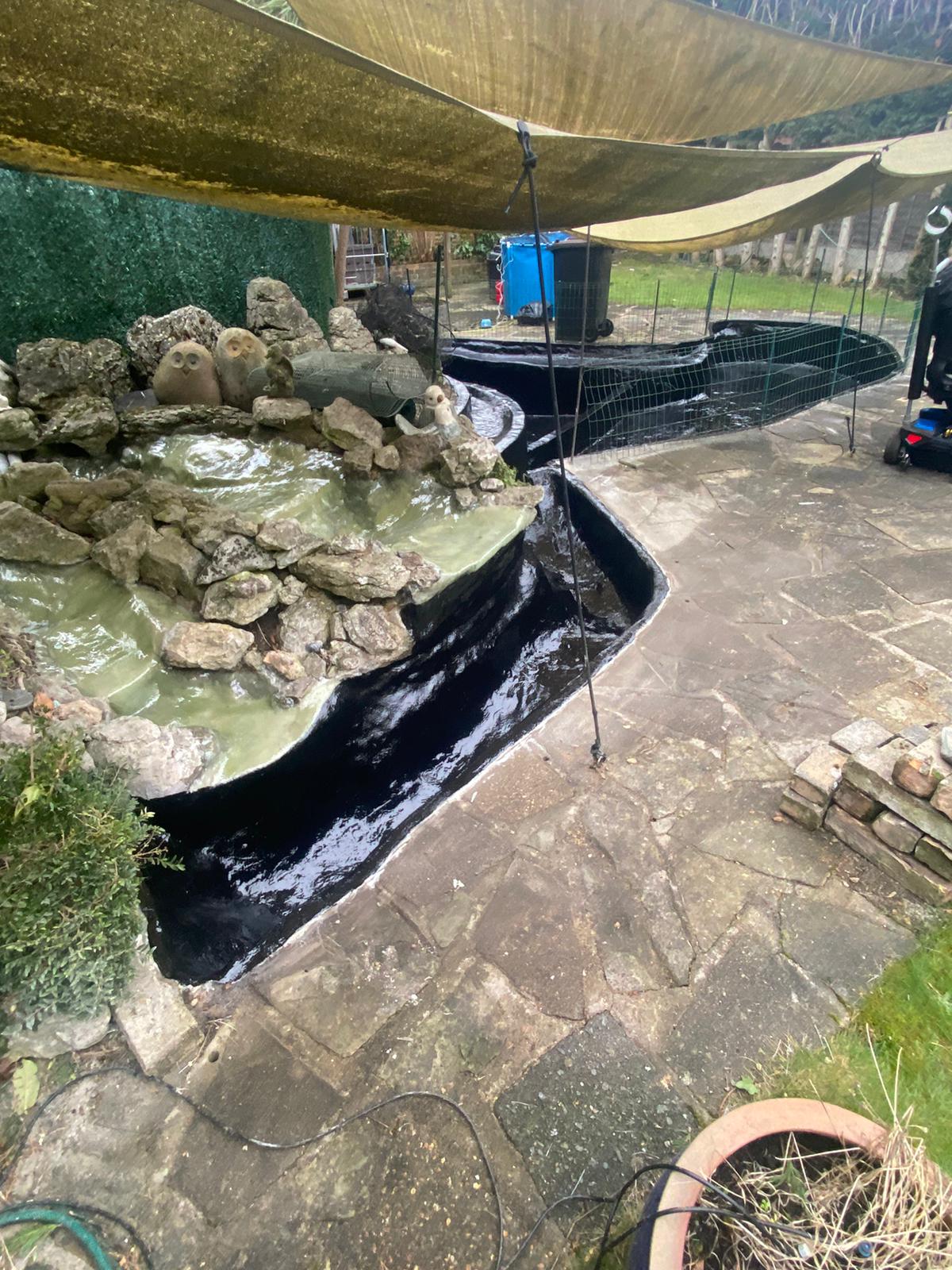
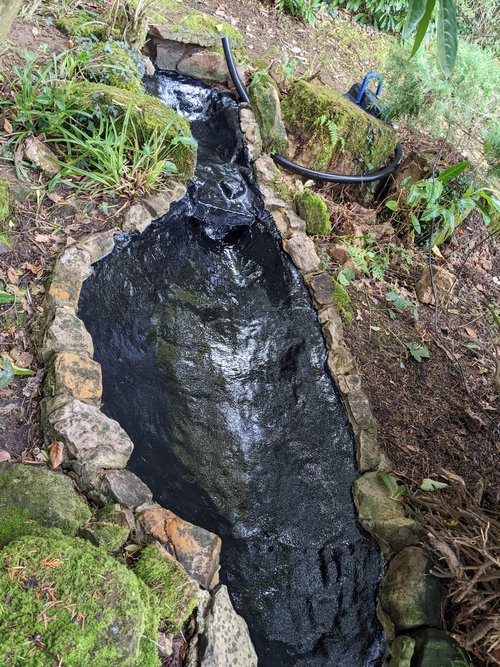
Is fibreglass suitable for ponds with waterfalls or streams
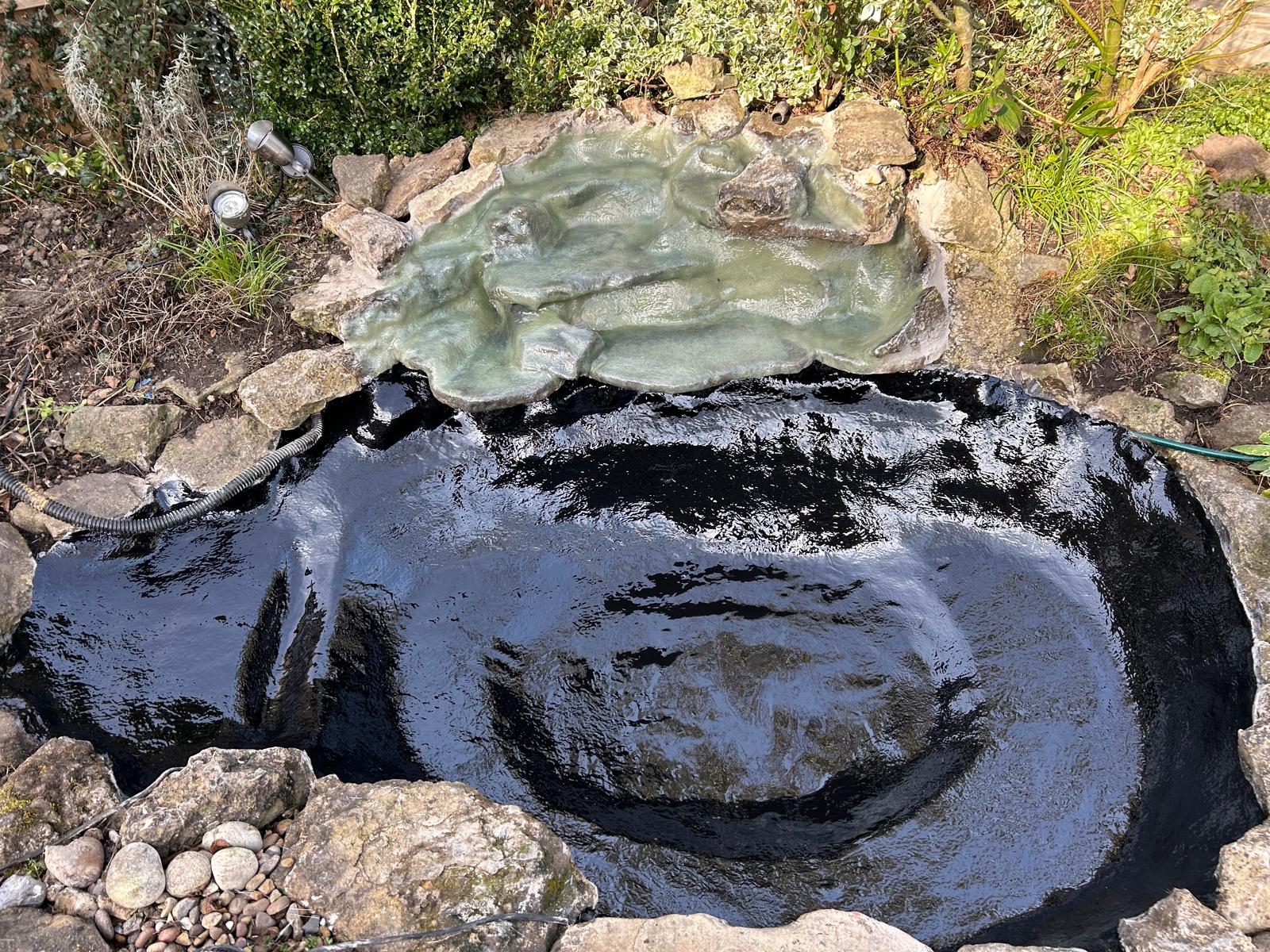
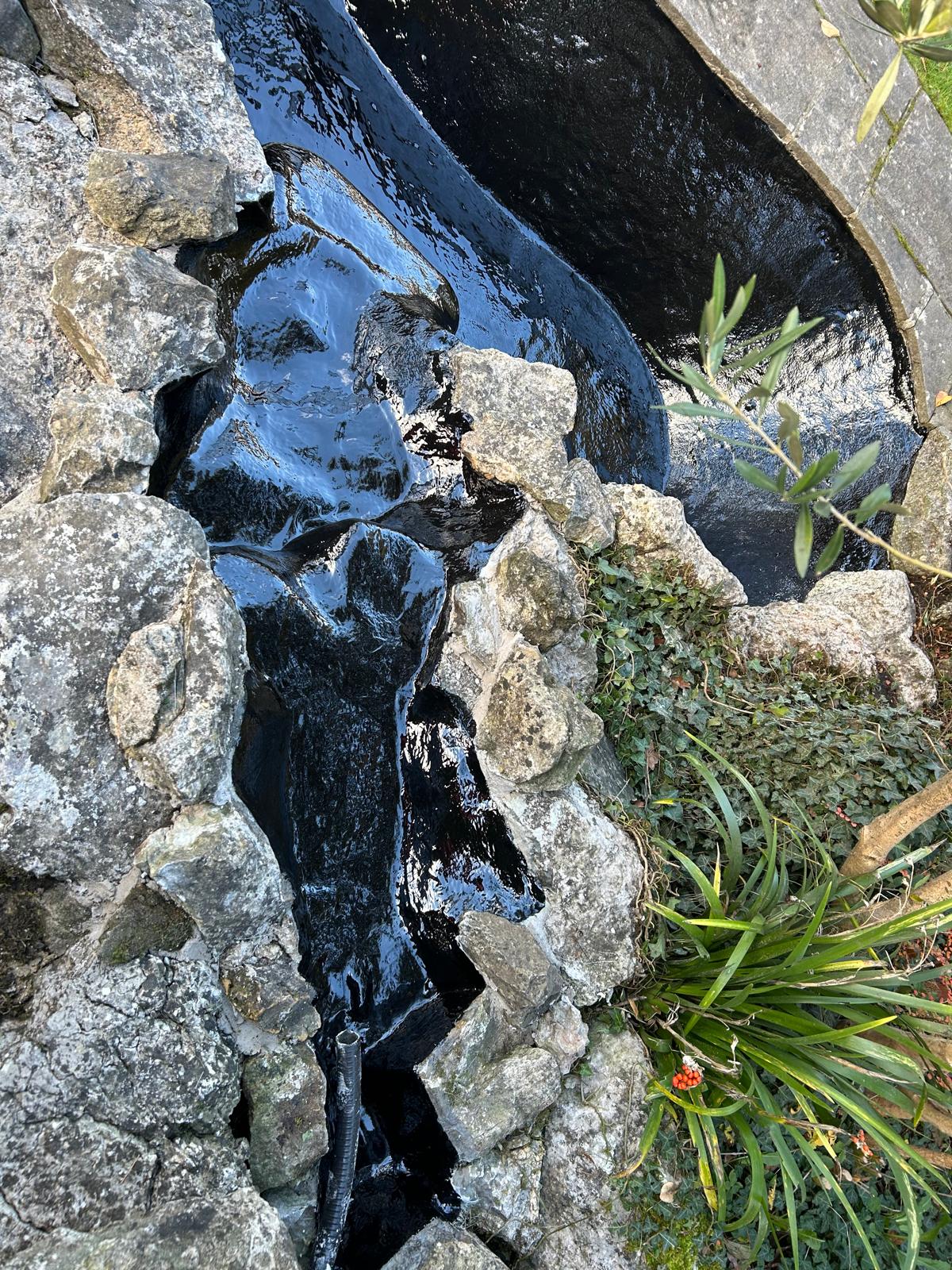
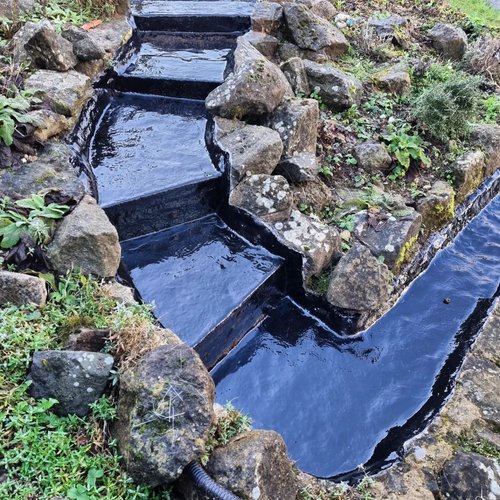
Yes, fibreglass works well with waterfalls and streams.
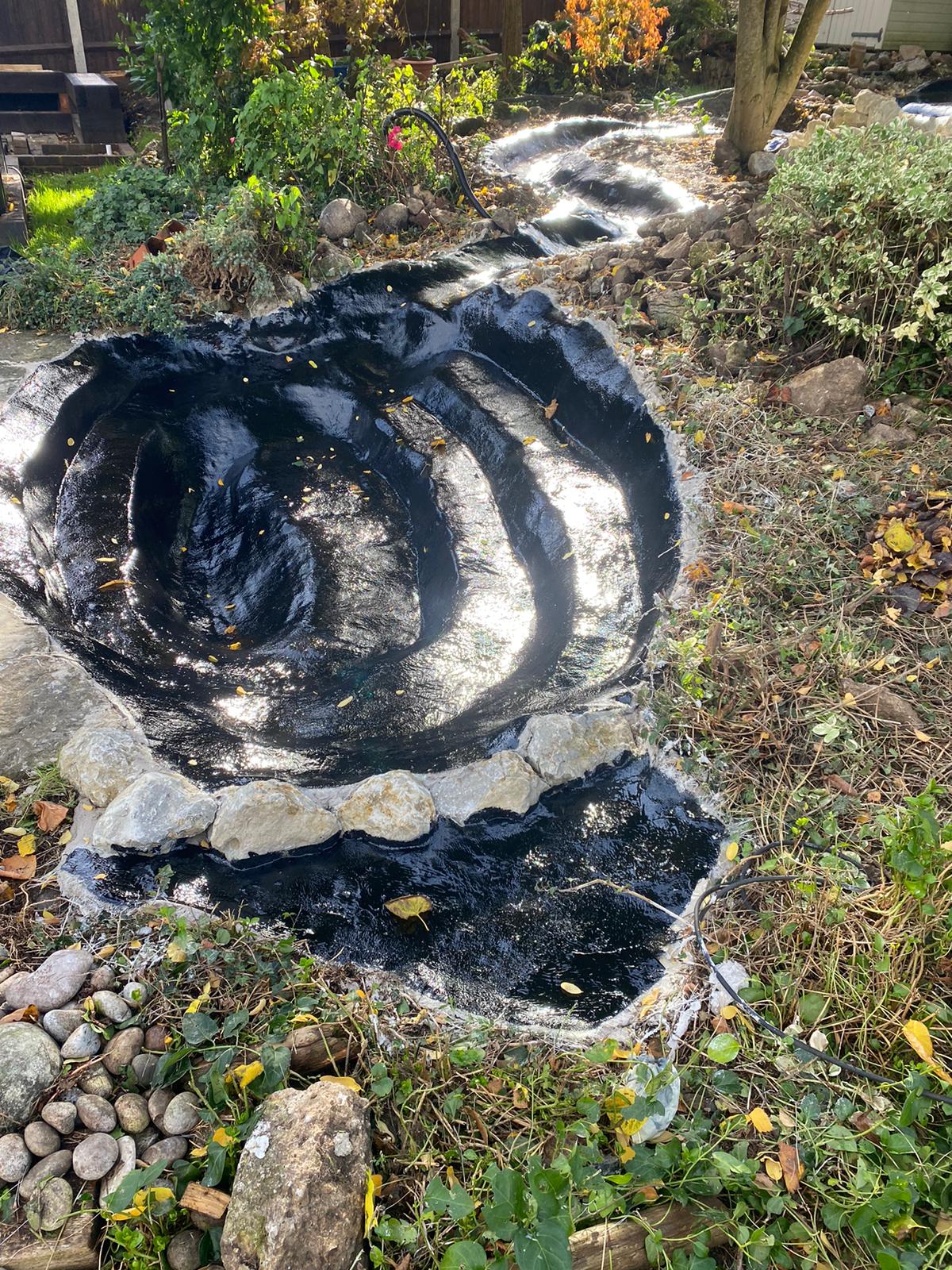
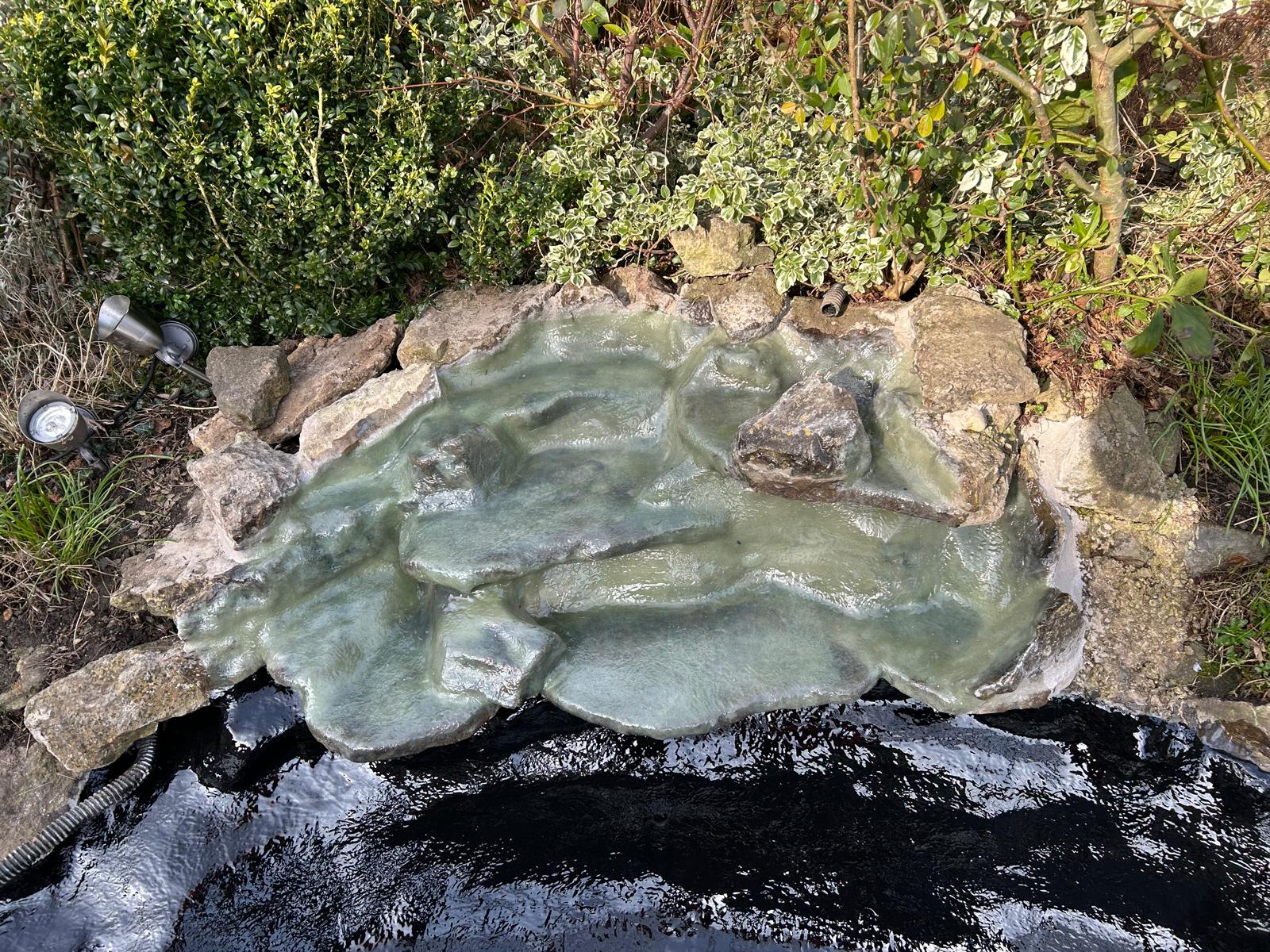
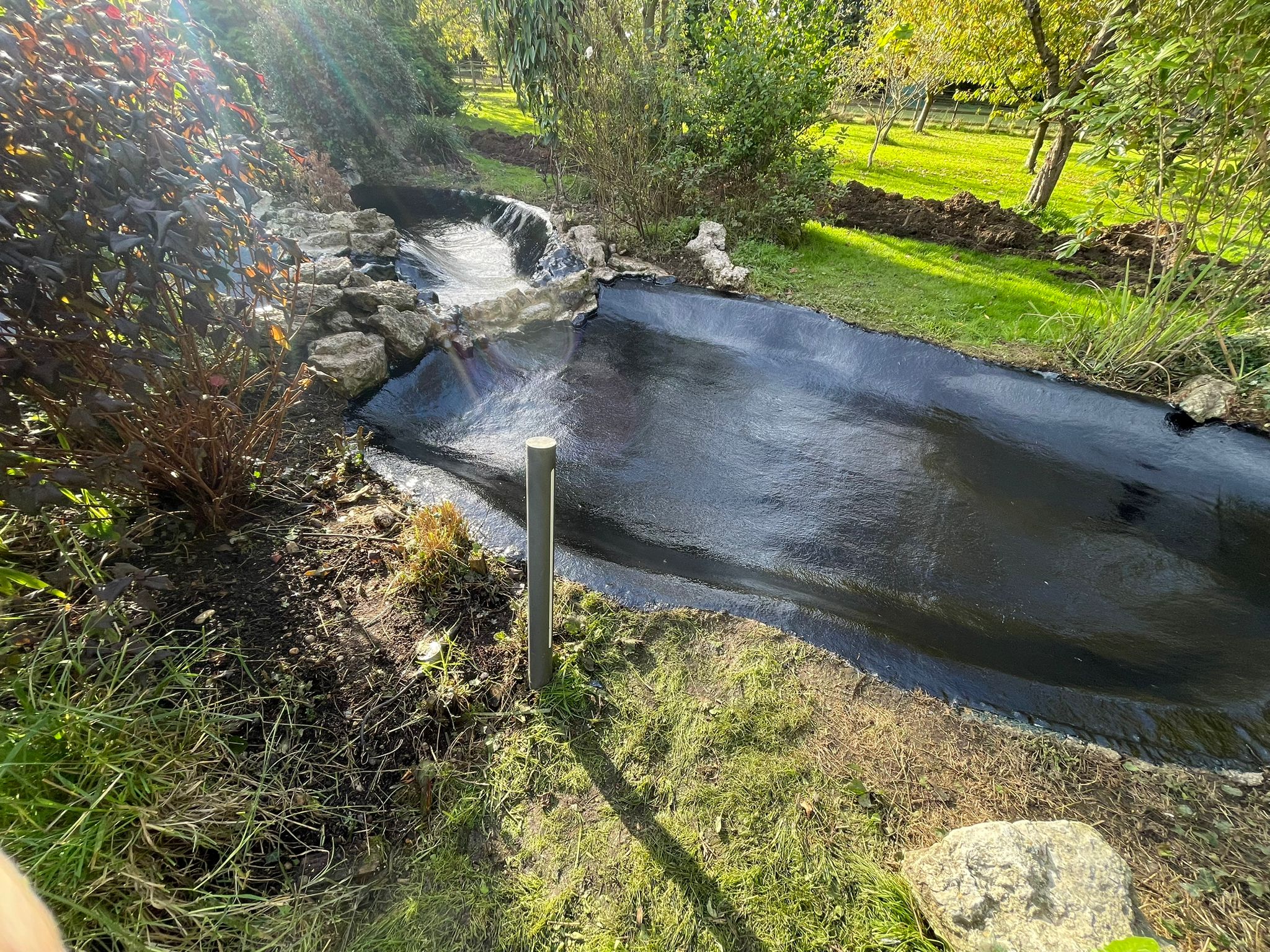
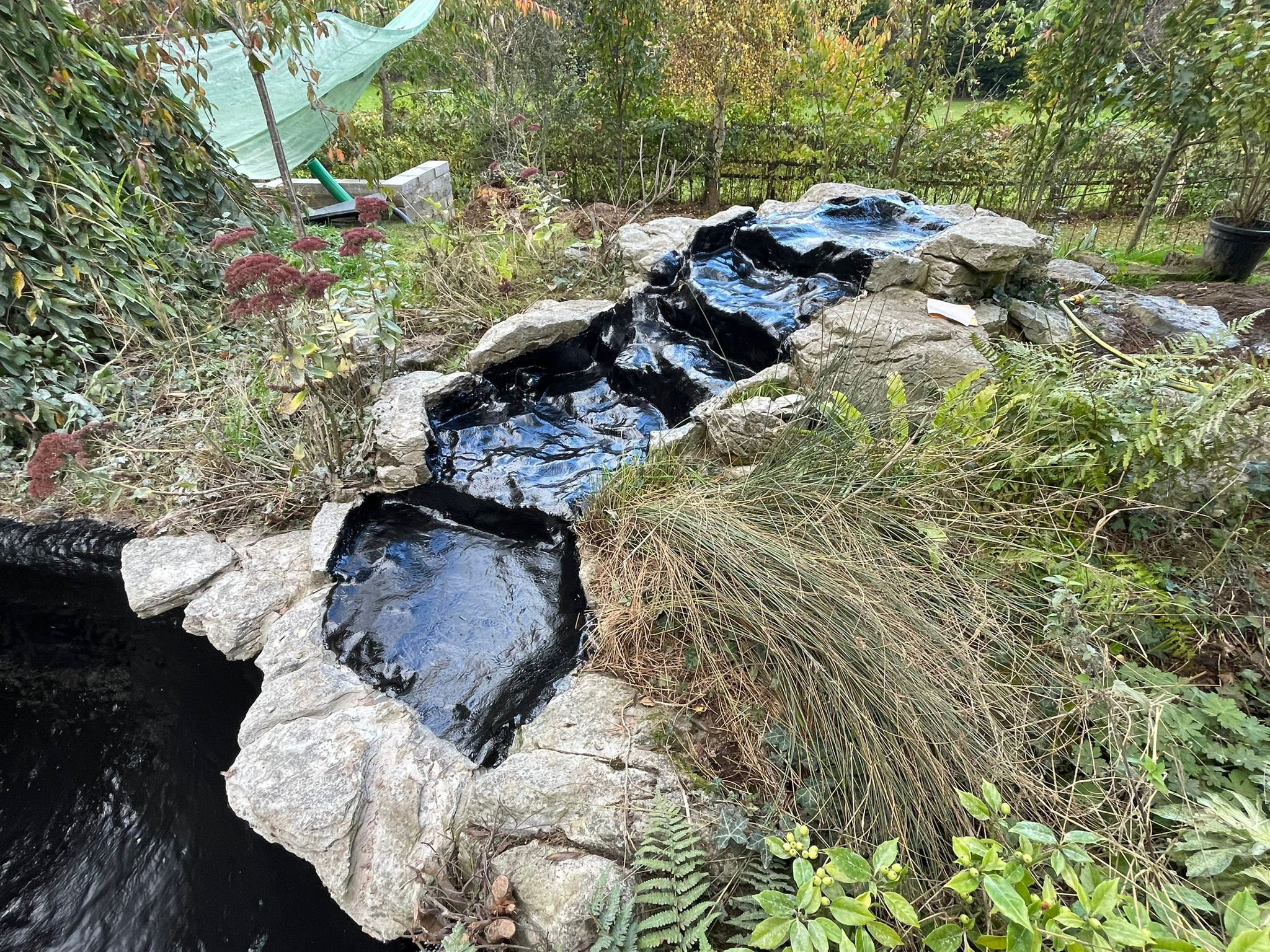
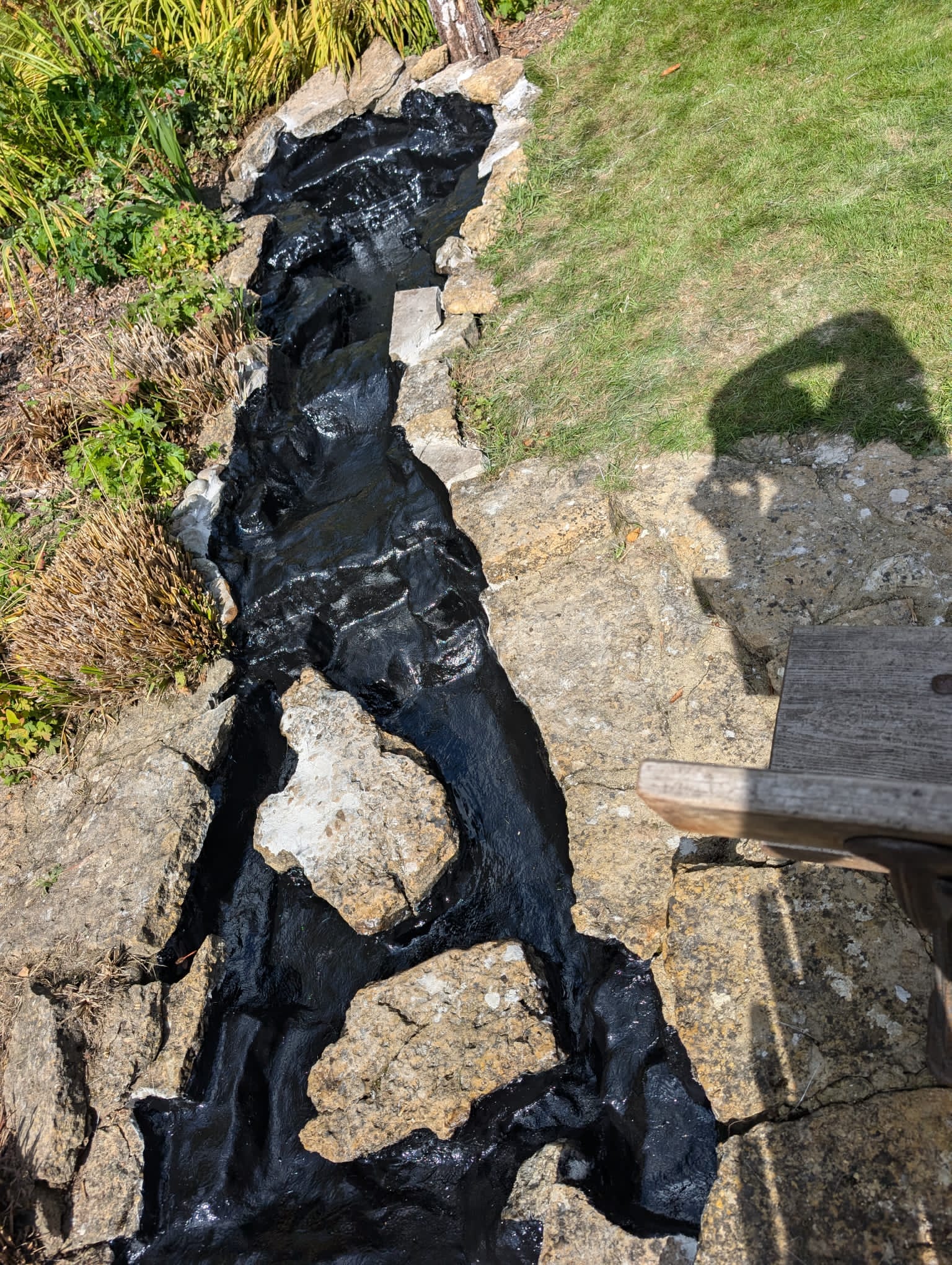
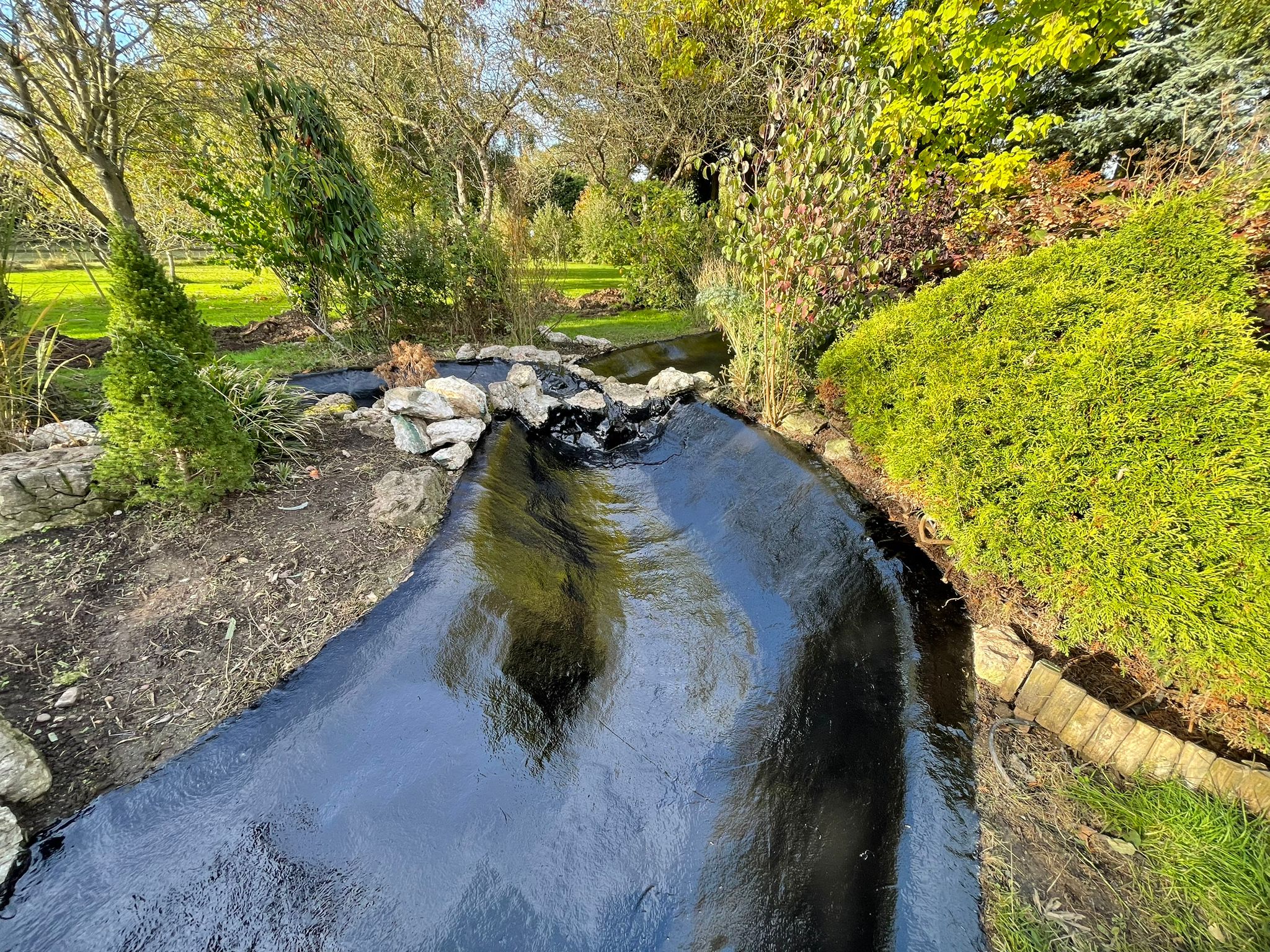
It can be shaped to suit flowing water features and helps create a smooth, controlled surface that improves water movement and reduces leakage risk.
Can fibreglass be used for pond refurbishments
Yes, fibreglass is commonly used in pond refurbishment projects.
Older ponds can be upgraded by removing existing liners or repairing the structure before applying fibreglass. This provides a long term improvement without needing a full rebuild.
Does fibreglass improve pond structure strength
Fibreglass adds strength to the surface, but it does not replace the need for a solid structure.
The pond must be built correctly first, with fibreglass acting as a strong and durable lining that enhances the overall system.
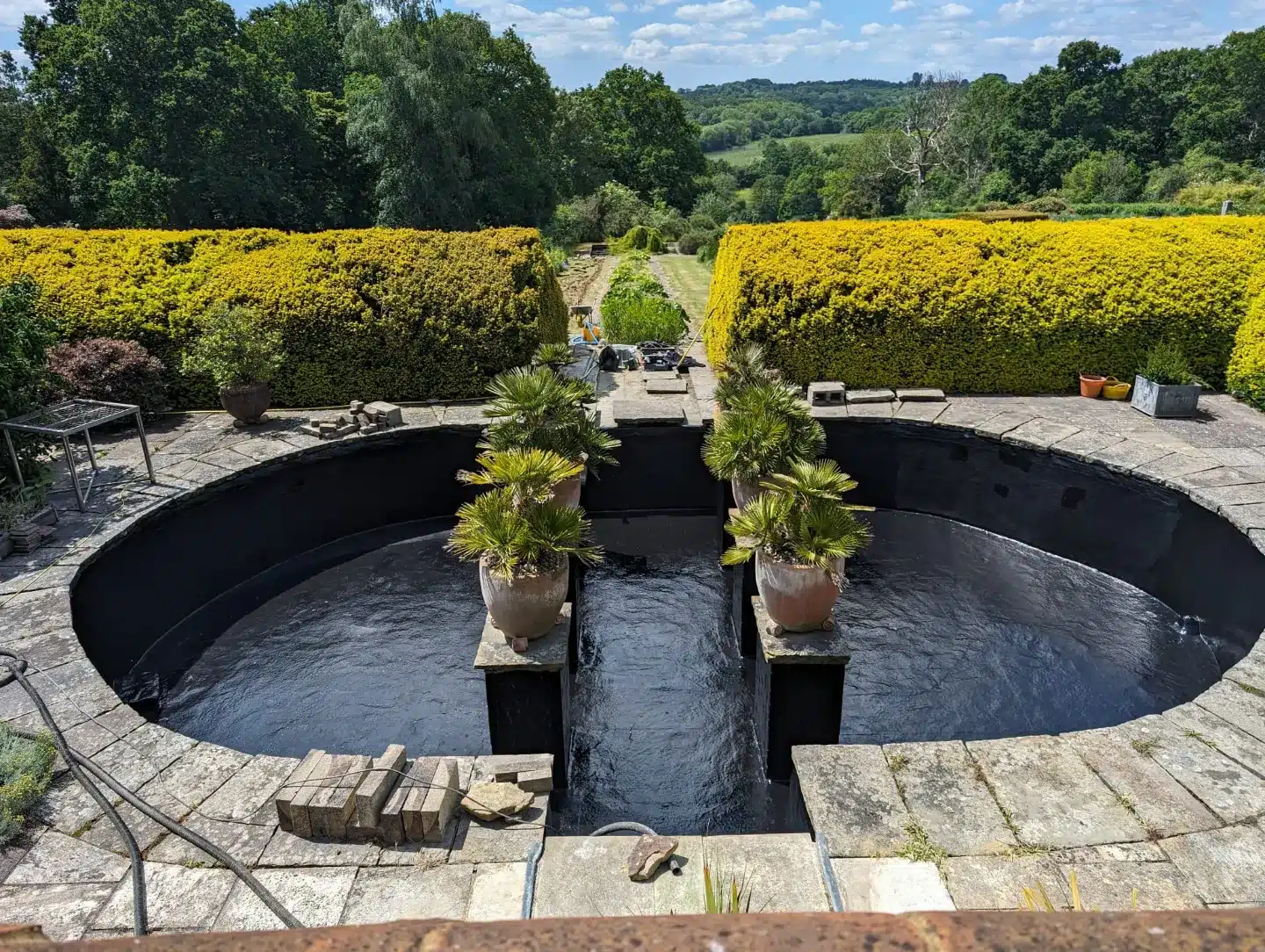
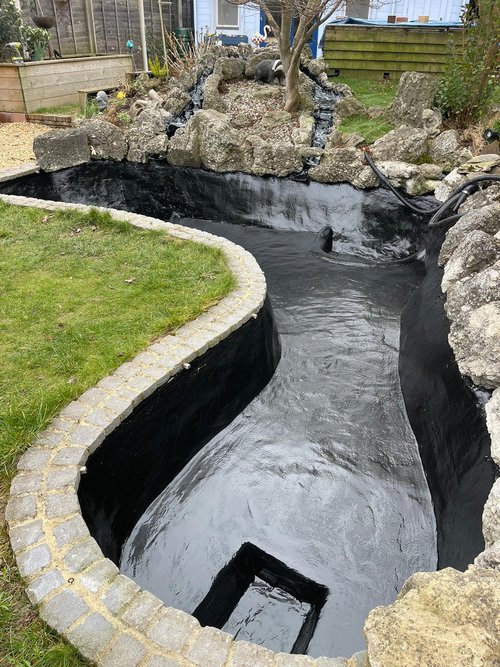
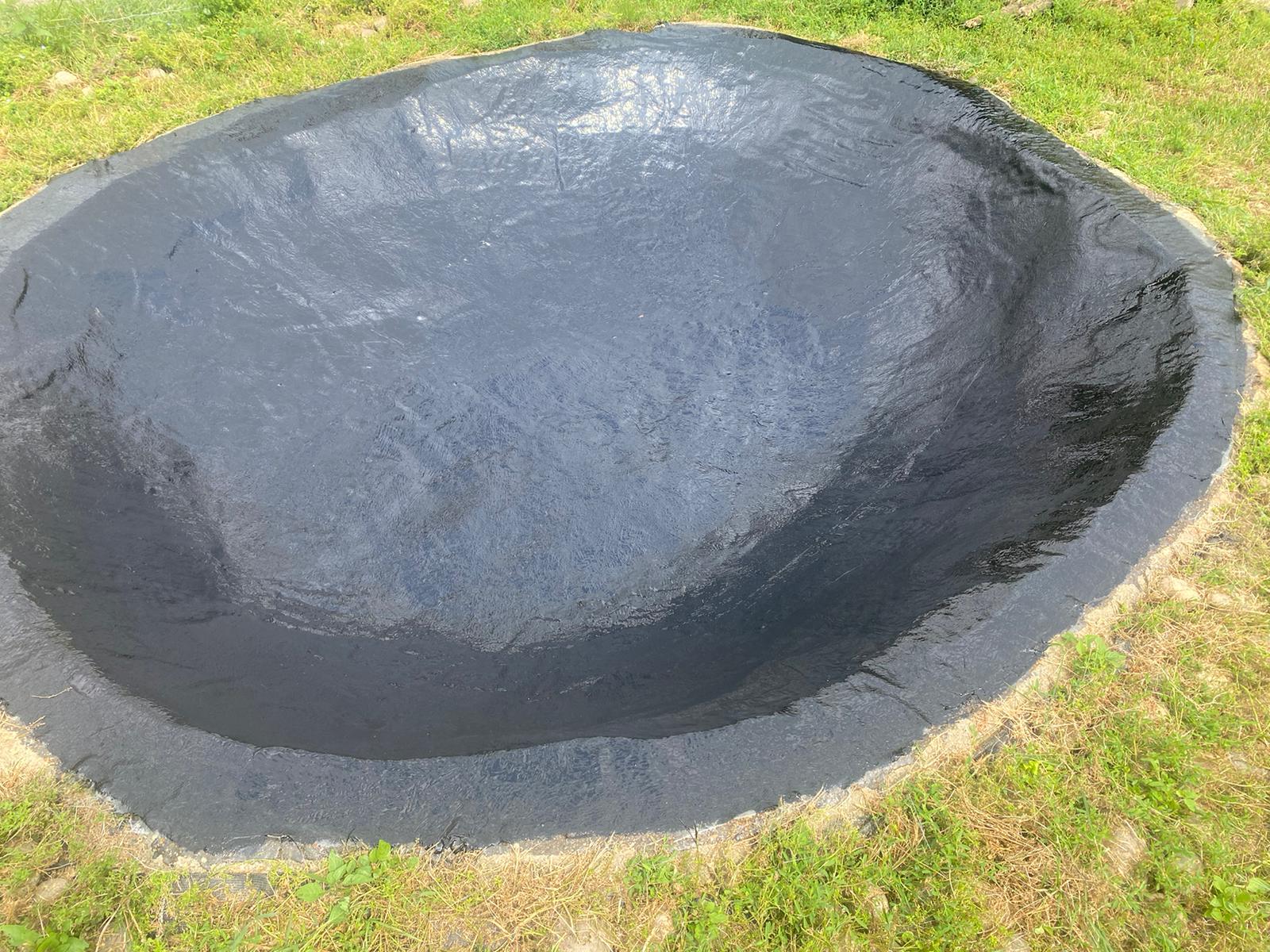
Can fibreglass be used on irregular shaped ponds
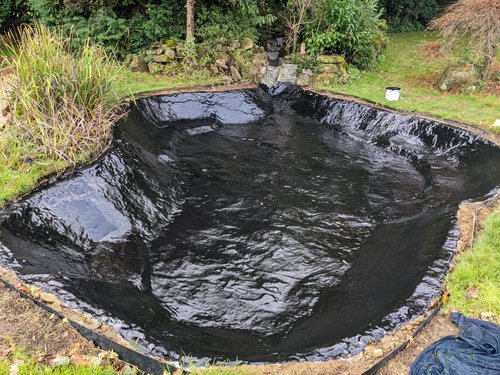
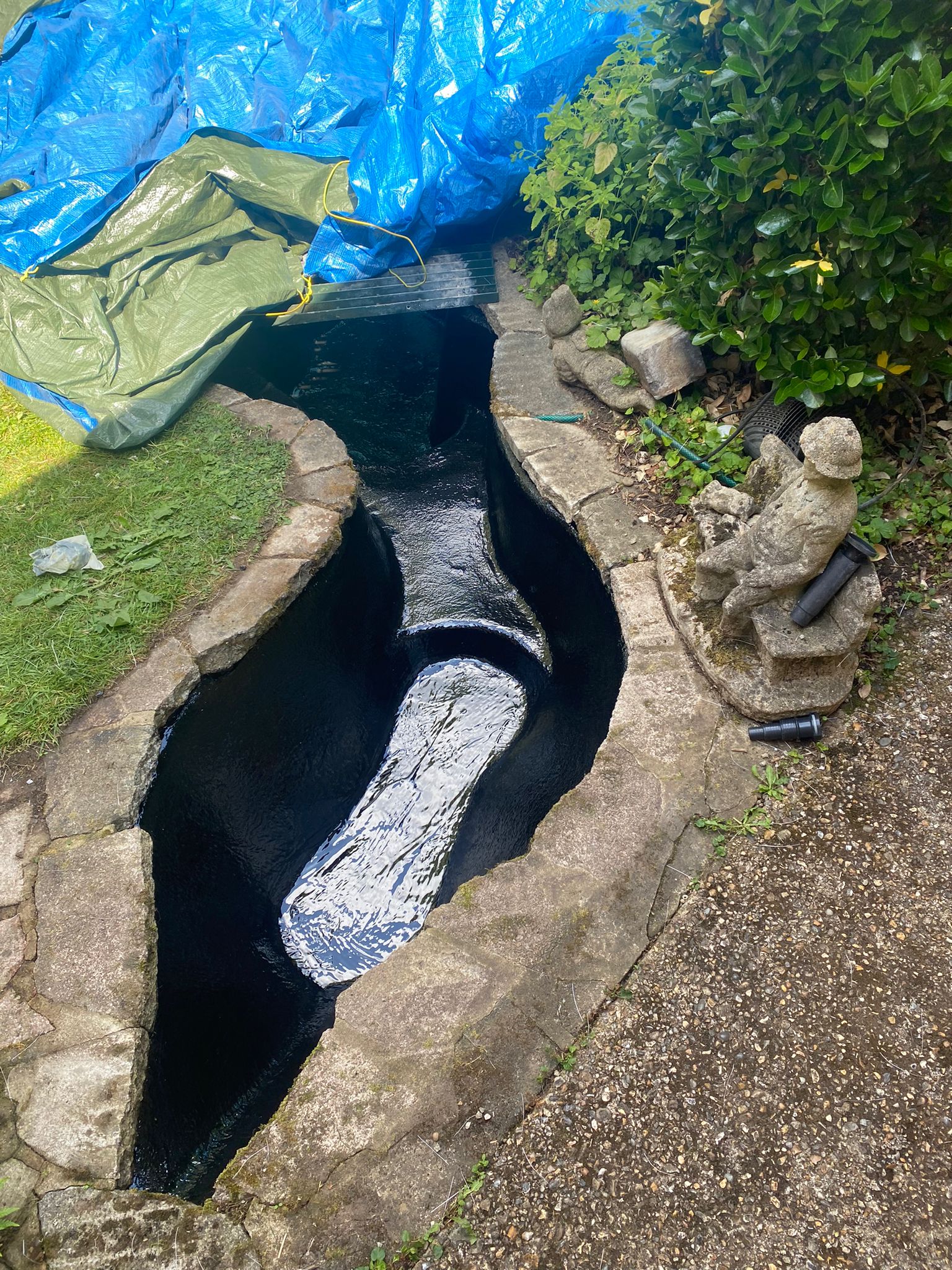
Yes, fibreglass is ideal for irregular shapes.
It can be applied to curves, shelves, steps, and unique designs while maintaining a seamless finish. This makes it suitable for bespoke and custom pond builds.
How do you clean a fibreglass pond surface
Cleaning a fibreglass pond is straightforward.
Debris can be brushed or vacuumed away, and the smooth surface makes it easier to remove buildup. Standard pond maintenance practices are still required, but the lining itself does not complicate the process.
Does fibreglass prevent algae growth
Fibreglass does not stop algae completely, but it helps reduce buildup.
The smooth surface makes it harder for algae to attach compared to rough or creased surfaces. Good filtration and maintenance are still essential for controlling algae.
Can fibreglass be used for large ponds and lakes
Fibreglass can be used for larger ponds, but suitability depends on the structure and design.
For very large or natural style ponds, other methods may also be considered. Each project is assessed individually to determine the best approach.
Can fibreglass ponds be drained and refilled safely
Yes, fibreglass ponds can be drained and refilled without issue.
The rigid structure remains stable when empty, provided the pond has been built correctly. This makes maintenance and cleaning more manageable.
Is fibreglass suitable for wildlife ponds
Fibreglass can be used in wildlife ponds, but design considerations may vary.
In some cases, natural edges or planting areas are incorporated alongside the fibreglass lining. It provides a durable base while still allowing for a natural environment.
Can fibreglass be colour matched to a pond design
Fibreglass finishes are available in a range of colours.
This allows the pond to be tailored to suit different designs, whether that is a darker finish for koi visibility or a lighter finish for a natural look.
What should I consider before choosing fibreglass
Key factors include budget, pond size, structure, and long term goals.
Fibreglass is best suited to projects where durability, finish quality, and reduced maintenance are important. It is also a good option for upgrading older ponds with ongoing issues.
When is the best time to fibreglass a pond
The best time is during suitable weather conditions.
Dry and mild conditions allow the materials to cure properly and ensure the best finish. Planning the timing of the project helps achieve a more reliable result.
