





Best Blanketweed Treatment for Ponds
Quick Answer: Best Blanketweed Treatment
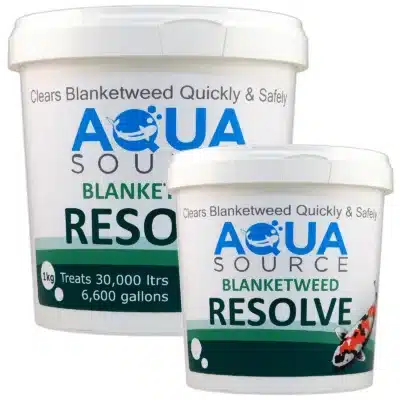
The best blanketweed treatment for most garden ponds is Aqua Source Blanketweed Resolve. It works by reducing phosphate levels in the water, which helps break the nutrient cycle that fuels blanketweed growth. Unlike many traditional algaecides, it is safe for fish, plants and wildlife ponds when used correctly.
How to Remove Blanketweed and String Algae from Garden Ponds
Blanketweed is one of the most common and frustrating problems pond owners face. Almost every spring we begin hearing from pond owners whose clear ponds have suddenly become filled with long green strands of algae that seem to appear almost overnight.
This algae, commonly known as blanketweed, string algae, or filamentous algae, can quickly spread across the entire pond. It often wraps around pumps, waterfalls and filtration equipment, clings to pond walls and plants, and eventually forms thick floating mats on the water surface.
Not only does blanketweed make a pond look untidy and neglected, it can also clog filters, trap debris and reduce oxygen levels if left untreated.
The good news is that blanketweed is completely manageable once you understand why it appears and how to control it properly. In many cases the problem can be resolved quickly by improving pond balance and using a reliable blanketweed treatment.
Through our pond cleaning and maintenance work across Kent and the South East, we deal with blanketweed outbreaks every year in ponds of all sizes, from small wildlife ponds to large koi ponds. Over time we have tested a wide range of algae treatments and control methods. Some offer temporary improvements, some make little difference, and a few consistently deliver excellent results.
The treatment we now recommend most often is Aqua Source Blanketweed Resolve.
You can check the latest price and reviews here on Amazon.
This guide explains exactly what blanketweed is, why it appears in ponds and how to remove it effectively so you can keep your pond healthy and clear.
What is Blanketweed?
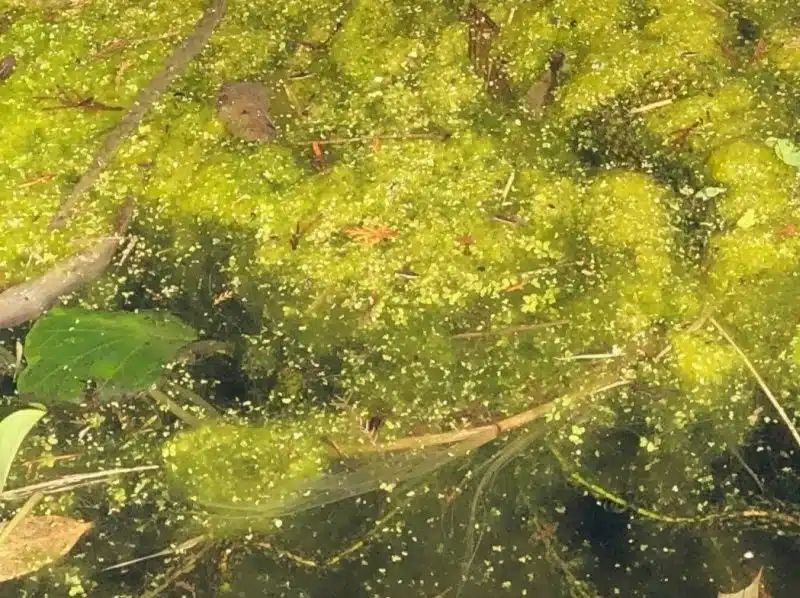
Blanketweed is a form of filamentous algae that grows in long strands within pond water. Unlike green water algae which turns pond water cloudy, blanketweed forms visible green strings that attach themselves to surfaces such as pond walls, waterfalls, rocks and plants.
As it grows it begins to form tangled masses that float on the surface of the pond. These mats often trap debris and organic material which further encourages algae growth.
Typical signs of blanketweed include
- long green strands attached to pond walls
- algae growing on waterfalls and pumps
- thick floating mats across the pond surface
- filters clogging with green algae
- algae wrapping around pond plants
In small amounts blanketweed is a natural part of the pond ecosystem. However once nutrient levels increase the algae can grow extremely quickly and overwhelm the pond.
If your pond is already heavily affected by algae, a full pond clean can often restore balance quickly. You can learn more about our pond cleaning services here.

Close-Up of Blanketweed Strands
Why Blanketweed Appears in Ponds
Blanketweed develops when the pond environment provides the ideal conditions for algae growth. The main factors that encourage blanketweed are excess nutrients, strong sunlight and stable water temperatures.
Understanding these causes is the key to controlling blanketweed long term. Simply removing the algae without addressing these underlying issues often leads to the problem returning again.
Excess Nutrients
The most significant cause of blanketweed growth is excess nutrients in the water. These nutrients act as fertiliser for algae.
They commonly enter ponds through
• fish waste
• uneaten fish food
• decaying leaves
• dying pond plants
• sludge accumulating on the pond floor
As these materials break down they release phosphate and nitrate into the water. When these nutrients build up faster than the pond’s natural biological processes can remove them, algae growth accelerates.
Sunlight Exposure
Blanketweed thrives in ponds that receive strong sunlight throughout the day. Sunlight provides the energy algae need to grow and reproduce.
Ponds located in open gardens with little shade are therefore more susceptible to algae outbreaks.
Poor Filtration
A good pond filter removes organic waste before it has time to decompose and release nutrients.
If the filtration system is undersized, poorly maintained or simply overwhelmed by waste, nutrients can accumulate quickly and encourage blanketweed growth.
You can explore pond filtration equipment here
https://www.thatpondguy.co.uk/product-category/pond-filters/
Low Oxygen Levels
Beneficial bacteria play an important role in breaking down organic waste in a pond. These bacteria require oxygen to function effectively.
When oxygen levels are low, organic material breaks down more slowly and nutrients begin to accumulate. This imbalance often encourages algae growth.
Our guide on pond oxygenation explains this in more detail
https://www.thatpondguy.co.uk/oxygenation-and-aeration-for-koi-ponds/
Why Blanketweed Explodes in Spring
Many pond owners notice that blanketweed suddenly appears during March or April, even if the pond looked perfectly healthy throughout winter.
This happens because several seasonal changes occur at the same time.
As temperatures rise, biological activity within the pond increases. Fish become more active and begin producing more waste, while organic debris that accumulated over winter starts to break down.
At the same time sunlight becomes stronger and the days become longer, creating ideal conditions for algae growth.
However the beneficial bacteria within pond filters are still recovering from the colder winter period and are not yet operating at full capacity. This temporary imbalance allows nutrients to accumulate, giving algae the opportunity to grow rapidly.
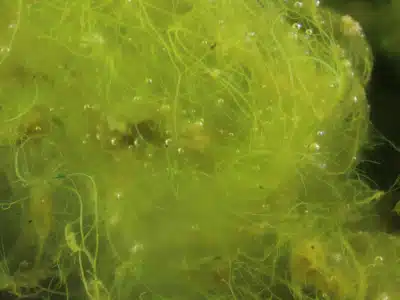
Close-Up of Blanketweed Strands in a Pond
Natural Ways to Reduce Blanketweed
Before using any treatment it is worth improving the overall balance of the pond. Blanketweed thrives in ponds where nutrients are allowed to build up, so improving water quality can often reduce algae growth significantly.
Add Oxygenating Plants
Oxygenating plants such as hornwort and watercress absorb nutrients directly from the water. By consuming these nutrients they leave less available for algae to grow.
Remove Organic Debris
Leaves, dead plant material and sludge release nutrients as they decompose. Removing this material helps reduce nutrient levels within the pond.
Improve Filtration
A properly sized pond filter removes organic waste before it can break down and feed algae.
You can browse pond filtration equipment here
https://www.thatpondguy.co.uk/product-category/pond-filters/
Increase Aeration
Aeration improves oxygen levels and supports beneficial bacteria that naturally break down organic waste.
Avoid Overfeeding Fish
Overfeeding fish is one of the most common causes of blanketweed outbreaks. Only feed fish what they will consume within a few minutes.
Manual Blanketweed Removal
When blanketweed becomes severe it can help to physically remove some of the algae before applying treatment.
The simplest method is to twist the strands around a stick or pond brush and lift the algae from the water. This allows large amounts of blanketweed to be removed quickly.
However manual removal only treats the visible algae. If the underlying causes such as excess nutrients remain, blanketweed will usually return.
For this reason manual removal works best when combined with improvements to filtration, aeration and water quality.

Overgrown Pond with Blanketweed Infestation
How to Use Aqua Source Blanketweed Resolve for Maximum Effectiveness
Aqua Source Blanketweed Resolve is available in several tub sizes, allowing you to choose the correct amount based on the volume of your pond. Using the correct dosage ensures the treatment works effectively and helps prevent blanketweed from returning.
| Size | Treats Up To | UK Gallons |
|---|---|---|
| 250g | 7,500 litres | 1,649 gallons |
| 500g | 15,000 litres | 3,300 gallons |
| 1kg | 30,000 litres | 6,600 gallons |
| 2kg | 60,000 litres | 13,200 gallons |
Dosage Guidelines
The recommended dosage for Aqua Source Blanketweed Resolve is:
25g of product per 750 litres of pond water
Applying the correct amount helps the treatment target blanketweed while also reducing the nutrients that allow algae to grow.
Application Instructions
One of the reasons this treatment is so popular is that it is extremely easy to apply. There is no complicated mixing or preparation required.
Follow these simple steps:
- Sprinkle the product evenly around the edges of the pond or directly over areas where blanketweed is visible.
- Allow the treatment to dissolve naturally in the water.
- For heavy blanketweed infestations, repeat the dose every 10 days for the first 30 days.
- Once the blanketweed has been brought under control, apply a maintenance dose once per month to prevent regrowth.
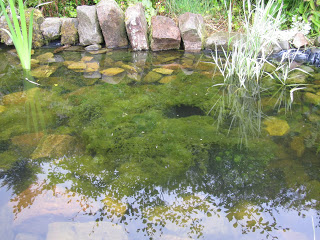
Blanketweed Growth in a Pond
Preventing Blanketweed Long Term
Once blanketweed has been brought under control, the next step is preventing it from returning. The key to long term blanketweed control is maintaining a balanced and healthy pond ecosystem where excess nutrients are kept to a minimum.
Blanketweed thrives in ponds where organic waste is allowed to build up and where water circulation or filtration is insufficient. By keeping the pond clean and well balanced, you can dramatically reduce the chances of blanketweed taking hold again.
Some of the most effective ways to prevent blanketweed include:
- Regular filter maintenance – Clean your pond filter and mechanical sponges regularly so they continue removing waste efficiently.
- Removing sludge and organic debris – Leaves, plant waste and sludge on the pond floor release nutrients as they break down, which fuels algae growth.
- Improving water circulation – Good water movement helps distribute oxygen and prevents stagnant areas where algae can thrive.
- Increasing aeration – Pond aerators raise oxygen levels and support beneficial bacteria that break down organic waste naturally.
- Monitoring fish feeding – Only feed fish what they will consume quickly. Uneaten food rapidly increases nutrient levels.
- Maintaining stable water chemistry – Keeping carbonate hardness and overall water quality stable helps prevent sudden algae blooms.
Taking a proactive approach to pond maintenance will always produce better results than waiting for blanketweed to become a major problem.
If you would like a more detailed guide to seasonal pond care, including how to prepare your pond for spring, summer, autumn and winter, you can read our full guide here.
Why Aqua Source Blanketweed Resolve is the Best Blanketweed Treatment
After testing a wide range of pond algae treatments over the years, Aqua Source Blanketweed Resolve has consistently proven to be one of the most effective and reliable blanketweed treatments available.
Many traditional algae treatments simply kill the visible algae. While this can temporarily clear the pond, the nutrients that caused the blanketweed in the first place remain in the water. As a result the algae often returns within a few weeks.
Aqua Source Blanketweed Resolve works differently. Instead of just targeting the algae itself, it helps remove the nutrients that blanketweed depends on to grow. By reducing phosphate levels within the pond it helps break the nutrient cycle that fuels repeated algae outbreaks.
This approach not only removes existing blanketweed but also helps prevent it from quickly returning.
From our experience working on ponds of all sizes, from small garden ponds to larger koi ponds, this treatment is particularly effective when combined with good filtration, aeration and regular pond maintenance.
Key advantages of Aqua Source Blanketweed Resolve include
- Helps reduce phosphate levels which feed blanketweed
- Safe for fish, plants and wildlife ponds when used correctly
- Suitable for koi ponds, goldfish ponds and ornamental water features
- Simple to apply with no complicated mixing required
- Works effectively in both warm and cooler water temperatures
Many pond owners begin noticing visible improvements within around 7 to 10 days, with thicker blanketweed growth gradually breaking down over the following weeks.
If you are looking for a reliable way to remove blanketweed and keep it under control long term, this treatment is one of the best options currently available.
🌿 Restore clear water and enjoy your pond again without battling constant blanketweed growth.
📢 You can view the product and current prices here: https://www.amazon.co.uk/dp/B07Y2N7F3F
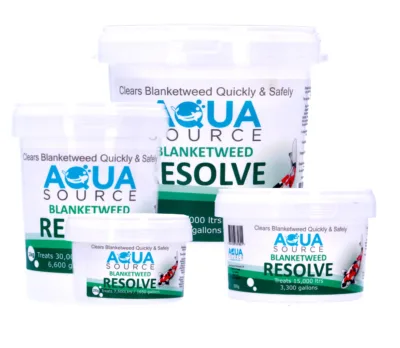
Aqua Source Blanketweed Resolve – Available in Multiple Sizes
More Pond Care Resources
If you would like to learn more about keeping your pond clear, balanced and free from blanketweed, our detailed Pond Care Services Page explains the key maintenance tasks for every season. It covers everything from spring pond preparation through to winter care, along with practical advice on filtration, aeration and algae control.
Need Professional Help With Blanketweed?
If blanketweed has already taken hold or your pond is suffering from heavy sludge build up, a professional pond clean can often restore balance much faster than treatments alone.
Our pond cleaning service removes accumulated debris, improves water quality and helps prevent recurring algae problems.
We work across Kent, London, Essex, Surrey, Sussex, Berkshire and Hampshire, providing professional pond cleaning, maintenance and pond construction services. From small wildlife ponds through to large ornamental lakes and koi ponds, every project is tailored to the specific needs of the pond and its environment.
If you would like expert advice or a quote for pond cleaning, maintenance or a new pond build, feel free to get in touch and we will be happy to help.
About the Author
Matthew Adlington is the founder of That Pond Guy, a specialist pond construction and maintenance company working across Kent and the South East. With years of hands on experience cleaning and restoring hundreds of ponds, Matthew regularly deals with blanketweed outbreaks in both wildlife ponds and koi ponds.
Blanketweed Frequently Asked Questions
Expert Summary: How to Remove Blanketweed
Blanketweed is caused by excess nutrients in pond water, particularly phosphate and nitrate released from fish waste, uneaten food, decomposing leaves and organic sludge.
The most effective way to remove blanketweed is to:
• manually remove large strands of algae
• reduce nutrient levels in the pond
• improve filtration and aeration
• apply a treatment that targets phosphate levels
For most garden ponds, a phosphate reducing treatment such as Aqua Source Blanketweed Resolve provides one of the most reliable ways to control blanketweed and prevent it from returning.
You can view the treatment here: https://www.amazon.co.uk/dp/B07Y2N7F3F
Understanding Blanketweed
What is blanketweed in a pond?
Blanketweed is a type of filamentous algae that grows in long green strands within pond water. Unlike green water algae, which makes pond water appear cloudy, blanketweed forms visible strings that attach to pond walls, rocks, plants and filtration equipment.
As the strands grow they often tangle together to form thick floating mats on the surface of the pond.
Why does blanketweed grow in ponds?
Blanketweed grows when ponds contain excess nutrients combined with strong sunlight and stable water temperatures.
The most common sources of nutrients are:
• fish waste
• uneaten fish food
• decomposing leaves
• dying aquatic plants
• organic sludge on the pond floor
These nutrients act as fertiliser for algae and allow blanketweed to grow rapidly.
Why does blanketweed appear suddenly in spring?
Blanketweed often appears during early spring because pond ecosystems temporarily become unbalanced.
As water temperatures rise, fish become more active and organic debris begins decomposing. At the same time sunlight increases, providing ideal conditions for algae growth.
Beneficial bacteria within pond filters are still recovering from winter temperatures, allowing nutrients to build up and algae to grow rapidly.
Is blanketweed harmful to fish?
Blanketweed itself is not toxic to fish. However heavy algae growth can create problems within the pond ecosystem.
Large mats of algae can:
• clog pumps and filters
• reduce oxygen levels
• trap debris
• restrict water movement
If left unmanaged, severe blanketweed growth can affect overall pond health.
Removing Blanketweed
What is the fastest way to remove blanketweed?
The fastest way to remove blanketweed is usually a combination of manual removal and treatment.
Large strands can first be removed by twisting them around a stick or pond brush. A blanketweed treatment can then be applied to reduce the nutrients that allow algae to grow.
This approach removes both the visible algae and the conditions that caused it.
What is the best blanketweed treatment?
Many pond owners find that treatments which reduce phosphate levels provide the most reliable long term results.
Products such as Aqua Source Blanketweed Resolve work by lowering the nutrients that blanketweed depends on, helping break the cycle of repeated algae growth.
You can view the treatment here
https://www.amazon.co.uk/dp/B07Y2N7F3F
How long does blanketweed treatment take to work?
Most treatments begin showing visible results within 7 to 10 days. During this period the algae typically begins weakening and breaking down.
Severe infestations may take several weeks to fully clear depending on the nutrient levels within the pond.
Should I remove blanketweed before treating it?
Yes. Removing as much algae as possible before treatment often improves results.
Manual removal reduces the amount of blanketweed in the pond and allows the treatment to work more effectively on the remaining algae.
Alternative Blanketweed Remedies
Does barley straw remove blanketweed?
Barley straw has been used for many years as a natural algae control method. As it decomposes it releases compounds that may inhibit algae growth.
However barley straw usually works slowly and can be unreliable in heavily affected ponds.
Does baking soda remove blanketweed?
Baking soda is sometimes recommended online because it raises carbonate hardness in pond water.
While stable carbonate hardness can help support biological filtration, baking soda alone does not remove the nutrients that cause blanketweed growth.
Does hydrogen peroxide kill blanketweed?
Hydrogen peroxide can kill algae temporarily but it is not recommended for routine pond use.
If used incorrectly it can damage plants, harm fish and disrupt beneficial bacteria.
Does vinegar remove blanketweed?
Vinegar should never be used in ponds containing fish or aquatic plants. It can disrupt water chemistry and potentially harm pond life.
Do UV clarifiers remove blanketweed?
UV clarifiers are extremely effective for controlling green water algae but they rarely remove blanketweed.
This is because blanketweed grows attached to surfaces rather than floating through the filtration system.
Blanketweed Treatment Options Compared
| Method | Effectiveness | Speed | Long Term Results |
|---|---|---|---|
| Manual removal | Low | Fast | Temporary |
| Barley straw | Medium | Slow | Moderate |
| Liquid algaecides | Medium | Fast | Temporary |
| Phosphate reducing treatments | High | Medium | Long lasting |
Phosphate reducing treatments often provide the most reliable long term control because they target the nutrient source that fuels blanketweed growth.
Preventing Blanketweed
Can pond plants help prevent blanketweed?
Yes. Healthy aquatic plants compete with algae for nutrients within the water.
Oxygenating plants and floating plants absorb excess nutrients and help stabilise the pond ecosystem.
Does pond sludge cause blanketweed?
Yes. Sludge is one of the most common causes of recurring blanketweed problems.
As sludge decomposes it releases nutrients such as phosphate and nitrate which encourage algae growth.
Will aeration reduce blanketweed?
Increasing aeration improves oxygen levels and supports beneficial bacteria that break down organic waste.
These bacteria help process nutrients before algae can use them, reducing the likelihood of severe blanketweed outbreaks.
Can too many fish cause blanketweed?
Yes. Overstocked ponds produce large amounts of waste which increases nutrient levels in the water.
If filtration cannot keep up with this waste, algae growth becomes much more likely.
Does shade help prevent blanketweed?
Reducing direct sunlight can slow algae growth. Floating plants such as water lilies can provide natural shade across the pond surface.
Common Blanketweed Mistakes
Why does blanketweed keep coming back?
Blanketweed usually returns because the underlying causes remain. Excess nutrients, poor filtration and accumulated sludge allow algae to regrow quickly.
Treating the algae alone without improving pond balance often leads to repeated outbreaks.
Can cleaning a filter too much cause algae problems?
Yes. Over cleaning biological filter media can remove beneficial bacteria that help process nutrients.
This can temporarily increase nutrient levels and encourage algae growth.
Can overfeeding fish cause blanketweed?
Yes. Uneaten fish food quickly decomposes and releases nutrients that feed algae growth.
Only feed fish what they will consume within a few minutes.
Additional Blanketweed FAQ Questions
Blanketweed Identification
How can I tell if my pond has blanketweed?
Blanketweed usually appears as long green strands or hair like algae growing on pond walls, rocks, plants or equipment. The strands often feel slimy and can be lifted from the water in clumps.
Unlike green water algae, blanketweed does not make the water cloudy but instead forms visible strings or mats.
Is blanketweed the same as string algae?
Yes. Blanketweed and string algae are two names for the same type of filamentous algae that grows in strands within pond water.
Different pond keepers and suppliers often use different terms, but they refer to the same problem.
What colour is blanketweed?
Blanketweed usually appears bright green when actively growing. As it begins to die or break down it may turn darker green, brown or grey.
During treatment the algae often loses colour and becomes softer before breaking apart.
Blanketweed Growth Conditions
Does warm weather make blanketweed worse?
Yes. Warmer temperatures combined with strong sunlight create ideal conditions for algae growth.
This is why blanketweed growth usually accelerates during late spring and summer.
Can rain cause blanketweed outbreaks?
Heavy rain can sometimes increase blanketweed growth because runoff water may introduce additional nutrients into the pond from surrounding soil, lawns or gardens.
Can fertiliser from nearby lawns cause blanketweed?
Yes. Garden fertilisers can easily wash into ponds during rain. These fertilisers contain phosphate and nitrate which can quickly encourage algae growth.
Pond Equipment and Blanketweed
Can poor water circulation cause blanketweed?
Yes. Poor circulation can allow nutrients and organic waste to settle in certain areas of the pond. These stagnant areas often become hotspots for algae growth.
Improving circulation helps distribute oxygen and nutrients more evenly throughout the pond.
Does a bigger filter stop blanketweed?
A properly sized filtration system can help reduce algae problems by removing waste before it breaks down into nutrients.
However even large filters cannot completely prevent blanketweed if nutrient levels remain high.
Can waterfalls help reduce blanketweed?
Waterfalls improve water movement and aeration, both of which can help maintain a healthy pond ecosystem. While waterfalls alone will not eliminate blanketweed, they can contribute to better water quality.
Blanketweed Treatment
Can I treat blanketweed in a pond with fish?
Yes. Most modern blanketweed treatments are designed to be safe for fish when used according to the manufacturer’s instructions.
It is always important to follow the recommended dosage carefully.
Can blanketweed treatment harm pond plants?
Most treatments are safe for aquatic plants when used correctly. However extremely high doses or repeated over treatment may stress delicate plants.
How often should blanketweed treatment be applied?
During heavy outbreaks treatments may be applied every 10 days until the algae is under control.
Once the blanketweed has cleared, many pond keepers apply maintenance treatments monthly during the warmer months.
Seasonal Blanketweed Questions
Should I treat blanketweed in early spring?
Yes. Treating blanketweed early in the season often prevents large outbreaks later in spring and summer.
Starting treatment when the algae first appears usually produces the best results.
Does blanketweed grow in autumn?
Blanketweed growth usually slows during autumn as temperatures drop and sunlight decreases. However it may still remain present within the pond until winter.
Will frost kill blanketweed?
Cold temperatures can slow or temporarily stop blanketweed growth, but frost rarely eliminates it completely.
Once temperatures rise again the algae may begin growing again.
Pond Maintenance Questions
Can cleaning the pond remove blanketweed permanently?
A thorough pond clean can remove accumulated sludge and organic waste that fuel algae growth.
While blanketweed may still appear occasionally, removing these nutrient sources can significantly reduce recurring outbreaks.
Does pond water testing help prevent blanketweed?
Yes. Testing pond water for parameters such as pH, KH and nutrient levels can help identify imbalances that may encourage algae growth.
Maintaining stable water chemistry helps support a healthy pond ecosystem.
Is a wildlife pond more likely to get blanketweed?
Wildlife ponds sometimes develop blanketweed because they often contain fewer filtration systems than koi ponds.
However healthy plant growth in wildlife ponds can also help absorb nutrients and limit algae growth.
