





Understanding Koi Behavior and Communication
Koi, the dazzling jewels of the pond, are more than just vibrant fish. These majestic creatures possess unique behaviors, communication styles, and personalities that can captivate any pond owner. As a koi keeper, understanding these nuances is key to maintaining their health and happiness. A deeper knowledge of koi behavior not only strengthens the bond you share with your fish but also helps you ensure their well-being.
In this guide, we’ll dive into the world of koi behavior and communication, providing you with insights and practical tips to enhance your understanding of these fascinating creatures.
Social Creatures with Individual Personalities
Koi are social animals, thriving in groups where their dynamic personalities come to life. Watching koi interact with each other can be mesmerizing, as they display behaviors that signal their comfort and communication. In nature, koi often school together, and in a pond, you’ll observe them swimming in a cohesive group. However, koi are also unique individuals with distinct personalities, and their behavior can vary depending on their temperament.

Koi Schooling Together
If you’re looking to enhance your koi pond with proper design to encourage healthy social behavior, visit our Pond Building Services page.
Some koi are natural leaders, often seen swimming at the forefront of the group. These more dominant koi may even take the first bite of food, pushing other fish aside. On the other hand, more passive koi may hang back, waiting for their turn to eat or interact with others. Understanding these personalities can help you manage feeding times, prevent aggressive behavior, and even monitor the well-being of your koi community.
Key Tip: Regularly observing your koi’s social interactions can give you valuable insight into their individual personalities and how they affect group dynamics. This can also help you spot signs of bullying or stress, allowing you to take action early.
Feeding Behaviors: Koi and Food-Related Aggression
Feeding time is one of the best opportunities to observe koi behavior up close. You’ll notice some koi are eager to feed, while others approach the process with more caution. Koi are omnivores, naturally foraging in their environment, which can sometimes lead to uprooting plants or scouring the pond floor for food.

Koi Feeding Time
Learn more about the best feeding practices from Koi Organization International (KOI), an excellent resource for koi care.
During feeding, it’s common to see koi exhibit aggressive behaviors as they compete for food. The koi that tend to dominate feeding times may push smaller or more passive fish out of the way. This is a natural behavior, but as a pond owner, you should ensure that all fish get enough to eat. Using floating feeding rings or spreading food across the pond can help reduce food-related aggression and ensure a more balanced feeding routine.
Key Tip: To minimize competition and ensure all koi are fed, scatter food evenly across the pond surface or introduce multiple feeding spots. This can prevent one or two koi from dominating feeding times.
Understanding Koi Communication: Body Language, Sounds, and Touch
Koi are not just silent swimmers; they communicate through a variety of methods, including body language, sound, and even touch. By paying attention to these cues, you can better understand your koi’s emotional and physical state and the Koi behavior and communication.
Body Language
One of the most noticeable ways koi communicate is through their swimming patterns and body posture. When koi are content and relaxed, they swim gracefully with extended fins and a smooth, steady pace. However, when they are stressed or frightened, they tend to swim erratically or quickly, with their fins held close to their bodies.

Koi Nudging Each Other
Flicking or flashing (when koi rub their bodies against surfaces) is another behavior to watch for. This can be a sign of skin irritation, parasites, or water quality issues. If you notice frequent flicking, it may be time to check the water parameters or inspect the fish for signs of illness.
Sounds
While not all pond owners are aware, koi can make sounds to express themselves. These sounds, though not always audible above water, are low-pitched grunts or croaks. Koi tend to make sounds when they’re excited, during feeding, or when they’re feeling agitated. For instance, if one koi is chasing another, you may notice a sudden grunt or splash, indicating a territorial dispute or warning.
Touch
Touch is another form of communication in koi, often seen during social interactions. When two koi nudge each other gently with their heads, this is usually a sign of recognition and respect. Koi will often engage in this behavior as part of their social bonding, particularly when forming a hierarchy in the pond.
Key Tip: Paying close attention to changes in swimming patterns, fin posture, or sounds can help you detect stress, illness, or environmental issues in your pond early on.
Stress and Environmental Factors
Koi, like any other living creature, are sensitive to their environment. Stress can arise from several factors, including poor water quality, overcrowding, lack of hiding places, or aggressive behavior from other fish. Understanding how stress impacts koi behavior is crucial for maintaining a healthy pond learning their Koi behavior and communication.
Water Quality
The most important factor in reducing stress in koi is maintaining optimal water conditions. Koi are particularly sensitive to changes in pH, ammonia, nitrite, and nitrate levels. Poor water quality can lead to lethargic behavior, loss of appetite, and even visible signs of illness like cloudy eyes or frayed fins. Regular water testing and prompt adjustments are key to preventing stress and ensuring your koi stay active and healthy.
To keep your pond in the best condition, check out our detailed guide on Pond Cleaning and Pond Maintenance.

Koi in Crystal Clear Water with Lush Plants
Overcrowding
Overcrowded ponds can lead to heightened aggression, stress, and a higher risk of disease. If you notice your koi are constantly chasing or bumping into each other, it might be a sign that your pond is overstocked. A general rule of thumb is to allow 500 gallons of water per koi to give them enough space to thrive.
Hiding Places
Koi appreciate areas in the pond where they can retreat and feel safe, especially when they’re feeling stressed or threatened. Adding underwater plants, rocks, or even purpose-built koi shelters can give them the space they need to relax and de-stress. These hiding spots also help reduce aggression among koi by giving them areas to escape from more dominant individuals.
Key Tip: Regularly check the water quality and ensure your pond is spacious enough for your koi to swim freely. Consider adding hiding places to reduce stress and allow koi to rest comfortably.
Building Trust with Your Koi
Koi are intelligent creatures that can recognize their owners, often swimming up to the surface when you approach. Building trust with your koi can deepen your understanding of the Koi behavior and communication with them, making pond maintenance and feeding an enjoyable experience for both of you.
Hand-Feeding
One way to build trust is through hand-feeding. While this requires patience, it can create a bond between you and your koi, as they’ll learn to associate your presence with a positive experience. Start by standing still near the pond’s edge and slowly lowering food into the water. Over time, your koi will grow more comfortable and may even eat directly from your hand.
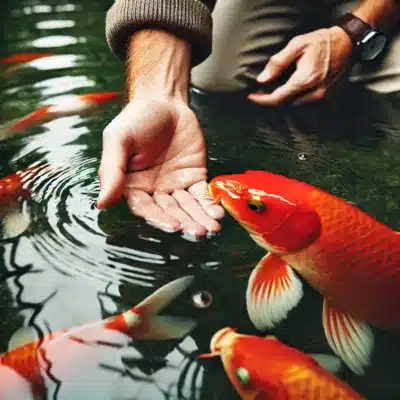
Koi Hand Feeding
Routine Interactions
Spending time near your pond, observing your koi, and interacting with them on a daily basis can also strengthen this bond. The more familiar they are with you, the more relaxed and social they’ll become.
Key Tip: Patience is key when building trust with your koi. Frequent, gentle interactions and consistent feeding routines will help them associate your presence with safety and nourishment.
Conclusion: Enhancing Your Understanding of Koi Behavior
By paying attention to koi behavior, communication, and the factors that influence their well-being, you can create a thriving environment for your pond’s inhabitants. From their social interactions and feeding habits to their communication through body language, sounds, and touch, koi are complex creatures that require attentive care. With the right environment, stress-free conditions, and regular observation, you’ll not only ensure their health but also enjoy a deeper connection with your beautiful koi.
We proudly work across Kent, London, Essex, Surrey, Sussex, Berkshire, and Hampshire, delivering professional pond cleaning, maintenance, and building services tailored to each pond’s individual needs, from small garden ponds through to large natural lakes. These services form part of our pond care services, covering everything from routine maintenance through to specialist pond construction. Get in touch today for a free quote and let That Pond Guy look after all aspects of your pond with experienced workmanship and honest advice.
Matthew Adlington
