





Managing pH Levels in Koi Ponds: A Complete Guide
Managing pH levels in koi ponds is essential for the health and well-being of your fish. The pH, or potential of hydrogen, measures the acidity or alkalinity of the water and directly impacts the environment in which your koi live. A stable and balanced pH ensures that koi can thrive, free from stress and health complications. In this guide, we’ll explain the importance of pH, how to monitor it, and how to maintain the ideal pH range for your koi pond.
What is pH and Why Does it Matter for Koi?
The pH scale ranges from 0 to 14, with 7.0 being neutral. Water with a pH below 7 is considered acidic, while water with a pH above 7 is alkaline. For koi ponds, the ideal pH range is between 7.0 and 8.0, where the water is slightly alkaline. A stable pH in this range supports the koi’s biological processes, reduces stress, and enhances their immune system.
A balanced pH is crucial for many reasons:
- Health of Beneficial Bacteria: Beneficial bacteria in your pond’s biofilter are sensitive to pH levels. These bacteria, which help break down ammonia into less harmful substances like nitrites and nitrates, function best within the ideal pH range. When the pH is too high or too low, these bacteria may become less effective, causing harmful toxins to build up and threaten the health of your koi.
- Koi Metabolism: pH affects koi metabolism and immune function. When the pH levels are stable, koi are better able to regulate their internal processes, grow properly, and fend off diseases. Unstable pH levels, on the other hand, may weaken their immune response, leading to increased vulnerability to infections and parasites.
If the pH falls outside of this range, koi can experience serious health problems. A low pH (acidic water) can lead to acidosis, which affects the fish’s ability to maintain electrolyte balance, leading to stress or death. On the other hand, a high pH (alkaline water) can cause alkalosis, a condition that can damage gill function, reduce oxygen absorption, and cause lethargy.
Key Impacts of Managing pH levels in koi ponds:
- Acidosis: Symptoms include erratic swimming, lack of appetite, and increased stress. Prolonged exposure can be fatal.
- Alkalosis: Koi may show signs of stress, such as gasping at the water’s surface, sluggish movement, and gill irritation.
How to Test and Monitor pH Levels
Regular monitoring of your pond’s pH is key to maintaining a stable and healthy environment for your koi. Testing the pH level should be part of your weekly pond maintenance routine, and it’s especially important to test during seasonal changes when water conditions may fluctuate. Testing should also be done after heavy rainfall, adding new fish, or after treating the pond with medications, as these factors can alter water chemistry.
- pH Testing Kits: A reliable pH testing kit or digital pH meter will allow you to monitor the pH of your pond water accurately. Test the water at the same time each day for consistent results, as pH can fluctuate based on sunlight, temperature, and plant activity. It’s a good practice to test pH early in the morning and then again in the late afternoon, as the pH may naturally rise throughout the day due to photosynthesis in plants.
- Ideal Range: Always aim to keep your pond’s pH between 7.0 and 8.0. Sudden drops or spikes outside of this range should be addressed immediately. Monitoring pH regularly will help you catch changes early, preventing potential stress or health problems for your koi.
Tips for pH Monitoring:
- Always use clean equipment to avoid contamination.
- Store pH testing kits in a cool, dry place to maintain their accuracy.
- Keep a log of your pH readings to track trends over time.
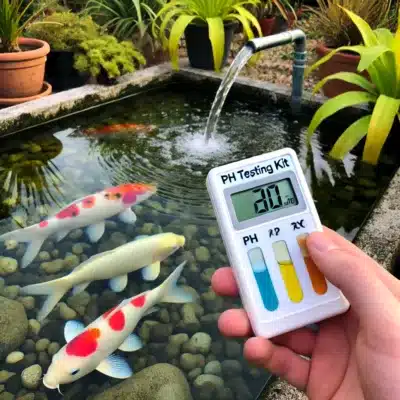
PH Testing in a Koi Pond
Causes of pH Fluctuations in Koi Ponds
Several factors can influence the pH levels in your pond, and understanding these causes can help you prevent drastic changes that may harm your koi:
- Algae Growth: Excessive algae can lower pH levels, especially at night. During the day, algae absorb carbon dioxide through photosynthesis, raising the pH. However, at night, algae release carbon dioxide back into the water, which can increase acidity and lower the pH. An abundance of algae can cause dramatic daily fluctuations, putting stress on your koi.
- Rainwater: Acid rain, or even normal rainfall, can lower the pH in your pond, especially if your pond is located in areas with frequent rain. Rainwater typically has a slightly acidic pH, and heavy rainfall can dilute the pond water, causing the pH to drop suddenly.
- Fish Waste and Organic Debris: Decomposing leaves, fish waste, and other organic matter can increase acidity as they break down, lowering the pH over time. If your pond has a lot of debris or an overstocking of fish, the buildup of organic waste will reduce pH and lead to water quality problems.
- Water Source: The source of water you use to fill your pond may have a pH that affects the overall balance. For example, tap water treated with chemicals can be more alkaline. Similarly, well water may have minerals that affect pH. It’s important to test the pH of any water you add to your pond.
- Aquatic Plants: The amount and type of aquatic plants can also influence pH. While plants like water lilies help stabilize pH, others may contribute to fluctuations depending on their biological processes. In a densely planted pond, plants can cause diurnal (day-night) changes in pH due to photosynthesis.

Well-maintained filtration system in a koi pond
Adjusting pH Levels in a Koi Pond
If you find that your pond’s pH levels are out of balance, there are several methods to adjust them safely. It’s important to make changes gradually to avoid shocking your koi. Sudden shifts in pH, even if it’s toward the ideal range, can cause stress and weaken the immune system of your koi.
Lowering pH (When the Water is Too Alkaline)
If your pond’s pH is too high (alkaline), you can bring it down using the following methods:
- Peat Moss: Adding peat moss to your pond filter can lower pH levels over time, as it releases tannins that naturally acidify the water. Peat moss not only lowers pH but also softens the water, reducing mineral content that can cause alkaline conditions.
- Acid Buffers: Commercial pH-lowering products, also known as acid buffers, can be used to bring the pH down. Always follow the manufacturer’s guidelines and avoid making rapid changes, as this can stress your fish.
- Rainwater Collection: For ponds in areas with naturally acidic rainwater, you can collect rainwater and gradually add it to the pond to help lower pH.
Learn more about controlling algae and improving water quality in our pond maintenance page.
Raising pH (When the Water is Too Acidic)
If the water becomes too acidic (low pH), the following methods can help raise the pH:
- Baking Soda: One of the simplest ways to raise pH is by adding small amounts of baking soda (sodium bicarbonate) to your pond water. Start with small doses to avoid overshooting the target range. Baking soda is a fast-acting solution and can also help increase alkalinity (KH).
- Crushed Limestone or Oyster Shells: Adding crushed limestone or oyster shells to the pond can buffer the water and raise the pH naturally. These materials slowly release calcium carbonate, which stabilizes pH levels over time and helps to prevent fluctuations.
- Alkaline Buffers: Commercial alkaline buffers can also be used to gradually increase pH and maintain a stable balance. These buffers help create an environment that resists pH changes, keeping levels consistent over time.
Preventing pH Fluctuations
Keeping pH levels stable is easier than constantly adjusting them. Here are some strategies to prevent major fluctuations in your pond’s pH:
- Perform Regular Water Changes: Changing 10-20% of the pond water weekly can help dilute any substances that may alter pH levels and maintain overall water quality. Water changes also help remove excess organic material that can lead to pH changes.
- Maintain Proper Filtration: A well-functioning biological filtration system helps process fish waste and organic matter that could lower the pH over time. Ensuring that your pond’s filter is working optimally can help maintain the ideal water chemistry for your koi.
- Remove Debris: Regularly skim leaves, dead plant material, and uneaten food from the pond to prevent organic decay, which can lower pH. Using a pond vacuum or skimmer net can make debris removal easier and more efficient.
- Monitor Alkalinity (KH): Alkalinity, or carbonate hardness (KH), measures the water’s ability to buffer against pH changes. Testing and maintaining proper alkalinity levels can help prevent rapid pH swings. A stable KH level helps keep pH stable, even if other factors fluctuate.

A beautifully maintained PH koi pond
The Role of Alkalinity in pH Stability
Alkalinity plays a crucial role in buffering pH and preventing sudden swings. In koi ponds, maintaining a KH level of 100-200 mg/L is recommended. Alkalinity acts as a stabilizer, ensuring that changes in the pond’s environment don’t cause rapid pH shifts that could stress or harm koi.
- Test Regularly: Like pH, KH levels should be tested regularly to ensure that they remain in the optimal range. Regular testing helps you catch low alkalinity before it leads to fluctuating pH.
- Add Buffers if Necessary: If alkalinity levels drop too low, you can add buffering agents like sodium bicarbonate to maintain a stable environment. Buffering agents are especially useful in ponds where rainwater or runoff frequently enters, as they can dilute alkalinity.
To explore more about water quality management in koi ponds, check out our water quality guide.
Routine Testing and Maintenance: Key to pH Success for Managing pH levels in koi ponds
Achieving and maintaining stable pH levels requires routine testing and proper pond care for managing pH levels in koi ponds. Adding pH testing to your weekly maintenance tasks ensures that you catch fluctuations early, allowing you to make adjustments before your koi are affected. Consistent testing helps prevent sudden pH shifts, which are often more harmful than gradual changes.
- Use a Digital Meter or Test Strips: While both digital meters and test strips are effective, digital pH meters provide more accurate readings. Make sure to calibrate your meter regularly for consistent results.
- Keep a Log: Maintaining a log of your pH readings can help identify patterns and prevent future fluctuations. If you notice patterns, such as pH dipping after rainfall, you can take proactive measures to stabilize the pH.
Conclusion: Keeping pH in Balance for Happy, Healthy Koi
Ensuring that your koi pond’s pH remains between 7.0 and 8.0 is essential to maintaining a healthy environment where your koi can thrive. Regular monitoring, routine maintenance, and the careful use of pH adjusters will help you keep the water balanced and prevent any long-term health issues for your fish.
By understanding the causes of pH fluctuations and using proper prevention methods, koi pond owners can create a stable, beautiful environment that supports their koi’s well-being and longevity.
Matthew Adlington
