





Designing Your Koi Pond with Aquatic Plants: A Complete Guide
Designing your koi pond is a deeply personal journey that blends aesthetics and functionality. While some prefer the minimalist beauty of a plant-free pond, others embrace the lush, natural look of aquatic plants. Aquatic plants for koi ponds not only enhance the beauty of the pond but also contribute to a healthier ecosystem by improving water quality, providing shade, and supporting beneficial microorganisms.
Even though koi ponds can thrive without plants—especially with the help of effective filtration systems—aquatic plants offer a range of benefits that can help balance the pond’s ecosystem. In this guide, we’ll explore a wide variety of aquatic plants, from stunning water lilies to functional oxygenating weeds, that can enhance both the beauty and health of your koi pond.
1. Water Lilies (Nymphaea spp.)
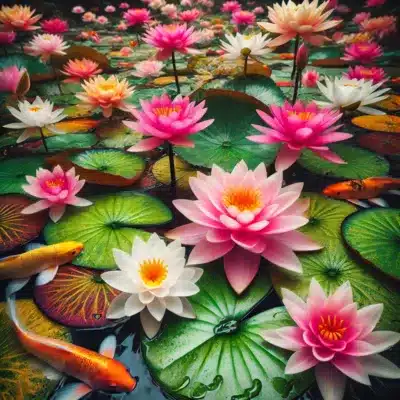
Water Lilies in a Koi Pond
Role:
Water lilies are renowned not just for their beauty but also for their critical role in maintaining a healthy pond ecosystem. The large, flat leaves of water lilies float on the pond’s surface, providing shade that helps regulate water temperature. This shading effect limits the amount of sunlight reaching the water, which in turn helps prevent the rapid growth of algae—a common issue in sunny ponds. By keeping the water cooler, water lilies also create a more comfortable environment for koi, especially during the hot summer months. Moreover, these plants help oxygenate the water through their submerged roots and stems, contributing to a balanced aquatic ecosystem.
Aesthetic Appeal:
Water lilies are known for their stunning blooms, which add elegance and color to any pond. Available in a wide range of hues, including white, pink, yellow, and red, their flowers create a floating garden on the pond’s surface. Each flower opens in the morning and closes at night, adding a dynamic, ever-changing visual interest to your pond. The combination of blooms and large, round leaves creates a picturesque water feature that draws the eye and invites a sense of tranquility.
Care Tips:
While water lilies are low-maintenance, they do benefit from regular care. To keep them healthy, remove dead or yellowing leaves to prevent them from sinking to the bottom and decaying. Planting water lilies in containers, rather than directly in the pond bed, can help control their spread and make them easier to manage. Additionally, fertilize them during the growing season to encourage abundant blooms.
2. Water Hyacinth (Eichhornia crassipes)
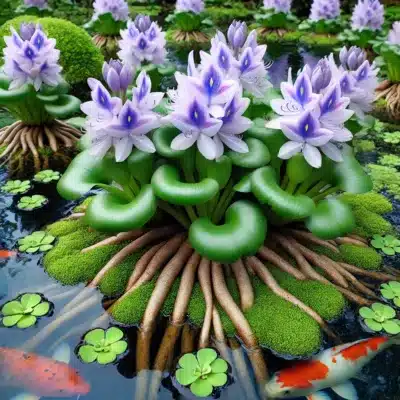
Water Hyacinths Floating in a Koi Pond
Role:
Water hyacinths are one of the fastest-growing aquatic plants and are known for their ability to quickly purify water. These floating plants absorb excess nutrients, such as nitrates and phosphates, which can otherwise promote algae blooms. Their long, dangling roots provide a habitat for beneficial microorganisms that help break down organic matter, further enhancing water quality. This makes water hyacinths an excellent natural solution for maintaining the clarity and health of your koi pond.
Aesthetic Appeal:
With their glossy, rounded leaves and striking lavender flowers, water hyacinths bring a tropical feel to any pond. The buoyant nature of these plants allows them to float freely across the water’s surface, creating a soft, flowing effect. Their bright blooms and lush greenery provide a beautiful contrast to the clear water and the vibrant colors of your koi.
Care Tips:
Water hyacinths grow rapidly, so it’s important to monitor their spread. If left unchecked, they can quickly cover the entire surface of your pond, blocking sunlight and potentially depleting oxygen levels. Regular thinning is necessary to prevent overcrowding. These plants are also sensitive to cold, so in cooler climates, they may need to be removed and overwintered indoors.
3. Lotus (Nelumbo spp.)
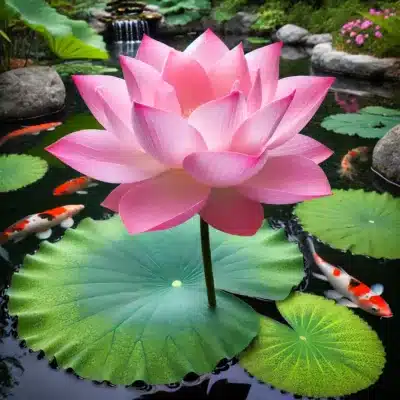
Blooming Lotus in a Koi Pond
Role:
Lotus plants are prized for their ability to provide shade, reduce algae growth, and oxygenate the water. Their large, umbrella-like leaves float on the surface, while their roots extend deep into the pond substrate, where they help to stabilize the pond bed and prevent erosion. Lotus plants also contribute to oxygenation through their roots, which release oxygen into the water as they photosynthesize. This creates a healthier environment for koi, as well as for other aquatic plants and wildlife.
Aesthetic Appeal:
Lotus flowers are iconic symbols of purity and beauty, with their large, showy blooms standing high above the water’s surface. These plants come in a variety of soft pastel colors, including pink, white, and yellow, and their flowers can reach up to 12 inches in diameter. The dramatic height and size of lotus flowers make them a stunning focal point in any koi pond, creating a serene and majestic atmosphere.
Care Tips:
Lotus plants require warm, sunny conditions to thrive, so they should be planted in areas of the pond that receive at least six hours of direct sunlight per day. They also need a nutrient-rich substrate, so adding aquatic plant fertilizer will help them bloom more vigorously. Like water lilies, lotus plants benefit from regular removal of dead leaves and flowers to prevent decay.
4. Cattails (Typha spp.)
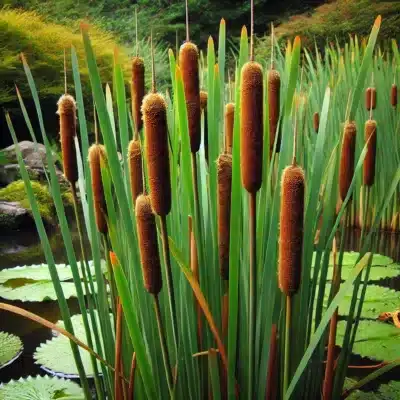
Cattails Along the Edge of a Koi Pond
Role:
Cattails are marginal plants that grow along the edges of ponds, where they play a crucial role in water filtration and habitat creation. These plants absorb excess nutrients, such as nitrogen and phosphorus, which can otherwise lead to poor water quality. Cattails also help stabilize the pond’s shoreline by preventing erosion, and their tall, dense growth provides shelter for small aquatic animals and insects. The vertical structure of cattails adds biodiversity to your pond, making it a more dynamic and balanced ecosystem.
Aesthetic Appeal:
With their tall, cylindrical spikes and lush green leaves, cattails bring vertical dimension to your pondscape. Their brown seed heads stand out against the green foliage, adding texture and movement to the landscape. In the fall, cattails release their fluffy seeds into the air, creating a soft, natural effect that enhances the beauty of your pond.
Care Tips:
Cattails are hardy and require minimal care, but they can spread aggressively if not managed. To prevent them from overtaking your pond, divide the plants every few years and remove any unwanted growth. Cattails prefer shallow water and can tolerate a wide range of water conditions, making them a versatile option for most ponds.
5. Horsetail (Equisetum hyemale)
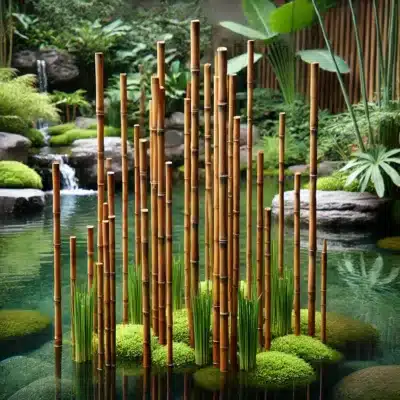
Horsetail Growing in a Koi Pond
Role:
Horsetail, also known as scouring rush, is a natural water filter that helps improve water clarity and quality. Its vertical, reed-like stems absorb excess nutrients and impurities, making it an excellent addition to koi ponds that require additional filtration. Horsetail is particularly effective at removing heavy metals from the water, which can be harmful to both koi and other aquatic life.
Aesthetic Appeal:
Horsetail’s unique, segmented appearance adds a modern, architectural element to your pond. Its bamboo-like stems grow tall and straight, creating a striking contrast to the more delicate, flowing plants around it. Horsetail works well in contemporary pond designs, where its sleek, upright growth adds structure and sophistication.
Care Tips:
Horsetail is a fast-growing plant that can spread quickly if left unchecked. To control its growth, plant it in containers or areas of the pond where it won’t crowd out other plants. Horsetail thrives in both full sun and partial shade and requires little maintenance once established.
6. Iris (Iris spp.)
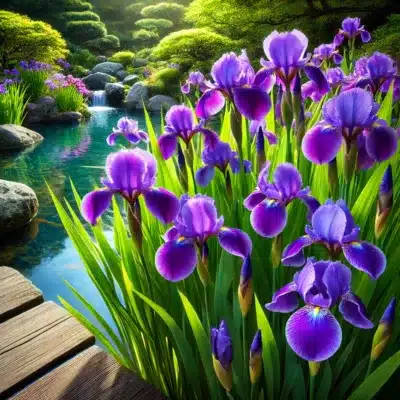
Iris Blooming at the Edge of a Koi Pond
Role:
Iris plants are excellent for absorbing excess nutrients and improving water quality in koi ponds. They grow along the shallow edges of ponds, where their roots help stabilize the shoreline and prevent erosion. Iris plants are also beneficial for wildlife, as their flowers attract pollinators like bees and butterflies, while their dense foliage provides shelter for small pond creatures.
Aesthetic Appeal:
Known for their vibrant colors and striking blooms, irises add a splash of bold beauty to any pond. Their tall, sword-like leaves create a dramatic effect along the pond’s edge, while their flowers, which come in shades of purple, yellow, and blue, add a pop of color. Irises are particularly well-suited to naturalistic pond designs, where their wild, untamed look complements the surrounding landscape.
Care Tips:
Irises are low-maintenance plants that require little care once established. They prefer full sun to partial shade and thrive in shallow water or moist soil. To keep them looking their best, remove dead leaves and spent flowers regularly. If the plants become overcrowded, divide them in early spring to encourage healthy growth.
7. Arum Lily (Zantedeschia aethiopica)
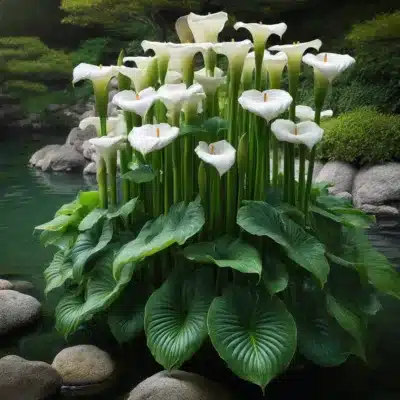
Arum Lily Blooming Near a Pond
Role:
The arum lily is a versatile aquatic plant that can grow in both shallow water and along the pond’s edges. It helps purify the water by absorbing nutrients and provides shelter for koi and other aquatic life. The large, heart-shaped leaves of the arum lily also offer shade, which helps regulate water temperature and reduce algae growth.
Aesthetic Appeal:
Arum lilies are known for their elegant, trumpet-shaped white flowers, which stand out beautifully against their bold, green leaves. These plants add a touch of sophistication to any pond, creating a serene, peaceful atmosphere. Their tall, upright growth makes them a striking focal point, especially when planted in clusters near the water’s edge.
Care Tips:
Arum lilies prefer full sun to partial shade and thrive in moist, well-drained soil. To encourage continuous blooming, remove spent flowers regularly. These plants are hardy and can tolerate cooler temperatures, making them a great choice for ponds in temperate climates.
8. Pickerel Weed (Pontederia cordata)
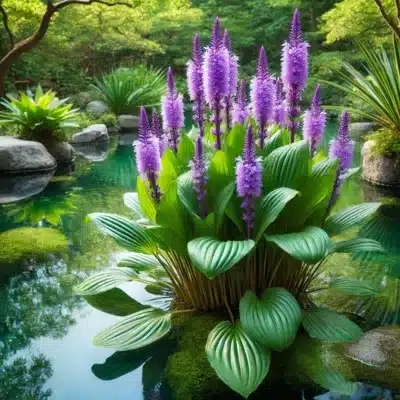
Pickerel Weed at the Pond’s Edge
Role:
Pickerel weed is an excellent plant for water filtration and habitat creation in koi ponds. Its dense root system absorbs excess nutrients, helping to keep the water clean and clear. Pickerel weed also provides shelter for small pond creatures, such as tadpoles and dragonfly larvae, making it an important part of the pond’s ecosystem.
Aesthetic Appeal:
With its tall spikes of vibrant blue or violet flowers, pickerel weed adds a burst of color to the pond’s edge. The plant’s broad, heart-shaped leaves create a lush, green backdrop that contrasts beautifully with the bright blooms. Pickerel weed is a great choice for naturalistic pond designs, where its wild, untamed look enhances the overall landscape.
Care Tips:
Pickerel weed is a low-maintenance plant that requires little care once established. It prefers full sun and grows best in shallow water. To keep the plant looking its best, remove dead leaves and spent flowers regularly. If the plant becomes overcrowded, divide it in early spring to encourage healthy growth.
9. Marsh Marigold (Caltha palustris)
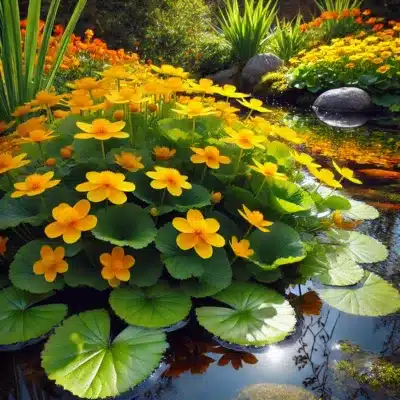
Marsh Marigold Blooming Near a Koi Pond
Role:
Marsh marigold is a hardy, native aquatic plant that plays a key role in water purification and habitat creation. Growing in shallow water or along the margins of ponds, its roots help stabilize the soil and prevent erosion. The marsh marigold absorbs excess nutrients, reducing the likelihood of algae blooms and helping to maintain the overall water quality of your koi pond. Additionally, this plant provides shelter for small aquatic organisms, contributing to the biodiversity of your pond.
Aesthetic Appeal:
Known for its bright, sunny yellow flowers, marsh marigold is one of the first plants to bloom in the spring, signaling the start of the growing season. Its cheerful blossoms create a striking contrast against the deep green foliage, adding a vibrant splash of color to your pond’s edge. The flowers resemble buttercups and create a lively, naturalistic atmosphere, making them ideal for wildlife-friendly ponds or more natural designs.
Care Tips:
Marsh marigold is a relatively low-maintenance plant that thrives in full sun to partial shade. It prefers moist or wet soil and can tolerate a wide range of water depths. After blooming, it may die back during the summer months but will return the following spring. Prune dead flowers and leaves to keep the plant looking neat and to prevent decaying matter from affecting water quality.
10. Amphibious Bistort (Persicaria amphibia)
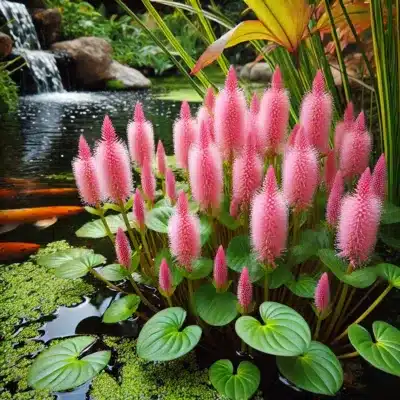
Amphibious Bistort Growing in a Koi Pond
Role:
Amphibious bistort is a versatile plant that can thrive both in water and along the pond margins. Its roots help filter the pond by absorbing excess nutrients, which helps prevent issues such as algae overgrowth. This plant provides cover and habitat for small aquatic creatures, making it a valuable addition to the pond ecosystem. Its dense foliage also helps to reduce erosion around the pond’s edges.
Aesthetic Appeal:
Amphibious bistort is known for its pink flower spikes that rise above the water, creating a beautiful, wild look along the pond’s edge. The plant’s broad, lance-shaped leaves float on the water’s surface, adding a lush, green layer to the pondscape. This plant brings texture and color to the pond’s margins and complements the more delicate flowers of other aquatic plants.
Care Tips:
This plant is low maintenance and can tolerate various conditions, including full sun or partial shade. It spreads relatively quickly, so periodic thinning or division may be required to prevent it from overtaking the pond. Amphibious bistort grows best in shallow water, up to about 6 inches deep, and is ideal for planting in natural or wildlife-focused pond designs.
11. Water Mint (Mentha aquatica)
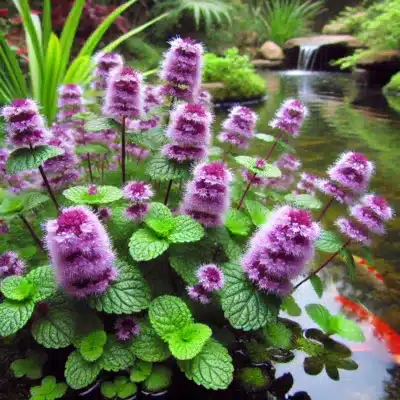
Water Mint Growing at the Pond’s Edge
Role:
Water mint is a highly aromatic, native plant that not only oxygenates the water but also improves water quality by absorbing excess nutrients. Its fast-growing roots and stems help to reduce the buildup of harmful substances, such as nitrates and phosphates, in the pond. Water mint also plays a significant role in providing habitat and shelter for small fish and insects, contributing to the pond’s overall biodiversity.
Aesthetic Appeal:
With clusters of small, purple flowers that bloom throughout the summer, water mint adds a soft, natural beauty to the pond. Its green, fragrant leaves and low-growing nature make it ideal for filling in gaps along the pond’s edge, creating a dense, aromatic border that attracts pollinators like bees and butterflies. The combination of purple flowers and lush green leaves makes water mint a favorite for naturalistic pond designs.
Care Tips:
Water mint is a vigorous grower, so it may need to be thinned regularly to prevent it from spreading too quickly. It prefers full sun or partial shade and thrives in moist soil or shallow water. While it requires little maintenance, pruning back the plant in late summer can encourage fresh growth and prevent it from becoming too invasive.
12. Purple Loosestrife (Lythrum salicaria)
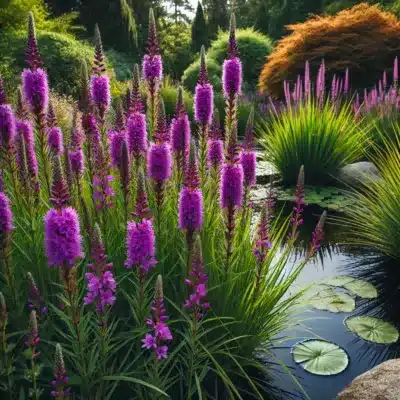
Purple Loosestrife Blooming Along the Pond’s Edge
Role:
Purple loosestrife is a tall, showy plant that grows along the pond’s edges and provides significant ecological benefits. It helps filter the water by absorbing excess nutrients, which can lead to cleaner, clearer water for your koi. Additionally, purple loosestrife offers shelter for small pond creatures and attracts beneficial pollinators like bees and butterflies, which adds to the overall biodiversity of the pond environment.
Aesthetic Appeal:
With its tall spikes of vibrant purple flowers, purple loosestrife creates a dramatic and wild effect along the pond’s edge. Its tall, upright growth adds vertical interest to the pondscape, while its colorful blooms add a pop of contrast against the surrounding greenery. This plant is perfect for natural or cottage-style ponds, where its untamed beauty enhances the landscape’s wild appeal.
Care Tips:
Purple loosestrife thrives in full sun and moist soil, making it an ideal choice for marginal areas of the pond. It spreads easily, so it may need to be divided or thinned regularly to prevent it from overtaking other plants. Though it’s hardy and low maintenance, it’s important to monitor its growth to ensure it doesn’t become too dominant in the pond ecosystem.
13. Ragged Robin (Lychnis flos-cuculi)
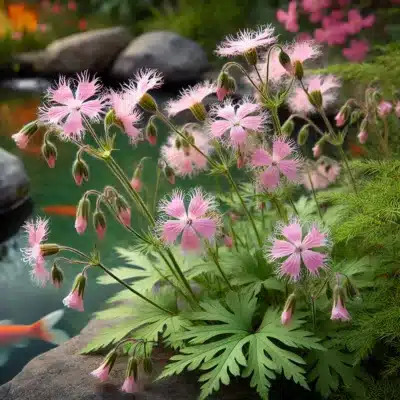
Ragged Robin Blooming Near a Koi Pond
Role:
Ragged robin is a native UK plant that grows along the margins of ponds, where it helps improve water quality by absorbing nutrients and filtering the water. Its finely divided roots stabilize the soil, reducing erosion around the pond’s edges. This plant also provides habitat for various pond creatures, contributing to the overall health of the pond’s ecosystem.
Aesthetic Appeal:
Ragged robin is named for its delicate, fringed pink flowers, which bloom in late spring and early summer. These whimsical flowers add a touch of wild beauty to the pond’s edge, creating a light and airy atmosphere. The plant’s soft, green foliage complements its bright flowers, making it a perfect addition to wildlife-friendly ponds or naturalistic designs.
Care Tips:
Ragged robin prefers moist soil or shallow water and thrives in full sun or partial shade. It’s a relatively low-maintenance plant, but to encourage continuous blooming, remove spent flowers regularly. If the plant becomes overcrowded, divide it in early spring to promote healthy growth.
14. Parrot’s Feather (Myriophyllum aquaticum)
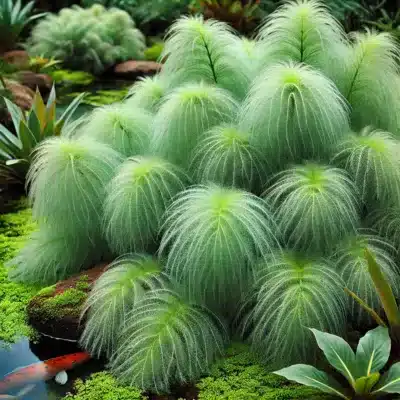
Parrot’s Feather Growing in a Koi Pond
Role:
Parrot’s feather is a submerged aquatic plant that helps oxygenate the water and improve water clarity. Its fine, feathery leaves provide shade for koi, helping to regulate water temperature and reduce stress. The plant’s dense growth also creates shelter for small aquatic animals, contributing to the overall health and balance of the pond ecosystem.
Aesthetic Appeal:
With its bright green, feathery foliage, parrot’s feather adds a soft, flowing texture to the pond’s surface. The plant’s leaves extend above the water, creating a natural, cascading effect that adds movement and depth to the pondscape. Parrot’s feather is ideal for naturalistic ponds or those with a tropical feel, where its lush growth can complement other plants.
Care Tips:
Parrot’s feather is a fast grower, so it may need to be thinned or pruned regularly to prevent it from overtaking the pond. It grows best in shallow water and prefers full sun, though it can tolerate partial shade. Regular maintenance, such as removing dead or decaying leaves, will help keep the plant looking fresh and healthy.
15. White Pickerel Weed (Pontederia cordata ‘Alba’)
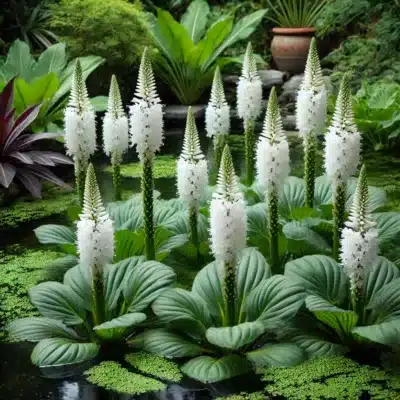
White Pickerel Weed in a Koi Pond
Role:
White pickerel weed is a marginal plant that grows along the edges of koi ponds, where it helps filter the water by absorbing excess nutrients. This plant’s roots stabilize the pond’s shoreline, reducing erosion and helping to maintain the overall health of the pond. Additionally, the plant provides shelter for small aquatic creatures and supports beneficial microorganisms, making it an essential component of the pond’s ecosystem.
Aesthetic Appeal:
The tall, white flower spikes of white pickerel weed add a touch of elegance to the pond’s edge. These pure white flowers create a striking contrast against the plant’s lush green leaves, adding vertical interest and texture to the pondscape. White pickerel weed blooms throughout the summer, providing continuous visual interest and attracting pollinators like bees and butterflies.
Care Tips:
White pickerel weed is a low-maintenance plant that thrives in full sun to partial shade. It prefers shallow water and can be planted directly in the pond bed or in containers. To keep the plant looking its best, remove dead leaves and spent flowers regularly. If the plant becomes too crowded, divide it in early spring to promote healthy growth.
Adding Oxygenating Weeds to Your Pond
Oxygenating weeds are vital for maintaining the health and clarity of your koi pond. These submerged plants play a critical role in pond ecosystems by releasing oxygen into the water during the day, which is essential for koi and other aquatic life. The oxygen produced helps to keep the water clear and prevents the build-up of harmful gases, ensuring that your pond remains balanced and free from algae overgrowth.
Some common oxygenating weeds include hornwort and water crowfoot, which are particularly effective at maintaining water quality. Hornwort, for example, grows rapidly and is excellent at absorbing excess nutrients, which can otherwise lead to algae blooms. It also doesn’t require planting in soil and can grow floating freely, making it versatile and easy to manage.
Water crowfoot, another popular oxygenating plant, thrives in ponds with flowing water and has delicate white flowers that float on the water’s surface. Beneath the surface, its finely divided leaves provide excellent shelter for koi and other pond creatures, and it plays a key role in keeping the water oxygen-rich and clear.
Why Are Oxygenating Weeds Important?
- Water Clarity: These plants absorb excess nutrients, such as nitrates and phosphates, helping to reduce the growth of unwanted algae. Clear water not only enhances the appearance of your pond but also creates a healthier environment for your koi.
- Oxygen Production: By releasing oxygen into the water, these weeds support the respiration of fish and other pond life. Oxygen levels can decrease significantly during warm months, so these plants help mitigate the risk of fish stress or death.
- Natural Filtration: Oxygenating weeds contribute to the overall filtration system of your pond, working alongside mechanical filters to keep the water clean. They break down organic matter and help process fish waste, further improving the pond’s ecosystem.
- Shelter and Habitat: The dense, bushy growth of plants like hornwort provides shelter for small pond creatures, offering hiding spots for koi and helping them feel more secure in their environment.
While oxygenating weeds remain largely unseen beneath the surface, their impact is substantial. They require minimal maintenance, making them an effortless but effective way to enhance the quality of your pond water.
Care Tips for Oxygenating Weeds
- It’s important to periodically thin out fast-growing oxygenating plants, such as hornwort, to prevent them from overcrowding your pond. Regular trimming ensures that the plants maintain a healthy size without monopolizing space or blocking light.
- Be mindful of where you place these plants. They are most effective in areas with moderate water movement, as this allows the plants to distribute oxygen more evenly throughout the pond.
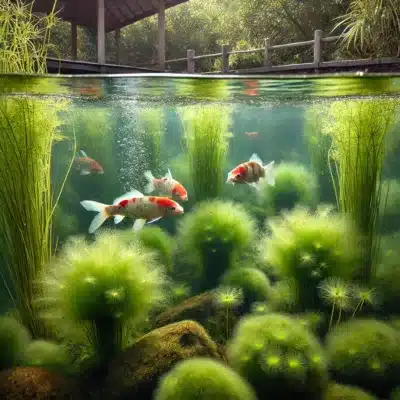
Oxygenating Weeds in a Koi Pond
Conclusion: Enhancing Your Pond with Aquatic Plants
Designing a koi pond that balances beauty and functionality requires careful plant selection. By incorporating plants like water lilies, pickerel weed, marsh marigold, and oxygenating weeds, you can create a visually stunning pond while improving the health and balance of the ecosystem.
To explore how to keep your pond water crystal clear, check out our guide on pond filtration.
Learn more about UK native aquatic plants at UK Aquatic Plant Society.
We proudly work across Kent, London, Essex, Surrey, Sussex, Berkshire, and Hampshire, delivering professional pond cleaning, maintenance, and building services tailored to each pond’s individual needs, from small garden ponds through to large natural lakes. These services form part of our pond care services, covering everything from routine maintenance through to specialist pond construction. Get in touch today for a free quote and let That Pond Guy look after all aspects of your pond with experienced workmanship and honest advice.
Matthew Adlington
