





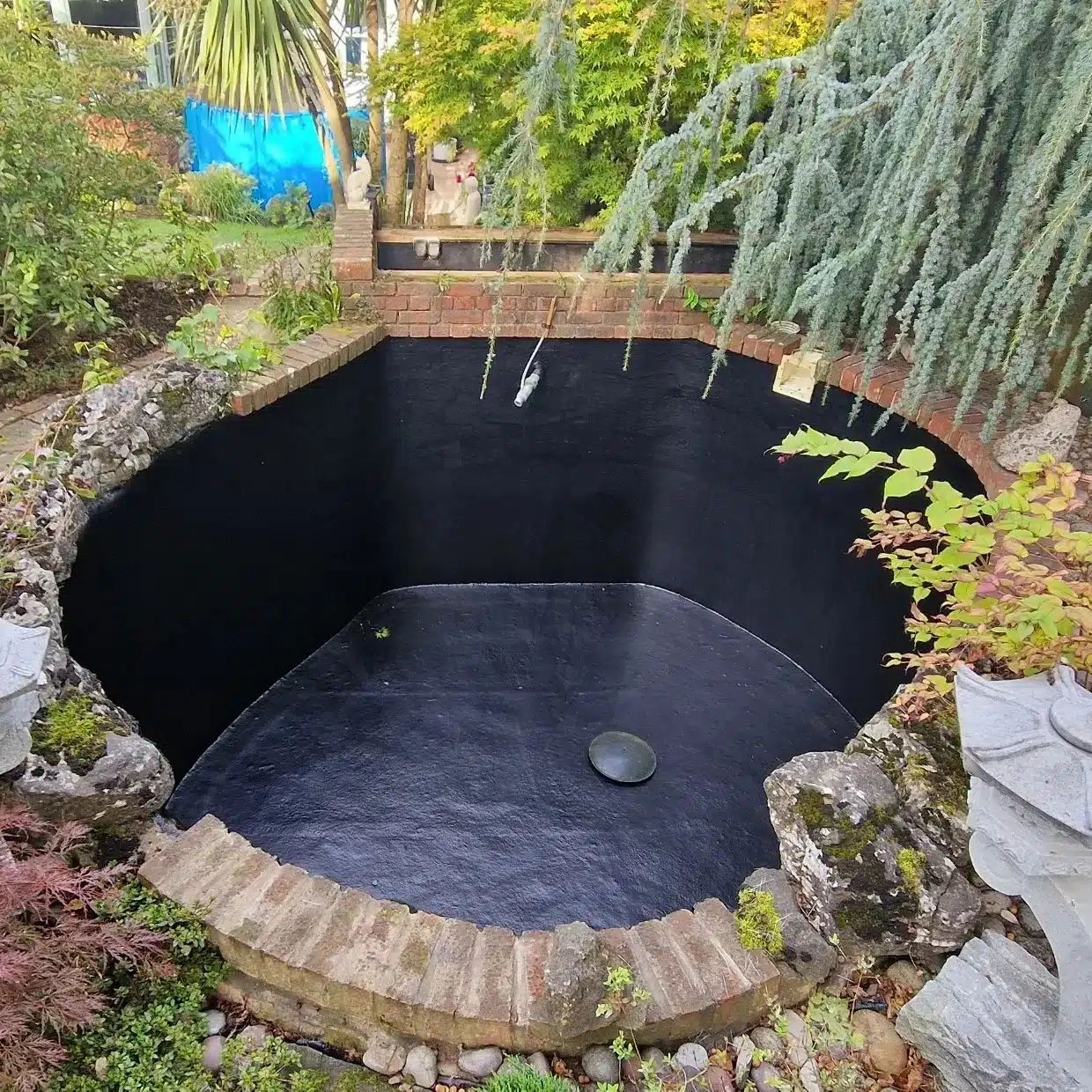
Pond Fibreglassing Guide: Preparation, GRP and Curing
Pond fibreglassing creates a seamless glass-reinforced plastic (GRP) lining over a stable prepared structure. When the shell, substrate, fittings and cure are all right, the result is smooth, durable and easy to clean. When those stages are rushed, a glossy topcoat can hide pinholes, poor bonding or movement that later becomes a leak.
We fibreglass new ponds and refurbish existing ones across Kent, London and the South East. The most important lesson from that work is simple: GRP is the waterproof finish, not a substitute for sound construction. Preparation usually determines the quality of the finished lining more than the speed of lamination.
Quick answer: fibreglass is an excellent choice for a properly built koi pond, formal garden pond or swimming pond. Plan drains, returns and viewing glass first; make the substrate dry, stable and smooth; use a pond-suitable laminate and topcoat system; and allow full cure before cleaning and filling.
What pond fibreglassing is
A GRP lining is made by saturating glass reinforcement with resin so it cures into a continuous laminate. A pigmented flowcoat or topcoat then seals and finishes the surface. The lining is formed on site, which allows it to follow corners, shelves, curves, bottom drains, returns and window rebates without folded liner.
Fibreglass is particularly well suited to:
- concrete and block-built koi ponds;
- raised ponds with viewing windows;
- formal ponds with straight sides and clean edges;
- bespoke curves, steps and planting zones;
- liner-pond conversions with a new stable substrate;
- and some swimming ponds and water features.
It is not the right answer for every flexible or unstable shell. The substrate and intended movement must be assessed before selecting the lining.
Why choose GRP for a pond?
A seamless finish
Unlike sheet liner, a site-applied laminate has no folds around corners and fittings. This gives a cleaner appearance and removes creases where waste can collect. Correctly formed details around drains and returns become part of the continuous lining.
Smooth and non-porous
A properly finished surface is easy to wipe and vacuum. Algae can still grow—no pond finish prevents normal biofilm—but it has fewer deep creases or rough joints in which debris can lodge.
Suitable for complex shapes
GRP can follow well-prepared curves, shelves and rebates. That makes it useful for custom ponds where a preformed shell is impossible and a folded liner would look untidy.
Repairable
Localised GRP damage can often be ground back, prepared and relaminated. A repair still needs the cause addressed; patching over structural movement or ongoing water ingress is unlikely to last.
A professional finish around windows
The window rebate can be laminated before the glass is bonded, creating a neat waterproof detail. The structure, laminate, glass and silicone design must be coordinated before work starts.
What fibreglass does not do
GRP does not make an unsound wall structurally strong. It should not be expected to bridge active cracks, restrain an inadequate window opening or stop groundwater forcing through an unprepared shell. If the structure moves, the lining is loaded with it.
Before quoting a lining, assess:
- cracks and movement;
- loose render or boards;
- groundwater and active damp;
- sharp corners and exposed fixings;
- compatibility of old paint or coating;
- and access for safe preparation and ventilation.
A structural defect should be repaired and allowed to stabilise first. Where a pond has leaked, find out whether the water escaped through the lining, a fitting, pipework or the shell rather than assuming a new surface alone is the cure.
The best substrates for pond fibreglassing
GRP needs a clean, dry, stable and compatible surface. Common build-ups include smooth rendered blockwork or suitable rigid boards installed over the structure. The exact preparation depends on the resin system, pond construction and installer.
Rendered blockwork
Render can create a continuous substrate when it is fully cured, well bonded and smooth. Hollows, cracks and friable areas must be corrected. The pond must be genuinely dry, not only dry to the touch after a heater has been pointed at one section.
Insulation or preparation boards
Suitable boards can smooth the shell, soften thermal loss and isolate minor surface irregularities. They must be mechanically secure and compatible with the laminate system. Joints, corners and fixings need careful preparation so they do not print through the finished surface.
Existing fibreglass
Sound existing GRP can often be repaired or overlaminated after thorough cleaning, grinding and assessment. Waxed, contaminated or poorly bonded surfaces must be removed or prepared correctly. A new topcoat will not bond reliably to dirt, algae or an unabraded glossy finish.
Old liner ponds
Fibreglass should not simply be painted over a flexible liner. A stable substrate is created first, often while preserving much of the existing edging and landscape. Our guide to converting a liner pond to fibreglass explains the refurbishment approach.
Plan every fitting before laminating
Bottom drains, returns, skimmers, overflows, lights and window rebates should be installed or prepared before the lining. The laminate must finish onto compatible flanges and faces with enough room for proper detailing.
Use the exact component instructions. Some fittings are designed to clamp a flexible liner; others have flanges intended for bonding or laminating. Mixing methods can create a weak seal that is difficult to reach once the pond is full.
Pressure-test buried pipework before closing the structure. Photograph and measure every concealed line. A leaking pipe behind fresh GRP cannot be repaired from the visible surface.
Viewing windows require early coordination
A pond window is not added as an afterthought. The structural opening, finished rebate, glass size, water depth and bonding method must agree. Many raised koi windows use an infinity-style detail where the top remains visually open; the silicone calculation and support arrangement therefore differ from a conventional four-sided aquarium frame.
Complete and finish the GRP rebate so it is smooth, clean and dimensionally correct. Then use properly specified pond viewing glass and pond-safe silicone. Respect the adhesive manufacturer’s bead thickness, preparation and cure time.
How professional pond fibreglassing is carried out
The following overview explains the sequence; it is not a resin-mixing instruction. Polyester resins and related materials involve fire, vapour, skin and eye hazards. The Health and Safety Executive warns that styrene vapour can irritate the nose, throat and lungs and that proper exposure controls are required. Product safety data, ventilation, PPE, storage and waste procedures must be followed.
1. Inspection and moisture assessment
The shell is checked for movement, water ingress, loose substrate and incomplete fittings. Work is scheduled around suitable weather. Groundwater or rain entering through the shell must be controlled rather than trapped beneath the laminate.
2. Cleaning and preparation
Dust, laitance, algae, old coating and loose material are removed. Corners are shaped so glass reinforcement can lie without bridging. Returns and drains are masked and prepared, and the entire surface is vacuumed before laminating.
3. Priming where the system requires it
A compatible primer or resin coat may be used to seal and promote bonding to the substrate. Timing matters: leaving some systems too long can require additional abrasion before the laminate is applied.
4. Laminating
Glass reinforcement is cut and laid with planned overlaps. Resin is worked through the glass and air is consolidated out. Corners, fittings and window rebates receive deliberate detail rather than leftover patches. Consistent coverage is more important than rushing to finish a wall.
5. Inspection and preparation for topcoat
Once the laminate has reached the correct stage, sharp fibres, trapped air and surface defects are dealt with. Good lighting is essential. A small pinhole can be almost invisible on a dark surface until the pond is full.
6. Flowcoat or topcoat
The pigmented finish seals the laminate and creates the final pond surface. Coverage must be even, including behind fittings and around the waterline. Dark colours are popular because they create depth and make koi stand out, but the product must be suitable for permanent pond immersion after full cure.
7. Cure and final checks
The lining is protected from rain, dust, insects and premature filling while it cures. Cure time varies with the exact materials and conditions. Do not use a generic 24-hour rule where the installer or manufacturer specifies longer.
Temperature, humidity and rain matter
GRP chemistry is sensitive to conditions. Cold can slow cure; excessive heat can shorten working time; moisture can impair bonding or mark the finish. Condensation is particularly deceptive because a cold wall may become damp even when rain has stopped.
A temporary enclosure can protect the work, but it must also provide safe ventilation and fire control. Uncontrolled heaters, naked flames and resin vapour are a dangerous combination. Professionals plan both the weather window and the safe working environment.
How long before the pond can be filled?
Follow the resin-system manufacturer and installer’s written advice. The surface feeling hard does not prove the complete laminate and topcoat have finished curing. Sealants around windows and fittings may require a different—and often longer—period.
Before filling:
- inspect the whole lining in good light;
- confirm drains, returns and overflows are open and correctly assembled;
- allow all silicone and adhesives to cure fully;
- clean the surface using the agreed method;
- and keep a record of product dates and instructions.
Fill and commission the complete system methodically. Treat mains water, confirm pond volume, inspect for leaks and test water before fish are introduced.
Does new fibreglass need sanding or polishing?
A properly applied pond topcoat should not need cosmetic polishing. Local high points or sharp fibres are corrected during installation. Aggressive sanding of the finished coat can expose laminate and create a porous patch, so any defect should be assessed and refinished with compatible materials.
Maintaining a fibreglass pond
Routine care is straightforward:
- remove debris with pond-safe tools;
- avoid metal scrapers and sharp vacuum heads;
- do not pressure-wash close to fittings or damaged areas without assessment;
- check around windows, drains and returns during cleans;
- and investigate water loss rather than repeatedly topping up.
A normal biofilm is not a failure of the lining. If algae is removed, expect the clean surface to recolonise. Good circulation and filtration have more influence on pond cleanliness than scrubbing the GRP spotless.
Repairing a damaged GRP lining
Minor impact damage, pinholes and local delamination can often be repaired. The area is drained, dried, ground back to sound laminate and rebuilt with compatible materials. The repair must extend beyond the visible defect to achieve a reliable bond.
Where cracks return, determine whether the substrate is moving. Where blisters appear, investigate moisture or contamination beneath the laminate. A cosmetic patch over an active cause is unlikely to be permanent.
Fibreglass versus a flexible pond liner
A flexible liner is economical, adaptable and an excellent choice for many natural garden ponds. It tolerates some ground movement and can be installed without a full masonry shell. It may, however, show folds, be vulnerable to puncture and look less precise around formal windows and vertical walls.
GRP costs more and demands a rigid prepared structure, skilled application and appropriate conditions. In return, it creates a seamless formal finish that is particularly attractive for long-term koi ponds. The right decision depends on pond style, structure, budget and intended lifespan—not on declaring one material universally superior.
What affects the cost of pond fibreglassing?
Price depends on much more than litres. Important factors include:
- internal surface area;
- number of corners, shelves and steps;
- condition and moisture of the substrate;
- access and distance for materials;
- bottom drains, returns and lights;
- window rebates and glass installation;
- temporary weather protection;
- and whether old liner, paint or failed GRP must be removed.
Provide drawings, dimensions and clear photographs for an initial discussion, but expect the final method to depend on an inspection of the actual shell.
Pond fibreglassing FAQs
Is fibreglass safe for koi?
A pond-suitable GRP system is safe after correct application, full cure and commissioning. Uncured resin and unsuitable coatings are not safe. Use an experienced installer and follow the product system.
Can you fibreglass directly onto concrete blocks?
Raw blockwork is generally too rough and porous for a quality finish. It normally needs a suitable smooth rendered or boarded substrate, fully dry and compatible with the resin system.
Can a liner pond be converted without rebuilding the whole garden?
Often yes. A stable substrate can sometimes be created inside the existing pond while keeping much of the coping and landscape. The old structure and levels must be assessed individually.
Will fibreglass stop a structural crack?
No. The cause of active movement should be repaired first. GRP is a waterproof laminate, not a replacement for a sound structure.
Why do pinholes appear?
Possible causes include trapped air, dry glass, surface contamination, poor consolidation or an incomplete topcoat. The surrounding laminate should be inspected rather than dabbing paint onto the visible dot.
Can fibreglass be applied in winter?
It can be carried out in controlled conditions, but substrate temperature, humidity, ventilation and cure must be managed. A cold damp shell should not be laminated simply because the calendar is convenient.
How long does a fibreglass pond last?
A correctly built and maintained GRP pond can provide many years of service. Lifespan depends on structural stability, materials, installation quality, UV exposure above the waterline and physical damage.
Can I change the colour later?
Sound GRP can often be prepared and recoated with a compatible finish. It must be cleaned, abraded and inspected first; applying new topcoat over a waxed or contaminated surface will not bond reliably.
Can a pond window be fitted after fibreglassing?
It is possible but normally involves cutting and rebuilding the opening, then relaminating the rebate. Planning the window before construction is neater and less expensive.
Do I need a professional installer?
GRP involves hazardous materials, weather-sensitive chemistry and details that become inaccessible once filled. For a permanent pond—especially one with fish, windows or complex fittings—professional installation is the sensible route.
Preparation is the part you never see in the finished photograph
The smooth final surface is only as dependable as the shell, moisture control and fitting details beneath it. Plan the pond as a complete structure, give preparation enough time and never rush cure because the garden looks ready to fill.
See our full professional pond fibreglassing service, browse completed work and customer reviews, or read the concrete block koi pond guide if you are still planning the structure. We can assess new builds, liner conversions and repairs across Kent, London, Essex, Surrey, Sussex and the wider South East.
