





Benefits of a Koi Pond: An Honest Owner’s Guide
A well-designed koi pond can become the part of the garden that people naturally gather around: a changing view, a rewarding hobby and a reason to slow down for ten minutes every day. The benefits are real, but so are the responsibilities. This honest guide looks at both sides and explains how to create a pond that remains enjoyable rather than becoming an expensive maintenance problem.
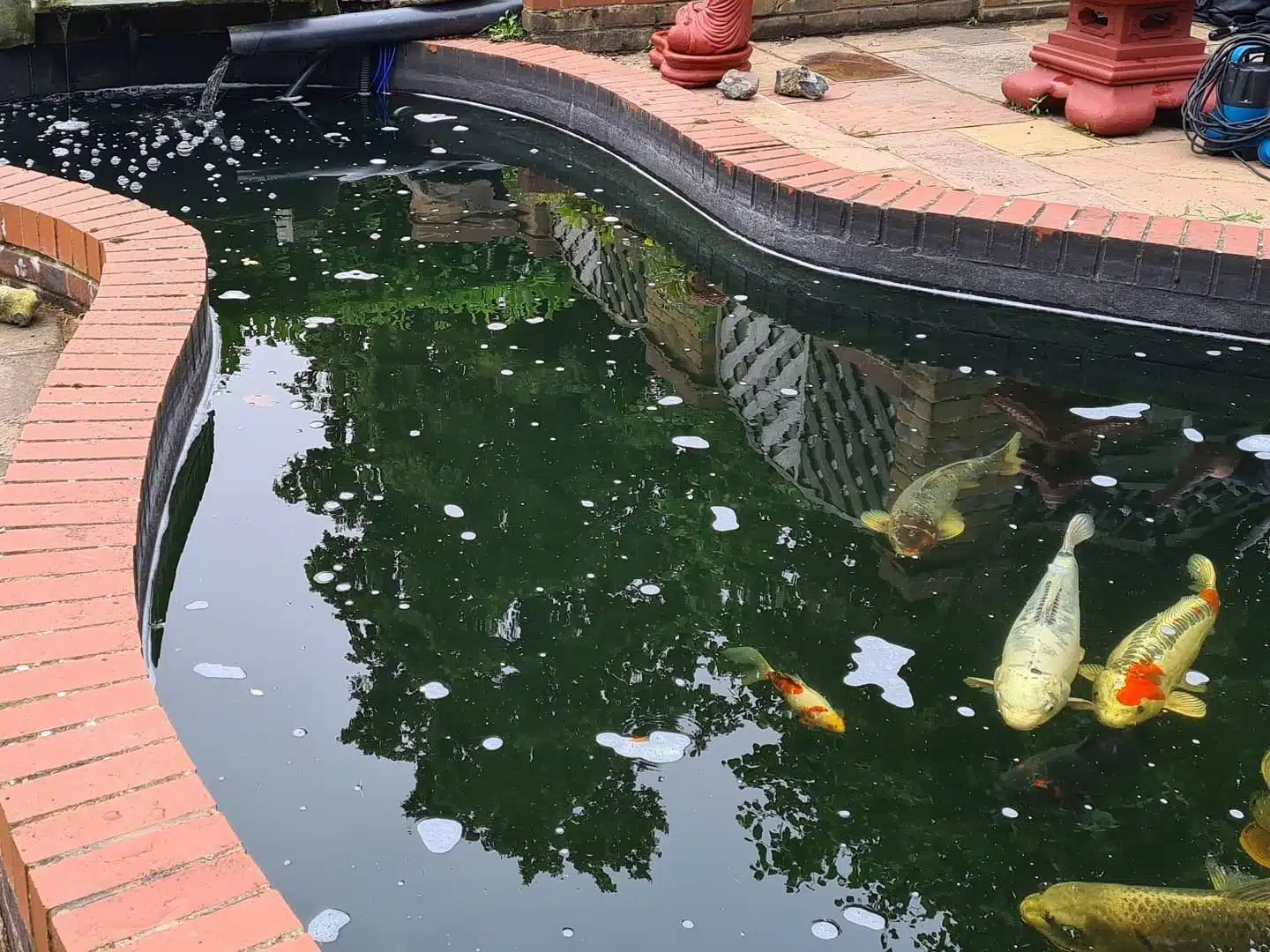
A koi pond creates a living focal point
Water changes a garden in a way a static ornament cannot. Reflections move with the sky, surface patterns change with light and the koi bring colour and behaviour throughout the seasons. A carefully positioned window or seating area turns maintenance checks into something you look forward to.
Good visual design still starts with the fish. Provide safe depth, stable volume, smooth finishes, correctly placed returns and unobstructed swimming space. An overcomplicated shape with shallow dead zones may look impressive on a plan but collect waste and fluctuate in temperature. Our guide to building a concrete-block koi pond and the pond fibreglassing guide explain two important construction stages.
Daily observation encourages a slower pace
Many owners value the few quiet minutes spent watching koi feed or move through the pond. There is good reason to find that restorative, but we avoid making medical claims. What we can say from working with pond owners is that the routine creates a natural pause: check the water, notice the fish and step away from a screen.
The best version of this benefit comes from a reliable system. If the owner is constantly worried about blocked filters or unclear readings, the pond creates stress instead. Accessible equipment, realistic stocking and a simple maintenance log turn observation into confidence. See our koi pond maintenance guide.
Koi are individual animals, not decoration
Spend time with a group and individual differences become obvious. Some koi are first to feed, some remain cautious, some investigate new objects and others follow a confident fish. Colour and body shape also change as they grow. Learning those normal patterns helps the owner spot illness earlier.
Our guide to koi behaviour and communication explains flashing, isolation, feeding response and social behaviour. If you are planning a first purchase, read how to choose healthy koi rather than selecting by colour alone.
A pond becomes a practical learning project
Koi keeping brings together biology, chemistry, hydraulics, construction, electrics and seasonal horticulture. Owners learn the nitrogen cycle because it directly affects fish. They learn how pipe diameter changes flow, why warm water holds less oxygen and why alkalinity protects the biological filter.
This makes a pond a genuinely useful family learning project when adults retain responsibility for safety and animal care. Testing water can demonstrate cause and effect; keeping a log shows seasonal trends; watching insects and birds introduces wider garden ecology. Start with the ideal pond water guide and our explanation of ammonia and nitrite.
It can bring people together
A pond often becomes the first place visitors walk towards. Feeding time gives children and adults something shared to watch, while the design and fish give experienced keepers plenty to discuss. Koi clubs, shows and online communities add a social side for owners who want it.
Family involvement needs clear rules: children must be supervised, lids and covers must remain closed, food quantities should be controlled and electrical equipment is not a play area. Read our detailed family, fish and pond safety guide before treating the pond as an attraction.
A well-planned pond supports garden wildlife
A dedicated koi pond is not the same as a wildlife pond. Koi eat small organisms, disturb planting and produce a high nutrient load. Even so, the wider garden can benefit from water, marginal planting and insects attracted to suitable areas. The most successful compromise often creates a separate planted margin, bog garden or wildlife pond that is protected from the koi.
Use British-grown pond plants in appropriate baskets and depths, avoid invasive species and provide safe escape routes for wildlife. Do not introduce amphibian spawn or wild fish to a koi pond because of disease and welfare risks.
The hobby rewards long-term care
Koi can live for many years and grow into substantial fish. That makes the relationship very different from a short-lived garden display. Owners see patterns develop, recognise individuals and refine the pond around them. The responsibility is significant: future moves, power cuts, winter care and holiday cover all need planning.
A mature pond also develops biological stability that cannot be purchased instantly. Watching a new system become dependable through careful testing and gradual stocking is part of the satisfaction. The keeping koi healthy guide explains the routine that protects that investment of time.
Water can improve the character of a garden
A formal raised pond can add strong architectural lines. An infinity-style window gives a close view of the fish. A natural edge can soften a larger landscape. Waterfalls and returns introduce sound, although noise should be tested near bedrooms and neighbours before construction.
Lighting can make the pond usable in the evening, but it should not shine directly into neighbours’ windows or leave fish without dark periods. Use purpose-made low-voltage or suitably installed outdoor equipment and provide safe cable routes. Browse pond-building equipment for construction essentials, but settle the design before the shopping list.
The practical realities to understand first
Construction cost
A proper koi pond needs safe structure, waterproofing, drainage, filtration, circulation, aeration and electrics. Cutting invisible essentials to fund visible finishes usually costs more later. Obtain a design and itemised specification rather than comparing only the headline build price.
Running cost
Pumps and air systems normally operate continuously. UV, heating, automatic cleaning and top-up add energy or water use. Compare wattage at the real operating point. Variable equipment can help, but the system must maintain required flow and oxygen at lower settings.
Maintenance
Even automatic filters need inspection and servicing. Water tests expire, UV lamps age, air pumps need service parts and drains must discharge somewhere. Design access so the routine is quick and clean.
Safety
Open water is a drowning risk, especially for young children. Electrical equipment is used in a wet environment. Edges can be slippery. Safety must be designed in, not added after the first near miss.
Fish welfare
Stock for adult size and filter capacity. Do not buy koi before the biological filter is mature. Arrange competent holiday care and a power-cut plan.
How to maximise the benefits
- Decide what you value: close fish viewing, a quiet garden feature, serious koi keeping or family interest.
- Choose a suitable position: visible from the house, accessible for construction and maintenance, and away from excessive leaf fall where possible.
- Calculate realistic volume: more stable water and sensible depth support fish welfare.
- Design filtration and pipework together: use the koi equipment guide.
- Make cleaning easy: provide drainage, isolation valves, unions and equipment access.
- Commission slowly: dechlorinate, mature the filter, add fish gradually and test frequently.
- Keep records: water chemistry, servicing and fish observations make problems easier to solve.
Is a koi pond right for you?
A koi pond suits someone prepared to care for a high-stock aquatic system year round, fund continuous equipment and arrange cover when away. It may not suit a household that cannot safely separate young children from open water, a rented property without permission, or an owner seeking a maintenance-free feature.
If you primarily want frogs, newts and natural planting, a wildlife pond may be a better fit. If you want sound and movement without fish, a self-contained water feature can be simpler. The right choice is the one whose maintenance and welfare needs still feel reasonable five years later.
Frequently asked questions
Are koi ponds relaxing?
Many owners find daily observation calming, but the experience depends on reliable design and manageable maintenance. We would describe it as an enjoyable routine, not a medical treatment.
Do koi recognise their owners?
Koi learn feeding routines and associate people or cues with food. Individual confidence varies, and patient consistent behaviour builds trust.
Will a koi pond add value to my home?
It may appeal strongly to the right buyer and deter another. Build it because you want the pond; do not rely on a guaranteed financial uplift.
Are koi ponds difficult to maintain?
A well-designed pond with accessible equipment can be straightforward, but it is never maintenance-free. Expect testing, filter cleaning, water changes and equipment servicing.
Can children help with a koi pond?
They can observe, test water and help feed under close adult supervision. Physical safety barriers and strict food quantities remain adult responsibilities.
Do koi ponds attract wildlife?
Water and planting attract insects and birds, but koi may eat smaller animals and plants. A separate wildlife zone often works better.
How long do koi live?
With suitable genetics and care, koi can be a long-term commitment measured in decades, although lifespan varies widely with husbandry and health.
Does a koi pond need to be heated?
No for many UK garden ponds. Heating can stabilise temperature or support particular goals, but adds cost and design requirements.
Can I build a small koi pond?
Small volumes change chemistry and temperature quickly, while koi grow large. A modest ornamental or wildlife pond may be more appropriate if space cannot provide stable volume and depth.
How much does a koi pond cost to run?
Add the wattage of equipment running continuously, multiply by hours and your electricity tariff, then include water, food, consumables and servicing. Heating can dominate winter cost.
Do I need planning permission?
Many domestic ponds do not, but raised structures, listed buildings, conservation areas, drainage and substantial engineering can change the position. Check local requirements before construction.
What is the first step?
Write a design brief, measure the site, decide adult stocking and obtain a hydraulic and filtration plan before excavation.
A pond worth living with
The best koi ponds are not necessarily the largest or most expensive. They are safe, stable, easy to maintain and positioned where the owner can enjoy the fish every day. That Pond Guy brings hands-on construction and maintenance experience to those decisions. Explore our pond care services or contact us to discuss an existing or proposed pond honestly.
Benefits for an established garden
A pond can solve a design problem by giving a large border or patio a clear destination. It can reflect a favourite tree, screen an unattractive boundary with planting or connect indoor and outdoor spaces through a viewing window. The filter house, cables and waste routes need equal design attention so the finished garden does not look like equipment was added afterwards.
Water also creates microhabitats. Marginal planting can support pollinating insects, while a controlled overflow can irrigate suitable areas with nutrient-rich pond water. Use treatments carefully around planted and wildlife areas and never discharge medicated water into a natural watercourse.
Benefits for the owner who enjoys practical projects
Koi ponds offer continual opportunities to measure and improve: compare pump flow after cleaning, reduce pipe friction, tune a moving bed, monitor seasonal KH consumption or photograph fish development. That appeals to people who enjoy engineering as much as the fish. The important discipline is changing one variable at a time and keeping welfare ahead of experimentation.
There is also satisfaction in repair rather than replacement. Serviceable pumps, air compressors, valves and filters can often be maintained for many years when access is good and genuine spares are available. Choosing equipment with long-term support is a benefit that does not show in the cheapest initial price.
Responsible ownership makes the difference
A pond should improve the garden without creating risk for neighbours, wildlife or future occupants. Secure access, control noise, keep records of underground pipe and cable routes, label isolators and leave clear instructions for anyone providing holiday care. If the property is sold, an equipment diagram and maintenance history make the system much less intimidating.
Can a koi pond be environmentally responsible?
It will use electricity and water, so impact cannot be ignored. Efficient pumps, sensible flow, leak prevention, unheated operation where suitable, water reuse on non-edible planting and long-lived equipment can reduce it. Never release koi or pond water into natural waterways.
Can I combine koi with a swimming pond?
Not casually. Swimming-water design, fish waste, treatment choices, electrical safety and hygiene standards need specialist assessment. A decorative koi pond and a swimming pond normally have different priorities.
What happens if I move house?
Plan in advance. Koi need suitable transport and a mature destination; leaving the pond requires agreement with the buyer and clear care instructions. Never drain or abandon a stocked pond.
Our conclusion
A koi pond is at its best when it offers beauty, interest and a manageable daily ritual. Those benefits grow from planning, stable water and respect for the fish. If the honest responsibilities still sound worthwhile, it can become one of the most distinctive and rewarding parts of a garden.
