






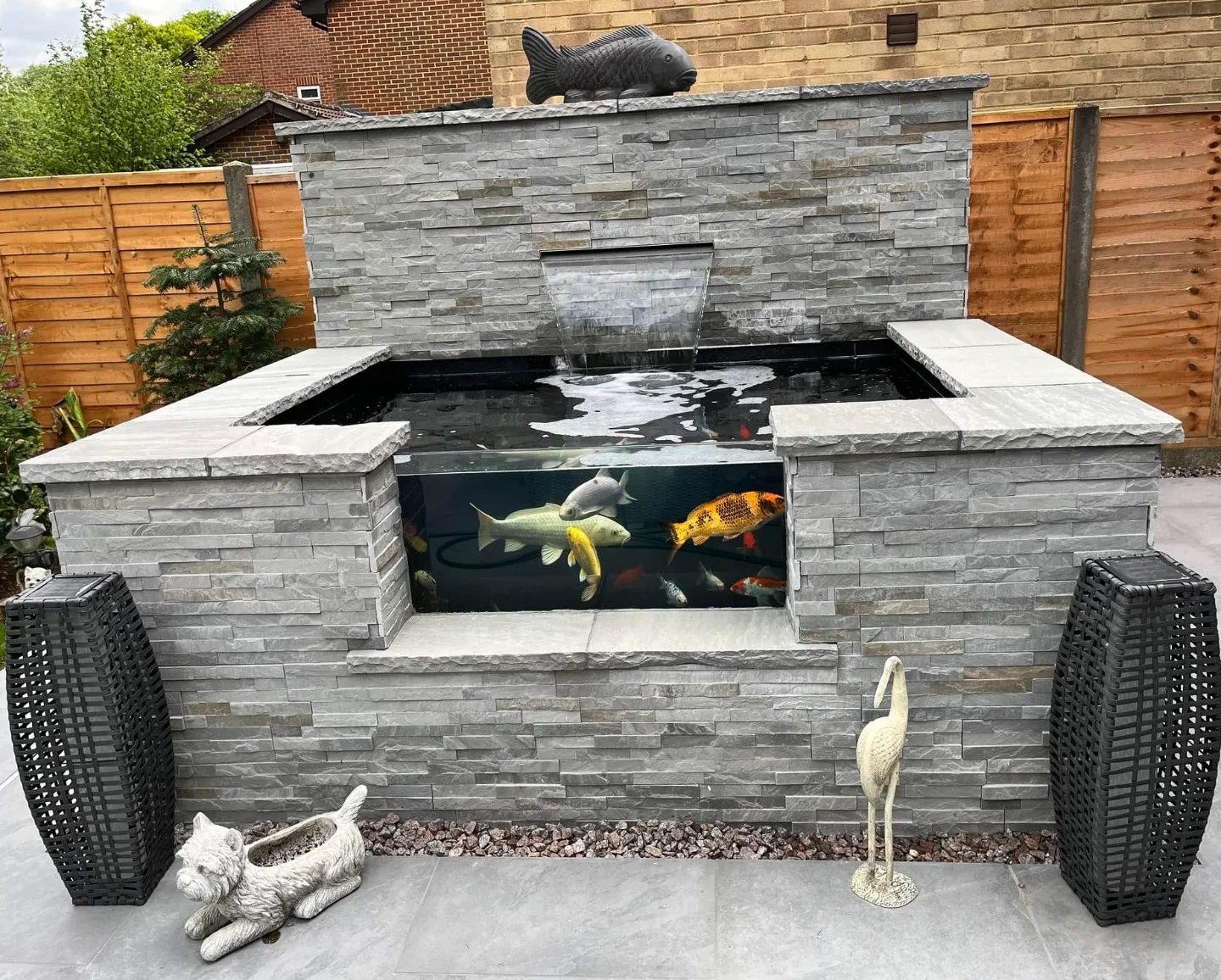
Keeping Your Koi Cool for the Summer
Hot weather does not automatically mean a koi pond is in danger, but prolonged warmth reduces the margin for error. Warm water holds less dissolved oxygen while koi, filter bacteria and decomposing organic matter all continue to consume it. Feeding, algae, a dirty filter or a failed air pump can turn a manageable warm day into an emergency—often during the night or around dawn.
Our practical view: do not wait for koi to gasp at the surface before increasing aeration. During a hot spell, check the pond early, keep air and circulation running continuously, reduce avoidable oxygen demand and have backup equipment ready.
Why Hot Weather Is Hard on Koi
The first problem is physical: as water temperature rises, its capacity to hold dissolved oxygen falls. At the same time koi metabolism increases, so fish may consume more oxygen. Biological filtration also depends on oxygen, and bacteria breaking down food, faeces, algae and other organic debris add to the total demand.
Algae make the daily pattern less predictable. During daylight, photosynthesis can add oxygen; after dark, algae and plants respire and consume it. A pond that appears lively in the afternoon may be at its lowest oxygen level shortly before sunrise. A dense algal bloom can also crash, leaving a large mass of material decomposing and stripping oxygen from the water.
The Environment Agency identifies low dissolved oxygen as a major cause of fish mortality and notes that algal blooms can create large daily fluctuations. This is why aeration, feeding and water-quality checks need closer attention during sustained heat.
Warning Signs of Heat or Low-Oxygen Stress
- koi gathering beside a waterfall return or air diffuser;
- rapid gill movement;
- gasping or repeatedly taking air at the surface;
- tight shoaling, unusual lethargy or poor response;
- loss of appetite;
- large koi showing distress before smaller fish;
- fish remaining near inlets early in the morning;
- a sudden change after a thunderstorm or algae die-off.
These signs can have more than one cause. Test the water rather than assuming temperature alone is responsible. Chlorine exposure, ammonia, nitrite, gill damage and disease can produce similar behaviour.
Immediate Action if Koi Are Gasping
- Increase aeration immediately. Add a spare air pump or diffuser, increase safe surface agitation and make sure existing airlines have not kinked or disconnected.
- Stop feeding. Feeding increases fish metabolism and creates more waste for the filter to process.
- Check circulation. Confirm the pond pump, filter flow, waterfall and skimmer are operating. Clean only the parts that are genuinely blocking flow—do not sterilise biological media in an emergency.
- Test water. Check temperature, dissolved oxygen if a suitable meter is available, ammonia, nitrite, pH and chlorine.
- Remove obvious decaying matter. Dead fish, large clumps of dying algae and rotting debris increase oxygen demand.
- Add replacement water safely if appropriate. Use dechlorinated water, avoid an abrupt temperature change and do not assume a cold hose is a substitute for aeration.
- Seek help. If fish remain distressed or deaths occur, contact an experienced aquatic professional or fish vet. In England, serious fish distress in a fishery or natural water can be reported to the Environment Agency incident hotline.
Run Aeration Continuously Through Hot Spells
For a stocked koi pond, aeration should normally be considered essential life-support equipment rather than decoration. It supports the fish directly, encourages gas exchange and supplies oxygen to biological filters. Browse our pond air pumps and match both flow and pressure to the depth and number of diffusers.
Place air where it helps the whole system
A bottom diffuser creates an upward plume and helps circulate water, but its effect depends on pond shape and depth. Avoid arranging air so violently that fish cannot rest or the bottom drain and skimmer pattern is disrupted. Moving-bed biological filters need their own reliable air supply.
Check delivered air, not only the pump label
Deep diffusers create back pressure. Long narrow airline, manifolds, non-return valves and clogged air stones reduce delivered flow. Inspect bubbling at the pond and keep spare diaphragms, airline and diffusers appropriate to the equipment.
Keep backup aeration
Power cuts and pump failures are most dangerous when the pond is warm and heavily stocked. A second air pump, battery or generator plan, and a simple alarm can prevent a failure becoming a fish loss. Test backup equipment before a heatwave.
Do Not Switch the Pond Pump or Filter Off at Night
Night is often when oxygen is most limited. The main circulation pump should normally continue running so oxygenated water reaches the fish and biological filter. Switching a mature filter off can leave bacteria without water flow and oxygen; stagnant water inside a filter may deteriorate before it is restarted.
If a waterfall loses excessive water through splash, correct the return or reduce it only after ensuring alternative circulation and aeration remain adequate. A separate variable-flow pond pump can help tune circulation, but energy saving must never take priority over fish welfare.
Reduce Feeding Before It Becomes an Emergency
Koi may appear hungry in warm weather, but feeding decisions should reflect oxygen and water quality, not appetite alone. More food increases metabolic oxygen demand and produces more ammonia for the filter.
- Feed smaller portions that are eaten promptly.
- Remove uneaten food.
- Reduce or stop feeding if koi are lethargic, oxygen is low or ammonia/nitrite is detectable.
- Avoid heavy feeding late in the day before the overnight oxygen low point.
- Do not resume normal feeding until the cause of distress is corrected and tests are satisfactory.
Explore koi food by season and purpose, but remember that no food formulation compensates for low oxygen or failing filtration.
Shade Can Slow Heat Gain
Partial shade reduces solar heating and gives fish a more comfortable refuge. Shade sails, pergolas, established marginal planting and floating-leaved plants can help. Cover only part of the pond and keep ventilation over the surface; an enclosed sheet immediately above the water can trap heat and obstruct gas exchange.
Plants require thoughtful balance in a koi pond. Water lilies shade the surface, while marginals soften edges and support wildlife. Koi may uproot or eat some plants, and heavy plant or algae growth consumes oxygen after dark. Browse our British-grown pond plants for appropriate planting depths and mature spread.
Avoid sudden, improvised cooling
Do not tip ice directly into the pond or make a large, rapid change with very cold tap water. Sudden temperature and chemistry changes can add stress. The safer objective is to slow further heat gain, protect cooler deeper water and maintain oxygenation.
Manage Water Level and Top-Ups Safely
Evaporation can be substantial in hot, windy weather, especially with waterfalls. Mark the normal level so unusual loss is noticed. An automatic pond top-up can protect the operating level, but it can also hide a leak if water use is not monitored.
Mains tap water containing chlorine or chloramine must be treated before entering a fish pond. Use a correctly sized pond dechlorinator, stay within its rated flow and cartridge capacity, and verify performance. Top-ups replace evaporated water; they are not the same as a deliberate water change because evaporation leaves most dissolved material behind.
Test Water More Often in a Heatwave
Temperature
Use a dependable pond thermometer and record readings at similar times. The daily maximum matters, but the early-morning condition can reveal the oxygen low point. Avoid quoting one universal “safe” koi temperature: acclimation, duration, oxygen, fish size, stocking and health all affect risk.
Dissolved oxygen
A calibrated dissolved-oxygen meter provides a direct measurement. Readings vary through the day, so one afternoon test can give false reassurance. Check near dawn if you are investigating overnight oxygen demand.
Ammonia and nitrite
Both should be treated as warning parameters in a stocked pond. Increased feeding, filter problems or reduced flow can cause deterioration. The toxicity of the un-ionised portion of ammonia is influenced by pH and temperature, so warm alkaline water can make an ammonia problem more dangerous.
pH and KH
Algae and plant activity can produce a daily pH swing, while biological filtration consumes alkalinity. Check KH as part of system stability rather than trying to force pH to a particular number with repeated quick corrections.
Chlorine
Test replacement water after the dechlorination method if there is any doubt. Clear water is not proof that chlorine or chloramine has been removed.
Our pond water testing section includes equipment for routine monitoring and fault finding.
Keep Filters Flowing Without Over-Cleaning
A dirty mechanical stage restricts flow and increases organic load. Clean screens, brushes, sponges or drum waste routes as required, but preserve biological media. Wash mature biological media only as the manufacturer recommends and avoid chlorinated tap water unless the product explicitly permits it.
Drum filters may clean more frequently during algae blooms and heavy feeding, increasing water loss. Confirm the top-up and purifier can safely support the cleaning demand. Keep air moving through moving-bed media and check shower or return distribution for blockages.
Control Algae by Fixing the Conditions
Do not respond to every green or string-algae problem by adding treatment during fish distress. Identify whether the problem is green water, blanket weed or a dying bloom, and follow the product label carefully. Some treatments can temporarily increase oxygen demand as algae break down, making strong aeration especially important.
A correctly sized UV clarifier can control suspended green-water algae when matched to the real pump flow. Blanket weed requires a different strategy involving nutrient management, manual removal, planting, maintenance and a labelled treatment where appropriate.
Prepare Before the Forecast Turns Hot
- Clean obstructed air stones and check airline.
- Service air-pump diaphragms if due.
- Test spare aeration and power-failure plans.
- Remove accumulated sludge and decaying debris gradually.
- Confirm the main pump and filter are delivering normal flow.
- Check the UV, filter waste route and drum-cleaning supply.
- Stock dependable ammonia, nitrite, pH, KH and chlorine tests.
- Fit a thermometer where it can be read easily.
- Inspect top-up, dechlorinator and overflow capacity.
- Plan temporary shade before the heatwave arrives.
A Practical Hot-Weather Routine
Early morning
Observe every fish before feeding. Check air and circulation, look for koi gathering at returns, remove mortalities immediately and test oxygen or water quality if behaviour is abnormal.
Afternoon
Record the temperature near the likely daily peak. Check water level, shade and equipment housings for overheating. Avoid unnecessary netting, transport or major maintenance.
Evening
Make sure the air pump, backup plan and circulation will continue overnight. Feed lightly or not at all when conditions are marginal, clear excess food and verify the overflow and top-up.
Hot-Weather Koi Questions Answered
Why do koi gasp more in hot weather?
Warm water holds less dissolved oxygen while fish and biological activity may consume more. Gasping is an emergency sign that also warrants water-quality checks.
Should I add ice to a koi pond?
No. Direct ice can create a rapid local temperature change and may introduce untreated water. Shade, aeration and controlled dechlorinated replacement water are safer tools.
Should I stop feeding koi during a heatwave?
Reduce feeding when temperature and oxygen are becoming stressful, and stop if fish gasp, become lethargic or water tests are abnormal.
Is a waterfall enough aeration?
It helps when it breaks the surface effectively, but waterfalls can lose flow or water and may not provide enough oxygen for a heavily stocked koi pond. Dedicated air provides redundancy.
Should aeration run at night?
Yes. Night and early morning can be the lowest-oxygen period because plants and algae consume oxygen in darkness.
Can too much aeration harm koi?
Very turbulent flow can prevent resting or disrupt circulation, but inadequate oxygen is the more common heatwave danger. Distribute air sensibly and avoid trapping fish.
Why are large koi affected first?
Larger fish have greater absolute oxygen needs and may show distress earlier when dissolved oxygen falls.
Can I do a water change in hot weather?
Yes when it is needed and correctly managed, but avoid an abrupt temperature or chemistry change. Dechlorinate mains water and monitor the pond.
Will shade stop algae?
Shade can reduce solar input, but algae also respond to nutrients, circulation, filtration and maintenance. It is one part of management.
What time should I test dissolved oxygen?
Test at the time of concern. Early morning is useful for detecting the overnight low point; multiple readings show the daily swing.
Can an air pump overheat?
Yes. Keep it ventilated, dry and within its installation instructions. Do not enclose it tightly in direct sun.
Should I clean the filter during a heatwave?
Clear mechanical blockages that reduce flow, but do not aggressively clean or replace mature biological media unless necessary.
What if the electricity fails?
Use the tested backup plan immediately. Prioritise aeration, reduce feeding and monitor fish until full circulation returns.
Does rain solve low oxygen?
Not reliably. A thunderstorm can mix water or accompany an algae change, and sudden runoff may create other problems. Keep mechanical aeration running.
Can automatic top-up cool the pond?
It primarily maintains level, not temperature. The incoming water still needs treatment, and rapid cold-water addition can stress fish.
When should I seek professional help?
Seek urgent advice if gasping continues after aeration, multiple fish are affected, deaths occur or water tests indicate ammonia, nitrite, chlorine or a severe pH problem.
Equipment That Supports a Hot-Weather Plan
- Pond air pumps
- Air-pump accessories
- Pond water testing
- Variable-flow pond pumps
- Automatic pond top-up systems
- British-grown pond plants
If you need help planning aeration, tell us the verified pond volume, deepest diffuser depth, number and size of koi, filter type and current air equipment. Those details allow a far better recommendation than pond volume alone.
