





How to Choose Healthy Koi: A Responsible Buyer’s Guide
Choosing koi responsibly means looking beyond the brightest pattern in the sales vat. A suitable koi should be healthy, structurally sound, appropriate for your pond and bought from a seller who can explain its history and care. This practical guide covers observation, body shape, skin quality, transport, quarantine and the questions worth asking before money changes hands.
Prepare your pond before choosing a fish
A new koi is not the first step in a new pond. Confirm the pond is mature, ammonia and nitrite are zero, pH and KH are stable, aeration is adequate and the filter has spare capacity. Know the real volume and current stock. A small koi may become a substantial adult, so buy for future space rather than today’s visual gap.
Our ideal koi pond water guide explains the tests, while choosing koi pond equipment covers filter and air capacity.
Choose the seller before the koi
A responsible koi dealer keeps clean, well-managed systems, separates stock where appropriate and can discuss origin, arrival dates, quarantine or health protocols, feeding and water temperature. Staff should be willing to pause a sale if a fish looks unwell or the buyer’s pond is unsuitable.
Look at the entire facility. Do several vats contain fish with clamped fins, ulcers, heavy mucus, flashing or rapid breathing? Are nets shared carelessly? Are dead or distressed fish left unnoticed? One hidden fish can be difficult to assess, but repeated warning signs are a reason to leave.
Ask how long the koi has been on site, whether it has recently arrived or been treated, what food it takes and the current water parameters. No dealer can promise zero disease risk, but transparent husbandry and proper biosecurity reduce it.
Watch the koi before it is bowled
Observe from a respectful distance before anyone starts chasing the fish. Healthy koi should swim with balance and purpose, hold the fins normally and respond to the group. Breathing should appear steady. One fish persistently isolating, hanging at a return, rubbing, rolling, clamping its fins or struggling to remain level deserves investigation.
Do not confuse temporary caution with disease. Koi in a busy shop may be alert to movement, but their behaviour should settle. Our koi behaviour guide explains common signs.
Assess body shape and structure
View the koi from above in a suitable inspection bowl. The body should be balanced left to right, with a smooth transition from head to shoulders and a tail tube appropriate to age and variety. Fins should be paired, intact and held evenly. The spine should not show an unexplained bend, and the mouth and gill covers should close normally.
Young koi change considerably, so an oversized head or very thin tail may affect future proportions. Female koi often develop fuller bodies, while male koi may remain slimmer; sex can be difficult to judge reliably when young. Do not let confident claims of sex or future size replace what is visible.
Check these structural points
- Both eyes clear, aligned and similar.
- Mouth opens and closes normally without distortion.
- Gill covers lie flat and move evenly.
- Pectoral, pelvic, dorsal, anal and tail fins are present and not split to the base.
- Spine and tail line remain straight during swimming.
- No one-sided swelling, deep depression or raised scales.
Examine skin, scales and fins
Healthy skin should look clean and lustrous for the variety, with the protective mucus layer intact. Look for ulcers, red patches, cotton-wool growth, excessive grey mucus, missing scales, raised scales, white spots, lumps or blood in the fins. Minor healed damage may not make a koi unsuitable, but the seller should explain it honestly.
A small red mark from recent netting is not the same as an advancing ulcer, yet any broken skin increases risk. Do not buy a visibly diseased koi on the assumption that a general treatment at home will solve it. The koi health guide explains why symptoms need diagnosis.
Colour and pattern: buy what you enjoy
Traditional variety standards can help you understand what may improve with growth, but a garden koi does not need show potential to be a rewarding fish. Choose a pattern you enjoy at normal pond viewing distance. Skin quality and healthy structure matter more than perfectly symmetrical markings.
Colours change with age, genetics, temperature, food and environment. Red may consolidate or recede, black can emerge or disappear, and a juvenile pattern may stretch as the body grows. Be cautious of absolute promises about future appearance.
Understanding common koi varieties
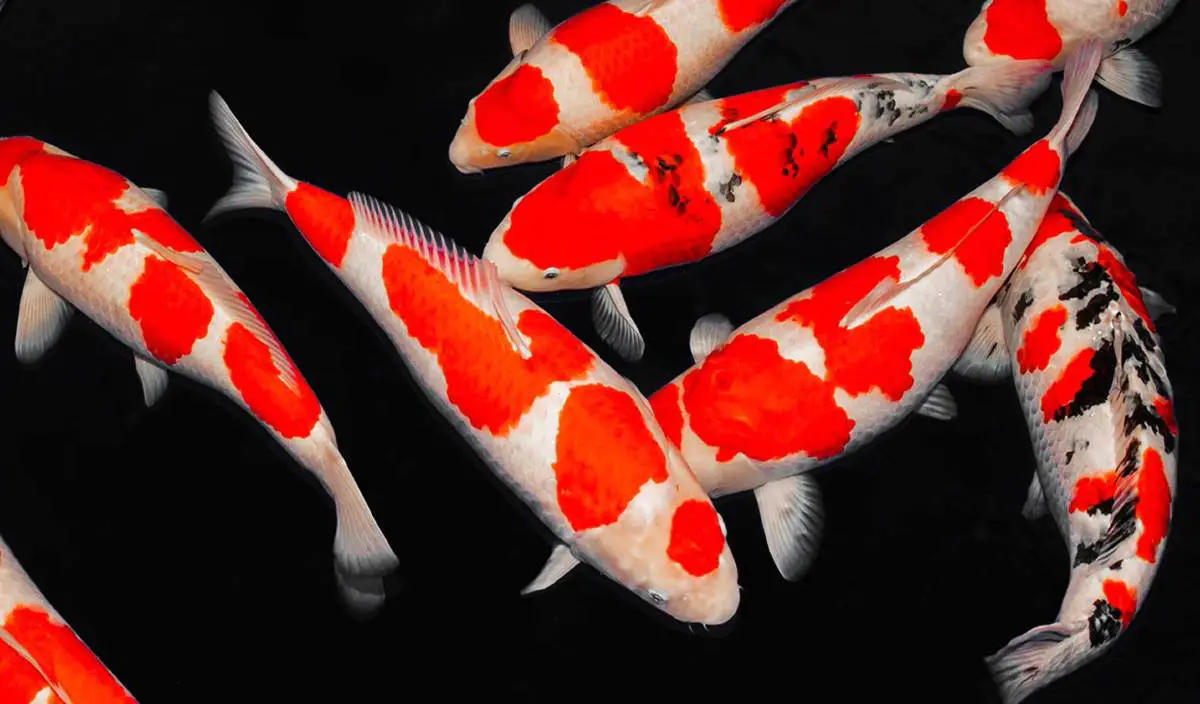
Kohaku combines red pattern on white skin. Sanke adds black markings to a red-and-white base, while Showa traditionally develops strong black wrapping around the body. Chagoi and other single-colour varieties are often valued for body and friendly behaviour. Ogon varieties have metallic single colours. Utsuri combine black with white, red or yellow.
Variety names help comparison but should not push a buyer beyond budget or pond suitability. A healthy, well-shaped koi that appeals to you is a better purchase than a fashionable name attached to a stressed fish.
Size, age and growth claims
Larger koi cost more to produce, house and transport, but present size does not guarantee eventual size or quality. Genetics, sex, early development, food, water, stocking and temperature all influence growth. A small koi from large parents may have potential, but no seller can guarantee a specific final length.
Ask whether the stated length was measured and whether it includes the tail. Consider how the fish will be transported and whether the receiving pond has room. Do not buy several rapidly growing koi simply because small juveniles look lost in a large pond.
Japanese, Israeli and UK-bred koi
Origin does not override individual health. Japanese koi have deep breeding traditions and specialist bloodlines; Israeli and UK breeders also produce strong, attractive fish. Ask for accurate origin rather than assuming it from a variety name or marketing language.
Different supply chains have different biosecurity histories. Quarantine every new koi according to a sensible protocol regardless of price or country. Expensive fish can carry the same health risks as inexpensive ones.
Set a complete budget
The purchase price is only part of ownership. Allow for transport, quarantine, food, filter capacity, water testing, electricity and veterinary or specialist care. If the pond cannot safely support another adult fish, the responsible budget is zero until the system changes.
Browse our koi food, water testing and air pump ranges only after confirming the pond’s needs.
Questions to ask the dealer
- Where and when did this koi arrive?
- What is the current water temperature, pH and salinity?
- What has it been eating?
- Has this system or koi received treatment recently?
- What quarantine and health checks are used?
- Has the fish been measured, and how old is it believed to be?
- Is the stated sex confirmed or an estimate?
- What is the transport plan for the journey length and weather?
Safe netting and inspection
A pan net should guide the koi, not chase it around the vat. The fish is best transferred with a wetted sock net into a covered bowl containing system water. Keep the bowl shaded, avoid crowding and minimise the inspection time. Wet hands and equipment before contact.
Do not lift a koi by the tail, gill covers or a dry mesh. If the seller’s handling is rough or the fish is repeatedly jumping, postpone the decision. Stress can conceal normal behaviour and makes injury more likely.
Transporting a koi home
The dealer should use a strong fish bag with adequate water and oxygen, usually double-bagged and placed in a rigid insulated box. Travel directly, keep the container dark and stable and protect it from heat or freezing. Never leave bagged koi in a parked vehicle.
For a long journey or large fish, discuss transport in advance. Do not open a bag repeatedly because this loses oxygen and alters gas balance. On arrival, follow the dealer’s acclimation guidance while avoiding the introduction of transport water into the pond where practical.
Quarantine is part of choosing responsibly
A quarantine system needs mature filtration, strong aeration, secure cover, temperature control where used and enough room for normal movement. It should have dedicated nets, bowls and hoses. A bare uncycled vat filled on collection day is not safe quarantine.
Match water gradually, test ammonia and nitrite frequently and observe appetite, breathing, skin and faeces. Do not medicate every new fish without diagnosis. If parasites are suspected, arrange a competent scrape and microscope examination.
Work with the main pond before quarantine, then clean and disinfect hands and equipment appropriately. Never share wet tools. The keeping koi healthy guide includes biosecurity principles.
Introducing koi to the main pond
Move the fish only when quarantine observations, water and health are satisfactory. Compare temperature, pH and KH and avoid a sudden transfer between very different conditions. Transfer the fish, not quarantine water. Observe existing and new koi closely for the following weeks.
Feed lightly at first and confirm the biological filter handles the increased load. Test more often after any stock addition. Do not add several fish at once simply to save on delivery.
When to walk away
- The koi cannot swim or breathe normally.
- It has an unexplained ulcer, raised scales, severe fin damage or heavy mucus.
- Several fish in the system show distress.
- The seller will not answer basic husbandry questions.
- The fish has only just arrived and you are pressured to collect immediately.
- Your quarantine is not ready.
- The adult stocking plan or filter cannot support it.
- The purchase depends on a guarantee about future colour, sex or size.
Frequently asked questions
What is the healthiest sign when choosing koi?
Balanced swimming, steady breathing, open fins, intact skin and normal behaviour together are more useful than one feature.
Should I buy the most active koi?
Activity should be normal and controlled, not frantic. Assess the group and individual in context.
Is a small red mark acceptable?
It may be minor handling damage or the start of a problem. Ask the seller to explain it, inspect carefully and postpone if uncertain.
Can I choose a koi from a photograph?
A photograph helps assess pattern but not breathing, balance, skin texture or group health. A live video and reputable seller improve remote selection.
How many koi should I buy at once?
As few as the quarantine and main filter can safely support. Gradual stocking is better for water stability.
Does price indicate health?
No. Price reflects size, breeder, variety and perceived quality. Every price point requires the same health checks.
Are Japanese koi always better?
They may have valued bloodlines and quality, but origin alone does not make an individual healthy or suitable.
Can the sex of a young koi be guaranteed?
Often not. Treat early sex claims as estimates unless the seller has a sound basis.
How long should quarantine last?
There is no single duration for every protocol. It must be long enough for observation and any planned temperature or health checks, with expert advice for valuable collections.
Should new koi be treated automatically?
No. Stable water and observation come first. Treat diagnosed problems with compatible products and accurate volume.
Why is pond capacity more important than purchase price?
A beautiful koi in an overloaded pond faces chronic stress and poor water. Welfare depends on the destination system.
What should I bring to collect koi?
A suitable insulated box, journey plan and the dealer’s transport instructions. For large fish, arrange professional packing and lifting.
Choose slowly and enjoy the fish for years
The best purchase still looks sensible after the excitement of the shop has passed. Put health, pond capacity and biosecurity ahead of pattern, then choose the koi you genuinely enjoy. If you need an independent check of the destination pond, contact That Pond Guy with the volume, stock, filter and water results.
